Acrylonitrile Styrene Acrylate (asa) Price Trend and Forecast

UNSPC code: 13102005
|
Weekly Update
|
Historical Data Since 2015
|
Forecast for 2026
  • Commodity Pricing

acrylonitrile styrene acrylate (asa) Price Trends by Country

nlNetherlands
usUnited States
esSpain
inIndia
gbUnited Kingdom
krSouth Korea

Global acrylonitrile styrene acrylate (asa) Spot Market Prices, Trend Analysis and Forecast

Price Watch™ provides real-time price assessments and price forecasts for Acrylonitrile Styrene Acrylate (ASA) across top trading regions:

Acrylonitrile Styrene Acrylate (ASA) Regional Coverage  Acrylonitrile Styrene Acrylate Grade and Country Coverage  Acrylonitrile Styrene Acrylate Pricing Data Coverage Explanation 
Asia-Pacific Acrylonitrile Styrene Acrylate (ASA) Pricing Analysis  Acrylonitrile Styrene Acrylate (ASA) Heat Resistant (MFI: 3-7) FOB Prices at Busan Port, South Korea  Weekly Price Update on Acrylonitrile Styrene Acrylate (ASA) Real-Time Export Prices from Busan Port, South Korea to Global Markets 
Acrylonitrile Styrene Acrylate (ASA) Heat Resistant (MFI: 3-7) CIF Prices at Nhava Sheva Port, West India. Importing from South Korea.  Weekly Price Update on Acrylonitrile Styrene Acrylate (ASA) Real-Time Import Prices at Nhava Sheva Port, West India, from South Korea. 
Acrylonitrile Styrene Acrylate (ASA) Heat Resistant (MFI: 3-7) Ex-Bhiwandi, India  Weekly Price Update on Acrylonitrile Styrene Acrylate (ASA) Real-Time Domestic Prices, Bhiwandi, West India 
Europe Acrylonitrile Styrene Acrylate (ASA) Pricing Analysis  Acrylonitrile Styrene Acrylate (ASA) Heat Resistant (MFI: 3-7) CIF Prices at Rotterdam Port Netherlands. Importing from South Korea  Weekly Price Update on Acrylonitrile Styrene Acrylate (ASA) Real-Time Import Prices at Rotterdam Port Netherlands, from South Korea 
Acrylonitrile Styrene Acrylate (ASA) Heat Resistant (MFI: 3-7) CIF Prices at Immingham Port, United Kingdom. Importing from South Korea   Weekly Price Update on Acrylonitrile Styrene Acrylate (ASA) Real-Time Import Prices at Immingham Port, United Kingdom, from South Korea 
Acrylonitrile Styrene Acrylate (ASA) Heat Resistant (MFI: 3-7) CIF Prices at Algeciras Port, Spain. Importing from South Korea  Weekly Price Update on Acrylonitrile Styrene Acrylate (ASA) Real-Time Import Prices at Algeciras Port, Spain, from South Korea 
North America Acrylonitrile Styrene Acrylate (ASA) Pricing Analysis  Acrylonitrile Styrene Acrylate (ASA) Heat Resistant (MFI: 3-7) CIF Prices at Houston Port, USA. Importing from South Korea  Weekly Price Update on Acrylonitrile Styrene Acrylate (ASA) Real-Time Import Prices at Houston Port, USA, from South Korea 


Note: In assessments structured as CIF [Importing Port] (Exporting Country), the country mentioned in brackets indicates the primary origin of supply (exporting country), while the named port refers to the destination port in the importing country. Other Incoterms (FOB, FD, EXW, etc.) should be interpreted in accordance with standard international trade definitions.

Acrylonitrile Styrene Acrylate (ASA), Price Trend Q1 2026

During Q1 2026, the global Acrylonitrile Styrene Acrylate (ASA) market improved by around 2.75% over the previous quarter as a result of increasing feedstock prices along with tighter supply conditions. Prices for some of the main raw materials, especially for acrylonitrile and styrene, increased to high levels; the result has been a significant increase in production costs and the overall market perception trended upwards.

Due to current geopolitical tensions in the world, supply chains have been impacted by delays in incoming naphtha shipments from the Middle East, which caused limited feedstock availability in the entire Asian region. Several producers reduced their operating rates; therefore, supply conditions became tighter with little to no spot availability.

Furthermore, firm styrene price trends created additional upward pressure on ASA global prices. In the last half of Q1 2026, ASA price trends rapidly accelerated between mid-February and March and went well above normal historical price levels. Overall, the Q1 ASA market had a bullish trend based on continued elevated upstream costs, limited available supply, and increased volatility in global trade flows.

South Korea: ASA Export prices FOB Busan, South Korea; Grade- Heat Resistant (MFI: 3-7)

In Q1 2026, ASA price in South Korea (FOB Busan) has increased by approximately 2.7% compared with the previous quarter, supported by higher feedstock costs and tightening supply conditions. The ASA price trend in South Korea is driven by rising acrylonitrile and styrene prices, which increase production costs for domestic manufacturers.

Market sentiment strengthened amid ongoing geopolitical disruptions affecting Middle Eastern trade flows, leading to delays in naphtha cargo arrivals and tighter upstream butadiene availability. Further pressure comes from shipping disruptions near the Strait of Hormuz and operational issues at the Port of Fujairah, which delay feedstock inflows into South Korea.

In addition, reduced operating rates among several producers due to constrained feedstock availability limit overall supply. Firm styrene trends continue to support higher export offers. In South Korea, ASA prices in March 2026 have surged by over 10% compared with February levels, reflecting strong cost-push pressure and heightened market volatility.

Netherlands: ASA Import prices CIF Rotterdam (South Korea), Netherlands; Grade- Heat Resistant (MFI: 3-7)

In Q1 2026, ASA price in the Netherlands (CIF) has increased by approximately 3.2% compared with the previous quarter, supported by higher feedstock costs and firmer import offers from Asia. The ASA price trend in the Netherlands is primarily driven by rising acrylonitrile and styrene prices, which lift production costs for exporters and are reflected in higher CIF levels in the Dutch market.

Supply conditions continued to tighten amid ongoing geopolitical disruptions affecting global trade flows, leading to delays in feedstock availability and lower operating rates among producers. This tighter supply environment continues to support upward pricing pressure across the region. At the same time, stable to slightly higher freight costs also contribute to higher landed prices.

Market sentiment strengthened further in the latter part of the quarter, with a more visible price rise between mid-February and March. In the Netherlands, ASA prices in March 2026 have increased by around 12% compared with the previous month, reflecting strong cost-push pressure, tighter supply conditions, and firmer import pricing trends.

USA: ASA Import prices CIF Houston (South Korea), USA; Grade- Heat Resistant (MFI: 3-7)

In Q1 2026, ASA price in the USA (CIF imports) has increased by approximately 2.40% compared with the previous quarter, supported by rising feedstock costs and firm export pricing from Asia. The ASA price trend in the USA reflects higher acrylonitrile and styrene costs, which increase production expenses for exporters and result in higher offer levels in the US market.

Supply conditions have tightened due to geopolitical disruptions affecting feedstock availability and reduced operating rates among some producers. Import availability remained slightly constrained, supporting firmer sentiment.

Freight costs, stable to slightly higher, add marginal pressure to landed prices. In the USA, ASA prices in March 2026 have increased by around 12% compared with the previous month, reflecting stronger cost-push pressure, tighter supply, and firm import offers.

India: ASA Domestical prices Ex-Bhiwandi, India; Grade – Heat Resistant (MFI: 3-7)

In Q1 2026, ASA price in India (domestic market) has increased by approximately 3.5% compared with the previous quarter, supported by tighter supply conditions and firm upstream cost pressures. The ASA price trend in India is driven by higher acrylonitrile and styrene prices, which raise production costs and push domestic pricing higher.

Market conditions are further affected by delayed shipment arrivals, which disrupt supply flows and tighten material availability across the country. This constrained supply reduces spot availability, leading buyers to secure material even at higher price levels. Demand from key end-use sectors such as automotive and construction shows gradual improvement, supporting market sentiment.

Global supply disruptions and logistical challenges also add to the overall firm tone. Prices gained stronger momentum in the latter part of the quarter. In India, ASA prices in March 2026 have increased by around 12% compared with February levels, reflecting tight supply, higher input costs, and improving demand conditions.

Spain: ASA Import prices CIF Algeciras (South Korea), Spain; Grade- Heat Resistant (MFI: 3-7)

In Q1 2026, ASA price in Spain (CIF imports) has increased by approximately 4.5% compared with the previous quarter, supported by higher feedstock costs and increased freight rates from South Korea. The ASA price trend in Spain is driven by rising acrylonitrile and styrene costs, which increase production expenses for Korean exporters and result in firmer FOB offers, translating into higher CIF levels in Spain.

Higher Korea–Spain freight rates also add pressure on landed costs. Supply conditions tighten further amid ongoing geopolitical disruptions affecting global trade routes, leading to delays in feedstock availability and reduced operating rates among producers. This constrained supply environment, along with firm upstream costs, supports stronger pricing momentum.

Sentiment improved in the latter part of the quarter, with a clearer rise between mid-February and March. In Spain, ASA prices in March 2026 have increased by around 12% compared with February levels, reflecting higher FOB Korea pricing, increased freight costs, and tighter supply conditions.

United Kingdom: ASA Import prices CIF Immingham (South Korea), United Kingdom; Grade- Heat Resistant (MFI: 3-7)

In Q1 2026, ASA price in the UK (CIF imports) has increased by about 4.0% compared with the previous quarter, supported by higher feedstock costs and logistics expenses. The ASA price trend in the UK is driven by rising acrylonitrile and styrene prices, which increase production costs for exporters and push import offers higher. Higher freight rates also added pressure on landed costs.

Supply conditions tighten amid geopolitical disruptions affecting global trade flows, causing delays in feedstock availability and lower operating rates among some producers. This, along with firm upstream costs, supports a stronger pricing outlook.

Momentum built in the latter part of the quarter, with a clear rise between mid-February and March. In the UK, ASA prices in March 2026 have increased by around 12% compared with February, reflecting higher costs, tighter supply, and increased freight expenses.

Acrylonitrile Styrene Acrylate (ASA) Price Trend Analysis: Q4 2025

The worldwide ASA market saw a drop in Q4 2025 of around 2.8% from Q3 2025 as a result of poor feedstock trends and weak downstream demand. Styrene and acrylonitrile prices both fell during the quarter resulting in manufacturers with lower production costs and downward pressure on ASA prices.

Demand from end-use industries, like automotive and construction, has been still soft as buyers continued to be cautious and only purchase based on need due to adequate supply. Production has been focused on matching slower consumption rates so that producers had limited inventory accumulation throughout all major producing areas.

Exports remained steady as competitively priced offers have been available in the marketplace but there has been little to no urgency to buy from the international community. Market sentiment stayed weak as declining upstream costs, balanced supply/demand conditions, and muted demand created a bearish trend in Q4 2025.

South Korea: ASA Export prices FOB Busan, South Korea; Grade- Heat Resistant (MFI: 3-7)

In Q4 2025, Acrylonitrile Styrene Acrylate (ASA) prices in South Korea (FOB Busan) have been declining by approximately 2.80% compared to the previous quarter, reflecting continued weakness in downstream demand and softer feedstock trends. The Acrylonitrile Styrene Acrylate (ASA) price trend in South Korea has been under pressure as demand from automotive and industrial sectors has remained subdued, with buyers maintaining a cautious, need-based procurement approach.

Additionally, lower styrene and acrylonitrile costs have reduced production expenses, further weighing on market pricing. Supply conditions have remained sufficient, with producers maintaining balanced operating rates to align with subdued consumption and avoid inventory build-up.

Export sentiment has also remained muted, as overseas buyers have adopted a wait-and-watch strategy amid competitive offers and expectations of further corrections. In December 2025, Acrylonitrile Styrene Acrylate (ASA) prices in South Korea have continued to soften by around 1.7% from the previous month, influenced by weak demand, adequate supply, and limited procurement activity across both domestic and export markets.

Netherlands: ASA Import prices CIF Rotterdam (South Korea), Netherlands; Grade- Heat Resistant (MFI: 3-7)

In Q4 2025, Acrylonitrile Styrene Acrylate (ASA) prices in the Netherlands (CIF) have been declining by around 4% compared to the previous quarter, reflecting continued weakness across the European market. The Acrylonitrile Styrene Acrylate (ASA) price trend in the Netherlands has been under pressure due to subdued demand from key end-use sectors such as construction and automotive, where consumption has remained slow amid broader economic uncertainty and cautious purchasing behaviour.

Lower feedstock costs, particularly for styrene and acrylonitrile, have further weighed on import pricing, allowing suppliers to offer more competitive cargoes into the region. Supply levels have remained sufficient, supported by steady inflows from Asian exporters, including South Korea, which have kept inventory positions comfortable.

Buyers have largely adopted a wait-and-watch approach, limiting procurement to immediate needs while anticipating further corrections. In December 2025, Acrylonitrile Styrene Acrylate (ASA) prices in the Netherlands have softened by around 1.4% from November levels, influenced by declining upstream costs, ample supply, and weak downstream demand.

USA: ASA Import prices CIF Houston (South Korea), USA; Grade- Heat Resistant (MFI: 3-7)

In Q4 2025, Acrylonitrile Styrene Acrylate (ASA) prices in the USA (CIF Houston) have been declining by approximately 3.75% compared to the previous quarter, reflecting softer market fundamentals. The Acrylonitrile Styrene Acrylate (ASA) price trend in the USA has been under pressure due to subdued demand from key end-use sectors such as automotive and construction, where procurement activity has remained cautious amid sufficient material availability.

Lower feedstock costs, particularly for styrene and acrylonitrile, have reduced production expenses for exporters, resulting in more competitive import offers into the US market. Supply levels have remained adequate, supported by steady inflows from Asian producers, which have kept inventory positions comfortable and limited any upward pricing momentum.

Buyers have largely maintained a need-based purchasing approach, with limited urgency to restock amid expectations of further corrections. In December 2025, Acrylonitrile Styrene Acrylate (ASA) prices in the USA have continued to soften by around 3.5% from the previous month, influenced by declining upstream costs, ample supply, and restrained downstream demand.

India: ASA Domestically traded prices Ex-Bhiwandi, India; Grade- Heat Resistant (MFI: 3-7)

Throughout Q4 2025, domestic Acrylonitrile Styrene Acrylate (ASA) prices in India dropped by roughly 2.63% compared to the last quarter, primarily driven by shaky demand fundamentals and a significant easing of cost pressures.

The overall ASA price trend in India stayed soft as interest from vital sectors like automotive parts and construction remained hit-or-miss; most buyers decided to limit their purchases to immediate needs since they already held sufficient inventory.

This downward momentum is further reinforced by weakening feedstock costs, particularly for styrene and acrylonitrile, which lowered production expenses and gave suppliers the room to revise their offers downward.

On the supply side, the market stayed perfectly balanced, supported by healthy domestic availability and a steady stream of imports that prevented any supply-side bottlenecks. Trading activity stayed moderate, with market participants remaining cautious and dodging bulk deals in hopes of further price corrections.

By December 2025, ASA prices in India continued to slide, falling another 2% from the month before. This persistent softness is fuelled by comfortable supply levels, cheaper upstream inputs, and a general “wait-and-see” attitude across downstream industries as the year ended.

Spain: ASA Import prices CIF Algeciras (South Korea), Spain; Grade- Heat Resistant (MFI: 3-7)

During Q4 2025, ASA prices in Spain (CIF imports) saw a steady decline of roughly 3.70% compared to the previous quarter, a clear reflection of the persistent softness across the European market. The ASA price trend in Spain is heavily weighed down by lacklustre demand from the construction and automotive industries, where high economic uncertainty and cautious spending kept consumption levels very low.

Lower costs for raw materials, particularly styrene and acrylonitrile, played a major role in dragging import prices down, as global suppliers slashed their offers to stay competitive in the Spanish market. Supply remained perfectly adequate throughout the quarter, thanks to consistent shipments from Asian exporters that kept the market well-stocked.

Most buyers refused to stock up, sticking instead to a strictly need-based buying strategy while they waited for the market to bottom out. By December 2025, ASA prices in Spain softened by an additional 1% from the previous month, as the combination of cheaper feedstocks, ample material availability, and quiet downstream demand maintained a bearish tone through the end of the year.

United Kingdom: ASA Import prices CIF Immingham (South Korea), United Kingdom; Grade- Heat Resistant (MFI: 3-7)

During Q4 2025, ASA prices in the UK (CIF imports) dropped by roughly 3.80% compared to the previous quarter, a clear sign of the persistent weakness in market fundamentals. The ASA price trend in the UK stayed under heavy pressure as demand from major sectors like construction and automotive remained lacklustre, with buyers staying cautious due to ongoing economic uncertainty and the fact that there is already plenty of material to go around.

This downward slide is fuelled by cheaper feedstocks, specifically styrene and acrylonitrile, which slashed production costs and allowed exporters to keep cutting their offer prices. Supply levels remained more than adequate, supported by a steady flow of shipments from Asian producers that kept the market well-stocked.

Instead of stocking up, buyers stuck to a defensive, need-based strategy, holding off on bulk orders in anticipation of even lower prices. By December 2025, ASA prices in the UK softened by an additional 1.3% from the previous month, as the combination of falling upstream costs and quiet downstream demand maintained a bearish tone through the end of the year.

The global Acrylonitrile Styrene Acrylate price trend in Q3 2025 has displayed varied trends across key regions, reflecting differences in demand and supply dynamics. In the APAC region, Korea has experienced a downward trend, influenced by softer demand from automotive and industrial sectors, while India has seen relatively stable activity. Europe has maintained moderate movement overall, supported by steady industrial and consumer applications.

In the USA, the market has shown firm activity, underpinned by consistent demand from the automotive and consumer goods industries alongside stable raw material supply. Overall, the ASA market has remained resilient during the quarter, with regional variations reflecting localized end-use demand and supply chain conditions.

South Korea: ASA Export prices FOB Busan, South Korea, Grade- Heat Resistant (MFI: 3-7).

In Q3 2025, the Acrylonitrile Styrene Acrylate (ASA) price trend in South Korea has shown a slight downward trend of 0.85%, with average prices during the quarter around 2,430–2,450 USD/MT FOB Busan. The ASA price trend in South Korea has been influenced by moderate demand from key end-use sectors, including automotive components and industrial applications, where ASA is commonly used for exterior trims, housings, and durable plastic parts.

Factors such as raw material availability, supply chain logistics, and polymer production schedules have contributed to the market behaviour. Acrylonitrile Styrene Acrylate (ASA) prices in South Korea in September 2025 have reflected a fall of 0.8% compared to the previous month. The continued, but moderate, demand from automotive and industrial sectors, combined with stable feedstock supply, is expected to keep the ASA market in South Korea relatively steady heading into Q4 2025.

Netherlands: ASA Import prices CIF Rotterdam (South Korea), Netherlands, Grade- Heat Resistant (MFI: 3-7).

In Q3 2025, the Acrylonitrile Styrene Acrylate (ASA) price trend in the Netherlands has shown a moderate upward trend of 0.6%, with quarterly average prices around 2,580–2,600 USD/MT. The ASA market in the Netherlands has been supported by steady demand from key end-use sectors, including automotive components, consumer goods, and industrial applications, where ASA is used for durable housings, trims, and exterior parts.

The increase in quarterly prices has been largely driven by freight rate fluctuations, which impacted overall supply costs. In September 2025, ASA prices in the Netherlands have fallen 0.72% compared to the previous month, reflecting a slight correction following earlier gains in the quarter. The ASA price trend in the Netherlands is expected to maintain relative stability into Q4 2025, with demand from industrial and automotive sectors continuing to support price resilience.

USA: ASA Import prices CIF Houston (South Korea), USA, Grade- Heat Resistant (MFI: 3-7).

In Q3 2025, the Acrylonitrile Styrene Acrylate (ASA) price trend in the USA (CIF Houston) has shown a slight downward trend of 1.3%, with quarterly average prices around 2,605–2,625 USD/MT. The ASA market in the USA has been influenced by steady demand from key end-use sectors, including automotive components, consumer goods, and industrial applications, where ASA is used for durable housings, trims, and structural parts.

Factors such as raw material availability, logistics, and polymer production schedules have contributed to market behaviour. In September 2025, ASA prices in the USA have remained stable, reflecting consistent demand and balanced supply conditions. The ASA market in the USA is expected to maintain relative stability into Q4 2025, supported by ongoing consumption from automotive and industrial sectors.

India: ASA Domestically traded prices Ex-Bhiwandi, India, Grade- Heat Resistant (MFI: 3-7).

n Q3 2025, the Acrylonitrile Styrene Acrylate (ASA) price trend in the Indian domestic market, Ex-Bhiwandi, has shown a slight downward trend of 2%, with quarterly average prices around 2,615–2,630 USD/MT. The market has been influenced by moderate demand from key end-use sectors, particularly automotive components, electrical housings, and construction-related applications, where ASA is used for durable trims, panels, and structural parts. Supply-side factors, including steady raw material availability and balanced production schedules, have contributed to the relatively stable market conditions.

In September 2025, acrylonitrile styrene acrylate prices in the Indian domestic market have decreased 0.92% compared to the previous month, reflecting a modest decline amid consistent consumption from industrial and automotive sectors. Despite this slight softening, the ASA market in India is expected to remain resilient heading into Q4 2025, as demand from key applications continues to support stable price levels and balanced supply-demand dynamics.

Spain: ASA Import prices CIF Algeciras (South Korea), Spain, Grade- Heat Resistant (MFI: 3-7).

In Q3 2025, the Acrylonitrile Styrene Acrylate (ASA) price trend in Spain has shown a slight downward trend of 0.9%, with quarterly average prices around 2,585–2,600 USD/MT. The market has been influenced by demand from key end-use sectors, including automotive components, consumer goods, and industrial applications, where ASA is used for durable housings, trims, and exterior parts. Supply-side factors, such as consistent polymer production schedules, have remained stable, but moderate demand pressures have contributed to the price softening during the quarter.

In September 2025, ASA prices in Spain have decreased 1.67% compared to the previous month, reflecting a sharper correction as end-user demand eased slightly. Despite this, the ASA market in Spain is expected to remain resilient heading into Q4 2025, supported by ongoing consumption from automotive and industrial sectors.

United Kingdom: ASA Import prices CIF Immingham (South Korea), United Kingdom, Grade- Heat Resistant (MFI: 3-7).

According to PriceWatch, Q3 2025, acrylonitrile styrene acrylate price trend in the UK has shown a marginal upward trend of 0.12%, with quarterly average prices around 2,585–2,600 USD/MT. The increase during the quarter has been primarily driven by freight rate fluctuations and logistics costs, which impacted the overall supply chain.

Demand from key end-use sectors, including automotive components, consumer goods, and industrial applications, has remained steady, supporting the market. In September 2025, ASA prices in the United Kingdom have fallen 2.36% compared to the previous month, reflecting a notable correction following earlier gains and some easing in end-user demand.

Despite this softening, the acrylonitrile styrene acrylate market in the UK is expected to maintain relative stability heading into Q4 2025, as consumption from industrial and automotive sectors continues to provide support, and supply chain conditions gradually normalize after freight and logistics pressures in the previous months.

According to PriceWatch, In the South Korean market, prices for Acrylonitrile Styrene Acrylate (ASA) during the second quarter of 2025, Injection Moulding grade FOB Busan averaged $2456 per metric ton, reflecting a minimal increase of just 0.08% over the previous quarter. The negligible shift in pricing was primarily due to stable market fundamentals, where supply and demand remained largely balanced.

Feedstock acrylonitrile prices experienced mild upward movement during April, but the impact on finished ASA costs was offset by softer styrene prices and steady acrylate inputs. South Korean producers operated at consistent run rates, with no major plant disruptions reported.

Downstream demand from automotive and durable goods segments showed slight improvement, though it wasn’t strong enough to trigger aggressive restocking. Buyers mostly stuck to short-term procurement strategies amid cautious sentiment. As a result, price momentum remained subdued, with the market exhibiting a steady tone rather than any strong directional movement through the quarter.

According to PriceWatch, In the Indian domestic market, prices for Acrylonitrile Styrene Acrylate (ASA) Injection Moulding grade on an Ex-Bhiwandi basis averaged $2,670 per metric ton in the second quarter of 2025, reflecting a marginal decrease of 0.21% from the first quarter.

The slight decline was driven primarily by reduced procurement from the automotive and electrical appliance sectors, which faced sluggish consumer demand amid elevated retail inflation and persistent interest rate pressure.

Inventory levels remained adequate across distributors and processors, leading to limited spot buying activity throughout April and May. Imports from South Korea and Taiwan continued at stable levels, but aggressive domestic price competition particularly from newer players in Gujarat and Maharashtra kept offers under check.

While feedstock cost movements were relatively neutral, traders noted slight flexibility in price negotiations by suppliers aiming to protect market share. Overall sentiment in the ASA market remained cautious, and the anticipated Q2 pickup in seasonal demand failed to fully materialize, keeping prices under mild downward pressure despite otherwise steady supply conditions.

By Q1 2025, Acrylonitrile Styrene Acrylate (ASA) prices in South Korea rebounded to $2455/MT, marking a 1.16% increase from Q4 2024. The price recovery was primarily fuelled by renewed demand from the automotive, construction, and electronics sectors, which picked up momentum as economic activity improved at the start of the year.

Additionally, supply chain adjustments and improved trade routes contributed to a more balanced market, preventing excess supply from weighing down prices further. As a result, ASA pricing reflected a modest but steady upward trend heading into 2025.

In Q1 2025, Acrylonitrile Styrene Acrylate prices in the Indian domestic market fell sharply to $2677/MT, registering a 5.72% decline from the previous quarter. The downturn was mainly attributed to continued weak demand from the automotive and appliance sectors, where ASA is widely used for components such as radiator grills, side mirror housings, and exterior trim panels.

Several OEMs operated at reduced capacity due to a buildup of finished goods inventory and lacklustre retail sales. On the supply side, imports from South Korea remained abundant and aggressively priced, as Korean producers diverted surplus material to overseas markets amid slow regional consumption.

This influx of low-cost cargo further eroded domestic pricing. Moreover, with feedstock markets like acrylonitrile and styrene showing limited cost support, Indian buyers were hesitant to restock, anticipating additional softness ahead.

Acrylonitrile Styrene Acrylate (ASA) Price Trend Analysis: Q4 2024

Moving into Q4 2024, the Acrylonitrile Styrene Acrylate (ASA) market in South Korea saw another slight dip, with prices settling at $2427/MT, a 0.47% decrease from Q3. While seasonal demand from the packaging and consumer goods sectors provided some support, overall consumption remained moderate.

The availability of material in the market remained steady, and manufacturers adjusted production to align with demand. Although freight disruptions and high shipping costs persisted, they were not enough to drive significant price increases, keeping the market in a stabilized state.

In Q4 2024, prices dropped to $2839/MT, down 2.17% from the previous quarter. The seasonal slowdown in industrial activity, along with tepid demand for automotive exterior parts and appliance housings, weighed on procurement volumes. Many manufacturers had front-loaded purchases earlier in the year and adopted a conservative approach in Q4 due to sluggish downstream orders.

Meanwhile, steady import arrivals from South Korea driven by weak domestic demand in that market continued to saturate the Indian supply base. Competitive import offers and flexible shipment timelines kept domestic distributors from raising prices.

In Q3 2024, the Acrylonitrile Styrene Acrylate (ASA) market in South Korea experienced a slight decrease in prices due to stabilizing demand. Prices were recorded at $2440/MT, reflecting a 0.89% dip from Q2. The market slowdown was influenced by easing consumption in the automotive and construction sectors, while improved production rates helped balance supply. Additionally, persistent logistical challenges, including equipment shortages and congestion at key Asian ports, prevented a sharper decline in prices despite the softer demand.

In Q3 2024, Acrylonitrile Styrene Acrylate prices slid to $2902/MT, down 0.74% from Q2 levels. The Indian monsoon season dampened infrastructure and appliance-related consumption, while the automotive sector saw uneven recovery, particularly in exterior plastic parts such as mirror covers, rear spoilers, and grilles.

Although production at Indian processors remained moderate, regular arrivals of Korean-origin ASA ensured sufficient availability. Buyers remained cautious in procurement, preferring to maintain lean inventories amid expectations of prolonged price weakness.

In Q2 2024, Acrylonitrile Styrene Acrylate (ASA) prices in South Korea further declined to USD 2460/MT, marking a minor decrease of 0.64% from Q1. This was partly due to sustained supply chain issues, including port congestion in Asia and equipment shortages. Additionally, a slowdown in global automotive production, a key end-use market for ASA, contributed to the weakening demand. The broader economic uncertainty, combined with fluctuations in the Styrene feedstock market, exerted additional downward pressure on ASA prices during this period.

During Q2 2024, domestic Acrylonitrile Styrene Acrylate prices edged slightly lower to $2924/MT, a 0.59% drop from Q1. Demand from construction plastics and durable consumer goods remained stable but unexceptional, while automotive component production especially non-structural exterior parts like radiator grills and side mirrors remained below expectations due to limited new vehicle launches.

With no major upward pressure from raw material prices and strong supply inflows from South Korea, market sentiment stayed soft, and most procurement was short-term, or contract based.

In Q1 2024, the global Acrylonitrile Styrene Acrylate (ASA) market displayed mixed trends, with prices in South Korea reported at USD 2476/MT, reflecting a slight decrease of 3.7% from the previous quarter. This drop was mainly attributed to subdued demand from key industries, including automotive and construction, alongside an overall reduction in consumer activity post the 2023 peak.

However, demand from the packaging sector remained resilient, driven by seasonal factors such as the Lunar New Year, which increased packaging material needs in South Korea and the broader Asia-Pacific region.

In Q1 2024, Acrylonitrile Styrene Acrylate prices averaged $2941/MT, down 0.69% from Q4 2023. Seasonal trends and cautious buying led to subdued market activity. End-use segments such as automotive and appliance moulding witnessed only modest activity, with OEMs prioritizing leaner production schedules early in the year.

Despite stable demand for ASA in applications like side mirror housings and decorative panels, the presence of low-cost Korean imports provided ample availability, preventing any notable price rebound during the quarter.

Technical Specifications of Acrylonitrile Styrene Acrylate (asa) Price Trends

Product Description

Acrylonitrile Styrene Acrylate (ASA) is a high-performance thermoplastic known for its exceptional weather resistance, making it ideal for outdoor applications. It combines the toughness of acrylonitrile, the rigidity of styrene, and the superior UV and chemical resistance of acrylate, resulting in a durable material that withstands harsh environments without fading, cracking, or losing its mechanical properties. ASA offers excellent colour retention and impact strength, making it a popular choice for automotive parts, roofing, outdoor furniture, and signage. Its low-gloss finish and easy processability further enhance its versatility across various industries.

Identifiers and Classification:

  • CAS No – 26299-47-8
  • HS Code – 39033000
  • Molecular Formula – (C8H8.C7H12O2.C3H3N)x
  • Molecular Weight[g/mol] – 100,000 – 200,000


Acrylonitrile Styrene Acrylate Synonyms:

  • ASA
  • Acrylonitrile-styrene-acrylate resin
  • Acrylonitrile-styrene-acrylate copolymers
  • ASA terpolymer
  • ASA copolymer
  • ASA plastic
  • ASA resin


Acrylonitrile Styrene Acrylate (ASA) Grades Specific Price Assessment:

  • Heat Resistant (MFI: 3-7) ASA, Grade Price Trend


Acrylonitrile Styrene Acrylate (ASA) Global Trade and Shipment Terms

  • Quotation Terms (Product & Country Specific): 10-15 MT
  • Packaging Type (Product & Country Specific): 25 Kg Bag


Incoterms Referenced in Acrylonitrile Styrene Acrylate (ASA) Price Reporting

Shipping Term  Location  Definition 
FOB Busan  Busan, South Korea  ASA Export price from South Korea 
CIF Houston (South Korea)  Houston, USA  ASA import price in USA from South Korea 
CIF Rotterdam (South Korea)  Rotterdam, Netherlands  ASA import price in Netherlands from South Korea 
CIF Nhava Sheva (South Korea)   Nhava Sheva, India  ASA import price in India from South Korea 
CIF Immingham (South Korea)  Immingham, United Kingdom  ASA import price in United Kingdom from South Korea 
CIF Algeciras (South Korea)  Algeciras, Spain  ASA import price in Spain from South Korea 
Ex-Bhiwandi  Bhiwandi, India  Domestically Traded ASA price in Bhiwandi, India 

*Quotation Terms refers to the quantity range specified for the ASA being quoted or offered in a commercial transaction.

**Packaging Type refers to standard packaging size commonly used for ASA packing, ease of handling, transportation, and storage in industrial and commercial applications.


Acrylonitrile Styrene Acrylate (ASA) Manufacturers and their brands

Brand Name  Manufacturer 
NA  LG Chem 
Luran®  INEOS Styrolution 

Acrylonitrile Styrene Acrylate (asa) Industrial Applications

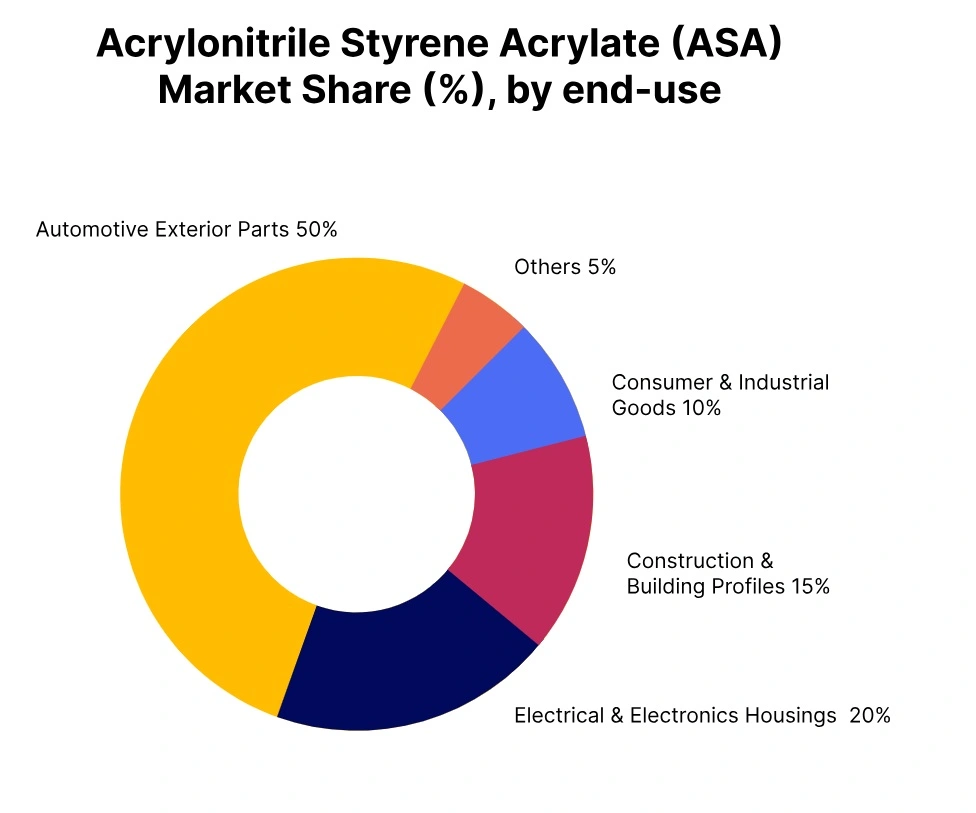
acrylonitrile styrene acrylate market share end-use

Historically, several events have caused significant fluctuations in Acrylonitrile Styrene Acrylate (asa) prices

  • Russia-Ukraine Conflict (2022–Present): The ongoing Russia-Ukraine war has disrupted energy supplies, especially in Europe, leading to higher production costs for EVA due to increased energy prices and logistical challenges. This has caused EVA price volatility globally, especially in regions reliant on European production.
  • Global Energy Crisis (2022–2023): The post-pandemic global energy crisis, exacerbated by sanctions on Russian energy exports, led to higher energy and feedstock costs, including ethylene, which directly affected EVA production costs. The scarcity of natural gas and rising crude oil prices put pressure on EVA supply chains, leading to price hikes.
  • COVID-19 Pandemic (2020): The initial phase of the COVID-19 pandemic in early 2020 saw a sharp decline in demand for EVA, as manufacturing activity slowed. However, as the year progressed, demand for EVA rebounded sharply due to increased packaging needs (especially for e-commerce) and the production of personal protective equipment (PPE), such as face masks and gloves. This rebound in demand caused prices to fluctuate sharply.

Why Price Watch™?

Price Watch™ is your trusted resource for tracking global acrylonitrile styrene acrylate (asa) price trends. Our platform delivers real-time data and expert analysis, offering deep insights into the key factors driving price fluctuations in the acrylonitrile styrene acrylate (asa) market. By monitoring critical events such as geopolitical tensions, supply chain disruptions, and economic shifts, Price Watch™ keeps you fully informed of market dynamics.

In addition, Price Watch™ provides detailed forecasts and updates on production capacities, enabling you to anticipate market changes and make well-informed decisions. With Price Watch™, you gain a competitive edge in understanding all the elements that influence acrylonitrile styrene acrylate (asa) prices worldwide. Stay ahead of the curve with Price Watch’s™ reliable, accurate, and timely acrylonitrile styrene acrylate (asa) market data.

Track Price Watch's™ acrylonitrile styrene acrylate (asa) price assessment on a weekly basis since 2015 onwards, along with short-term forecasts, and get access to the detailed report in a downloadable format.

Acrylonitrile Styrene Acrylate (asa) Market Price Trend published by Price Watch™ reflect prevailing spot market conditions, derived from independent research, verified trade inputs, and proprietary market intelligence as of the publication date. Prices are published on the specified Incoterm and represent indicative base market levels, exclusive of applicable taxes, VAT, duties, tariffs, and other statutory charges. Actual transaction values may vary depending on volume, credit terms, contractual structure, and other negotiated conditions. Market prices are inherently subject to volatility, liquidity dynamics, regulatory changes, and evolving trade activity. The information provided is for reference and benchmarking purposes only and does not constitute an offer, recommendation, or guarantee of transactional outcomes. Users should exercise independent commercial judgment and assess their specific contractual, regulatory, tax, and application requirements before making business decisions. Price Watch™ assumes no liability for decisions taken based on this information.

The price of Acrylonitrile Styrene Acrylate (ASA) is influenced by multiple factors, including the cost of raw materials like acrylonitrile, styrene, and acrylic ester, which fluctuate based on crude oil prices. Market demand from key industries such as automotive, construction, and consumer goods also plays a critical role. Additionally, external factors like supply chain disruptions, freight costs, geopolitical issues, and environmental regulations can further drive pricing volatility. Monitoring the prices of feedstocks and global economic trends is essential for anticipating ASA price movements.

Supply chain disruptions, such as port congestion, freight rate increases, and logistical bottlenecks, significantly affect ASA prices. For instance, delays in raw material imports, equipment shortages, and rerouting of shipping routes can lead to supply-demand imbalances, pushing prices higher. Procurement heads should also consider regional disparities in supply, with countries like South Korea being major players in ASA production. Staying updated on global supply chain conditions helps mitigate cost uncertainties.

The price of ASA is closely tied to fluctuations in its feedstocks: acrylonitrile, styrene, and acrylic ester. Any significant changes in crude oil prices directly influence the cost of these materials, which can either push ASA prices up or down. Additionally, geopolitical tensions, refinery shutdowns, and environmental policies impacting raw material availability contribute to the volatility.

ASA (Acrylonitrile Styrene Acrylate) is a high-performance engineering plastic widely used in automotive exteriors, construction materials, and outdoor applications due to its excellent weather resistance and durability. Its pricing plays a crucial role in determining production costs across automotive, infrastructure, and industrial manufacturing sectors. Price Watch™ tracks ASA prices to help businesses stay informed about market movements and cost trends.

ASA prices vary by region and grade. Prices are usually quoted per metric ton and fluctuate based on supply-demand balance and feedstock costs. Price Watch™ provides up-to-date price assessments across key global markets.

ASA prices are influenced by key feedstock costs, particularly acrylonitrile and styrene, along with production operating rates, demand from automotive and construction sectors, and global trade flows. Supply chain dynamics, including import-export activity and logistics conditions, also play a significant role. Seasonal demand patterns, plant operating strategies, and regional market conditions further impact pricing trends. Recent movements have shown variability depending on fluctuations in feedstock prices and the pace of recovery in downstream demand.

Major demand comes from the automotive industry, construction sector, and outdoor applications, where ASA is widely used due to its superior weather resistance and durability. Key applications include automotive exterior parts, building materials such as roofing sheets and siding, and outdoor equipment housings. Additionally, ASA finds usage in electrical and industrial components, signage, and consumer goods that require long-term UV stability and colour retention. Price Watch™ tracks consumption trends across these sectors.

ASA is produced at petrochemical and polymer manufacturing facilities worldwide through a multi-stage polymerization process. It is derived from key feedstocks such as acrylonitrile, styrene, and acrylic rubber, which are chemically combined to form a durable, weather-resistant engineering plastic. The material is then processed into pellets or granules, making it suitable for various manufacturing techniques such as injection moulding and extrusion for end-use applications across automotive, construction, and industrial sectors.

South Korea is one of the largest exporters of ASA globally, supported by its strong petrochemical infrastructure and competitive production base. Other key exporting regions include China, Taiwan, and select European producers. Export volumes typically fluctuate depending on plant operating rates, domestic demand conditions, feedstock cost trends, and overall pricing competitiveness in international markets. Price Watch™ monitors global trade flows and supply availability.

Overall supply is generally balanced, with sufficient availability across major producing regions. However, temporary tightness can arise due to feedstock constraints, reduced operating rates, plant maintenance, or logistics disruptions. Sudden demand fluctuations from key sectors such as automotive and construction can also impact short-term availability in the market. Price Watch™ closely tracks supply-demand balances to highlight potential shortages or oversupply situations.

ASA is available in multiple grades such as general-purpose, heat-resistant, UV-stabilized, and high-flow grades for injection moulding and extrusion applications. Prices vary based on properties like weather resistance, impact strength, flow characteristics, and end-use performance requirements. Price Watch™ provides grade-wise price assessments for better market clarity.

When demand rises sharply often driven by stronger activity in automotive, construction, or outdoor applications prices tend to increase as supply tightens. Lead times may extend, and buyers can face limited spot availability, especially if production is already running at balanced or reduced operating rates. Price Watch™ captures these shifts in real time.

Acrylonitrile and styrene are the primary raw materials for ASA production. Any increase in their prices directly raises production costs, which manufacturers may pass on to buyers through higher ASA prices. Price Watch™ analyses price correlations to explain cost movements.

Regional prices vary due to differences in feedstock availability (acrylonitrile and styrene), local manufacturing capacity, energy and production costs, freight rates, import duties, and domestic demand conditions across key end-use sectors. Price Watch™ tracks regional differentials to highlight pricing gaps across markets.

ASA price outlook depends on feedstock trends, particularly acrylonitrile and styrene, along with demand from automotive, construction, and outdoor applications, production rates, and overall global economic conditions. Price Watch™ publishes regular forecasts projecting price direction over the next 12 months.

Yes. Reliable forecasts help buyers plan procurement strategies, manage inventory efficiently, negotiate better contracts, and control overall raw material costs across automotive, construction, and industrial applications. Price Watch™ forecasts support smarter purchasing and budgeting decisions.

Events such as trade policy changes, shipping disruptions, energy price volatility, or geopolitical tensions can affect feedstock availability (acrylonitrile and styrene), production rates, and export flows, leading to fluctuations in ASA prices. Price Watch™ provides timely updates on such market-moving events.

Price Watch™ gathers data from producers, converters, traders, and buyers to publish transparent ASA price assessments, market reports, and forecasts, helping stakeholders stay ahead of market trends.