Adipic Acid Price Trend and Forecast

UNSPC code: 12352106
|
Weekly Update
|
Historical Data Since 2015
|
Forecast for 2026

adipic acid Price Trends by Country

cnChina
inIndia
twTaiwan
sgSingapore
trTurkey
egEgypt
auAustralia
vnVietnam
krSouth Korea

Global adipic acid Spot Market Prices, Trend Analysis and Forecast

Price Watch™ provides price assessments for Adipic Acid across top trading regions:

Asia-Pacific

  • Adipic Acid Technical Grade Crystalline Powder (99.8% min) FOB Busan, South Korea
  • Adipic Acid Technical Grade Crystalline Powder (99.8% min) FOB Shanghai, China
  • Adipic Acid Technical Grade Crystalline Powder (99.8% min) CIF Singapore (South Korea), Singapore
  • Adipic Acid Technical Grade Crystalline Powder (99.8% min) CIF Kaohsiung (South Korea), Taiwan
  • Adipic Acid Technical Grade Crystalline Powder (99.8% min) CIF Melbourne (China), Australia
  • Adipic Acid Technical Grade Crystalline Powder (99.8% min) CIF Haiphong (China), Vietnam
  • Adipic Acid Technical Grade Crystalline Powder (99.8% min) CIF Singapore (China), Singapore
  • Adipic Acid Technical Grade Crystalline Powder (99.8% min) CIF Nhava Sheva (South Korea), India
  • Adipic Acid Technical Grade Crystalline Powder (99.8% min) CIF Nhava Sheva (China), India
  • Adipic Acid Technical Grade Crystalline Powder (99.8% min) Ex-Mumbai, India


Middle East

  • Adipic Acid Technical Grade Crystalline Powder (99.8% min) CIF Alexandria (China), Egypt


Europe

  • Adipic Acid Technical Grade Crystalline Powder (99.8% min) CIF Mersin (China), Turkey


Note:
In assessments structured as CIF [Importing Port] (Exporting Country), the country mentioned in brackets indicates the primary origin of supply (exporting country), while the named port refers to the destination port in the importing country. Other Incoterms (FOB, FD, EXW, etc.) should be interpreted in accordance with standard international trade definitions.

Adipic Acid Price Trend Q1 2026

During the first quarter of the year 2026 the Adipic Acid price experienced major price increases mainly in March because of high levels of demand from the automotive, nylon production and industrial chemical sectors. Major price increases have been primarily driven by geopolitical tensions around the globe, and in particular between Iran and Israel.

This geopolitical instability disrupted the global crude oil supply chain which triggered significant price volatility in the energy market and caused increased costs for feedstock materials such as Cyclohexane due to the rising crude oil prices, thus increasing the overall production costs associated with the production of Adipic Acid.

Additionally, logistical issues such as shipping delays and supply chain bottlenecks exacerbate the situation. The largest monthly price increase occurred in March, with an increase as much as 50% in some areas. The price of Adipic Acid at the end of the 1st Quarter of 2026 has been a clear example of how global disruptions impacted the Adipic Acid market through the end of that quarter.

South Korea: Adipic Acid Export prices FOB Busan, South Korea; Grade- Technical Grade Crystalline Powder (99.8% min)

In Q1 2026, the Adipic Acid price trend in South Korea has risen by around 15% compared to the previous quarter. Demand gradually improves across automotive, textiles, and industrial chemical sectors, and that steady pickup supports higher consumption through the quarter. March shows the strongest shift. The Adipic Acid price in South Korea jumps by about 29% versus February levels.

The move is largely driven by cost-side pressure rather than demand alone. The Iran–Israel conflict in the Middle East disrupts crude oil supply flows and keeps energy markets unstable, which quickly reflects in upstream pricing. Cyclohexane costs move higher along with crude, pushing production economics upward.

At the same time, supply tightness builds further as logistics disruptions and supply chain delays restrict material movement, leaving less flexibility in spot availability. The In South Korea, Adipic Acid prices in March 2026 reflects a market shaped by external cost pressure, tighter supply conditions, and ongoing geopolitical uncertainty rather than a simple demand recovery.

China: Adipic Acid Export prices FOB China, China; Grade- Technical Grade Crystalline Powder (99.8% min)

In Q1 2026, the Adipic Acid price trend in China increased significantly by 34% compared to the previous quarter, driven by a solid recovery in demand from industries like nylon production, automotive, and industrial chemicals. The Adipic Acid price in China experienced a sharp rise of 38% in March, reflecting both stronger demand and global supply pressures as compared to February.

A key factor behind this rise was the ongoing Iran–Israel conflict in the Middle East, which has disrupted crude oil supply routes and created instability in global energy markets. As crude prices surged, feedstock costs for intermediates such as cyclohexane also spiked, driving up production costs for Adipic Acid.

On top of this, the market faced a supply crunch due to logistical issues, higher freight rates, and limited raw material availability, which led to tighter supplies and further increased prices. The Adipic Acid price trend in China in March 2026 highlights how geopolitical tensions, rising feedstock costs, and supply chain challenges have led to a sharp price increase toward the end of the quarter.

Taiwan: Adipic Acid Import prices CIF Kaohsiung, Taiwan; Grade- Technical Grade Crystalline Powder (99.8% min)

In Q1 2026, the Adipic Acid price trend in Taiwan rose by 15% compared to the previous quarter, with increased demand from industries like automotive, nylon production, and industrial chemicals, all of which saw a post holiday boost. The most significant price jump occurred in March, with the Adipic Acid price in Taiwan climbing by 28% as compared to February. This sharp rise was influenced by several factors, including the ongoing Iran–Israel conflict in the Middle East.

This geopolitical tension has disrupted crude oil supply routes, creating instability in energy markets and pushing crude oil prices higher. As a result, the cost of key feedstocks, such as cyclohexane, has risen, impacting production costs for adipic acid. Alongside these rising feedstock costs, global supply chain challenges including shipping delays and tighter raw material availability have created a supply crunch, making it harder to secure materials.

This combination of geopolitical uncertainty, higher feedstock prices, and logistical issues has led to a sharp increase in prices. The Adipic Acid price trend in Taiwan in March 2026 underscores how global events and market conditions can lead to significant price shifts, particularly when supply becomes constrained

India: Adipic Acid Import prices CIF Nhava Sheva, India; Grade- Technical Grade Crystalline Powder (99.8% min)

In Q1 2026, the Adipic Acid price trend in India increased significantly by 38% compared to the previous quarter, reflecting a strong uptick in demand from sectors such as automotive, textiles, and industrial chemicals, as these industries recovered from slower activity earlier in the year. The most dramatic rise occurred in March, when the Adipic Acid price in India surged by 46% as compared to lats month.

This sharp increase can largely be attributed to the ongoing Iran–Israel conflict in the Middle East, which has disrupted global crude oil supply routes and created uncertainty in energy markets. As crude oil prices spiked, feedstock costs for essential materials like cyclohexane also rose, directly impacting production costs for adipic acid.

Additionally, logistical bottlenecks and supply chain disruptions, along with a supply crunch, have made it harder to secure material from China, further constraining availability and driving up prices. The Adipic Acid price trend in India in March 2026 reflects how geopolitical instability, rising feedstock and transport costs, and tight supply conditions have combined to push prices sharply higher toward the end of the quarter.

Turkey: Adipic Acid Import prices CIF Mersin, Turkey; Grade- Technical Grade Crystalline Powder (99.8% min)

In Q1 2026, the Adipic Acid price trend in Turkey saw a significant increase of 34% compared to the previous quarter, driven by a strong recovery in demand from industries like automotive, textiles, and industrial chemicals. These sectors saw a notable uptick in activity, contributing to higher consumption of Adipic Acid. The Adipic Acid price in Turkey rose even further by 35% in March, marking the largest price increase in the quarter as compared to last month.

This surge was largely due to external factors, with the ongoing Iran–Israel conflict playing a major role. The geopolitical tensions in the Middle East disrupted crude oil supply routes, leading to volatility in energy markets and driving up crude oil prices. This, in turn, raised the cost of key feedstocks such as cyclohexane, essential for producing Adipic Acid.

Additionally, logistical disruptions and a supply crunch made it harder to secure material, further tightening availability and pushing prices up. The Adipic Acid price trend in Turkey in March 2026 clearly illustrates how geopolitical instability, rising feedstock costs, and strained supply chains have all combined to push prices higher by the end of the quarter.

Egypt: Adipic Acid Import prices CIF Alexandria, Egypt; Grade- Technical Grade Crystalline Powder (99.8% min)

In Q1 2026, the Adipic Acid price trend in Egypt saw a significant rise of 33% compared to the previous quarter, fueled by strong demand from industries like nylon production, automotive, and industrial chemicals. This demand uptick led to an increase in the Adipic Acid price in Egypt, which surged by 33% in March as compared to February.

The major factor behind this sharp rise was the disruption caused by the Iran–Israel conflict in the Middle East. The conflict has caused significant volatility in crude oil supply routes, leading to a sharp spike in crude oil prices. As a result, feedstocks such as cyclohexane key to producing Adipic Acid also became more expensive.

On top of this, shipping delays and a supply crunch due to tighter global supply chains have reduced material availability, contributing to the rising prices. The Adipic Acid price trend in Egypt in March 2026 demonstrates how geopolitical tensions, higher energy costs, and logistical bottlenecks have pushed prices significantly higher toward the end of the quarter.

Australia: Adipic Acid Import prices CIF Melbourne, Australia; Grade- Technical Grade Crystalline Powder (99.8% min)

In Q1 2026, the Adipic Acid price trend in Australia rose significantly by 27% compared to the previous quarter, driven by an uptick in demand from industries like automotive, nylon production, and chemicals. These industries saw a stronger recovery following a slow start to the year, leading to increased consumption of Adipic Acid.

The Adipic Acid price in Australia rose even further by 35% in March as compared to February, a sharp jump due to a combination of global disruptions and geopolitical tensions. The Iran–Israel conflict in the Middle East played a major role in this price surge, as it has disrupted crude oil supply chains, causing energy markets to fluctuate. As crude oil prices increased, so did the cost of crucial feedstocks such as cyclohexane, pushing up production costs.

On top of this, supply crunch conditions emerged as logistical challenges, higher shipping costs, and limited availability of material from China tightened the supply. These supply-side disruptions, combined with rising production costs, led to a surge in prices. The Adipic Acid price trend in Australia in March 2026 highlights how geopolitical instability and rising feedstock and transportation costs have driven a sharp price increase toward the end of the quarter.

Vietnam: Adipic Acid Import prices CIF Haiphong, Vietnam; Grade- Technical Grade Crystalline Powder (99.8% min)

In Q1 2026, the Adipic Acid price trend in Vietnam saw a significant rise of 33% compared to the previous quarter, as demand from industries like automotive, nylon production, and industrial chemicals began to pick up. After a slower start to the year, companies ramped up production, leading to increased consumption of Adipic Acid. However, the most striking change came in March, when the Adipic Acid price in Vietnam surged by 37% as compared to February.

This sharp increase can be attributed to several global challenges, particularly the Iran–Israel conflict in the Middle East. This conflict disrupted crude oil supply routes, causing crude prices to rise and, in turn, pushing up the cost of key feedstocks like cyclohexane. The surge in crude and feedstock costs led to higher production costs for Adipic Acid.

Along with these rising costs, logistical issues and a supply crunch created additional pressure on availability, further driving up prices. The Adipic Acid price trend in Vietnam in March 2026 clearly reflects how geopolitical instability, increasing raw material costs, and a strained supply chain have all combined to push prices sharply higher toward the end of the quarter.

Singapore: Adipic Acid Import prices CIF Singapore, Singapore; Grade- Technical Grade Crystalline Powder (99.8% min)

According to Price-Watch™, in Q1 2026 in Singapore, prices of Adipic Acid increase by approximately 33% when compared to the previous quarter. After going through a relatively slow period, demand begins to pick up across automotive parts, textile, and nylon production, which has lifted overall consumption. March continues to be a strong month for the product. When comparing Singaporean Adipic Acid prices against February, March 2026 average spot prices are up approximately 37%.

The overall price increase has more to do with supply chain issues affecting supply levels than a consistent story of demand. The ongoing conflict between Israel and Iran creates instability in crude oil transportation throughout the Middle East and causes volatility within energy commodities. Rising crude oil prices translate into raising feedstock/highed production costs.

Supply levels continue to be challenging due to shipping delays, increased freights, and limited supply out of China; which creates an inconsistent delivery of product. Overall, due to both enter the order to secure spot material has also been difficult which can compound price upward pressures. The average Singapore Adipic Acid price in March can be attributed to the cost and logistics disruptions as the driving forces behind the dramatic increase against subsequently strong demand.

Adipic Acid Price Trend Analysis: Q4 2025

In Q4 2025, Adipic Acid prices generally decreased due to weaker demand and stable supply across multiple sectors. Many companies prioritized managing existing inventories over placing new orders, leading to downward pressure on prices. However, in December, prices saw a slight rise, mainly driven by year-end restocking as businesses prepared for potential supply shortages in early 2026. This seasonal uptick in purchasing helped support prices despite the overall quiet market conditions. The price trend in December reflects the usual end-of-year behavior, where businesses secure materials ahead of the holiday season. While demand remained subdued, the focus on inventory replenishment and logistical adjustments resulted in price stabilization or modest increases toward the end of the quarter.

South Korea: Adipic Acid Export prices FOB Busan, South Korea; Grade- Technical Grade Crystalline Powder (99.8% min)

In Q4 2025, the Adipic Acid price trend in South Korea slips by around 4% compared to the previous quarter. Demand stays on the softer side, and overall buying interest remains limited through most of the quarter. Market activity is relatively muted. Buyers continue to rely on existing inventories instead of placing fresh bulk orders, and that steady cautious approach keeps pressure on prices throughout the period. December doesn’t show movement compared to November. The Adipic Acid price in South Korea stays largely flat, which is typical for this time of year when trading activity slows, and companies avoid aggressive purchasing ahead of the new cycle. The In South Korea, Adipic Acid prices in December 2025 reflects a market where seasonal slowdown and low buying interest balance out the broader weak trend seen across Q4.

China: Adipic Acid Export prices FOB China, China; Grade- Technical Grade Crystalline Powder (99.8% min)

In Q4 2025, the Adipic Acid price trend in China eases by around 4% compared to the previous quarter. Demand from major end-use sectors softens, while supply conditions stay broadly steady, keeping overall market direction weak. Buying activity remains careful through most of the quarter. Many players avoid fresh bulk purchases and instead focus on working down existing inventories, which adds mild downward pressure on prices. December moves slightly against that trend. The Adipic Acid price in China rises by about 3% compared to November, mainly supported by year-end restocking. With Chinese New Year shutdowns approaching, buyers step in to secure material in advance, which lifts spot interest for a short period. The In China, Adipic Acid prices in December 2025 reflects a market where seasonal restocking temporarily offsets an otherwise softer quarterly trend.

Taiwan: Adipic Acid Import prices CIF Kaohsiung, Taiwan; Grade- Technical Grade Crystalline Powder (99.8% min)

In Q4 2025, the Adipic Acid price trend in Taiwan decreased by 4% compared to the previous quarter, as demand softened and the market was balanced with adequate supply from South Korea. Many businesses were cautious in their purchasing decisions, preferring to use existing inventories instead of committing to new orders, which put downward pressure on prices. In December, the Adipic Acid price in Taiwan remained flat, with no significant change as compared to November, as the typical yearend slowdown took hold. Companies focused more on inventory management than on placing new orders, which kept prices stable despite a quieter market. The Adipic Acid price trend in Taiwan in December 2025 reflects this common pattern at the end of the year, where companies typically prepare for the upcoming year and make adjustments to their stock, contributing to price stability.

India (China): Adipic Acid Import prices CIF Nhava Sheva, India; Grade- Technical Grade Crystalline Powder (99.8% min)

In Q4 2025, the Adipic Acid price trend in India declines by around 4% compared to the previous quarter. Demand from key sectors slows through the quarter, while supply conditions remain stable, which keeps overall pricing under mild pressure. Even with the softer trend, December shows a small shift. The Adipic Acid price in India rises by about 4% compared to November, mainly due to year-end restocking. Buyers step in ahead of the holiday period and possible supply tightness going into early 2026, which supports short-term buying interest. The In India, Adipic Acid prices in December 2025 reflects a typical seasonal pattern where restocking activity briefly offsets an otherwise weaker quarterly trend.

Ex-India: Adipic Acid Import prices Ex-Mumbai, India; Grade- Technical Grade Crystalline Powder (99.8% min)

In Q4 2025, the Adipic Acid price trend in Ex-Mumbai stays largely stable, showing no major change compared to the previous quarter. Demand from key industries remains steady, but there is no strong push from downstream sectors to move prices higher. Market activity is quiet. Buyers continue to manage existing inventories and avoid aggressive fresh buying, which keeps the overall pricing environment unchanged through most of the quarter. December shows a slight shift. The Adipic Acid price in Ex-Mumbai edges up by about 2% compared to November, mainly due to year-end restocking. With the holiday period approaching and early-year supply uncertainty in focus, buyers secure material in advance. The In Ex-Mumbai, Adipic Acid prices in December 2025 reflects how seasonal restocking activity provides mild support to prices even in an otherwise steady and low-volatility quarter.

Turkey: Adipic Acid Import prices CIF Mersin, Turkey; Grade- Technical Grade Crystalline Powder (99.8% min)

In Q4 2025, the Adipic Acid price trend in Turkey decreased by 5% compared to the previous quarter, as demand from key sectors softened and supply remained stable. Throughout the quarter, many businesses adopted a cautious approach, managing existing stock rather than placing new orders, which led to downward pressure on prices. However, in December, the Adipic Acid price in Turkey increased by 5% as compared to last month, supported by typical yearend restocking activity. As the holiday season approached, companies secured inventory to ensure a smooth start to 2026, which helped lift prices slightly. The Adipic Acid price trend in Turkey in December 2025 reflects the usual seasonal uptick in buying activity, where businesses tend to replenish their stocks before the new year, even in an otherwise slower market.

Egypt: Adipic Acid Import prices CIF Alexandria, Egypt; Grade- Technical Grade Crystalline Powder (99.8% min)

In Q4 2025, the Adipic Acid price trend in Egypt declines by around 5% compared to the previous quarter, as demand softens while supply conditions remain steady. Overall market sentiment stays on the weaker side, with limited buying interest across the quarter. Purchasing activity remains cautious. Most buyers focus on using existing inventories instead of placing fresh large-volume orders, which keeps pressure on prices throughout the period. December moves slightly in the opposite direction. The Adipic Acid price in Egypt increases by about 5% compared to November, mainly supported by year-end restocking. As the holiday period approaches and companies prepare for early 2026 requirements, some additional buying interest returns to the market. The In Egypt, Adipic Acid prices in December 2025 reflects a typical seasonal pattern where restocking activity provides mild support to prices even in an otherwise softer quarterly trend.

Australia: Adipic Acid Import prices CIF Melbourne, Australia; Grade- Technical Grade Crystalline Powder (99.8% min)

In Q4 2025, the Adipic Acid price trend in Australia declines by around 3% compared to the previous quarter. Demand from key sectors weakens slightly, while steady supply from China keeps the market comfortably supplied, adding mild downward pressure on prices. Market activity remains on the softer side through the quarter. Buyers focus more on managing existing inventory rather than placing fresh orders, which results in lower procurement interest overall. December is quiet. The Adipic Acid price in Australia stays stable with a slight 3% decline compared to November, in line with typical year-end behavior. Most companies limit new purchases and prioritize inventory control ahead of the holiday period. The In Australia, Adipic Acid prices in December 2025 reflects seasonal slowdown and cautious buying, which keeps prices largely steady even as the broader quarterly trend remains slightly weaker.

Vietnam: Adipic Acid Import prices CIF Haiphong, Vietnam; Grade- Technical Grade Crystalline Powder (99.8% min)

In Q4 2025, the Adipic Acid price trend in Vietnam declines by around 4% compared to the previous quarter, as demand from downstream industries softens and supply from China remains balanced. Overall market sentiment stays cautious, with limited buying support through most of the quarter. Purchasing activity is subdued. Buyers mainly focus on managing existing inventory instead of placing new bulk orders, which keeps mild downward pressure on prices across the period. December shows a slight change in direction. The Adipic Acid price in Vietnam rises by about 3% compared to November, mainly due to year-end restocking. As companies prepare for holidays and possible supply tightness early in the new year, fresh buying activity picks up slightly. The In Vietnam, Adipic Acid prices in December 2025 reflects a typical seasonal pattern where restocking demand briefly supports prices even in an otherwise quiet and slightly weaker quarterly market.

Singapore: Adipic Acid Import prices CIF Singapore, Singapore; Grade- Technical Grade Crystalline Powder (99.8% min)

In Q4 2025, the Adipic Acid price trend in Singapore declined by 4% compared to the previous quarter, as demand from key industries softened and supply remained relatively steady. Many businesses adopted a cautious approach, focusing on managing existing stock rather than making large new purchases, which led to a decrease in procurement activity and downward pressure on prices. However, in December, the Adipic Acid price in Singapore rose by 3%, driven by typical year-end restocking compared to November. As companies prepared for the holiday season and anticipated potential supply shortages in early 2026, they secured materials, which helped push prices slightly higher. The Adipic Acid price trend in Singapore in December 2025 highlights how seasonal restocking behavior can support prices, even in a quieter market. Companies securing stock ahead of the new year provided a small but significant lift to prices despite the overall softness throughout Q4 2025.

In Q3 2025, Adipic Acid prices declined across key markets, including South Korea, China, Taiwan, India, Turkey, Egypt, Australia, Vietnam, and Singapore. This was driven by weaker demand from industries like automotive, textiles, and packaging, which faced production slowdowns. Factors such as rising raw material costs, logistical challenges and fluctuations in currencies added further pressure on prices.

The most significant price drops occurred in China, India, and Turkey, while some markets, such as Brazil and Taiwan, experienced smaller declines. The outlook for Q4 2025 remains uncertain, with potential price declines unless demand recovers in key industrial sectors like automotive and textiles.

South Korea: Adipic Acid export prices FOB Busan, South Korea, Grade- Technical Grade Crystalline Powder (99.8% min).

In Q3 2025, Adipic Acid prices in South Korea decreased by 4.24%, following a 2.95% decline in Q2. The Adipic Acid price trend in South Korea was influenced by weaker demand from key industries such as automotive and textiles, which faced production slowdowns and lower consumption. Supply chain disruptions, along with rising raw material costs, also added pressure on prices.

Furthermore, a slowdown in the domestic economy and logistical challenges led to reduced exports. Adipic Acid prices in September 2025 were significantly lower compared to Q2. The outlook for the next quarter remains cautious, with potential for further price declines unless demand recovers in key sectors.

China: Adipic Acid Export prices FOB China, China, Grade- Technical Grade Crystalline Powder (99.8% min).

According to the PriceWatch, in Q3 2025, Adipic Acid prices in China decreased by 4.57%, following a more significant decline of 9.14% in Q2. The Adipic Acid price trend in China was mainly driven by reduced demand from the automotive and industrial sectors, which faced operational slowdowns and reduced production. Additionally, rising feedstock costs, particularly for benzene, and logistical disruptions exerted further downward pressure on prices.

Despite stable domestic production, the decline in export demand from key regions, including Southeast Asia and Europe, contributed to price volatility. Adipic Acid prices in September 2025 were lower compared to Q2. The market outlook for Q4 2025 will depend on the recovery of demand from the automotive and industrial sectors.

Taiwan: Adipic Acid Import prices CIF Kaohsiung, Taiwan, Grade- Technical Grade Crystalline Powder (99.8% min).

In Q3 2025, Adipic Acid prices in Taiwan decreased by 4.05%, following a 2.85% decline in Q2. The Adipic Acid price trend in Taiwan was impacted by slowdowns in the automotive and construction sectors which reduced consumption. Additionally, rising feedstock costs and logistical challenges, particularly from South Korea, contributed to the price decline.

Despite steady demand from the packaging and coatings industries, the overall market faced pressure from reduced industrial activity. Adipic Acid prices in September 2025 were lower compared to Q2. The outlook for Q4 2025 will depend on a recovery in key sectors like automotive and construction, which could support price stabilization.

Singapore: Adipic Acid Import prices CIF Singapore, Singapore, Grade- Technical Grade Crystalline Powder (99.8% min).

In Q3 2025, Adipic Acid prices in Singapore declined by 3.98%, following a 2.75% decrease in Q2. The Adipic Acid price trend in Singapore was influenced by slower demand from the automotive and electronics sectors, which saw production slowdowns due to supply chain issues. Despite steady imports from South Korea, rising freight costs and supply chain disruptions added downward pressure on prices.

Adipic Acid prices in September 2025 were lower than in Q2. The outlook for the next quarter will depend on the recovery of key industries, particularly automotive and consumer electronics, which will be critical to stabilizing prices.

India (South Korea): Adipic Acid Import prices CIF Nhava Sheva, India, Grade- Technical Grade Crystalline Powder (99.8% min).

According to the PriceWatch, in Q3 2025, Adipic Acid prices in India decreased by 2.84%, following a larger decline of 5.37% in Q2. The Adipic Acid price trend in India was influenced by weaker demand from the automotive and textile industries, both of which faced production slowdowns. Despite steady imports from South Korea, rising raw material costs, particularly for benzene, and higher logistics costs added pressure on prices.

In addition, the weakening of the Indian Rupee against the US Dollar made imports more expensive, further influencing price movements. Adipic Acid prices in September 2025 were lower compared to Q2. The market outlook remains cautious, with potential for further price declines unless demand from key sectors recovers.

India (China): Adipic Acid Import prices CIF Nhava Sheva, India, Grade- Technical Grade Crystalline Powder (99.8% min).

According to the PriceWatch, in Q3 2025, Adipic Acid prices in India decreased by 2.36%, following a more significant drop of 9.99% in Q2. The Adipic Acid price trend in India was primarily influenced by a slowdown in demand from the automotive and textile industries, which faced production delays and slower consumption. Rising import costs from China and logistical disruptions contributed to the price decline.

Ex-Mumbai Adipic Acid prices saw a larger decline of 6.34%, following a 10.86% decrease in Q2. Despite steady imports, the weakening of the Indian Rupee and higher transportation costs added pressure on pricing. Adipic Acid prices in September 2025 were lower than in Q2. The market outlook remains uncertain, with potential for further declines unless demand from key industrial sectors improves.

Turkey: Adipic Acid Import prices CIF Mersin, Turkey, Grade- Technical Grade Crystalline Powder (99.8% min).

In Q3 2025, Adipic Acid prices in Turkey decreased by 4.66%, following a larger drop of 11.33% in Q2. The Adipic Acid price trend in Turkey was influenced by a slowdown in demand from the automotive and construction sectors, both of which faced production delays and reduced consumption. Additionally, rising freight and import costs from China added pressure on prices.

Despite this, steady demand from the textiles sector helped limit the price decline. Adipic Acid prices in September 2025 were lower compared to Q2. The outlook for the next quarter remains cautious, with potential further price declines depending on a recovery in key industrial sectors.

Egypt: Adipic Acid Import prices CIF Alexandria, Egypt, Grade- Technical Grade Crystalline Powder (99.8% min).

In Q3 2025, Adipic Acid prices in Egypt decreased by 4.47%, following a significant decline of -10.38% in Q2. The Adipic Acid price trend in Egypt was primarily impacted by weakened demand from the automotive and packaging industries, which faced slowdowns. Rising import costs from China due to increasing logistics fees further pressured the prices.

Despite a slight increase in demand from the industrial sector, it was insufficient to offset the overall price decline. Adipic Acid prices in September 2025 were lower compared to Q2. The outlook for Q4 2025 remains uncertain, with price movements likely to depend on demand recovery in key sectors.

Australia: Adipic Acid Import prices CIF Melbourne, Australia, Grade- Technical Grade Crystalline Powder (99.8% min).

According to the PriceWatch, in Q3 2025, Adipic Acid prices in Australia decreased slightly by 0.83%, following a larger decline of 11.47% in Q2. The Adipic Acid price trend in Australia was influenced by lower demand from the automotive and consumer goods industries, which saw reduced production and slower consumption.

Despite this, steady imports from China helped stabilize the supply chain, though rising freight and raw material costs contributed to the price decline. Adipic Acid prices in September 2025 were slightly lower compared to Q2. The market outlook for Q4 2025 will depend on demand recovery in key industries and the resolution of logistical challenges.

Vietnam: Adipic Acid Import prices CIF Haiphong, Vietnam, Grade- Technical Grade Crystalline Powder (99.8% min).

In Q3 2025, Adipic Acid prices in Vietnam decreased by 4.32%, following a significant drop of 10.00% in Q2. The Adipic Acid price trend in Vietnam was driven by weaker demand from key sectors, particularly automotive and textiles, which faced production slowdowns and limited consumption.

Additionally, rising import costs and logistical disruptions from China exerted further pressure on prices. Adipic Acid prices in September 2025 were lower compared to Q2. The outlook for the next quarter remains cautious, with potential further price declines depending on demand recovery from the automotive and textile industries.

Singapore: Adipic Acid Import prices CIF Singapore, Singapore, Grade- Technical Grade Crystalline Powder (99.8% min).

In Q3 2025, Adipic Acid prices in Singapore decreased by 4.61%, following a drop of 9.47% in Q2. The Adipic Acid price trend in Singapore was influenced by weaker demand from the automotive and packaging industries, which faced production delays and lower consumption. Supply chain disruptions and higher logistics costs from China further contributed to the price decline.

Despite stable demand from the chemical sector, it was insufficient to offset the overall downturn in prices. Adipic Acid prices in September 2025 were lower compared to Q2. The market outlook for Q4 2025 depends on the recovery of demand from key sectors such as automotive and packaging.

According to the PriceWatch, Adipic Acid prices from China dropped to 948 USD per metric ton in Q2 2025, a 9.14% decrease from Q1 2025. This decline in the price trend is due to weaker demand in downstream sectors like automotive and textiles. The reduced industrial activity in importing countries such as Turkey, Egypt, and Vietnam has lowered demand.

Additionally, decreased feedstock costs, particularly for benzene and cyclohexane, have contributed to the price drop. The seasonal slowdown in Q2 further impacts industrial production, especially in China, leading to a sharp price decline compared to Q1 2025. For South Korea, the market showcased a decrease of 2.95%, with prices at 1292 USD per metric ton in Q2 2025.

While demand from Taiwan and Singapore has slowed, South Korea’s market is more stable. The price trend in South Korea is less volatile than in China, with feedstock costs holding steady, reflecting a more resilient market.

According to the PriceWatch, the Adipic Acid price trend in India (CIF) dropped to 1009 USD per metric ton in Q2 2025, marking a 9.99% decrease from Q1 2025. This decline is driven by slower demand from downstream sectors like automotive and textiles, which rely on Adipic Acid for nylon production. The seasonal slowdown in industrial activity and reduced manufacturing output in India have contributed to the price drop.

Additionally, softer feedstock prices for benzene and cyclohexane have led to lower production costs, further decreasing import prices from China. In Mumbai, prices fell to 1162 USD per metric ton in Q2 2025, reflecting a 10.86% decrease from Q1 2025. This drop mirrors the price trend seen in the CIF market, with reduced demand from industries like automotive and textiles.

The softening of international prices, particularly from China, has led to similar price adjustments in the domestic market. The ongoing market challenges and weaker demand are affecting both India and Mumbai’s pricing.”

In Q1 2025, the price of Adipic Acid in China decreased by about 4.47%, settling at approximately USD 1043 per ton. This drop was mainly caused by lower feedstock costs, particularly for Benzene, combined with weak demand from downstream industries and an oversupply of Adipic Acid. Moreover, the Intra-Asia Container Index fell by 30%, making imports more cost-effective for countries in the Asia-Pacific region.

The combination of reduced production costs and cheaper transportation contributed to the regional price decline, reflecting a global trend of price softness in the Adipic Acid market due to ongoing supply-demand imbalances and lower shipping costs.

In Q1 2025, CIF Nhava Sheva (China) prices fell by 1.91%, mainly due to declining crude oil prices that reduced production costs and made imports more affordable for India. However, this decline was partly offset by the depreciation of the Indian rupee. On the other hand, CIF Nhava Sheva (South Korea) saw a modest increase of 0.94%, driven by higher freight charges and the weakening of the rupee.

Ex-Mumbai prices dropped by 5.78%, aligning with global market trends and falling feedstock prices. These changes highlight the impact of commodity prices, currency fluctuations, and logistics costs on import patterns.

Adipic Acid Price Trend Analysis: Q4 2024

In the Q4 2024, China’s adipic acid prices saw a notable decline of about 8.11%, falling to approximately USD 1092 per ton. This decrease was largely attributed to sluggish demand, continued inventory reduction efforts, and supply chain challenges.

Additionally, falling costs of key raw materials such as benzene and cyclohexane, along with lower logistics expenses, played a significant role in driving prices down. This bearish market sentiment was also reflected in major importing countries such as Vietnam, Singapore, Egypt, and Australia, where similar market conditions prevailed.

Overall, the combination of lower production costs and sluggish demand led to a broad-based decrease in Adipic Acid prices across key global markets.

In Q4 2024, CIF Nhava Sheva (China) prices fell by 6.83%, driven by destocking and ongoing supply chain pressures. Meanwhile, CIF Nhava Sheva (South Korea) saw a modest 0.65% increase, supported by continued bullish demand, particularly driven by increased car sales, which pushed up export prices.

Ex-Mumbai prices dropped slightly by 0.87%, reflecting the effects of destocking activities. These trends highlight the varying regional market conditions and their impact on import prices and trade dynamics.


In Q3 2024, China’s domestic Adipic Acid prices declined by approximately 4.22% compared to the previous quarter, reaching around USD 1188 per ton. This decrease was primarily driven by weak domestic demand, reduced export volumes, and a drop in Benzene prices, which led to lower production costs.

A similar bearish trend was observed in major importing countries such as Vietnam and Singapore, indicating a broader global softness in Adipic Acid prices. In contrast, prices in Australia and Egypt increased, largely due to higher freight charges and transportation costs.

This regional price divergence underscores the complex dynamics of the Adipic Acid market, where localized factors such as demand patterns and logistical expenses significantly impact pricing trends across different markets.

In Q3 2024, CIF Nhava Sheva (China) prices fell by 2.32%, driven by low domestic demand, reduced export volumes, and falling Benzene prices, which reduced production costs for importing countries like India. In contrast, CIF Nhava Sheva (South Korea) prices rose by 5.63%, fuelled by continued bullish demand.

Ex-Mumbai prices remained stable at the lower end, supported by steady demand in the Indian market. These dynamics reflect the impact of global market conditions on regional pricing trends.

In Q2 2024, Adipic Acid prices in China’s domestic market declined by approximately 1.57% compared to Q1 2024, settling at around USD 1241 per ton. This slight downturn was mainly attributed to disruptions in demand and supply within key end-use sectors such as the automotive and textile industries. Similar market fluctuations were also observed across various regions of the APAC market, reflecting the broader regional impact of changing industrial activity and supply chain dynamics.

During the second quarter of 2024, CIF Nhava Sheva (China) prices declined by 0.63%, largely as a result of weak domestic demand in China. In contrast, CIF Nhava Sheva (South Korea) recorded a 2% uptick, supported by strong demand momentum in South Korea and escalating logistics costs. The Ex-Mumbai prices rose by 1.75%, reflecting an increase in trade volumes within the Indian market.

This indicates that while China faced subdued market conditions, South Korea experienced higher costs due to logistics, and India’s market growth bolstered local pricing. Overall, regional demand fluctuations and logistical factors played key roles in shaping these price trends.

In Q1 2024, the price of Adipic Acid in China’s domestic market rose by approximately 3.13% compared to Q4 2023, reaching around USD 1261 per ton. This increase was primarily driven by the rising cost of raw materials, especially cyclohexane, along with ongoing logistics and transportation challenges.

The bullish price trend was also reflected in major importing countries such as Egypt, Turkey, and several Southeast Asian nations, where rising freight charges and transportation costs further pushed prices upward.

Additionally, fluctuations in demand from key end-use industries like automotive and textiles contributed to price volatility across the region. Similar trends were observed in South Korea and other parts of the APAC region, influenced by shifts in supply and demand dynamics.

In Q1 2024, CIF Nhava Sheva (China) and CIF Nhava Sheva (South Korea) prices saw notable increases of 5.66% and 1.88%, respectively. These hikes were driven by higher raw material costs, especially cyclohexane, coupled with logistical challenges in Asia that pushed up import costs.

Additionally, Ex-Mumbai prices rose by 4.59%, largely due to the rising import costs and heightened domestic demand from the automobile sector. This suggests that the combination of global supply chain disruptions, raw material price inflation, and strong local demand are contributing to a more expensive import and manufacturing environment in India.

Technical Specifications of Adipic Acid Price Trends

Product Description

Adipic Acid (C₆H₁₀O₄) is a key intermediate in the production of nylon, polyurethanes, and plasticizers. Primarily derived from Cyclohexane, its applications span textiles, automotive, and packaging industries. This white crystalline solid is soluble in water and alcohol, playing a crucial role in manufacturing flexible, durable materials.

Identifiers and Classification:

  • CAS No – 124-04-9
  • HS Code – 29171200
  • Molecular Formula – (CH2)4(COOH)2
  • Molecular Weight (in gm/mol) – 146.14


Adipic Acid Synonyms:

  • Hexanedioic acid


Adipic Acid Grades Specific Price Assessment:

  • Technical Grade Crystalline Powder (99.8% min)


Adipic Acid Global Trade and Shipment Terms

  • Quotation Terms (Product & Country Specific):25-28 MT
  • Packaging Type (Product & Country Specific): 25 Kg Bag


Incoterms Referenced in Adipic Acid Price Reporting

Shipping Term  Location  Definition 
FOB South Korea  Busan, South Korea  Adipic Acid Export price from South Korea 
FOB China  Shanghai, China  Adipic Acid Export price from China 
CIF Kaohsiung (Taiwan)  Haiphong, Taiwan  Adipic Acid Import price in Taiwan from South Korea 
CIF Singapore (Singapore)  Singapore, Singapore  Adipic Acid Import price in Singapore from South Korea 
CIF Nhava Sheva (India)  Nhava Sheva, India  Adipic Acid Import price in India from South Korea 
CIF Nhava Sheva (India)  Nhava Sheva, India  Adipic Acid Import price in India from China 
Ex- Mumbai  Mumbai, India  Domestically Traded Adipic Acid price in Mumbai 
CIF Mersin (Turkey)  Mersin, Turkey  Adipic Acid Import price in Turkey from China 
CIF Alexandria (Egypt)  Alexandria, Egypt  Adipic Acid Import price in Egypt from China 
CIF Melbourne (Australia)  Melbourne, Australia  Adipic Acid Import price in Australia from China 
CIF Haiphong Vietnam)  Haiphong, Vietnam  Adipic Acid Import price in Haiphong from China 
CIF Singapore (Singapore)  Singapore, Singapore  Adipic Acid Import price in Singapore from China 

*Quotation Terms refers to the quantity range specified for the Adipic Acid being quoted or offered in a commercial transaction.

**Packaging Type refers to standard packaging size commonly used for Adipic Acid packing, ease of handling, transportation, and storage in industrial and commercial applications.


Key Adipic Acid Manufacturers

Manufacturer 
BASF Petrochemicals  
Huafeng Group 
Haili Group 
Shandong Hualu 
Shenma Industrial Co., Ltd 


Adipic Acid Industrial Applications

Adipic acid is a key component in the production of nylon, polyurethanes, plastics, lubricants, and other polymers. It’s also used in the production of resins, adhesives, coatings, paper, plasticizers, and engineering plastics and mainly used in Automotive industries.

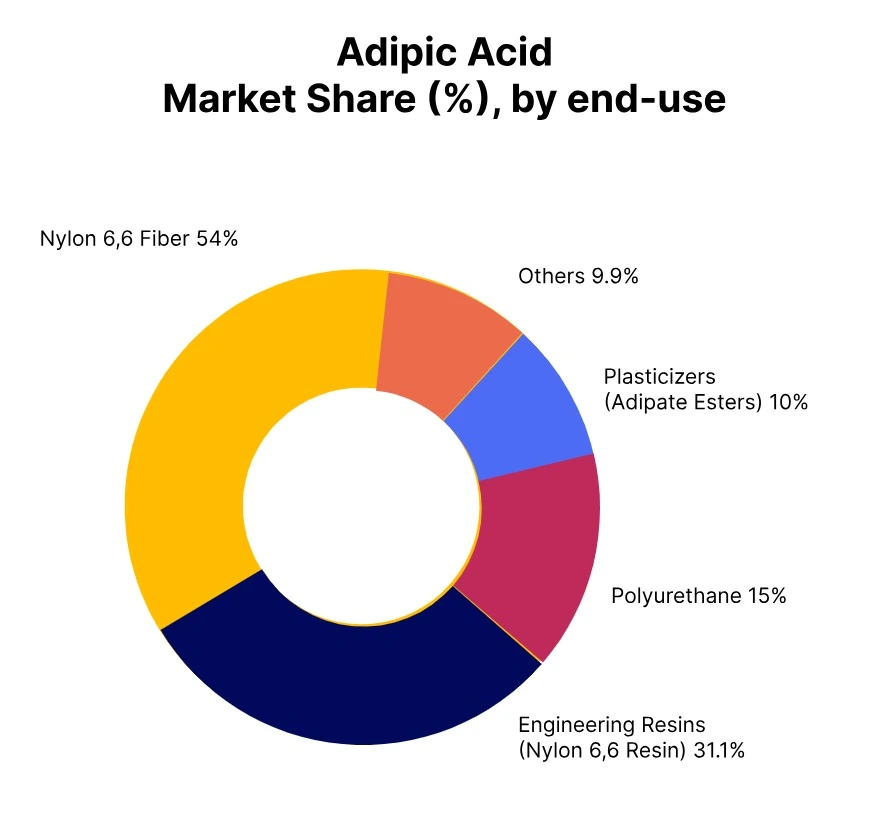
Adipic Acid Market Share End Use

Historically, several events have caused significant fluctuations in Adipic Acid prices

  • Shifting Global Supply Chains and Export Challenges: The increased competition, along with challenges in exporting to key markets like the U.S. and Europe due to trade tensions and economic downturns, has led to fluctuating prices and pressures on Chinese producers to maintain market share.
  • 2023 – Economic Slowdown and OPEC + Production Cuts: Adipic acid prices in China declined due to weaker demand from the textile and automotive industries, but rising raw material costs due to OPEC+ cuts placed upward pressure on production costs.
  • 2022 – Russia-Ukraine Conflict: As crude oil prices surged, the cost of benzene, a key raw material for adipic acid, increased, resulting in higher adipic acid prices in China.
  • 2021 – Raw Material Shortages and Energy Crises: The price of adipic acid in China increased sharply in 2021 due to higher production costs. The energy crisis in China, caused by power shortages and government-imposed energy consumption limits, further added to production challenges and price volatility.
  • 2020 – COVID-19 Pandemic: Adipic acid prices in China plummeted during the first half of 2020 due to reduced industrial activity and demand. However, prices recovered slightly by the end of the year as the Chinese economy bounced back faster than many other regions.
  • 2018 – U.S.- China Trade War: Adipic acid prices in China fluctuated due to increased tariffs on exports to the U.S., which is one of the largest markets for Chinese adipic acid.
  • 2016-2017 – Environmental Regulations: Compliance with these regulations led to increased production costs for Chinese manufacturers. Some factories were forced to shut down temporarily for upgrades, leading to supply shortages and an increase in prices during these years.
  • 2014-2015 – Overcapacity in China: Excess supply in both domestic and international markets drove prices downward. Many Chinese manufacturers faced challenges in maintaining profitability due to this oversupply issue, which caused a significant drop in adipic acid prices​.

These factors combined have made the adipic acid market in China highly volatile over the past decade, with global events like the pandemic, trade wars, and energy crises playing crucial roles in shaping pricing trends.

Why Price Watch™?

Price Watch™ is your trusted resource for tracking global adipic acid price trends. Our platform delivers real-time data and expert analysis, offering deep insights into the key factors driving price fluctuations in the adipic acid market. By monitoring critical events such as geopolitical tensions, supply chain disruptions, and economic shifts, Price Watch™ keeps you fully informed of market dynamics.

In addition, Price Watch™ provides detailed forecasts and updates on production capacities, enabling you to anticipate market changes and make well-informed decisions. With Price Watch™, you gain a competitive edge in understanding all the elements that influence adipic acid prices worldwide. Stay ahead of the curve with Price Watch’s™ reliable, accurate, and timely adipic acid market data.

Track Price Watch's™ adipic acid price assessment on a weekly basis since 2015 onwards, along with short-term forecasts, and get access to the detailed report in a downloadable format.

Adipic Acid Market Price Trend published by 𝐏𝐫𝐢𝐜𝐞 𝐖𝐚𝐭𝐜𝐡™ reflect prevailing spot market conditions, derived from independent research, verified trade inputs, and proprietary market intelligence as of the publication date. Prices are published on the specified Incoterm and represent indicative base market levels, exclusive of applicable taxes, VAT, duties, tariffs, and other statutory charges. Actual transaction values may vary depending on volume, credit terms, contractual structure, and other negotiated conditions. Market prices are inherently subject to volatility, liquidity dynamics, regulatory changes, and evolving trade activity. The information provided is for reference and benchmarking purposes only and does not constitute an offer, recommendation, or guarantee of transactional outcomes. Users should exercise independent commercial judgment and assess their specific contractual, regulatory, tax, and application requirements before making business decisions. 𝐏𝐫𝐢𝐜𝐞 𝐖𝐚𝐭𝐜𝐡™ assumes no liability for decisions taken based on this information.

The price of Adipic Acid is influenced by several key factors, including the cost of raw materials such as cyclohexane, which is derived from crude oil. Fluctuations in crude oil prices can have a significant impact on Adipic Acid pricing. Other factors include supply-demand imbalances, changes in production capacity, energy prices, and environmental regulations, especially as industries move towards more sustainable practices. Additionally, the economic performance of key industries such as automotive, textiles, and electronics, which use Adipic Acid in nylon production, can further drive pricing trends.

Supply chain disruptions, such as raw material shortages, transportation delays, or geopolitical tensions, can lead to volatility in Adipic Acid prices. For instance, disruptions in cyclohexane production or changes in trade policies affecting its export/import can increase the cost of Adipic Acid. Similarly, labor strikes or logistical issues in major manufacturing hubs can lead to reduced supply, driving up prices. Procurement heads should monitor both upstream raw material markets and potential disruptions in global supply chains to anticipate and mitigate price fluctuations.

The price forecast for Adipic Acid is subject to fluctuations due to changing raw material costs, regulatory shifts, and demand from key industries like automotive (for nylon production) and textiles. Given the volatility of oil prices and environmental policies promoting sustainable alternatives, procurement teams should stay informed by following market trends and industry reports. Securing long-term contracts, diversifying suppliers, and considering alternative feedstocks or production methods can help mitigate risks from price hikes and ensure more stable procurement costs in the future.

Adipic Acid is a white crystalline powder used primarily in the production of nylon 6,6, a key material for manufacturing textiles, automotive components, and industrial products. It is also used in the production of plasticizers, synthetic lubricants, and food additives. The price of Adipic Acid is important because fluctuations can affect the production costs of these critical materials, influencing sectors like textiles, automotive, and food production. 𝐏𝐫𝐢𝐜𝐞 𝐖𝐚𝐭𝐜𝐡™ monitors Adipic Acid prices to help businesses understand market trends and make informed decisions.

Adipic Acid prices typically vary depending on factors like raw material costs (especially benzene and cyclohexane), production methods, regional supply-demand conditions, and energy prices. Prices are usually quoted per metric ton and fluctuate based on global market conditions, particularly in the textile and automotive industries. 𝐏𝐫𝐢𝐜𝐞 𝐖𝐚𝐭𝐜𝐡™ provides real-time price assessments to help businesses with procurement and cost planning.

Adipic Acid prices are primarily influenced by feedstock costs (benzene and cyclohexane), energy prices, production capacity, and global demand from sectors like automotive and textiles. Seasonal demand, supply chain disruptions, production capacity utilization, and geopolitical events can also impact pricing. Additionally, changes in the price of oil or raw materials used in the production process play a significant role in shaping price trends. 𝐏𝐫𝐢𝐜𝐞 𝐖𝐚𝐭𝐜𝐡™ tracks these dynamics to provide accurate insights.

The largest consumers of Adipic Acid are the automotive and textile industries. Adipic Acid is used in the production of nylon, which is a key component in automotive parts, carpets, and textiles. It is also used in the production of polyurethane resins, lubricants, and plasticizers. 𝐏𝐫𝐢𝐜𝐞 𝐖𝐚𝐭𝐜𝐡™ tracks demand trends from these industries to assess market movements.

Adipic Acid is produced through the hydrogenation of cyclohexanone, which is derived from cyclohexane. The production process involves a catalytic oxidation reaction, which creates Adipic Acid along with by-products such as nitric oxide. Major manufacturers of Adipic Acid are in regions with strong petrochemical and chemical industries, including North America, Europe, and Asia.

The largest exporters of Adipic Acid include countries with established chemical industries such as China, the United States, and several European countries, including Germany. These nations serve as key suppliers to global markets, especially to regions with large automotive and textile manufacturing sectors. 𝐏𝐫𝐢𝐜𝐞 𝐖𝐚𝐭𝐜𝐡™ tracks global export flows and trade patterns for accurate market insights.

Global supply generally meets demand, but localized shortages can occur due to disruptions in production, feedstock constraints, or sudden spikes in demand, particularly from the automotive and textile sectors. Production shutdowns, plant maintenance, and raw material shortages can cause temporary supply imbalances. 𝐏𝐫𝐢𝐜𝐞 𝐖𝐚𝐭𝐜𝐡™ monitors these dynamics to help businesses stay ahead of potential supply issues.

Adipic Acid is typically available in industrial-grade and food-grade varieties. The food-grade grade is more expensive due to stricter quality and safety regulations. Industrial-grade Adipic Acid, used in manufacturing and chemical processes, is generally more affordable. Prices also vary based on packaging, purity, and production methods. 𝐏𝐫𝐢𝐜𝐞 𝐖𝐚𝐭𝐜𝐡™ provides detailed price assessments for each grade to ensure market transparency.

A sudden increase in demand for Adipic Acid, often driven by growth in the automotive, textile, or plastics industries, can lead to price increases. Suppliers may prioritize long-term contract customers, and spot buyers may face higher prices or longer lead times. Production flexibility is limited by feedstock availability and plant capacity. 𝐏𝐫𝐢𝐜𝐞 𝐖𝐚𝐭𝐜𝐡™ tracks such demand shifts and provides timely updates to help businesses adjust their strategies.

Energy costs are a major factor in the production of Adipic Acid. Increased energy prices, particularly for natural gas and electricity, can lead to higher production costs, which are generally passed on to customers in the form of higher prices. The production of Adipic Acid requires significant energy input, and fluctuations in energy prices directly affect its manufacturing cost. 𝐏𝐫𝐢𝐜𝐞 𝐖𝐚𝐭𝐜𝐡™ tracks energy price trends and incorporates them into its market assessments.

Regional price differences for Adipic Acid arise from factors such as local production capacity, feedstock costs, energy prices, and transportation expenses. Areas with limited local production or higher logistical costs tend to have higher prices, while regions with established production facilities and favorable feedstock availability typically experience lower prices. 𝐏𝐫𝐢𝐜𝐞 𝐖𝐚𝐭𝐜𝐡™ tracks these regional variations to provide comprehensive market insights.

The forecast for Adipic Acid prices depends on key factors such as feedstock costs (benzene, cyclohexane), energy prices, global production capacity, and demand from key industries like automotive and textiles. Seasonal demand fluctuations, geopolitical factors, and supply chain disruptions can also impact pricing. 𝐏𝐫𝐢𝐜𝐞 𝐖𝐚𝐭𝐜𝐡™ provides detailed price forecasts based on these factors to help businesses plan for future market conditions.

Yes. Accurate price forecasts help businesses time their purchases, optimize procurement strategies, and plan budgets more effectively. For instance, if a forecast predicts a price increase due to higher raw material costs or rising demand, businesses can purchase materials in advance to secure current rates. 𝐏𝐫𝐢𝐜𝐞 𝐖𝐚𝐭𝐜𝐡™ provides actionable insights that assist businesses in making informed decisions.

Global events such as natural disasters, geopolitical tensions, or feedstock supply disruptions can disrupt production and shipping, leading to price volatility. For example, hurricanes or other extreme weather events can disrupt the production of feedstocks like benzene, leading to higher prices for Adipic Acid. 𝐏𝐫𝐢𝐜𝐞 𝐖𝐚𝐭𝐜𝐡™ provides real-time updates on how such events influence the market.

𝐏𝐫𝐢𝐜𝐞 𝐖𝐚𝐭𝐜𝐡™ gathers data from global manufacturers, distributors, and buyers to provide accurate price assessments for Adipic Acid. Our detailed market reports and forecasts offer businesses valuable insights into pricing trends, helping them make informed purchasing and procurement decisions.