Aluminium Sheet Price Trend and Forecast

UNSPC code: 30265001
|
Weekly Update
|
Historical Data Since 2015
|
Forecast for 2026
  • Commodity Pricing

aluminium sheet Price Trends by Country

cnChina
inIndia
usUnited States
deGermany

Global aluminium sheet Spot Market Prices, Trend Analysis and Forecast

𝐏𝐫𝐢𝐜𝐞 𝐖𝐚𝐭𝐜𝐡™ provides price assessments for Aluminium Sheet across top trading regions:

Asia-Pacific

  • Aluminium Sheet 5251 H22-2mm FOB Shanghai, China
  • Aluminium Sheet 1200, H12-2mm EX- Mumbai, India


North America

  • Aluminium Sheet 1100-H14-2mm Del Alabama, USA


Europe

  • Aluminium Sheet AW-1050A-2mm FD-Willich, Germany


Note:
In assessments structured as CIF [Importing Port] (Exporting Country), the country mentioned in brackets indicates the primary origin of supply (exporting country), while the named port refers to the destination port in the importing country. Other Incoterms (FOB, FD, EXW, etc.) should be interpreted in accordance with standard international trade definitions.

Aluminium Sheet Price Trend Q4 2025

The quarterly averages for aluminium sheet price around the world have risen approximately 2-3% over quarter IV of 2025 compared to the prior quarter due to a mixture of factors, such as continued strength of primary aluminium on London Metal Exchange along with stable energy prices combined with the production limitation by the largest producers of primary aluminium that support the upward trend of prices in Q4 2025.

Growth in demand from several sectors, including: Packaging; Automotive; Construction; and many others across many of the major consuming areas of the world, helped keep the market sentiments positive even though most companies are very cautious when purchasing.

On the other hand, comfortable inventory levels combined with the improved supply chain conditions across much of the world constrained significantly larger price increases and caused regional variances in pricing across the globe.

China: Aluminium Sheet Export prices FOB Shanghai, China; Grade- 5251 H22-2mm

Aluminium sheet price trend in China have continued to gain ground in Q4 2025, moving up by an average of about 4% from Q3 2025 as demand from the automotive and packaging sectors continued to remain strong, along with limited primary production levels and lower inventory at key ports.

After initially rising from temporary softness in the first part of October 2025, spot prices stabilized throughout November as smelters began to cut back on their discount rates and traders took advantage of the cheaper prices to rebuild their inventories prior to year-end, while downstream buyers remained cautious with their purchasing activity. Additionally, policy announcements designed to provide support for infrastructure expenditure also contributed to the positive sentiment.

In December 2025, aluminium sheet prices in China rose another 2.3%, propelled by year-end restocking and expectations for a tight supply of aluminium raw materials in early 2026 due to continued high bauxite and alumina production costs.

USA: Aluminium Sheet Domestically Traded prices Del Alabama, North America; Grade- 1100-H14-2mm

The price trend of aluminium sheet in the USA during Q4 2025 showed a notable upward momentum, with average prices rising by 5.6 % compared to Q3 2025 as demand strengthened and inventory levels tightened. Market participants attributed the quarteronquarter increase to sustained activity in automotive and construction sectors, alongside higher energy and freight costs that pressured producers’ margins.

Domestic smelters implemented incremental premiums, and imports remained constrained due to global supply chain bottlenecks, further supporting price gains. Throughout December 2025, aluminium sheet prices in the USA continued this trajectory, registering a 1.2 % month-on-month increase as buyers sought to cover yearend requirements and hedge against anticipated cost inflation in early 2026.

According to Price-Watch™ , Overall, Q4 2025 was characterized by bullish pricing dynamics, with limited downward correction despite typical seasonal volatility.

India: Aluminium Sheet Domestically Traded prices EX- Mumbai, India; Grade- 1200,H12-2mm

The price trend of aluminium sheet in India witnessed a notable upturn in Q4 2025, extending the recovery momentum seen earlier in the year. Prices rose by 7.6% compared with Q3 2025, driven by stronger demand from the automotive and packaging sectors, ongoing supply chain realignments, and elevated global metal costs that filtered into domestic markets.

Import parity levels trended higher amid tighter regional inventories, while local producers maintained disciplined output to support margins. Consumer segments displayed resilience, absorbing incremental cost pressures as manufacturers passed through part of the increases. In December 2025 alone, aluminium sheet prices in India climbed a further 2% on the back of sustained buying interest ahead of year-end stock adjustments.

Looking ahead, stakeholders anticipate moderated volatility but remain cautious on cost dynamics and input feedstock variability.

Germany: Aluminium Sheet Domestically Traded prices FD-Willich, Germany; Grade- AW-1050A-2mm

The price trend of aluminium sheet in Germany during Q4 2025 reflected a moderate upward adjustment, with average prices rising by 1.5 % from Q3 2025, driven by steady demand from the automotive and construction sectors coupled with ongoing tightness in domestic supply. Market activity was generally stable, although buyers increasingly negotiated on volumes as producers maintained firm offers to protect margins.

Notably, Aluminium sheet prices in Germany in December 2025 experienced a minor dip of 0.4%, as year-end inventory management and selective discounting led to a slight easing in prices. Overall, Q4 2025 highlighted a market balancing strong underlying demand with cautious end-user procurement, suggesting that aluminium sheet pricing in Germany remains sensitive to both supply fluctuations and downstream industrial demand heading into early 2026.

Aluminium Sheet Price Trend Analysis: Q4 2025

During July-September 2025, the aluminium sheet market followed a mixed trend in Q3 2025, with prices varying 1-2%. This fluctuation was prompted by an interplay of various factors affecting demand and supply in different regions.

While on one side some markets saw prices rise due to increasing raw material costs and growing demand from sectors like automotive and construction, On the contrary, some areas experienced price falls due to oversupply concerns and low market sentiment, a sign of risk-averse buying activity. These divergence factors were the cause of the overall moderate volatility of aluminium sheet prices during the quarter.

China: Aluminium Sheet Export prices FOB Shanghai, China, Grade- 5251 H22-2mm.

During Q3 2025, Aluminium sheet price trend in China recorded a marginal fall of about 0.10% against Q2 2025, thus showing a relatively stable market in general. The minor drop was largely fueled by prudent demand due to fear of reduced industrial output and inventory realignments by large consumers.

In spite of the modest decline, supply held steady, balancing the market and stopping substantial falls in prices. Nevertheless, in September 2025, aluminium sheet prices experienced a marginal rise, with prices rising by approximately 0.10%. This increase was due to reviving demand from the automotive and packaging industries and a slight rise in the cost of raw materials.

USA: Aluminium Sheet Domestic Prices Del Alabama, USA, Grade- 1100-H14-2mm.

The trend of price of the Aluminium sheet in the U.S. market in Q3 2025 reflected a modest upward movement with a 3% uptick from Q2 2025. This increase has been largely fueled by increased demand across the automotive and construction industries, along with the tighter supply conditions as a result of continuing maintenance at various domestic mills and import supply disruptions.

Prices of Aluminium sheets have been steady in July and August underpinned by robust order volumes and buoyant input costs, notably energy and raw materials. Aluminium sheet prices in the US dropped, however, in September 2025 by 0.2% as US Aluminium sheet prices followed a moderate weakening in demand and strengthened supply availability. Market players also observed a short dip in LME aluminium prices, which helped ease the September slowdown.

India: Aluminium Sheet Domestic Prices EX- Mumbai, India, Grade- 1200, H12-2mm.

According to PriceWatch, Aluminium sheet price trend in India recorded strong upward movement during Q3 2025, posting a net hike of 8% over Q2 2025. This increase was prompted by robust demand from major industries like automotive, packaging, and construction, as well as tight supply owing to raw material shortages globally and increasing energy prices.

Indian aluminium sheet prices went up by 2% in September 2025, further adding to the bullish mood of the market. Producers dealt with higher input costs, such as alumina and power, that added to the increase in prices. Moreover, exports demand continued to be strong, tightening local availability and helping fuel the price rise.

Germany: Aluminium Sheet Domestic Prices FD-Willich, Germany, Grade- 1200, H12-2mm.

The price trend of the Aluminium sheet in the German market for Q3 2025 had a gradual increase, up by a total of 2% from Q2 2025. The rise was underpinned by a modest rebound in European manufacturing activity, especially within automotive and packaging segments, combined with ongoing supply-side tensions as a result of energy cost pressures and lower output of major producers.

Market sentiment was robust during July and August, with purchasers locking in material in expectation of further price increases. Aluminium sheet prices in Germany came under a little pressure at the end of the quarter following that. US Aluminium sheet prices dropped 1% during September 2025, led by weaker industrial orders and softer raw material prices, such as a fall in primary aluminium prices on the LME.

According to the PriceWatch, the aluminium sheet plunged to $3465/metric ton FOB Shanghai in Q2 2025, marking a 2.80% quarter over quarter decline. This drop reflects a broader global oversupply, as manufacturers offered steep discounts to reduce inventory. On the trade-policy front, the U.S. doubled its Section 232 tariffs on imported aluminium to 50% effective June 4, 2025 creating a domino effect in global trade flows. Although Shanghai prices cite local oversupply issues, global tariff pressure particularly from the U.S. has suppressed sentiment, making Chinese exports less competitive, and contributing indirectly to the price drop.

According to the PriceWatch, aluminium sheet prices in India dropped more sharply to $3126 per metric ton Ex-Mumbai during Q2 2025, marking a significant 7.72% decrease quarter on quarter. The decline was largely driven by anti dumping duties imposed on Chinese aluminium imports, which were extended and enforced more strictly by Indian authorities in early 2025 to support domestic manufacturers.

In the first quarter of 2025, Aluminium Sheet prices experienced a slight upward trend, reaching USD 3565/MT FOB Shanghai with a 1.11% increase from Q4 2024. This growth was primarily driven by a steady revival in demand from the construction and automotive sectors, which picked up pace following the year-end lull.

Manufacturers resumed operations after the holiday season, leading to increased procurement activities. Supply levels remained stable, and with smooth logistics across key markets, the aluminium sheet market maintained a well-balanced outlook with a mild but positive momentum.

In Q1 2025, aluminium sheet prices registered a noticeable uptick, rising by $3402 per metric ton, Ex- Mumbai reflecting a 4.19% increase compared to the previous quarter. This price rally was driven by robust demand recovery in the transportation and packaging industries, coupled with continued constraints in raw material supply.

Elevated energy costs and export limitations from major producing hubs further pressured production, tightening overall market availability. Additionally, increased activity in downstream sectors like aerospace and infrastructure spurred consistent buying interest.

Aluminium Sheet Price Trend Analysis: Q4 2024

In Q4 2024, the global aluminium sheet market saw a notable upward trend, driven primarily by demand from key regions like China, UK, and the USA. China’s expanding manufacturing sector, along with its infrastructure initiatives, propelled domestic demand for aluminium sheets, fostering price growth.

The UK and USA also contributed to the global trend, with both countries benefiting from a rebounding industrial sector and a surge in construction projects, particularly in infrastructure and renewable energy.

In Q4 2024, the aluminium sheet market saw a significant price rise of $3265 per metric ton, Ex-Mumbai indicating a 3.94% quarter-over-quarter growth. Key contributors to the upward momentum included tightening supply chains, particularly in Asia and Europe, as well as a steady uptick in demand from construction, packaging, and electrical sectors.

Elevated energy and transportation costs impacted smelting operations, while logistical disruptions at major ports like Shanghai and Nhava Sheva led to slower inventory turnover. Market participants also cited policy adjustments in producing countries as a catalyst for bullish trading behavior, sustaining price strength throughout the quarter.

In Q3 2024, the global aluminium sheet market experienced a notable downturn, with significant declines observed across major markets. China, a key player in the sector, saw a decrease in aluminium sheet demand driven by a slowdown in industrial activity and a reduction in construction projects. Similarly, UK and the USA faced declines, albeit influenced by different regional factors. In India, the slowdown in infrastructure and automotive sectors dampened aluminium sheet consumption.

The UK experienced weaker demand due to a combination of economic uncertainty and reduced manufacturing output. In the USA, a decline in construction and transportation sectors led to lower aluminium sheet consumption. This combined decrease across these regions highlights a global trend of reduced industrial activity, posing challenges for producers and suppliers in Q3 2024.

In Q3 2024, aluminium sheet prices declined by $3142 per metric ton, Ex- Mumbai with a 2.43% drop from the previous quarter. The decrease was mainly attributed to subdued demand from automotive and export-oriented manufacturing sectors, alongside a rebound in global supply. Increased output from Chinese and Middle Eastern producers, coupled with easing freight rates and stabilized energy prices, contributed to improved supply-side dynamics. Additionally, softer macroeconomic indicators and cautious procurement behavior among downstream players created downward pressure, with overall sentiment reflecting a temporary market correction.

In Quarter 2 of 2024, the global aluminium sheet market is experiencing a robust upward trend, driven by rising demand from key regions such as China, UK, and the USA. China, as a dominant player in the industry, continues to expand its manufacturing capacity, leading to increased consumption of aluminium sheets for both domestic use and export.

The UK and USA are seeing a rebound in their manufacturing industries, particularly in automotive, aerospace, and construction applications. Combined, these factors are propelling the global market, with aluminium sheet prices expected to rise as supply chains adjust to meet the surging demand.


In Q2 2024, aluminium sheet prices saw a sharp rise of ₹3220 per metric ton, Ex-Mumbai showing a 11.37% increase over the previous quarter. The price surge was underpinned by tight inventories, strong restocking demand from the construction and consumer goods industries, and rising input costs such as alumina and fuel.

Geopolitical instability and shipping bottlenecks at key international ports further constrained supply. Market sentiment remained positive, fueled by expectations of continued industrial activity and limited short-term availability, particularly across zones like Willich and Del Alabama.

In Q1 2024, the global market for aluminium sheets saw divergent trends across key regions. China experienced a notable increase in demand, driven by strong industrial activity and infrastructure projects, leading to higher production and price levels. In contrast, UK and the USA saw a decrease in aluminium sheet prices.

Similarly, the UK and USA experienced weaker consumer and industrial activity, further exacerbated by inflationary pressures and supply chain challenges, contributing to the downward price movement in these regions. Overall, while China’s market growth counterbalanced the declines in other regions, the global market remained volatile.


In Q1 2024, aluminium sheet prices experienced a marginal decline of $2891 per metric ton, Ex-Mumbai translating to a 0.28% decrease from the previous quarter. The price softening stemmed from tepid demand in major end-use sectors, especially in Europe and parts of Asia.

Higher inventory levels at global distribution hubs and improved production efficiency helped offset cost pressures. Despite stable energy prices, buyers remained cautious due to lingering economic uncertainty, resulting in a balanced market environment with limited volatility.

Technical Specifications of Aluminium Sheet Price Trends

Product Description:

Aluminium sheet is a flat-rolled product produced by rolling aluminium ingots into thin, flexible sheets. It is commonly used in manufacturing, construction, transportation, and packaging industries.

Identifiers and Classification:

  • HS Code: 760611


Aluminium Sheet Synonyms:

  • Aluminum Sheet
  • Aluminium Sheet
  • Aluminum Alloy Sheet


Aluminium Sheet Grades Specific Price Assessment:

  • 1200, H12-2mm
  • 525 H22-2mm
  • AW-1050A-2mm
  • 1100-H14-2mm


Aluminium Sheet Global Trade and Shipment Terms

  • Quotation Terms (Product & Country Specific): 25-30 MT
  • Packaging Type (Product & Country Specific): Container


Incoterms Reference in Aluminium Sheet Reporting

Shipping Term  Location  Definition 
FOB Shanghai  Shanghai, China   Aluminium Sheet export prices from China 
Ex-Mumbai  Mumbai, India   Domestically Traded Aluminium Sheet prices in India 
Del Alabama  Alabama, USA  Domestically Traded Aluminium Sheet prices in USA 
FD-Willich  Willich, Germany  Domestically Traded Aluminium Sheet prices in Germany 

*Quotation Terms refers to the quantity range specified for the Aluminium Sheet being quoted or offered in a commercial transaction.

**Packaging Type refers to standard packaging size commonly used for Aluminium Sheet packing, ease of handling, transportation, and storage in industrial and commercial applications.


Key Aluminium Sheet Manufacturers

Manufacturer 
Novelis 
Alcoa 
Vedanta 
Hindalco 
Chalco 
Shandong Xinfa Aluminium Group 
WMH GROUP 

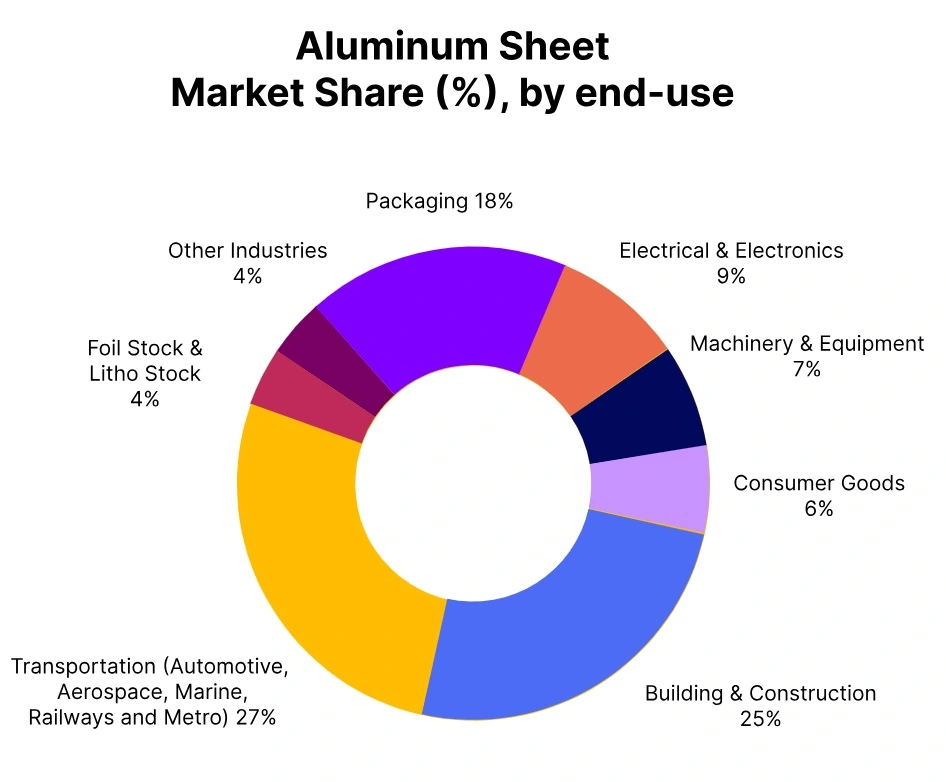
Aluminium Sheet Industrial Applications

aluminium sheet market share end use

Historically, several events have caused significant fluctuations in Aluminium Sheet prices

  • Global Supply Chain Disruption (2022): Geopolitical tensions and natural disasters disrupted supply chains, leading to price volatility in aluminium sheet markets as production and transportation were affected.
  • Global Economic Downturn (2019-2020): The global economic slowdown, particularly in sectors like construction and automotive, led to reduced demand for aluminium sheet, causing prices to drop sharply.
  • COVID-19 Pandemic (2020): The pandemic caused severe disruptions in production and reduced industrial activity globally, resulting in a significant drop in demand for aluminium sheets and a subsequent price fall.

These events highlight the vulnerability of the aluminium sheet market to external factors and the need for careful market monitoring.

Why Price Watch™?

Price Watch™ is your trusted resource for tracking global aluminium sheet price trends. Our platform delivers real-time data and expert analysis, offering deep insights into the key factors driving price fluctuations in the aluminium sheet market. By monitoring critical events such as geopolitical tensions, supply chain disruptions, and economic shifts, Price Watch™ keeps you fully informed of market dynamics.

In addition, Price Watch™ provides detailed forecasts and updates on production capacities, enabling you to anticipate market changes and make well-informed decisions. With Price Watch™, you gain a competitive edge in understanding all the elements that influence aluminium sheet prices worldwide. Stay ahead of the curve with Price Watch’s™ reliable, accurate, and timely aluminium sheet market data.

Track Price Watch's™ aluminium sheet price assessment on a weekly basis since 2015 onwards, along with short-term forecasts, and get access to the detailed report in a downloadable format.

Aluminium Sheet Market Price Trend published by 𝐏𝐫𝐢𝐜𝐞 𝐖𝐚𝐭𝐜𝐡™ reflect prevailing spot market conditions, derived from independent research, verified trade inputs, and proprietary market intelligence as of the publication date. Prices are published on the specified Incoterm and represent indicative base market levels, exclusive of applicable taxes, VAT, duties, tariffs, and other statutory charges. Actual transaction values may vary depending on volume, credit terms, contractual structure, and other negotiated conditions. Market prices are inherently subject to volatility, liquidity dynamics, regulatory changes, and evolving trade activity. The information provided is for reference and benchmarking purposes only and does not constitute an offer, recommendation, or guarantee of transactional outcomes. Users should exercise independent commercial judgment and assess their specific contractual, regulatory, tax, and application requirements before making business decisions. 𝐏𝐫𝐢𝐜𝐞 𝐖𝐚𝐭𝐜𝐡™ assumes no liability for decisions taken based on this information.

Aluminium sheets are produced from raw materials such as bauxite, which is refined into alumina and then smelted into aluminium. The price of these feedstocks, especially alumina and aluminium ingots, plays a significant role in determining the final price of aluminium sheet products. When the cost of aluminium production feedstocks increases—due to factors like rising energy prices or limited supply of raw materials—the price of aluminium sheets tends to rise as well. Additionally, energy costs, such as electricity, which is a major component in aluminium smelting, can heavily influence production costs and, subsequently, the price of the finished aluminium sheet.

Aluminium sheet prices are closely linked to inflation due to their role in production across a wide range of industries. When aluminium sheet prices rise, it increases the cost of manufacturing products that use aluminium, such as automotive parts, appliances, and packaging materials. These higher production costs are often passed on to consumers in the form of higher prices for goods and services. As aluminium is a key input in many sectors, a sustained increase in aluminium sheet prices can contribute to broader inflationary pressures within an economy, leading to a rise in the general price level. This can affect not just the direct consumers of aluminium products, but also industries that depend on aluminium as an essential component of their supply chain.

Aluminium Sheet is highly conductive metal sheet widely used in electrical transmission, construction, automotive, packaging, and industrial applications. Its price directly impacts industries such as power distribution, cable manufacturing, transportation, and infrastructure development. 𝐏𝐫𝐢𝐜𝐞 𝐖𝐚𝐭𝐜𝐡™ tracks these prices to help businesses and consumers stay updated with market movements and cost trends.

Aluminium Sheet prices vary by region and market conditions. Prices are typically quoted per metric ton or per pound and fluctuate based on global supply, import/export flows, industrial demand, and currency exchange rates. 𝐏𝐫𝐢𝐜𝐞 𝐖𝐚𝐭𝐜𝐡™ provides real-time price assessments across different global markets to help buyers and sellers make informed decisions.

Prices fluctuate due to changes in Chinese production, environmental regulations, seasonal smelter maintenance, feedstock availability, and demand from pharmaceuticals, electronics, and alloys. Exchange rates, logistics costs, and global economic conditions also influence trends.

Major consumers include pharmaceuticals, electronics, metallurgy, chemical & pigment industries, and research/specialty materials. 𝐏𝐫𝐢𝐜𝐞 𝐖𝐚𝐭𝐜𝐡™ analyses demand patterns across all these industries.

Aluminium Sheets are produced either from primary aluminum (derived from bauxite ore through the Bayer and Hall-Héroult processes) or from recycled aluminum scrap. Alloying elements such as silicon, magnesium, copper, or zinc are added during melting to achieve specific mechanical properties. Major producing regions include China, India, the Middle East, Europe, and North America.

China is one of the largest producers and exporters of aluminum products, including sheets. Other significant exporters include India, the United Arab Emirates, Russia, and Malaysia. Export volumes fluctuate based on domestic demand, environmental policies, and global trade regulations. 𝐏𝐫𝐢𝐜𝐞 𝐖𝐚𝐭𝐜𝐡™ tracks production levels, export flows and trade patterns to help businesses understand global supply chains and identify sourcing opportunities.

Supply generally meets demand, but disruptions may occur due to smelter shutdowns, environmental restrictions, or spikes in industrial consumption. 𝐏𝐫𝐢𝐜𝐞 𝐖𝐚𝐭𝐜𝐡™ monitors these supply-demand imbalances to alert the market about potential shortages or surpluses.

Prices vary due to alloy composition, purity, mechanical strength, conductivity, application suitability, and market factors, with higher-performance or specialized sheets costing more. 𝐏𝐫𝐢𝐜𝐞 𝐖𝐚𝐭𝐜𝐡™ provides separate price assessments for each grade to ensure market transparency.

When demand rises, for example: from pharmaceutical production or electronics manufacturing prices typically climb. Suppliers may prioritize certain customers, and lead times can extend. 𝐏𝐫𝐢𝐜𝐞 𝐖𝐚𝐭𝐜𝐡™ captures these market dynamics in real-time.

Aluminium Sheet is energy intensive. Rising electricity, fuel, or chemical costs often get passed on to buyers. This is why prices in regions with cheaper electricity tend to be lower, a correlation that 𝐏𝐫𝐢𝐜𝐞 𝐖𝐚𝐭𝐜𝐡™ analyses in its price assessments & market reports.

Regional variations arise from import dependency, shipping costs, currency fluctuations, and local demand. 𝐏𝐫𝐢𝐜𝐞 𝐖𝐚𝐭𝐜𝐡™ tracks prices across all major regions to highlight these differences.

Forecasts depend on production capacity, Chinese export policies, industrial demand, and macroeconomic factors. 𝐏𝐫𝐢𝐜𝐞 𝐖𝐚𝐭𝐜𝐡™ regularly publishes detailed forecasts that project price movements for the next 12 months based on comprehensive analysis of supply additions, demand growth in key industries, seasonal patterns, and macroeconomic indicators. Our forecasts help businesses anticipate market conditions and plan accordingly.

Yes. Accurate forecasts allow businesses to optimize purchasing, negotiate contracts, and manage inventories. If 𝐏𝐫𝐢𝐜𝐞 𝐖𝐚𝐭𝐜𝐡™ forecasts predict a price increase in three months, you might choose to stock up now or lock in long-term contracts at current rates, potentially saving thousands of dollars.

Events such as Chinese export restrictions, smelter shutdowns, environmental regulations, or economic shocks can cause supply shortages and price volatility. 𝐏𝐫𝐢𝐜𝐞 𝐖𝐚𝐭𝐜𝐡™ provides timely alerts when such events affect the market.

𝐏𝐫𝐢𝐜𝐞 𝐖𝐚𝐭𝐜𝐡™ collects data from manufacturers, distributors, and buyers worldwide to publish regular price assessments, market reports, and forecasts. Our transparent methodology and comprehensive coverage make us a trusted source for understanding fair pricing and market trends in the Aluminium Sheet industry.