Aluminum Alloy Ingot Price Trend and Forecast

UNSPC code: 30265202
|
âźł Weekly Update
|
Historical Data Since 2015
|
Forecast for 2026
  • Commodity Pricing

aluminum alloy ingot Price Trends by Country

cnChina
inIndia
gbUnited Kingdom
usUnited States

Global aluminum alloy ingot Spot Market Prices, Trend Analysis and Forecast

Aluminum Alloy Ingot Price Trend Q3 2025

In Q3 2025, the global aluminum alloy ingot market recorded a moderate price increase of around 1.5–3% compared to Q2 2025. The upward movement was supported by steady demand recovery from the automotive and aerospace sectors, particularly in North America and Europe, where production activities gained momentum.

Supply constraints arising from maintenance shutdowns at several smelters and alloy producers, alongside higher logistics costs, also contributed to tighter market conditions. In contrast, demand growth in Asia remained stable but subdued due to slower construction activity in China. Additionally, a mild rebound in aluminum prices and increased costs of alloying materials, such as magnesium and silicon, added to overall price firmness.

China

Aluminium Alloy Ingot Export prices FOB-Shanghai, China, Grade- Purity:81%(ADC12).

According to PriceWatch, the aluminum alloy ingot price trend in China during Q3 2025 reflected a modest upward momentum, with an increase of around 0.50% compared to Q2 2025. This growth was primarily driven by stable downstream demand from the automotive and construction sectors, along with slightly tighter domestic supply due to environmental production controls in key manufacturing hubs. Prices were supported by a marginal rise in raw material costs and energy tariffs.

Aluminum alloy ingot prices in July and August showed gradual appreciation, underpinned by positive market sentiment and restocking activity. However, in September 2025, Aluminium alloy ingot prices declined by 0.12%, attributed to weakening demand toward the quarter’s end and increased inventory levels in some regions. Despite the minor dip in September, the quarterly price movement remained on an upward trajectory, indicating a carefully optimistic outlook among traders and manufacturers for the near term.

USA

Aluminium Alloy Ingot Domestic prices Del-Alabama, USA, Grade- Purity: Purity:81%.

According to PriceWatch, the aluminum alloy ingot price trend in the USA during Q3 2025 showed a modest upward movement, marking a 1.47% increase in comparison to Q2 2025. This growth was primarily driven by consistent demand from the automotive and construction sectors, coupled with tightened supply due to ongoing global logistics disruptions and rising energy costs affecting smelting operations.

Aluminum alloy ingot prices experienced consistent support throughout July and August, with market participants anticipating continued recovery in downstream industries. Although, in September 2025, Aluminum alloy ingot prices declined by 1%, attributed to easing raw material costs and increased inventory levels in some regional markets. Regardless of this minor dip, overall quarterly prices maintained a firm trajectory, reflecting the alloy’s strategic demand and constrained production outlook.

India

Aluminium Ingot Domestic prices EX-Mumbai, India, Grade- Purity: Purity:88%(IA80).

According to PriceWatch, aluminum alloy ingot prices in India showed an upward trend in Q3 2025, registering an overall increase of 8.39% compared to Q2 2025. This stable price trend of the product was primarily driven by robust demand from the automotive and construction sectors, paired with a surge in raw material costs and limited scrap availability in the domestic market.

In September 2025, Aluminum alloy ingot prices further escalated by 2.84%, reflecting sustained buying activity and tightened supply dynamics. Furthermore, the global uptick in aluminum prices, due to energy cost pressures and production curbs in major producing regions, added to the bullish sentiment in the Indian market. Import restrictions and a depreciating rupee also contributed to higher landed costs, causing domestic producers to revise prices upward.

Germany

Aluminium Ingot Domestic prices FD-Willich, Germany, Grade- Purity:81%.

According to PriceWatch, the aluminum alloy ingot price trend in Germany during Q3 2025 showed a slight upward movement, recording a 0.32% increase in comparison to Q2 2025. This growth was primarily driven by steady demand from the automotive and construction sectors, coupled with moderate supply chain constraints and increased energy costs impacting production margins.

However, in September 2025, Aluminum alloy ingot prices decreased by 0.91%, reflecting a temporary dip in demand and improved import availability, which slightly eased supply-side pressures. Over the quarter, the market remained cautiously optimistic, with prices fluctuating within a narrow band. Market participants noted that while the price support continued due to long-term infrastructure projects, short-term consumption remained sensitive to macroeconomic uncertainties.

Aluminum Alloy Ingot Price Trend Analysis: Q2 2025

According to PriceWatch, the prices of aluminium alloy ingot delivered declined to $2,568 per MT FOB Shanghai in Q2 2025, a drop of 2.03% compared to Q1. This modest decrease reflects a combination of weak downstream demand and trading pressures. Globally, slower activity from sectors like automotive and construction has played a role in suppressing price momentum.

Moreover, recent U.S. and China tariff adjustments alongside Chinese production curbs to meet environmental targets have caused volatility in the market. Market pricing is being shaped by supply constraints, inventory levels, and reduced consumption from downstream industries, reflecting broader uncertainty in global commodity markets.

According to the PriceWatch, India saw a sharper downturn as aluminium alloy ingot prices slumped to $2,915 per MT Ex-Mumbai, marking a 7.78% quarterly decline in Q2 2025. The steeper dip is closely tied to India combination of domestic tariff measures and raw material disruptions. The government has forced hostile to dumping obligations on Chinese imports particularly anodised outlines and essential aluminum to ensure neighborhood industry.

In the first quarter of 2025, aluminium Alloy Ingot prices experienced a modest rise, reaching USD 2,519/MT FOB Shanghai with a 1.27% increase from Q4 2024. This upward movement was supported by steady demand from the automotive and construction sectors, which picked up pace after the year-end lull.

As manufacturers ramped up operations to meet upcoming seasonal orders, restocking activity increased across key markets. Supply levels remained stable, and with no major transportation or raw material constraints, the market maintained a balanced outlook with a slight positive trend.

In Q1 2025, aluminium alloy ingot prices witnessed a notable surge, rising by $3,187 per metric ton Ex-Mumbai with a 5.60% increase compared to the previous quarter. This upward momentum was primarily driven by a combination of tight global supply chains, increased demand from the automotive and construction sectors, and higher energy costs impacting production.

Market participants also cited geopolitical tensions and export restrictions from key producing nations as contributing factors to the bullish trend. The consistent rise in downstream consumption and limited inventory replenishment further supported the price escalation, signaling a strong and sustained demand outlook for aluminium in the near term.

Aluminum Alloy Ingot Price Trend Analysis: Q4 2024

In Q4 2024, the aluminium alloy ingot market witnessed a notable upward trend across key regions, including China, the USA, and the UK. Robust demand from the automotive and construction sectors, coupled with a global push toward lightweight and sustainable materials, drove price increases. China, being a dominant producer and consumer, saw heightened domestic demand and export activities, contributing to firming prices. India followed suit, with infrastructure development and rising automotive production boosting market sentiment.

In the USA, supply chain stabilization and increased industrial activity supported price gains, while in the UK, a weakened currency and strong industrial demand further amplified price trends. Collectively, these regions experienced synchronized growth, reflecting the resilience of the global aluminium alloy ingot market amid evolving economic dynamics.

In Q4 2024, the aluminium alloy ingot market experienced a notable price increase of $3018 per metric ton, Ex- Mumbai with a 4.20% rise compared to the previous quarter. This upward trend was primarily driven by a combination of tighter global supply, strong demand from the automotive and construction sectors, and increased energy costs impacting production.

Supply disruptions in key producing regions, coupled with a gradual recovery in manufacturing activity, further supported the bullish sentiment. Additionally, market participants anticipated continued inventory drawdowns and potential policy shifts in major economies, contributing to firm buying interest and sustaining the positive momentum in aluminium prices during the quarter.

In Q3 2024, the aluminium alloy ingot market exhibited a consistent downward trend across major regions, including China, the USA, and the UK. This decline was primarily driven by sluggish demand from key sectors such as automotive and construction, coupled with rising global inventories. In China, domestic demand stagnated due to ongoing real estate challenges, while India saw a dip in consumption amid weaker manufacturing activity.

The USA experienced reduced industrial orders and cost pressures from alternative materials, and in the UK, economic uncertainties further dampened market sentiment. Combined with softening energy costs and a stronger supply chain recovery, these factors collectively pressured aluminium alloy ingot prices globally during the quarter.

In Q3 2024, aluminium alloy ingot prices witnessed a notable decrease of $2897 per metric ton Ex- Mumbai with a 2.64% decline compared to the previous quarter. This downward trend can be attributed to a combination of softening global demand, particularly from the construction and automotive sectors, and improved supply dynamics, including higher production outputs from key regions like China and the Middle East.

Additionally, easing energy prices and a reduction in raw material costs helped alleviate production expenses, further influencing the market correction. Market sentiment also reflected cautious optimism amid economic uncertainties, contributing to the moderated pricing environment during the quarter.

In Q2 2024, the aluminium alloy ingot market exhibited a notable upward trend across key regions, driven by strong demand in automotive, aerospace, and construction sectors. In China, government-backed infrastructure projects and robust manufacturing activities propelled prices, reflecting increased domestic consumption and export demand. In the USA, market momentum was supported by a growing focus on sustainability and demand for recycled aluminium alloys, alongside steady recovery in construction activities.

Meanwhile, the UK saw an uptick in prices, underpinned by high demand in the automotive sector and increased imports due to local supply constraints. This synchronized growth highlights the global reliance on aluminium alloys for lightweight, durable, and sustainable applications.

In Q2 2024, aluminium alloy ingot prices experienced a significant upward trend, rising by ₹2975 per metric ton (MT), Ex- Mumbai with a 12.39% increase quarter-over-quarter. This price surge was primarily driven by a combination of factors including tightening supply in major producing regions, robust demand from the automotive and construction sectors, and rising input costs such as alumina and energy.

Additionally, geopolitical uncertainties and logistical disruptions contributed to inventory drawdowns, further supporting the bullish momentum. The market sentiment remained optimistic throughout the quarter, reflecting strong consumption patterns and limited availability in both domestic and international markets.

During the first quarter of 2024, the global aluminium alloy ingot market exhibited mixed trends across key regions. In China, prices saw an upward trajectory driven by strong domestic demand and increased industrial activity, particularly in the automotive and construction sectors. Conversely, the USA, and the United Kingdom experienced a downward trend in prices.

The USA faced challenges from slowing manufacturing growth and weaker downstream demand, while the UK’s decrease was influenced by economic uncertainty and sluggish consumption in key industries. This divergence highlights regional market dynamics shaped by varying economic and industrial factors.


In the first quarter of 2024, the prices of aluminium alloy ingot saw a slight decrease of $2647 per metric ton, Ex- Mumbai reflecting a modest decline of 0.28% compared to the previous quarter. This marginal drop indicates a relatively stable market environment with limited fluctuations. The soft bearish trend was primarily driven by weaker demand from key industrial sectors such as construction and automotive, particularly in major markets like China and Europe.

Lower prices were also impacted by increased inventory levels recorded at LME warehouses in the first half of the quarter. Stabilization in energy costs, which play a significant role in aluminium production, also helped curb any potential price increases. Overall, while the market exhibited some softness in Q1, the price movement suggests a cautious yet balanced outlook as the industry heads into the second quarter of 2024.

Technical Specifications of Aluminum Alloy Ingot Price Trends

Product Description:

Aluminum alloy ingots are specialized forms of aluminum that include added alloying elements such as silicon, magnesium, zinc, or copper to enhance specific properties like strength, corrosion resistance, or machinability. These ingots are used in diverse industries, including automotive, aerospace, construction, and consumer goods. The combination of lightweight characteristics, excellent strength-to-weight ratio, and adaptability to manufacturing processes makes aluminum alloy ingots ideal for demanding applications.

Identifiers and Classification:

  • HS Code: 76012010


Aluminium Alloy Ingot Grades Specific Price Assessment:

  • Purity:81%(ADC12)
  • Purity:88%(IA80)
  • Purity:81%
  • Purity:81%


Aluminium Alloy Ingot Global Trade and Shipment Terms

  • Quotation Terms (Product & Country Specific): 28-30 MT, 150-200 MT and 15-20 MT
  • Packaging Type (Product & Country Specific): Container


Incoterms Reference in Aluminium Alloy Ingot Reporting

Shipping Term  Location  Definition 
FOB Shanghai  Shanghai, China   Aluminium Alloy Ingot export from China 
Ex-Mumbai   India   Domestically Traded Aluminium Alloy Ingot price in India 
Del Alabama   USA  Domestically Traded Aluminium Alloy Ingot price in USA 
FD-Willich  Germany  Domestically Traded Aluminium Alloy Ingot price in Germany 

*Quotation Terms refers to the quantity range specified for the Aluminium Alloy Ingot being quoted or offered in a commercial transaction.

**Packaging Type refers to standard packaging size commonly used for Aluminium Alloy Ingot packing, ease of handling, transportation, and storage in industrial and commercial applications.


Key Aluminium Alloy Ingot Manufacturer

Manufacturer 
TRIMET Aluminium SE 
Alcoa 
Chalco 
Nalco 
Hindalco 
Balco 
Shandong Xinfa Aluminium Group 

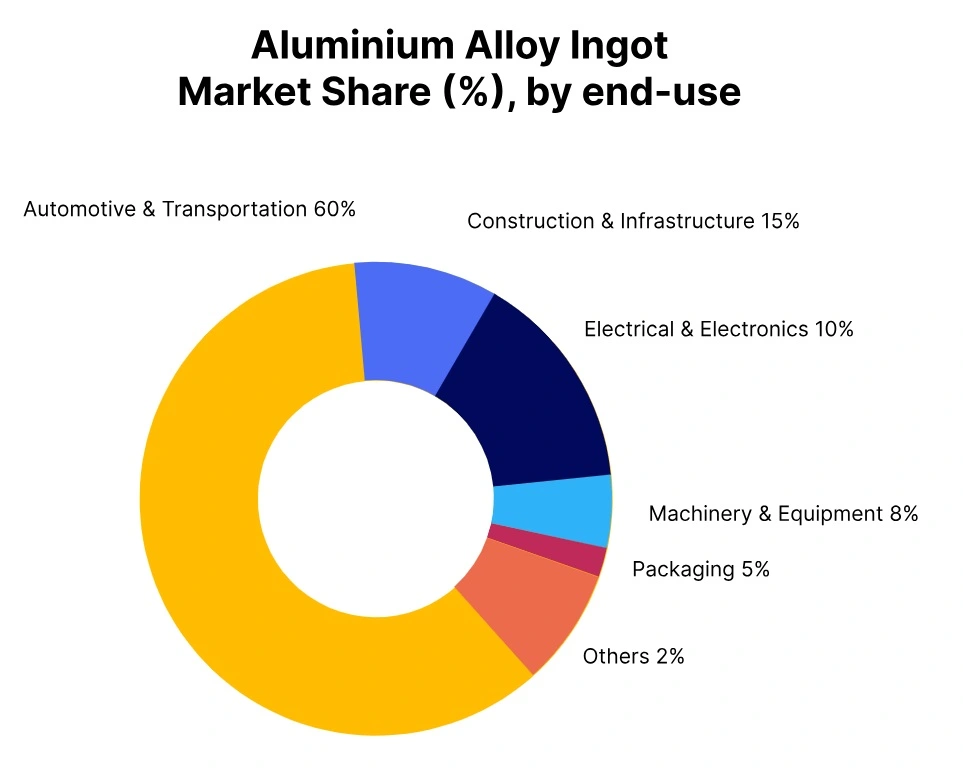
Aluminum Alloy Ingot Industrial Applications

aluminium alloy ingot market share enduse

Historically, several events have caused significant fluctuations in Aluminum Alloy Ingot prices

  • Global Supply Chain Disruption (2022): Geopolitical tensions, including the war in Ukraine, disrupted global supply chains, leading to volatility in aluminum alloy ingot prices and affecting the availability of raw materials for production.
  • Global Economic Downturn (2019-2020): The global economic slowdown significantly impacted key industries like automotive and construction, leading to reduced demand for aluminum alloy ingots and a subsequent drop in prices.
  • COVID-19 Pandemic (2019-2020): The pandemic caused a sharp decline in demand for aluminum alloy ingot-intensive sectors, such as transportation and infrastructure development, resulting in a significant decrease in prices and production activity.


These events highlight the aluminum alloy ingot market’s sensitivity to global disruptions, emphasizing the importance of robust strategies to adapt to changing supply-demand dynamics.

Why PriceWatch?

PriceWatch is your trusted resource for tracking global aluminum alloy ingot price trends. Our platform delivers real-time data and expert analysis, offering deep insights into the key factors driving price fluctuations in the aluminum alloy ingot market. By monitoring critical events such as geopolitical tensions, supply chain disruptions, and economic shifts, PriceWatch keeps you fully informed of market dynamics.

In addition, PriceWatch provides detailed forecasts and updates on production capacities, enabling you to anticipate market changes and make well-informed decisions. With PriceWatch, you gain a competitive edge in understanding all the elements that influence aluminum alloy ingot prices worldwide. Stay ahead of the curve with PriceWatch’s reliable, accurate, and timely aluminum alloy ingot market data.

Track PriceWatch's aluminum alloy ingot price assessment on a weekly basis since 2015 onwards, along with short-term forecasts, and get access to the detailed report in a downloadable format.

Data Collection and Sources​

  • Real-Time Market Data: PriceWatch aggregates real-time pricing data from a diverse range of sources, including global commodity exchanges, industry reports, and proprietary databases. This ensures that our assessments reflect the most current market conditions.
  • On-the-Ground Intelligence: Our team gathers insights directly from key market participants, including producers, suppliers, traders, and end-users, across major Aluminum Alloy Ingot production hubs. This ground-level intelligence is crucial for understanding localized market dynamics.
  • Supply Chain Monitoring: We track the entire Aluminum Alloy Ingot supply chain, from raw material availability (e.g., Propylene) to production and distribution channels. This includes monitoring feedstock prices, production capacities, and transportation logistics.

Event Tracking and Impact Analysis​

  • Geopolitical Tensions: PriceWatch continuously monitors global geopolitical developments, such as conflicts or trade disputes, which can significantly impact Aluminum Alloy Ingot prices. Our analysis includes potential disruptions to supply chains and their immediate and long-term effects on pricing.
  • Economic Shifts: PriceWatch evaluates macroeconomic trends, including global economic growth, inflation rates, and sector-specific demand (e.g., automotive, packaging), to predict shifts in Aluminum Alloy Ingot demand and corresponding price movements.

Production Capacity and Supply Analysis

  • Current Production Monitoring: We maintain a comprehensive database of global Aluminum Alloy Ingot production facilities, tracking their operational status, maintenance schedules, and output levels. This allows us to assess current supply availability accurately.
  • Future Capacity Projections: Our research includes detailed forecasts of upcoming Aluminum Alloy Ingot production capacities, factoring in new plant constructions, expansions, and technological advancements. This helps in predicting future supply trends and potential price stabilization.

Demand Forecasting

  • Sectoral Demand Analysis: PriceWatch provides in-depth analysis of demand trends across key sectors, including packaging, automotive, and construction. We track year-on-year demand growth and project future consumption patterns based on economic indicators and industry developments.
  • Global Demand Dynamics: Our methodology considers regional demand variations and how they influence global Aluminum Alloy Ingot pricing. This includes understanding the impact of shifts in manufacturing bases, trade policies, and environmental regulations.

Pricing Model Development

  • Dynamic Pricing Models: PriceWatch utilizes advanced econometric models to forecast Aluminum Alloy Ingot prices, incorporating real-time data, historical trends, and projected market conditions. Our models are continuously refined to enhance accuracy and predictive power.
  • Scenario Analysis: We conduct scenario-based assessments to evaluate potential future market conditions. This includes best-case, worst-case, and most likely scenarios, helping our clients prepare for a range of market outcomes.

Reporting and Client Support

  • Comprehensive Reports: Our clients receive detailed reports that include current price assessments, future price forecasts, and in-depth analysis of market drivers. These reports are designed to be actionable, providing clear insights and recommendations.
  • Ongoing Support: PriceWatch offers continuous updates and personalized support to our clients, ensuring they have the most up-to-date information to make informed decisions. Our experts are available to discuss specific market developments and provide tailored advice.

This research methodology ensures that PriceWatch delivers the most accurate, timely, and actionable Aluminum Alloy Ingot pricing assessments, helping our clients stay ahead of market trends and make informed business decisions.

Aluminum Alloy Ingot Market Price Trend provided by PriceWatch is a base price and excludes VAT/Taxes, discounts, or offers. The information herein is accurate to the best of our knowledge as of the date indicated and is provided solely for the convenience of our customers as a reference for aluminum alloy ingot. PriceWatch disclaims any warranties or representations regarding the accuracy of results derived from this information. It is the sole responsibility of the user to assess the suitability of the product for their specific application. This document does not constitute an endorsement to use the product in violation of any applicable patent rights.

Several factors can impact the price and production of aluminum alloy ingots, including:

Supply and Demand: Demand from industries like automotive, aerospace, and construction can drive prices, while oversupply can decrease them.

Energy Costs: Aluminum alloy production is energy-intensive, so fluctuations in electricity and fuel costs significantly affect prices.

Raw Materials: Costs of bauxite, alumina, and alloying elements (e.g., magnesium, silicon, copper) directly influence production costs.

Exchange Rates: Global trade of aluminum alloys, often priced in US dollars, is affected by currency fluctuations.

Geopolitical Factors: Instability in key production regions can disrupt supply chains and impact prices.

Technological Advancements: Efficient alloying and production technologies reduce costs and improve production.

Environmental Regulations: Compliance with stricter environmental standards can increase production costs.

Global Economic Conditions: Economic growth or recession influences industrial demand for aluminum alloys, affecting prices.

The prices of feedstocks like alumina, silicon, and magnesium significantly affect the production costs of aluminum alloy ingots. Increases in feedstock prices raise production costs, which can drive up market prices for aluminum alloy ingots.

Inflation impacts aluminum alloy ingot prices by increasing production costs, such as raw materials, energy, and labor. Currency depreciation associated with inflation also affects global trade prices. Despite reduced consumer demand in inflationary periods, rising energy and raw material costs often drive-up prices.