Antimony Price Trend and Forecast

UNSPC code: 11161716
|
Weekly Update
|
Historical Data Since 2015
|
Forecast for 2026
  • Commodity Pricing

antimony Price Trends by Country

usUnited States
inIndia
nlNetherlands
cnChina

Global antimony Spot Market Prices, Trend Analysis and Forecast

Price-Watch’s most active coverage of Antimony price assessment:

  • Purity: 99.65%min. FOB Shanghai, China
  • Purity: 99.65%min. EX Mumbai, India
  • Purity: 99.65%min. FD Rotterdam, Netherlands
  • Purity: 99.65%min. Del Baltimore, USA

Antimony ingot Price Trend Q3 2025

In Q3 2025, the global Antimony Ingot market exhibited a mixed yet mildly bullish trend, with prices inclining by around 2.6% overall. Market sentiment fluctuated across major producing and consuming regions due to shifting industrial demand and varying supply conditions. In China, firmer downstream activity from flame retardant and alloy sectors supported a moderate price rise, while India witnessed stable trading amid steady consumption from battery and glass manufacturers.

The USA and European markets faced intermittent softness owing to sufficient inventories and subdued procurement. Despite regional disparities, tightening supply from certain Chinese smelters and improved export orders helped maintain an upward bias in global prices through the quarter.

China

Antimony ingot Export prices FOB Shanghai, China, Purity: 99.65%min.

In Q3 2025, the antimony ingot price trend  in China showed a mild decline of 0.22% compared to the previous quarter, reflecting a marginally weaker global sentiment. The market experienced lessened demand from flame retardant and battery alloy sectors, while export orders softened amid slower downstream activity in Europe and Asia.

Despite steady domestic production levels, persistent oversupply and limited new procurement from overseas buyers exerted slight downward pressure on prices. The decline remained contained as smelters maintained cautious operating rates and raw material availability stayed relatively balanced.

Antimony ingot prices in China increased by 0.1% in September 2025, primarily supported by consistent demand from flame retardant and battery alloy industries alongside constrained smelter output due to maintenance activities. Meanwhile, steady export inquiries and tight raw material availability helped maintain price firmness despite limited domestic consumption growth.

India

Antimony ingot Export prices EX Mumbai, India, Purity: 99.65%min.

According to PriceWatch, in Q3 2025, the antimony price trend in India recorded a notable increase of 3.70% compared to Q2 2025, supported by stronger domestic demand and improved trading sentiment. The rise was primarily driven by restocking activity from alloy and flame-retardant manufacturers ahead of the festive and industrial production cycle.

Import volumes from China remained steady, but higher freight and handling costs added mild upward pressure on landed prices. Furthermore, a minimal depreciation of the Indian Rupee against the U.S. Dollar contributed to firmer import valuations, sustaining the overall bullish tone in the local market.

Antimony ingot prices in India declined by 0.25% in September 2025, mainly due to subdued demand from the flame retardant and alloy manufacturing sectors amid cautious procurement by end users. Additionally, sufficient domestic inventories and competitive imports from China exerted mild downward pressure on prices, keeping overall market sentiment slightly bearish through the month.

USA

Antimony ingot Export prices Del Baltimore, USA, Purity: 99.65%min.

According to PriceWatch, in Q3 2025, the antimony ingot price trend in the USA registered a 3.54% increase compared to the previous quarter, mirroring improved demand from the flame-retardant, battery, and alloy manufacturing sectors. The market benefited from steady downstream consumption and limited import availability due to ongoing logistical constraints and higher freight costs.

Traders reported stronger buying interest from industrial consumers seeking to replenish inventories ahead of year-end manufacturing schedules. Additionally, global supply tightness and firmer Chinese export quotations provided upward momentum, supporting the overall price incline in the U.S. market.

Antimony ingot prices in the USA declined by 1.33% in September 2025, primarily driven by weakened demand from the chemical and alloy manufacturing sectors amid slower industrial activity. Simultaneously, stable import supplies and inventory overhang contributed to the downward pressure, resulting in a softening of market prices during the month.

Netherlands

Antimony ingot Export prices FD Rottterdam, Netherlands, Purity: 99.65%min.

In Q3 2025, the antimony ingot price trend in the Netherlands showed a 3.40% increase compared to Q2 2025, driven by rising demand from the European flame-retardant and battery alloy industries. Strengthened procurement activity by downstream manufacturers, coupled with limited immediate availability from global suppliers, supported firmer pricing.

Additionally, logistical constraints and slightly higher import costs from Asian markets contributed to the upward trend. Market sentiment remained cautiously positive as buyers balanced stock replenishment with careful monitoring of global supply fluctuations.

Antimony ingot prices in the Netherlands declined by 1.78% in September 2025, mainly due to sluggish demand from the chemical and metal alloy industries as downstream activity slowed. Ample import availability and comfortable inventory levels weighed on market sentiment, leading to a notable softening of prices during the month.

Antimony Price Trend Analysis: Q2 2025

According to the PriceWatch, In Q2 2025, the antimony market demonstrated modest upward momentum, with prices increasing by $34959 per metric ton, FOB Shanghai reflecting a 0.39% gain. This incremental rise suggests a relatively stable demand outlook, potentially driven by continued use of antimony in flame retardants, lead acid batteries, and emerging energy storage technologies.

The slight price uptick could also be attributed to tightened global supply chains or minor disruptions in key producing regions like China or Myanmar. While the increase is not dramatic, it signals market resilience amid fluctuating industrial demand and evolving geopolitical trade dynamics. Stakeholders may interpret this as a sign of cautious optimism for the remainder of the year.

According to the PriceWatch, In Q2 2025, Antimony India is experiencing a significant price increase, with prices rising by $30,562 per metric ton, Ex Mumbai representing an 8.65% uplift. This notable surge indicates strong demand or constrained supply conditions in the market, potentially driven by increased industrial usage or supply chain challenges.

The price hike could impact downstream industries relying on antimony, such as flame retardants, batteries, and alloys, potentially leading to increased production costs. However, it also reflects the commodity’s growing strategic importance, possibly influenced by global market trends or regulatory changes. Stakeholders should monitor this trend closely, as sustained price increases may affect market dynamics and investment decisions moving forward.

In Q1 2025, the price trend of antimony in China rose to USD 34,825/MT, FOB Shanghai representing a robust 17.8% increase from the previous quarter. This sharp price escalation was largely attributed to China’s continued export restrictions, stricter environmental regulations, and lower domestic mine output, all of which tightened supply and heightened competition among buyers.

As a result, global market sentiment turned decidedly bullish, with downstream markets in the Netherlands, India, and the USA experiencing heightened price pressures, intensified procurement activity, and increased volatility. Across these regions, buyers responded to the supply constraints and rising costs by accelerating stockpiling and seeking alternative sourcing strategies, reinforcing the upward momentum in antimony prices during the quarter.

The antimony market experienced an extraordinary surge in Q1 2025, with prices rocketing to $28,860/MT Ex Mumbai, representing a 36.13% quarter over quarter increase as market sentiment reached. Additional mine closures in China due to environmental compliance costs and resource depletion reduced production, while global consumption reached record highs. Technology sector demand reached unprecedented levels as AI data centers began specifying antimony-based fire suppression systems, with major cloud computing companies securing multiyear supply agreements at premium prices.

Tesla’s announcement of pilot programs using antimony batteries for grid storage applications created additional supply pressure estimated at 5,000 metric tons annually. Supply side responses remained limited despite exceptional price incentives, as environmental permitting for new mines requires 3-5 years while existing operations faced regulatory and technical constraints.

Regional market dynamics became extremely complex, with Asian suppliers increasingly reluctant to export materials needed for domestic strategic programs, forcing some industrial users to substitute materials or reduce production.

Antimony Price Trend Analysis: Q4 2024

By the fourth quarter, antimony prices reached their peak for the year, driven by a culmination of supply side challenges and sustained global demand. In China, limited mine output and export restrictions kept the market extremely tight, with buyers scrambling to secure supplies. The Netherlands continued to act as a critical redistribution center for European and global buyers, with trading activity remaining brisk.

In India, the high cost of imports prompted some end users to seek substitutes or reduce consumption where possible, while in the USA, strategic stockpiling by manufacturers further intensified the competition for available material. The overall market sentiment was tense, with persistent supply constraints and strong industrial demand keeping prices at elevated levels.

Antimony prices maintained explosive momentum in Q4 2024, reaching $21,200/MT with a robust 27.40% increase from Q3 levels, as market sentiment reached fever pitch amid intensifying supply constraints. The defense industry emerged as a significant new demand source, with military procurement agencies securing long term supply agreements at premium prices for night vision equipment, specialized ammunition, and infrared detection systems.

Renewable energy sector antimony consumption doubled compared to Q3 levels as major energy storage projects specified antimony based battery systems for grid stabilization applications. Financial markets fully embraced antimony as an investment theme, with commodity focused ETFs adding exposure and options trading volume increasing over 300% compared to previous quarters.

Supply chain disruptions extended beyond production constraints to include logistics challenges, with shipping costs increasing significantly and lead times extending to 12 to 16 weeks for standard grades.

The third quarter was characterized by continued strength in antimony prices as supply shortages became more pronounced. In China, production disruptions due to environmental inspections and temporary mine closures exacerbated the tightness in the market. The Netherlands saw increased speculative buying and inventory accumulation by traders, reflecting concerns over future availability.

Indian manufacturers faced higher procurement costs, leading to cautious purchasing strategies, while in the USA, strong demand from the automotive and electronics sectors kept the market active. The prevailing sentiment was one of heightened uncertainty, with supply risks dominating market discussions and supporting elevated price levels.

The antimony market underwent a fundamental transformation in Q3 2024, with prices surging to $16,640/MT, marking a substantial 32.06% quarter over quarter increase as market sentiment turned decisively bullish. The most significant catalyst was implementation of stricter environmental regulations in China’s Hunan Province, forcing temporary closure of smaller operations and reducing output at larger facilities, constraining global supply by an estimated 15 20%.

Demand surged across multiple sectors, with electronics industry experiencing unprecedented growth in antimony consumption due to accelerating 5G infrastructure deployment globally. The flame retardant market tightened significantly as new safety regulations in construction and automotive sectors increased specification requirements for antimony based compounds.

In the second quarter, antimony prices saw a notable increase, driven by a combination of robust demand and persistent supply limitations. China’s ongoing efforts to consolidate its mining industry and enforce stricter environmental standards further constrained exports, pushing global buyers to seek alternative sources. The Netherlands benefited from increased trading activity, with European industries ramping up purchases to secure inventories ahead of anticipated price hikes.

India’s demand was buoyed by growth in the chemical and pharmaceutical sectors, while the USA experienced heightened buying interest from the battery and flame retardant industries. The overall sentiment was bullish, with concerns about long term supply security fueling upward price momentum.

Antimony prices experienced consolidation in Q2 2024, settling at $12,600/MT with a marginal 0.16% decrease from Q1 levels, reflecting neutral to slightly bearish market sentiment. The primary driver was, supply chain normalization, with Chinese smelters improving production efficiency and completing maintenance schedules at major facilities, resulting in higher-than-expected output during traditionally slower summer months.

However, emerging demand patterns from the renewable energy sector provided offsetting support, particularly in grid scale energy storage applications where antimony-based batteries offer safety advantages over lithium-ion alternatives. Semiconductor manufacturers increased antimony usage driven by expanding production of specialized chips for automotive and telecommunications applications.

Geopolitical discussions about critical mineral security in the US and EU began creating awareness about antimony’s strategic importance, laying groundwork for future market developments. Inventory levels across major consuming regions remained adequate but showed signs of gradual decline, with Asian markets reporting tighter availability for specialty grades.

The first quarter of 2024 saw a gradual increase in antimony prices across major markets. In China, increased environmental regulations and tighter mining controls led to reduced domestic output, which contributed to a firmer market sentiment. The Netherlands, as a key European hub for antimony trading and processing, experienced stable demand from the flame retardant and battery industries, with buyers showing cautious optimism amid supply chain adjustments.

In India, the electronics and chemical sectors maintained steady consumption, while in the USA, restocking by manufacturers and continued interest from the plastics and alloys sectors supported a moderate uptick in prices. Overall, the quarter was marked by a cautious but positive outlook as supply constraints began to strengthen the market.

The antimony market in Q1 2024 demonstrated modest bullish sentiment with prices reaching $12,620 per metric ton, representing a 2.27% quarter over quarter increase from Q4 2023’s $12,340. This measured price appreciation reflected steady recovery in industrial demand, particularly from flame retardant applications which account for approximately 60% of global antimony consumption.

The electronics manufacturing sector showed consistent procurement activities as supply chains normalized following post pandemic disruptions. Chinese producers maintained stable output levels despite ongoing environmental compliance measures, while minor supply interruptions from Bolivia and Russia provided underlying price support. Lead acid battery manufacturers in emerging markets sustained steady demand as automotive production recovered.

Strategic buyers, including government agencies, began building inventory positions in anticipation of potential future supply constraints. Trading activity remained moderate with balanced spot and contract pricing, while LME warehouse inventories stayed relatively stable.

Technical Specifications of Antimony Price Trends

Product Description

Antimony is most traded and used industrially in the form of antimony trioxide (Sb₂O₃), a white, odorless, crystalline powder with a high purity level (typically ≥99.5%). It is produced by oxidizing antimony metal or roasting antimony ore such as stibnite. The compound has a specific gravity of 5.2–5.6, a melting point of around 655–656°C and is sparingly soluble in water but soluble in strong acids and alkali hydroxides.

Identifiers and Classification:

  • HS Code – 81101000


Synonyms:

  • Metallic Antimony
  • Sb Ingot
  • Antimony


Antimony ingot Grades Specific Price Assessment:

  • Purity: 99.65%min.


Antimony ingot Global Trade and Shipment Terms

  • Quotation Terms: 15-20 MT
  • Packaging Type: Steel Strap


Incoterms Referenced in Antimony ingot Price Reporting

Shipping Term  Location  Definition 
FOB Shanghai  Shanghai, China  Antimony ingot Export price from China 
Del Baltimore  Alabama, USA  Domestically Traded Antimony ingot price in USA 
FD Rottterdam  Rottterdam, Netherlands  Domestically Traded Antimony ingot price in Netherlands 
EX-Mumbai  Mumbai, India  Domestically Traded Antimony ingot price in India 

*Quotation Terms refers to the quantity range specified for the Antimony ingot being quoted or offered in a commercial transaction.

**Packaging Type refers to standard packaging size commonly used for Antimony ingot packing, ease of handling, transportation, and storage in industrial and commercial applications.


Key Antimony ingot Manufacturers

Manufacturer 
Hunan Gold Corporation 
Mandalay Resources 
Guangxi China Tin Group 
United States Antimony Corporation (USAC) 
Yunnan Muli Antimony Industry Co. 
AMG Advanced Metallurgical Group 

Antimony Industrial Applications

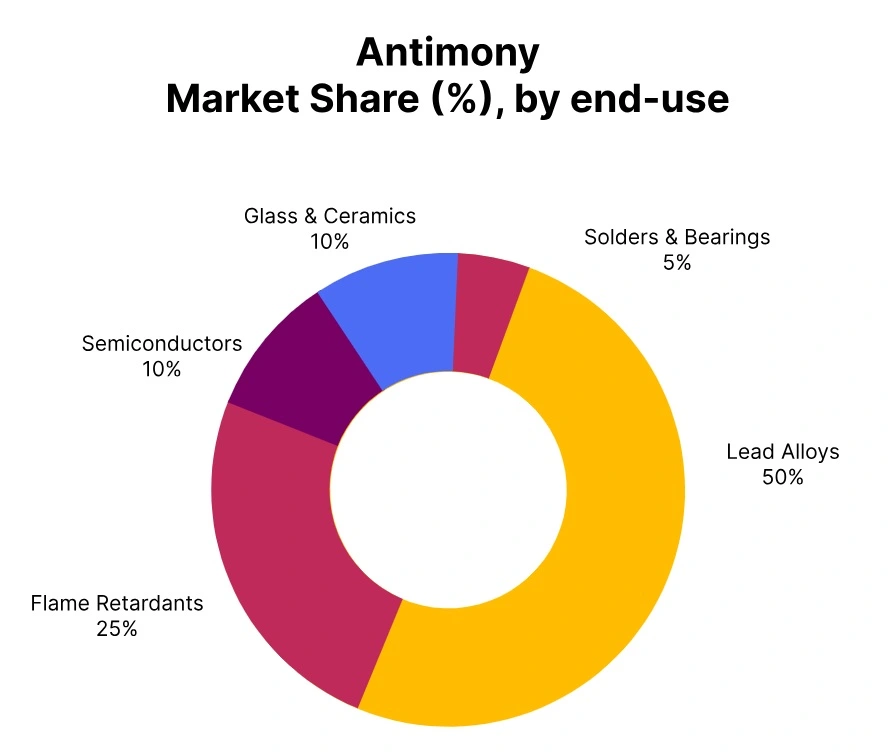
Antimony Market Share End Use

Historically, several events have caused significant fluctuations in Antimony prices

  • Impact on Investment and Financing: Elevated interest rates globally, particularly in major economies like the U.S. and Europe, made financing more expensive for businesses.
  • Global Supply Chain Disruption (2022): The war in Ukraine and other geopolitical tensions disrupted supply chains, leading to price volatility in various commodities, including antimony.
  • COVID-19 Pandemic (2019-2020): The global pandemic led to a significant decline in demand for antimony-intensive industries, causing prices to plummet.
  • Global Economic Downturn (2019-2020): The global economic slowdown led to reduced demand for antimony, resulting in lower prices.

These events underscore the antimony market’s vulnerability to global disruptions and highlight the need for continuous monitoring of supply-demand dynamics.

Why PriceWatch?

PriceWatch is your trusted resource for tracking global antimony price trends. Our platform delivers real-time data and expert analysis, offering deep insights into the key factors driving price fluctuations in the antimony market. By monitoring critical events such as geopolitical tensions, supply chain disruptions, and economic shifts, PriceWatch keeps you fully informed of market dynamics.

In addition, PriceWatch provides detailed forecasts and updates on production capacities, enabling you to anticipate market changes and make well-informed decisions. With PriceWatch, you gain a competitive edge in understanding all the elements that influence antimony prices worldwide. Stay ahead of the curve with PriceWatch’s reliable, accurate, and timely antimony market data.

Track PriceWatch's antimony price assessment on a weekly basis since 2015 onwards, along with short-term forecasts, and get access to the detailed report in a downloadable format.

Data Collection and Sources​

  • Real-Time Market Data: PriceWatch aggregates real-time pricing data from a diverse range of sources, including global commodity exchanges, industry reports, and proprietary databases. This ensures that our assessments reflect the most current market conditions.
  • On-the-Ground Intelligence: Our team gathers insights directly from key market participants, including producers, suppliers, traders, and end-users, across major antimony production hubs. This ground-level intelligence is crucial for understanding localized market dynamics.
  • Supply Chain Monitoring: We track the entire antimony supply chain, from raw material availability to production and distribution channels. This includes monitoring feedstock prices, production capacities, and transportation logistics

Event Tracking and Impact Analysis​

  • Geopolitical Tensions: PriceWatch continuously monitors global geopolitical developments, such as conflicts or trade disputes, which can significantly impact antimony prices. Our analysis includes potential disruptions to supply chains and their immediate and long-term effects on pricing.
  • Natural Disasters and Climate Events: We assess the impact of natural disasters, such as hurricanes or winter storms, on antimony production facilities, particularly in vulnerable regions like the APAC coasts. These events are factored into our price forecasts and supply outlooks.
  • Economic Shifts: PriceWatch evaluates macroeconomic trends, including global economic growth, inflation rates, and sector-specific demand (e.g., automotive, packaging, to predict shifts in antimony demand and corresponding price movements.

Production Capacity and Supply Analysis

  • Current Production Monitoring: We maintain a comprehensive database of global antimony production facilities, tracking their operational status, maintenance schedules, and output levels. This allows us to assess current supply availability accurately.
  • Future Capacity Projections: Our research includes detailed forecasts of upcoming antimony production capacities, factoring in new plant constructions, expansions, and technological advancements. This helps in predicting future supply trends and potential price stabilization.

Demand Forecasting

  • Sectoral Demand Analysis: PriceWatch provides an in-depth analysis of demand trends across key sectors, including packaging, automotive, and construction. We track year-on-year demand growth and project future consumption patterns based on economic indicators and industry developments.
  • Global Demand Dynamics: Our methodology considers regional demand variations and how they influence global antimony pricing. This includes understanding the impact of shifts in manufacturing bases, trade policies, and environmental regulations.

Pricing Model Development

  • Dynamic Pricing Models: PriceWatch utilizes advanced econometric models to forecast antimony prices, incorporating real-time data, historical trends, and projected market conditions. Our models are continuously refined to enhance accuracy and predictive power.
  • Scenario Analysis: We conduct scenario-based assessments to evaluate potential future market conditions. This includes best-case, worst-case, and most-likely scenarios, helping our clients prepare for a range of market outcomes.

Reporting and Client Support

  • Comprehensive Reports: Our clients receive detailed reports that include current price assessments, future price forecasts, and in-depth analysis of market drivers. These reports are designed to be actionable, providing clear insights and recommendations.
  • Ongoing Support: PriceWatch offers continuous updates and personalized support to our clients, ensuring they have the most up-to-date information to make informed decisions. Our experts are available to discuss specific market developments and provide tailored advice.

This research methodology ensures that PriceWatch delivers the most accurate, timely, and actionable antimony pricing assessments, helping our clients stay ahead of market trends and make informed business decisions.

Antimony Market Price Trend provided by PriceWatch is a base price and excludes VAT/Taxes, discounts, or offers. The information herein is accurate to the best of our knowledge as of the date indicated and is provided solely for the convenience of our customers as a reference for antimony. PriceWatch disclaims any warranties or representations regarding the accuracy of results derived from this information. It is the sole responsibility of the user to assess the suitability of the product for their specific application. This document does not constitute an endorsement to use the product in violation of any applicable patent rights.

Commodity prices are influenced by a complex interplay of factors, including:

 Production cost: Production costs directly influence commodity prices. When production expenses rise, such as through higher raw material or labor costs, commodity prices typically increase. Conversely, lower production cost leads to reduced prices of particular commodities.

Supply and Demand: The fundamental driver of commodity prices is the balance between supply and demand. When demand exceeds supply, prices tend to rise, and vice versa.  

Economic Growth: Global economic growth, particularly in emerging markets, can increase demand for commodities, driving prices higher.  

Geopolitical Events: Political instability, conflicts, and trade tensions can disrupt supply chains, affecting commodity prices.  

Natural Disasters: Weather events such as droughts, floods, and hurricanes can impact the production and availability of certain commodities.  

Speculation: Financial speculators can influence commodity prices through their trading activities.  

Government Policies: Government policies, such as tariffs, subsidies, and regulations, can impact the production, consumption, and trade of commodities.  

 PriceWatch, a leading procurement intelligence firm, offers a comprehensive suite of tools and services to help you effectively track commodity prices.

Some of the key benefits of using PriceWatch include:

 Real-time Data: Access to up-to-date market intelligence and data on commodity supply chains.

Expert Analysis: Insights from industry experts to interpret market trends and identify potential risks.

Risk Assessment: Tools to assess supply chain vulnerabilities and develop mitigation strategies.

Benchmarking: Comparisons of commodity prices and sourcing practices to optimize procurement decisions.

Supplier Intelligence: Detailed information on suppliers, including their financial health, production capacity, and sustainability practices.