Base Oil Price Trend and Forecast

UNSPC code: 151215
|
Weekly Update
|
Historical Data Since 2015
|
Forecast for 2026
  • Commodity Pricing

base oil Price Trends by Country

usUnited States
krSouth Korea
twTaiwan
aeUnited Arab Emirates
saSaudi Arabia
sgSingapore
inIndia
idIndonesia
deGermany
nlNetherlands

Global base oil Spot Market Prices, Trend Analysis and Forecast

Price-Watch™ provides price assessments for Base Oil across top trading regions:

Asia-Pacific

  • Base Oil Group – II (150N) FOB Daesan Port, South Korea
  • Base Oil Group – II (500N) FOB Daesan Port, South Korea
  • Base Oil Group – III (Viscosity: 4cST) FOB Busan, South Korea
  • Base Oil Group – III (Viscosity: 6cST) FOB Busan, South Korea
  • Base Oil Group – III (Viscosity: 8cST) FOB Busan, South Korea
  • Base Oil Group – II (150N) FOB Mailiao, Taiwan
  • Base Oil Group – II (500N) FOB Mailiao, Taiwan
  • Base Oil Group – II (500N) FOB Port of Singapore, Singapore
  • Base Oil Group – II (150N) CIF Nhava Sheva (South Korea), India
  • Base Oil Group – II (500N) CIF Nhava Sheva (South Korea), India
  • Base Oil Group – II (150N) CIF Nhava Sheva (Taiwan), India
  • Base Oil Group – II (500N) CIF Nhava Sheva (Taiwan), India
  • Base Oil Group – II (220N) CIF Nhava Sheva (USA), India
  • Base Oil Group – II (500N) CIF Nhava Sheva (Singapore), India
  • Base Oil Group – II (110N) CIF Nhava Sheva (Saudi Arabia), India
  • Base Oil Group – I (SN500) CIF Nhava Sheva (UAE), India
  • Base Oil Group – II (150N) CIF Jakarta (South Korea), Indonesia
  • Base Oil Group – II (500N) CIF Jakarta (South Korea), Indonesia
  • Base Oil Group – II (500N) CIF Jakarta (Singapore), Indonesia
  • Base Oil Group – I (SN500) Ex-Kandla (Bulk), India
  • Base Oil Group – III (Viscosity: 4cST) Ex-Mumbai (Bulk), India
  • Base Oil Group – III (Viscosity: 8cST) Ex-Mumbai (Bulk), India
  • Base Oil Group – II (220N) Ex-Kandla (Bulk), India
  • Base Oil Group – II (500N) Ex-Delhi (Barrels), India
  • Base Oil Group – II (500N) Ex-Kandla (Bulk), India


North America

  • Base Oil Group – I (SN150) FOB New Orleans, USA
  • Base Oil Group – I (SN500) FOB New Orleans, USA
  • Base Oil Group – II (100N) FOB New Orleans, USA
  • Base Oil Group – II (220N) FOB New Orleans, USA
  • Base Oil Group – II (600N) FOB New Orleans, USA


Europe

  • Base Oil Group – I (SN150) FD Rotterdam, Netherland
  • Base Oil Group – I (SN500) FD Rotterdam, Netherland
  • Base Oil Group – I (SN150) FD Hamburg, Germany
  • Base Oil Group – I (SN500) FD Hamburg, Germany


Middle East

  • Base Oil Group – I (SN500) FOB Jebel Ali, UAE
  • Base Oil Group – III (Viscosity: 4cST) FOB Jebel Ali, UAE
  • Base Oil Group – III (Viscosity: 6cST) FOB Jebel Ali, UAE
  • Base Oil Group – III (Viscosity: 8cST) FOB Jebel Ali, UAE
  • Base Oil Group – II (110N) FOB Yanbu, Saudi Arabia


Note:
In assessments structured as CIF [Importing Port] (Exporting Country), the country mentioned in brackets indicates the primary origin of supply (exporting country), while the named port refers to the destination port in the importing country. Other Incoterms (FOB, FD, EXW, etc.) should be interpreted in accordance with standard international trade definitions.

Base Oil Price Trend Report – Q4 2025

According to Price-Watch™, In Q4 2025, global Base Oil markets experienced widespread downward price pressure driven primarily by declining crude oil benchmarks that reduced feedstock costs and weakening refinery margins.

Base Oil price trends globally reflected oversupply conditions across major trading hubs, with Group II grades recording quarterly declines ranging from 6.81% to 8.54%. North American and European markets faced subdued demand from automotive and industrial lubricant sectors, contrasting with relatively stable consumption patterns in Asian markets.

Crude oil price volatility significantly impacted production economics, while favourable weather conditions across major shipping routes supported consistent logistics operations and supply chain reliability. The quarter concluded with producers implementing cautious output management strategies and traders executing year-end inventory optimization efforts amid evolving global trade dynamics and regional competitive pressures.

USA: Base Oil Group – II (220N) Export prices FOB New Orleans, USA

In Q4 2025, Base Oil Group II (220N) prices in USA experienced notable downward pressure amid oversupply conditions and subdued demand from automotive lubricant manufacturers. Base Oil price in USA for Group II (220N) material FOB New Orleans ranged between USD 650-675 per metric ton, recording an 8.54% quarterly decline.

The Base Oil price trend in USA was influenced by declining Crude Oil prices that reduced production costs, weakening refinery margins, and competitive pricing strategies among major producers. In December 2025, Base Oil prices decreased by 1.21%, supported by strategic inventory adjustments executed by blenders, normalized refinery operations maintaining adequate supply levels, and balanced year-end procurement activities.

South Korea: Base Oil Group – II (500N) Export prices FOB Daesan Port, South Korea

In Q4 2025, Base Oil Group II (500N) prices in South Korea demonstrated significant downward adjustment reflecting ample supply availability and moderate regional export demand. Base Oil price in South Korea for Group II (500N) material FOB Daesan Port ranged between USD 835-920 per metric ton, recording a 6.81% quarterly decline.

The Base Oil price trend in South Korea was influenced by lowered feedstock costs, normalized refinery throughput, and competitive export positioning across Southeast Asian markets. In December 2025, Base Oil prices decreased by 5.35%, supported by year-end inventory rationalization efforts and measured demand patterns from key importing nations.

Taiwan: Base Oil Group – II (500N) Export prices FOB Mailiao, Taiwan

In Q4 2025, Base Oil Group II (500N) prices in Taiwan experienced moderate downward pressure amid competitive regional supply dynamics and steady export market fundamentals. Base Oil price in Taiwan for Group II (500N) material FOB Mailiao ranged between USD 855-895 per metric ton, recording a 7.05% quarterly decline.

The Base Oil price trend in Taiwan was influenced by declining raw material prices that reduced production economics and regional pricing competitiveness against South Korean and Singaporean suppliers. In December 2025, Base Oil prices increased by 1.02%, reflecting strategic year-end restocking activities executed by forward-thinking buyers and improved export inquiry levels.

UAE: Base Oil Group – I (SN500) Export prices FOB Jebel Ali, UAE

In Q4 2025, Base Oil Group I (SN500) prices in UAE demonstrated relatively resilient performance amid balanced Middle Eastern supply-demand fundamentals and sustained regional consumption. Base Oil price in UAE for Group I (SN500) material FOB Jebel Ali ranged between USD 810-885 per metric ton, recording a 2.86% quarterly decline.

The Base Oil price trend in UAE was influenced by moderating Crude Oil prices that eased feedstock costs and consistent demand from African and South Asian export markets. Favorable weather conditions supported uninterrupted shipping operations. In December 2025, Base Oil prices increased by 4.88%, supported by improved export demand and measured production discipline.

Saudi Arabia: Base Oil Group – II (110N) Export prices FOB Yanbu, Saudi Arabia

In Q4 2025, Base Oil Group II (110N) prices in Saudi Arabia exhibited moderate downward adjustment reflecting ample regional supply availability and balanced export market conditions. Base Oil price in Saudi Arabia for Group II (110N) material FOB Yanbu ranged between USD 700-725 per metric ton, recording a 4.08% quarterly decline.

The Base Oil price trend in Saudi Arabia was influenced by softening Crude Oil benchmarks that lowered production costs and competitive export pricing strategies targeting African and European markets. In December 2025, Base Oil prices increased by 0.67%, reflecting year-end contractual stabilization efforts and sustained inquiry levels from regional blenders.

Singapore: Base Oil Group – II (500N) Export prices FOB Port of Singapore, Singapore

In Q4 2025, Base Oil Group II (500N) prices in Singapore experienced notable downward pressure amid competitive regional supply dynamics and moderate Southeast Asian demand fundamentals. Base Oil price in Singapore for Group II (500N) material FOB Port of Singapore ranged between USD 835-930 per metric ton, recording a 4.47% quarterly decline.

The Base Oil price trend in Singapore was influenced by declining crude oil prices that reduced feedstock economics and competitive positioning against South Korean and Taiwanese suppliers. Favorable weather conditions support consistent material flows. In December 2025, Base Oil prices decreased by 5.58%, supported by year-end inventory adjustments and normalized shipping logistics.

India: Base Oil Group – II (500N) Imported prices CIF Nhava Sheva from South Korea, India

In Q4 2025, Base Oil Group II (500N) prices in India demonstrated moderate downward adjustment reflecting ample import availability and balanced domestic lubricant manufacturing demand. Base Oil price in India for Group II (500N) material CIF Nhava Sheva from South Korean origin ranged between USD 905-980 per metric ton, recording a 4.44% quarterly decline.

The Base Oil price trend in India was influenced by softening Crude Oil prices that improved import economics and competitive import pricing from South Korean suppliers. Favorable monsoon withdrawal and weather conditions supported uninterrupted port operations. In December 2025, Base Oil prices decreased by 4.52%, supported by strategic inventory management efforts.

Indonesia: Base Oil Group – II (150N) Imported prices CIF Jakarta from South Korea, Indonesia

In Q4 2025, Base Oil Group II (150N) prices in Indonesia exhibited relative stability amid balanced import supply conditions and steady domestic lubricant manufacturing requirements. Base Oil price in Indonesia for Group II (150N) material CIF Jakarta from South Korean origin ranged between USD 800-825 per metric ton, recording a minimal 0.04% quarterly increase.

The Base Oil price trend in Indonesia was influenced by stable crude oil price levels that maintained import cost structures and consistent import availability from South Korean refiners. Favorable weather conditions supported reliable material deliveries. In December 2025, Base Oil prices decreased by 2.25%, reflecting year-end inventory rationalization efforts.

Netherlands: Base Oil Group – I (SN150) FD Rotterdam

In Q3 2025, Base Oil Group I (SN150) prices in Netherlands experienced significant downward pressure amid oversupply conditions in European markets and subdued regional lubricant manufacturing demand. Base Oil price in Netherlands for Group I (SN150) material Free Delivered Rotterdam ranged between USD 805-845 per metric ton, recording a 7.98% quarterly decline.

The Base Oil price trend in Netherlands was influenced by declining Brent Crude Oil prices that reduced refinery operating economics, ample regional supply availability from European refiners, and competitive import flows from Middle Eastern and Asian sources.

Warm summer weather conditions supported consistent logistics operations across European distribution networks. In September 2025, Base Oil prices decreased by 1.20%, reflecting strategic inventory adjustments and measured procurement activities.

Germany: Base Oil Group – I (SN150) FD Hamburg

In Q3 2025, Base Oil Group I (SN150) prices in Germany demonstrated notable downward adjustment reflecting oversupply conditions and balanced domestic industrial lubricant manufacturing demand. Base Oil price in Germany for Group I (SN150) material Free Delivered Hamburg ranged between USD 840-885 per metric ton, recording a 7.72% quarterly decline.

The Base Oil price trend in Germany was influenced by softening WTI Crude Oil benchmarks that weakened refinery margins, adequate regional supply availability, and competitive import pricing from Middle Eastern and Russian suppliers.

Favorable summer weather conditions facilitated smooth logistics operations and consistent material distribution. In September 2025, Base Oil prices decreased by 0.58%, supported by ongoing inventory optimization efforts and normalized logistics across European distribution networks.

India: Base Oil Group – I (SN500) Ex-Kandla (Bulk)

In Q3 2025, Base Oil Group I (SN500) prices in India exhibited upward momentum amid tightening domestic supply conditions and robust demand from industrial lubricant manufacturing sectors. Base Oil price in India for Group I (SN500) material Ex-Kandla in bulk ranged between USD 980-1065 per metric ton, recording a 6.22% quarterly increase.

The Base Oil price trend in India was influenced by rising Dubai Crude Oil prices during parts of the quarter that strengthened refinery margins, constrained domestic refinery output, and competitive export opportunities reducing local availability.

Monsoon weather conditions impacted port operations and logistics efficiency across western India. In September 2025, Base Oil prices increased by 4.00%, supported by strategic restocking activities and improved domestic demand patterns.

Base Oil Price Trend Analysis: Q4 2025

In Q3 2025, the global Base Oil market turned predominantly bearish, with quarterly percentage changes ranging from -6.90% to +2.82%. The most significant declines were recorded in Taiwan and Saudi Arabia, as regional oversupply and weak downstream demand weighed heavily on pricing. Singapore, South Korea, and Indonesia also posted moderate reductions.

The UAE was the only market to record a price increase, supported by stable production and consistent export inquiries. Freight conditions remained steady across most ports, providing minimal cushion against overall pricing pressure. The Base Oil price trend in Q3 reflected oversupply, low seasonal demand, and cautious global procurement behavior.

USA: Base Oil Export Price from the USA, Grade: Group II (220N) FOB New Orleans.

In Q3 2025, the Base Oil price in the USA recorded a modest increase of 0.7%, with FOB New Orleans offers ranging between USD 660–763 per metric ton. The Base Oil price trend in the USA indicated gradual stabilization following sharper declines earlier in the year, supported by consistent export flows and modest demand recovery.

However, Base Oil prices in September 2025 registered a slight dip of 4.3% in the US, reflecting pressure from global oversupply and reduced downstream buying. US origin cargoes remained competitively priced, helping to maintain confidence among international buyers despite the uncertain economic landscape.

South Korea: Base Oil Export Price from South Korea, Grade: Group II (500N) FOB Daesan Port.

In Q3 2025, the Base Oil price in South Korea decreased by 4%, with FOB Daesan Port offers in the band of USD 915–998 per metric ton. The Base Oil price trend in South Korea mirrored regional oversupply and heightened competition among Asian refiners. Despite stable production output, Korean suppliers made pricing adjustments to maintain regional market share.

In September 2025, Base Oil prices in South Korea fell further by 3.1%, showing the impact of deferred buying and cautious procurement amid weak signals from end-user markets. South Korea continues to assess pricing strategies in line with evolving trade dynamics.

Taiwan: Base Oil Export Price from Taiwan, Grade: Group II (500N) FOB Mailiao.

In Q3 2025, the Base Oil price in Taiwan dropped sharply by 6.90%, with FOB Mailiao offers between USD 890–973 per metric ton. The Base Oil price trend in Taiwan signaled a significant correction following earlier gains, driven by tepid global demand and rising supply-side pressure. Taiwanese refiners responded by trimming offers and adjusting shipping cycles to avoid surplus buildup.

Base Oil prices in September 2025 declined by an additional 4.74% in Taiwan, emphasizing ongoing demand-side softness. Market participants now anticipate selective procurement patterns to dominate the outlook for Q4 as stakeholders await signs of broader consumption recovery.

UAE: Base Oil Export Price from the UAE, Grade: Group I (SN500) FOB Jebel Ali.

In Q3 2025, the Base Oil price in the UAE rose by 2.82%, with FOB Jebel Ali quotes ranging between USD 835–880 per metric ton. The Base Oil price trend in the UAE exhibited slight bullishness, supported by a steady export pace and firm demand from regional packaging and industrial sectors.

Despite global softness, the UAE benefited from efficient port logistics and price discipline. Base Oil prices in September 2025 saw a marginal decline of 1.62% in UAE, suggesting late-quarter hesitation among buyers. However, market momentum remained intact, and the outlook for Q4 remains cautiously optimistic.

Saudi Arabia: Base Oil Export Price from Saudi Arabia, Grade: Group II (110N) FOB Yanbu.

In Q3 2025, the Base Oil price in Saudi Arabia fell by 6.3%, with FOB Yanbu offers spanning USD 718–786 per metric ton. The Base Oil price trend in Saudi Arabia highlighted increasing pressure from inventory buildup and softer inquiries from traditional export destinations. Producers responded by offering more competitive rates to retain market share.

Base Oil prices in September 2025 declined further by 2.0% in Saudi Arabia, reinforcing the bearish tone in regional markets. Moving forward, suppliers are expected to closely watch Q4 demand trends and possibly recalibrate output to balance market fundamentals.

Singapore: Base Oil Export Price from Singapore, Grade: Group II (500N) FOB Port of Singapore.

In Q3 2025, the Base Oil price in Singapore declined by 5.5%, with FOB Port of Singapore quotes ranging between USD 920–958 per metric ton. The Base Oil price trend in Singapore underscored increased intra-Asian competition and a shift toward conservative buying behaviors. Regional buyers delayed purchases, anticipating better pricing ahead.

In Singapore, Base Oil prices for September 2025 slipped by 1.9%, suggesting continued caution and oversupply in the system. Singapore exporters adjusted their offers in response to thin demand, aiming to maintain liquidity while awaiting improved fundamentals later in the year.

India: Base Oil Import Price in India from UAE, Grade: Group I (SN500) CIF Nhava Sheva.

According to Price-Watch, in Q3 2025, the Base Oil price in India edged down by 0.94%, with CIF Nhava Sheva offers for UAE-origin SN500 ranging from USD 993–1085 per metric ton. The Base Oil price trend in India remained broadly steady due to consistent consumption and healthy import flow, though international supply pressure added mild bearish cues.

In India, Base Oil prices for September 2025 reflected a 2% decline, showing late-quarter buyer restraint. Indian importers maintained cautious procurement strategies, favoring spot purchases while monitoring exchange rate movements and upstream cost developments ahead of Q4 planning.

Indonesia: Base Oil Import Price in Indonesia from South Korea, Grade: Group II (150N) CIF Jakarta.

In Q3 2025, the Base Oil price in Indonesia dropped by 3.5%, with CIF Jakarta quotes for Korean origin 150N spanning USD 976–1060 per metric ton. The Base Oil price trend in Indonesia has been weighed down by surplus inventories and subdued industrial activity. Importers took a wait-and-see approach, avoiding long-term contracts.

Base Oil prices in September 2025 saw a 3.0% decline, highlighting the impact of weakened downstream demand and tight financing conditions. The market remained on alert for signs of economic improvement or restocking triggers that may influence Q4 pricing recovery.

In Q2 2025, the global Base Oil market displayed modest bullish activity in select regions, with percentage changes ranging from -3.37% to +7.36%. Strong gains were noted in Indonesia, South Korea, and Taiwan, as demand recovery and tight supply supported prices. India saw a minor uptick backed by stable imports from the UAE, while Saudi Arabia and the USA experienced slight declines amid surplus availability. Price movement across Asia-Pacific was largely positive, whereas North America and the Middle East reflected pressure from competitive global supply. The Base Oil price trend in Q2 remained influenced by export competitiveness, market restocking, and regional trade flows. 

USA 

Base Oil Export Price from the USA, Grade: Group II (220N) FOB New Orleans

In Q2 2025, the Base Oil price in the USA continued its downward trend, falling by 3.37%, with FOB New Orleans offers ranging between USD 715–735 per metric ton. The Base Oil price trend in the USA reflected persistent oversupply, sluggish export demand, and lower feedstock costs. The Base Oil prices in Q2 2025 were under pressure as global trading slowed and North American refiners adjusted output levels accordingly. While domestic offtake remained relatively steady, competitive international markets forced suppliers to revise offers, particularly toward the latter part of the quarter. Lower logistics costs also weighed on overall price realizations. 

South Korea 

Base Oil Export Price from South Korea, Grade: Group II (500N) FOB Daesan Port

In Q2 2025, the Base Oil price in South Korea rose by 6.91%, with FOB Daesan Port offers ranging between USD 988–1005 per metric ton. The Base Oil price trend in South Korea remained bullish due to constrained supply availability and steady demand across Asia. Base Oil prices in Q2 2025 climbed in response to planned maintenance shutdowns and tighter regional inventories. Korean producers benefitted from increased inquiries from Southeast Asia and India, which kept prices firm despite some freight volatility. Positive sentiment in feedstock markets and tighter spot availability also contributed to the quarter’s upward momentum. 

Taiwan 

Base Oil Export Price from Taiwan, Grade: Group II (500N) FOB Mailiao

The Base Oil price in Taiwan witnessed an increase of 4.85% in Q2 2025, with FOB Mailiao values moving between USD 965–1070 per metric ton. The Base Oil price trend in Taiwan was supported by firm buying from regional importers and slightly reduced output during scheduled plant maintenance. The Base Oil prices in Q2 2025 reflected strong pull from India and Southeast Asia, which limited availability in the spot market. Sellers maintained price discipline in response to rising freight rates and tighter margins. The market remained firm throughout the quarter despite global uncertainties affecting other downstream chemical sectors. 

UAE 

Base Oil Export Price from the UAE, Grade: Group I (SN500) FOB Jebel Ali

In Q2 2025, the Base Oil price in the UAE declined slightly by 1.14%, with FOB Jebel Ali offers ranging between USD 821–865 per metric ton. The Base Oil price trend in the UAE showed softness, driven by rising domestic production and slower overseas inquiries. The Base Oil prices in Q2 2025 moved downward due to increased competition from other Middle Eastern and Asian suppliers. Despite stable refining rates, exporters adjusted their offers to protect market share. Demand from Africa and South Asia was cautious, leading to a subdued trading environment for most of the quarter. 

Saudi Arabia 

Base Oil Export Price from Saudi Arabia, Grade: Group II (110N) FOB Yanbu

The Base Oil price in Saudi Arabia increased slightly by 0.81% in Q2 2025, with FOB Yanbu offers ranging from USD 785–805 per metric ton. The Base Oil price trend in Saudi Arabia was supported by consistent demand from traditional export markets and stable production. The Base Oil prices in Q2 2025 remained rangebound despite occasional freight fluctuations and macroeconomic uncertainties. Regional buyers maintained steady procurement, and Saudi exporters benefitted from competitive positioning versus alternative Asian suppliers. Market confidence improved during the latter half of the quarter, pointing to a balanced outlook ahead. 

Singapore 

Base Oil Export Price from Singapore, Grade: Group II (500N) FOB Port of Singapore

In Q2 2025, the Base Oil price in Singapore showed minimal change, declining just 0.17%, with FOB Port of Singapore offers between USD 984–1005 per metric ton. The Base Oil price trend in Singapore reflected balanced supply-demand fundamentals with a slightly bearish tilt. The Base Oil prices in Q2 2025 remained stable due to consistent cargo flows and measured buyer activity in Southeast Asia. Traders opted for shorter-term contracts, keeping procurement volumes lean. While production levels remained firm, the competitive pricing landscape and cautious end-user sentiment limited upward momentum across the region. 

Indonesia 

Base Oil Import Price in Indonesia from South Korea, Grade: Group II (150N) CIF Jakarta

In Q2 2025, the Base Oil price in Indonesia surged by 7.36%, with CIF Jakarta offers from South Korea ranging between USD 1050–1070 per metric ton. The Base Oil price trend in Indonesia was driven by firm demand and limited spot availability. The Base Oil prices in Q2 2025 increased as buyers rushed to replenish inventories following a period of tight supply. Steady consumption, stronger freight costs, and robust regional trade flows further supported the upward momentum. Korean-origin cargoes gained popularity due to consistent delivery timelines and high quality. 

Base Oil Import Price in India from UAE, Grade: Group I (SN500) CIF Nhava Sheva.

The Base Oil price in India edged higher by 1.40% in Q2 2025, with CIF Nhava Sheva offers from UAE-origin suppliers ranging between USD 1060–1075 per metric ton. The Base Oil price trend in India reflected strong seasonal demand and firm interest from blenders despite global pricing fluctuations. The Base Oil prices in Q2 2025 remained firm as buyers secured volumes ahead of the monsoon season, ensuring uninterrupted downstream operations. While freight costs declined significantly, elevated import values were supported by tight domestic availability and firm international benchmarks. 

In Q1 2025, the global Base Oil market showed a mixed to slightly bearish tone across major regions, with percentage changes ranging from -5.34% to +2.59%. The steepest decline was recorded in the USA, driven by reduced export momentum and robust refinery runs. Meanwhile, India and Singapore registered modest gains due to consistent imports and stable demand. The Asia-Pacific region remained largely steady, with South Korea and Indonesia showing minimal fluctuation. Middle Eastern suppliers like the UAE and Saudi Arabia experienced slight price shifts amid balanced exports. Overall, the Base Oil price trend in Q1 was shaped by healthy availability, cautious purchasing behaviour, and relatively flat freight dynamics. 

USA 

Base Oil Export Price from the USA, Grade: Group II (220N) FOB New Orleans

In Q1 2025, the Base Oil price in the USA declined by 5.34%, with FOB New Orleans offers between USD 735–765 per metric ton. The Base Oil price trend in the USA continued to weaken due to oversupply conditions and poor export demand. The Base Oil prices in Q1 2025 dropped steadily as refineries ran at high rates, and storage constraints prompted sellers to lower offers. A lack of aggressive buying interest globally and subdued industrial activity weighed on overall market sentiment. Freight remained steady but had little effect in offsetting the bearish tone. 

South Korea 

Base Oil Export Price from South Korea, Grade: Group II (500N) FOB Daesan Port

The Base Oil price in South Korea declined marginally by 0.36% in Q1 2025, with FOB Daesan Port offers ranging from USD 895–957 per metric ton. The Base Oil price trend in South Korea remained relatively flat due to stable demand from key export destinations. The Base Oil prices in Q1 2025 held within a tight range as buyers took a cautious approach amid uncertain macroeconomic signals. Korean producers maintained steady supply levels, and competition remained manageable, helping limit further downside. Freight costs were largely unchanged and had minimal impact on trade. 

Taiwan 

Base Oil Export Price from Taiwan, Grade: Group II (500N) FOB Mailiao

In Q1 2025, the Base Oil price in Taiwan rose by 2.59%, with FOB Mailiao offers between USD 940–983 per metric ton. The Base Oil price trend in Taiwan was buoyed by strong international demand and tightened supply. The Base Oil prices in Q1 2025 moved upward as traders covered shortfalls and restocking picked up. Despite higher costs, buyers in India and Southeast Asia continued to source Taiwanese cargoes due to reliable supply chains. The overall sentiment remained firm with suppliers holding prices amid favorable currency movements. 

UAE 

Base Oil Export Price from the UAE, Grade: Group I (SN500) FOB Jebel Ali

The Base Oil price in the UAE edged up by 0.24% in Q1 2025, with FOB Jebel Ali offers ranging between USD 837–862 per metric ton. The Base Oil price trend in the UAE was stable, with balanced export demand and consistent production. The Base Oil prices in Q1 2025 showed slight firmness as suppliers maintained offers in a relatively calm market. North African and South Asian buyers remained active, supporting price stability. Traders remained cautious but optimistic about volumes moving forward into Q2. 

Saudi Arabia 

Base Oil Export Price from Saudi Arabia, Grade: Group II (110N) FOB Yanbu

The Base Oil price in Saudi Arabia declined by 4.65% in Q1 2025, with FOB Yanbu offers between USD 773–799 per metric ton. The Base Oil price trend in Saudi Arabia showed downward momentum as export volumes outpaced consumption in key markets. The Base Oil prices in Q1 2025 moved lower due to aggressive pricing from other Gulf producers and lackluster demand. Despite steady production, inventory buildup led to discounts in spot transactions. Sellers adopted a wait-and-watch strategy as Q2 approached. 

Singapore 

Base Oil Export Price from Singapore, Grade: Group II (500N) FOB Port of Singapore

In Q1 2025, the Base Oil price in Singapore rose by 1.78%, with FOB Port of Singapore offers ranging between USD 964–1025 per metric ton. The Base Oil price trend in Singapore reflected modest growth driven by steady export demand from neighboring countries and balanced production levels. The Base Oil prices in Q1 2025 maintained resilience despite minor global crude oil price fluctuations. Stable freight costs during the quarter supported market stability, enabling suppliers to keep pricing competitive in key regional markets. 

Indonesia 

Base Oil Import Price in Indonesia from South Korea, Grade: Group II (150N) CIF Jakarta

In Q1 2025, the Base Oil price in Indonesia declined slightly by 0.17%, with CIF Jakarta offers from South Korea ranging between USD 951–1015 per metric ton. The Base Oil price trend in Indonesia remained largely stable amid steady supply and controlled import volumes. The Base Oil prices in Q1 2025 were maintained by consistent demand from local blenders and minimal freight cost fluctuations. Competitive regional supply and balanced inventories supported pricing stability throughout the quarter. 

Base Oil Import Price in India from UAE, Grade: Group I (SN500) CIF Nhava Sheva.

In Q1 2025, the Base Oil price in India increased by 2.45%, with CIF Nhava Sheva offers from UAE ranging between USD 1000–1070 per metric ton. The Base Oil price trend in India was influenced by rising crude oil benchmarks and growing domestic demand. The Base Oil prices in Q1 2025 saw moderate gains supported by logistical improvements and import volumes from UAE manufacturers. Freight costs also increased slightly, contributing to upward pressure on pricing, although market competition kept prices in a reasonable range.

Base Oil Price Trend Analysis: Q4 2024

In Q4 2024, the global Base Oil market saw mixed regional price trends influenced by supply and demand shifts. North America experienced moderate price declines due to ample supply and cautious exports. East Asia, including South Korea and Taiwan, showed varied movements with steady demand supporting some gains, while Taiwan faced slight pressure from inventories. The Middle East displayed contrasting trends, with UAE prices stable and Saudi Arabia seeing notable declines amid oversupplies. Southeast Asia’s Singapore saw minor price drops, whereas Indonesia recorded moderate increases. India’s market remained firm, supported by strong imports and consumption. Freight rates were stable, enabling smooth trade, with cautious optimism prevailing for 2025. 

USA 

Base Oil Export Price in USA, Grade: Group II (220N) FOB New Orleans 

In Q4 2024, the Base Oil price in USA declined by 4.11%, with FOB New Orleans prices ranging between USD 773–818 per metric ton. The Base Oil price trend in USA showed moderate softness due to increased supply and subdued export demand. The Base Oil prices in Q4 2024 were pressured by cautious buying behaviours and inventory build-up. Freight rates remained stable, helping maintain some market balance. Despite the downward adjustment, steady domestic consumption prevented sharper declines. The USA market moved cautiously amid uncertainty over global demand and economic conditions. 

South Korea 

Base Oil Export Price in South Korea, Grade: Group II (500N) FOB Daesan Port 

In Q4 2024, the Base Oil price in South Korea rose by 4.94%, with FOB Daesan Port prices ranging between USD 882–993 per metric ton. The Base Oil price trend in South Korea strengthened due to improved regional demand and active inquiries from Southeast Asian buyers. The Base Oil prices in Q4 2024 benefitted from steady refinery output and consistent export flows. Freight costs remained stable, supporting smoother trade. Market participants remained cautiously optimistic, balancing supply availability against pricing pressures. The regional market indicated firming fundamentals ahead of 2025. 

Taiwan 

Base Oil Export Price in Taiwan, Grade: Group II (500N) FOB Mailiao 

In Q4 2024, the Base Oil price in Taiwan declined slightly by 0.71%, with FOB Mailiao prices ranging between USD 911–973 per metric ton. The Base Oil price trend in Taiwan reflected stable production and moderate demand from export-driven sectors. The Base Oil prices in Q4 2024 were pressured by cautious buying and slight inventory adjustments. Freight rates remained steady, supporting continued trade flows. Market participants remained watchful as crude oil price fluctuations influenced purchasing decisions. Overall, Taiwan’s Base Oil market held a balanced stance throughout the quarter. 

UAE 

Base Oil Export Price in UAE, Grade: Group I (SN500) FOB Jebel Ali 

In Q4 2024, the Base Oil price in UAE decreased marginally by 0.47%, with FOB Jebel Ali prices ranging between USD 828–858 per metric ton. The Base Oil price trend in UAE was supported by consistent production and steady shipments to key regional markets. The Base Oil prices in Q4 2024 reflected balanced supply and demand fundamentals with minor downward pressure. Freight costs were stable, helping maintain trade efficiency. Buyers in South Asia and East Africa remained active, supporting market resilience. The UAE Base Oil market continued to show stability amid moderate external demand. 

Saudi Arabia 

Base Oil Export Price in Saudi Arabia, Grade: Group II (110N) FOB Yanbu 

In Q4 2024, the Base Oil price in Saudi Arabia declined sharply by 7.48%, with FOB Yanbu prices ranging between USD 800–847 per metric ton. The Base Oil price trend in Saudi Arabia was influenced by oversupply and limited export inquiries. The Base Oil prices in Q4 2024 experienced pressure from competitive regional offers and higher inventory levels. Freight rates remained largely unchanged, but demand softness weighed heavily on pricing. Market participants delayed purchases anticipating further price declines. Overall, Saudi Arabia’s Base Oil market faced challenges amid subdued external demand in the quarter. 

Singapore 

Base Oil Export Price in Singapore, Grade: Group II (500N) FOB Port of Singapore 

In Q4 2024, the Base Oil price in Singapore decreased slightly by 1.51%, with FOB Port of Singapore prices ranging between USD 958–994 per metric ton. The Base Oil price trend in Singapore reflected ample supply and cautious demand from regional buyers. The Base Oil prices in Q4 2024 were impacted by slower spot activity and stable freight costs. Despite minor price softening, trade flows remained consistent with buyers monitoring market direction. Market participants adopted a wait-and-see approach amid global crude oil uncertainties. Singapore’s Base Oil market showed signs of cautious optimism overall. 

Indonesia 

Base Oil Import Price in Indonesia from South Korea, Grade: Group II (150N) CIF Jakarta 

In Q4 2024, the Base Oil price in Indonesia increased by 4.58%, with CIF Jakarta prices ranging between USD 937–1045 per metric ton. The Base Oil price trend in Indonesia was supported by growing industrial demand and steady import volumes from South Korea. The Base Oil prices in Q4 2024 reflected increased purchasing activity and stable freight costs. Market participants-built inventories ahead of the new year, anticipating higher consumption. Competitive regional supply and efficient logistics aided price strength. Indonesia’s Base Oil market demonstrated cautious optimism as the quarter progressed. 

Base Oil Import Price in India from UAE, Grade: Group I (SN500) CIF Nhava Sheva

In Q4 2024, the Base Oil price in India increased by 3.04%, with CIF Nhava Sheva prices ranging between USD 985–1100 per metric ton. The Base Oil price trend in India was driven by strong demand from lubricant manufacturers and steady imports from the UAE. The Base Oil prices in Q4 2024 benefitted from robust procurement activity and stable freight rates. Buyers remained active despite global market uncertainties, supporting steady consumption. Inventory levels were balanced, with expectations of tighter supply in early 2025 influencing buying behaviour. India’s Base Oil market remained firm and resilient. 


In Q3 2024, the global Base Oil market experienced varied regional price movements driven by complex supply-demand balances across major producing and consuming areas. North America’s prices softened notably due to rising inventories and weaker export demand amid cautious buyer behavior. East Asia exhibited mixed trends, with South Korea maintaining steady pricing while Taiwan encountered modest declines caused by inventory corrections and cautious purchasing. The Middle East remained stable in UAE, but Saudi Arabia faced price drops amid oversupply and subdued exports. Southeast Asia, including Singapore and Indonesia, recorded slight price gains supported by consistent demand and supply chain efficiency. India’s prices rose moderately, buoyed by strong imports and steady domestic consumption. 

USA 

Base Oil Export Price in USA, Group II (220N) FOB New Orleans

In Q3 2024, the Base Oil price in the USA declined marginally by 2.32%, with FOB New Orleans prices ranging between USD 811 and 845 per metric ton. This Base Oil price trend was weighed primarily by growing inventories and weaker export demand from key international markets. Domestic consumption levels remained relatively steady, but cautious buying behavior limited any significant price advances. Freight rates were stable throughout the quarter, supporting logistical efficiency and timely deliveries. Market participants closely monitored crude oil price trends and supply-demand dynamics, which are expected to influence price movements in the upcoming quarter. 

South Korea 

Base Oil Export Price in South Korea, Group II (500N) FOB Daesan Port

In Q3 2024, the Base Oil price in South Korea decreased slightly by 0.96%, with FOB Daesan Port prices ranging from USD 835 to 923 per metric ton. This price trend reflected balanced refinery output and moderate export activity amid cautious buyer sentiment. Buyers remained hesitant, awaiting clearer market signals before committing larger purchases. Freight costs remained steady and helped facilitate smooth deliveries across regional supply chains. Regional demand was consistent but competition from alternative suppliers limited significant price growth, maintaining a cautious overall market sentiment during the quarter. 

Taiwan 

Base Oil Export Price in Taiwan, Group II (500N) FOB Mailiao

In Q3 2024, the Base Oil price in Taiwan decreased by 2.71%, with FOB Mailiao prices ranging between USD 909 and 988 per metric ton. This downward price trend was pressured by inventory adjustments and cautious purchasing behavior from downstream sectors, despite steady refinery operations. Freight costs remained stable and ensured uninterrupted export activity throughout the quarter. Market participants maintained a cautious stance due to global demand uncertainties, which resulted in moderate price declines. Taiwan’s competitive positioning persisted, but subdued buying sentiment restrained any meaningful price increases during this period. 

UAE 

Base Oil Export Price in UAE, Group I (SN500) FOB Jebel Ali

In Q3 2024, the Base Oil price in the UAE increased by 2.62%, with FOB Jebel Ali prices ranging from USD 808 to 882 per metric ton. This price trend was supported by steady refinery output and firm regional demand, which bolstered market confidence. Stable freight rates contributed to smooth logistics and timely shipments. Robust demand from South Asian and African markets helped strengthen export volumes. Market participants exhibited cautious optimism, closely monitoring fluctuations in crude prices and geopolitical factors that could potentially influence supply and pricing in future quarters. 

Saudi Arabia 

Base Oil Export Price in Saudi Arabia, Group II (110N) FOB Yanbu

In Q3 2024, the Base Oil price in Saudi Arabia declined by 2.34%, with FOB Yanbu prices fluctuating between USD 855 and 929 per metric ton. The price trend was pressured by oversupply conditions and weaker export demand from key international markets. Buyers remained cautious due to ample inventory levels and competitive pricing from other regional suppliers. Although freight costs stayed steady, they were insufficient to mitigate the downward price pressures. Market observers anticipated potential supply adjustments or policy interventions to stabilize pricing and restore balance soon amid ongoing market softness. 

Singapore 

Base Oil Export Price in Singapore, Group II (500N) FOB Port of Singapore

In Q3 2024, the Base Oil price in Singapore edged up by 0.71%, with FOB Port of Singapore prices ranging between USD 967 and 1010 per metric ton. The price trend experienced modest gains, supported by steady regional demand and reliable supply availability. Stable freight costs facilitated efficient logistical operations and timely deliveries. Buyers remained cautiously optimistic amid ongoing global economic uncertainties, maintaining steady procurement while closely monitoring market fundamentals and geopolitical risks that could impact future pricing and supply dynamics in this key hub. 

Indonesia 

Base Oil Import Price in Indonesia from South Korea, Group II (150N) CIF Jakarta

In Q3 2024, the Base Oil price in Indonesia increased by 1.07%, with CIF Jakarta prices ranging between USD 890 and 980 per metric ton. This price trend was supported by growing industrial demand alongside steady import volumes from South Korea. Freight costs remained stable, facilitating efficient supply chain operations. Buyers exhibited cautious optimism amid improving regional economic activity. Market participants closely monitored global crude oil trends and regional trade policies, which were expected to influence price direction and supply stability in the near term. 

Base Oil Import Price in India from UAE, Group I (SN500) CIF Nhava Sheva

In Q3 2024, the Base Oil price in India increased by 3.26%, with CIF Nhava Sheva prices ranging between USD 970 and 1065 per metric ton. This price trend was driven by strong imports from the UAE coupled with steady domestic consumption across various industrial sectors. Freight costs remained manageable, ensuring timely and reliable supply. Buyers demonstrated growing confidence amid stable market conditions. Market participants carefully tracked import volumes and international price trends to guide their procurement strategies, expecting continued supply stability and moderate price growth soon. 

In Q2 2024, the global Base Oil market exhibited a diverse pattern of regional price movements, driven by a complex interplay of supply adjustments and fluctuating demand across key markets worldwide. North America experienced a modest price recovery, supported by renewed export momentum and balanced levels of domestic consumption. East Asia, particularly South Korea and Taiwan, showed firm and steady prices due to robust refinery operations and healthy regional demand from industrial users.

The Middle East remained largely stable with only minor fluctuations observed in UAE and Saudi Arabia, influenced by inventory adjustments. Southeast Asia, including Singapore and Indonesia, witnessed moderate price increases due to growing import demand and supply chain efficiencies. India maintained steady pricing supported by strong import volumes and consistent domestic consumption. 

USA 

Base Oil Export Price in USA, Group II (220N) FOB New Orleans

In Q2 2024, the Base Oil price in the USA increased by a moderate 4.27%, with FOB New Orleans prices ranging between USD 826 and 880 per metric ton. This upward Base Oil price trend was supported by a balanced mix of export activity and steady domestic consumption patterns. Renewed demand from international buyers and improvements in logistical operations further contributed to these price gains. Freight rates remained consistent, helping to facilitate reliable and timely supply chains. Market participants continued to monitor crude oil price fluctuations and production adjustments closely, which are expected to shape price directions in the months ahead. 

South Korea 

Base Oil Export Price in South Korea, Group II (500N) FOB Daesan Port

In Q2 2024, the Base Oil price in South Korea increased by 6.48%, with FOB Daesan Port prices ranging between USD 857 and 937 per metric ton. This upward price trend was driven by steady refinery output levels coupled with strong export demand from regional buyers. Increased purchasing activity was supported by stable freight costs and improved supply chain efficiencies across Asia-Pacific markets. Competitive pricing helped South Korea maintain its strong position as a key Base Oil supplier in the region. Market players closely monitored global economic indicators to anticipate potential demand shifts and future price movements. 

Taiwan 

Base Oil Export Price in Taiwan, Group II (500N) FOB Mailiao

In Q2 2024, the Base Oil price in Taiwan surged significantly by 12.46%, with FOB Mailiao prices ranging between USD 941 and 1010 per metric ton. This sharp price increase reflected robust regional demand combined with controlled refinery output, which supported firm and resilient pricing levels. Stable freight rates ensured smooth logistical operations and uninterrupted export activities throughout the quarter. Buyers exhibited growing confidence and increased procurement activity amid positive market sentiment. Taiwan’s competitive export positioning was reinforced, though market participants remained vigilant for potential global demand fluctuations and crude price volatility that could impact future pricing. 

UAE 

Base Oil Export Price in UAE, Group I (SN500) FOB Jebel Ali

In Q2 2024, the Base Oil price in the UAE declined slightly by 0.40%, with FOB Jebel Ali prices ranging between USD 812 and 843 per metric ton. This marginal price decrease was primarily due to local inventory adjustments and modest variations in export demand from regional customers. Freight costs remained stable, supporting efficient logistical operations despite softer market conditions. Market participants maintained a cautious outlook amid competitive regional supply and closely monitored global crude price movements, which have the potential to influence future pricing trends within the Middle East and export markets. 

Saudi Arabia 

Base Oil Export Price in Saudi Arabia, Group II (110N) FOB Yanbu

In Q2 2024, the Base Oil price in Saudi Arabia remained largely stable, registering a slight decrease of 0.11%, with FOB Yanbu prices fluctuating between USD 885 and 935 per metric ton. The price trend reflected balanced supply conditions alongside steady export demand from key trading partners. Buyers remained cautious but consistent in their procurement, supported by stable freight rates and robust local market fundamentals. Market observers anticipated that potential supply adjustments or policy shifts might influence price trends soon, particularly amid ongoing uncertainties in the global economic landscape. 

Singapore 

Base Oil Export Price in Singapore, Group II (500N) FOB Port of Singapore

In Q2 2024, the Base Oil price in Singapore increased by a notable 9.67%, with FOB Port of Singapore prices ranging from USD 952 to 1005 per metric ton. This positive price trend was driven by strong regional demand and robust import volumes from key industrial sectors. Stable freight costs facilitated smooth and efficient supply chain operations, ensuring timely deliveries to customers. Buyers demonstrated increased confidence amid improving economic conditions across Southeast Asia. Market participants closely followed global crude oil trends and geopolitical developments that could significantly impact supply and pricing dynamics going forward. 

Indonesia 

Base Oil Import Price in Indonesia from South Korea, Group II (150N) CIF Jakarta

In Q2 2024, the Base Oil price in Indonesia increased by 6.69%, with CIF Jakarta prices ranging from USD 906 to 972 per metric ton. The price trend was supported by rising industrial demand across various sectors and steady import volumes from South Korea. Freight rates remained stable, ensuring efficient and timely delivery of products to end users. Buyers showed cautious optimism as regional economies demonstrated signs of recovery. Market players closely monitored global crude oil price movements and trade policies that are expected to impact price direction and supply stability going forward. 

Base Oil Import Price in India from UAE, Group I (SN500) CIF Nhava Sheva

In Q2 2024, the Base Oil price in India increased by 7.40%, with CIF Nhava Sheva prices ranging from USD 965 to 1025 per metric ton. This upward price trend was primarily driven by steady import volumes from the UAE combined with consistent domestic consumption across multiple industrial sectors. Freight costs remained manageable, supporting supply stability and timely deliveries. Buyers exhibited increased procurement activity, reflecting growing confidence in the underlying market fundamentals. Market participants closely tracked global supply-demand dynamics and crude price fluctuations to guide their purchasing strategies in the upcoming quarter.

In Q1 2024, the global Base Oil market witnessed a generally bearish trend, characterized by downward pressure across most regions amid ample supply and subdued demand. North America experienced notable price declines, influenced by inventory build-ups and softer export activity. East Asia, including South Korea and Taiwan, saw falling prices due to cautious refinery output and reduced buying interest. The Middle East markets, particularly UAE and Saudi Arabia, reflected minor price decreases driven by stable but modest local demand. Southeast Asia, encompassing Singapore and Indonesia, faced downward pricing momentum amid weak import demand. India’s import prices also declined moderately amid steady domestic supply and cautious procurement. 

USA 

Base Oil Export Price in USA, Group II (220N) FOB New Orleans

In Q1 2024, the Base Oil price in the USA declined by 8.28%, with FOB New Orleans prices ranging from USD 798 to 832 per metric ton. This significant downward price trend was driven by increased domestic inventories and reduced export shipments. Weaker international demand and logistical challenges further pressured prices. Freight rates remained relatively stable, but overall market sentiment turned cautious as buyers deferred purchases anticipating further price corrections. Market participants monitored crude oil price volatility closely, expecting it to influence supply strategies and pricing trends in the subsequent quarters. 

South Korea 

Base Oil Export Price in South Korea, Group II (500N) FOB Daesan Port

In Q1 2024, the Base Oil price in South Korea decreased by 10.34%, with FOB Daesan Port prices ranging from USD 829 to 856 per metric ton. This downward price trend resulted from cautious refinery runs amid weakening regional demand and softer export inquiries. Freight costs remained steady, but the overall market experienced diminished buyer interest, leading to price pressure. South Korean suppliers faced competitive challenges from other Asia-Pacific producers. Market participants expected pricing to stabilize only after supply-demand dynamics improved in the upcoming quarters. 

Taiwan 

Base Oil Export Price in Taiwan, Group II (500N) FOB Mailiao

In Q1 2024, the Base Oil price in Taiwan declined by 8.41%, with FOB Mailiao prices ranging between USD 859 and 870 per metric ton. The falling price trend was due to reduced refinery throughput and weaker regional demand. Stable freight rates provided limited support, but overall buyer activity slowed significantly. Exporters faced inventory pressure, resulting in price discounts. Market players stayed vigilant on crude oil price trends and global economic signals that would likely dictate future market movements and pricing stability. 

UAE 

Base Oil Export Price in UAE, Group I (SN500) FOB Jebel Ali

In Q1 2024, the Base Oil price in the UAE rose by 6.26%, with FOB Jebel Ali prices between USD 807 and 858 per metric ton. This moderate price increase was supported by steady local demand and strong export activity from the Middle East region. Freight rates remained stable, facilitating efficient product movement. Buyers showed confidence in supply reliability despite global market uncertainties. Market participants monitored global crude prices and geopolitical factors closely to anticipate future price trajectories in the region. 

Saudi Arabia 

Base Oil Export Price in Saudi Arabia, Group II (110N) FOB Yanbu

In Q1 2024, the Base Oil price in Saudi Arabia fell by 2.59%, with FOB Yanbu prices ranging from USD 868 to 927 per metric ton. The price decline was driven by steady supply and subdued export demand. Freight costs were stable, but market participants exercised caution amid regional competitive pressures and global economic uncertainties. Buyers adopted a wait-and-see approach, awaiting clearer market signals to adjust purchasing plans. The overall market sentiment remained subdued but stable. 

Singapore 

Base Oil Export Price in Singapore, Group II (500N) FOB Port of Singapore

In Q1 2024, the Base Oil price in Singapore declined by 7.97%, with FOB Port of Singapore prices ranging from USD 881 to 909 per metric ton. This price decline was influenced by weaker regional demand and excess inventory in the market. Freight rates remained consistent, enabling smooth supply chain operations despite lower prices. Buyers were cautious in their procurement, anticipating further price corrections. Market participants focused on crude oil trends and regional economic developments as key factors for future price stabilization. 

Indonesia 

Base Oil Import Price in Indonesia from South Korea, Group II (150N) CIF Jakarta

In Q1 2024, the Base Oil price in Indonesia decreased by 7.94%, with CIF Jakarta prices ranging from USD 865 to 886 per metric ton. This price decline was primarily driven by reduced import demand amid regional economic caution. Freight rates remained stable, supporting timely deliveries but providing limited price support. Buyers adopted a cautious stance, focusing on inventory management amid volatile global crude oil prices. Market participants anticipated improved demand conditions could help stabilize prices in coming quarters. 

Base Oil Import Price in India from UAE, Group I (SN500) CIF Nhava Sheva

In Q1 2024, the Base Oil price in India decreased by 4.85%, with CIF Nhava Sheva prices ranging between USD 915 and 930 per metric ton. The downward price trend reflected ample domestic supplies and cautious import volumes from the UAE. Freight costs remained manageable, but buyers showed restraint amid uncertain market conditions. Procurement activities were selective, with buyers awaiting clearer signals on global price trends. The market maintained relative stability, with expectations of moderate price movement in the near term.

Technical Specifications of Base Oil Price Trends

Product Description:

Base Oil is a foundational component in the formulation of lubricants, produced through the refining of crude oil or chemical synthesis. It serves as the primary fluid in oils, greases, and other industrial lubricants, offering excellent thermal stability, oxidation resistance, and viscosity control. Its performance characteristics can be tailored through refining methods or blending with additives, providing flexibility for a wide range of applications including automotive, industrial, and marine lubricants. With its balance of purity, performance, and cost-effectiveness, base oil is a critical material for ensuring equipment longevity and operational efficiency.

Identifiers and Classification:

  • HS Code – 27101971


Base Oil Synonyms:

  • Base Stock
  • Mineral Base Oil
  • Synthetic Base Oil


Base Oil Grades Specific Price Assessment:

  • 150N, Grade Price Trend
  • 500N, Grade Price Trend
  • SN500, Grade Price Trend
  • 220N, Grade Price Trend
  • 110N, Grade Price Trend


Base Oil Global Trade and Shipment Terms

  • Quotation Terms (Product & Country Specific): 200 – 250 MT
  • Packaging Type (Product & Country Specific): Flexi Tank


Incoterms Referenced in Base Oil Price Reporting:

Shipping Term  Location  Definition 
FOB New Orleans  New Orleans, USA  Base Oil Export Price from USA 
FOB Daesan Port  Daesan Port, South Korea  Base Oil Export Price from South Korea 
FOB Mailiao  Mailiao, Taiwan  Base Oil Export Price from Taiwan 
FOB Jebel Ali  Jabel Ali, UAE  Base Oil Export Price from UAE 
FOB Yanbu  Yanbu, Saudi Arabia  Base Oil Export Price from Saudi Arabia 
FOB Port of Singapore  Port of Singapore, Singapore  Base Oil Export Price from Singapore 
CIF Nhava Sheva (South Korea)  Nhava sheva, India  Base Oil import price in India from South Korea 
CIF Nhava Sheva (Taiwan)  Nhava sheva, India  Base Oil import price in India from Taiwan 
CIF Nhava Sheva (USA)  Nhava sheva, India  Base Oil import price in India from USA 
CIF Nhava Sheva (Singapore)  Nhava sheva, India  Base Oil import price in India from Singapore 
CIF Nhava Sheva (Saudi Arabia)  Nhava sheva, India  Base Oil import price in India from Saudi Arabia  
CIF Nhava Sheva (UAE)  Nhava sheva, India  Base Oil import price in India from UAE 
CIF Jakarta (South Korea)  Jakarta, Indonesia  Base Oil import price in Indonesia from South Korea 
CIF Jakarta (Singapore)  Jakarta, Indonesia  Base Oil import price in Indonesia from Singapore 

*Quotation Terms refers to the quantity range specified for the Base Oil being quoted or offered in a commercial transaction.

**Packaging Type refers to standard packaging size commonly used for Base Oil packing, ease of handling, transportation, and storage in industrial and commercial applications.

Key Base Oil Manufacturers

Manufacturers 
Motiva Enterprises 
Chevron 
S-Oil Corporation 
SK Lubricants (SK group) 
GS Caltex 
Formosa Petrochemical Corporation 
ExxonMobil 
ADNOC (Abu Dhabi National Oil Company) 

Base Oil Industrial Applications

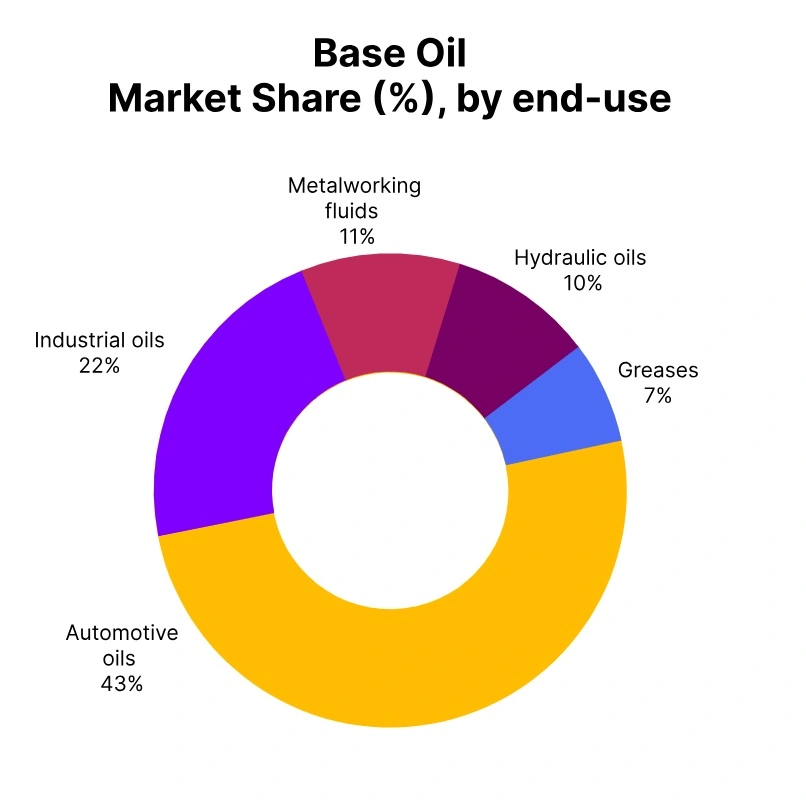
base oil market share end use

Historically, several events have caused significant fluctuations in Base Oil prices

Why Price Watch™?

Price Watch™ is your trusted resource for tracking global base oil price trends. Our platform delivers real-time data and expert analysis, offering deep insights into the key factors driving price fluctuations in the base oil market. By monitoring critical events such as geopolitical tensions, supply chain disruptions, and economic shifts, Price Watch™ keeps you fully informed of market dynamics.

In addition, Price Watch™ provides detailed forecasts and updates on production capacities, enabling you to anticipate market changes and make well-informed decisions. With Price Watch™, you gain a competitive edge in understanding all the elements that influence base oil prices worldwide. Stay ahead of the curve with Price Watch’s™ reliable, accurate, and timely base oil market data.

Track Price Watch's™ base oil price assessment on a weekly basis since 2015 onwards, along with short-term forecasts, and get access to the detailed report in a downloadable format.

Base Oil Market Price Trend published by 𝐏𝐫𝐢𝐜𝐞 𝐖𝐚𝐭𝐜𝐡™ reflect prevailing spot market conditions, derived from independent research, verified trade inputs, and proprietary market intelligence as of the publication date. Prices are published on the specified Incoterm and represent indicative base market levels, exclusive of applicable taxes, VAT, duties, tariffs, and other statutory charges. Actual transaction values may vary depending on volume, credit terms, contractual structure, and other negotiated conditions. Market prices are inherently subject to volatility, liquidity dynamics, regulatory changes, and evolving trade activity. The information provided is for reference and benchmarking purposes only and does not constitute an offer, recommendation, or guarantee of transactional outcomes. Users should exercise independent commercial judgment and assess their specific contractual, regulatory, tax, and application requirements before making business decisions. 𝐏𝐫𝐢𝐜𝐞 𝐖𝐚𝐭𝐜𝐡™ assumes no liability for decisions taken based on this information.

Base Oil is a refined petroleum or synthetic product that forms the primary component of lubricants, accounting for 70-95% of finished lubricant formulations. Its price directly impacts on the cost of automotive engine oils, industrial lubricants, hydraulic fluids, metalworking fluids, greases, and transmission oils, making base oil pricing a critical factor for lubricant manufacturers, automotive industries, and industrial equipment operators worldwide. Price-Watch™ tracks these prices to help businesses and consumers understand and stay updated with the market trends.

Base Oil prices vary by region and grade. Prices are typically quoted per metric ton or per barrel and change based on supply, demand, crude oil prices, and refining capacity. Price-Watch™ provides real-time price assessments across different global markets to help buyers and sellers make informed decisions.

Base Oil prices fluctuate due to changes in Crude Oil and feedstock costs, refining capacity utilization, energy price movements, and demand from automotive and industrial lubricant sectors. Refining technology and processes (solvent refining, hydro processing, catalytic dewaxing), quality specifications and API classification requirements, production economics and refinery margins, transportation and logistics costs, seasonal demand patterns in automotive and manufacturing sectors, competition between mineral and synthetic base oils, regulatory standards (API, ACEA specifications), trade policies and tariffs, and broader economic conditions further shape price trends, with recent outlooks reflecting volatility driven by Crude Oil price movements, refinery capacity changes, and automotive industry demand cycles.

The biggest buyers of Base Oil are automotive lubricant manufacturers producing engine oils, transmission fluids, and gear oils, followed by industrial lubricant producers serving manufacturing, mining, and heavy equipment sectors. Additional demand comes from metalworking fluid manufacturers, hydraulic fluid producers, marine lubricant suppliers, grease manufacturers, specialty lubricant companies, oil compressor producers, turbine oil manufacturers, and transformer oil suppliers. Price-Watch™ analyses demand patterns across all these industries.

Base Oil is manufactured through refining processes applied to Crude Oil or through synthetic production routes. Conventional mineral base oils are produced through solvent refining, hydro processing, or catalytic dewaxing of petroleum crude oil at specialized refineries. Synthetic base oils (PAO, ester-based) are produced through chemical synthesis processes. It is manufactured by major oil refineries, integrated petroleum companies, and specialized base oil producers with advanced hydrocracking and dewaxing facilities.

Base Oil trade is driven by refining capacity, quality specifications, and regional demand balances. The United States, South Korea, and several Middle Eastern countries including Saudi Arabia, UAE, are among the world’s largest exporters of base oil, operating major Group II and Group III production facilities. European countries including Netherlands, along with Asian producers in India, Singapore also play significant roles in regional and global trade.

Export volumes fluctuate based on automotive and industrial demand, refinery run rates and capacity utilization, Crude Oil availability and pricing, freight costs and shipping logistics, quality grade requirements, and regional supply-demand imbalances. Price-Watch™ tracks production levels, export flows and trade patterns to help businesses understand global supply chains and identify sourcing opportunities.

Supply generally matches demand, but regional shortages can occur due to refinery shutdowns, maintenance turnarounds, crude oil supply constraints, transportation problems, or sudden spikes in lubricant production. Capacity transitions from Group I to higher-quality Group II/III production can temporarily create market imbalances. Price-Watch™ monitors these supply-demand imbalances to alert the market about potential shortages or surpluses.

Base Oil prices vary significantly by API group classification based on refining depth, performance characteristics, and application suitability. Group I Base Oils (solvent-refined, 70-120 viscosity index, higher sulfur content above 0.03%, less than 90% saturates) trade at the lowest prices and serve cost-sensitive industrial applications such as metalworking fluids and greases. Group II Base Oils (hydro processed, 80-120 VI, sulfur content below 0.03%, over 90% saturates, clearer color) command moderate to premium prices and dominate automotive engine oil formulations due to improved oxidation stability and lower volatility. Group III Base Oils (severely hydrocracked/hydro isomerized, 120+ VI, very low sulfur, over 90% saturates, excellent oxidation stability) trade at significant premiums due to superior performance, fuel economy benefits, and extended drain intervals.

Group IV (PAO – polyalphaolefins) and Group V (esters, naphthenic, other synthetics) synthetic base oils command the highest prices due to exceptional performance characteristics and specialized applications. Within each group, viscosity grades (SN 150, SN 500, SN 600, Bright Stock, etc.) also affect pricing based on application requirements. Price-Watch™ provides separate price assessments for Group I, Group II, Group III, and other grades to ensure market transparency.

When Base Oil demand rises quickly, often due to increased automotive production, industrial manufacturing expansion, or seasonal lubricant demand peaks, prices typically increase. Suppliers may prioritize long-term contract customers with established relationships, while spot buyers face tighter availability, longer lead times, or premium pricing to secure supplies. Refinery flexibility is limited by processing complexity and capacity constraints, particularly for higher-quality Group II/III production. Price-Watch™ captures these market dynamics in real-time.

Energy and Crude Oil costs are the dominant factors in Base Oil pricing. When Crude Oil, Natural Gas, or refining energy costs rise, producers typically pass these costs on to buyers, making base oils more expensive. Refining margins, hydrogen costs (for hydro processing), and utilities represent significant production expenses. This is why prices correlate closely with crude oil benchmarks (Brent, WTI) and regional energy costs, a relationship that Price-Watch™ analyses in its price assessments & market reports.

Base Oil prices vary by region based on local refining capacity and technology, Crude Oil feedstock availability and quality, energy and processing costs, transportation and logistics expenses, quality grade requirements and specifications, automotive and industrial demand strength, import/export dynamics and freight costs, and regional supply-demand balances.

Regions with modern Group II/III refining capacity and integrated crude oil access often have competitive pricing, while areas dependent on imports or lacking advanced refining infrastructure may see higher prices. Price-Watch™ tracks prices across all major regions to highlight these differences.

The Base Oil market outlook depends on factors such as Crude Oil price trends and refining economics, capacity additions (particularly Group II/III plants) and refinery closures, automotive production and vehicle parc growth, industrial manufacturing activity, lubricant demand patterns and drain interval trends, technology shifts toward lower-viscosity and synthetic lubricants, environmental regulations affecting specifications, shipping and logistics costs, re-refining and circular economy developments, and macroeconomic indicators affecting transportation and industrial sectors.

Price-Watch™ regularly publishes detailed forecasts that project price movements for the next 12 months based on comprehensive analysis of supply additions, demand growth in key industries, seasonal patterns, and macroeconomic indicators. Our forecasts help businesses anticipate market conditions and plan accordingly.

Absolutely. Accurate forecasting allows you to time your purchases better, negotiate contracts more effectively, and budget more accurately. If Price-Watch™ forecasts predict a price increase in three months, you might choose to stock up now or lock in long-term contracts at current rates, potentially saving thousands of dollars.

Events like natural disasters, refinery accidents, Crude Oil supply disruptions, geopolitical tensions affecting petroleum markets, maintenance turnarounds at major base oil plants, trade disputes, shipping route disruptions, or economic downturns can cause supply shortages and price spikes. Hurricane impacts on U.S.

Gulf Coast refineries, Middle East geopolitical tensions, COVID-19 pandemic demand collapse and recovery, Suez Canal blockages affecting shipping, and force majeure declarations at major production facilities, for instance, have created significant market volatility. Price-Watch™ provides timely alerts when such events affect the market.

Price-Watch™ collects data from manufacturers, distributors, and buyers worldwide to publish regular price assessments, market reports, and forecasts. Our transparent methodology and comprehensive coverage make us a trusted source for understanding fair pricing and market trends in the Base Oil industry, covering Group I, Group II, Group III, and synthetic grades across all viscosity ranges.