Bauxite Price Trend and Forecast

UNSPC code: 10151500
|
Weekly Update
|
Historical Data Since 2015
|
Forecast for 2026
  • Commodity Pricing

bauxite Price Trends by Country

gnGuinea
cnChina
inIndia
auAustralia

Global bauxite Spot Market Prices, Trend Analysis and Forecast

𝐏𝐫𝐢𝐜𝐞 𝐖𝐚𝐭𝐜𝐡™ provides price assessments for Bauxite across top trading regions:

Asia-Pacific

  • Bauxite non-calcined (45% Min.) CIF Qingdao (Guinea), China
  • Bauxite non-calcined (45% Min.) CIF Mundra (Guinea), India
  • Bauxite non-calcined (45% Min.) FOB Brisbane, Australia


Africa

  • Bauxite non-calcined (45% Min.) FOB Kamsar, Guinea


Note:
In assessments structured as CIF [Importing Port] (Exporting Country), the country mentioned in brackets indicates the primary origin of supply (exporting country), while the named port refers to the destination port in the importing country. Other Incoterms (FOB, FD, EXW, etc.) should be interpreted in accordance with standard international trade definitions.

Bauxite Price Trend Q4 2025

Bauxite market prices decreased approximately 3-4% in Q4 2025 versus Q3 2025 due to improved supply availability and weaker downstream demand. The previous logistical barriers have eased by increasing shipments from major production areas; therefore, the slowdowns during the months of seasonal refinery operation limited spot buying. In addition, alumina refiners have adopted cautious purchasing practices based upon stable but unexciting aluminium demand, particularly from construction and automobile sectors. Furthermore, during the quarter, freight rates also returned to a normal condition, which helped to lessen costs throughout the entire supply chain. In addition, localized supply risks continued to exist in some mining locations; however, the overall market conditions transitioned to either balanced or slightly oversupplied.

Guinea: Bauxite Export prices FOB Kamsar, Guinea; Grade- Non Calcined (45% Min.)

The price trend of Bauxite in Q4 2025 in Guinea indicated a continued downward movement, with prices declining by 2.4% compared to Q3 2025 due to balanced supply and moderate export demand. Steady mining output and consistent shipment volumes kept the global market well supplied, particularly across key Asian destinations. In Guinea, Bauxite prices declined by 3.8% in December 2025, reflecting weaker spot buying interest and sufficient inventory levels at major importing ports. Buyers maintained cautious procurement strategies amid stable freight conditions and comfortable stockpiles. Competitive export pricing and stable operational performance among leading producers further reinforced the bearish sentiment, resulting in limited opportunities for price recovery during the quarter.

China: Bauxite Import Prices CIF Qingdao (Guinea), China; Grade- Non Calcined (45% Min.)

The price trend for bauxite pricing in China has continued to exhibit a downward softness trend throughout Q4 of 2025, resulting in an overall reduction of pricing (2%) when compared to Q3 of 2025. This trend has been attributed to continued weak demand for alumina and aluminum, as well as ample inventories at ports. The price of bauxite in China fell by 3.8% in December 2025 due to continued stability in domestic mining activity and lower demand for procurement activity by aluminum smelters (aluminum producers). The reduced amount of construction activity and ongoing controls on production rates further reduced the amount of spot trades occurring within the market. However, steady arrivals of imported bauxite material (from primary suppliers such as Guinea and Australia) at Chinese ports provided further assurance of adequate supply levels to meet demand, contributing to downward price pressure throughout the quarter.

India: Bauxite Import Prices CIF Mundra (Guinea), India; Grade-Non Calcined (45% Min.)

The price trend of bauxite in India softened notably in Q4 2025, reflecting weaker demand from alumina refineries and adequate supply availability, contributing to a 2.37 % decrease in average quarterly prices compared with Q3 2025. In December 2025, Bauxite prices in India declined by 3% as downstream aluminium sectors moderated procurement amid slowing global industrial activity and steady domestic mining output, which capped supplier pricing leverage. Soft global demand, stable inventories, and subdued export flows also pressured market sentiment. This trend underscores a bearish phase for the raw material, with muted downstream uptake and cautious buying behaviour dampening price momentum into the year-end.

Australia: Bauxite Export prices FOB Brisbane, Australia; Grade- Non Calcined (45% Min.)

Bauxite price trend in Australia showed a stable decrease in the fourth quarter of 2025, falling approximately 2.2% on a quarterly basis when compared to the third quarter of 2025 due primarily to abundant supply and weak downstream alumina pricing, which has been putting downward pressure on the ore values. A slow pace of refiner restocking and high port inventories kept export bids from reaching previous levels during the period (generally reflective of weaker demand in major Asian markets and weaker prices in the commodities market as a whole). Furthermore, in December 2025 there has been further deterioration in the bauxite price market in Australia, with prices falling by approximately 4.4% as sellers have been competing for limited orders, and spot trading diminished. The combination of increased supply and decreased demand created a conducive environment for the continued decline of Australian bauxite pricing for the balance of 2025.

Bauxite Price Trend Analysis: Q4 2025

In Q3 2025, the global bauxite market experienced a notable price correction, with average prices declining by approximately 17–20% compared to Q2 2025. This downward trend was mainly driven by lessened demand from major alumina refineries amid slower-than-expected growth in the aluminium sector, particularly in China and Southeast Asia.

Additionally, increased supply from Guinea and Australia contributed to oversupply pressures. Operational expansions and improved logistics in West Africa enabled higher export volumes, further weighing global prices. Currency fluctuations and lower energy costs also reduced production expenses, influencing spot market pricing.

Guinea

The bauxite price trend in Guinea during Q3 2025 reflected a sharp correction, with prices falling by approximately 19% compared to Q2 2025. This decline was primarily attributed to a surplus in export volumes as mining activities in the Boké and Kindia regions operated at near maxiumum capacity. Less demand from Chinese and Indian alumina refinery, combined with high stockpiles at ports, further pressured prices downward.

However, bauxite prices saw a modest rebound in September 2025, increasing by around 2% month-on-month, supported by slight restocking activity and improved freight movement following seasonal disruptions. Market participants noted temporary supply constraints due to stricter port inspections and new environmental checks. Despite the quarterly drop, the marginal September recovery signaled potential price stabilization ahead.

China

According to PriceWatch, the bauxite price trend in China during Q3 2025 showed a significant decline, with prices dropping by approximately 19% compared to Q2 2025. This downward movement was largely driven by subdued demand from domestic alumina refineries, which operated at reduced capacity due to oversupply and weak aluminium margins.

Furthermore, a steady inflow of imported bauxite from Guinea and Indonesia led to increased stock levels at major ports like Lianyungang and Fengcheng, adding further pressure on domestic prices. Soft macroeconomic indicators and cautious infrastructure spending also weighed overall consumption.

Bauxite prices saw a slight recovery in September 2025, rising by 1% month-on-month, as some refineries resumed operations in anticipation of seasonal demand in Q4. The slight rebound was also supported by a slowdown in import volumes and improved sentiment across the non-ferrous metals sector.

India

According to PriceWatch, the price trend of bauxite in India during Q3 2025 witnessed a notable decline, with prices falling by approximately 14% compared to Q2 2025. This decrease was primarily driven by a slowdown in procurement from domestic alumina producers, particularly in Odisha and Gujarat, amid reduced production rates and high inventory levels.

The oversupply was further intensified by consistent mining output from major public and private sector players, including NALCO and Hindalco, without a corresponding rise in downstream demand. Additionally, limited export activity and subdued demand from the construction and automotive sectors contributed to bearish market sentiment.

However, bauxite prices experienced a marginal increase of 1% in September 2025, supported by early signs of recovery in alumina plant operations and increased logistical activity ahead of the festive season.

Australia

The bauxite price trend in Australia during Q3 2025 witnessed a significant decline, with prices decreasing by approximately 18% compared to Q2 2025. This downturn was primarily driven by softened global demand, particularly from Chinese alumina refineries operating at reduced capacity due to environmental regulations and oversupply concerns. Additionally, higher freight costs and a strong Australian dollar further pressured export competitiveness.

Weaker construction and manufacturing activity worldwide also contributed to lower bauxite consumption, impacting Australian exports. However, Bauxite prices showed a slight recovery in September 2025, rising by 2% amid signs of restocking demand and marginal improvements in downstream alumina and aluminium markets. Supply disruptions in other regions and anticipation of infrastructure spending in Asia provided temporary support to market sentiment.

According to the PriceWatch, bauxite prices has declined to $67 per metric ton FOB Kamsar in Q2 2025, marking a 9.46% drop quarter on quarter. This bearish shift has been largely influenced by tariff related spillover effects from global metal trade tensions notably the US imposition of a 25% aluminium tariff beginning March 2025.

Although this tariff targets aluminium, it has cascaded through the upstream supply chain: aluminium producers have cut back bauxite purchases leading to reduced demand and lower prices ports like Kamsar.

According to the PriceWatch, In India, bauxite prices dropped to $84 per metric ton Ex-Mumbai in Q2 2025 a decline of 8.59% QoQ. Here, domestic tariff measures have compounded the pressures: the Indian government has introduced retaliatory and safeguard duties on steel and aluminium imports since late 2024, including provisional duties on flat steel and aluminium, thereby disrupting domestic demand patterns.

In Q1 2025, bauxite prices surged by $73.48 per metric ton FOB Kamsar, marking a 27.61% increase driven by a combination of supply disruptions and strong global demand. Key supply-side constraints including mining slowdowns in major producing countries and logistical bottlenecks reduced available inventories while demand remained robust from downstream industries such as aluminum production, construction, and automotive particularly fueled by the global shift toward electric vehicles and infrastructure expansion. China, as a major consumer saw notable price inflation due to internal demand-supply imbalances further amplifying global pricing pressure.

In Q1 2025, bauxite prices in India increased by $91.89/metric ton CIF Mundra (Guinea), with 29.57% increase. This significant rise was driven by a combination of factors impacting both domestic supply and global demand. Despite India being the world’s second-largest aluminum producer, domestic bauxite extraction has struggled to keep pace with the growing industry needs. Challenges such as environmental regulations, complex land acquisition processes, and community resistance have hindered the expansion of mining operations.

Additionally, certain bauxite deposits in India contain higher impurity levels, raising costs and reducing efficiency in alumina production. Consequently, Indian producers have increasingly relied on imported bauxite to meet demand. Imports rose from over 3.7 million metric tons in 2023 to more than 4.5 million metric tons in 2024, reflecting a 20% year-over-year increase. This growing dependence on external sources, coupled with global supply constraints, has exerted upward pressure on prices.

Bauxite Price Trend Analysis: Q4 2024

During Q4 2024, bauxite prices suffered a significant hike, increasing by $57.58 per metric FOB Kamsar ton, or 15.17, due to the influence of a mix of force disruptions and continued demand. The rainy season typically disrupting mining activity caused lower shipments and in October a major exporter halted exports, further constraining force.

Despite all these challenges, bauxite exports reached a record high of 38.01 million tonnes in Q2 2024 due to robust Chinese demand, representing 69.44 of Guinea’s bauxite exports for the first eleven months of 2024. Such a rise in demand was driven by China’s record-breaking aluminum product, driven by industries like solar power and electric vehicles.

In Q4 2024, bauxite prices in India experienced a substantial surge of $70.92 per metric ton CIF Mundra (Guinea), marking a 13.72% increase. This sharp rise was driven by a combination of factors impacting both domestic supply and global demand. Despite India being the world’s second-largest aluminum producer, domestic bauxite extraction faced challenges, including environmental regulations and logistical issues, leading to supply constraints. Additionally, the global bauxite market experienced disruptions, with key suppliers facing challenges that affected supply chains.

In Q3 2024, bauxite prices increased by $50 per metric ton FOB Kamsar, or 7.76%, due to a mix of supply disruptions and persistent demand. In one of the world’s largest bauxite exporters, Guinea, the rainy season took a toll on mining activities, with lower shipments being a result and a contributing factor to price increases.

Additionally, geopolitical tensions and logistical challenges, such as disruptions in shipping routes, further strained supply chains, exacerbating the upward pressure on prices. Simultaneously, strong demand from key sectors, including aluminum production, construction, and automotive industries, particularly in regions like Europe and Asia, supported the price increase.

In Q3 2024, prices in India experienced a significant increase of $62.37/metric ton CIF Mundra (Guinea), equating to a 4.78% rise. This surge was driven by domestic supply constraints and escalating demand from the aluminum sector.

Despite India being the world’s second-largest aluminum producer, domestic bauxite extraction faced challenges, including environmental regulations and logistical issues, leading to supply constraints. Additionally, the global bauxite market experienced disruptions, with key suppliers facing challenges that affected supply chains.

In Q2 2024, bauxite prices saw a slight increase of $46.40 per metric ton FOB Kamsar, representing a 0.80% rise, indicating a relatively stable but tightening market. The modest price growth was primarily driven by seasonal supply constraints in major producing countries like Guinea, where heavy rains disrupted mining and transport operations.

Additionally, steady demand from the global aluminum industry, particularly in China, maintained pressure on supply chains. Although the market did not experience sharp volatility, ongoing logistical challenges and elevated freight costs contributed to a gradual upward price trend, reflecting a cautious but resilient global bauxite outlook during the quarter.

In Q2 2024, bauxite prices in India increased by $59.52/metric ton CIF Mundra (Guinea), with 0.53%, reflecting moderate price pressure in the market. This incremental increase can be attributed to several factors, including a tightening supply due to weather-related disruptions in major bauxite-producing regions like Guinea, where mining and transportation were impacted by seasonal rains.

While the impact of supply constraints was limited, it contributed to a mild upward trend. Concurrently, the strong demand for aluminum, particularly from industries in India and other key regions such as China, kept the bauxite market relatively stable.

In Q1 2024, bauxite prices increased by $46.03 per metric ton FOB Kamsar, a 3.37% rise, driven by steady demand and tightening supply conditions. The price uptick was influenced by continued strong consumption from the aluminum production sector, especially in Asia, where industrial output remained robust. At the same time, weather-related disruptions, and regulatory pressures in key mining regions, including Guinea and Australia, constrained supply, and delayed shipments.

Although the increase was moderate, it reflected underlying market resilience amid growing concerns over raw material availability and transportation bottlenecks, setting the tone for firmer pricing in the subsequent quarters.

In Q1 2024, bauxite prices in India experienced a notable increase of $59.21 per metric ton CIF Mundra (Guinea), reflecting a 4.26% rise. This uptick was primarily driven by a combination of domestic supply constraints and increasing demand from the aluminum sector. Despite India being the world’s second-largest aluminum producer, challenges such as environmental regulations, land acquisition issues, and infrastructure inadequacies have hindered the expansion of bauxite mining operations.

These factors contributed to a tightening of domestic supply, placing upward pressure on prices. Simultaneously, the global demand for aluminum remained robust, particularly in regions like Asia, further supporting the price increase.

Technical Specifications of Bauxite Price Trends

Product Description:

Bauxite is a naturally occurring, reddish-brown to tan sedimentary rock primarily composed of aluminum minerals such as gibbsite, boehmite, and diaspore, along with iron oxides like goethite and hematite. It serves as the principal ore for aluminum extraction through the Bayer process. In its calcined form, bauxite undergoes heating to remove moisture, enhancing its suitability for various industrial applications.

Identifiers and Classification:

  • HS Code: 26060020


Bauxite Grades Specific Price Assessment:

  • Non-Calcined (45% Min.)


Bauxite Global Trade and Shipment Term

  • Quotation Terms (Product & Country Specific): 50000-65000MT
  • Packaging Type (Product & Country Specific): Dry Bulk


Incoterms Reference in Bauxite Reporting

Shipping Term  Location  Definition 
FOB Brisbane   Australia  Bauxite Export from Australia 
FOB Kamsar  Kamsar, Guinea  Bauxite Export from Guinea 
CIF Qingdao (Guinea)  China   Bauxite Import Price in China from Guinea 
CIF Mundra (Guinea)  India  Bauxite Import Price in India from Guinea 

*Quotation Terms refers to the quantity range specified for the Bauxite being quoted or offered in a commercial transaction.

**Packaging Type refers to standard packaging size commonly used for Bauxite packing, ease of handling, transportation, and storage in industrial and commercial applications.


Key Bauxite Manufacturers

Manufacturer 
Rio Tinto 
Alcoa 
Chalco 
Nalco 
Hindalco 

Bauxite Industrial Applications

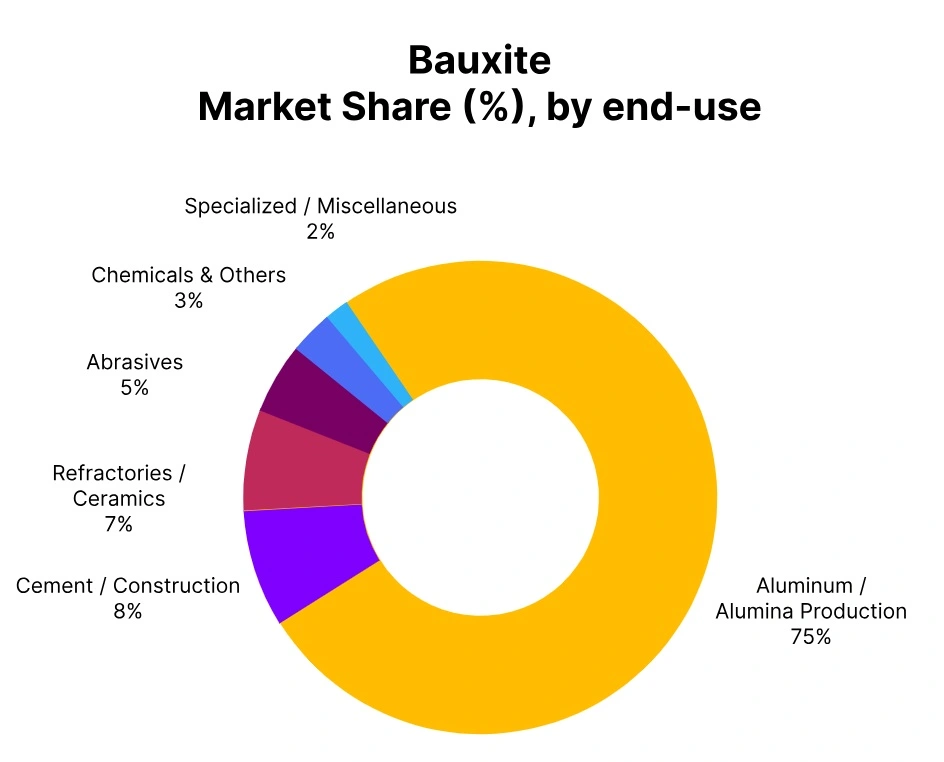
bauxite market share end use

Historically, several events have caused significant fluctuations in Bauxite prices

  • Global Supply Chain Disruption (2022): Geopolitical tensions, including the war in Ukraine, and restrictions on energy exports disrupted global supply chains. This led to input cost volatility and logistical challenges in the aluminum industry, causing fluctuations in bauxite pricing.
  • COVID-19 Pandemic (2019–2020): The pandemic severely impacted industrial operations and global trade, reducing demand for aluminum and bauxite in key sectors like manufacturing and infrastructure, causing bauxite prices to decline.
  • Global Economic Downturn (2019–2020): The slowdown in global economic activity, particularly in aluminum-consuming sectors such as construction and transportation, led to decreased demand for bauxite, resulting in a drop in prices.

Why Price Watch™?

Price Watch™ is your trusted resource for tracking global bauxite price trends. Our platform delivers real-time data and expert analysis, offering deep insights into the key factors driving price fluctuations in the bauxite market. By monitoring critical events such as geopolitical tensions, supply chain disruptions, and economic shifts, Price Watch™ keeps you fully informed of market dynamics.

In addition, Price Watch™ provides detailed forecasts and updates on production capacities, enabling you to anticipate market changes and make well-informed decisions. With Price Watch™, you gain a competitive edge in understanding all the elements that influence bauxite prices worldwide. Stay ahead of the curve with Price Watch’s™ reliable, accurate, and timely bauxite market data.

Track Price Watch's™ bauxite price assessment on a weekly basis since 2015 onwards, along with short-term forecasts, and get access to the detailed report in a downloadable format.

Bauxite Market Price Trend published by 𝐏𝐫𝐢𝐜𝐞 𝐖𝐚𝐭𝐜𝐡™ reflect prevailing spot market conditions, derived from independent research, verified trade inputs, and proprietary market intelligence as of the publication date. Prices are published on the specified Incoterm and represent indicative base market levels, exclusive of applicable taxes, VAT, duties, tariffs, and other statutory charges. Actual transaction values may vary depending on volume, credit terms, contractual structure, and other negotiated conditions. Market prices are inherently subject to volatility, liquidity dynamics, regulatory changes, and evolving trade activity. The information provided is for reference and benchmarking purposes only and does not constitute an offer, recommendation, or guarantee of transactional outcomes. Users should exercise independent commercial judgment and assess their specific contractual, regulatory, tax, and application requirements before making business decisions. 𝐏𝐫𝐢𝐜𝐞 𝐖𝐚𝐭𝐜𝐡™ assumes no liability for decisions taken based on this information.

Global Demand for Alumina and Aluminum

 Bauxite is the primary raw material for alumina, which is then used to produce aluminum.

 Increased demand for aluminum in construction, automotive, aerospace, packaging, and electronics boosts bauxite demand.

 Growth in emerging economies and global infrastructure spending also drives demand.

Major Importing Countries (Especially China)

 China is the largest consumer and importer of bauxite, especially after reducing domestic mining due to environmental concerns.

 Any change in Chinese import policy, domestic production, or refinery capacity affects global prices.

Supply Disruptions

 Mining disruptions due to weather (e.g., cyclones in Australia), political instability, or labor strikes can restrict supply.

 Export bans or restrictions (e.g., Indonesia in the past) can cause price spikes.

Grade and Quality of Bauxite

 High-grade bauxite (with high Al₂O₃ and low reactive silica) commands a premium price.

 Prices vary depending on whether it is metallurgical-grade, non-metallurgical-grade, or refractory-grade.

Bauxite is produced from raw bauxite ore, and its pricing is closely tied to the cost of mining, refining, and energy inputs. Fluctuations in alumina and energy prices directly influence bauxite production costs. Higher feedstock and processing costs generally lead to increased bauxite prices.

Bauxite is the primary source of aluminum, which is widely used in construction, transportation, packaging, and electronics. When bauxite prices rise, the cost of aluminum-based products such as vehicles, buildings, and consumer goods also increases, contributing to inflation across various industries.

PriceWatch offers:
• Real-time bauxite pricing and trend analysis
• Market outlook reports
• Risk insights based on global supply chains and mining regulations
• Weekly pricing assessments and procurement intelligence tools

Bauxite is the primary ore of aluminum and a critical raw material used in aluminum production, refractories, abrasives, cement, and specialty applications. Because aluminum is widely used in construction, transportation, packaging, and electronics, changes in bauxite prices directly impact global manufacturing and industrial costs. 𝐏𝐫𝐢𝐜𝐞 𝐖𝐚𝐭𝐜𝐡™ tracks these prices to help businesses stay informed about market trends and cost movements.

Bauxite prices vary depending on grade, alumina content, silica levels, and regional supply-demand conditions. Prices are typically quoted per metric ton and fluctuate based on mining output, export policies, freight costs, and industrial demand. 𝐏𝐫𝐢𝐜𝐞 𝐖𝐚𝐭𝐜𝐡™ provides up-to-date price assessments across key global markets to support informed purchasing and sales decisions.

Bauxite market trends are influenced by aluminum production levels, Chinese import demand, environmental regulations, mining policies, and energy costs. Seasonal weather conditions in major producing countries and logistics disruptions can also impact supply. 𝐏𝐫𝐢𝐜𝐞 𝐖𝐚𝐭𝐜𝐡™ analyzes these factors to deliver clear insights into current and future price movements.

The largest consumer of bauxite is the aluminum industry, where it is refined into alumina and then smelted into aluminum. Additional demand comes from cement production, refractory materials, abrasives, and specialty chemical applications. 𝐏𝐫𝐢𝐜𝐞 𝐖𝐚𝐭𝐜𝐡™ monitors demand patterns across these industries to provide comprehensive market intelligence.

Bauxite forms in tropical and subtropical regions through the weathering of aluminum-rich rocks. Major producing countries include Australia, Guinea, China, Brazil, and India, with additional supply from Indonesia, Jamaica, Malaysia, and Vietnam. Mining typically involves open-pit extraction, followed by refining into alumina. 𝐏𝐫𝐢𝐜𝐞 𝐖𝐚𝐭𝐜𝐡™ tracks production trends and global supply flows to assess market availability.

Guinea and Australia are among the largest exporters of raw bauxite, supplying major aluminum-producing countries such as China. Export volumes are influenced by domestic mining policies, environmental regulations, and international trade agreements. 𝐏𝐫𝐢𝐜𝐞 𝐖𝐚𝐭𝐜𝐡™ monitors export flows and global trade patterns to help businesses understand supply chain dynamics.

Global bauxite reserves are substantial and generally sufficient to meet long-term demand. However, short-term supply disruptions can occur due to political instability, environmental restrictions, mining bans, or logistical challenges. 𝐏𝐫𝐢𝐜𝐞 𝐖𝐚𝐭𝐜𝐡™ analyzes supply-demand balances to identify potential shortages or surpluses in the market.

Bauxite grades vary based on alumina content, silica levels, moisture content, and impurity concentrations. Higher alumina and lower silica grades typically command premium prices due to better refining efficiency. Regional quality differences and transportation costs also influence pricing. 𝐏𝐫𝐢𝐜𝐞 𝐖𝐚𝐭𝐜𝐡™ provides separate price assessments for different grades to ensure market transparency.

When demand rises, particularly from aluminum smelters or infrastructure projects, prices tend to increase. Suppliers may prioritize long-term contracts, and spot market availability can tighten. 𝐏𝐫𝐢𝐜𝐞 𝐖𝐚𝐭𝐜𝐡™ captures these shifts in real time, helping businesses respond strategically to market changes.

Although bauxite mining itself is moderately energy-intensive, the refining process into alumina requires significant energy. Rising fuel and electricity costs increase production expenses, which can push prices higher. 𝐏𝐫𝐢𝐜𝐞 𝐖𝐚𝐭𝐜𝐡™ evaluates energy cost trends as part of its pricing analysis and forecasts.

Regional price differences result from freight rates, import dependency, local taxes, mining regulations, and currency exchange fluctuations. Countries with abundant domestic production often have lower prices compared to import-reliant regions. 𝐏𝐫𝐢𝐜𝐞 𝐖𝐚𝐭𝐜𝐡™ tracks regional price variations to highlight arbitrage opportunities and sourcing advantages.

Bauxite price forecasts depend on mining expansions, Chinese demand trends, environmental regulations, infrastructure growth, and global economic conditions. Seasonal patterns and geopolitical developments also play a role. 𝐏𝐫𝐢𝐜𝐞 𝐖𝐚𝐭𝐜𝐡™ publishes detailed 12-month forecasts based on comprehensive analysis of supply, demand, and macroeconomic indicators.

Accurate forecasts enable businesses to optimize procurement strategies, negotiate better contracts, and manage inventory efficiently. If 𝐏𝐫𝐢𝐜𝐞 𝐖𝐚𝐭𝐜𝐡™ projects a future price increase, companies may choose to secure supply in advance, potentially reducing procurement costs and minimizing risk exposure.

Events such as export restrictions, mining policy changes, environmental crackdowns, geopolitical tensions, or economic downturns can significantly affect supply and pricing. 𝐏𝐫𝐢𝐜𝐞 𝐖𝐚𝐭𝐜𝐡™ provides timely alerts and analysis when global developments disrupt the market.

𝐏𝐫𝐢𝐜𝐞 𝐖𝐚𝐭𝐜𝐡™ collects market data from miners, traders, distributors, and end users worldwide to publish transparent price assessments, market reports, and forecasts. Its comprehensive methodology ensures reliable insights into fair pricing and long-term market trends within the global bauxite industry.