

Ammonium sulphate, long treated as a niche by-product fertilizer, has become one of the hottest commodities in global agriculture. Chinese exports of the nutrient jumped by roughly 23% in 2025 to over 21 million tons, and the country now supplies close to 60% of world output.
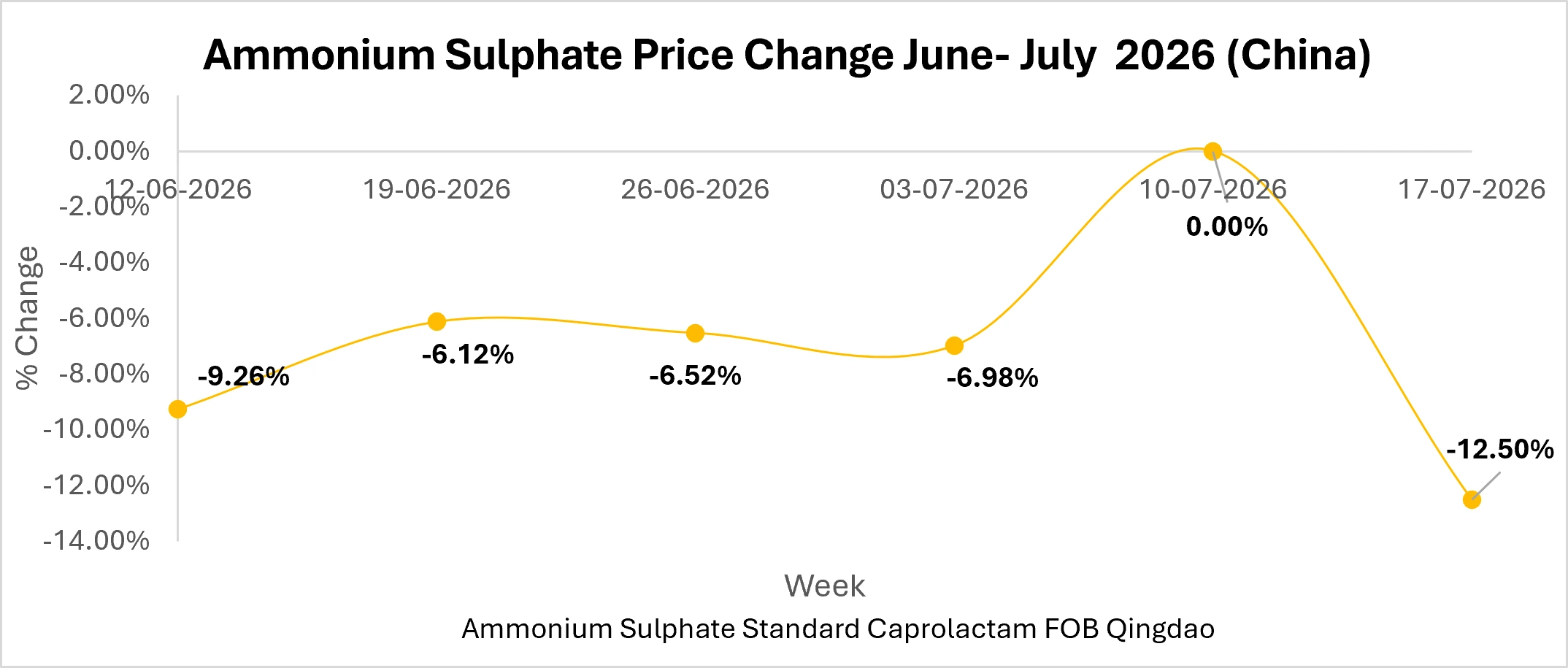
Source: Price Watch™ Ammonium Sulphate Prices
Global Ammonium Sulphate Market Benefits from Changing Fertilizer Demand
First, geopolitics has reshaped the nitrogen trade. Conflict-related disruptions around the Strait of Hormuz have squeezed ammonia and urea flows from West Asia, pushing global urea prices up sharply and making cheaper, sulphur-rich ammonium sulphate an attractive substitute.
India felt this directly with DAP and urea supplies from Gulf suppliers disrupted ahead of the kharif season, the Centre began routing large volumes of ammonium sulphate to states, and Odisha’s Agriculture Department has formally directed district collectors and MARKFED to push it to farmers as a urea alternative.
Second, there is a genuine agronomic driver behind the shift, not just a stopgap. Soil Sulphur deficiency has been rising quietly for years in Odisha it grew from roughly 36% of tested soils in 2008-09 to 44% a decade later because high-analysis fertilizers like urea and DAP contain no Sulphur, while intensive cropping keeps depleting it.
Ammonium sulphate’s 21% nitrogen and 24% Sulphur content correct both problems at once, which is why demand from Brazil’s soybean belt and Southeast Asia was already climbing before the current crisis.
China Ammonium Sulphate Market Tightens Export Procedures
Ammonium sulphate had been the only major Chinese fertilizer without formal export inspection controls, unlike urea, ammonium chloride and phosphates, which face quotas and inspection regimes. That changed in mid-July, when China’s customs authorities began rolling out CIQ (China Inspection and Quarantine) checks nationwide, reportedly after mis-declared urea and potash cargoes were shipped disguised as ammonium sulphate.
The immediate effect isn’t a supply cut but longer clearance times, shipment delays and reduced trading liquidity enough to unsettle prices even without volumes falling.
For importers, the implication is a tighter, slower, and more expensive pipeline layered onto an already stretched nitrogen market, with China able to throttle timing even if it doesn’t cap tonnage outright.
Global Ammonium Sulphate Market Outlook
Whether the demand holds are really two questions. The geopolitical premium from Hormuz risk and urea scarcity is likely to fade once shipping normalizes. But the structural driver, Sulphur-depleted soils and the crop-yield case for ammonium sulphate, is not going away.
Price Watch™ expects global output to keep growing at a slower, steadier pace through 2026 and beyond, suggesting the shift outlasts the crisis that triggered it, even as prices cool from crisis-era peaks.
Follow Price Watch™ on LinkedIn for real-time fertilizer market insights, nutrient price trends, supply chain intelligence, and global commodity updates.