

Global lactic acid markets remained increasingly fragmented through Q2 2026 as producers across Asia, Europe, and North America navigated volatile carbohydrate feedstock costs, fluctuating fermentation economics, and uneven downstream demand recovery.
While corn, sugar, and cassava prices shifted across key producing regions, many manufacturers avoided aggressive lactic acid price increases to preserve long-term customer relationships in the food & beverage, pharmaceutical, personal care, and biodegradable plastics sectors.
Rather than fully passing higher production costs through the value chain, several suppliers absorbed part of the feedstock inflation internally, resulting in increasing margin compression across the value chain.
What Was the Most Unusual Market Movement?
The most notable market development was the divergence between regional pricing trends:
- FOB China experienced intermittent price strength as fermentation feedstock costs increased and procurement improved from biodegradable plastics and food ingredient manufacturers.
- FOB Thailand witnessed recurring price fluctuations driven by changing corn and sugar economics, import competition, inventory adjustments, and cautious buying from food processing and pharmaceutical manufacturers.

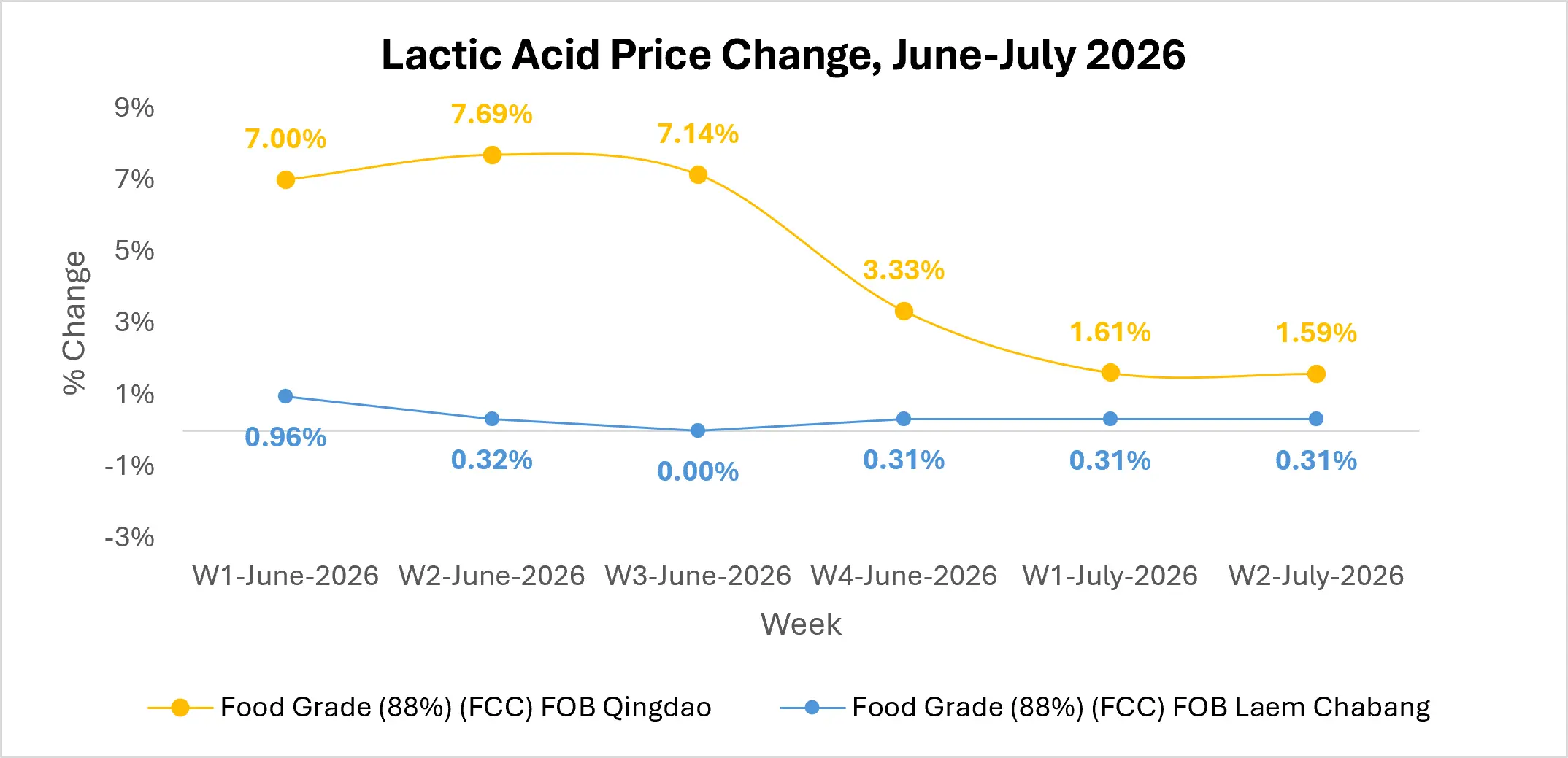
Source: Price Watch™ Lactic Acid Prices
How Did the Feedstock-to-Lactic Acid Chain React?
The carbohydrate feedstock (corn, sugarcane, or glucose) → Lactic Acid value chain remained under pressure during Q2 2026. Fluctuating feedstock and fermentation costs increased production expenses, while uneven demand from food, pharmaceuticals, and biodegradable plastics limited producers’ pricing flexibility.
Although food and personal care applications provided steady consumption, weaker procurement from the PLA bioplastics and industrial sectors constrained overall demand. As a result, standalone lactic acid producers faced tighter margins, particularly amid rising competition from Asian exporters and integrated manufacturers.
Lactic Acid Short-Term Outlook
Market sentiment is expected to remain cautious as feedstock costs fluctuate and downstream purchasing stays selective. Producers may optimize operating rates and inventory levels to protect profitability, with market performance increasingly influenced by feedstock economics and demand from high-value applications rather than broad-based industrial recovery.
Key Question for Buyers
Are stable lactic acid in Thailand prices reflecting genuine supply-demand balance, or are producers temporarily absorbing higher production costs to protect long-term customer relationships before a broader market correction emerges?
For deeper chemical spread analysis and procurement intelligence, follow Price Watch™
Follow Price Watch™ on LinkedIn for real-time raw material insights, specialty chemical market trends, supply chain intelligence, and global commodity updates.