

The Strait of Hormuz is back in the headlines. Iran’s Revolutionary Guard navy declared the waterway closed on July 12, after striking a vessel it accused of using an unauthorized route.
The United States responded with fresh military strikes on Iranian targets. Both sides now disagree publicly on whether the strait is actually open.
Hormuz Remains Critical to the Polymer Value Chain
This matters far beyond oil tankers. The strait carries close to a quarter of the world’s seaborne Crude Oil. It also serves as the feedstock corridor for a large share of global Polyethylene, Polypropylene, Polyvinyl Chloride, and Polyethylene Terephthalate production. Daily vessel transits have dropped sharply compared to normal levels. War risk insurance costs have climbed fast.
Crude Oil is the upstream driver here. When Crude Oil supply routes tighten, naphtha costs rise. That pushes up the cost of Ethylene, the base building block for most commodity plastics. Any disruption at this stage moves quickly through the entire polymer chain.
Polymer Markets Could Face Renewed Cost Pressure
Low Density Polyethylene shows this clearly right now. The Low Density Polyethylene Price Trend in Belgium has been volatile through June and July.
Weekly data shows swings from flat to declines of over 14 percent in a single week. The Low Density Polyethylene Price in Saudi Arabia has also softened recently, dropping nearly 4 percent in the most recent week tracked.
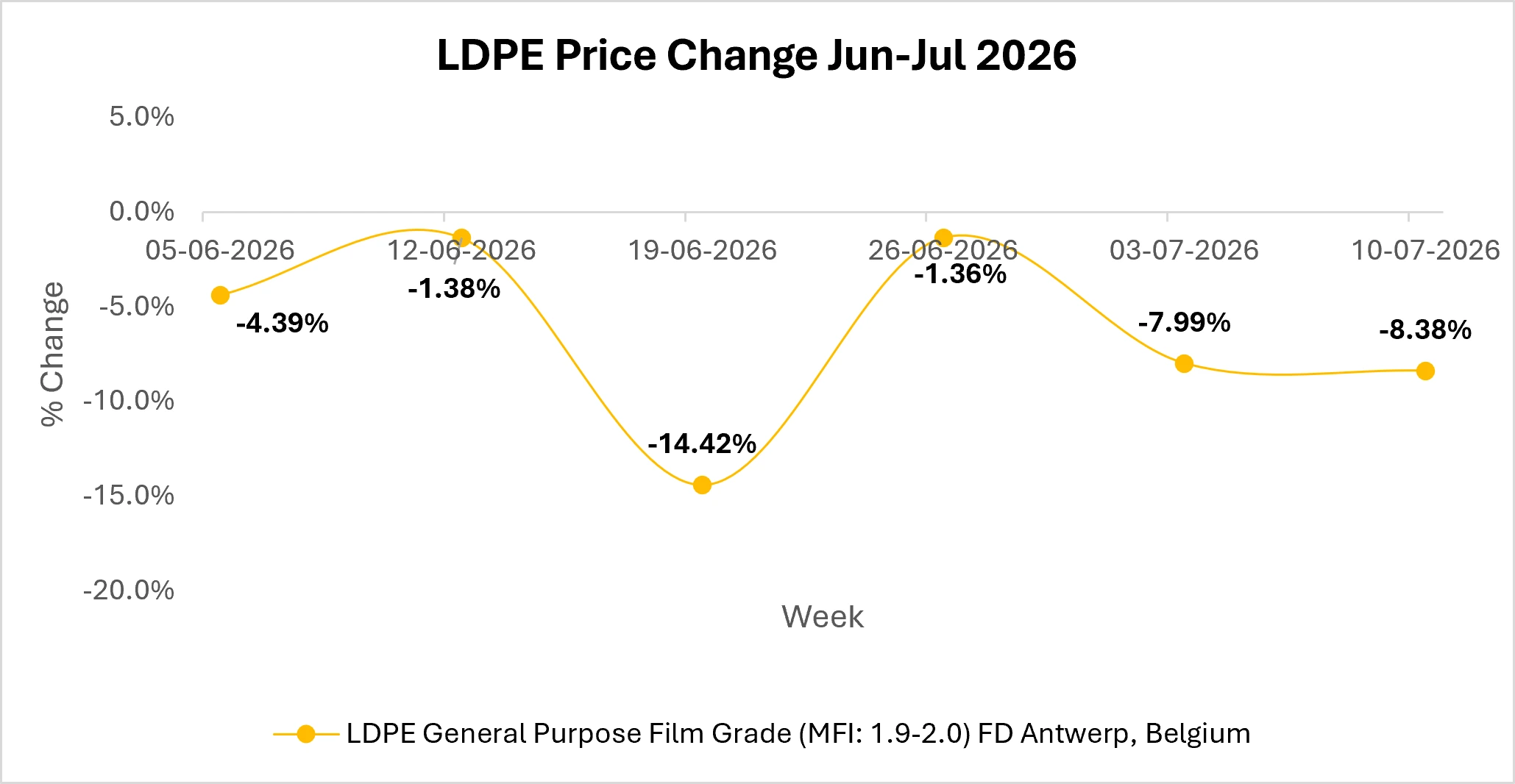
Source: Price Watch™ LDPE Prices
These numbers reflect the calm before the current storm. Prices had been easing after a memorandum between the United States and Iran in mid-June. Gulf export flows resumed. Inventories rebuilt. Freight rates and war risk surcharges came down from their earlier highs.
Regional Polymer Markets May Respond Differently
That easing period may now be interrupted. Middle East Polyethylene export capacity depends heavily on this single corridor. Freight capacity remains thin after earlier Red Sea disruptions never fully resolved. Insurance premiums tend to rise quickly but fall slowly, so costs could stay elevated for months even after a short closure.
Polymer Market Outlook
Buyers should expect renewed pressure on Polyethylene, Polypropylene, Polyvinyl Chloride, and Polyethylene Terephthalate as feedstock costs reprice. Asia and India often see fast, transaction based price spikes. Europe usually feels the impact later through contract resets.
The lesson from earlier this year still applies. Markets can move faster than contract and hedging cycles allow. Procurement teams that track feedstock and freight signals now will be better positioned than those waiting for the next supplier price letter.
Follow Price Watch™ on LinkedIn for real-time raw material insights, pricing trends, supply chain intelligence, and market updates shaping global commodity markets.