

India’s organic cotton fibre market has been showing a gradual increase in prices during July and August 2026. The movement has been supported by a firmer domestic cotton market, changing crop expectations and continued interest in sustainable textile materials.
Organic cotton remains a specialised segment because its production requires specific farming practices and certification. Therefore, changes in the wider cotton market can have a noticeable impact on organic fibre availability and replacement costs.
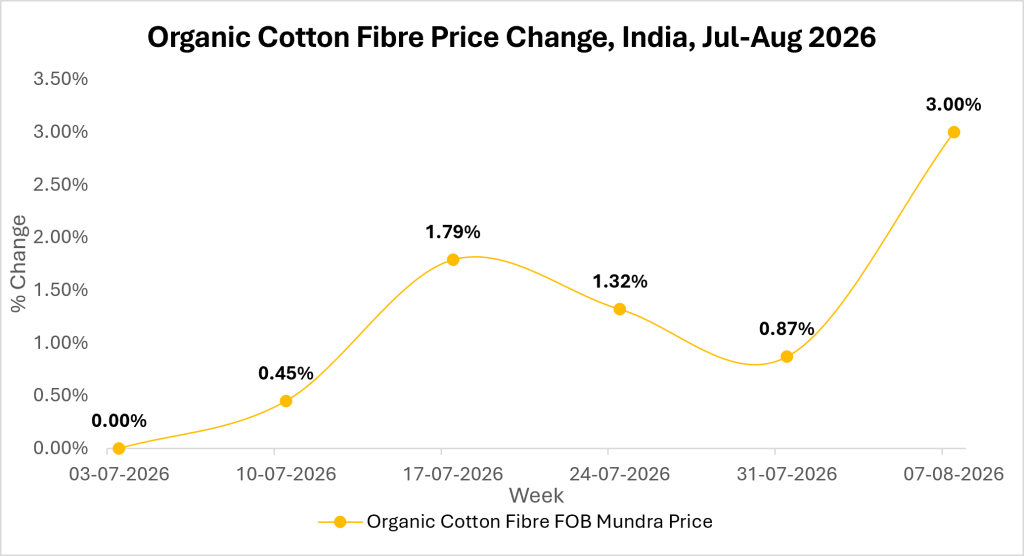
Source: Price Watch™ Organic Cotton Fibre
Why have organic cotton fibre prices been moving higher?
The main reason has been the stronger tone in the Indian cotton market. Domestic cotton prices have been receiving support from firm international values and steady demand from the textile industry.
The Ministry of Textiles reported in July that both international and domestic cotton prices had increased significantly over the recent period. This has created a higher cost base for cotton processors and fibre suppliers.
Organic cotton fibre has been following this broader market direction. However, the increase has been relatively controlled because buyers have remained cautious about higher prices. Suppliers have also been watching new-crop prospects before making large commitments.
How are weather and cotton sowing affecting the market?
Weather has been one of the most important factors for the cotton market during the current season. Cotton sowing had initially been slower than last year, although improved monsoon conditions helped planting activity recover during July, particularly in major cotton-growing states such as Maharashtra and Gujarat.
The weather situation is still important because cotton requires favourable conditions during different stages of crop development. Any prolonged dry spell or excessive rainfall could affect yields and quality. The Reserve Bank of India has also recently highlighted the risk that El Niño conditions could create for the Indian monsoon and agriculture.
For organic cotton, weather uncertainty can be even more important because certified supply is more limited than conventional cotton. If crop availability becomes tighter, buyers may have fewer alternatives for replacing their requirements.
Is demand for sustainable cotton supporting the market?
Sustainability has been gaining importance in India’s textile industry, supporting long-term demand for organic cotton. Certified and traceable fibre remains a specialised requirement for many brands, while cautious buying and controlled inventories have been limiting a sharper price rise.
Organic Cotton Fibre Market Outlook
Organic cotton fibre prices are expected to remain firm with a mild upward bias in the coming months. The direction of the broader cotton market, crop conditions, monsoon performance and availability of certified organic cotton are likely to remain the key price drivers.
Improved new-crop arrivals and better production prospects could ease supply concerns and limit further price increases. However, continued weather uncertainty and steady textile demand could provide support to the market, keeping organic cotton fibre prices firm to slightly higher in the near term.
For the latest prices and forecasts, with deeper insights on markets such as India, Bangladesh and China, subscribe to Price Watch™
Follow Price Watch™ on LinkedIn for real-time Organic Cotton Fibre market insights, Organic Cotton Fibre price trends, supply chain intelligence, and global commodity updates.