

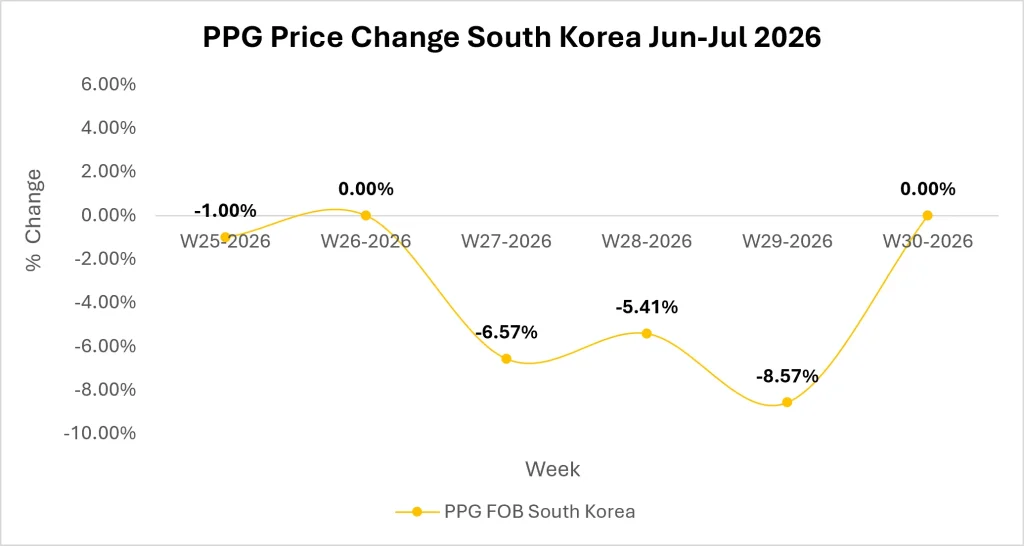
A nearly ten percent slide in six weeks usually leads to a feedstock collapse. Not this time. Polypropylene glycol export prices from South Korea have fallen steadily since week 25, even as propylene oxide, its core feedstock, has barely moved. That gap is the real story this week.
FOB South Korea polypropylene glycol prices slipped slightly in week 25 and held steady in week 26. The market then turned firmly lower from week 27 onward, with each week bringing a deeper cut than the one before, culminating in the sharpest single week drop of the run-in week 29. Week 30 finally saw the slide pause.
Taken together, the six-week stretch adds up to one of the steepest run rates this market has posted outside a genuine demand shock.
Source: Price Watch™ Polypropylene Glycol
Why Polypropylene Glycol Export Prices Are Falling Faster Than Feedstock Costs
Propylene oxide has stayed stable through July, with only mild softening across northeast Asia. So, this fall is not a story. It looks more like a demand pullback, with polyurethane and coatings buyers in China trimming orders, and South Korean producers cutting offers to clear inventory ahead of the third quarter.
Polypropylene Glycol Supply Chain: China Export Pressure and Strait of Hormuz Risk
Shipping through the Strait of Hormuz remains disrupted amid the ongoing regional conflict, and Gulf bound freight premiums are still elevated. Import prices into Saudi Arabia and Turkey climbed close to 30 percent at the peak of the conflict, though that spike has since eased as some vessel movement resumes.
- India and Germany buyers are watching the widening gap between falling FOB offers and sticky CIF landed cost
- Australia and USA importers may get a short restocking window before Chinese demand recovers
Polypropylene Glycol Market Outlook: Next One to Three Months
Prices should stay under pressure through August unless Chinese polyurethane demand picks up or Gulf shipping risk pushes freight sharply higher again. South Korean producers have little room left to cut without hitting margin floors.
- A pickup in China’s polyurethane restocking cycle could stall the slide within weeks, even without any change on the feedstock side
- A fresh flare up around the Strait of Hormuz would lift freight and CIF costs even if FOB offers stay soft
- South Korean producers may shift toward trimming run rates rather than discounting further, which would tighten near term availability
- Buyers in Australia and the USA have a narrow window to negotiate third quarter contracts before offers firm up again
Polypropylene Glycol Market Outlook
Looking ahead, South Korea’s Polypropylene Glycol market is expected to remain under pressure over the next one to three months unless Chinese polyurethane demand improves meaningfully. Producers are approaching margin limits, making further price reductions increasingly difficult.
A recovery in Chinese restocking could stabilise prices, while renewed geopolitical disruptions around the Strait of Hormuz could increase freight costs and tighten global supply. If margins continue to narrow, South Korean producers may reduce operating rates instead of offering deeper discounts, potentially supporting prices later in the quarter.
Feedstock costs, Chinese polyurethane demand, freight rates, producer operating rates, and geopolitical developments will remain the key factors shaping the global Polypropylene Glycol market in the coming months.
Follow Price Watch™ on LinkedIn for real-time Polypropylene Glycol market insights, Polypropylene Glycol price trends, supply chain intelligence, and global commodity updates.