

The global bromine market remained under intense focus in May 2026 as geopolitical uncertainty in the Middle East, concerns surrounding the Strait of Hormuz, and strong downstream industrial demand continued shaping market sentiment. At the same time, manufacturers accelerated investments in advanced bromine safety technologies to improve emergency response systems and strengthen operational safety standards across the supply chain.
How did geopolitical tensions influence the bromine market?
Middle East ceasefire uncertainty created concerns regarding global bromine supply continuity.
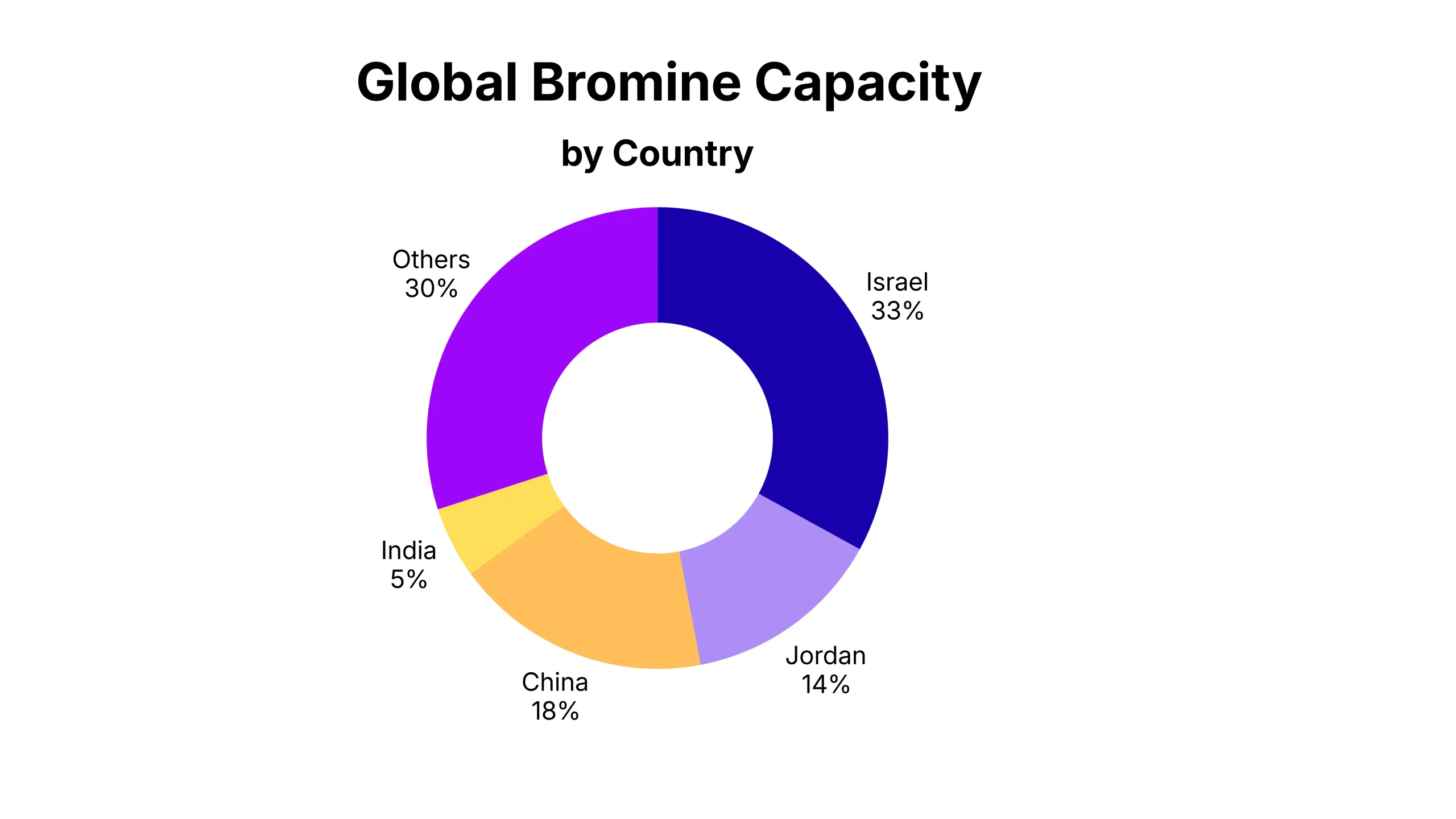
Industry estimates indicate that Israel’s ICL contributes more than 33% of global bromine production capacity, while Jordan Bromine Company accounts for nearly 14% of worldwide output. Because a significant share of bromine production is concentrated around the Dead Sea region, buyers across Asia and Europe closely monitored regional tensions and trade developments. Market participants feared that prolonged instability could disrupt exports and tighten global supply conditions.
Why did the Strait of Hormuz become a critical trade concern?
Shipping risks near the Strait of Hormuz increased fears of delays and higher logistics pressure.
The Strait of Hormuz manages nearly 20% of global oil and chemical transportation flows, making it one of the world’s most important maritime trade routes. Industry observers warned that any disruption in the corridor could delay bromine shipments, raise freight costs, and impact chemical supply chains worldwide. Several importers reportedly maintained cautious procurement strategies and controlled inventories amid continued uncertainty in the region.
How strong was industrial demand for bromine?
Demand from flame retardants, electronics, and energy storage sectors remained supportive.
Approximately 70% of bromine consumption is linked to flame retardant applications used in electronics, construction materials, plastics, and electric vehicle components. Rising electrification trends and increasing battery production also continued supporting bromine-based chemical demand globally.
Why did bromine safety innovation gain industry attention?
Manufacturers focused on improving leakage treatment efficiency and industrial safety standards.
ICL Industrial Products introduced the BromoQuel® neutralization system, designed to simplify bromine leakage incident treatment. The portable system can generate nearly 70 liters of foam and operate from a distance of around 10–20 meters, helping reduce direct exposure risks for emergency response teams.
Industry participants believe that any long-term ceasefire agreement in the Middle East could help stabilize Bromine exports, improve shipping confidence, and reduce pressure on global chemical supply chains. However, continued uncertainty surrounding regional negotiations may keep the Bromine market sensitive to sudden geopolitical developments in the near term.
Bullish run to continue in Bromine prices
The Bromine market is expected to remain firm in the coming months as supply-side risks and stable industrial demand continue supporting global trade activity. Future market direction will likely depend on Middle East geopolitical stability, shipping conditions near the Strait of Hormuz, and continued growth in electronics, energy storage, and specialty chemical industries worldwide.
With its real-time spot market intelligence, forecasting models, and in-depth market outlook analysis, Price-Watch™ helps businesses track market movements, anticipate supply disruptions, and make data-driven procurement decisions before major fluctuations occur. Covering key bromine markets across India, Israel, Jordan, and China, Price-Watch™ delivers the regional market intelligence and data precision this evolving bromine industry demands.
Follow Price Watch™ on LinkedIn for real-time raw material insights, pricing trends, supply chain intelligence, and market updates shaping global commodity markets.