

Global terbium oxide prices moderated in mid-June, marking the first noticeable decline in the heavy rare earth complex after a period of stagnant trading.
The move has attracted attention from rare earth traders and advanced magnet manufacturers, signaling a potential shift in sentiment within the strategically critical heavy rare earth segment.
This retreat raises a pivotal question for procurement teams: is this a temporary correction amid inventory rebalancing, or the early signal of broader softening in heavy rare earth demand?
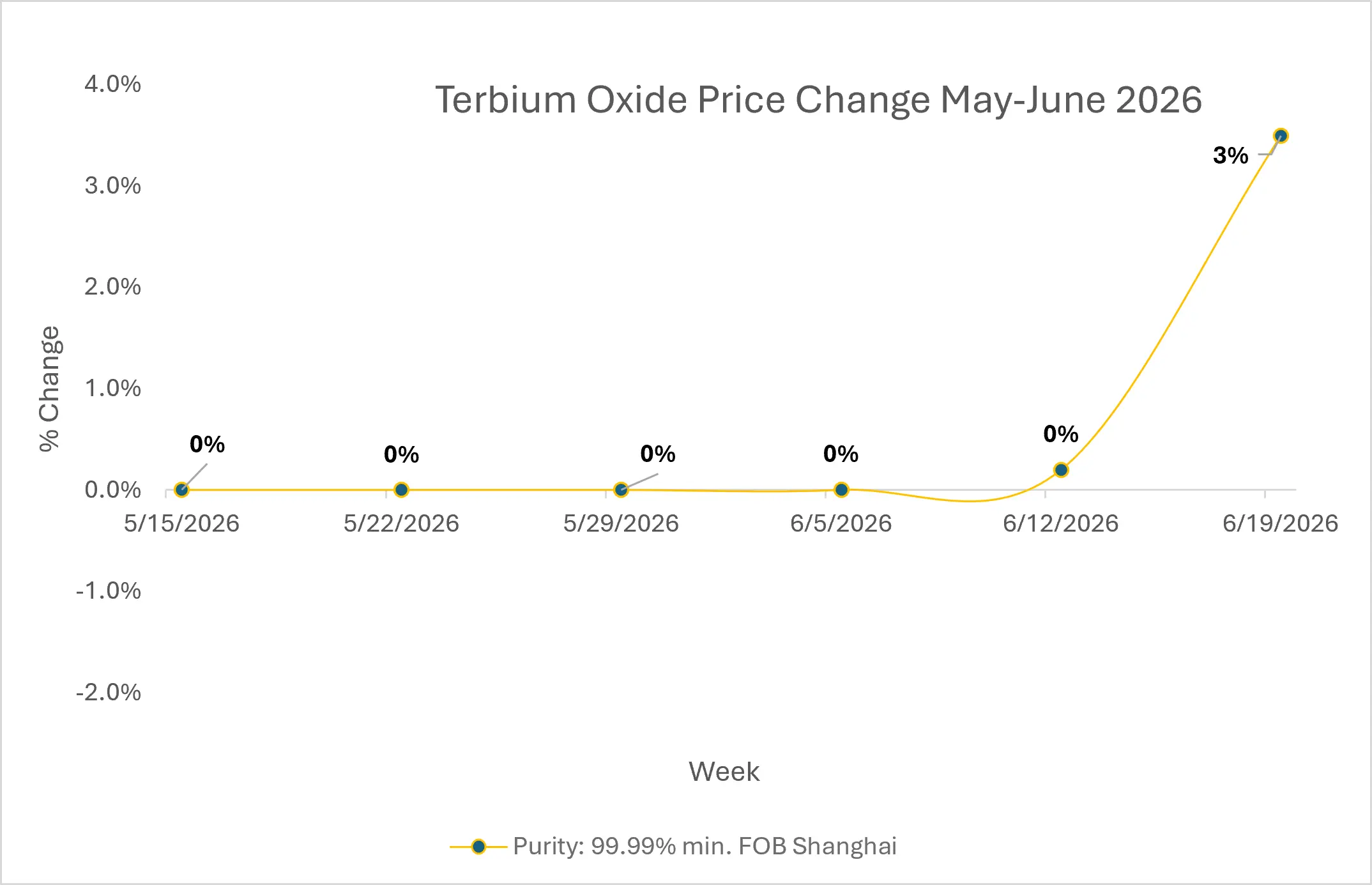
Source: Price Watch™ Terbium oxide Prices
What Drove Terbium oxide price?
- Softening Demand from Permanent Magnet Sector
The primary consumer of terbium oxide, the high-performance permanent magnet industry, has tempered procurement activity amid cautious outlooks for electric vehicle production in China and Europe.
Terbium is used as a dopant in neodymium-iron-boron magnets to enhance high-temperature performance, but manufacturers are minimizing additions due to cost pressures.
This reduced intake has directly eased pricing pressure on terbium oxide. Suppliers report slower order conversion rates and increased buyer hesitation on spot purchases, forcing distributors to hold prices steady or offer marginal concessions to maintain volume.
- Inventory Normalization Across Refining Hubs
Following months of inventory buildup in Chinese refining and distribution centers, key hubs entered a normalization phase in June. With inventories at adequate levels, the urgency for speculative buying has diminished.
This inventory-driven pause in demand has reduced immediate pressure on terbium oxide pricing, allowing prices to retreat slightly. The effect is particularly pronounced in spot markets, where traders face reduced liquidity as end-users draw from existing stock rather than new orders.
- Chinese Industrial Activity and Macro Pressures
China’s recent industrial output data revealed muted growth in steel production and mining activity, reflecting broader economic softness. As the dominant producer and consumer of rare earths, China’s slowdown exerts disproportionate downward pressure on the entire rare earth complex, including terbium oxide.
Currency fluctuations and macroeconomic uncertainty have further dampened trader sentiment, with buyers adopting a wait-and-watch approach rather than committing to forward contracts. This macro-driven caution has contributed to the price decline.
Industry Impact
Permanent magnet manufacturers benefit from slightly lower input costs, potentially improving margin flexibility in the EV and robotics sectors.
Refining companies face reduced pricing power and may need to adjust production schedules to prevent further inventory accumulation. Trading houses see compressed spreads and reduced arbitrage opportunities as price volatility contracts.
Mining companies with terbium byproduct streams experience modest revenue pressure. End-use industries in electric vehicles and high-end electronics gain short-term cost relief but face uncertainty regarding supply stability through the third quarter.
Terbium oxide Market Outlook
For the coming weeks, terbium oxide prices are expected to trade with mild downward bias and moderate volatility. Key indicators include Chinese rare earth production quota updates, electric vehicle production data, and magnet manufacturer order volumes.
Upside risks include unexpected supply disruptions from major producers or accelerated adoption of high-efficiency motor standards. Downside risks involve prolonged economic slowdown in China or technological substitution reducing terbium dopant requirements.
This decline represents a temporary correction driven by inventory normalization and cautious procurement rather than a structural demand collapse. The terbium oxide market remains fundamentally supported by long-term EV and robotics growth, but short-term sentiment is subdued.
Strategic buyers should monitor the price movement as a potential entry point but avoid aggressive accumulation until demand signals strengthen in late Q2.
Follow Price Watch™ on LinkedIn for real-time raw material insights, pricing trends, supply chain intelligence, and market updates shaping global commodity markets.