Butyric Acid Price Trend and Forecast

UNSPC code: 12164502
|
Weekly Update
|
Historical Data Since 2015
|
Forecast for 2026

butyric acid Price Trends by Country

cnChina
inIndia
sgSingapore
pePeru
usUnited States
seSweden

Global butyric acid Spot Market Prices, Trend Analysis and Forecast

Price-Watch™ provides real-time price assessments and price forecasts for Butyric Acid across top trading regions:

Butyric Acid Regional Coverage    Butyric Acid Grade and Country Coverage    Butyric Acid Pricing Data Coverage Explanation   


Asia Butyric Acid Pricing Analysis   

Butyric Acid Industrial Grade (99.5%) FOB Prices at Shanghai Port, China  Weekly Price Update on Butyric Acid Real-Time Export Prices from Shanghai Port, China to Global Markets   
Butyric Acid Industrial Grade (99.5%) CIF prices at Singapore Port, Singapore from China  Weekly Price Update on Butyric Acid Real-Time Import Prices at Singapore Port, Singapore from China 
   Butyric Acid Industrial Grade (99.5%) CIF prices at Nhava Sheva Port, India from China  Weekly Price Update on Butyric Acid Real-Time Import Prices at Nhava Sheva Port, West India from China 
North America Butyric Acid Pricing Analysis    Butyric Acid Industrial Grade (99.5%) FOB Prices from Houston Port, USA  Weekly Price Update on Butyric Acid Real-Time Export Prices from Houston Port, USA to Global Markets   
Europe Butyric Acid Pricing Analysis    Butyric Acid Industrial Grade (99.5%) FOB Prices at Gothenburg Port, Sweden  Weekly Price Update on Butyric Acid Real-Time Export Prices from Gothenburg Port, Sweden to Global Markets   
South America Butyric Acid Pricing Analysis    Butyric Acid Industrial Grade (99.5%) CIF prices at Callao Port, Peru from China  Weekly Price Update on Butyric Acid Real-Time Import Prices at Callao Port, Peru from China 

Note: In assessments structured as CIF [Importing Port] (Exporting Country), the country mentioned in brackets indicates the primary origin of supply (exporting country), while the named port refers to the destination port in the importing country. Other Incoterms (FOB, FD, EXW, etc.) should be interpreted in accordance with standard international trade definitions.

Butyric Acid Price Trend Q1 2026

In Q1 2026, Butyric Acid’s pricing trend saw an increase due to stronger demand recovery alongside reduced supply availability in multiple markets. The pricing trend has been heavily impacted by interruptions of the global supply chain and geopolitical conflict (particularly in the Middle East), as well as fluctuations in the value of crude oil, which have created higher feedstock costs and higher logistical costs, thereby increasing overall market prices.

Multiple regions also had extremely large price jumps, with some regions exceeding +30% price increase updates, reflecting changes in inventories and production to accommodate new tighter market conditions.

Overall, March’s price movements exhibited the fickleness of the market’s response to outside supply chain shocks such as geopolitical unrest, increasing energy costs, and shortages of raw materials, caused the large jump in Butyric Acid prices.

In addition to increase in overall pricing trends, select regions have demonstrated isolated pockets of price rebounds; this too reflects the volatility of the markets and their reliance on both the global supply dynamic and geopolitics.

China: Butyric Acid Export prices FOB Shanghai, China; Grade- Industrial (99.5%)

In Q1 2026, the Butyric Acid price trend in China has increased by 11% compared to the previous quarter. This rise has been largely driven by recovering demand from key industries, including chemicals and food additives, as production activity resumed after the holiday period.

The Butyric Acid price in China surged by 32% in March compared to February, primarily due to supply-side disruptions caused by geopolitical tensions in the Middle East, which resulted in fluctuations in crude oil prices and availability of raw material butyraldehyde. These factors have led to rising production costs and logistical backlogs.

The Butyric Acid price trend in China in March 2026 highlights the significant impact of global supply chain disruptions amidst of middle east conflict, along with increased energy prices, which have contributed to a sharp price increase in the later part of Q1 2026.

USA: Butyric Acid Export prices FOB Houston, USA; Grade- Industrial (99.5%)

In Q1 2026, the Butyric Acid price trend in the USA has decreased by 14% compared to the previous quarter. This decline has been driven by weaker demand, particularly in the food and chemical industries, alongside oversupply in the market. The Butyric Acid price in the USA showed a moderate recovery in March, increasing by 8% compared to February, as production levels stabilized and inventory levels began to adjust.

This price increase was largely attributed to a slight rebound in demand, coupled with the impact of global raw material shortages due to tensions in war torn middle east and logistical disruptions affected by strait of Hormuz closer by Iran due to ongoing conflict Iran and Israel.

The Butyric Acid price trend in the USA in March 2026 highlights the market’s volatility and its sensitivity to global supply chain dynamics and fluctuating feedstock prices, especially after a period of market contraction.

Sweden: Butyric Acid Export prices FOB Gothenburg, Sweden; Grade- Industrial (99.5%)

In Q1 2026, the Butyric Acid price trend in Sweden has decreased by 6% compared to the previous quarter. This decline has been primarily driven by reduced demand from key industries such as chemicals and food additives, coupled with an oversupply situation. However, in March as compared to February, the Butyric Acid price in Sweden saw a rebound, increasing by 11%, as the market adjusted to tighter supply conditions and recovering demand. This rise has been influenced by disruptions in global supply chains, including rising energy prices in Europe and logistical bottlenecks that affected feedstock butyraldehyde availability. The Butyric Acid price trend in Sweden in March 2026 reflects the market’s sensitivity to external supply side shocks and the stabilization of production levels in response to demand recovery.

Singapore: Butyric Acid import prices CIF Singapore, Singapore; Grade- Industrial (99.5%)

According to Price-Watch™, in Q1 2026, the Butyric Acid price trend in Singapore has increased by 11% compared to the previous quarter. This rise has been largely driven by a recovery in demand from key industries such as food and pharmaceuticals, alongside tightening supply conditions.

As compared to previous month the Butyric Acid price in Singapore surged by 31% in March, reflecting tightening market conditions and supply-side disruptions. These disruptions were influenced by global raw material shortages, rising feedstock costs, and logistical challenges.

The geopolitical tensions in the Middle East, along with fluctuations in crude oil prices, have exacerbated the situation, pushing production costs higher. The Butyric Acid price trend in Singapore in March 2026 highlights the market’s sensitivity to global supply constraints and geopolitical factors, contributing to a sharp increase in prices.

Peru: Butyric Acid import prices CIF Callao, Peru; Grade- Industrial (99.5%)

Butyric Acid prices in Peru rose 9% in Q1 of 2026 compared to Q4 of 2025 as demand continues to increase from both chemical and food processing industries while supply has been tightening. In March of 2026, the price of Butyric Acid increased by 39% compared to February of 2026 due to continued supply constraints.

Supply constraints have been worsened by disruptions in the global supply chain and geopolitical tensions, which caused fluctuations in crude oil prices and thus the availability of feedstocks. The Butyric acid price trend in Peru illustrates how the Butyric Acid market has been sensitive to external elements, including fluctuations in energy prices and logistical disruptions that affect production costs.

India: Butyric Acid import prices CIF Nhava Sheva, India; Grade- Industrial (99.5%)

The Butyric acid price trend in India during Q1 2026 continued to climb, growing approximately 15% from the last quarter, driven largely by a resurgence of demand from the major user sectors of the acid, which include food additives and pharmaceuticals coupled with a continued tightening of supply.

The increase in Butyric acid prices in India has been substantial (41% month over month) in March due to the continuing impact of disruptions to global supply chains (related to geopolitical tensions in the Middle East) combined with volatility in crude oil prices; these two factors resulted in higher feedstock costs and challenges in production that pushed up production costs and therefore the price of Butyric acid.

This price trend in March 2026 indicated how sensitive the butyric acid market can be to global geopolitical dynamics as well as supply chain issues that have affected pricing trends during the second half of Q1 2026.

Butyric Acid Price Trend Analysis: Q4 2025

In the 4th quarter of 2025, Butyric Acid prices decreased in many regions because of lower downstream demand and excess supply. General seasonal trends also contributed to this decline in Butyric Acid prices. Many buyers in Butyric Acid’s downstream markets have been less active than normal; because of this, they have reduced their orders and production in anticipation of the upcoming holiday season. During this period, activity in the butyric acid market has reduced due to lower order levels, and some markets experienced price decreases in the range of 1% to 3% in December 2025. General trends in the Butyric Acid market during this quarter include reduced buying, reduced inventory, and efforts to sell excess inventory. These conditions produced downward pressure on prices as supply has been greater than immediate demand. The overall stability of the butyric acid market remains relatively consistent despite price decreases as a result of year-end buying inactivity and general caution within the market.

China: Butyric Acid Export prices FOB Shanghai, China; Grade- Industrial (99.5%)

The Butyric Acid price in China dipped 3% in Q4 2025 as demand from downstream industries slowed and market supply outpaced orders. This surplus kept the pressure on prices throughout the quarter. By December, the market is particularly quiet, with in China, Butyric Acid prices in December 2025 dropping another 3% compared to November. This year-end slide is mostly due to the usual holiday slowdown. As businesses prepared for the break, they cut back on production and tightened their inventory management. Ultimately, the Butyric Acid price trend in China in December 2025 shows a standard seasonal lull, where weaker demand and cautious buying naturally pulled prices lower.

USA: Butyric Acid Export prices FOB Houston, USA; Grade- Industrial (99.5%)

The Butyric Acid price in the USA fell 6% in the fourth quarter of 2025. This drop has been mostly due to slower demand from food additive and industrial buyers, along with ample stocks in the market. By December 2025, the trend continued as in the USA, Butyric Acid prices in December 2025 slipped another 7% compared to November. This dip came down to the usual holiday slowdown. As the year wrapped up, companies cut back on orders and focused on clearing out their current inventory instead of buying more. Ultimately, the Butyric Acid price trend in the USA in the last quarter of 2025 shows how a seasonal lack of buying interest can pull prices lower.

Sweden: Butyric Acid Export prices FOB Gothenburg, Sweden; Grade- Industrial (99.5%)

The Butyric Acid price in Sweden fell 4% during the final quarter of 2025 as seasonal interest dried up and the market lost its momentum. This downward slide followed the broader regional trend where industrial work slowed down significantly toward the end of the year. By December, the market went even quieter, with in Sweden, Butyric Acid prices in December 2025 dipping another 3% compared to November. The main reason for this year-end drop has been a lack of new orders, as plants cut back production for the holiday break. Instead of stocking up, buyers focused on clearing out the supplies they already have on hand, which left plenty of unsold product sitting in the market. Ultimately, the Butyric Acid price trend in Sweden in December 2025 shows a classic seasonal slump where low demand and cautious spending naturally dragged prices down.

Singapore: Butyric Acid import prices CIF Singapore, Singapore; Grade- Industrial (99.5%)

The Butyric Acid price in Singapore dipped 3% during the fourth quarter of 2025, fuelled by weaker demand from core sectors and a tougher, more competitive market. This downward pressure kept prices lean throughout the period. By December, the market stayed quiet, with in Singapore, Butyric Acid prices in December 2025 slipping another 2% compared to November. This year-end slide has been mostly a result of a seasonal supply-demand imbalance. As the holidays approached, buyers pulled back on orders to focus on clearing out their existing stock. With more product available than the market needed, prices naturally moved lower. Ultimately, the Butyric Acid price trend in Singapore in December 2025 highlights a standard year-end lull where cautious purchasing and inventory management shaped the market.

Peru: Butyric Acid import prices CIF Callao, Peru; Grade- Industrial (99.5%)

The Butyric Acid price in Peru fell by 5% during the fourth quarter of 2025. This drop has been mainly caused by a dip in demand and a market that has been crowded with supply. By December, the market stayed quiet, with in Peru, Butyric Acid prices in December 2025 slipping another 1% compared to November. This year-end slide has been classic case of the holiday slowdown. As the year wrapped up, companies cut back on their orders and focused on clearing out the stock they already have instead of buying more. Ultimately, the Butyric Acid price trend in Peru in Q4 2025 highlights a typical seasonal lull where a lack of new buying activity pulled prices lower.

India: Butyric Acid import prices CIF Nhava Sheva, India; Grade- Industrial (99.5%)

In Q4 2025, the Butyric Acid price trend in India has decreased by 3% compared to the previous quarter. This decline has been mainly driven by softer demand from key industries and an oversupply in the market. The Butyric Acid price in India showed a slight decrease of 1% in December compared to previous month, reflecting the typical slowdown in market activity during the holiday season. The Butyric Acid price trend in India in December 2025 reflects the seasonal reduction in demand as industries scale back production and purchasing, leading to a modest decrease in prices during the month.

In the third quarter of 2025, Butyric Acid prices saw a mixed trend among the main markets. China, the USA, Sweden, Singapore, and Peru experienced price reductions owing to deteriorating demand from food and beverages, pharmaceuticals, and skincare and cosmetics, combined with logistics issues and an oversupplied market.

Conversely, Indian prices increased slightly due to mild recovery in food and pharmaceutical sectors. Besides mixed pricing, logistical delays and production slowdowns led the trend of Butyric Acid pricing to be volatile.

USA: Butyric Acid Export prices FOB Houston, USA, Grade 99.5 min Industrial Grade.

In Q3 2025, Butyric Acid prices in the USA decreased by 3.19%, following a more modest 0.42% drop in Q2. The Butyric Acid price trend in the USA was heavily influenced by reduced demand from the food and industrial sectors, both of which faced slow production cycles.

A temporary shutdown in a major production facility also contributed to supply disruptions, leading to a tightening of available stocks. The slowdown in consumer demand and the rising cost of imports from China further pressured prices.

Butyric Acid prices in September 2025 reflected a notable decline from the previous levels in the US. Butyric acid prices are expected to remain under pressure unless there is a significant rebound in demand during Q4.

Sweden: Butyric Acid Export prices FOB Gothenburg, Sweden, Grade 99.5 min Industrial Grade.

According to PriceWatch, In Q3 2025, Butyric Acid prices in Sweden experienced a sharp decline of 4.92%, reversing the 4.72% increase seen in Q2. The Butyric Acid price trend in Sweden has been influenced by several factors, including a drop in demand from the pharmaceutical and cosmetics industries, which saw seasonal slowdowns.

Additionally, supply disruptions due to a temporary shutdown of a key production plant further tightened supply. The increased cost of raw materials and logistical challenges in Europe also contributed to the price drop. In Sweden, Butyric Acid prices in September 2025 have been lower compared to the previous month, reflecting the overall market downturn in Sweden.

The market may remain volatile in the coming months, with the potential for further fluctuations depending on supply and demand conditions.

China: Butyric Acid Export prices FOB Shanghai, China, Grade 99.5 min Industrial Grade.

In the third quarter of 2025, butyric acid prices in China dropped slightly by 1.22%, following a decrease of 1.74% in the second quarter of 2025. The price trend of butyric acid in China has been heavily influenced by soft demand from both the domestic and international markets. Lower food and beverage consumption as well as softness in the fragrance sector resulted in lower-than-expected demand from final consumption customers.

Production issues and delays added to bearish sentiment. Despite challenges, though, import volumes remained constant, although excess stock availability kept prices rangebound. In September 2025, Butyric prices in China decreased by 0.55% in comparison to the previous month.

Singapore: Butyric Acid import prices CIF Singapore, Singapore, Grade- 99.5 min Industrial Grade.

Butyric acid prices in Singapore fell by 1.38% in Q3 2025, following a 2.39% decline in Q2. The decrease in Butyric acid price trend in Singapore has mainly been driven by sluggish demand from key end-use industries, such as food processing and pharmaceuticals, both of which have been affected by slow production cycles. Moreover, supply chain disruptions and increasing import costs, particularly from China, led to further downward pressure on prices.

Although imports remained consistent, oversupply conditions in the domestic market continued to limit any potential price recovery, and butyric acid prices in September 2025 remained lower than the previous month in Singapore.

Peru: Butyric Acid import prices CIF Callao, Peru, Grade- 99.5 min Industrial Grade.

In Q3 2025, Butyric Acid prices in Peru decreased by 1.45%, continuing the modest increase of 0.91% in Q2. In Peru, the butyric acid price trend has been influenced by less than expected demand in the food and beverage sector, as economic issues facing the region affected industrial activity. While imports from China have been stable, transport delays and rising raw material prices had a holding effect on pricing.

The Butyric acid market as a whole has been constrained by oversupply, which supported the price drop. Lastly, the Butyric Acid prices in September 2025 have been lower than the previous month’s prices in Peru. For Q4 2025, prospects for the Butyric Acid market will depend on the recovery of industrial demand and supply chain concerns.

India: Butyric Acid import prices CIF Nhava Sheva, India, Grade- 99.5 min Industrial Grade.

Butyric Acid prices in India increased by 0.73% in Q3 2025 after dropping by 3.48% in Q2. The price trend of Butyric Acid in India has been supported by a moderate recovery in demand from food and pharma activity in India. Nevertheless, subdued demand from other industries such as automotive and cosmetics limited the overall price increase for Butyric Acid in Q3 2025.

Although transportation costs remained elevated and logistics challenges persisted, imports from China flowed steadily and sufficed to limit the price fluctuations. In India, Butyric Acid prices in September 2025 have been slightly higher than August 2025 however pricing remained relatively stable overall and have been subject to moderate upwards pressure.

According to the PriceWatch, the prices of Butyric Acid showed mixed trends in Q2 2025. China’s prices decreased to 1,049 USD per metric ton, a 1.74% drop from Q1 2025, driven by lower demand from Singapore and Peru. Seasonal slowdowns in the food and animal feed industries also contributed to this decline.

In contrast, the USA saw a modest 0.42% reduction, with prices reaching 1,257 USD per MT. The market remained stable due to steady demand from the chemicals and agriculture sectors. Sweden, however, experienced a significant 4.72% increase, with prices rising to 1,405 USD per metric ton.

This was driven by higher demand in Europe, especially in the flavor, fragrance, and animal feed industries. The price trend in Sweden reflects strong export activity, stable feedstock supply, and favorable market conditions, making it competitive despite weaker trends from China and the USA.

According to the PriceWatch, the price of Butyric Acid imported to India from China decreased to 1,108 USD per metric ton in Q2 2025, a 3.48% drop from Q1 2025. This decline is mainly due to reduced downstream demand from sectors like animal feed and food additives, which experience seasonal slowdowns in Q2.

Feedstock prices, including butyric acid’s precursor, fluctuated slightly, contributing to a decrease in production costs. Additionally, demand from key Indian industries weakened, leading to a dip in the price index.

The price trend reflects China’s efforts to adjust prices to maintain competitiveness in the Indian market, despite weaker consumption. However, the import volume remained steady, with China continuing to supply India’s demand for Butyric Acid. Overall, the market conditions in India appeared subdued, in line with seasonal consumption patterns and reduced industrial activity during Q2.

In Q1 2025, Butyric Acid prices experienced a downturn, falling to USD 1068/MT, a 2.33% decrease from the previous quarter. This decline was driven by weak demand from industries like food, beverages, and cosmetics, with buyers holding off due to high inventory levels and market uncertainties. The influx of affordable imports, especially from Asia, further pressured local prices.

Despite these challenges, China’s manufacturing capacity remained steady, ensuring a reliable supply. In the USA, prices dropped 7.89% to USD 1262/MT, due to oversupply and weak demand. Meanwhile, Sweden saw a minimal increase of 0.05%, remaining at USD 1341/MT, reflecting stable market conditions and steady demand.

Butyric Acid prices fell to USD 1148/MT, reflecting a decrease of 2.11% from the previous quarter. The drop in prices was largely due to weaker demand from key sectors such as food and beverages, as well as cosmetics. Buyers remained cautious, leading to lower purchasing activity. Increased inventory levels in the market, along with a stable but competitive supply environment, added further pressure on prices, preventing any substantial recovery.

Butyric Acid Price Trend Analysis: Q4 2024

Butyric Acid prices are projected to decline significantly, falling to USD 1093/MT, a 12.88% decrease, driven by reduced demand from key sectors like flavors, fragrances, paints, and adhesives. Economic uncertainty and lower industrial activity have led to a drop in consumption, compounded by increased competition from alternative chemicals and cheaper imports.

Despite steady production levels, market sentiment remains weak. In contrast, Q4 2024 saw USA prices surge by 9.01%, reaching USD 1371/MT due to higher demand and supply constraints. Meanwhile, Sweden experienced a slight decline of 0.47%, settling at USD 1341/MT, reflecting subdued performance amid global economic challenges, contrasting with the USA’s stronger growth.

In Q4 2024, Butyric Acid prices experienced a sharp decline, dropping to USD 1173/MT, a significant 12.01% decrease. This was driven by a slowdown in demand as industries reduced production in response to weaker market conditions. Buyers adopted a more cautious approach, limiting new orders and focusing on existing inventory. Additionally, the market saw increased competition from cheaper imports, further pressuring prices downward.

Butyric Acid prices are expected to rise to USD 1255/MT, reflecting a 0.47% increase, driven by a recovery in demand across key sectors like paints, adhesives, flavors, fragrances, and coatings, particularly as seasonal demand picks up during the summer months. Supply chain adjustments, including production disruptions or planned maintenance, may tighten supply, further pushing prices up.

In Q3 2024, the USA saw a slight price increase of 0.79%, reaching USD 1257/MT, reflecting steady growth despite global market volatility. Meanwhile, Sweden experienced a 4.50% decline, with prices falling to USD 1347/MT, due to weakening demand, highlighting contrasting market conditions in both countries.

Butyric Acid prices fell again to USD 1632 per metric ton, -1.62% on Q2. This was largely because of a tapering in agrochemical consumption following the end of the high application period. Export activity was also subdued with weakening global demand. While local production held at regular levels, the market grappled with larger inventory levels and weaker offtake. Consequently, prices remained under mild downward pressure during the quarter.

In Q2 2024, Butyric Acid prices continued to decline by 1.9%, falling to USD 1249/MT. This was mainly due to weakened demand in key sectors such as flavors, fragrances, and coatings. Although manufacturers began replenishing inventories for seasonal demand, the overall market remained subdued. The impact of earlier supply disruptions from maintenance activities had diminished, leading to more stable supply levels.

In contrast, USA prices saw a modest increase of 0.56%, reaching USD 1247/MT, while Sweden experienced a stronger rise of 5.64%, reaching USD 1411/MT, driven by increased demand. Sweden’s growth was more robust, while the USA experienced slower growth despite the broader market challenges.

By Q2 2024 Butyric Acid prices showed a slight decrease, falling to USD 1311/MT, a 1.33% dip from Q1. This decline was driven by a seasonal reduction in demand from key industries, coupled with competitive pricing from international markets. Although some industries began restocking for the upcoming season, the overall market sentiment remained subdued.

In Q1 2024, Butyric Acid prices in China declined by approximately 4.5%, driven by increased production capacity among local chemical manufacturers, leading to a market surplus. This surplus, coupled with stable or decreasing feedstock prices like butyl acetate and butyl alcohol, reduced production costs and enabled manufacturers to pass on savings.

Additionally, a temporary dip in demand from industries like flavors, fragrances, paints, and coatings contributed to the price reduction. Meanwhile, USA prices decreased by 5.51% to USD 1240/MT, due to reduced demand. In contrast, Sweden saw a slight increase of 1.25%, reaching USD 1335/MT, benefiting from steady market conditions and a stable rise in prices.

In Q1 2024, Butyric Acid prices were slightly higher at USD 1329/MT, although they still faced a modest decrease of 1.93% from the previous quarter. Demand from end-use industries was relatively stable, but some hesitation among buyers and a slowdown in industrial activity dampened price growth. Additionally, the market had been adjusting to higher inventory levels, which weighed on price movements.

Technical Specifications of Butyric Acid Price Trends

Product Description

Butyric Acid is a colourless carboxylic acid with a pungent odour, extensively used in animal feed, flavours, fragrances, and industrial applications. It is commonly synthesized from feedstocks like butyl acetate and butyl alcohol through chemical processes. Known for its role in promoting gut health in livestock, it also serves as a key intermediate in various manufacturing sectors.

Identifiers and Classification:

  • CAS No – 107-92-6
  • HS Code – 29156010
  • Molecular Formula – CH₃CH₂CH₂COOH
  • Molecular Weight (in gm/mol) – 88.11


Styrene Butadiene Rubber Synonyms:

  • Butanoic acid
  • Isopropylformic acid
  • Ethylacetic acid.


Butyric Acid Grades Specific Price Assessment:

  • 99.5 min Industrial Grade


Butyric Acid Global Trade and Shipment Terms

  • Quotation Terms (Product & Country Specific): 25-28 MT (Global), 10-15 MT (Sweden, USA)
  • Packaging Type (Product & Country Specific): ISO Tank (Global), 200 Kg Drum (Sweden, USA)


Incoterms Referenced in Butyric Acid Price Reporting

Shipping Term  Location  Definition 
FOB China  Shanghai, China  Butyric Acid Export price from China 
FOB USA  Houston, USA  Butyric Acid Export price from USA 
FOB Sweden  Gothenburg, Sweden  Butyric Acid Export price from Sweden 
CIF JNPT (China)  JNPT, India  Butyric Acid import price in India from China 
CIF Singapore (China)  Singapore, Singapore  Butyric Acid import price in Singapore from China 
CIF Callao (China)  Callao, Peru  Butyric Acid import price in Peru from China 

*Quotation Terms refers to the quantity range specified for the Butyric Acid being quoted or offered in a commercial transaction.

**Packaging Type refers to standard packaging size commonly used for Butyric Acid packing, ease of handling, transportation, and storage in industrial and commercial applications.


Key Butyric Acid Manufacturers and their brands

Manufacturer 
Nanjing Chemical Material Corp. 
Yufeng International Group Co., Ltd. 
Hangzhou Better Chem Tech Ltd 
Runtai New Material Co., Ltd. 
Eastman  
Perstorp  

Butyric Acid Industrial Applications

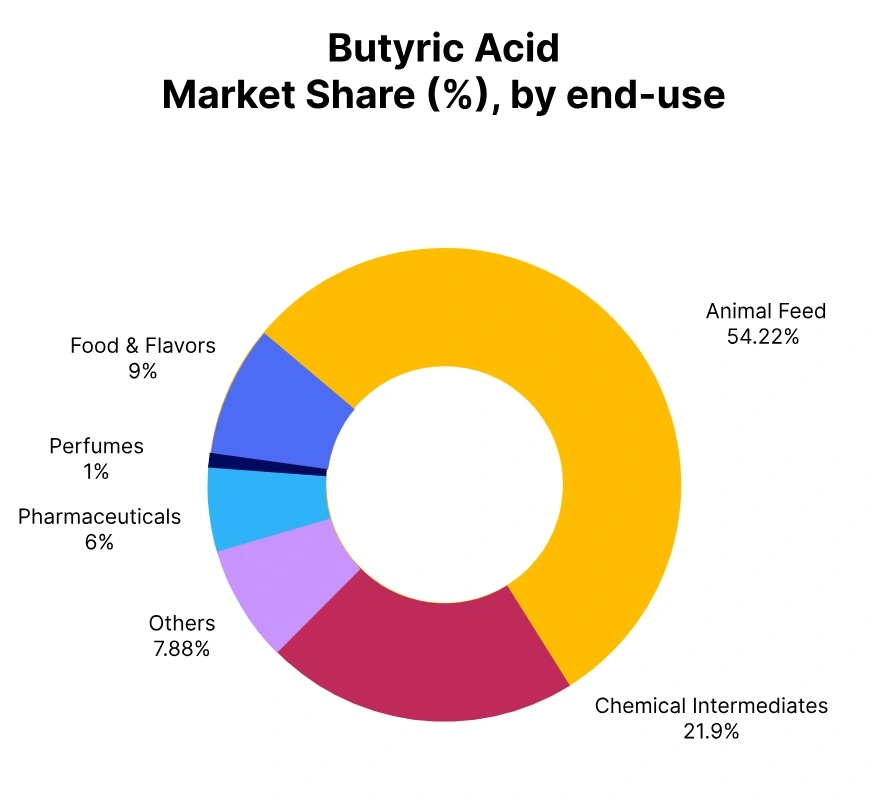
butyric acid market share end use

Historically, several events have caused significant fluctuations in Butyric Acid prices

  • Raw Material Shortages: Butyric Acid is primarily produced from butyl acetate and butyl alcohol, and fluctuations in the prices of these two, often due to supply chain disruptions, can significantly impact Butyric Acid pricing. For example, shortages in the availability of butyl acetate and butyl alcohol due to industrial plant closures or production inefficiencies have caused price hikes.
  • Changes in Agricultural Demand: Butyric Acid is widely used in animal feed to enhance gut health, and fluctuations in agricultural demand, especially in the livestock sector, have caused price variations. For instance, during periods of increased meat production or export bans, there is heightened demand for Butyric Acid-based feed additives, leading to price spikes.
  • Oil Price Volatility: As Butyric Acid production involves petrochemical feedstocks, fluctuations in global crude oil prices directly affect production costs. Sudden spikes or drops in oil prices, often due to geopolitical tensions, natural disasters, or changes in OPEC policies, can lead to significant Butyric Acid price changes.
  • Regulatory and Environmental Policies: New regulations affecting chemical production, such as stricter environmental laws or limits on emissions, can raise production costs for Butyric Acid manufacturers. When such regulations come into force, particularly in regions like Europe or North America, they can reduce supply and raise prices globally. Additionally, import/export tariffs imposed by major producing nations can impact international pricing.
  • Technological Advancements and Shifts Toward Sustainability: Advancements in green chemistry and bio-based production methods have also caused fluctuations. While bio-based Butyric Acid can sometimes offer cost savings, the initial capital investments and shifts in production processes can temporarily drive-up prices.
  • COVID-19 Pandemic: The global pandemic in 2020 caused widespread disruptions across industries, including Butyric Acid production. Plant shutdowns, labour shortages, and transportation delays all contributed to significant price volatility. Disruptions to supply chains and shifts in demand across pharmaceuticals, food additives, and animal feed sectors led to fluctuating prices during and after the pandemic.

These events underscore the Butyric Acid market’s vulnerability to global disruptions and highlight the need for continuous monitoring of supply-demand dynamics.

Why Price Watch™?

Price Watch™ is your trusted resource for tracking global butyric acid price trends. Our platform delivers real-time data and expert analysis, offering deep insights into the key factors driving price fluctuations in the butyric acid market. By monitoring critical events such as geopolitical tensions, supply chain disruptions, and economic shifts, Price Watch™ keeps you fully informed of market dynamics.

In addition, Price Watch™ provides detailed forecasts and updates on production capacities, enabling you to anticipate market changes and make well-informed decisions. With Price Watch™, you gain a competitive edge in understanding all the elements that influence butyric acid prices worldwide. Stay ahead of the curve with Price Watch’s™ reliable, accurate, and timely butyric acid market data.

Track Price Watch's™ butyric acid price assessment on a weekly basis since 2015 onwards, along with short-term forecasts, and get access to the detailed report in a downloadable format.

Butyric Acid Market Price Trend published by Price Watch™ reflect prevailing spot market conditions, derived from independent research, verified trade inputs, and proprietary market intelligence as of the publication date. Prices are published on the specified Incoterm and represent indicative base market levels, exclusive of applicable taxes, VAT, duties, tariffs, and other statutory charges. Actual transaction values may vary depending on volume, credit terms, contractual structure, and other negotiated conditions. Market prices are inherently subject to volatility, liquidity dynamics, regulatory changes, and evolving trade activity. The information provided is for reference and benchmarking purposes only and does not constitute an offer, recommendation, or guarantee of transactional outcomes. Users should exercise independent commercial judgment and assess their specific contractual, regulatory, tax, and application requirements before making business decisions. Price Watch™ assumes no liability for decisions taken based on this information.

The pricing of Butyric Acid is influenced by various factors, including the cost of raw materials used in its production, energy prices, and fluctuations in demand from end-use industries such as animal feed, flavors, paint, fragrances, and coatings. Seasonal trends, production outages, and transportation costs also play a significant role. Additionally, global economic conditions and geopolitical events can impact supply chain dynamics, further affecting prices.

Butyric Acid prices are highly sensitive to demand fluctuations in its primary end-use sectors, such as animal feed, flavors, paints, coatings. A surge in demand, especially during seasonal peaks, tends to drive up prices due to increased consumption. Conversely, lower demand during off-peak periods or economic slowdowns can lead to price decreases. Procurement heads should closely monitor industry trends to anticipate price changes.

Yes, regional price differences for Butyric Acid exist due to variations in production capacities, raw material availability, and transportation costs. For example, Asia, being a major manufacturing hub, often offers lower prices compared to regions like Europe or North America. Procurement teams can optimize sourcing strategies by exploring cost-competitive regions and establishing relationships with suppliers in areas where production costs are lower.

Butyric Acid is a short-chain fatty acid used in the production of flavorings, fragrances, and as a chemical intermediate in various industries, including pharmaceuticals, food, and plastics. It plays a key role in manufacturing butyrate esters, which are used in the food industry as flavor additives and in the production of plastics and biofuels. The price of Butyric Acid is crucial because fluctuations can affect the cost of its derivatives and downstream products, impacting industries such as food processing, chemicals, and pharmaceuticals. Price-Watch™ tracks Butyric Acid prices to help businesses stay updated on market trends.

The cost of Butyric Acid varies based on factors like regional supply and demand, feedstock costs, production methods, and market conditions. Prices are typically quoted per metric ton and fluctuate based on these factors. Price-Watch™ provides real-time price assessments across different global markets to help buyers and sellers make informed decisions.

Butyric Acid prices are influenced by factors such as feedstock availability (primarily from petroleum derivatives), demand from industries like food processing, pharmaceuticals, and plastics, and energy prices. Market trends are also affected by global production capacity, plant shutdowns, and the cost of transportation. Seasonal demand for Butyric Acid in flavoring and fragrance production also impacts its pricing. Price-Watch™ tracks these factors to provide accurate price trends.

The largest consumers of Butyric Acid are the food and beverage industry (for flavor additives and preservatives), the pharmaceutical industry (for drug formulations), and the chemical industry (for the production of plastics, biodegradable plastics, and solvents). Additionally, Butyric Acid is used in animal feed and as a key intermediate in producing butyrate esters, which have various applications. Price-Watch™ monitors demand across these industries to assess market behavior.

Butyric Acid is typically produced through chemical processes involving the fermentation of carbohydrates or the catalytic oxidation of petroleum products. It can also be derived from animal fats and oils. The production process involves converting raw materials such as glucose or butylene into Butyric Acid in chemical plants or bio-refineries. It is widely produced in petrochemical complexes across the globe.

Major exporters of Butyric Acid include countries with strong chemical and petrochemical production capacities such as China, the United States, and European countries like Germany. These countries have established infrastructure for large-scale production and serve as key suppliers to global markets. Price-Watch™ tracks global export volumes and trade dynamics to provide insights into international supply chains.

Supply generally matches demand, but regional shortages can occur due to production disruptions, feedstock constraints, or sudden surges in demand from industries like food processing or pharmaceuticals. Additionally, seasonal peaks in demand for Butyric Acid from the flavoring and fragrance sectors can create temporary supply imbalances. Price-Watch™ monitors these dynamics to alert businesses about potential supply shortages.

Butyric Acid is available in different grades, such as industrial-grade and food-grade varieties. Food-grade Butyric Acid requires higher purity levels and adherence to food safety regulations, which results in a premium price compared to industrial-grade material. The price can also vary based on packaging, logistics, and the method of production (e.g., synthetic vs. bio-based). Price-Watch™ provides separate price assessments for each grade to ensure transparency.

When demand for Butyric Acid rises suddenly, often due to increased production in food and flavor additives, pharmaceuticals, or plastics, prices tend to increase. Suppliers may prioritize long-term contracts, while spot buyers may face higher prices or limited availability. Production flexibility can be constrained by the availability of feedstocks, plant capacity, and logistical factors. Price-Watch™ captures these market shifts in real-time, helping businesses make informed decisions.

Energy prices significantly impact the cost of Butyric Acid production, particularly for processes involving high-temperature reactions. When energy costs, such as natural gas or electricity, increase, manufacturers generally pass these higher costs onto customers, leading to price hikes. This is particularly true for petrochemical-based production methods. Price-Watch™ tracks energy price trends and includes them in its pricing assessments.

Regional price differences for Butyric Acid arise from factors such as local production capacity, feedstock costs, energy prices, and transportation expenses. Areas with limited production facilities or high logistics costs tend to have higher prices, while regions with established chemical complexes and favorable feedstock availability typically experience lower prices. Price-Watch™ tracks these regional variations to offer comprehensive price insights.

The price forecast for Butyric Acid depends on various factors such as raw material prices (feedstocks like butylene and glucose), energy costs, production capacity, demand from key industries (like food, fragrance, and plastics), and global supply chain dynamics. Changes in these factors can lead to price volatility, and Price-Watch™ regularly publishes forecasts to help businesses plan for future market conditions.

Yes, accurate price forecasts help businesses time their purchases more effectively, negotiate favorable contracts, and better manage budgets. For example, if a forecast predicts rising prices due to increased demand or feedstock shortages, businesses may decide to purchase in advance or lock in current rates. Price-Watch™ provides actionable insights for strategic decision-making.

Global events such as natural disasters, geopolitical tensions, and feedstock supply disruptions can lead to production delays and shipping bottlenecks, causing price volatility for Butyric Acid. For example, supply chain disruptions caused by natural disasters or trade restrictions can lead to temporary shortages and higher prices. Price-Watch™ provides timely alerts to businesses when such events affect supply or pricing.

Price-Watch™ collects data from global manufacturers, distributors, and buyers to provide transparent, reliable price assessments. Our detailed market reports and forecasts make us a trusted source for understanding Butyric Acid pricing trends, helping businesses make informed decisions based on the latest market data.