Calcium Chloride Price Trend and Forecast

UNSPC code: 12352301
|
Weekly Update
|
Historical Data Since 2015
|
Forecast for 2026

calcium chloride Price Trends by Country

inIndia
thThailand
ngNigeria
usUnited States
auAustralia

Global calcium chloride Spot Market Prices, Trend Analysis and Forecast

Price Watch™ provides real-time price assessments and price forecasts for Calcium Chloride across top trading regions:

Calcium Chloride Regional Coverage    Calcium Chloride Grade and Country Coverage    Calcium Chloride Pricing Data Coverage Explanation   


Asia Calcium Chloride Pricing Analysis   

Calcium Chloride Industrial Grade 94%purity FOB Prices at Nhava Shiva Port, India  Weekly Price Update on Calcium Chloride Real-Time Export Prices from Nhava Shiva Port, West India to Global Markets   
Calcium Chloride Industrial Grade 94%purity CIF prices at Laem Chabang Port, Thailand from India  Weekly Price Update on Calcium Chloride Real-Time Import Prices at Laem Chabang Port, Thailand from India 
Calcium Chloride Industrial Grade 94%purity CIF prices at Sydney Port, Australia from India  Weekly Price Update on Calcium Chloride Real-Time Import Prices at Sydney Port, Australia from India 
Middle East & Africa Calcium Chloride Pricing Analysis    Calcium Chloride Industrial Grade 94%purity CIF prices at Apapa Port, Nigeria from India  Weekly Price Update on Calcium Chloride Real-Time Import Prices at Apapa Port, Nigeria from India 
North America Calcium Chloride Pricing Analysis    Calcium Chloride Industrial Grade 94%purity CIF prices at Houston Port, USA from India  Weekly Price Update on Calcium Chloride Real-Time Import Prices at Houston Port, USA from India 


Note: In assessments structured as CIF [Importing Port] (Exporting Country), the country mentioned in brackets indicates the primary origin of supply (exporting country), while the named port refers to the destination port in the importing country. Other Incoterms (FOB, FD, EXW, etc.) should be interpreted in accordance with standard international trade definitions.

Calcium Chloride Price Trend Q1 2026

The current market prices of the Calcium Chloride commodity for Q1 2026 have exhibited a decline trend, which represents a 1% to 18% decline. The affected key countries include India, Thailand, Nigeria, the United States of America, and Australia.

The reasons behind the decline in the prices of calcium chloride can be attributed to a drop in demand for this product within applications such as de-icing, dust control, and water treatment, with constant production levels.

Although there have been differences in prices, the stability of prices has been ensured by balancing the supply and demand of this product. Growth within the market has been hindered by various factors.

India: Calcium Chloride Export price from FOB Nhava Sheva, India, Industrial Grade 94%purity

During Q1 2026, Calcium Chloride price in India have depicted a minor downtrend in pricing. Prices have been trading between -1% to -18%, considering weak demand from sectors like de-icing, dust suppression, and water treatment, among others, coupled with steady supply in the region and guarded participation from buyers.

Calcium Chloride price trend in India have managed to trade relatively stable due to supply-demand equilibrium in the sector. In India, Calcium Chloride price in March 2026 has a significant fall by about 12% on account of weak demand and stable supply conditions leading to price correction. Although production levels have been constant, there have been some signs of under-consumption in some sectors during the quarter.

Thailand: Calcium Chloride imported price CIF Laem Chabang from India, Thailand, Industrial Grade 94%purity

The Calcium chloride price in Thailand have depicted a minor trend of decreasing price trend. The Calcium Chloride price trend in India ranged between -1% to -16%. These fluctuations can be attributed to the relatively weak demand for this chemical from various industries like de-icing, dust management, and water purification among others. There have not been any significant changes in the regional supplies.

In Thailand, Calcium Chloride price in March 2026 have exhibited a marked decline by 10%, as compared to last year’s figures. This drop can be attributed to the low demands witnessed along with stable supply trends. Production levels have maintained stability, though demand levels in some markets have lagged.

Nigeria: Calcium Chloride imported price CIF Apapa from India, Nigeria, Industrial Grade 94%purity

According to Price-Watch™, in Q1 2026, Calcium Chloride prices in Nigeria have shown a slight downward price trend. The Calcium Chloride price trend in Nigeria has fluctuated between -1% to -12%, reflecting softer demand from industries such as de-icing, dust control, and water treatment, alongside stable regional supply and cautious buyer participation.

Despite some price variations, the market has remained relatively stable due to balanced supply and demand dynamics. In Nigeria, Calcium Chloride prices in March 2026 have seen a notable decrease, dropping by 8%. This decline has been primarily driven by lower demand and an overall stable supply outlook, resulting in price corrections.

Throughout Q1, production rates have remained steady, but consumption in certain sectors has shown signs of lagging. Overall, the Calcium Chloride price in Nigeria has reflected demand-driven volatility during the period.

USA: Calcium Chloride imported price CIF Houston from India, USA, Industrial Grade 94%purity

In Q1 2026, Calcium Chloride prices in the USA have shown a slight downward price trend. The prices fluctuated between -0.5% to -13%, reflecting softer demand from industries such as de-icing, dust control, and water treatment, alongside stable regional supply and cautious buyer participation. Despite some price variations, the market remained relatively stable due to balanced supply and demand dynamics.

However, prices saw a notable decrease in March 2026, dropping by 10%. This decline is primarily driven by lower demand and an overall stable supply outlook, resulting in price corrections. Throughout Q1, production rates remained steady, but consumption in certain sectors showed signs of lagging. The broader market reflected demand-driven volatility, as seen in the price movements in the USA during the period.

Australia: Calcium Chloride imported price CIF Sydney from India, Australia, Industrial Grade 94%purity

In Q1 2026, Calcium Chloride prices in Australia have shown a slight downward price trend. The prices fluctuated between -1% to -12%, reflecting softer demand from industries such as de-icing, dust control, and water treatment, alongside stable regional supply and cautious buyer participation. Despite some price variations, the market remained relatively stable due to balanced supply and demand dynamics.

However, prices saw a notable decrease in March 2026, dropping by 8%. This decline is primarily driven by lower demand and an overall stable supply outlook, resulting in price corrections. Throughout Q1, production rates remained steady, but consumption in certain sectors showed signs of lagging. The broader market reflected demand-driven volatility, as seen in the price movements in Australia during the period.

Calcium Chloride Price Trend Analysis: Q4 2025

During the fourth quarter of 2025, the global market of calcium chloride has witnessed a minor decline in prices, showing a decline of 1% to 12%. The major market for calcium chloride is India, Thailand, Nigeria, the USA, and Australia. The reasons for the decline include low demand for the product from industries like de-icing, dust suppression, water treatment, among others, along with constant production levels. The global market has maintained stability despite price variations due to the availability of raw materials and effective inventory management practices in place. Growth in the industry has been hindered by unfavorable economic conditions.

India: Calcium Chloride Export price from FOB Nhava Sheva, India, Industrial Grade 94%purity

In Q4 2025, Calcium Chloride prices in India have shown a slight downward price trend. The prices fluctuated between -1% to -6%, reflecting softer demand from industries such as de-icing, dust control, and water treatment, along with stable regional supply and cautious buyer participation. Despite some price variations, the market remained relatively stable due to balanced supply and demand dynamics. However, prices saw a slight decrease in December 2025, dropping by 0.5% to 1.0%. This decline is primarily driven by lower demand and a stable supply outlook, resulting in price corrections. Throughout Q4, production rates remained steady, but consumption in certain sectors showed signs of slowing. The broader market reflected demand-driven volatility, as seen in the price movements in India during the period.

Calcium Chloride price in India has declined during the Q4 2025. Calcium Chloride price trend in India has been within a range of -1% – -6% owing to softening demand for calcium chloride from industries including ice melting, dust suppression, and water treatment industries among others. The prices for calcium chloride within Q4 have experienced minor changes in price, which have been attributed to demand and supply balance in the market. In India, Calcium Chloride price in December 2025 have been recorded decreases of up to 0.5% to 1.0%. Such declines have been experienced due to low demand and a steady supply outlook for the commodity within India. In Q4, production levels have been seen to be at par with the same consumption level.

Thailand: Calcium Chloride imported price CIF Laem Chabang from India, Thailand, Industrial Grade 94%purity

Calcium Chloride price in Thailand within quarter four 2025 fell with a marginal decrease in price. In terms of Calcium Chloride price trend in Thailand, the prices have fallen firmly ranging between -1% to -5% due to lower demand in industries that include de-icing, dust suppression, and water treatment among others coupled with an equal supply level and conservative buyers’ participation. Although there have been fluctuations in prices, there has not been an impact on the market as the supply and demand have been balanced. In Thailand, Calcium Chloride price in December 2025 has however fallen by 0.5% to 1.0%. The main reason behind the decline in prices is lower demand while supply levels remain constant, thus leading to a correction in prices. During the quarter, there is no variation in production although there is a dip in consumption levels in certain industries.

Nigeria: Calcium Chloride imported price CIF Apapa from India, Nigeria, Industrial Grade 94%purity

In Q4 2025, Calcium Chloride prices in Nigeria have shown a slight downward price trend. The Calcium Chloride price trend in Nigeria has fluctuated between -1% to -4%, reflecting softer demand from industries such as de-icing, dust control, and water treatment, alongside stable regional supply and cautious buyer participation. Despite some price variations, the market has remained relatively stable due to balanced supply and demand dynamics. In Nigeria, Calcium Chloride prices in December 2025 have seen a slight decrease, dropping by 0.5% to 3.0%. This decline has been primarily driven by lower demand and a stable supply outlook, resulting in price corrections. Throughout Q4, production rates have remained steady, but consumption in certain sectors has shown signs of slowing. The broader market has reflected demand-driven volatility, as seen in the Calcium Chloride price in Nigeria during the period.

USA: Calcium Chloride imported price CIF Houston from India, USA, Industrial Grade 94%purity

In Q4 2025, Calcium Chloride prices in the USA have shown a slight downward price trend. The prices fluctuated between -1% to -7%, reflecting softer demand from industries such as de-icing, dust control, and water treatment, alongside stable regional supply and cautious buyer participation. Despite some price variations, the market remained relatively stable due to balanced supply and demand dynamics. However, prices saw a slight decrease in December 2025, dropping by 0.5% to 2.0%. This decline is primarily driven by lower demand and a stable supply outlook, resulting in price corrections. Throughout Q4, production rates remained steady, but consumption in certain sectors showed signs of slowing. The broader market reflected demand-driven volatility, as seen in the price movements in the USA during the period.

Australia: Calcium Chloride imported price CIF Sydney from India, Australia, Industrial Grade 94%purity

In Q4 2025, Calcium Chloride prices in Australia have shown a slight downward price trend. The prices fluctuated between -1% to -11%, reflecting softer demand from industries such as de-icing, dust control, and water treatment, alongside stable regional supply and cautious buyer participation. Despite some price variations, the market remained relatively stable due to balanced supply and demand dynamics. However, prices saw a slight decrease in December 2025, dropping by 0.5% to 3.0%. This decline is primarily driven by lower demand and a stable supply outlook, resulting in price corrections. Throughout Q4, production rates remained steady, but consumption in certain sectors showed signs of slowing. The broader market reflected demand-driven volatility, as seen in the price movements in Australia during the period.

In Q3 2025, the global Calcium Chloride market showed moderate stability with regional variations. The Calcium Chloride price trend fluctuated sharply during the July-September 2025 quarter, driven by consistent feedstock costs, energy prices, and regional supply chain dynamics.

Despite some fluctuations in upstream factors, robust demand from industries such as construction and road de-icing helped maintain price stability. Ongoing expansions in production capacity and adjustments in supply chains are expected to keep prices stable in the coming quarter.

USA: Calcium Chloride Import prices CIF Houston, USA, Grade: Industrial Grade 94% purity.

In September 2025 ending quarter, Calcium Chloride price in the USA increased by approximately 2.39%, largely driven by rising import costs from key supply sources. The Calcium Chloride price trend in the USA mirrored the global market’s price hike, influenced by supply constraints, steady demand from industries such as construction, de-icing, and water treatment, and elevated logistics costs. This upward price momentum in the US has been transmitted to the US market, where buyers faced higher landed costs due to both increased export prices and rising freight charges.

Additionally, stable demand in the USA, combined with limited availability from alternative sources, helped support the price increase. The marginal depreciation of the US dollar also contributed to raising the effective import cost when priced in local currency. Looking ahead, while supply conditions may stabilize and freight rates ease, strong seasonal demand could continue to keep Calcium Chloride Prills prices in the USA elevated in the short term.

Australia: Calcium Chloride Import prices CIF Sydney, Australia, Grade: Industrial Grade 94% purity.

In Q3 2025, Australia experienced an increase in the cost of Calcium Chloride Prills of approximately 12.20%, as import prices from key supply sources had increased. The Calcium Chloride price trend in Australia nominally reflected a notable global price increase as associated with Northeast markets, driven by supply constraints, demand from industries, such as construction, de-icing and water treatment, spelt high costs of logistics and the cost of supply. These same trends have been evident in the Australian market, where buyers saw higher landed costs, since export prices had additionally increased, as had freight charges.

Given that established markets around the globe may revert to normal supply conditions and pressure on freight rates may ease, seasonality and lack of alternatives to Calcium Chloride Prills may still support higher prices in Australia in the coming quarter. Similarly, in line with that increase, the Calcium Chloride price in Australia, in September of 2025 ramped up by the higher amount of 16.91%.

India: Calcium Chloride Export prices FOB Nhava Sheva, India, Grade: Industrial Grade 94% purity.

According to Price-Watch™, in the third quarter of 2025, the Calcium Chloride price trend in India rose by about 3.05%, indicating moderate stability in pricing in a relatively stable market. Factors that contributed to the stable Calcium Chloride price trend in India included steady and consistent feedstock costs as well as stable energy prices. The stability of different supply chains in the region and continued stable demand from key end-use sectors such as construction, de-icing, and oilfield chemicals, helped support stable pricing.

Fluctuations with some upstream raw material pricing have taken place, yet continued improvements in production capacity and logistical enhancements helped stabilize pricing. Overall, all indications suggest that Calcium Chloride price stability in India will remain for the fourth quarter of 2025. In September 2025, the Calcium Chloride price trend in India rose by 6.96%, reflecting a notable uptick, likely driven by seasonal demand and supply adjustments in response to heightened requirements during peak use periods.

Thailand: Calcium Chloride Import prices CIF Laem Chabang, Thailand, Grade: Industrial Grade 94% purity.

In the third quarter of 2025, the Calcium Chloride Prills price in Thailand went up by about 0.78%, primarily due to increased landed costs from its main supply regions. The Calcium Chloride price trend in Thailand is symptomatic of the increase in pricing across the global market, which has been largely driven by supply deficiencies, demand from construction, de-icing, water treatment and related industries in addition to upward pressure on logistics from significant export manufacturers.

This pricing pressure translated into Thailand with increases in both landed costs as a result of increased export pricing pressure and increases in freight costs. There has also been stable end-user demand within Thailand and limited substitutions available from other regional suppliers which provided additional support for commodity prices. The slight depreciation of the Thai Baht also increased the effective cost of importing the product as measured in Thai Baht.

Looking ahead, while supply conditions may recover to reflect the existing availability and freight costs may stabilize, seasonal demand could very well lead to elevated calcium chloride price trends in the Thai marketplace temporarily. In September 2025, Calcium Chloride prices in Thailand increased by 5.74%, reflecting a sharp increase in price due to tightened supply and late demand surge in that quarter.

Nigeria: Calcium Chloride Import prices CIF Apapa, Nigeria, Grade: Industrial Grade 94% purity.

In Q3 2025, Calcium Chloride Prills price in Nigeria decreased by approximately 2.09%, largely influenced by lower import costs from key supply sources. The Calcium Chloride price trends in Nigeria mirrored the global market’s price decline, driven by easing supply constraints, stable demand from industries such as construction, de-icing, and water treatment, and more manageable logistics costs.

This decrease in price has been passed onto the Nigerian market, where buyers benefitted from lower landed costs due to reduced export prices and more favorable freight rates. Additionally, stable demand in Nigeria and increased availability from alternative sources contributed to the price decrease. The appreciation of the Nigerian naira also helped mitigate the impact of import costs when priced in local currency.

Looking ahead, if global supply conditions remain stable and freight rates continue to ease, Calcium Chloride Prills prices in Nigeria may stabilize, although short-term demand fluctuations could still influence pricing. In September 2025, the Calcium Chloride price trend in Nigeria rose by 3.31%, reflecting a slight rebound, likely driven by temporary demand increases or supply chain adjustments following the earlier price dip.

According to the PriceWatch, India’s calcium chloride price rose to 232 USD per MT in Q2 2025, marking a 6.85% increase from Q1. This rise in calcium chloride prices was driven by higher demand from the USA, Australia, Thailand, and Nigeria, particularly for de-icing and industrial use.

The calcium chloride price trend showed growth, supported by seasonal demand in the Northern Hemisphere. The calcium chloride price index gained momentum, while feedstock supply remained stable.

Compared to Q1, the calcium chloride price chart indicated a clear upward shift, fueled by seasonal factors and global economic recovery. India retained its position as a leading exporter with strong shipping and production capabilities. 

According to the PriceWatch, India’s calcium chloride price in Q1 2025 was 217 USD per MT, with moderate global demand. The calcium chloride price index remained stable, driven by steady demand from key markets like the USA, Thailand, Nigeria, and Australia.

The Q1 price chart showed minimal fluctuations, supported by winter season de-icing needs and stable feedstock supply. Compared to Q4 2024, Q1 2025 saw marginal price shifts, indicating a steady market. Upstream industries faced minimal disruptions, ensuring consistent production levels. 

Calcium Chloride Price Trend Analysis: Q4 2024

In Q4 2024, the calcium chloride market in Asia Pacific experienced a price increase of 1.25%. This rise can be attributed to robust demand from de-icing applications and the recovery of production capacities across the region. 

In Q3 2024, the calcium chloride market in Asia Pacific experienced a price decrease of 1.44. This decline can be attributed to decreased demand from downstream industries and disruptions in transportation and logistics within the region. 

However, in Q2,2024, the calcium chloride market in Asia Pacific saw a stable price. This is due to the Stable economy and market specific factors which also includes feedstock market.  

In Q1, 2024, the calcium chloride market in Asia Pacific saw a sustainable decrease in prices, with a fall of 5%. This is driven by the key factors driving influence increased demand within the pharmaceuticals, agrochemicals, and electronics industries. 

Technical Specifications of Calcium Chloride Price Trends

Product Description

Calcium chloride (CaCl₂) is a versatile inorganic compound used in de-icing, dust control, and as a desiccant. It is produced from limestone (CaCO₃) through a chemical reaction with hydrochloric acid. The feedstock includes limestone, water, and hydrochloric acid, resulting in a highly soluble, hygroscopic compound widely used in various industrial applications.

Identifiers and Classification:

  • CAS No – 10043-52-4
  • HS Code – 28272000
  • Molecular Formula – CaCl2
  • Molecular Weight[g/mol] – 110.98


Calcium Chloride Synonyms:

  • Calcium Chloride Anhydrous
  • Calcium dichloride
  • Calcium chloride anhydrous
  • CaCl2
  • Dowflake
  • Liquidow
  • Peladow
  • Bovikalc


Calcium Chloride Grades Specific Price Assessment:

  • Industrial Grade 94%purity Grade Price Trend


Calcium Chloride Global Trade and Shipment Terms

  • Quotation Terms (Product & Country Specific): 20-25 MT
  • Packaging Type (Product & Country Specific): 25 Kg Bags

Incoterms Referenced in Calcium Chloride Price Reporting

Shipping Term  Location  Definition 
FOB India  Nhava Sheva, India  Calcium Chloride Export price from India 
CIF Laem Chabang (India)  Laem Chabang, Thailand  Calcium Chloride import price in Thailand from India 
CIF APAPA (India)  APAPA, Nigeria  Calcium Chloride import price in Nigeria from India 
CIF Houston (India)   Houston, USA  Calcium Chloride import price in USA from India 
CIF Sydney (India)   Sydney, Australia  Calcium Chloride import price in Australia from India 

*Quotation Terms refers to the quantity range specified for the Calcium chloride being quoted or offered in a commercial transaction.

**Packaging Type refers to standard packaging size commonly used for calcium chloride packing, ease of handling, transportation, and storage in industrial and commercial applications.

Calcium Chloride Manufacturers and their brands

Brand Name Manufacturer
Grasim Calcium Chloride Prill Grasim Industries
Aarti Calcium Chloride Prill Aarti Industries

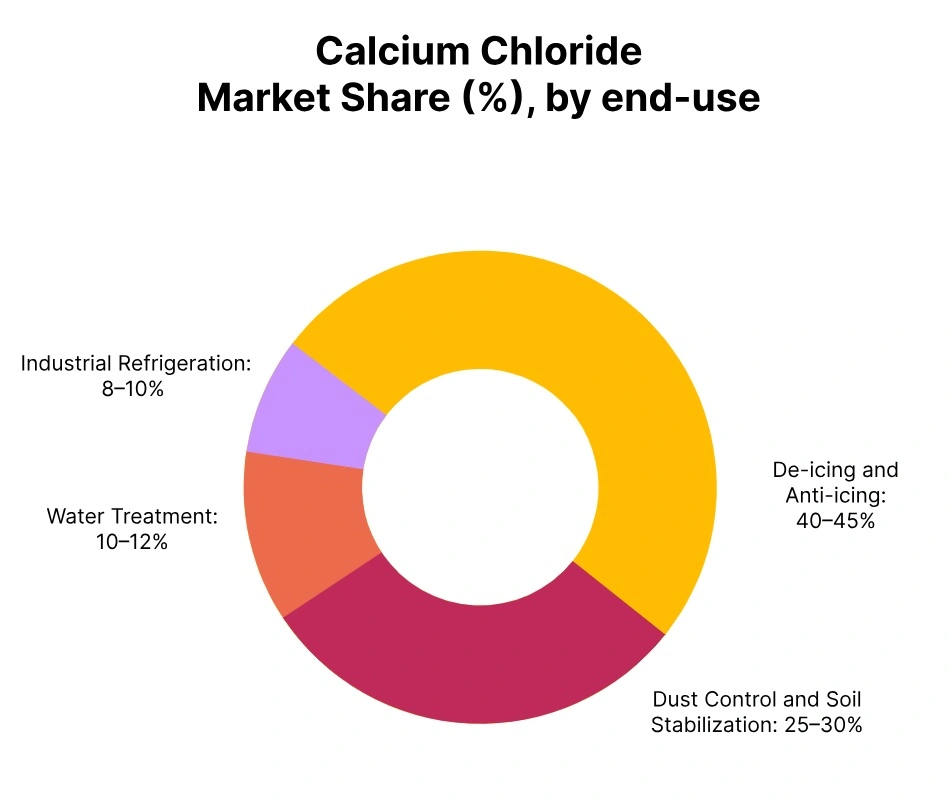
Calcium Chloride Industrial Applications

calcium chloride market share end use

Historically, several events have caused significant fluctuations in Calcium Chloride prices

  • Russia-Ukraine Conflict (2022): The Russia-Ukraine conflict contributed to higher calcium chloride prices through supply chain disruptions, increased energy and production costs, and overall market uncertainty. 
  • COVID-19 Pandemic (2020): Demand plummeted initially but rebounded as packaging needs surged. 
  • Geopolitical Tensions (2018-2019): U.S.-China trade wars caused price instability due to disrupted supply chains. 


These events underscore the Calcium Chloride market’s vulnerability to global disruptions and highlight the need for continuous monitoring of supply-demand dynamics.
 

Why Price Watch™?

Price Watch™ is your trusted resource for tracking global calcium chloride price trends. Our platform delivers real-time data and expert analysis, offering deep insights into the key factors driving price fluctuations in the calcium chloride market. By monitoring critical events such as geopolitical tensions, supply chain disruptions, and economic shifts, Price Watch™ keeps you fully informed of market dynamics.

In addition, Price Watch™ provides detailed forecasts and updates on production capacities, enabling you to anticipate market changes and make well-informed decisions. With Price Watch™, you gain a competitive edge in understanding all the elements that influence calcium chloride prices worldwide. Stay ahead of the curve with Price Watch’s™ reliable, accurate, and timely calcium chloride market data.

Track Price Watch's™ calcium chloride price assessment on a weekly basis since 2015 onwards, along with short-term forecasts, and get access to the detailed report in a downloadable format.

Calcium Chloride Market Price Trend published by 𝐏𝐫𝐢𝐜𝐞 𝐖𝐚𝐭𝐜𝐡™ reflect prevailing spot market conditions, derived from independent research, verified trade inputs, and proprietary market intelligence as of the publication date. Prices are published on the specified Incoterm and represent indicative base market levels, exclusive of applicable taxes, VAT, duties, tariffs, and other statutory charges. Actual transaction values may vary depending on volume, credit terms, contractual structure, and other negotiated conditions. Market prices are inherently subject to volatility, liquidity dynamics, regulatory changes, and evolving trade activity. The information provided is for reference and benchmarking purposes only and does not constitute an offer, recommendation, or guarantee of transactional outcomes. Users should exercise independent commercial judgment and assess their specific contractual, regulatory, tax, and application requirements before making business decisions. 𝐏𝐫𝐢𝐜𝐞 𝐖𝐚𝐭𝐜𝐡™ assumes no liability for decisions taken based on this information.

The pricing of Calcium Chloride is influenced by several factors, including raw material costs, production methods, demand from key industries (such as construction, de-icing, and agriculture), and market conditions. Seasonal fluctuations, supply chain dynamics, and geopolitical events can also impact pricing trends.

To manage risks associated with price volatility, procurement heads can diversify suppliers, negotiate long-term contracts to lock in favorable prices, and monitor market trends closely. Establishing strategic partnerships with key suppliers can also enhance supply chain stability and reduce exposure to price fluctuations.

While specific forecasts can vary, current trends suggest that Calcium Chloride prices may experience moderate fluctuations due to seasonal demand changes, particularly in winter for de-icing applications. Additionally, fluctuations in raw material costs and supply chain stability will be critical factors to watch in the pricing landscape.

Calcium Chloride (CaCl2) is an inorganic compound widely used in various industries for applications such as de-icing, dust control, water treatment, and in the oil and gas sector as a drilling fluid. It is also used in the production of concrete and as a desiccant in the packaging industry. The price of Calcium Chloride is important as it directly impacts the cost of these applications, influencing downstream industries and overall supply chain economics.

Calcium Chloride prices vary depending on grade (flakes, pellets, or liquid), region, and delivery terms. Prices are typically quoted per metric ton and fluctuate based on supply-demand conditions, feedstock costs, and production trends. Price-Watch™ provides real-time pricing insights across global markets to support informed decision-making.

The Calcium Chloride market experiences moderate fluctuations influenced by seasonal demand (especially in the winter months for de-icing), raw material availability, production rates, and global economic conditions. Key factors include the cost of natural gas and limestone, which are used in its production, as well as regulatory changes related to environmental policies and safety standards in the construction and water treatment sectors.

The largest consumers of Calcium Chloride are the construction, de-icing, and water treatment industries. It is extensively used for road de-icing in winter, controlling dust on unpaved roads, and in the production of concrete. Additionally, Calcium Chloride is used in oil and gas drilling, food preservation, and as a drying agent in the pharmaceutical and packaging sectors.

Calcium Chloride is produced through a process called the “lime-soda process,” where limestone (calcium carbonate) is treated with hydrochloric acid. It is produced in specialized chemical facilities, with major manufacturing hubs in North America, Europe, and Asia. The compound is available in various forms, including anhydrous, dihydrate, and as a solution, with production facilities located close to sources of raw materials.

Major exporters of Calcium Chloride include China, the United States, and India, supported by strong chemical manufacturing infrastructure and large production capacities. Export dynamics vary based on regional demand, production costs, and trade conditions.

Globally, Calcium Chloride supply is generally sufficient to meet demand. However, regional imbalances can occur during peak seasons, especially in the winter months when demand for de-icing increases. Supply chain disruptions or shortages of raw materials can lead to temporary tightness in certain markets, but overall production capacity is adequate to meet demand.

Calcium Chloride is available in various grades, including anhydrous, dihydrate, and liquid forms. The anhydrous form is typically more expensive due to its higher purity and more intensive production process. The price differences are influenced by factors such as grade, application, and the level of moisture content.

A sudden increase in demand, especially during the winter season for de-icing or in the construction industry, can lead to price hikes as supply tightens. Producers may prioritize contract customers, while spot buyers may face higher prices or limited availability. Capacity expansion may follow, but it requires time to implement.

Energy prices play a significant role in the production cost of Calcium Chloride, as manufacturing processes are energy-intensive. Higher energy costs, particularly in the production of the raw material (limestone), increase overall production expenses and can lead to higher market prices. Energy cost fluctuations, particularly natural gas prices, are a key factor influencing Calcium Chloride pricing.

Regional price variations for Calcium Chloride arise from differences in production costs, transportation logistics, local demand conditions, and feedstock availability. Regions with strong domestic production tend to have more competitive pricing, while markets dependent on imports may see higher costs due to transportation fees and import tariffs.

Calcium Chloride prices are expected to show moderate growth due to steady demand in de-icing, construction, and water treatment sectors. Seasonal demand, feedstock price fluctuations, and energy costs are likely to cause short-term volatility, but long-term price trends are expected to remain stable with modest increases.

Yes, accurate forecasts can assist in better procurement planning, cost optimization, and contract negotiation. Businesses can manage risks and make informed decisions based on insights from Price-Watch™, minimizing supply chain disruptions and optimizing purchasing strategies.

Global events such as geopolitical tensions, supply chain disruptions, plant shutdowns, and fluctuations in energy prices can impact Calcium Chloride supply and prices. These factors can cause short-term volatility, especially during high-demand seasons like winter, and may create market uncertainty.

Price-Watch™ provides trusted, real-time price assessments, market insights, and forecasts for Calcium Chloride across regions, helping businesses track trends and make informed decisions.