Price-Watch™ provides real-time price assessments and price forecasts for Carbon Fibre across top trading regions:
| Carbon Fiber Regional Coverage | Carbon Fiber Grade and Country Coverage | Carbon Fiber Pricing Data Coverage Explanation |
|
Asia-Pacific Carbon Fiber Pricing Analysis |
Industrial Grade Fibre Standard Modulus Tow (12K) FOB Prices at Busan Port, South Korea Grade Price Trend | Weekly Price Update on Industrial Grade Fibre Standard Modulus Tow (12K) Real-Time Export Prices from Busan Port, South Korea to Global Markets |
| Industrial Grade Fibre Standard Modulus Tow (12K) CIF Prices at Port Klang, Malaysia, Importing form South Korea Grade Price Trend | Weekly Price Update on Industrial Grade Fibre Standard Modulus Tow (12K) Real-Time Import Prices at Port Klang, Malaysia from South Korea | |
| Industrial Grade Fibre Standard Modulus Tow (12K) CIF Nhava Sheva Port, West India, Importing from South Korea Grade Price Trend | Weekly Price Update on Industrial Grade Fibre Standard Modulus Tow (12K) Real-Time Import Prices at Nhava Sheva Port, West India from South Korea | |
| Industrial Grade Fiber Standard Modulus Continuous Tow 50K (Epoxy-Compatible) CIF Prices at Nhava Sheva Port, West India, importing from Mexico Grade Price Trend | Weekly Price Update on Standard Modulus Continuous Tow 50K (Epoxy-Compatible) Real-Time Import Prices at Nhava Sheva Port, West India from Mexico | |
|
North America Carbon Fiber Pricing Analysis |
Industrial Grade Fiber Standard Modulus Continuous Tow 50K (Epoxy-Compatible) FOB Manzanillo Port, Mexico Grade Price Trend | Weekly Price Update on Industrial Grade Fiber Standard Modulus Continuous Tow 50K (Epoxy-Compatible) Real-Time Export Prices from Manzanillo Port, Mexico to Global Markets |
| Europe Carbon Fiber Pricing Analysis | Industrial Grade Fiber Standard Modulus Continuous Tow 50K (Epoxy-Compatible) CIF Prices at Mersin Port, Turkey Importing from Mexico Grade Price Trend | Weekly Price Update on Standard Modulus Continuous Tow 50K (Epoxy-Compatible) Real-Time Import Prices at Mersin Port, Turkey from Mexico |
Carbon Fibre Price Forecasts & Market Foresight Q3 2026
Outlook: Stable
Confidence: High
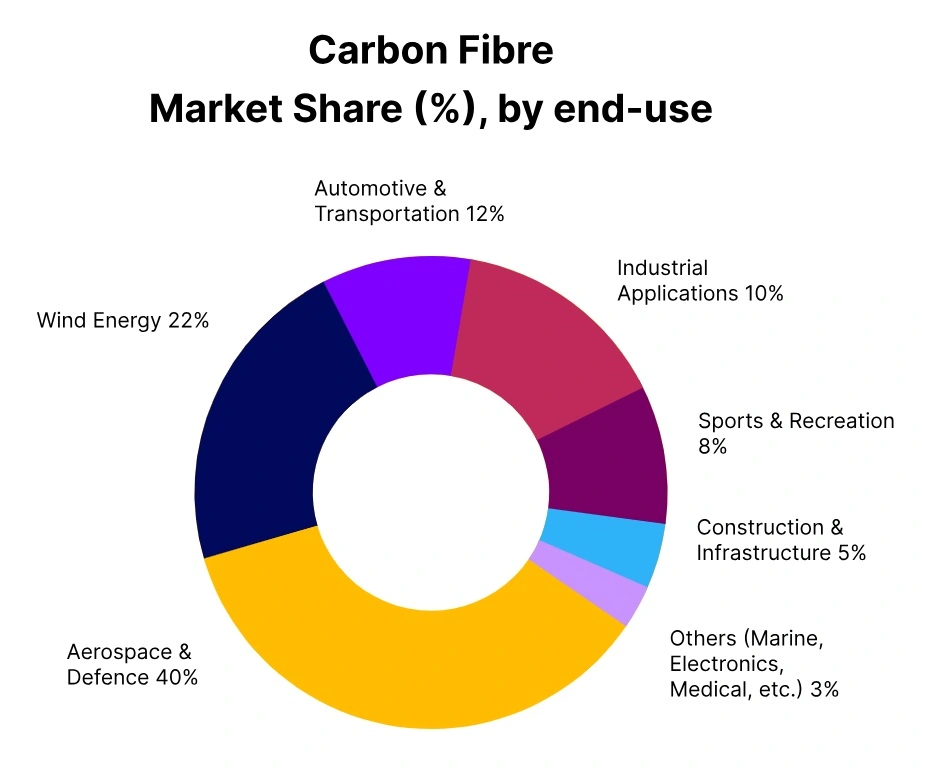
Carbon fibre prices are expected to remain stable globally during Q3 2026, supported by balanced supply-demand conditions, controlled production rates, and steady demand from aerospace, hydrogen storage, wind energy, and industrial applications.
In India, prices are expected to remain stable to slightly improve due to the depreciation of the Indian Rupee, which may keep import costs elevated despite stable global prices.
PAN precursor costs, energy prices, and geopolitical developments will continue to influence market movements.
Global Carbon Fibre Market Overview by Region (July–September 2026)
| Country | Grade/ Incoterm | Outlook |
| South Korea | Industrial Grade Fibre Standard Modulus Tow (12K) FOB Busan | Stable |
| Malaysia | Industrial Grade Fibre Standard Modulus Tow (12K) CIF Port Klang (South Korea) | Stable |
| India | Industrial Grade Fibre Standard Modulus Tow (12K) CIF Nhavasheva (South Korea) Grade Price Trend | Stable to Mildly Bullish |
| Mexico | Industrial Grade Fiber Standard Modulus Continuous Tow 50K (Epoxy-Compatible) FOB Manzanillo | Stable |
| Turkey | Industrial Grade Fiber Standard Modulus Continuous Tow 50K (Epoxy-Compatible) CIF Mersin (MEXICO) | Stable |
| India | Industrial Grade Fiber Standard Modulus Continuous Tow 50K (Epoxy-Compatible) CIF Nhava sheva (MEXICO) | Stable to Mildly Bullish |
*Carbon Fibre Forecast represents an analytical assessment based on information available at the time of publication. Actual market prices may vary due to unforeseen operational, regulatory, geopolitical, or economic developments.
Explore the Complete Price Watch™ Carbon Fibre Forecast
Access comprehensive carbon fibre market intelligence, including a 3-Month Rolling Forecast, forward price curves, country-wise market outlooks, procurement insights, and monthly forecast updates.
Explore Price Watch™ Carbon Fibre Forecasts
What’s Included
The 3-Month Forecast (Updated Monthly)
It reflects changes in PAN precursor and acrylonitrile prices, energy costs, production rates, plant outages, inventories, trade flows, freight costs, end-use demand, and geopolitical developments influencing the global carbon fibre market.
Our Proprietary Hybrid Forecasting Model Evaluates:
- Feedstock & production economics
- Plant operating rates & outages
- Inventory and supply-demand balance
- Regional trade flows & freight
- Import-export dynamics
- Macroeconomic & geopolitical developments
Track Carbon Fibre Supply Disruptions in Real Time
As geopolitical risks continue to reshape global supply chains, stay ahead of the events that drive price movements by monitoring plant shutdowns, maintenance turnarounds, force majeure events, logistics bottlenecks, trade restrictions, and operational disruptions before they impact carbon fibre markets.
Access the Price Watch™ GIO Tracker
Carbon Fibre Price Trend Q2 2026
The global carbon fibre market recorded a firm price trend in Q2 2026, supported by higher energy costs, rising production expenses, and supply chain uncertainties linked to the US–Iran conflict, which pushed crude oil prices higher and increased manufacturing costs.
The carbon fibre price trend across major regions was further supported by steady demand from wind energy, hydrogen storage, pressure vessels, aerospace, automotive composites, and industrial applications, while controlled production rates helped maintain market balance.
The Carbon Fibre Price Chart captured this upward momentum across key markets during the quarter, with FOB and CIF prices reflecting higher input costs and logistics expenses.
By June 2026, early signs of stabilization and minor corrections emerged as energy prices eased, inventories remained adequate, and buyers adopted cautious procurement strategies. The Carbon Fibre Price Index also reflected a moderation in geopolitical risk premiums while maintaining a stable market outlook.
Mexico: Industrial Grade Fiber Standard Modulus Continuous Tow 50K (Epoxy-Compatible) FOB Manzanillo Grade Price Trend
In Q2 2026, the carbon fibre price in Mexico for Continuous Tow 50K increased by approximately 9%, driven by higher energy costs, rising production expenses, and supply chain uncertainties linked to the US–Iran conflict, which pushed crude oil prices higher and increased pressure on global manufacturing costs.
The carbon fibre price trend in Mexico was further supported by steady demand from wind energy, pressure vessels, and industrial composite applications, while controlled production levels helped maintain supply-demand balance.
In June 2026, the carbon fibre price in Mexico increased by around 2% as elevated energy costs and firm industrial demand continued to support pricing. Overall, the Mexican carbon fibre market maintained a positive outlook during Q2 2026, with geopolitical developments and input cost pressures influencing price movements.
Tukey: Industrial Grade Fiber Standard Modulus Continuous Tow 50K (Epoxy-Compatible) CIF Mersin (MEXICO) Grade Price Trend
In Q2 2026, the carbon fibre 50K price in Turkey imported from Mexico increased by approximately 9%, supported by higher import costs, rising energy expenses, and elevated logistics costs.
The carbon fibre price trend in Turkey was influenced by steady demand from wind energy, automotive composites, and industrial applications, while geopolitical uncertainty, including the US–Iran conflict, increased volatility in energy markets and affected global production costs.
Higher crude oil prices contributed to increased manufacturing and transportation expenses, supporting firm carbon fibre pricing. In June 2026, the carbon fibre price in Turkey increased by around 2.5% as suppliers adjusted offers amid stable demand and higher landed costs.
Overall, the Turkish carbon fibre market maintained a positive pricing trend during Q2 2026, driven by cost pressures and balanced supply-demand conditions.
South Korea
In Q2 2026, the carbon fibre price in South Korea increased by approximately 14%, supported by higher energy costs, rising production expenses, and supply chain uncertainties linked to the US–Iran conflict, which pushed crude oil prices higher and increased pressure on industrial manufacturing costs.
The carbon fibre price trend in South Korea was also supported by stable demand from hydrogen storage, pressure vessels, and industrial composite applications, while producers maintained controlled operating rates to balance supply.
However, in June 2026, the carbon fibre price in South Korea declined by around 1% due to cautious buying activity, sufficient inventories, and softer short-term demand from downstream users. Overall, the market remained firm, with geopolitical developments and energy price movements influencing Q2 2026 price volatility.
Malaysia: Industrial Grade Fibre Standard Modulus Tow (12K) CIF Port Klang (South Korea) Grade Price Trend
In Q2 2026, the carbon fibre price in Malaysia increased by approximately 14%, supported by higher import costs, elevated energy prices, and supply chain uncertainties linked to the US–Iran conflict, which pushed crude oil prices higher and increased global manufacturing and logistics expenses.
The carbon fibre price trend in Malaysia was influenced by steady demand from industrial composite manufacturers, pressure vessel applications, and construction reinforcement sectors, while importers faced higher landed costs due to freight and supply chain disruptions.
However, in June 2026, the carbon fibre price in Malaysia declined by around 1% as freight conditions improved, inventory levels remained sufficient, and buyers adopted a cautious procurement approach amid moderate downstream demand.
Overall, the Malaysian carbon fibre market remained stable, with import costs and geopolitical developments shaping Q2 2026 price movements.
India: Industrial Grade Fibre Standard Modulus Tow (12K) CIF Nhava sheva (South Korea) Grade Price Trend
In Q2 2026, the carbon fibre price in India imported from South Korea increased by approximately 14%, driven by higher import costs, elevated energy expenses, and supply chain uncertainty linked to the US–Iran conflict, which pushed crude oil prices higher and increased global manufacturing costs.
The carbon fibre price trend in India was also influenced by rising demand from aerospace, defence, electric mobility, and industrial composite applications, while India’s continued dependence on imported carbon fibre supported firm landed prices.
However, in June 2026, the carbon fibre price in India declined by around 1% as buyers reduced spot purchases, inventories remained adequate, and suppliers adjusted pricing amid moderate downstream demand.
Overall, CIF India carbon fibre prices remained firm during Q2 2026, with import costs, geopolitical risks, and global supply conditions shaping market movements.