Caustic Potash (potassium Hydroxide) Price Trend and Forecast

âźł Weekly Update
|
Historical Data Since 2015
|
Forecast for 2026
  • Commodity Pricing

caustic potash (potassium hydroxide) Price Trends by Country

krSouth Korea
cnChina
gbUnited Kingdom
myMalaysia
brBrazil
jpJapan
esSpain
inIndia

Global caustic potash (potassium hydroxide) Spot Market Prices, Trend Analysis and Forecast

Caustic Potash (Potassium Hydroxide) Price Trend Q3 2025

In Q3 2025, the international Caustic Potash (Potassium Hydroxide) market recorded strong performance in all regions following massive demand from chemical processing, pharmaceutical, textile, and manufacturing sectors. Prices stabilized towards the second half of the quarter and declined sharply in September 2025 underpinned by balanced feedstock supply, sustained capacity utilization, and stable industrial activity. The South Korean market became the major exporter sustaining regional trade momentum. Freight dynamics by region impacted import competitiveness. The market sentiment has been upbeat with supply chain resilience and uninterrupted industrial expansion underpinning price firmness. International markets illustrated an average price rise of 3% to 5% for Q3 2025, indicating robust market momentum and positive consumption patterns.

United Kingdom

(Caustic Potash (Potassium Hydroxide) import price in UK from South Korea) Flakes (90%) Industrial Grade.

During Q3 2025, The Caustic Potash (Potassium Hydroxide) prices in UK market demonstrated strong momentum, driven by stable demand from the chemical processing and cleaning products industries. Freight rates in the United Kingdom showed an increasing trend, contributing to higher all-in import costs and supporting overall market valuations. Caustic Potash (Potassium Hydroxide) price ranged between USD 840–980 per metric ton, reflecting steady South Korean imports and stable regional transport conditions.

The Caustic Potash (Potassium Hydroxide) price trend in UK rose by 5.70% during the quarter, underscoring consistent market momentum and robust downstream demand, which helped maintain healthy pricing levels throughout the period. However, in September 2025, Caustic Potash (Potassium Hydroxide) prices in the United Kingdom fell sharply by 10.57% due to excess availability and muted industrial demand. Sellers reduced offers to clear accumulated stocks.

Spain

(Caustic Potash (Potassium Hydroxide) import price in Spain from South Korea) Flakes (90%) Industrial Grade.

During Q3 2025, The Caustic Potash (Potassium Hydroxide) prices in Spain market remained steady, underpinned by consistent demand from the manufacturing and chemical industries. Freight rates in Spain continued a downtrend, helping mitigate upstream cost pressures and supporting overall market stability. Caustic Potash (Potassium Hydroxide) price trend in Spain has largely been influenced by stable imports from South Korea and well-balanced regional supply conditions, with the market trading between USD 815–970 per metric ton.

The Caustic Potash price increased by 1.98% during the quarter, reflecting disciplined market behaviour and sustained consumption trends amid stable regional fundamentals. However, in September 2025, Caustic Potash (Potassium Hydroxide) prices in Spain plunged by 12.67%, the steepest regional decline, driven by high inventory levels and weak purchasing interest. Competitive offers dominated market discussions.

Brazil

(Caustic Potash (Potassium Hydroxide) import price in Brazil from China) Flakes (90%) Industrial Grade

In Q3 of 2025, Caustic Potash (Potassium Hydroxide) prices in Brazil demonstrated notable strength from robust off-take from chemical processing and industrial manufacturing sectors. Respective freight rates in Brazil exhibited inherent strength facing logistics pressures from greater shipping distances associated with the regional distributions that traded off overall pricing for imports during the quarter. The Caustic Potash (Potassium Hydroxide) price trend in Brazil has generally been higher as a result of increased import volumes from South Korea along with the generally robust regional market conditions with trading in a range of USD 820–940 per metric ton.

The price of Caustic Potash (Potassium Hydroxide) increased incrementally for the quarter at 8.23% noting solid market traction with continued downstream consumption providing solid prices for most of the quarter. Nevertheless, the prices for Caustic Potash (Potassium Hydroxide) fell in September 2025 by 8.57% in Brazil as market confidence was tempered with ongoing oversupply challenging distributor activity, and offers were made to vary trade.

China

(Caustic Potash (Potassium Hydroxide) Export price from China) Flakes (90%) Industrial Grade

According to PriceWatch, in Q3 2025, the Caustic Potash (Potassium Hydroxide) prices in China displayed notable resilience, supported by steady domestic consumption from the chemical and pharmaceutical industries. Caustic Potash prices in China ranged between USD 910–970 per metric ton, reflecting firm regional and local demand during the quarter. Production levels remained consistently high, aided by reliable feedstock availability and stable power costs.

Overall, Caustic Potash price trend in China recorded a modest rise of 4.58%, which reflected continued market confidence and balanced fundamentals in the Chinese Caustic Potash sector. However, in September 2025, Caustic Potash (Potassium Hydroxide) price in China dropped by 2.39% amid steady domestic production and reduced export activity. Limited spot inquiries kept trading sentiment weak.

Malaysia

(Caustic Potash (Potassium Hydroxide) import price in Malaysia from South Korea) Flakes (90%) Industrial Grade

During the third quarter of 2025, Caustic Potash (Potassium Hydroxide) prices in Malaysia stayed stable through robust demand from chemical processing and industrial cleaning applications. The Caustic Potash price increased in the quarter by 5.51%, reflecting some relatively firm macro-market momentum and reasonable downstream consumption to set firm prices for the quarter. Freight rates in Malaysia have trended upward, which affects the overall import competition and contributes to price variations in the local market.

The Caustic Potash (Potassium Hydroxide) price in Malaysia declined in September 2025 by 6.54% with limited spot demand but stable import activity. Overall activity in the marketplace remained muted during the month. The Caustic Potash (Potassium Hydroxide) price trend in Malaysia maintained relatively stable volumes of imports from South Korea and sufficient activity in the regional marketplace at a range of USD 820–920 per metric ton.

Japan

(Caustic Potash (Potassium Hydroxide) import price in Japan from South Korea) Flakes (90%) Industrial Grade

During the third quarter of 2025, Caustic Potash (Potassium Hydroxide) prices in the Japanese market remained relatively stable and declined sharply towards the later stages of the quarter as steady demand shifted toward chemical production and specialty chemicals. Freight prices in Japan experienced a slight decline, which relieved import costs slightly and supported stable pricing. The price trend for Caustic Potash (Potassium Hydroxide) in the Japanese market reflected stable import trends from Korea and balanced domestic conditions, with a price range of USD 770–860 per metric ton.

The price of Caustic Potash (Potassium Hydroxide) saw an increase of 4.63% for the quarter, reflecting continued firmness in the market and continued consumption downstream, which sustained stable pricing throughout the quarter. However, in September 2025, Caustic Potash (Potassium Hydroxide) prices decreased by 7.29%, as sluggish orders in downstream applications and stable supply in the domestic market weighed on demand conditions. End users of the product were prudent in their consumption patterns, which down- warded the overall market signal.

India

(Domestically Traded Caustic Potash (Potassium Hydroxide) price from Ahmedabad) Flakes (90%) Industrial Grade

According to PriceWatch, in the third quarter of 2025, the prices for Caustic Potash (Potassium Hydroxide) in India displayed steady strength backed by sustained demand from the chemical processing, textiles, and pharmaceuticals sectors, trading in a price range of USD 850–920 per metric ton, reflecting stable domestic absorption levels and feedstock availability. However, in September 2025, the caustic potash (Potassium Hydroxide) price slipped by 1.03% with stable demand alongside supply equilibrium. Stable production levels led to prices not correcting more sharply where they could have.

The caustic potash (Potassium Hydroxide) price trend in India showed a steady progression, with market sentiment residing on an optimistic side given firm industrial activity and strong regional-buying behaviour. The logistical issues from the monsoon season did not have a direct impact that disrupted supply distribution, with an uninterrupted supply dynamic contributing to market equilibrium. Overall, Caustic potash prices in India increased 4.45% over the quarter which indicated bullish market fundamentals in place alongside favourable consumption patterns.

South Korea

(Caustic Potash (Potassium Hydroxide) Export price from South Korea) Flakes (90%) Industrial Grade
During Q3 2025, Caustic Potash (Potassium Hydroxide) prices in South Korea showed moderate stability amidst steady local chemical and manufacturing sector demand. The Caustic Potash price trend in South Korea was determined by stable raw material buying patterns, with prices trading between USD 740-830 per metric ton.

Neighbouring Asian markets export demand stayed firm, underpinning overall price performance during the quarter. The 4.89% Caustic Potash price hike in Q3 2025 mirrored balanced market fundamentals and stable consumption trends. In September 2025, Caustic Potash (Potassium Hydroxide) prices in South Korea declined by 7.24%, pressured by ample inventories and weaker regional buying. Market participants reported slower offtake from downstream consumers.

Caustic Potash (Potassium Hydroxide) Price Trend Analysis: Q2 2025

According to PriceWatch, In Q2 2025, the South Korean Caustic Potash Flakes (90%) Industrial Grade market began to recover as prices improved modestly to USD 753 per metric ton, rising +0.40% from Q1. Export demand from nations like India and Vietnam was small scale, but this contributed some strength to overall business activity. Domestic market demand was stable in water treatment and agricultural applications.

Since raw material and energy prices remained steady, vendors could keep their prices firm without any significant erosion of margins. Though buyers continued to purchase cautiously, the price increase evidenced initial indications of stabilization momentum. Even inventory levels also seemed better balanced than in previous quarters, since producers moderated production cautiously.

Certain players in the market believed that the worst of the price erosion period was behind them, and this prevented most sellers from offering deep discounts. Competitive pressures from nearby Asian markets also began to abate somewhat, allowing South Korean exporters to be more resistant. Moreover, ongoing geopolitical tensions particularly disruptions linked to the Iran-Israel conflict had a spillover effect on trade flows in the broader region. These tensions contributed to temporary diversions in sourcing preferences and logistics routes, indirectly benefiting South Korean suppliers as buyers looked to diversify their import base.

Although complete recovery was still far from reach, the tone of the market overall shifted away from sharply bearish to tentatively neutral. As long as demand doesn’t change and inquiries become solid, the region will be able to transition into a more stable period of prices in the second half of the year.

According to PriceWatch, In Q2 2025, Prices of Ahmedabad Caustic Potash Flakes (90%) Industrial Grade fell to USD 857.77 per metric ton, -4.64% down from the previous quarter. Purchasing was in less interest since most of the buyers already had adequate inventory with them for previous quarters. This lukewarm purchasing along with regular high availability affected market sentiment.

Sellers also felt the sting of falling prices due to increased competition from the surrounding regions. Although manufacturers attempted to reduce output, it could not offset general weakness, and there were steep discounts to continue selling.

Despite efforts to stabilize the market, the over-supply condition resulted in intensified price cutting among distributors. A few traders indicated postponing new purchases in the expectation of further declines, further hampering market recovery. Transport charges remained in check but did not help enough to counteract the downward pressure on prices.

Additionally, small-end buyers concentrated on depleting existing inventory instead of ordering new. Larger buyers also delayed their purchasing cycles, contributing to the extended softness in demand. The Ahmedabad market remained in a low-momentum cycle, with sellers still under pressure to push material at negotiated prices. 

According to PriceWatch, In Q1 2025, Caustic Potash (Potassium Hydroxide) Flakes (90%) Industrial Grade – South Korea prices declined substantially to USD 750, down by -5.46% compared to Q4 2024. The foreign demand was not strong in the market, and many of the buyers had stocked enough in the previous quarter.

The South Korean suppliers also received increased competition from local suppliers offering lower prices. Despite strong domestic demand in industries like textiles and detergents, there was excess supply and very few new orders to drive prices down. Prices had to be cut to stay in the market, which was a sign of a weak sentiment for the quarter. 

According to PriceWatch, In Q1 2025, Ahmedabad market prices fell to USD 899.47 per metric ton from -4.53% in Q4 2024. Domestic buying fell as traders waited and watched in the hope of further falls. The sellers reacted by providing prices competitively, particularly as stocks remained on the higher side.

Usage by industry remained in customary industry sectors but was inadequate to sustain the market. Bearish mood was triggered by the absence of high export orders and price action by other sellers. Market players focused on liquidating old stock than searching for new orders. 

Caustic Potash (Potassium Hydroxide) Price Trend Analysis: Q4 2024

According to PriceWatch, In Q4 2024, The South Korean industrial grade Caustic Potash (Potassium Hydroxide) Flakes (90%) market plateaued, and prices were unchanged from Q3. The sellers did not want to reduce prices any further with the support of firm local procurement and the gentle recovery of export demand, particularly for year-end restocking.

Pressure on inventories began to ease, and an improved supply-demand condition contained further corrections. Logistics and freight return to normal, granting producers some leeway to correct costs and maintain stable quotes in local and export markets. 

According to PriceWatch, In Q4 2024, Caustic Potash prices fell to USD 942 per metric ton, -2.15% down from Q3. Following the short respite in Q4, the market eased out once again with purchasers holding out for end-of-year offers. Purchase reduced and inventories started accruing. Domestic producers lowered prices to dispose of material before fiscal turn-over. Export demand was also weak, and domestic buyers were not willing to take up higher prices. Though level of production quantities, sentiment in all directions relaxed on account of weak activity and inventory in hand offering pressure. 

According to PriceWatch, In Q3 2024, the Caustic Potash (Potassium Hydroxide) Flakes (90%) Industrial Grade – South Korea market approached price resistance at USD 793.33, only -0.46% lower than Q2. Though demand remained weak, vendors were maintaining their discipline, and deep discounting was a decreasing occurrence.

Exporters shipped moderate volumes to South Asia and the Middle East, serving to reduce some of the inventory build-up. Domestic consumption, particularly industrial and chemical, continued at an even rate, stemming further steep declines. 

According to PriceWatch, In Q3 2024, the market recorded a soft upturn with prices lifting to USD 962.9 per metric ton from Q2, +2.27%. This increase was triggered by moderate restocking in addition to temporary equilibrium of demand and supply. Sellers were better dispositioned and had started resisting price falls, giving them less room for give-and-take. Internal business was even, helping take some overhang stock. With no cost inflation or material disruptions, manufacturers maintained offers firm and sentiment modestly optimistic for the quarter. 

According to PriceWatch, In Q2 2024, The downtrend continued for Caustic Potash (Potassium Hydroxide) Flakes (90%) Industrial Grade – South Korea with prices dropping to USD 797, down -1.69% from Q1. Languid export orders and risk-averse local buying resulted in subdued trading activity. Bulk buying was avoided by most buyers on the belief that prices would go down further.

Production stayed level from the sellers’ perspective, but muted demand meant that the market continued to be oversupplied. Relationship maintenance with core customers held priority over volume expansion, keeping prices in closely held, gradual decline. 

According to PriceWatch, In Q2 2024, rates dropped to USD 941.5 per metric ton, a decline of -0.68% from Q1. Local and export customers continued purchasing cautiously and market activity was poor. All of them were looking for further cuts, so they did not buy in size. Despite maintaining the level of production, demand levels did not demonstrate any sign of real increase.”. Traders focused on relationship contracts to keep levels of flow, and subpar procurement continued to stress levels of price during the quarter. 

According to PriceWatch, In Q1 2024, prices of Caustic Potash (Potassium Hydroxide) Flakes (90%) Industrial Grade – South Korea fell drastically to USD 810.67 per metric ton from a notable -8.91% decrease compared to Q4 2023. The fall was primarily caused by post-year-end inventory overhang as well as lacklustre buying interest from both domestic and foreign markets.

The buyers from Asia and the Middle East remained on the sidelines after the restocking in the previous quarter. Despite this, producers maintained regular production, and this led to increased availability. Combined with high logistics costs and weak export competitiveness, this created a very strained situation that forced prices down hard. 


According to PriceWatch, In Q1 2024, Ahmedabad Caustic Potash prices saw USD 948 per metric ton, -2.63% lower than in Q4 2023. The quarter started with overhang from the previous quarter, and big sector buying interest remained constricted. Producers kept production levels steady at the same levels, but the absence of active buying kept prices in check. Without any support from the external markets and soft domestic momentum, sellers lowered offers to stay in the mix. Bearish sentiment existed throughout the quarter with market direction being of concern for traders. 

Technical Specifications of Caustic Potash (potassium Hydroxide) Price Trends

Caustic Potash (potassium Hydroxide) Industrial Applications

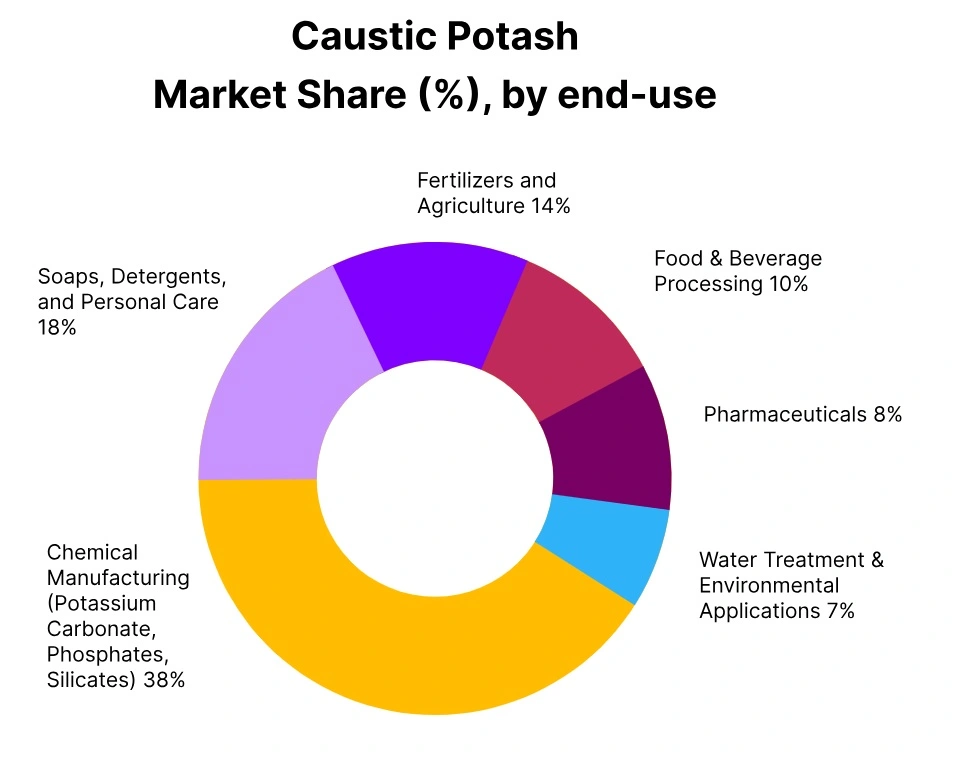
Potassium Hydroxide (KOH) is a strong, highly versatile alkali widely used in industries such as chemicals, agriculture, and manufacturing. It plays a key role in producing liquid soaps, detergents, and potassium-based fertilizers. KOH is also essential in chemical synthesis, pH regulation, water treatment, and biodiesel production. Additionally, it serves as an electrolyte in alkaline batteries. Its strong reactivity makes it valuable across various applications, though it must be handled with care due to its corrosive nature. 

Historically, several events have caused significant fluctuations in Caustic Potash (potassium Hydroxide) prices

Russia-Ukraine Conflict (2022–Present): The war triggered a surge in natural gas and electricity prices, which are critical to the energy-intensive electrolysis process used to manufacture Potassium Hydroxide (KOH). This significantly raised production costs, particularly in Europe, where some facilities were forced to reduce output or shut down. As a result, regional supply tightened, and prices climbed sharply. 

China’s Environmental Regulations (2017–Present): China’s enforcement of stricter environmental policies led to the closure or retrofitting of non-compliant chemical plants, including KOH facilities and upstream potassium chloride (KCl) suppliers. These regulatory measures reduced both domestic and export output, contributing to global KOH supply shortages and upward price pressure. 

COVID-19 Pandemic (2020): At the start of the pandemic, global demand for KOH declined due to slowdowns in sectors like agriculture, batteries, and general chemicals. However, this was followed by a sharp rebound in demand for disinfectants, soaps, and cleaning agents—key end uses of KOH. Combined with freight disruptions and supply chain delays, this led to notable price volatility during the recovery phase. 

Sanctions on Belarus (2021–2022): 

Belarus is a key global supplier of potassium chloride (KCl)—the main raw material for KOH. Western sanctions on Belarus due to political and human rights concerns severely restricted its potash exports. This created a global supply bottleneck for KCl, especially affecting countries with little domestic potash production, driving up input costs and therefore KOH prices. 

U.S.-China Trade Tensions (2018–2020): 

Trade disputes between the U.S. and China led to tariffs and regulatory barriers on various chemical products. China is a significant exporter of KOH and potassium salts. As trade routes became more restricted and uncertain, importers faced price hikes due to sourcing challenges and increased transportation risks. 

These events illustrate the Potassium Hydroxide market’s sensitivity to global disruptions, highlighting the importance of closely monitoring supply chain dynamics and geopolitical factors for better market forecasting. 

Why PriceWatch?

PriceWatch is your trusted resource for tracking global caustic potash (potassium hydroxide) price trends. Our platform delivers real-time data and expert analysis, offering deep insights into the key factors driving price fluctuations in the caustic potash (potassium hydroxide) market. By monitoring critical events such as geopolitical tensions, supply chain disruptions, and economic shifts, PriceWatch keeps you fully informed of market dynamics.

In addition, PriceWatch provides detailed forecasts and updates on production capacities, enabling you to anticipate market changes and make well-informed decisions. With PriceWatch, you gain a competitive edge in understanding all the elements that influence caustic potash (potassium hydroxide) prices worldwide. Stay ahead of the curve with PriceWatch’s reliable, accurate, and timely caustic potash (potassium hydroxide) market data.

Track PriceWatch's caustic potash (potassium hydroxide) price assessment on a weekly basis since 2015 onwards, along with short-term forecasts, and get access to the detailed report in a downloadable format.

Data Collection and Sources​

  • Real-Time Market Data: PriceWatch aggregates real-time pricing data for Potassium Hydroxide from various sources, including global commodity exchanges, industry reports, and proprietary databases. This ensures our assessments reflect the most current market conditions. 
  • On-the-Ground Intelligence: Our team gathers insights directly from key market participants, including Potassium Hydroxide producers, suppliers, traders, and end-users across major production regions. This ground-level intelligence helps us understand localized market dynamics. 
  •  Supply Chain Monitoring: We track the entire Potassium Hydroxide supply chain, from the availability of raw materials (such as trona ore and limestone) to production and distribution channels. This includes monitoring mining activities, production capacities, and transportation logistics to ensure a comprehensive view of the market. 

Event Tracking and Impact Analysis​

  • Geopolitical Tensions: PriceWatch continuously monitors global geopolitical events, such as trade disputes and conflicts that can disrupt Potassium Hydroxide production or exports. These factors, especially in key regions like China and South Korea, can have both immediate and long-term effects on global Potassium Hydroxide prices. 
  • Economic Shifts: PriceWatch analyses macroeconomic trends, such as global economic growth, inflation rates, and industry-specific demand (e.g., from the glass, detergent, and chemical sectors). These trends help us predict changes in Potassium Hydroxide demand and their impact on pricing. 

Production Capacity and Supply Analysis

  • Current Production Monitoring: We maintain a detailed database of global Potassium Hydroxide production facilities, tracking their operational status, maintenance schedules, and output levels. This allows us to accurately assess current supply levels and availability. 
  • Future Capacity Projections: Our research also includes forecasts of future production capacity based on new plant constructions, expansions, and technological advancements in the Potassium Hydroxide industry. This helps in predicting potential future supply trends and price stabilization. 

Demand Forecasting

  • Sectoral Demand Analysis: PriceWatch provides in-depth analysis of demand across key sectors such as glass, detergents, chemicals, and water treatment. We track year-on-year demand growth in these sectors and project future consumption patterns using economic indicators and industry trends. 
  • Global Demand Dynamics: Our methodology also considers regional demand variations and how they impact global Potassium Hydroxide pricing. This includes shifts in manufacturing bases, environmental policies, and trade agreements that could influence the market. 

Pricing Model Development

  • Dynamic Pricing Models: PriceWatch uses advanced econometric models to forecast Potassium Hydroxide prices, incorporating real-time data, historical trends, and projected market conditions. Our models are regularly updated to improve their accuracy and predictive power. 
  • Scenario Analysis: We conduct scenario-based evaluations to explore potential future market conditions. These include best-case, worst-case, and most-likely scenarios, helping clients prepare for various market outcomes and make informed decisions. 

Reporting and Client Support

  • Comprehensive Reports: Our clients receive detailed reports containing current price assessments, future price forecasts, and in-depth analysis of market drivers. These reports are designed to provide actionable insights and clear recommendations. 
  • Ongoing Support: PriceWatch offers continuous updates and personalized support, ensuring clients have access to the most up-to-date information. Our experts are available to discuss specific market developments and provide tailored advice to assist in strategic decision-making. 

This research methodology ensures that PriceWatch delivers accurate, timely, and actionable Potassium Hydroxide pricing assessments, helping clients stay ahead of market trends and make well-informed business decisions. 

Caustic Potash (potassium Hydroxide) Market Price Trend provided by PriceWatch is a base price and excludes VAT/Taxes, discounts, or offers. The information herein is accurate to the best of our knowledge as of the date indicated and is provided solely for the convenience of our customers as a reference for caustic potash (potassium hydroxide). PriceWatch disclaims any warranties or representations regarding the accuracy of results derived from this information. It is the sole responsibility of the user to assess the suitability of the product for their specific application. This document does not constitute an endorsement to use the product in violation of any applicable patent rights.

Potassium Hydroxide prices are influenced by several key factors, including the cost of raw materials—particularly potassium chloride (KCl), which is used in the electrolytic production of KOH. Energy prices, especially electricity (a major input in electrolysis), significantly impact production costs. Demand from end-use industries such as agriculture (for fertilizers), chemical manufacturing, and the soap and detergent sector also affects pricing. Additionally, supply chain disruptions, international trade policies, environmental regulations, and currency exchange fluctuations play a critical role in global price dynamics.

The availability of Potassium Hydroxide directly influences pricing. Limited availability due to production outages, maintenance shutdowns, or regulatory constraints can tighten supply and push prices higher. Conversely, when global production capacity increases or supply chains stabilize, prices may ease. Logistics and shipping conditions—especially for exports, also affect availability in specific regions. Continuous monitoring of production trends and supplier conditions is essential for anticipating price movements.

Regional Potassium Hydroxide pricing can vary due to differences in energy costs, access to raw materials like potassium chloride, local demand, and infrastructure efficiency. For example, countries with large KCl reserves and domestic KOH production facilities (such as China and parts of Europe) may offer more competitive prices. In contrast, regions heavily reliant on imports may face higher landed costs due to freight, duties, and tariffs. Procurement professionals should assess regional supply dynamics, production hubs, and incoterms (like CIF or FOB) when forming sourcing strategies to ensure a cost-effective and reliable supply.

Environmental and regulatory factors play an increasing role in the sourcing and production of Potassium Hydroxide. The manufacturing process, particularly the electrolysis of potassium chloride, consumes significant energy and can have a notable environmental footprint depending on the electricity source. Regulatory bodies may impose environmental compliance standards related to emissions, waste disposal, and handling of hazardous chemicals. Suppliers in regions with strict environmental laws may face higher production costs, which can be reflected in pricing. Additionally, regulations around transportation and chemical storage (such as REACH in Europe or EPA regulations in the U.S.) can affect lead times and logistics planning. Procurement teams should assess supplier compliance with environmental standards and consider sustainability metrics when selecting vendors to align with corporate ESG goals.