

Cobalt Price Trend and Forecast

UNSPC code: 27111601
|
âźł Weekly Update
|
Historical Data Since 2015
|
Forecast for 2026
  • Commodity Pricing

cobalt Price Trends by Country

cnChina
nlNetherlands
usUnited States

Global cobalt Spot Market Prices, Trend Analysis and Forecast

Price-Watch’s most active coverage of Cobalt price assessment:

  • Purity: 99.8%min. Ex Shanghai, China
  • Purity: 99.8%min. FD Rotterdam, Netherlands
  • Purity: 99.8%min. Del Baltimore, USA

Cobalt Price Trend Q3 2025

Cobalt prices demonstrated an upward trend in Q3 2025, driven by tight global supply amid export bans in the Democratic Republic of Congo and recovering demand in the electric vehicle and energy storage industries. Cobalt prices increased, with suggestions that prices would continue to increase into Q4.

The market reacted positively regarding conditions alleviating oversupply concerns and geopolitical risks, while high-performance battery applications continue to create cobalt demand, albeit with LFP battery substitution still occurring. Overall, the outlook remains cautiously optimistic because supply continues to constrain price.

China

Cobalt Export prices Ex Shanghai, China, Grade- 99.8%min.

In the third quarter of 2025, China’s cobalt price trend witnessed a 6.9% increase from the second quarter due to light restocking activity and slight improvements in demand from downstream sectors such as EV batteries and electronics. This demand spike, along with continuing supply constraints from the Democratic Republic of Congo’s export restrictions, supported a slight price increase for cobalt, especially cobalt hydroxide and refined cobalt products.

However, the price gains have been tempered by historically high domestic inventories and continued downward pressure in the market due to global transitions away from cobalt as batteries switch to cobalt-free chemistries such as LFP. The increase of 5.32% in Cobalt prices in China in September 2025 can be attributed to tighter supply from increased environmental regulations on mining and refining activities.

Additionally, an uptick in the stainless-steel market increased demand, contributing to increased price levels. Consequently, cobalt prices in China demonstrated limited strength through Q3 with further constraints in place to force prices to rally substantially.

Netherlands

Cobalt Export prices FD Rotterdam, The Netherlands, Grade- 99.8%min.

According to PriceWatch, In Q3 2025, the cobalt price trend in Netherlands has experience a 7.73% price increase compared to Q2, driven by tightening global supply due to export restrictions, especially from the Democratic Republic of Congo, and sustained demand from the battery and specialty alloy sectors. This positive price trend of cobalt reflects ongoing inventory drawdowns and supply chain pressures, which have been pushing Cobalt prices upward.

While demand in Europe remains strong, especially for EV battery production, logistical challenges and potential shifts in battery chemistry may introduce some volatility. The 4.55% increase in cobalt prices in the Netherlands in September 2025 can be attributed to tightened global supply chains due to export restrictions from major producing countries. Additionally, rising demand from the stainless steel and electric vehicle sectors further pressured prices upward.

USA

Cobalt Export prices DEL Baltimore, The USA, Grade- 99.8%min.

In Q3 2025, the cobalt price trend in U.S. saw a 3.99% price increase from Q2, driven by tightening supply from the Democratic Republic of Congo’s extended export ban and escalating U.S. China trade tensions that disrupted cobalt trade flows.

This supply constraint, combined with sustained demand from the electric vehicle sector, contributed to the positive price trend of cobalt. With prices rising sharply over the past year, market outlook remains bullish, signalling ongoing opportunities and challenges for producers, consumers, and investors in the cobalt space.

The 4.16% increase in cobalt prices in the USA during September 2025 has also reflected rising demand in industries such as stainless-steel manufacturing and automotive production, which rely heavily on cobalt. Additionally, supply chain disruptions or increased production costs have contributed to the price surge, tightening market availability and pushing prices upward.
Cobalt Price Trend Analysis: Q2 2025

According to the PriceWatch, In Q2 2025, cobalt prices surged by $29,330 per metric ton, Ex Shanghai a 32.92% rise driven by geopolitical disruption and tariff impacts. The Democratic Republic of Congo, the world’s top cobalt producer, suspended exports earlier this year, sharply tightening global supply. Meanwhile, escalating U.S. China trade tensions led to new tariffs on Chinese cobalt products and reciprocal export controls from China, further straining supply chains. These pressures forced Western manufacturers to diversify sourcing, often at higher costs.

While Chinese stockpiles and Indonesian production offered some relief, buyers prioritized security over price. The market also responded to uncertainty over future supply as the DRC considers a quota based export system. Overall, the price spike reflects not just short term scarcity but a broader restructuring of cobalt supply under geopolitical and trade pressures suggesting continued volatility ahead.

In the first quarter of 2025, cobalt experienced a notable price decline, dropping by $22,067 per metric ton, Ex-Shanghai which represents a 2.06% decrease. This downturn reflects a combination of factors including easing supply chain constraints, moderated demand from key sectors such as electric vehicle manufacturing, and possibly increased inventory levels.

While cobalt remains a critical component in battery technology, the price adjustment suggests market participants are recalibrating expectations amid shifting economic conditions and raw material availability. This price movement may impact both producers and consumers by influencing production costs and investment strategies in the cobalt supply chain going forward.

Cobalt Price Trend Analysis: Q4 2024

In Q4 2024, cobalt prices experienced a notable decline, dropping by $22,531 per metric ton, Ex-Shanghai which represents a 3.71% decrease compared to the previous quarter. This price reduction reflects weakening demand pressures, possibly due to a slowdown in key end markets such as electric vehicle production and battery manufacturing. Additionally, increased supply from mining expansions or stockpile releases may have contributed to the downward trend.

Market sentiment could also be influenced by broader economic uncertainties, including inflation concerns and geopolitical factors affecting commodity markets. Overall, the significant price drop signals a cautious outlook for cobalt in the near term, prompting stakeholders to closely monitor demand-supply dynamics and potential shifts in global trade flows.

In Q3 2024, cobalt prices experienced a significant decline, dropping by $23,400 per metric ton, Ex-Shanghai which corresponds to a 12.95% decrease. This sharp fall suggests a combination of factors such as weakening demand from key industries like electric vehicle manufacturing, increased supply from major producers, or shifts in market sentiment possibly influenced by macroeconomic conditions or geopolitical developments.

The price correction may reflect a temporary oversupply or concerns about slower growth in cobalt-intensive technologies. Market participants should closely monitor inventory levels, production forecasts, and end-user demand to better understand the potential for price stabilization or further volatility in the coming quarters.

In Q2 2024, cobalt prices experienced a significant decline, dropping by $26,800 per metric ton, Ex-Shanghai which represents a 5.12% decrease compared to the previous quarter. This downward trend reflects a combination of factors, including weakening demand from the electric vehicle and electronics sectors, where cobalt is a critical component, as well as potential easing of supply chain constraints.

Additionally, increased production from key cobalt-producing regions may have contributed to an oversupply in the market, further pressuring prices. The price correction signals a period of market adjustment, prompting stakeholders to reassess supply strategies and demand forecasts for the remainder of the year.

In Q1 2024, cobalt experienced a significant price decline, dropping by $28,331 per metric ton, Ex-Shanghai which equates to an 8.29% decrease. This sharp fall reflects a combination of weakening demand pressures and possibly increased supply or inventory levels in the market. The price adjustment indicates caution among buyers, likely driven by concerns over slower growth in key end-use sectors such as electric vehicle manufacturing and electronics.

Additionally, macroeconomic uncertainties and shifts in commodity markets may have contributed to the downward trend. Overall, the decrease suggests a more cautious outlook for cobalt in the near term, with market participants closely monitoring demand recovery and supply chain dynamics.

Technical Specifications of Cobalt Price Trends

Product Description

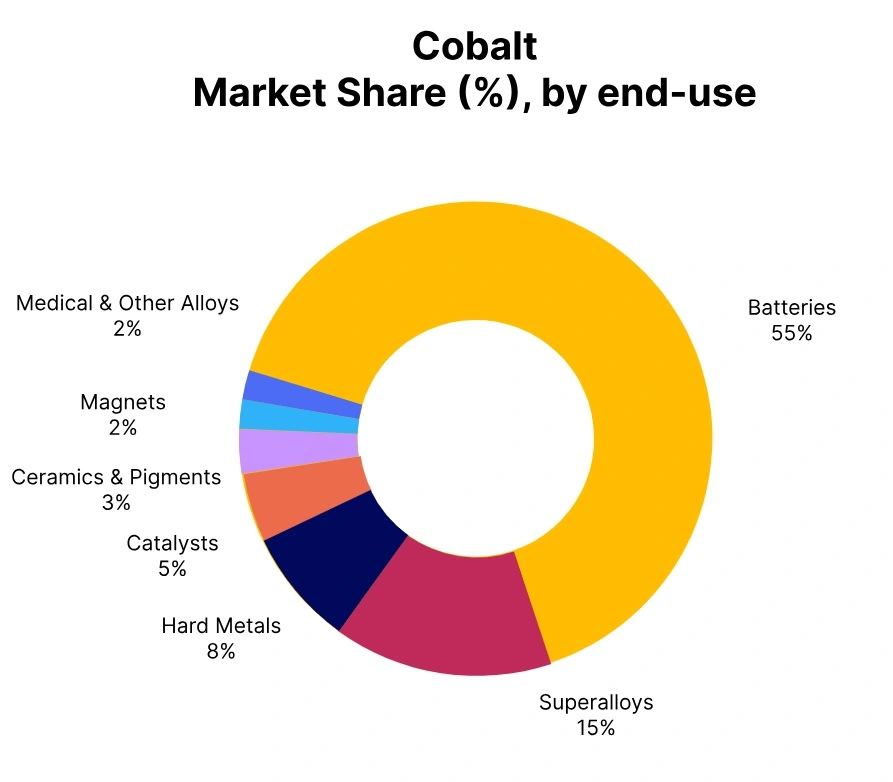
Cobalt is a hard, lustrous, silver-grey metal known for its exceptional strength, high temperature stability, and corrosion resistance. It is primarily used in the production of high-performance alloys, particularly in the aerospace, energy, and defence industries. Cobalt enhances the durability and performance of superalloys used in jet engines, gas turbines, and power plants. It also plays a vital role in rechargeable battery technologies, magnetic materials, and catalytic processes. Its unique properties make cobalt indispensable in applications requiring reliability under extreme conditions.

Identifiers and Classification:

  • HS Code – 260500


Cobalt Grades Specific Price Assessment:

  • 99.8%min


Cobalt Global Trade and Shipment Terms

  • Quotation Terms (Product & Country Specific): 10-15 MT
  • Packaging Type (Product & Country Specific): 250kg Steel drum


Incoterms Referenced in Cobalt Price Reporting

Shipping Term  Location  Definition 
Ex Shanghai  Shanghai, China  Cobalt Export price from China 
Del Baltimore  Baltimore, USA  Domestically Traded Cobalt price in USA 
FD Rotterdam  Rotterdam, Netherlands  Domestically Traded Cobalt price in Netherlands 

*Quotation Terms refers to the quantity range specified for the Cobalt being quoted or offered in a commercial transaction.

**Packaging Type refers to standard packaging size commonly used for Cobalt packing, ease of handling, transportation, and storage in industrial and commercial applications.


Key Cobalt Manufacturers

Manufacturer 
CMOC Group Ltd 
Jinchuan Group Co., Ltd 
Norilsk Nickel 
Vale Canada Ltd 
Electra Battery Materials 

Cobalt Industrial Applications

cobalt market share end use

Historically, several events have caused significant fluctuations in Cobalt prices

  • Global Supply Chain and Logistical Disruptions (2022–2023): Ongoing shipping bottlenecks, rising energy costs, and pandemic-related labour shortages impacted the mining and refining of cobalt, exacerbating supply-demand imbalances and price volatility.
  • Supply Concentration and Political Instability (2021–2022): The majority of cobalt supply originates from the Democratic Republic of the Congo (DRC), where political instability, regulatory uncertainties, and ethical concerns regarding artisanal mining practices disrupted supply, contributing to price fluctuations.
  • Electric Vehicle (EV) Boom (2020–2021): The rapid expansion of the electric vehicle market significantly increased demand for lithium-ion batteries, where cobalt is a key component. This surge in demand led to upward pressure on cobalt prices.

Why PriceWatch?

PriceWatch is your trusted resource for tracking global cobalt price trends. Our platform delivers real-time data and expert analysis, offering deep insights into the key factors driving price fluctuations in the cobalt market. By monitoring critical events such as geopolitical tensions, supply chain disruptions, and economic shifts, PriceWatch keeps you fully informed of market dynamics.

In addition, PriceWatch provides detailed forecasts and updates on production capacities, enabling you to anticipate market changes and make well-informed decisions. With PriceWatch, you gain a competitive edge in understanding all the elements that influence cobalt prices worldwide. Stay ahead of the curve with PriceWatch’s reliable, accurate, and timely cobalt market data.

Track PriceWatch's cobalt price assessment on a weekly basis since 2015 onwards, along with short-term forecasts, and get access to the detailed report in a downloadable format.

Data Collection and Sources​

  • Real-Time Market Data: We gather information from global exchanges, industry reports, and proprietary sources to provide timely and accurate assessments.
  • On-the-Ground Intelligence: We incorporate insights from producers, suppliers, and end-users across key production regions to offer a comprehensive view of market dynamics.
  • Supply Chain Monitoring: We track the availability and cost of raw materials  to evaluate supply conditions and price pressures.

Event Tracking and Impact Analysis​

  • Geopolitical Tensions: We monitor political and economic events that impact supply chains and the flow of cobalt production.
  • Market Demand Shifts: Our analysis considers global shifts in industrial and consumer demand, particularly in sectors like automotive, electronics, and renewable energy.

Production Capacity and Supply Analysis

  • Current Production Monitoring: We assess operational Cobalt production facilities and their output levels.
  • Future Capacity Projections: We forecast future production capabilities, factoring in technological advancements and production expansions

Demand Forecasting

  • Sectoral Demand Analysis: We evaluate demand from major sectors such as automotive catalysts, renewable energy, and electronics.
  • Regional Demand Dynamics: We assess demand from key markets and regions, especially China, the Netherlands, and the USA, and their impact on global pricing.

Pricing Model Development

  • Dynamic Pricing Models: Our pricing models incorporate real-time data, historical trends, and market projections.
  • Scenario Analysis: We perform scenario-based forecasting, assessing potential market conditions under various economic, geopolitical, and technological developments.

Reporting and Client Support

  • Comprehensive Reports: We provide actionable insights, forecasting, and detailed analysis of current and future price trends.
  • Ongoing Support: PriceWatch delivers continuous updates and expert advice tailored to your business needs.

Cobalt Market Price Trend provided by PriceWatch is a base price and excludes VAT/Taxes, discounts, or offers. The information herein is accurate to the best of our knowledge as of the date indicated and is provided solely for the convenience of our customers as a reference for cobalt. PriceWatch disclaims any warranties or representations regarding the accuracy of results derived from this information. It is the sole responsibility of the user to assess the suitability of the product for their specific application. This document does not constitute an endorsement to use the product in violation of any applicable patent rights.

Raw Material Availability – Cobalt is primarily mined as a byproduct of copper and nickel mining. Limited supply, particularly from major producers like the Democratic Republic of the Congo (DRC), heavily impacts prices.

Global Demand – Cobalt is essential in lithium-ion batteries used in electric vehicles (EVs), electronics, and energy storage systems. Rising demand from the EV sector can drive prices upward.

Geopolitical Stability – Political unrest or regulatory changes in cobalt-producing countries, especially the DRC, can disrupt supply chains and increase prices.

Environmental and Ethical Regulations – Increasing focus on ethical sourcing and environmental standards can influence supply chain operations and production costs, affecting prices.

Processing and Refining Costs – Cobalt requires extensive refining, often done in specific countries like China. Changes in energy, labor, and processing costs influence the final market price.

Market Speculation and Investment Trends – Commodities trading and speculation by investors can lead to short-term price volatility.

Exchange Rates – As cobalt is traded globally, fluctuations in currency values—especially USD, which is the standard trading currency—affect prices in different markets.

Technological Developments – Innovations in battery technology or alternative materials that reduce cobalt dependence can impact long-term demand and pricing.

The availability and cost of raw materials such as high-carbon steel and alloy coatings directly affect cobalt production costs and pricing.

Cobalt prices generally rise with inflation, driven by higher extraction and processing costs. However, demand from the battery, electronics, and electric vehicle industries plays a key role in sustaining price levels, often amplifying price movements beyond typical inflationary trends.