Cotton Fibre Price Trend and Forecast

UNSPC code: 11151501
|
Weekly Update
|
Historical Data Since 2015
|
Forecast for 2026
  • Commodity Pricing

cotton fibre Price Trends by Country

usUnited States
brBrazil
inIndia
cnChina
pkPakistan

Global cotton fibre Spot Market Prices, Trend Analysis and Forecast

Price-Watch™ provides price assessments for Cotton yarn across the top trading regions:

Asia-Pacific

  • Woven Yarn 30/1 Carded Ex-South India
  • Woven Yarn 40/1 Carded Ex-South India
  • Woven Yarn 60/1 Carded Ex-South India
  • Woven Yarn 30/1 Combed Ex-South India
  • Woven Yarn 40/1 Combed Ex-South India
  • Woven Yarn 60/1 Combed Ex-South India
  • Knitting Yarn 21/1 FOB Shanghai, China
  • Knitting Yarn 32/1 FOB Shanghai, China
  • Knitting Yarn 32/1 CIF Haiphong (China), Vietnam
  • Knitting Yarn 32/1 CIF Chittagong (China), Bangladesh


North America

  • Knitting Yarn 32/1 CIF Houston (China), USA


Note:
In assessments structured as CIF [Importing Port] (Exporting Country), the country mentioned in brackets indicates the primary origin of supply (exporting country), while the named port refers to the destination port in the importing country. Other Incoterms (FOB, FD, EXW, etc.) should be interpreted in accordance with standard international trade definitions.

Cotton Yarn Price Trend Q1 2026

As of Quarter 1 (Q1) of 2026, the global cotton yarn market is seeing a solid to upward price trend, with an increase of roughly 4-8% in price across most of the world’s major areas. The stabilisation of cotton fibre prices and gradual return of demand for textiles/apparel (primarily in export-oriented economies) has assisted the overall marketplace.

Key cotton purchasing nations, including the USA, Vietnam and Bangladesh, have continued to support trade movement, while supply-side restrictions in certain regions have put upward pressure on prices. At the same time, cautious buying activity and liquidity difficulties in sections of the value chain are curbing more aggressive price increases.

Overall, the marketplace continues to show a balanced but firm outlook on pricing through recovery of demand and support from costs driving price movements during the quarter.

China: Cotton Yarn Export prices FOB Shanghai, China; Grade- Knitting Yarn 32/1

According to Price-Watch™,  in Q1 2026, the price trend for Cotton Yarn export prices from China has been increasing, with prices having been increasing by around 5% compared to the previous quarter. The market has been being supported by relatively stable cotton fibre prices and a gradual improvement in export demand, particularly after a slow start due to the Lunar New Year holidays.

Chinese spinning mills have been resuming operations and adjusting production levels, contributing to a more balanced supply-demand scenario. In March 2026, cotton yarn 32/1 knitting prices in China have been rising further by around 3%, driven by ongoing restocking activity and improving export enquiries.

Additionally, inventory levels have been normalizing, as earlier stock accumulation has been absorbed by recovering demand. The market has been benefiting from steady demand in key export destinations, supporting overall price stability.

Furthermore, cost support from raw materials and controlled production rates have been sustaining pricing levels. Overall, the market has been reflecting a cautiously optimistic sentiment, with improving trade activity and balanced fundamentals supporting export prices during the quarter.

USA: Cotton Yarn import prices CIF Houston, China; Grade- Knitting Yarn 32/1

In Q1 2026, the price trend for Cotton Yarn import prices in the US from China has been improving upward, with prices having been increasing by around 4% compared to the previous quarter. The market has been witnessing a gradual recovery in apparel retail demand, as improving consumer spending and seasonal restocking by brands have been supporting yarn consumption.

Importers have been actively rebuilding inventories after earlier cautious procurement, which has been strengthening import demand. In March 2026, cotton yarn 32/1 knitting prices in USA have been rising further by around 3%, driven by stronger order placements and consistent supply from Asian exporters.

Additionally, logistics conditions in the US have been improving, although freight costs have been remaining relatively firm, contributing to higher CIF landed prices. The market has also been influenced by increased reliance on imports, as higher domestic production costs have been limiting local output.

Overall, the US cotton yarn market has been reflecting a cautiously improving demand environment, with retail recovery and inventory restocking supporting the upward price trend during the quarter.

Vietnam: Cotton Yarn import prices CIF Haiphong, China; Grade- Knitting Yarn 32/1

In Q1 2026, the price trend for cotton yarn import prices in Vietnam from China has been moving upward, with prices having been increasing by around 5% compared to the previous quarter. The increase has been primarily driven by firm export pricing from Chinese suppliers, along with stable raw cotton costs supporting yarn values.

Vietnamese buyers have been maintaining steady import volumes, with procurement largely aligned to production needs rather than aggressive stocking. In March 2026, cotton yarn 32/1 knitting prices in Vietnam have been rising further by around 3%, reflecting continued firmness in Chinese yarn export offers and slight improvement in regional trade activity.

Additionally, freight and logistics costs have been remaining relatively firm, contributing to higher CIF landed prices. Overall, the market has been reflecting a stable to firm import pricing trend, with cost-side support and consistent trade flows shaping pricing dynamics during the quarter.

Bangladesh: Cotton Yarn import prices CIF Chittagong, China; Grade- Knitting Yarn 32/1

Bangladesh’s Cotton Yarn import prices in Q1 2026 have experienced an overall firm upward price trend. Prices are increasing by nearly five percent when compared to Q4 2025. Reasons for this upward price trend are primarily the continued energy constrictions and reduced mill operating rates in the domestic spinning mill industry which has greatly reduced locally produced yarn available and therefore increased reliance on imports.

Additionally, financial issues in the textile sector and manufacturers’ cautious buying strategies have also influenced purchase patterns in Q1 2026. Bangladesh cotton yarn 32/1 knitting prices increased approximately four percent in March 2026 due to continued import demand and strong export pricing for Chinese suppliers.

At this time, also, domestic policies to support spinners and fluctuations in garment export orders are producing a mixed demand outlook for domestic yarns. In general, the Bangladesh cotton yarn market is exhibiting supply driven firmness with structural import dependency and limitations of domestic production making a definitive contribution to the ongoing upward price trend of CIF yarns for this quarter.

India: Cotton Yarn Domestic price in South India; Grade- Woven Yarn 30/1 Combed

In Q1 2026, the price trend for Cotton Yarn domestic prices in South India has been moving upward, with prices having been increasing by around 8% compared to the previous quarter. The market has been supported by strong export demand from key textile hubs such as Tiruppur, along with firm cotton fibre prices, which have been providing cost support to yarn values.

However, domestic demand has been remaining subdued, as higher yarn prices and cautious buying by downstream fabric manufacturers have limited aggressive procurement. In March 2026, cotton yarn 30/1 combed prices in India have been largely stable with negligible change, reflecting a balance between export-driven demand and weak domestic consumption.

Additionally, liquidity constraints and delayed payment cycles in the textile value chain have been affecting trading activity, while mills have been maintaining controlled production levels to manage inventory. Overall, the market has been reflecting a firm yet cautious sentiment, where cost pressures and export demand have been supporting prices, while muted domestic demand has been restricting sharper increases.

Cotton Fibre Price Trend Analysis: Q4 2025

In Q4 2025, the global cotton yarn market has been witnessing a broadly bearish trend, with prices declining across key regions including China, United States, Vietnam, Bangladesh, and India, showing an overall decline in the range of -8% to -12% quarter-on-quarter. The downturn has been driven by weak downstream demand, reduced export orders, and cautious procurement behaviour amid sufficient inventory levels.

Competitive pricing pressure among Asian suppliers has further weighed on global yarn prices. Seasonal disruptions such as Golden Week and post-Diwali slowdown have also impacted production and consumption cycles.

Despite the overall weakness, slight recovery has been observed in December due to short-term restocking and year-end order execution. Overall, the market has been continuing to reflect subdued demand conditions with mild recovery signals toward the end of the quarter.

China: Cotton Yarn Export prices FOB Shanghai, China; Grade- Knitting Yarn 32/1

In Q4 2025, Cotton Yarn export price trend from China for Knitting Yarn have been declining sharply by -11% quarter-on-quarter, as the market has been experiencing weak export demand and pricing pressure amid intense competition from other Asian suppliers. The downturn has been driven by reduced orders from key importing regions and cautious buying behaviour following earlier bulk procurement.

Additionally, high inventory levels at mills and softening Cotton yarn prices have been contributing to the bearish sentiment during the quarter. Seasonal disruptions during the Golden Week in October have also impacted production and shipment cycles, further influencing market activity.

In December 2025, cotton Knitting Yarn 32/1 export prices in China have been increasing slightly by +1% month-on-month, reflecting short-term recovery due to restocking and year-end order execution. Overall, the market has been continuing to witness a weak quarterly trend, with slight improvement toward the end of the period supported by limited demand recovery.

USA: Cotton Yarn import prices CIF Houston, China; Grade- Knitting Yarn 32/1

In Q4 2025, Cotton Yarn import price trend in the USA for Knitting Yarn have been declining significantly by -12% quarter-on-quarter, as the market has been experiencing weak downstream demand from apparel and home textile sectors along with ample inventory levels.

The decline has been driven by reduced import requirements and continued pressure from lower global yarn prices, particularly from Asian exporters. Additionally, cautious procurement strategies by buyers and stable shipping conditions have been limiting price recovery during the quarter.

Seasonal slowdown following major retail events such as Thanksgiving has further softened buying activity. In December 2025, cotton Knitting Yarn 32/1 import prices in the USA have been declining slightly by -1% month-on-month, reflecting continued weak demand and year-end inventory adjustments.

Overall, the market has been continuing to witness a bearish trend, with subdued consumption and excess supply weighing on prices.

Vietnam: Cotton Yarn import prices CIF Haiphong, China; Grade- Knitting Yarn 32/1

In Q4 2025, Cotton Yarn import prices in Vietnam for Knitting Yarn have been declining significantly by -11% quarter-on-quarter, as the market has been experiencing weak demand from the garment manufacturing sector and cautious procurement by mills amid sufficient inventory levels.

The downturn has been driven by reduced export orders from key markets and competitive pricing pressure from regional suppliers, which has limited fresh import activity. Additionally, stable logistics and smooth supply flows from China have been maintaining adequate availability, further weighing on prices. Seasonal factors such as production adjustments toward the year-end and slower activity ahead of Tet have also impacted buying sentiment.

In December 2025, cotton yarn Knitting Yarn 32/1 prices in Vietnam have been increasing slightly by +1% month-on-month, reflecting short-term restocking and improved order execution. Overall, the market has been continuing to witness a weak quarterly trend, with slight recovery observed toward the end of the period.

Bangladesh: Cotton Yarn import prices CIF Chittagong, China; Grade- Knitting Yarn 32/1

According to Price-Watch™, in Q4 2025, Cotton Yarn import prices in Bangladesh for Knitting Yarn have been declining sharply by -12% quarter-on-quarter, as the market has been experiencing subdued demand from the garment manufacturing sector amid cautious export orders and sufficient yarn inventories.

The downward trend has been influenced by reduced buying interest from mills due to slower order inflow from key global markets and competitive pricing pressure from alternative sourcing destinations.

Additionally, stable supply arrivals and smooth port operations have been ensuring adequate availability, further weighing on prices. Seasonal factors, including slower production activity toward the year-end and adjustments ahead of major global retail cycles, have also impacted demand sentiment.

In December 2025, cotton Knitting Yarn import prices in Bangladesh have been increasing slightly by +1% month-on-month, reflecting short-term restocking and improved order execution. Overall, the market has been continuing to witness a bearish quarterly trend, with marginal recovery observed toward the end of the period.

India: Cotton Yarn Domestic price in South India; Grade- Woven Yarn 30/1 Combed

In Q4 2025, Cotton Yarn domestic price trend in South India for woven yarn have been declining sharply by -8% quarter-on-quarter, as the market has been experiencing weak demand from the downstream weaving and garment sectors. The downturn has been driven by reduced export orders, particularly from key markets like Bangladesh, along with cautious procurement by mills amid sufficient yarn inventories.

In December 2025, cotton Woven Yarn 30/1 Combed prices in South India have remained stable at 0% month-on-month, reflecting limited buying activity and a pause in price movement amid weak demand conditions. Additionally, softening Cotton yarn prices and margin pressure on spinners have been contributing to the bearish sentiment during the quarter.

Seasonal factors such as post-festive slowdown following Diwali have further impacted buying activity in the domestic market. Overall, the market has been continuing to witness a weak trend, with subdued demand and ample supply weighing on yarn prices.

In Q3 2025, the global cotton fibre price trend has been mixed but generally stable. The price trend of the Cotlook A Index, a key international benchmark, has been up by about 0.4% from the previous quarter, supported by steady global demand, though in September 2025, Cotlook A Index prices have been around USD 1720 per metric ton, reflecting a slight 0.7% easing.

Cotton Fibre price trends in China and India have been upward, driven by strong domestic consumption and stable textile operations, whereas Pakistan and Brazil have been experiencing a downward trend due to softer demand and abundant supply.

Despite these regional differences, the overall global price trend has been cautiously optimistic, underpinned by steady trade flows, resilient downstream demand, and balanced supply conditions heading into the final quarter of 2025.

Brazil: Cotton fibre domestic prices Brazil, Grade- Brazil Cotton Index (CEPEA/ESALQ) 24 mm Ex-São Paulo.

In Q3 2025, Cotton fibre prices in Brazil have fallen sharply by approximately 5% compared to the previous quarter, with the downward trend continuing into September, when prices have dropped another 5% month-on-month.

The Cotton fibre price trend in Brazil has remained consistently negative, primarily driven by the advancement of the 2024/25 cotton harvest, which boosted supply and prompted sellers to reduce quotations.

In September 2025, cotton fibre prices in Brazil have been around USD 1470 /MT, reflecting this decline. Furthermore, the weakening of the Brazilian real against the U.S. dollar has added additional pressure on domestic prices.

China: Cotton fibre domestic prices China, Grade- China Cotton Index 3128B (28 mm) Ex-Zhengzhou.

During Q3 2025, cotton fibre prices in China increased around 7%, quarter-on-quarter, confirming the strength of the domestic market. The Cotton fibre price trend in China has been upwards, and in September 2025, cotton fibre prices in China have assessed at approximately USD 2150-2180/MT, reflecting a 0.9% increase from the previous month.

This increase has been supported by robust demand for quality cotton, and stable macroeconomic conditions, which helped sustain the textile industry. In addition, government policies (e.g., some subsidies for farmers) have bolstered market confidence. Regional supply has been tight, along with improved buying from textile mills further contributing to the increase in prices.

India: Cotton fibre domestic prices Gujarat (India), Grade- Shankar-6 – Gujarat 29 mm Ex-Gin Gujarat.

According to Price-Watch, in Q3 2025, cotton fibre prices in Gujarat have recorded a moderate rise of around 4% from the previous quarter, trading between 1810-1815 USD/MT, supported by steady domestic demand and limited regional supply.

The Cotton Fibre price trend has been generally upward, indicating a firm market tone. However, in September 2025, cotton prices have eased to approximately 1740–1760 USD/MT, declining about 2% due to anticipated cotton imports and a cautious outlook within the textile industry amid higher raw material costs.

Government measures, such as the extension of zero-duty import facilities, have also contributed to this short-term correction. Overall, the quarter has reflected an upward trajectory for cotton prices in India, tempered by brief market adjustments, highlighting the combined impact of supply dynamics, policy interventions, and demand trends.

Pakistan: Cotton fibre domestic prices Ex-Gin Karachi, Pakistan, Grade- KCA Spot Rate 27 mm.

During the third quarter of 2025, cotton fibre prices in Pakistan experienced a decline of approximately 4%, signalling a softness in the cotton fibre market. The Cotton Fibre price trend in Pakistan has been following a lower trajectory.

And quarterly data shows that cotton fibre prices in Pakistan settled at approximately 1480–1485 USD/MT in September 2025, around 3% lower than the previous month. Easing price pressures have been stemming from lower domestic demand, and increased competitive pressures from cotton imports, as well as broader underlying macroeconomic conditions impacting textile production on the whole.

According to the PriceWatch, in Q2 2025, the cotton fibre benchmark, Cotlook A Index (28 mm CFR Far East Asia), averaged 1724 USD/MT, a slight 0.27% rise from the previous quarter, effectively halting the persistent downtrend. Supply conditions remained comfortable, yet global stockpiling was avoided, preventing deeper declines.

Mill demand stayed cautious but steady, supporting trade flows. Balanced export activity from India and West Africa met moderate overseas demand. Market participants described the quarter as one of consolidation rather than recovery, with cotton fibre prices reflecting stability in a subdued phase.

According to the PriceWatch, Shankar-6 (29 mm Ex-Gin Gujarat) cotton prices averaged 632 USD/Candy in Q2 2025, marking a 2.47% recovery QoQ after several declining quarters. Limited recovery in export demand, particularly from Asian buyers, provided some support.

Weather concerns in Gujarat added slight uncertainty, prompting cautious buying by mills. Spinners in the state maintained selective procurement, keeping activity balanced. While prices resisted further falls, Gujarat’s market remained fragile, with recovery prospects dependent on demand revival.

According to the PriceWatch, the cotton fibre benchmark, Cotlook A Index (28 mm CFR Far East Asia), declined further in Q1 2025, averaging 1719 USD/MT, down 4.72% from Q4 2024 and reaching the lowest level in recent quarters. Ample supply from Brazil and the U.S. pressured global markets, while consumption stayed weak as mills operated cautiously amid subdued textile export demand.

Export competitiveness for Asian spinners diminished curbing buying interest. Futures and forward markets reflected a bearish tone throughout the quarter, highlighting a challenging environment as cotton fibre prices touched multi-year lows.

According to the PriceWatch, Shankar-6 (29 mm Ex-Gin Gujarat) cotton prices averaged 617 USD/Candy in Gujarat during Q1 2025, recording a further 5.10% decline QoQ. Heavy arrivals across the state kept supplies ample, while sluggish spinning activity created demand pressure. Mills in Gujarat procured conservatively, citing squeezed yarn margins. Export orders remained weak, leaving ginners with excess stock. The overall tone was bearish, with prices under continuous pressure in Gujarat’s key cotton belts.

Cotton Fibre Price Trend Analysis: Q4 2024

According to the PriceWatch, Q4 2024 showed a modest recovery, with the cotton fibre benchmark, Cotlook A Index (28 mm CFR Far East Asia), averaging 1805 USD/MT, up 0.65% from Q3 2024. USDA projections of tighter global stocks supported price stabilization, while selective buying from Asian markets and Indian procurement ahead of the new crop cycle provided additional support. Although the index firmed, gains were limited by weak global textile demand. Overall, the quarter reflected cautious optimism, with cotton fibre prices stabilizing.

According to the PriceWatch, In Q4 2024, Shankar-6 (29 mm Ex-Gin Gujarat) cotton prices declined sharply to 650 USD/Candy, down 6.41% QoQ. Fresh arrivals from the new crop in Gujarat flooded the market, weighing heavily on prices. Ginners faced pressure as farmer selling accelerated, while MSP procurement in the state remained minimal. Domestic mills slowed down buying as yarn demand stayed weak. With supplies exceeding consumption, Gujarat’s cotton market turned distinctly bearish, marking the sharpest quarterly fall of the year.

According to the PriceWatch, the cotton fibre benchmark, Cotlook A Index (28 mm CFR Far East Asia), averaged 1793 USD/MT in Q3 2024, a 6.49% decline from Q2 2024, extending the downward trend. Oversupply persisted, with abundant global availability weighing on the market. Asian textile demand remained muted, discouraging forward purchases from mills.

Indian and Pakistani spinners adopted a cautious stance amid weak export orders. Seasonal harvest pressure in producing countries further limited upside. The quarter reflected prolonged weakness, as cotton fibre prices came under sustained selling pressure.

According to the PriceWatch, Local mills stepped in selectively during Q3 2024, with Shankar-6 (29 mm Ex-Gin Gujarat) cotton prices averaging 694 USD/Candy, a 0.63% rise QoQ. Festive season demand for yarn supported procurement by Gujarat-based spinners, which provided some cushion despite weak export activity. However, high yarn inventories limited aggressive buying. The market held a cautious but firm undertone, with Gujarat’s cotton showing slight resilience compared to earlier quarter.

According to the PriceWatch, in Q2 2024, the cotton fibre benchmark, Cotlook A Index (28 mm CFR Far East Asia), fell to an average of 1917 USD/MT, down 9.91% from Q1 2024, indicating a clear correction from earlier gains. Larger arrivals from Brazil and the U.S. weighed heavily on sentiment, while mill demand softened due to excess yarn inventories and squeezed margins.

Chinese buying interest slowed, further dragging down international benchmarks. With shipping disruptions easing, supply normalized. The quarter carried a bearish undertone, with cotton fibre prices under consistent pressure.

According to the PriceWatch, In Q2 2024, Shankar-6 (29 mm Ex-Gin Gujarat) cotton prices averaged 690 USD/Candy, down 0.45% QoQ. The monsoon outlook influenced sentiment, with expectations of a healthy crop ahead keeping buyers cautious. Spinners in Gujarat restricted buying to short-term requirements, avoiding stock accumulation. Ginners reported lower margins due to slow offtake and muted yarn demand. Overall, the Gujarat market stayed stable, though underlying pressure from supply expectations kept the tone slightly soft.

According to the PriceWatch, the cotton fibre benchmark, Cotlook A Index (28 mm CFR Far East Asia), averaged 2128 USD/MT in Q1 2024, a 4.49% increase over Q4 2023, marking a firm performance compared to late 2023. Strong mills demand and limited exportable surplus in several producing countries supported the index.

Logistics constraints and elevated freight costs added to tightness, while Chinese restocking boosted international buying. ICE futures remained steady, reinforcing confidence in physical markets. The quarter reflected a bullish global trend, with cotton fibre prices maintaining strength.

According to the PriceWatch, Shankar-6 (29 mm Ex-Gin Gujarat) cotton prices in Gujarat averaged 693 USD/Candy in Q1 2024, up 1.50% from the previous quarter. Domestic mills in Gujarat supported prices with steady procurement, though purchases were mostly on a need-based basis.

Arrivals remained abundant, capping any major upside for ginners. Export activity was limited, and most of the price support came from domestic consumption. With yarn demand still subdued, Gujarat’s cotton market reflected a stable-to-firm trend without strong bullishness.

Technical Specifications of Cotton Fibre Price Trends

Product Description

Cotton fibre is a natural, soft, and fluffy cellulosic material obtained from the seed hairs of the cotton plant (Gossypium spp.). It is naturally white or creamy in colour and can be spun into yarns and threads of varying thicknesses. Cotton is valued for its breathability, moisture absorption, and comfort, making it a widely utilized fibre in the textile industry.

Identifiers and Classification:

  • HS Code – 5201


Cotton Fibre Synonyms:

  • Raw Cotton
  • Lint Cotton
  • Gossypium Fibre


Cotton Fibre Grades/Indexes – Specific Price Assessment:

  • China Cotton Index 3128B – 28 mm Grade Price
  • China Cotton Index 2227B – 27 mm Grade Price


China Cotton Index 2129B – 29 mm Grade Price

  • Cotlook A Index – 28 mm Grade Price
  • Brazil Cotton Index – 24 mm Grade Price
  • Shankar-6 – Gujarat – 29 mm Grade Price
  • KCA Spot Rate – 27 mm Grade Price


Cotton Fibre Global Trade and Shipment Terms

  • Quotation Terms (Product & Country Specific): 5 MT-10 MT, 80MT -100 MT, 20MT – 30MT
  • Packaging Type (Product & Country Specific): 312.5 Kg Bale, 220 Kg Bale, 170 kg Bale

Incoterms Referenced in Cotton Fibre Price Reporting

Shipping Term  Location  Definition 
Ex-Zhengzhou (Domestic)  Zhengzhou, China  Domestically traded cotton price in China 
Ex-São Paulo  São Paulo, Brazil  Domestically traded cotton price in Brazil 
CFR Far East Asia  Far East Asia (CFR Asia)  Import price delivered to Far East Asia 
Ex-Gujarat  Gujarat, India  Domestically traded cotton price in Gujarat 
Ex-Karachi  Karachi, Pakistan  Local spot rate cotton price in Karachi, Pakistan 

*Quotation Terms refers to the quantity range specified for the Cotton Fibre being quoted or offered in a commercial transaction.

**Packaging Type refers to standard packaging size commonly used for Cotton Fibre packing, ease of handling, transportation, and storage in industrial and commercial applications.

Cotton Manufacturing Countries and Regions

Country  Region 
China  APAC 
India  APAC 
Pakistan  APAC 
Brazil  South America 

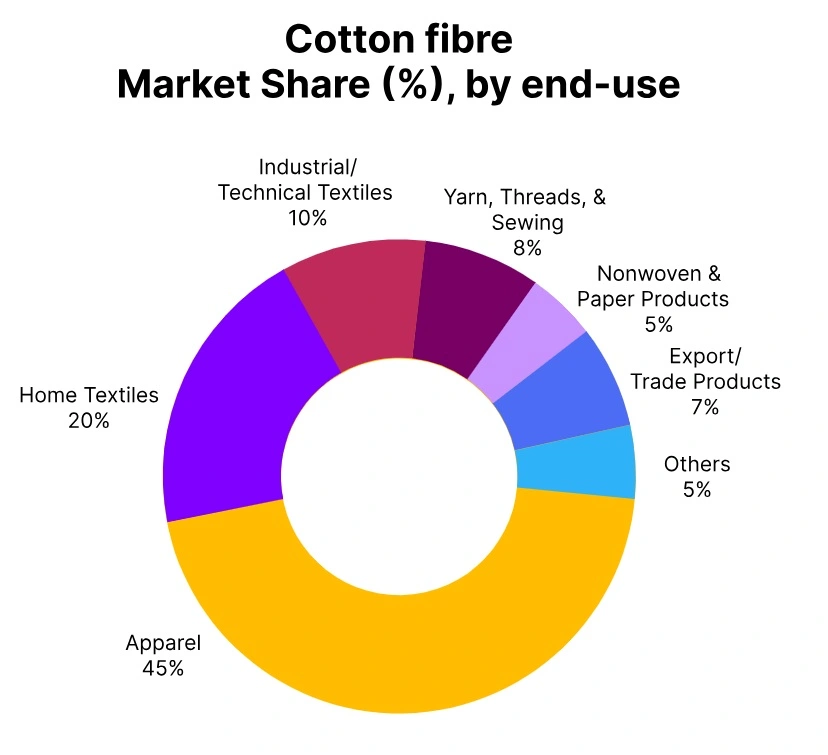
Cotton Fibre Industrial Applications

cotton fibre market share end use


Historically, several events have caused significant fluctuations in Cotton Fibre prices

Indian Cotton Import Duty Exemption (2025): In 2025, the Indian government extended the 11% import duty exemption on cotton to stabilize the textile industry amid raw material shortages. While the policy aimed to support domestic textile manufacturers, it increased the inflow of lower-priced imported cotton, exerting pressure on local cotton prices. Indian cotton producers faced heightened competition, with revenues affected due to market undercutting. This policy decision underscored the delicate balance between fostering industrial growth and safeguarding domestic agricultural interests. Price movements during this period reflected both policy-driven and market-driven influences, emphasizing the sensitivity of the cotton sector to regulatory measures.

COVID-19 Pandemic (2020–2021): The COVID-19 pandemic caused unprecedented disruptions across the global textile and apparel sector, reducing demand for cotton significantly. Lockdowns in major consuming countries, coupled with a decline in retail sales, resulted in a surplus of cotton stocks. Supply chain interruptions and labour shortages added further complexity, creating volatility in pricing. Cotton markets experienced sharp declines as both domestic and international buyers scaled back procurement. The pandemic highlighted the vulnerability of global commodities to sudden economic shocks and emphasized the need for resilient supply chain strategies. Market recovery began gradually as restrictions eased, and production-normalization initiatives were implemented.

U.S.-China Trade War (2018–2020): The U.S.-China trade war created significant disruptions in global cotton trade, with tariffs imposed on a wide range of commodities, including cotton. China, being a major importer, retaliated with tariffs on U.S. cotton, sharply reducing American exports. This led to an oversupply in the U.S. market, exerting downward pressure on cotton prices. Farmers experienced financial strain as production costs remained high while revenues fell. The uncertainty surrounding global trade policies further amplified price volatility. During this period, market sentiment remained cautious, with investors and producers closely monitoring tariff announcements and their potential impact on supply-demand dynamics.

Why Price Watch™?

Price Watch™ is your trusted resource for tracking global cotton fibre price trends. Our platform delivers real-time data and expert analysis, offering deep insights into the key factors driving price fluctuations in the cotton fibre market. By monitoring critical events such as geopolitical tensions, supply chain disruptions, and economic shifts, Price Watch™ keeps you fully informed of market dynamics.

In addition, Price Watch™ provides detailed forecasts and updates on production capacities, enabling you to anticipate market changes and make well-informed decisions. With Price Watch™, you gain a competitive edge in understanding all the elements that influence cotton fibre prices worldwide. Stay ahead of the curve with Price Watch’s™ reliable, accurate, and timely cotton fibre market data.

Track Price Watch's™ cotton fibre price assessment on a weekly basis since 2015 onwards, along with short-term forecasts, and get access to the detailed report in a downloadable format.

Cotton Fibre Market Price Trend published by Price Watch™ reflect prevailing spot market conditions, derived from independent research, verified trade inputs, and proprietary market intelligence as of the publication date. Prices are published on the specified Incoterm and represent indicative base market levels, exclusive of applicable taxes, VAT, duties, tariffs, and other statutory charges. Actual transaction values may vary depending on volume, credit terms, contractual structure, and other negotiated conditions. Market prices are inherently subject to volatility, liquidity dynamics, regulatory changes, and evolving trade activity. The information provided is for reference and benchmarking purposes only and does not constitute an offer, recommendation, or guarantee of transactional outcomes. Users should exercise independent commercial judgment and assess their specific contractual, regulatory, tax, and application requirements before making business decisions. Price Watch™ assumes no liability for decisions taken based on this information.

Cotton fibre prices are influenced by multiple factors, including global supply and demand, weather and climate conditions, crop yields in major producing countries (India, USA, China, Brazil, Pakistan), and government policies such as subsidies or export restrictions. Additionally, international trade dynamics, currency fluctuations, and transportation costs impact price movements. Market speculation and seasonal demand from the textile and apparel industries also contribute to price volatility.

Changes in supply, such as crop shortfalls due to droughts, floods, or pest infestations, can reduce availability and push prices higher. Conversely, oversupply from abundant harvests or increased imports can lower prices. Demand shifts from textile manufacturers, export orders, and seasonal consumption cycles directly impact pricing. Monitoring these factors is crucial for buyers and traders to plan procurement and inventory strategies effectively.

Buyers can optimize procurement by tracking global cotton market trends, including benchmark indices like Cotlook A, CCI, KCA Spot, and Brazil Cotton Index. Securing long-term contracts when prices are favourable, diversifying suppliers across producing regions, and hedging against currency or market volatility can mitigate risks. Awareness of geopolitical developments, government policies, and seasonal demand patterns also helps in making cost-effective and timely purchasing decisions.

Cotton yarn is produced by spinning natural cotton fibres into threads used in weaving and knitting fabrics. Its price is important because it directly impacts textile production costs and profit margins for manufacturers.

Changes in yarn prices reflect shifts in raw cotton costs, demand from garment sectors, and global trade conditions. As a result, it plays a key role in procurement decisions and overall market competitiveness. Price-Watch™ tracks Cotton Yarn prices to help businesses stay informed about market movements and cost trends.

Cotton yarn prices vary by count, quality, origin, and trade basis (FOB/CIF), and are typically quoted per kilogram in domestic and international markets. Prices fluctuate based on raw cotton costs, demand from the textile and apparel sectors, and global trade dynamics.

Seasonal factors, export demand, and inventory levels also play a key role in influencing price movements. Price-Watch™ provides up-to-date price assessments across key global markets.

The cotton yarn market is currently witnessing a mixed to slightly weak trend, influenced by fluctuating demand from the textile and apparel sectors and varying export orders across regions.

Prices are mainly affected by raw cotton costs, which remain the primary input, along with factors such as demand-supply balance, inventory levels, and global trade conditions.

Additionally, seasonal trends, currency fluctuations, and competition from synthetic fibres also play a significant role in shaping cotton yarn price movements.

The textile and apparel industry is the largest consumer of cotton yarn, using it for producing fabrics for garments such as shirts, t-shirts, denim, and home textiles. The knitting and weaving sectors are key buyers, as yarn is their primary raw material.

Additionally, industries involved in home furnishings, technical textiles, and hosiery products also consume significant volumes of cotton yarn. Overall, demand is largely driven by fashion, retail, and export-oriented garment manufacturing sectors.

Cotton yarn is made from natural cotton fibres grown in countries like India, China, and United States. These fibres are processed through spinning to produce yarn used in textiles. Its supply depends on cotton production and spinning industry capacity.

The largest exporter of cotton yarn is India, supported by its strong cotton production base and extensive spinning industry. Other major exporters is China which also play key roles in supplying yarn to global textile markets. Price-Watch™ monitors global trade flows and supply availability.

Yes, the global cotton yarn market generally has sufficient supply to meet demand, with production supported by strong cotton output and large spinning capacities. However, in many regions, supply has been slightly higher than demand, leading to inventory buildup and price pressure.

The balance can vary depending on regional demand and export activity. Price-Watch™ closely tracks supply-demand balances to highlight potential shortages or oversupply situations.

Cotton yarn is available in different grades based on count (thickness), quality (carded or combed), and end-use such as weaving or knitting yarn. Prices differ because higher counts and combed yarn require better-quality cotton and more processing, making them costlier. Additionally, variations in strength, uniformity, and application also influence pricing across different grades. Price-Watch™ provides grade-wise price assessments for better market clarity.

A sudden increase in cotton yarn demand typically leads to higher prices due to limited short-term supply. Mills may increase production, but supply adjustments take time, resulting in tighter inventories and longer lead times. Price-Watch™ captures these shifts in real time.

Raw cotton prices have a direct impact on cotton yarn costs, as cotton is the primary raw material used in yarn production. When cotton prices increase, yarn production costs rise, leading to higher yarn prices, and vice versa. Additionally, fluctuations in cotton availability and quality further influence overall yarn pricing.

Regional cotton yarn prices vary due to differences in local demand, supply, logistics costs, duties, and currency fluctuations, as well as yarn quality and production expenses. Price-Watch™ tracks regional differentials to highlight pricing gaps across markets.

Cotton yarn prices are expected to remain relatively stable to modestly firm in the near term, supported by steady demand from textile and apparel sectors and balanced supply conditions. Any significant changes in raw cotton prices or global trade activity could influence the trend. Price-Watch™ publishes regular forecasts projecting price direction over the next 12 months.

Yes. Reliable forecasts help buyers plan procurement, manage inventory, negotiate contracts, and control packaging costs. Price-Watch™ forecasts support smarter purchasing and budgeting decisions.

Global events can significantly impact cotton yarn supply and prices by affecting raw cotton availability, trade flows, and shipping logistics. Events such as extreme weather, geopolitical tensions, or changes in export policies can disrupt supply chains, leading to price volatility.

Additionally, global demand shocks, such as shifts in textile consumption or major retail cycles, can further influence market pricing. Price-Watch™ provides timely updates on such market-moving events.

Price-Watch™ gathers data from producers, converters, traders, and buyers to publish transparent cotton yarn price assessments, market reports, and forecasts, helping stakeholders stay ahead of market trends.