Cyclohexane Price Trend and Forecast

UNSPC code: 51334499
|
Weekly Update
|
Historical Data Since 2015
|
Forecast for 2026

cyclohexane Price Trends by Country

cnChina
thThailand
inIndia
twTaiwan
krSouth Korea
deGermany
beBelgium

Global cyclohexane Spot Market Prices, Trend Analysis and Forecast

  • Price Watch™ provides real-time price assessments and price forecasts for Cyclohexane across top trading regions:
Cyclohexane Regional Coverage   Cyclohexane Grade and Country Coverage   Cyclohexane Pricing Data Coverage Explanation  


Asia- Pacific Cyclohexane Pricing Analysis  


Cyclohexane Industrial Grade (99.9% min) FOB Prices Shanghai, China  Weekly Price Update on Cyclohexane Real-Time Export Prices from Shanghai port, China to Global Markets 
Cyclohexane Industrial Grade (99.9% min) FOB Prices Laem Chabang, Thailand  Weekly Price Update on Cyclohexane
Real-Time Export Prices from Laem Chabang Port, Thailand to Global Markets 
Cyclohexane Industrial Grade (99.9% min) CIF prices at Busan Port, South Korea, importing from China 


Weekly Price Update on Cyclohexane Real-Time Import Prices at Busan Port, South Korea, from China 
Cyclohexane Industrial Grade (99.9% min) CIF Prices at Nhava Sheva port, West India, Importing from China  Weekly Price Update on Cyclohexane Real-Time Import Prices at Nhava Sheva port, west India, from China 
Cyclohexane Industrial Grade (99.9% min) Ex-Hazira Prices, West India  Weekly Price Update on Cyclohexane Real-Time Domestic Prices of Ex-Hazira, West India 
Cyclohexane Industrial Grade (99.9% min) CIF Prices Kaohsiung Port, Taiwan, importing from Thailand  Weekly Price Update on Cyclohexane Real-Time Import Prices at Kaohsiung Port Taiwan, from Thailand 
Europe Cyclohexane Pricing Analysis  Cyclohexane Industrial Grade (99.9% min) FD Antwerp Prices, Belgium  Weekly Price Update on Cyclohexane Real-Time Domestic Prices at FD Antwerp Prices, Belgium 
Cyclohexane Industrial Grade (99.9% min) FOB prices Hamburg, Germany  Weekly Price Update on Cyclohexane Real-Time Export Prices from Hamburg, Germany to Global Markets 


Note: In assessments structured as CIF [Importing Port] (Exporting Country), the country mentioned in brackets indicates the primary origin of supply (exporting country), while the named port refers to the destination port in the importing country. Other Incoterms (FOB, FD, EXW, etc.) should be interpreted in accordance with standard international trade definitions.

Cyclohexane Price Trend Q1 2026

For the quarter ending March 2026, the international market for cyclohexane has shown diverse trends with cyclohexane price trend changes ranging from moderate rises to mild drops. In Asia, some markets, including Taiwan, Thailand, and India, have witnessed rising prices amid sustained demand in industries such as chemicals, automobiles, and textiles and stable production levels.

However, in markets such as China and South Korea, prices have fallen mildly because of weak demand and conservative purchasing practices. The geopolitics in the region, especially the conflict between Iran and Israel, has driven the price of crude oil, hence affecting production costs.

Nonetheless, the general market situation remains characterized by unstable supplies and conservative purchasing decisions, resulting in moderate price hikes in some regions, especially in Asia.

China: Cyclohexane Export prices FOB Shanghai, China; Grade- Industrial Grade (99.9% min)

Cyclohexane price trend in China reduced 2.5% during first half of Q1 2026 due primarily to decreased demand from key sectors (such as textiles and chemicals) during this period. Cyclohexane prices also fell due to low-levels of supply from these sectors and weak overall consumption and conservative purchasing patterns.

Overall, the cyclohexane price trend indicates weak market conditions as a result of slow-growth in demand. Cyclohexane prices in China rose in March 2026 by 22% as a result of geopolitical developments, especially geopolitical tensions between Iran and Israel, which have disrupted the oil price environment.

Thailand: Cyclohexane Export prices FOB Laem Chabang, Thailand; Grade- Industrial Grade (99.9% min)

The cyclohexane price in Thailand in Q1 2026 rose by 2% owing to rising demand in key industries such as chemicals and textiles and relatively stable supplies in the region. The cyclohexane price trend in Thailand has remained stable over time and has risen slightly on account of ongoing industrial activities and manufacturing operations.

In Thailand, cyclohexane price in March 2026 has risen by 23%. Such an increment in prices has been attributed to several reasons, including political issues in various parts of the world. One such political issue is the geopolitical tension between Iran and Israel. This conflict between the two nations has resulted in soaring crude oil prices, consequently affecting the production process.

Germany: Cyclohexane Export prices FOB Hamburg, Germany; Grade- Industrial Grade (99.9% min)

For the first quarter of 2026, the cyclohexane price in Germany has grown by 3.5%, due to strong demand from the major industrial sectors including automotive and chemical sectors, even in tough times globally. In this regard, the cyclohexane price trend in Germany has been driven by an impressive manufacturing environment.

In Germany, cyclohexane price in March 2026 has seen a 11% rise due to geopolitical issues, such as the conflict between Iran and Israel. As a result of the above conflict, there have been increased crude oil prices, leading to a price increase for cyclohexane due to increased costs in production. Therefore, geopolitical conflicts have been among the factors that have led to the cyclohexane price increase in Germany.

Belgium: Cyclohexane Domestically traded prices FD Antwerp, Belgium; Grade- Industrial Grade (99.9% min)

In Q1 2026, cyclohexane price trend in Belgium increased by 4%, driven by steady demand from key industries such as chemicals and automotive, alongside stable supply conditions in the region. The cyclohexane price trend in Belgium reflected ongoing industrial activity, with strong consumption supporting moderate price growth.

In Belgium, cyclohexane prices in March 2026 rose by 10%, influenced by geopolitical tensions, particularly the Iran-Israel conflict. This conflict led to higher crude oil prices, which in turn impacted production costs.

The price increase also reflected global supply chain disruptions, which further pushed prices upward. This surge underscores the impact of global geopolitical factors on the local market, leading to notable price adjustments despite overall stable demand.

India: Cyclohexane domestically traded prices Ex Hazira, India; Grade- Industrial Grade (99.9% min)

In Q1 2026, cyclohexane price trend in India increased by 5.5%, driven by steady demand from key industries such as automotive, chemicals, and textiles. Despite softer global demand, India’s market remained resilient due to strong industrial consumption.

The cyclohexane price trend in India reflected this continued demand, which helped support the price increase. In India, cyclohexane prices in March 2026 rose by 21%, largely influenced by geopolitical tensions, particularly the Iran-Israel conflict, which led to higher crude oil prices.

These higher crude prices impacted production costs, contributing to the substantial price surge. The price increase in India highlights the significant effect of geopolitical factors on local market conditions, driving price adjustments in response to global supply chain disruptions.

South Korea: Cyclohexane Import prices CIF Busan, South Korea; Grade- Industrial Grade (99.9% min)

According to Price-Watch™, in Q1 2026, cyclohexane price trend in South Korea (importing from China) decreased by 1%, primarily due to softer demand from key sectors such as chemicals and textiles. Despite stable supply conditions, reduced industrial activity and cautious buying behavior led to this price dip.

The cyclohexane price trend in South Korea reflected the subdued market sentiment and restrained procurement strategies. However, In South Korea, cyclohexane prices in March 2026 increased by 21%, driven by geopolitical tensions, particularly the Iran-Israel conflict.

The conflict led to higher crude oil prices, which in turn impacted production costs, contributing to the sharp price rise. This increase highlights the impact of global geopolitical events on the local market, pushing prices higher despite earlier softness.

Taiwan: Cyclohexane Import prices CIF Kaohsiung, Taiwan; Grade- Industrial Grade (99.9% min)

The cyclohexane price in Taiwan increased in Q1 2026 (importing from Thailand) by 2% in the first half, due to continued strong demand from major users (chemical and automotive), along with consistent supplies.

The overall cyclical price pattern that has been observed in Taiwan throughout the first quarter showed moderate to low levels of industrial activity; however, due to the uncertainties in the global economy, demand from end-users continues to support the upward price trend for cyclohexane in Taiwan.

Cyclohexane prices in Taiwan increased by 22% in March 2026, primarily driven by the geopolitical tensions created by the Iran-Israel conflict, the increase in crude oil price, and the effects on production costs.

Increased cyclohexane prices also reflect the effect of global supply chain disruption on production costs and availability, creating additional upward price pressures in Taiwan.

Cyclohexane Price Trend Analysis: Q4 2025

In quarter four of 2025, the worldwide market for cyclohexane has been inconsistent among regions, exhibiting prices that range from modest declines to modest gains. Among the Asian region markets of China, Thailand, and Taiwan (with Thailand as the importer), there have been declines in prices because of reduced demand in important industries like chemicals and textiles.

On the contrary, India has exhibited modest price growth because of unchanged demand in industries. Europe markets of Germany and Belgium have varied, with Germany posting a significant price gain while Belgium has a modest price gain.

Other countries like South Korea have has price declines like those being experienced in other Asian nations. Although prices have been inconsistent across regions, there have been important drivers that include conservative buying plans, logistical changes, and constant industrial consumption.

China: Cyclohexane Export prices FOB Shanghai, China; Grade- Industrial Grade (99.9% min)

The cyclohexane prices in China for Q4 2025 have gone down by 3% mainly owing to poor demand by some major industries like chemicals and textiles. Although there are stable supplies, the purchasing behavior adopted by buyers has been the reason behind the decline in cyclohexane prices in China.

The cyclohexane prices trend in China general market where lower industrial demand has caused a fall in prices. In China, the cyclohexane prices in December 2025 have fallen almost 1.5%. In addition to weak demand by some industries, lower short-term restocking activity and lower spot availability has led to a decline in cyclohexane prices.

Thailand: Cyclohexane Export prices FOB Laem Chabang, Thailand; Grade- Industrial Grade (99.9% min)

The cyclohexane price in Thailand for Q4 2025 has fallen by 2% due to lower consumption from the main industries including chemicals and textiles industry, despite there being steady supplies in the market.

However, buyer’s cautious behavior has been attributed to the lowering of the cyclohexane price trend in Thailand for Q4 2025.

In Thailand, cyclohexane price in December 2025 has fallen by approximately 1.5% due to lower spot availability. There has been very little short-term restocking of cyclohexane in Thailand as of December 2025.

Germany: Cyclohexane Export prices FOB Hamburg, Germany; Grade- Industrial Grade (99.9% min)

During the fourth quarter of 2025, cyclohexane price in Germany has witnessed an increase of 4% owing to the sustained demand in various sectors such as chemicals and automotive industries.

Despite the sluggish demand in some sectors, there has been an observed increase in the cyclohexane price trend in Germany because of high industry activities and consumption.

In Germany, the cyclohexane price in December 2025 has experienced a decline of 1.5%. The decrease in cyclohexane price in Germany is mainly attributed to the adjustments made towards the end of the quarter.

Belgium: Cyclohexane Domestically traded prices FD Antwerp, Belgium; Grade- Industrial Grade (99.9% min)

In Q4 2025, cyclohexane prices in Belgium increased by 2.5%, primarily driven by resilient demand from key industries such as chemicals and automotive. Despite mixed demand conditions globally, Belgium experienced a slight increase in prices due to stable industrial consumption.

The cyclohexane price trend in Belgium followed a moderate upward trajectory, reflecting consistent demand and procurement strategies. In Belgium, cyclohexane prices in December 2025 decreased by 1%, influenced by reduced procurement activity and seasonal factors affecting the market.

This price movement is a result of softening demand conditions and cautious buying behavior towards the end of the quarter.

India: Cyclohexane domestically traded prices Ex Hazira, India; Grade- Industrial Grade (99.9% min)

In Q4 2025, cyclohexane prices in India decreased by 0.5%, reflecting a slight dip despite steady demand from key sectors such as chemicals and textiles. The market in India showed resilience in industrial consumption, which helped maintain relatively stable prices.

In India, cyclohexane prices in December 2025 increased by 4%, driven by ongoing demand and procurement strategies from local industries. This price increase is largely due to sustained industrial consumption, particularly in the automotive and chemical sectors.

The cyclohexane price trend in India reflected the continued stability in local demand, which contributed to the price rise by the end of the quarter.

South Korea: Cyclohexane Import prices CIF Busan, South Korea; Grade- Industrial Grade (99.9% min)

In Q4 2025, cyclohexane prices in South Korea decreased by 3%, driven by softer demand in key sectors such as chemicals and textiles. Despite stable supply conditions, cautious buying behavior and restrained procurement strategies led to a price decline.

The cyclohexane price trend in South Korea followed a similar downward pattern to other Asian markets, with reduced industrial consumption and limited purchasing activity contributing to the overall price decrease.

In South Korea, cyclohexane prices in December 2025 remained lower, decreasing by 1.5%, influenced by reduced spot availability and limited short-term restocking efforts as the quarter ended.

Taiwan: Cyclohexane Import prices CIF Kaohsiung, Taiwan; Grade- Industrial Grade (99.9% min)

In Q4 2025, cyclohexane prices in Taiwan (importing from Thailand) decreased by 3.5%, reflecting weaker demand from key industries such as chemicals and textiles. Despite stable supply, cautious buying behavior and restrained procurement strategies from buyers contributed to this price decline.

The cyclohexane price trend in Taiwan followed a similar softening pattern to other markets in the region, with subdued industrial consumption and limited procurement activity.

In Taiwan, cyclohexane prices in December 2025 decreased by nearly 1.5%, influenced by reduced short-term restocking efforts and limited spot availability as the quarter ended. The market continued to reflect cautious demand conditions and soft purchasing strategies.

In Q3 2025, the global cyclohexane market experienced widespread price reductions, driven by weak demand in key sectors such as automotive, construction, and chemical manufacturing. Prices fell sharply in regions like Thailand, China, and Germany due to a global industrial slowdown.

As global production slowed, so did the demand for cyclohexane, leading to lower prices in multiple regions. In September 2025, the cyclohexane prices across the world continued to reflect this subdued industrial activity, with little signs of recovery.

The decline in cyclohexane prices was consistent with the broader economic slowdown, which affected consumption in major industries reliant on cyclohexane.

Germany: Cyclohexane Export prices FOB Hamburg, Germany, Grade- Industrial Grade (99.9% min).

Cyclohexane prices in Germany saw a 10.6% decrease, reaching 985 USD/MT in Q3 2025. The decline has largely been due to weaker demand from the automotive and chemical industries, both of which saw reduced production. As the European economy showed signs of weakness, the cyclohexane price trend in Germany also dropped due to lower consumption.

By September 2025, the cyclohexane prices in Germany mirrored the global decline, with prices remaining under pressure from the reduced activity in key sectors. Despite stable supply, industrial demand for cyclohexane remained sluggish, which prevented any significant price recovery by the end of the quarter.

Belgium: Cyclohexane Domestically traded prices FD Antwerp, Belgium, Grade- Industrial Grade (99.9% min).

Cyclohexane prices in Belgium fell by 10.1%, dropping to 1031 USD/MT in Q3 2025. This price reduction has been driven by a decrease in demand from industries such as automotive and chemicals, which experienced a slowdown in production. As the European economy showed signs of weakness, the cyclohexane price trend in Belgium also dropped due to lower consumption.

According to Price-Watch, in September 2025, the cyclohexane prices in Belgium continued to follow the global pattern of reduced demand. Prices remained subdued as the slowdown in key industries, particularly automotive and chemical manufacturing, persisted, reflecting the broader challenges facing the global market.

China: Cyclohexane Export prices FOB Shanghai, China, Grade- Industrial Grade (99.9% min).

Prices of cyclohexane in China experienced a 3% drop in Q3 2025 to 940 USD/MT due to softer demand from the automotive and construction end-use markets that have an outsized impact on overall cyclohexane consumption.

The global downturn in industrial production also contributed to the implementation of lower price levels. Notwithstanding the price drop, the cyclohexane price trend in China suggested some limited recovery in industrial demand, which continued into the end of the quarter.

According to Price-Watch, by September 2025, the prices of cyclohexane in China have been subjected to downward pressure in China, reflecting continued weak consumption, which is a trend consistent with the global slowdown. Furthermore, in September 2025, the cyclohexane price in China continued to be burdened due to reduced industrial activity across a number of key sectors.

Thailand: Cyclohexane Export prices FOB Laem Chabang, Thailand, Grade- Industrial Grade (99.9% min).

The cyclohexane prices in Thailand decreased by a substantial 16.6% to 803 USD/MT during Q3 of 2025. The steep drop has been attributed to a decline in demand from various sectors like automotive, plastics, and coatings, which all experienced reduced production time.

As the industrial activities slowed in Thailand, the decline in the cyclohexane price trend followed. In September of 2025, the cyclohexane prices in Thailand continued to exhibit evidence of this reduced demand in the industrial sector.

The demand drops from major end-use applications in both the automotive and plastics sectors continued to exert downward pressure on cyclohexane prices. The price decrease in Thailand has been part of a more general trend observable in many other regions in Asia, in which consumption of industrial chemical end uses, such as cyclohexane, remained stagnant.

India: Cyclohexane domestically traded prices Ex Hazira, India, Grade- Industrial Grade (99.9% min).

Cyclohexane prices in India dropped by 11.2% in Q3 2025. This decline was driven by reduced demand from the automotive, construction, and coatings sectors, as industrial activity slowed across the country. As a result, the cyclohexane price trend in India continued to reflect the global slowdown, with no significant rebound in industrial output by the end of the quarter.

In September 2025, the cyclohexane prices in India showed little recovery, reflecting ongoing weakness in demand from key sectors. The reduced consumption in these industries kept prices lower throughout the quarter.

South Korea: Cyclohexane Import prices CIF Busan, South Korea, Grade- Industrial Grade (99.9% min).

The price of cyclohexane in South Korea fell by 2.8% in Q3 2025 to 970 USD/MT as demand has been weak in the automotive and chemical industries due to production slowdowns. South Korea has been reliant on imports from of cyclohexane from China, and a global price decline therefore also affected local pricing.

Cyclohexane prices in September 2025 in South Korea have also been moving downwards in line with the global price decline, and cyclohexane prices remained under pressure as industrial consumption remained weak. Although overall demand was weak as cyclohexane prices continued to decline in South Korea, the supply situation remained relatively stable for the quarter.

Taiwan: Cyclohexane Import prices CIF Kaohsiung, Taiwan, Grade- Industrial Grade (99.9% min).

Cyclohexane prices in Taiwan fell by 14.8%, reaching 866 USD/MT in Q3 2025. This steep decline has been driven by reduced demand from automotive and plasticizer sectors, both of which experienced slowdowns.

The cyclohexane price trend in Taiwan mirrored the broader market downturn, reflecting the ongoing challenges faced by key industries. Taiwan’s reliance on imports from Thailand meant that the broader market slowdown in Asia impacted prices.

In September 2025, the cyclohexane prices in Taiwan followed the regional decline, with prices continuing to reflect low demand from key industrial sectors. The sharp price drop has a direct result of the reduced consumption of cyclohexane in manufacturing and production processes across Taiwan.

According to PriceWatch, In Q2 2025, the cyclohexane price trend showed declines in both China and Thailand. China experienced a 2.0% decrease, reaching USD 970 per metric ton in cyclohexane prices, driven by weaker industrial demand and slower manufacturing output, particularly in the chemicals and textiles sectors.

Ongoing supply chain disruptions and economic challenges further dampened consumption. Additionally, lower production rates in certain industries contributed to the price decline. On the other hand, Thailand saw a more modest 0.3% decrease, also at USD 970 per metric ton, in cyclohexane prices.

This slight decline was due to softer demand from the chemical and automotive industries. While Thailand’s industrial activity remained relatively steady, global economic uncertainty and regional production fluctuations led to the minor price reduction. Both markets were impacted by broader global economic conditions, including inflation and reduced industrial output. 

According to PriceWatch, In Q2 2025, the cyclohexane price trend in India showed varied changes across different regions. India (CIF China) experienced a decline of 4.6%, reaching at USD 1024 per metric ton influenced by decreased demand from downstream industries and global economic uncertainties impacting import activities.

India (Ex Hazira) saw a 2.1% decrease at USD 1200 per metric ton, reflecting softer domestic consumption and logistical challenges affecting supply chains. Similarly, India (Ex Mumbai) recorded a 1.4% drop at USD 1233 per metric ton, attributed to weaker demand from key sectors such as automotive and textiles, along with competitive pricing pressures from regional suppliers.

These regional variations highlight the complex interplay of domestic consumption patterns, supply chain dynamics, and international market conditions influencing cyclohexane pricing trends in India during this period. 

During Q1 2025, the cyclohexane market showed varied price movements across key Asian countries. In China, prices remained almost stable, with a slight decline of 0.1% to $988/MT, reflecting steady industrial activity despite softening demand. South Korea’s prices edged down by 0.2% to $1,016/MT, reflecting subdued demand from key sectors.

Taiwan and Thailand experienced sharper declines, with prices falling by 7.2% to $1,020/MT and 7.3% to $973/MT, respectively, due to weaker regional consumption and reduced industrial activity. Overall, the market showed mixed performance, with China holding steady, while Taiwan and Thailand struggled with lower demand. 

During Q1 2025, India’s cyclohexane market showed positive trends. CIF China prices increased by 2.0% to $1,080/MT, supported by steady export orders, while Ex-Hazira prices saw a significant rise of 6.3% to $1,234/MT, driven by stronger domestic demand and tighter supply.

The growth in the Ex-Hazira market was fuelled by an uptick in local consumption, particularly in the automotive and textile sectors, along with firm feedstock benzene prices. 

Cyclohexane Price Trend Analysis: Q4 2024

During Q4 2024, the cyclohexane market showed mixed trends across Asia, with price declines in China and South Korea due to softer demand and reduced industrial activity. China’s prices dropped by 4.0% to $989/MT, while South Korea also saw a decrease of 4.0% to $1,018/MT, driven by slower production and export demand.

Conversely, Taiwan and Thailand experienced slight recoveries, with prices rising by 2.1% to $1,099/MT and 2.2% to $1,050/MT, respectively, supported by moderate demand in sectors like automotive and packaging. Overall, the quarter was marked by weaker global demand, particularly in major consumption markets, although Taiwan and Thailand showed some resilience. 

In Q4 2024, India’s cyclohexane market experienced a slight decline. CIF China prices dropped by 2.8% to $1,058/MT, reflecting weaker export demand, while Ex-Hazira prices also fell by 2.7% to $1,161/MT, impacted by subdued domestic consumption.

The drop was attributed to a slowdown in industrial activity and lower demand from sectors like textiles and automotive, alongside global market uncertainties. 

During Q3 2024, the cyclohexane market in Asia displayed a mixed trend, with sharp regional divergences influenced by varying demand recovery, supply scenarios, and downstream consumption patterns. In China, prices rose further to $1,031/MT (7.4%) driven by strong demand from the nylon and polyester sectors, coupled with tighter domestic supply amid limited imports.

South Korea saw a similar upward momentum, with prices reaching $1,060/MT (8.2%), supported by increased industrial activity and firm export demand. Conversely, Taiwan and Thailand also saw declines, with prices falling to $1,076/MT (5.2%) and $1,028/MT (6.9%) respectively, as demand in downstream sectors like textiles and plastics softened and regional supply stabilized following earlier disruptions.

Overall, Q3 was characterized by a firm export-oriented outlook for major producers like China and South Korea, while localized demand pressures weighed on pricing in Taiwan and Thailand. 

During Q3 2024, India’s cyclohexane market showed a mixed performance. CIF China prices rose by 9.0% to $1,090/MT, driven by strong export demand and favourable global market conditions.

However, Ex-Hazira prices fell by 6.6% to $1,193/MT, reflecting a temporary oversupply in the domestic market, as production outpaced consumption. This discrepancy was caused by sluggish recovery in local industries, despite strong export performance. 

During Q2 2024, the international Cyclohexane market showed a strong upward trajectory across major Asian countries, driven by improved downstream demand, firm feedstock costs, and tightening regional supply. In China, prices rose to $960/MT, up by 6.5%, as demand from the nylon and caprolactam sectors rebounded alongside increased industrial activity.

South Korea mirrored this trend, with prices climbing to $980/MT (6.6%) due to a pickup in export orders and reduced inventories. Taiwan and Thailand experienced notable price hikes of 9.4%, reaching $1,136/MT and $1,103/MT respectively, as regional supply tightened amid scheduled maintenance shutdowns and strong consumption from the plastics and textiles sectors.

Overall, Q2 marked a bullish quarter for cyclohexane across Asia, backed by favourable market fundamentals and broad-based recovery in industrial end-use sectors. 

In Q2 2024, India’s cyclohexane market saw strong growth. CIF China prices increased by 7.3% to $1,000/MT, supported by healthy export volumes and improved global market conditions.

Ex-Hazira prices also rose by 4.7% to $1,278/MT, driven by robust domestic demand, particularly in the textile and automotive industries. This period marked a recovery in local consumption and was further supported by stable upstream benzene prices. 

During Q1 2024, the international Cyclohexane market experienced mixed trends across key Asian regions, reflecting varying demand dynamics and supply conditions. In China, prices declined to $902/MT, down by 3.3%, mainly due to subdued demand from the nylon and fibre intermediates sector and sufficient domestic availability.

South Korea followed a similar pattern with prices easing to $919/MT (2.2%) amid weak downstream consumption and steady production levels. Taiwan saw a modest rise of 2.3%, with prices reaching $1,038/MT, supported by moderate demand recovery in the industrial chemicals sector and tight spot availability.

Thailand also recorded a slight increase of 0.5%, with prices quoted at $1,009/MT, reflecting stable buying activity and constrained supply due to maintenance at certain local facilities. Overall, Q1 2024 highlighted regional differences in cyclohexane pricing trends, shaped by sector-specific demand fluctuations and localized supply factors. 

During Q1 2024, India’s cyclohexane market showed varied trends. CIF China prices inched up by 0.1% to $931/MT, reflecting steady export demand, while Ex-Hazira prices rose more significantly by 5.0% to $1,221/MT.

The domestic market benefited from improved consumption in key sectors like textiles and automotive, along with tighter local supply, which helped sustain price increases despite weaker global conditions. 

Technical Specifications of Cyclohexane Price Trends

Product Description

Cyclohexane is a colourless liquid widely used as a solvent and intermediate in various industrial applications. It plays a crucial role in the production of adipic acid and caprolactam, key components in the manufacture of nylon.

Cyclohexane is also utilized in the production of synthetic resins, coatings, and fuel additives. Its feedstock includes benzene, with applications in the production of cyclohexanone, a key intermediate in the production of nylon. Additionally, cyclohexane is used as a solvent in chemical processes and a cleaning agent in several industries.

Identifiers and Classification:

  • CAS No – 110-82-7
  • HS Code – 29021100
  • Molecular Formula – C6H12
  • Molecular Weight (in gm/mol) – 84.16 g/mol


Cyclohexane Synonyms:

  • Benzene hexahydride
  • Hexahydro benzene
  • Hexamethylene
  • Hexanaphthene
  • Cyclohexan
  • Cykloheksan


Cyclohexane Grades Specific Price Assessment:

  • Industrial Grade (99.9% min)


Cyclohexane Global Trade and Shipment Terms

  • Quotation Terms (Product & Country Specific): 25-28 MT, 10-15MT
  • Packaging Type (Product & Country Specific): ISO Tank, 180kg Drum


Incoterms Referenced in Cyclohexane Price Reporting

Shipping Term  Location  Definition 
FOB Shanghai  Shanghai, China  Cyclohexane Export Price from China 
FOB Laem Chabang  Laem Chabang, Thailand  Cyclohexane Export Price from Thailand 
CIF Busan (China)  Busan, South Korea  Cyclohexane Import price in South Korea from China 
CIF Nhava Sheva (China)  Nhava Sheva, India  Cyclohexane Import price in India from China 
Ex-Hazira  Hazira, India  Cyclohexane domestically traded price in India 
CIF Kaohsiung (Thailand)  Kaohsiung, Taiwan  Cyclohexane Import price in Taiwan from Thailand 
FD Antwerp  Antwerp, Belgium  Cyclohexane domestically traded price in Belgium 
FOB Hamburg  Hamburg, Germany  Cyclohexane Export Price from Germany 
Ex-Mumbai  Mumbai, India  Cyclohexane domestically traded price in India 

*Quotation Terms refers to the quantity range specified for the Cyclohexane being quoted or offered in a commercial transaction.

**Packaging Type refers to standard packaging size commonly used for Cyclohexane packing, ease of handling, transportation, and storage in industrial and commercial applications.


Key Cyclohexane Manufacturers

Manufacturer 
Sinopec Corp. 
PTT Global Chemical Public Company Limited 
BASF SE 
Chevron Phillips Chemical Company LLC 
ExxonMobil Corporation 
Gujarat State Fertilizers & Chemicals Ltd 

Cyclohexane Industrial Applications

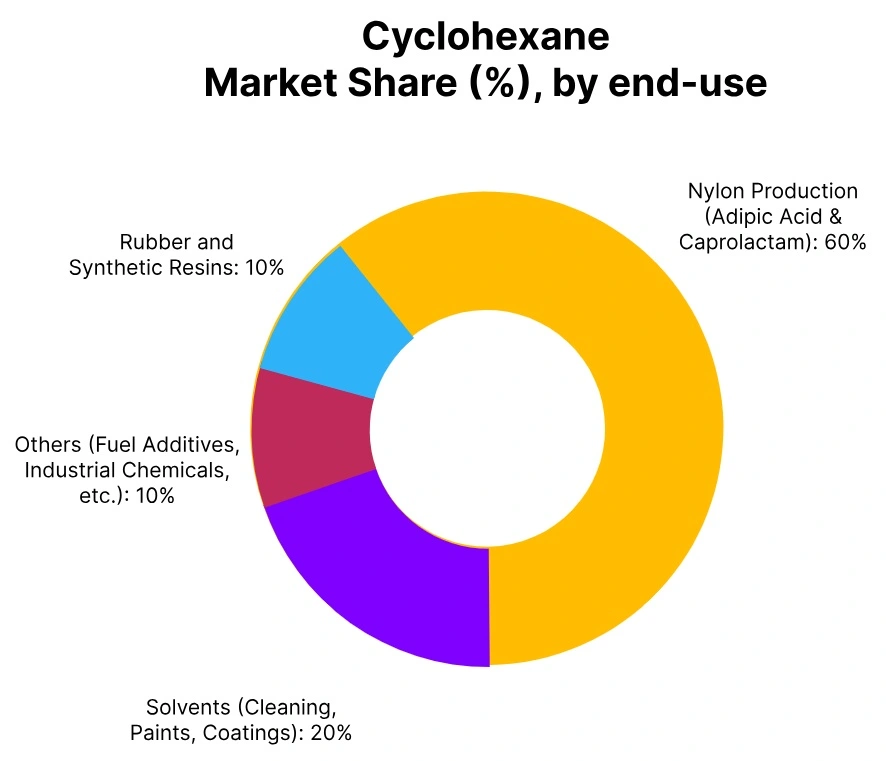
cyclohexane market share end use

Historically, several events have caused significant fluctuations in Cyclohexane prices

  • Fluctuations in Feedstock Prices (2023–2024): Continued volatility in the prices of feedstocks like benzene has caused fluctuations in cyclohexane prices. As the global economy recovered from the pandemic, demand for cyclohexane in the production of nylon and other chemicals surged, but tight supply of raw materials, combined with inflationary pressures, kept prices elevated. 
  • Russia-Ukraine War (2022–2023): The conflict between Russia and Ukraine had an indirect effect on the global petrochemical market, including cyclohexane prices in APAC. Europe faced energy shortages and price hikes in oil and natural gas, which impacted the global chemical supply chain. The redirection of chemical trade flows, increased transportation costs, and geopolitical uncertainties drove prices upward across the region. 
  • Raw Material Price Increases and Shortages (2021–2022): Supply chain disruptions, rising feedstock prices, and shortages of key raw materials like benzene contributed to rising cyclohexane prices in the APAC region. Tight supply coupled with high demand from industries such as nylon production (which heavily relies on cyclohexane) created price volatility. 
  • COVID-19 Pandemic (2020–2021): The COVID-19 pandemic had a significant impact on the global chemical industry, including cyclohexane. In early 2020, reduced industrial activity and lockdowns caused a sharp drop in demand for cyclohexane, leading to price declines. However, by mid-2020, as economies began to recover and demand for cyclohexane in key sectors like automotive and textiles rebounded, prices surged due to supply chain disruptions, logistical challenges, and pent-up demand. 
  • U.S.-China Trade War (2018–2019): The trade war between the U.S. and China, starting in 2018, affected the global petrochemical market, including cyclohexane. Tariffs on chemicals and petrochemicals imported from China caused disruptions in trade flows and uncertainties in supply chains. This increased price volatility in the APAC region as suppliers and buyers faced challenges with raw material sourcing. 
  • Environmental Regulations in China (2017): China, a major chemical producer in the region, implemented strict environmental regulations in 2017 to address pollution issues. The crackdown on non-compliant chemical plants, particularly in the production of key feedstocks like benzene, disrupted supply chains. This led to supply shortages of cyclohexane and its raw materials, causing price spikes across APAC. 
  • Oil Price Volatility (2015–2016): Cyclohexane is produced primarily from crude oil derivatives like benzene, so fluctuations in global oil prices directly affect cyclohexane costs. In 2015–2016, crude oil prices plummeted due to oversupply and weak global demand, which led to a decrease in cyclohexane prices in the APAC region. However, the market soon stabilized as OPEC introduced production cuts in 2016, causing a rebound in oil prices and cyclohexane costs. 


These events underscore the Cyclohexane market’s vulnerability to global disruptions and highlight the need for continuous monitoring of supply-demand dynamics. 

Why Price Watch™?

Price Watch™ is your trusted resource for tracking global cyclohexane price trends. Our platform delivers real-time data and expert analysis, offering deep insights into the key factors driving price fluctuations in the cyclohexane market. By monitoring critical events such as geopolitical tensions, supply chain disruptions, and economic shifts, Price Watch™ keeps you fully informed of market dynamics.

In addition, Price Watch™ provides detailed forecasts and updates on production capacities, enabling you to anticipate market changes and make well-informed decisions. With Price Watch™, you gain a competitive edge in understanding all the elements that influence cyclohexane prices worldwide. Stay ahead of the curve with Price Watch’s™ reliable, accurate, and timely cyclohexane market data.

Track Price Watch's™ cyclohexane price assessment on a weekly basis since 2015 onwards, along with short-term forecasts, and get access to the detailed report in a downloadable format.

Cyclohexane Market Price Trend published by Price Watch™ reflect prevailing spot market conditions, derived from independent research, verified trade inputs, and proprietary market intelligence as of the publication date. Prices are published on the specified Incoterm and represent indicative base market levels, exclusive of applicable taxes, VAT, duties, tariffs, and other statutory charges. Actual transaction values may vary depending on volume, credit terms, contractual structure, and other negotiated conditions. Market prices are inherently subject to volatility, liquidity dynamics, regulatory changes, and evolving trade activity. The information provided is for reference and benchmarking purposes only and does not constitute an offer, recommendation, or guarantee of transactional outcomes. Users should exercise independent commercial judgment and assess their specific contractual, regulatory, tax, and application requirements before making business decisions. Price Watch™ assumes no liability for decisions taken based on this information.

The pricing of Cyclohexane is influenced by various factors, including raw material costs, especially the price of benzene, which is its primary feedstock. Other key factors include production capacity, refining processes, global demand trends, and geopolitical stability in producing regions.

Additionally, transportation costs, energy prices, and regulatory changes can impact the overall cost structure. Monitoring these factors regularly can help procurement heads make informed decisions regarding Cyclohexane purchases.

To forecast future pricing trends for Cyclohexane, procurement heads should analyze historical pricing data, track fluctuations in benzene prices, and stay informed about supply chain issues, such as disruptions in production or transportation.

Following industry reports and market analyses, as well as observing demand shifts in sectors like chemicals and automotive, can help predict price changes. Collaborating with market analysts and using forecasting tools can also provide more accurate insights into future price movements.

Yes, sustainable sourcing options for Cyclohexane are emerging, such as bio-based production methods using renewable resources like biomass. These alternative production processes could impact pricing, with initial costs potentially higher than traditional methods.

However, as demand for greener chemicals grows and technology advances, sustainable production may become more cost-effective.

Additionally, adopting eco-friendly practices can support compliance with environmental regulations and improve corporate sustainability, which could become an important factor in future pricing strategies.

Cyclohexane is a versatile chemical compound used as a key intermediate in the production of nylon, synthetic fibers, and other polymers. It is also utilized in the manufacturing of solvents, coatings, adhesives, and resins. Cyclohexane plays a critical role in industries such as textiles, automotive, and chemicals.

Its pricing directly impacts the cost of synthetic fibers, coatings, adhesives, and industrial chemicals. As a result, cyclohexane prices are closely monitored by chemical producers, manufacturers of textiles and automotive components, and industries involved in the production of polymers and coatings.

Additionally, fluctuations in cyclohexane prices can affect the production costs of caprolactam, a key precursor for nylon, further influencing pricing in the textile and polymer industries. Price-Watch™ tracks these prices to help businesses and consumers understand and stay updated with the market trends.

Cyclohexane prices vary by region and delivery basis. Prices are typically quoted per metric ton and change based on supply, demand, feedstock costs, and production capacity. Price-Watch™ provides real-time price assessments across different global markets to help buyers and sellers make informed decisions.

Cyclohexane prices fluctuate due to several factors, including changes in feedstock costs (such as crude oil, benzene, and cyclohexane itself), energy price movements, and production capacity utilization. Demand from industries such as textiles, automotive, chemicals, and coatings significantly influences price trends.

Seasonal demand in sectors like synthetic fibers, automotive coatings, and polyurethane production, inventory levels, transportation and logistics costs, and competition with alternative solvents also impact pricing.

Additionally, trade policies, tariffs, and fluctuations in the availability of key raw materials, including benzene, play crucial roles in shaping price movements. Plant turnarounds, maintenance schedules, and broader economic conditions, such as shifts in industrial production and consumer demand, further contribute to market volatility.

Recent market trends have been affected by fluctuating feedstock costs, manufacturing outputs, and demand cycles in key sectors such as textiles, automotive, and chemicals.

The biggest buyers of cyclohexane are manufacturers in the textile, automotive, and chemical industries, with significant demand also coming from the coatings, adhesives, and plastics sectors.

Cyclohexane is widely used in the production of caprolactam, a key precursor to nylon 6, and is essential in the manufacture of synthetic fibers. Additional substantial demand comes from industries such as automotive, where cyclohexane is used in the production of coatings, adhesives, and various polymer-based products.

It is also critical in the production of formulations for industrial chemicals, resins, and coatings. Cyclohexane is essential in a variety of applications, ranging from textiles and automotive components to synthetic polymers and coatings.

Price-Watch™ analyzes demand patterns across these diverse industries to provide valuable insights into market trends.

Cyclohexane is primarily produced through the hydrogenation of benzene, a process that involves the addition of hydrogen to benzene in the presence of a catalyst under high pressure. Benzene is typically derived from petrochemical sources, including the refining of crude oil or through the catalytic reforming of naphtha.

The resulting cyclohexane is then purified and used across various industries. Alternative, more sustainable production routes focus on using bio-based feedstocks and cleaner hydrogenation processes, reflecting the growing interest in eco-friendly chemical manufacturing.

Cyclohexane is produced by major chemical and petrochemical companies that operate integrated facilities for benzene hydrogenation, serving industries such as textiles, automotive, coatings, and chemicals. It plays a crucial role in the production of synthetic fibers, automotive coatings, adhesives, and various polymer applications.

Cyclohexane trade is influenced by production capacity, feedstock availability, and regional demand in key industries such as textiles, automotive, coatings, and chemicals. Major producers like the United States, China, and Germany dominate the global cyclohexane market, with robust manufacturing infrastructures and significant production facilities for feedstocks like benzene.

Asian countries, particularly China, India, and Japan, play critical roles in the global cyclohexane market, driven by their large-scale textile, automotive, and chemical industries. Europe, especially countries like Germany, the Netherlands, and Belgium, is also a key exporter, catering to the needs of industries such as automotive, textiles, and coatings.

Export volumes fluctuate based on production capacity, feedstock economics, seasonal demand cycles, transportation costs, and regional supply-demand dynamics. Trade flows are also influenced by factors such as competition from alternative solvents, trade policies, tariffs, and region-specific pricing conditions.

Price-Watch™ tracks production levels, export flows, and trade patterns to help businesses understand global supply chains and identify sourcing opportunities.

Supply generally matches demand for cyclohexane, but regional shortages can occur due to production disruptions such as plant shutdowns, feedstock supply constraints, and transportation issues.

Planned and unplanned maintenance in key manufacturing facilities, feedstock limitations (such as benzene), or shifts in feedstock priorities (such as changes in the types of petrochemical derivatives produced) can temporarily tighten markets.

Sudden spikes in demand from industries like textiles, automotive, and coatings can also strain supply. Additionally, external factors like geopolitical events, weather-related disruptions, or fluctuations in crude oil prices can exacerbate supply challenges, leading to price volatility and tighter availability in certain regions.

Price-Watch™ monitors these supply-demand imbalances to alert the market about potential shortages or surpluses, helping businesses stay informed about market conditions and make proactive sourcing decisions.

Cyclohexane prices vary based on application grades, delivery terms, and contract structures. Cyclohexane is produced in different grades based on purity and concentration levels, with applications spanning across chemicals, textiles, automotive, and pharmaceuticals.

Lower-grade cyclohexane (typically 95–98% purity) is commonly used in solvent extraction, degreasing, and in the production of synthetic resins, while higher-grade cyclohexane (greater than 99% purity) is used in specialized industries such as pharmaceuticals, agrochemicals, and in the production of adipic acid for nylon manufacturing.

Higher purity grades tend to command premium prices due to their superior performance in demanding applications. Pricing also varies based on delivery terms (truck, rail, marine, or ISO containers), contract structures (spot vs. long-term), and geographic location.

Price-Watch™ provides separate price assessments for different delivery bases and contract types, ensuring market transparency for businesses and consumers.

When cyclohexane demand rises quickly, often due to increased chemical production, automotive manufacturing, or growing applications in pharmaceuticals and textiles, prices typically increase. Suppliers may prioritize long-term contract customers, while spot buyers face tighter availability, longer lead times, or significant premium pricing to secure supplies.

Production flexibility is constrained by raw material availability, manufacturing capacity limits, and the time required to restart idled production units. Market conditions such as seasonal demand spikes, especially in industries like synthetic resins and solvents, or supply chain disruptions can further impact availability. Price-Watch™ captures these market dynamics in real-time.

Energy and feedstock costs are the dominant factors in cyclohexane pricing. When crude oil, naphtha, or natural gas prices rise, the cost of producing cyclohexane increases, as raw materials like benzene and cyclohexane feedstocks become more expensive. Cyclohexane production requires significant energy inputs, particularly during the hydrogenation process, making it highly sensitive to fluctuations in energy prices.

The pricing of cyclohexane is closely tied to crude oil benchmarks and feedstock costs such as benzene, with natural gas and naphtha prices also playing a role in influencing production costs. This relationship is analyzed in real-time by Price-Watch™, which tracks energy costs and feedstock trends to provide accurate price assessments and market insights.

Cyclohexane prices vary by region based on local production capacity, feedstock availability, manufacturing infrastructure, energy costs, and regional supply-demand balances. Differences in feedstock types, such as benzene and cyclohexane feedstocks, influence production costs, with regions relying on different raw materials or processes impacting cyclohexane pricing.

Local energy prices, transportation costs, and logistics also play a significant role in price variations. Additionally, the concentration of key industries, such as chemicals, automotive, pharmaceuticals, and textiles, as well as the level of cyclohexane import/export activity, influence regional pricing dynamics.

Regions with stronger manufacturing sectors and integrated downstream industries tend to experience different pricing trends compared to regions with less industrial concentration. Price-Watch™ tracks Cyclohexane prices across all major regions to highlight these differences and provide detailed market insights.

The cyclohexane market outlook depends on factors such as crude oil and benzene feedstock price trends, production rates in key manufacturing sectors, capacity expansions (including cyclohexane production units), and maintenance schedules.

Industry demand from chemicals, automotive, pharmaceuticals, and textiles, as well as growth in synthetic resins, solvent applications, and pharmaceuticals, are critical drivers of price trends. Changes in feedstock availability, particularly benzene and hydrogen, and transportation or shipping costs can also influence cyclohexane pricing.

Additionally, regional supply-demand balances, import/export dynamics, and broader macroeconomic conditions affecting industrial production will play a key role.

Price-Watch™ regularly publishes detailed forecasts, analyzing supply-demand patterns, seasonal trends, and economic indicators to help businesses anticipate market conditions and plan accordingly for Cyclohexane prices over the next 12 months.

Absolutely. Accurate forecasting allows you to time your purchases better, negotiate contracts more effectively, and budget more accurately. If Price-Watch™ forecasts predict a price increase in three months, you might choose to stock up now or lock in long-term contracts at current rates, potentially saving thousands of dollars.

Global events can significantly impact cyclohexane supply and prices. Disruptions such as natural disasters, accidents at production or extraction units, feedstock supply shortages, planned and unplanned maintenance shutdowns, and geopolitical tensions affecting crude oil and feedstock markets can lead to supply shortages and price volatility.

For example, disruptions like hurricanes impacting petrochemical facilities, unplanned plant shutdowns in Asia or Europe, geopolitical tensions in the Middle East, or major strikes in key industries can create significant market volatility for cyclohexane.

Economic downturns or changes in consumer demand, particularly from the automotive, chemical, and pharmaceutical sectors, can also impact cyclohexane pricing. Price-Watch™ provides timely alerts when such global events affect Cyclohexane market conditions, helping businesses anticipate price fluctuations.

Price-Watch™ collects data from manufacturers, distributors, and buyers worldwide to publish regular price assessments, market reports, and forecasts for cyclohexane. Our transparent methodology and comprehensive coverage make us a trusted source for understanding fair pricing and market trends in the cyclohexane industry.