Diethylene Glycol Price Trend and Forecast

UNSPC code: 12161500
|
âźł Weekly Update
|
Historical Data Since 2015
|
Forecast for 2026

diethylene glycol Price Trends by Country

cnChina
usUnited States
beBelgium
deGermany
mxMexico
kwKuwait
saSaudi Arabia
inIndia

Global diethylene glycol Spot Market Prices, Trend Analysis and Forecast

Diethylene Glycol Price Trend Q3 2025

In Q3 2025, Diethylene Glycol (DEG) prices fell in all key global markets and reversed the increase trend seen in Q2. China experienced a drop of 4%, relative to a 3% increase in Q2. The USA and Belgium recorded the steepest decline at 20% each, while Germany and Mexico closely followed with an 18% dip. India had varied movement with CIF price’s down 2% and Ex-Hazira down by 7%. Saudi Arabia and Kuwait’s prices decreased modestly at 2% and 3%, respectively.

Although prices fell in all regions, the overall decline reflected weak downstream demand in automotive, textiles and coatings, high inventories, weakening feedstock costs, and general economic uncertainty. September prices remained depressed across global markets with cautious buying from consumers and a general bearish market atmosphere.

China

Diethylene Glycol Export Prices Ex-Jiangsu, China, Grade- (99.9% min) Industrial Grade.

Accoridng to PriceWatch, in Q3 2025, Diethylene Glycol price in China declined by 4%, following a 3% increase in Q2, suggesting a fundamental shift in the Diethylene Glycol price trend in China. The decline in Diethylene Glycol price was due to the slowdown in domestic consumption in the automotive and textile sectors, relative to previous quarters, as a result of growth moderation in China. Weakening prices were also supported by an oversupplied market and declining raw material cost.

The exports of Diethylene Glycol experienced slower momentum with domestic inventory levels still elevated, resulting in little urgency for buyers to buy more product. Diethylene Glycol price in China saw modest declines in September 2025 as market sentiment remained weak. Looking forward, Diethylene Glycol market participants expect stabilization in prices, supported by potential government stimulus measures and standard seasonal demand from Chinese downstream sectors, such as coatings and industrial production tools.

USA

Diethylene Glycol Export prices FOB Texas, USA, Grade- (99.6% min) Industrial Grade.

Diethylene Glycol price trend in the United States fell sharply in Q3 2025, down a significant 20% from the prior quarter in response to weakness in downstream demand. Throughout Q3 2025, the demand trend for Diethylene Glycol in the United States was largely prompted by a reduction in consumption from the automotive, paints and coatings, and textile industries. Economic uncertainties and a lower seasonal production cycle contributed to softness in market sentiment. A neutralization of the supply chain along with abundant available feedstock prompted lower prices.

Although this supply-side effect lowered prices further, weak export inquiries and higher inventory levels in the Gulf region contributed this lower price response. The overall trend for Diethylene Glycol prices in September 2025 remained subdued, weighted toward the previous months and broader trends. Going forward, pricing trends for Diethylene Glycol prices will likely relate to recovery indicators in automotive production use and prices for export, against the backdrop of changing global crude oil dynamics.

Belgium

Diethylene Glycol Export prices FOB Antwerp, Belgium, Grade- (99.5% min) Industrial Grade.

Diethylene Glycol price trend decreased by around 20% in Belgium during the third quarter of 2025 compared to the preceding quarter, as demand from the end user experienced a decrease, particularly in textiles and automotive coatings. The price trend for Diethylene Glycol in Belgium was affected by reduced export strength, as well as a decline in the paints and coatings sector. The steady domestic supply and less spot activity also added downward pressure. Additionally, energy costs and restructured EU logistics also had an impact on market trends.

The price trend for Diethylene Glycol in September 2025 still exhibited bearishness, as limited procurement from manufacturers took place due to plentiful stocking and cautious purchasing. Future price movement will likely depend on changes in demand recovery across industrial sectors, along with any changes in EU energy politics and trading flows.

Mexico

Diethylene Glycol Import prices CIF Manzanillo, México, Grade- (99.6% min) Industrial Grade.

In the third quarter of 2025, Diethylene Glycol price in Mexico declined by 18% from the previous quarter, which was attributed to slower consumption from downstream allied industries like automotive and textiles. The price trend of Diethylene Glycol in Mexico mirrored weak consumption as producers further lowered production rates and consumption continued with lower domestic shipments and export orders. Diethylene Glycol import volumes from the USA decreased significantly amid lower spot buying activities and higher inventory volumes being carried over.

Moreover, weakness in the upstream ethylene oxide markets had further leverage downward price momentum for Diethylene Glycol prices. The Diethylene Glycol price trend appeared to go even lower in September 2025 as buyers remained hesitant, expecting additional price correction before confirming orders. Market participants tracking the recovery of industrial production and import quantities noted the potential for more certainty heading into Q4.

Saudi Arabia

Diethylene Glycol Export prices FOB Jeddah, Saudi Arabia, Grade – (99.5% min) Industrial Grade.

In the third quarter of 2025, Diethylene Glycol prices in Saudi Arabia fell slightly by 2% from the previous quarter, once again demonstrating no extreme pricing movement. The price trend of Diethylene Glycol in Saudi Arabia was primarily driven by modest demand changes in textile and automotive markets, while supply from producers in the region remained steady. Global pricing pressure, especially from markets in Asia, created some pressure on local sentiment.

Export volumes remained steady, but some buyers paused purchases on price uncertainty. Prices for Diethylene Glycol in September 2025 eased modestly, following regional and global price behaviour. Future price direction is likely to depend on crude oil benchmark price and opportunities for exports to Asia and Europe.

Germany

Diethylene Glycol Import prices FD Hamburg Germany, (99.5% min) Industrial Grade.

During the third quarter of 2025, there was a significant week-over-week decline of 18% in Diethylene Glycol price in Germany from Q2 levels and this was due to weaker import demand and subdued buying patterns from downstream consumption. In terms of Diethylene Glycol price trends in Germany, the overall price measures remained soft as there were subdued conditions in the paints and coatings sector and also reduced consumption in textiles and automotive sectors. Diethylene Glycol price in Germany was helped by lower imports from some major suppliers like Belgium, as domestic inventory levels were sufficient, while a soft feedstock availability and normalization of regional logistics also affected the price measures.

Diethylene Glycol price in Germany in September remained under soft price pressure as buyer procurement volumes were reduced by limited demand amid the economic uncertainties. The market was watching buyer demand signals for any recovery but also watching international supply changes to assess Q4 demand and supply dynamics.

Kuwait

Diethylene Glycol Export prices FOB Shuwaikh, Kuwait, Grade- (99.5%) Industrial Grade.

Diethylene Glycol price in Kuwait had a slight decrease of 3% compared to Q2 in Q3 2025, suggesting a soft, but relatively stable market. The Diethylene Glycol price trend in Kuwait was primarily influenced by low downstream consumption in textiles and coatings, combined with minimal export activity. Participants in the market observed steady production and little disruption in supply. Despite weaknesses in the wider global market, demand remained constant within the Kuwaiti domestic demand, which supported the price decline.

The Diethylene Glycol price in September 2025 demonstrated some continued decreases as consistent and cautious buying continued from end-use industries. Demand trends throughout the quarter will be determined by expected recovery demand from ex-Japan and the general trends in downstream petrochemical feedstock markets across the Middle East.

India

Diethylene Glycol Import prices CIF JNPT, India Ex-Hazira India, Grade- (99.8% min) Industrial Grade.

According to PriceWatch, during the third quarter of 2025, Diethylene Glycol prices in India experienced fluctuating behavior over the period. In India, CIF prices decreased slightly in line with Q2, falling to 2% down from Q2, due to overall weak demand from textile, paints and coatings, and automotive sectors. The Diethylene Glycol price behavior in India was relatively stable relative to imports from Kuwait. Through that period, strong inventory levels and weak downstream consumption kept buying interest low for most of Q3. In the meantime, Ex-Hazira pricing fell further (by 7%) later during the 3rd quarter due to weaker offtake in the region as well as some price correction.

The Diethylene Glycol price remained low during September 2025, as converters reduced their willingness to procure more material amid global uncertainty. Throughout Q3 2025, and particularly heading into Q4 2025, key market participants were particularly focused on the balance of the end-user demand vs international shipping cost and availability to set their market direction.

Diethylene Glycol Price Trend Analysis: Q2 2025

According to PriceWatch, In Q2 2025, Diethylene Glycol prices showed mixed trends across major sourcing regions. In China, the price rose to USD 560 per ton, marking a 2.9% increase from the previous quarter, driven by steady demand from the textile, paints and coatings, and automotive sectors. Conversely, the U.S. market experienced a sharp 20% decline, with prices falling to USD 668 per ton due to oversupply and reduced downstream activity.

In Kuwait, the price dropped to USD 508 per ton, reflecting a more moderate 3.4% decrease, influenced by stable production and softer regional demand. The varied price movements reflected regional supply-demand dynamics and differing cost structures. Overall, Q2 2025 saw upward pressure in the Chinese market while U.S. and Kuwaiti prices declined, impacting global procurement strategies in end-use industries.

According To PriceWatch, In Q2 2025, Diethylene Glycol prices in the Indian market displayed contrasting trends between imported and domestic sources. The CIF India price stood at USD 534 per ton, showing a 3% decrease from the previous quarter due to softer international demand and increased availability from overseas suppliers.

In contrast, the domestic Ex-India price surged to USD 766 per ton, marking a sharp 15% increase, driven by tight local supply and strong demand from the textile, paints and coatings, and automotive sectors. The widening price gap between imports and domestic supply influenced buying decisions, with many consumers turning to imports for cost efficiency.

In Q1 2025, diethylene glycol prices varied across regions. In China, prices decreased by 11%, reaching 544 USD/Ton, due to a favorable supply-demand balance and steady demand from the automotive, textile, and paints and coatings industries. In the USA, prices dropped by 4.7%, reaching 839 USD/Ton, attributed to a balanced supply-demand situation and consistent consumption.

In Kuwait, prices fell by 12.8%, reaching 526 USD/Ton, with a significant price drop driven by market adjustments and stable demand across the automotive, textile, and paints and coatings sectors. These changes reflected typical market fluctuations and adjustments during the period.

In Q1 2025, diethylene glycol prices showed a decline across regions. In CIF India (Kuwait), prices decreased by 12%, reaching 553 USD/Ton, due to a balanced supply-demand situation and steady consumption across the automotive, textile, and paints and coatings industries.

In India, prices also dropped by 4%, reaching 667 USD/Ton, attributed to similar supply-demand conditions and consistent demand in these sectors. Both regions experienced stable consumption, reflecting typical market fluctuations.

Diethylene Glycol Price Trend Analysis: Q4 2024

In Q4 2024, diethylene glycol prices showed varied trends across regions. In China, prices decreased by 6.9%, reaching 611 USD/Ton, due to a favorable supply-demand balance and stable consumption in the automotive, textile, and paints and coatings industries. In the USA, prices increased by 0.3%, reaching 880 USD/Ton, driven by slight production cost increases and consistent demand across these sectors.

In Kuwait, prices decreased by 1.6%, reaching 603 USD/Ton, attributed to a balanced supply-demand situation and steady consumption in the automotive, textile, and paints and coatings industries. Overall, these changes reflect normal market fluctuations across these regions.

In Q4 2024, diethylene glycol prices showed mixed trends across regions. In CIF India (Kuwait), prices decreased by 3%, reaching 631 USD/Ton, attributed to a balanced supply-demand situation and steady consumption from the automotive, textile, and paints and coatings industries.

In India, prices dropped by 7%, reaching 693 USD/Ton, with the price reduction also linked to stable demand and a balanced supply-demand scenario across these sectors. Both regions experienced consistent demand in the automotive, textile, and paints and coatings industries during this period, reflecting normal market fluctuations.

In Q3 2024, diethylene glycol prices showed regional variation. In China, prices fell by 0.2%, settling at 656 USD/Ton, influenced by a balanced supply-demand dynamic and consistent demand from the automotive, construction, textile, and paints and coatings sectors. In the USA, prices climbed by 7%, reaching 877 USD/Ton, driven by higher production costs and steady consumption.

Meanwhile, in Kuwait, prices rose slightly by 0.2%, reaching 613 USD/Ton, due to a balanced supply-demand situation and stable demand across the automotive, construction, textile, and paints and coatings industries.

In Q3 2024, diethylene glycol prices showed mixed trends across regions. In CIF India (Kuwait), prices increased by 2%, reaching 652 USD/Ton, driven by a slight rise in production costs and stable demand from the automotive, textile, and paints and coatings industries. In India, prices decreased by 3%, reaching 763 USD/Ton, attributed to a balanced supply-demand situation and steady consumption across these key sectors. Both regions saw consistent demand from the automotive, textile, paints and coatings industries, reflecting stable market dynamics during this period.

In Q2 2024, diethylene glycol prices showed mixed trends across regions. In China, prices increased by 0.2%, reaching 657 USD/Ton, due to a balanced supply-demand situation and stable demand from the automotive, construction, textile, and paints and coatings industries. In the USA, prices rose by 2%, reaching 802 USD/Ton, driven by moderate production cost increases and consistent consumption across these sectors.

In Kuwait, prices fell by 8%, reaching 612 USD/Ton, attributed to a balanced supply-demand scenario and steady consumption in the automotive, construction, textile, and paints and coatings industries.

In Q2 2024, diethylene glycol prices showed a downward trend across regions. In CIF India (Kuwait), prices decreased by 7%, reaching 640 USD/Ton, driven by a balanced supply-demand situation and stable demand in the automotive, textile, and paints and coatings industries. Similarly, in India, prices decreased by 3%, reaching 763 USD/Ton, with steady demand across the same industries. Both regions experienced consistent consumption, reflecting normal market dynamics and balanced supply-demand conditions during this period.

In Q1 2024, diethylene glycol prices showed mixed trends across different regions. In China, prices decreased by 2%, reaching 656 USD/Ton, driven by a balanced supply-demand scenario and stable consumption across the automotive, construction, textile, and paints and coatings industries. In the USA, prices increased by 6%, reaching 802 USD/Ton, due to higher production costs and strong demand across these sectors.

Similarly, in Kuwait, prices rose by 7%, reaching 662 USD/Ton, attributed to increased production costs and consistent demand from the automotive, construction, textile, and paints and coatings industries.

In Q1 2024, diethylene glycol prices exhibited varying trends across regions. In CIF India (Kuwait), prices increased by 9%, reaching 687 USD/Ton, primarily due to higher production costs and stable demand from the automotive, textile, and paints and coatings sectors. In contrast, prices in India decreased by 2%, dropping to 790 USD/Ton, because of a balanced supply-demand situation and consistent consumption across these industries. Both regions saw steady demand in automotive, textiles, paints and coatings, with price changes reflecting regional supply conditions.

Technical Specifications of Diethylene Glycol Price Trends

Product Description

Diethylene Glycol (DEG) is a colorless, odorless, and hygroscopic liquid used in various industrial applications such as antifreeze, solvents, and plasticizers. It is also utilized in the production of resins and lubricants. Feedstock for diethylene glycol includes ethylene oxide and ethylene glycol through a reaction process. DEG is widely used in the manufacture of chemicals, pharmaceuticals, and in the production of polyurethanes and hydraulic fluids.

Identifiers and Classification:

  • CAS No – 111-46-6
  • HS Code – 29094100
  • Molecular Formula – C4H10O3
  • Molecular Weight (in gm/mol) – 106.12 g/mol


Diethylene Glycol Synonyms:

  • 2,2-oxydiethanol
  • Dihydroxy Diethyl Ether
  • Glycolethyl ether
  • Ethylene diglycol,


Diethylene Glycol Grades Specific Price Assessment:

  • Industrial Grade (99.6% min), Industrial Grade (99.5% min), Industrial Grade (99.9% min), Industrial Grade (99.8% min).


Diethylene Glycol Global Trade and Shipment Terms

  • Quotation Terms (Product & Country Specific): 25-28 MT, 15-20 MT
  • Packaging Type (Product & Country Specific): ISO Tank


Incoterms Referenced in Diethylene Glycol Price Reporting

Shipping Term  Location  Definition 
FOB Ex-Jiangsu  Ex-Jiangsu, China.  Diethylene Glycol Export Price from China. 
FOB Texas  Texas, USA.  Diethylene Glycol Export Price from USA. 
FOB Antwerp   Antwerp, Belgium.  Diethylene Glycol Export Price from Belgium. 
CIF Manzanillo (USA)  Manzanillo, Mexico.  Diethylene Glycol Import Price in Mexico from USA. 
FOB Jeddah  Jeddah, Saudi Arabia.  Diethylene Glycol Export Price from Saudi Arabia. 
FD Hamburg   Hamburg, Germany  Diethylene Glycol import price in Germany from Belgium. 
FOB Shuwaikh  Shuwaikh, Kuwait.  Diethylene Glycol Export Price from Kuwait. 
CIF JNPT (Kuwait)  JNPT, India.  Diethylene Glycol import price in India from Kuwait. 
Ex-Hazira  Hazira, India  Domestically Traded Diethylene Glycol price in Hazira. 
Ex-West India  West India, India  Domestically Traded Diethylene Glycol price in West India. 

*Quotation Terms refers to the quantity range specified for the Diethylene Glycol being quoted or offered in a commercial transaction.

**Packaging Type refers to standard packaging size commonly used for Diethylene Glycol packing, ease of handling, transportation, and storage in industrial and commercial applications.


Key Diethylene Glycol Manufacturers

Manufacturer 
The Dow Chemical Company 
INEOS 
SABIC 
Equate Petrochemical Company 
Sinopec 
Reliance Industries Limited 
MeGlobal 
Shell Chemicals 
Zhengzhou Meiya Chemical Products Co., Ltd  

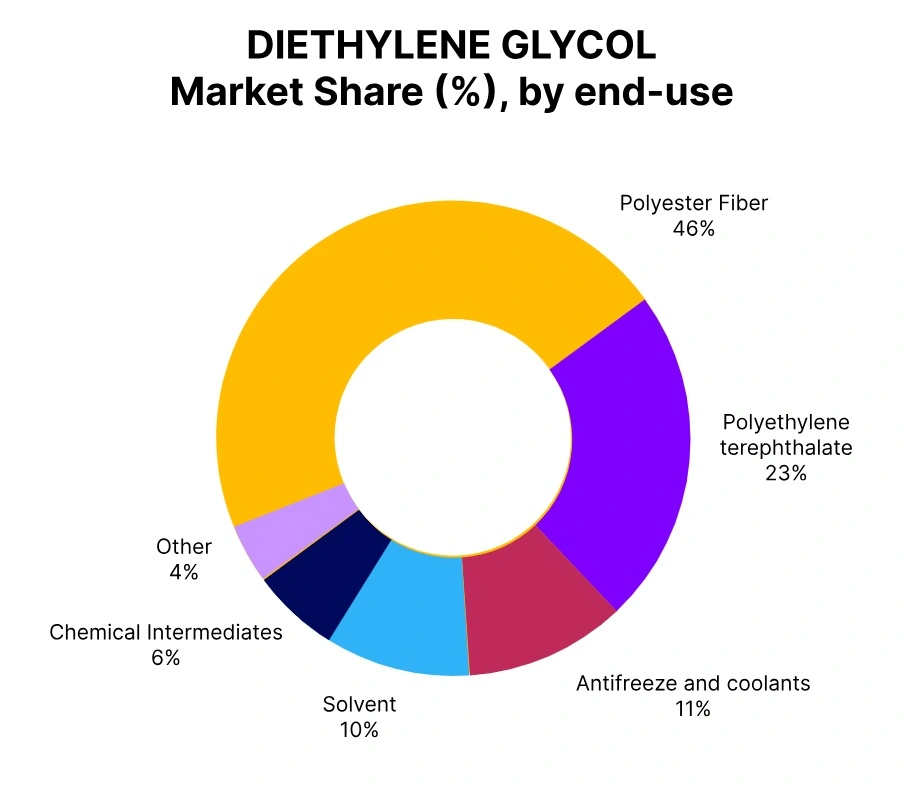
Diethylene Glycol Industrial Applications

diethylene glycol market share end use

Historically, several events have caused significant fluctuations in Diethylene Glycol prices

  • Russia-Ukraine Conflict (2022):  Russia and Ukraine are key players in the chemical industry. Disruptions in production and transport routes due to the conflict have led to shortages in various chemicals, including DEG. The instability in Eastern Europe has contributed to decreased prices for chemicals. As supply tightened and demand remained, prices for DEG and related products surged. The conflict has also affected energy prices, impacting production costs for chemicals. The geopolitical situation has created a volatile market, leading to unpredictable price fluctuations for DEG and other industrial chemicals. Companies have had to seek alternative suppliers or adjust their supply chains, which can also affect pricing and availability.
  • Texas Winter Storm (2021): The severe weather caused widespread power outages and shut down many chemical plants in Texas, a major hub for chemical production. This resulted in decreased production of DEG and other chemicals. The disruption caused by the storm contributed to ongoing volatility in the chemical market, with fluctuating prices in the weeks and months following the event.
  • COVID-19 Pandemic (2020):  With the rise in demand for disinfectants and sanitizers, which often contain DEG or its derivatives, there was a spike in interest in chemicals like DEG, contributing to price fluctuations. Initial supply shortages coupled with demand shifts led to volatile pricing for DEG. Some suppliers raised prices due to the increased costs of production and logistics.
  • Geopolitical Tensions (2018-2019):  The uncertainty surrounding international relations during this period created a volatile market environment, where prices for DEG could swing based on news related to trade policies or sanctions.
  • Shale Gas Boom (2010s): With increased feedstock supply and reduced production costs, prices for DEG and other related chemicals often experienced downward pressure. This made DEG more competitively priced in various applications.
  • Global Financial Crisis (2008-2009): Many chemical manufacturers faced financial challenges and were forced to reduce production or temporarily shut down facilities. This led to supply chain disruptions but also contributed to a temporary oversupply of DEG as inventory levels built up. Prices for DEG experienced volatility during the crisis. Initially, the drop in demand pushed prices down, but as production cuts were implemented, prices began to stabilize.
  • Hurricane Katrina (2005): The crisis created a volatile market environment, with fluctuations in prices due to uncertainties surrounding supply restoration and recovery efforts.
  • Oil Price Shocks (1970s-1980s): The economic turmoil caused by oil price shocks affected demand across various sectors, leading to fluctuations in the overall demand for chemicals, including DEG.

These events underscore the Diethylene Glycol market’s vulnerability to global disruptions and highlight the need for continuous monitoring of supply-demand dynamics.

Why PriceWatch?

PriceWatch is your trusted resource for tracking global diethylene glycol price trends. Our platform delivers real-time data and expert analysis, offering deep insights into the key factors driving price fluctuations in the diethylene glycol market. By monitoring critical events such as geopolitical tensions, supply chain disruptions, and economic shifts, PriceWatch keeps you fully informed of market dynamics.

In addition, PriceWatch provides detailed forecasts and updates on production capacities, enabling you to anticipate market changes and make well-informed decisions. With PriceWatch, you gain a competitive edge in understanding all the elements that influence diethylene glycol prices worldwide. Stay ahead of the curve with PriceWatch’s reliable, accurate, and timely diethylene glycol market data.

Track PriceWatch's diethylene glycol price assessment on a weekly basis since 2015 onwards, along with short-term forecasts, and get access to the detailed report in a downloadable format.

Data Collection and Sources​

  • Real-Time Market Data: PriceWatch aggregates real-time pricing data from a diverse range of sources, including global commodity exchanges, industry reports, and proprietary databases. This ensures that our assessments reflect the most current market conditions. 
  • On-the-Ground Intelligence: Our team gathers insights directly from key market participants, including producers, suppliers, traders, and end-users, across major Diethylene Glycol production hubs. This ground-level intelligence is crucial for understanding localized market dynamics. 
  • Supply Chain Monitoring: We track the entire Diethylene Glycol supply chain, from raw material availability (e.g., Ethylene Oxide) to production and distribution channels. This includes monitoring feedstock prices, production capacities, and transportation logistics. 

Event Tracking and Impact Analysis​

  • Geopolitical Tensions: PriceWatch continuously monitors global geopolitical developments, such as conflicts or trade disputes, which can significantly impact Diethylene Glycol prices. Our analysis includes potential disruptions to supply chains and their immediate and long-term effects on pricing.
  • Natural Disasters and Climate Events: We assess the impact of natural disasters, such as hurricanes or winter storms, on Diethylene Glycol production facilities, particularly in vulnerable regions like the U.S. Gulf Coast. These events are factored into our price forecasts and supply outlooks.
  • Economic Shifts: PriceWatch evaluates macroeconomic trends, including global economic growth, inflation rates, and sector-specific demand (e.g., automotive, packaging), to predict shifts in Diethylene Glycol demand and corresponding price movements.

Production Capacity and Supply Analysis

  • Current Production Monitoring: We maintain a comprehensive database of global Diethylene Glycol production facilities, tracking their operational status, maintenance schedules, and output levels. This allows us to assess current supply availability accurately.
  • Future Capacity Projections: Our research includes detailed forecasts of upcoming Diethylene Glycol production capacities, factoring in new plant constructions, expansions, and technological advancements. This helps in predicting future supply trends and potential price stabilization.

Demand Forecasting

  • Sectoral Demand Analysis: PriceWatch provides in-depth analysis of demand trends across key sectors, including packaging, automotive, and construction. We track year-on-year demand growth and project future consumption patterns based on economic indicators and industry developments.
  • Global Demand Dynamics: Our methodology considers regional demand variations and how they influence global Diethylene Glycol pricing. This includes understanding the impact of shifts in manufacturing bases, trade policies, and environmental regulations.

Pricing Model Development

  • Dynamic Pricing Models: PriceWatch utilizes advanced econometric models to forecast Diethylene Glycol prices, incorporating real-time data, historical trends, and projected market conditions. Our models are continuously refined to enhance accuracy and predictive power.
  • Scenario Analysis: We conduct scenario-based assessments to evaluate potential future market conditions. This includes best-case, worst-case, and most likely scenarios, helping our clients prepare for a range of market outcomes.

Reporting and Client Support

  • Comprehensive Reports: Our clients receive detailed reports that include current price assessments, future price forecasts, and in-depth analysis of market drivers. These reports are designed to be actionable, providing clear insights and recommendations.
  • Ongoing Support: PriceWatch offers continuous updates and personalized support to our clients, ensuring they have the most up-to-date information to make informed decisions. Our experts are available to discuss specific market developments and provide tailored advice.

This research methodology ensures that PriceWatch delivers the most accurate, timely, and actionable Diethylene Glycol pricing assessments, helping our clients stay ahead of market trends and make informed business decisions.

Diethylene Glycol Market Price Trend provided by PriceWatch is a base price and excludes VAT/Taxes, discounts, or offers. The information herein is accurate to the best of our knowledge as of the date indicated and is provided solely for the convenience of our customers as a reference for diethylene glycol. PriceWatch disclaims any warranties or representations regarding the accuracy of results derived from this information. It is the sole responsibility of the user to assess the suitability of the product for their specific application. This document does not constitute an endorsement to use the product in violation of any applicable patent rights.

The price of diethylene glycol (DEG) is influenced by several key factors, including raw material costs, production capacity, and market demand. Fluctuations in the prices of feedstocks, such as ethylene oxide, directly impact DEG pricing. Additionally, supply chain dynamics, geopolitical events, and seasonal demand variations from industries like automotive, textiles, and pharmaceuticals play a significant role in price determination. Understanding these factors is crucial for effective procurement planning.

To manage price fluctuations in diethylene glycol procurement, teams can implement several strategies. Diversifying the supplier base helps mitigate risks associated with reliance on a single source. Establishing long-term contracts with fixed pricing can protect against market volatility. Regularly monitoring market trends and raw material costs will enable procurement professionals to anticipate price changes. Additionally, effective inventory management practices can buffer against sudden price increases.

Current market trends affecting diethylene glycol pricing include increased demand from the automotive and construction sectors, driven by rising production activities. Additionally, sustainability initiatives are prompting shifts towards greener production methods, influencing pricing dynamics. Supply chain challenges, such as logistical disruptions and raw material availability, also contribute to market fluctuations. Staying informed about these trends is essential for procurement heads to make strategic sourcing decisions.