Dimethyl Terephthalate (dmt) Price Trend and Forecast

UNSPC code: 12352108
|
Weekly Update
|
Historical Data Since 2015
|
Forecast for 2026

dimethyl terephthalate (dmt) Price Trends by Country

inIndia
idIndonesia
jpJapan
cnChina
deGermany
usUnited States
krSouth Korea

Global dimethyl terephthalate (dmt) Spot Market Prices, Trend Analysis and Forecast

Price-Watch™ provides price assessments for Dimethyl Terephthalate (DMT) across top trading regions:

Asia-pacific

  • DMT Briquette (Purity: 99.9%) FOB Busan, South Korea
  • DMT Briquette (Purity: 99.9%) CIF Nhava Sheva (South Korea), India
  • DMT Briquette (Purity: 99.9%) Ex-Mumbai, India
  • DMT Briquette (Purity: 99.9%) CIF Jakarta (South Korea), Indonesia
  • DMT Briquette (Purity: 99.9%) CIF Yokohama (South Korea), Japan
  • DMT Briquette (Purity: 99.9%) CIF Shanghai (South Korea), China


North America

  • DMT Briquette (Purity: 99.9%) CIF Houston (Germany), USA


Europe

  • DMT Briquette (Purity: 99.9%) FOB Hamburg, Germany


Note: In assessments structured as CIF [Importing Port] (Exporting Country), the country mentioned in brackets indicates the primary origin of supply (exporting country), while the named port refers to the destination port in the importing country. Other Incoterms (FOB, FD, EXW, etc.) should be interpreted in accordance with standard international trade definitions.

Dimethyl Terephthalate (DMT) Price Trend Q1 2026

The worldwide Dimethyl Terephthalate (DMT) market saw a robust development during Q1 2026, with prices rising by around 3–8%, driven by favorable demand fundamentals and unchanged prices of raw materials. Within the APAC region, specifically South Korea, an increasing trend is observed amid rising demand for the material from polyester and PET applications, along with stable supply fundamentals.

The operating rate of producers remained balanced, ensuring good availability and rising prices. On the other hand, the European market also demonstrated robustness in Q1 2026 against the backdrop of increasing buyer interest and stable inventories, contributing to the upside momentum.

Stable feedstocks, which are linked to crude oil prices, also played a role in rising prices. Overall, the worldwide DMT market showed healthy growth in Q1 2026, driven by robust demand from downstream industries, stable supply fundamentals, and unchanged prices of cost-supporting materials.

South Korea: DMT Export prices FOB Busan, South Korea; Grade – Briquette (Purity: 99.9%)

The DMT price in South Korea during Q1 2026 have shown a robust increase, rising by about 5.3% during the period. The biggest price rise has taken place in the last month of the quarter, that is, March 2026. DMT price trend in South Korea has strengthen considering higher prices of PTA owing to lower production of ethylene by YNCC on account of raw material shortages caused by delayed imports of naphtha.

In March 2026, DMT price in South Korea have shown an increase of roughly 13.6% considering tight supply and high production costs. Lotte Chemical has been running below its normal capacity, resulting in tighter regional supply. Higher production costs in South Korea have resulted from a decline in ethylene supplies by Hanwha and delayed shipments of naphtha via the Strait of Hormuz.

India (Ex-Mumbai): DMT Domestically traded prices Ex-Mumbai; Grade – Briquette (Purity: 99.9%)

DMT prices in India in Q1 2026 have been witnessing a strong upward trend, reflecting an increase of around 7.9% over the quarter. The major price increase is observed in the last month of the quarter, i.e., March, amid ongoing disruptions in the Middle East.

The DMT price trend in India has been strengthening as delayed shipments of Paraxylene from Saudi Arabia have been tightening feedstock availability in the domestic market. In March 2026, DMT prices in India have been increasing by approximately 23.0%, reflecting sharp cost escalation and strong market fundamentals.

Levels have been reaching historically high points as strong domestic demand and limited availability have been supporting higher procurement activity. China suppliers have been increasing export offers, contributing to continued price increases. CIF offers have been remaining delayed due to logistical uncertainties, restricting spot availability.

Indonesia: DMT Import prices CIF Jakarta (South Korea), Indonesia; Grade – Briquette (Purity: 99.9%)

DMT prices in Indonesia (CIF Jakarta from South Korea) in Q1 2026 have been witnessing a firm upward trend, reflecting an increase of around 5.1% over the quarter. The DMT price trend in Indonesia has been strengthening as higher upstream PTA and Paraxylene costs in South Korea have been supporting elevated import offers.

Supply availability has been remaining steady, but tighter regional conditions and reduced operating rates have been limiting excess material, which has been supporting firmer levels. Import dependency has been remaining high, which has been increasing sensitivity to global cost movements.

Freight rates have been increasing amid shipping disruptions, which have been adding further pressure. Buyers have been maintaining steady procurement to meet polyester demand. In March 2026, DMT prices in Indonesia have been increasing by approximately 13.1%, reflecting sustained cost push factors and firm supplier sentiment.

Japan: DMT Import prices CIF Yokohama (South Korea), Japan; Grade – Briquette (Purity: 99.9%)

DMT prices in Japan (CIF Yokohama from South Korea) in Q1 2026 have been witnessing a firm upward trend, reflecting an increase of around 5.2% over the quarter. The DMT price trend in Japan has been strengthening as higher upstream PTA and Paraxylene costs have been supporting elevated import offers.

Supply availability has been remaining balanced, but tighter regional conditions have been limiting excess supply, which has been supporting firmer levels. Import reliance has been remaining significant, which has been increasing exposure to global cost fluctuations.

Freight rates have been increasing, which have been adding upward pressure. Buyers have been maintaining stable procurement to support demand. In March 2026, DMT prices in Japan have been increasing by approximately 13.3%, reflecting continued cost escalation and firm supplier sentiment.

China: DMT Import prices CIF Shanghai (South Korea), China; Grade – Briquette (Purity: 99.9%)

DMT prices in China (CIF Shanghai from South Korea) in Q1 2026 have been witnessing a firm upward trend, reflecting an increase of around 5.2% over the quarter. The DMT price trend in China has been strengthening as higher upstream PTA and Paraxylene costs have been supporting elevated import offers. Supply availability has been remaining sufficient, but regional tightening and firm feedstock costs have been supporting higher levels.

Import volumes have been remaining consistent, while buyers have been maintaining steady procurement. Freight rates have been increasing due to shipping uncertainties, which have been adding upward pressure.

Market sentiment has been remaining firm as cost push factors have been dominating. In March 2026, DMT prices in China have been increasing by approximately 13.4%, reflecting sustained cost escalation and firm supplier sentiment.

Germany: DMT Domestically traded prices FD Hamburg, Germany; Grade – Briquette (Purity: 99.9%)

DMT prices in Germany in Q1 2026 have been witnessing a moderate upward trend, reflecting an increase of around 3.4% over the quarter. The DMT price trend in Germany has been strengthening as global LNG prices have been increasing due to supply constraints and disruptions through the Strait of Hormuz, which have been raising energy costs.

A significant portion of LNG trade has been facing disruptions, which has been adding cost pressure on production. Paraxylene supply has been tightening, which has been increasing PTA production costs and has been supporting higher levels. In March 2026, DMT prices in Germany have been increasing by approximately 9.2%, reflecting continued cost escalation and firm energy-driven conditions.

USA: DMT Import prices CIF Houston (Germany), USA; Grade – Briquette (Purity: 99.9%)

DMT prices in the USA (CIF Houston from Germany) in Q1 2026 have been witnessing a moderate upward trend, reflecting an increase of around 3.3% over the quarter. The DMT price trend in the USA has been strengthening as higher upstream Paraxylene and PTA costs in Europe have been supporting elevated import offers.

Supply availability has been remaining steady, but increased energy costs and tighter feedstock conditions have been supporting firmer levels. Import dependency has been contributing to sensitivity toward global cost movements.

Freight rates have been increasing, which have been adding upward pressure. Buyers have been maintaining cautious procurement. In March 2026, DMT prices in the USA have been increasing by approximately 8.8%, reflecting continued cost support and improved supplier sentiment.


Dimethyl Terephthalate (DMT) Price Trend Analysis: Q4 2025

The worldwide DMT market recorded a slightly negative performance during Q4 2025, as prices decreased by about 1-2% due to balanced fundamentals and moderate demand variability. In the Asia-Pacific region, especially in South Korea, prices eased slightly amid steady demand from the polyester and PET production industries, as ample supply and healthy plant operating rates helped to keep the market well-balanced.

In Europe, especially in Germany, the negative trend persisted slightly due to weak buyer interest, well-balanced stocks, and weak exports, which kept prices under pressure. Manufacturers adjusted their productions to meet end-users’ demand, ensuring no supply pressure but little scope for prices to improve. Prices of raw materials are largely stable.

South Korea: DMT Export prices FOB Busan, South Korea; Grade – Briquette (Purity: 99.9%)

The DMT prices in South Korea during Q4 2025 has shown some signs of moderation, with a fall of about 1.7%. The softness in the DMT prices trend in South Korea is being caused by low demand for products from the polyester and PET resin industries, thus lessening procurement activities. Balance in the supply situation is prevailing due to the stable operating rate that manufacturers are maintaining.

The influence of feedstock prices on DMT prices has been stable to weak. Trading activity has been decreasing due to cautious procurement practices among buyers in line with their needs in consumption. In December 2025, DMT prices in South Korea by about 0.7%.

India (Ex-Mumbai): DMT Domestically traded prices Ex-Mumbai; Grade – Briquette (Purity: 99.9%)

DMT prices in India in Q4 2025 have been witnessing a stable to firm trend, reflecting a marginal increase of around 0.8% over the quarter. The DMT price trend in India has been remaining supported as demand from polyester and PET sectors has been staying consistent, which has been maintaining procurement levels. Domestic supply has been remaining balanced, supported by steady production and regular import availability from regional suppliers.

Feedstock cost influence has been remaining stable, which has been maintaining pricing consistency. Trading activity has been remaining steady, as buyers have been aligning purchases with ongoing consumption needs. In December 2025, DMT prices in India have been increasing by approximately 0.3%, reflecting continued support from stable demand and balanced supply dynamics.

Indonesia: DMT Import prices CIF Jakarta (South Korea), Indonesia; Grade – Briquette (Purity: 99.9%)

DMT prices in Indonesia (CIF Jakarta from South Korea) in Q4 2025 have been experiencing a mild softening trend, reflecting a decrease of around 1.7% over the quarter. The DMT price trend in Indonesia has been remaining soft as demand from polyester and PET manufacturing sectors has been moderating, which has been reducing import procurement. Supply from South Korea has been remaining consistent, which has been ensuring steady availability in the market.

Freight and logistics conditions have been remaining stable, which have been supporting smooth trade flow. Trading activity has been slowing, as buyers have been maintaining cautious purchasing approaches. In December 2025, DMT prices in Indonesia have been decreasing by approximately 0.6%, reflecting continued pressure from balanced supply and moderate demand conditions.

Japan: DMT Import prices CIF Yokohama (South Korea), Japan; Grade – Briquette (Purity: 99.9%)

DMT prices in Indonesia (CIF Jakarta from South Korea) in Q4 2025 have been experiencing a mild softening trend, reflecting a decrease of around 1.7% over the quarter. The DMT price trend in Indonesia has been remaining soft as demand from polyester and PET manufacturing sectors has been moderating, which has been reducing import procurement. Supply from South Korea has been remaining consistent, which has been ensuring steady availability in the market.

Freight and logistics conditions have been remaining stable, which have been supporting smooth trade flow. Trading activity has been slowing, as buyers have been maintaining cautious purchasing approaches. In December 2025, DMT prices in Indonesia have been decreasing by approximately 0.6%, reflecting continued pressure from balanced supply and moderate demand conditions.

China: DMT Import prices CIF Shanghai (South Korea), China; Grade – Briquette (Purity: 99.9%)

DMT prices in China (CIF Shanghai from South Korea) in Q4 2025 have been experiencing a mild softening trend, reflecting a decrease of around 1.7% over the quarter. The DMT price trend in China has been remaining soft as demand from polyester and PET resin sectors has been staying moderate, which has been limiting import procurement activity. Supply from South Korea has been remaining consistent, which has been ensuring sufficient availability in the market.

Feedstock cost influence has been remaining stable, which has been keeping sentiment subdued. Trading activity has been slowing, as buyers have been maintaining cautious purchasing strategies. In December 2025, DMT prices in China have been decreasing by approximately 0.6%, reflecting continued pressure from balanced supply and moderate demand conditions.

Germany: DMT Domestically traded prices FD Hamburg, Germany; Grade – Briquette (Purity: 99.9%)

DMT prices in Germany in Q4 2025 have been demonstrating a slight decline, reflecting a decrease of around 0.6% over the quarter. The DMT price trend in Germany has been remaining slightly weak as demand from polyester and PET resin sectors has been staying subdued, which has been reducing procurement volumes. Domestic production levels have been remaining stable, which have been ensuring adequate supply availability.

Feedstock cost fluctuations have been remaining limited, which has been reducing pricing support. Trading activity has been remaining cautious, as buyers have been aligning purchases with consumption requirements. In December 2025, DMT prices in Germany have been increasing by approximately 0.5%, reflecting slight improvement in sentiment and stable demand conditions.

USA: DMT Import prices CIF Houston (Germany), USA; Grade – Briquette (Purity: 99.9%)

DMT prices in the USA (CIF Houston from Germany) in Q4 2025 have been experiencing a softening trend, reflecting a decrease of around 1.3% over the quarter. The DMT price trend in the USA has been remaining soft as demand from polyester and PET resin producers has been staying moderate, which has been limiting import procurement. Supply from Germany has been remaining steady, which has been ensuring balanced availability.

Feedstock cost influence has been remaining stable, which has been keeping sentiment subdued. Trading activity has been remaining measured, as buyers have been maintaining cautious purchasing strategies. In December 2025, DMT prices in the USA have been increasing by approximately 0.5%, reflecting slight improvement in demand and stable supply conditions.

The global dimethyl terephthalate (DMT) price trend has shown diverging performance in Q3 2025 and has reflected different regional market dynamics and feedstock influenced pricing. In the APAC region, South Korea has reported a 1.5% price increase, albeit supported by steady polyester and PET production related demand.

Steady supply availability and stable crude-derived feedstock prices have been supportive of upward pricing movement. In contrast, the price trend in Europe and particularly in Germany has shown a 0.7% decrease supported by slight buyer interest and balanced inventories between polyester producers.

Weaker export activity and average downstream consumption have caused this marginal decrease. Overall, the global price outlook for dimethyl terephthalate (DMT) has remained balanced through Q3 2025 due to regional price divergences, production economics, feedstock costs, and steady polyester sector activity, with overall price stability being maintained across major markets.

South Korea: Dimethyl Terephthalate (DMT) Export prices FOB Busan, South Korea, Grade Briquette (Purity: 99.9%).

In Q3 2025, Dimethyl Terephthalate (DMT) prices in South Korea have been showing a positive trend, registering a 1.5% increase during the quarter, with prices averaging around USD 1550–1560/MT FOB Busan. The price of DMT in South Korea has been supported by sustained polyester and PET resin demand for dimethyl terephthalate, which is a key intermediate. Strong feedstock costs and balanced supply have aided price strength.

As of September 2025, Dimethyl terephthalate (DMT) prices in South Korea have increased by 0.5% from August, due to continual buying and steady polyester production supporting the firm in dimethyl terephthalate (DMT) markets, Overall, the South Korean dimethyl terephthalate has shown stability and strength through Q3 2025.

India: Dimethyl terephthalate (DMT) Domestically traded prices Ex-Mumbai, Grade Briquette (Purity: 99.9%).

According to PriceWatch, in Q3 2025, Dimethyl Terephthalate (DMT) prices in India, Ex-Mumbai, have been showing a positive trend, rising by around 3.0% during the quarter. The price trend has been supported by steady procurement activity and balanced supply, which have been maintaining market firmness. Feedstock values for methanol and terephthalic intermediates have been remaining stable, contributing to consistent pricing.

Import availability from regional suppliers has been staying regular, supporting smooth supply flow. In September 2025, Dimethyl terephthalate prices in India have been recording a marginal increase from August 2025, as ongoing industrial consumption and continuous buying interest have been sustaining the positive trend. Overall, supply-demand dynamics have been keeping the Indian dimethyl terephthalate market stable and resilient.

Indonesia: Dimethyl terephthalate Import prices CIF Jakarta (South Korea), Indonesia, Grade Briquette (Purity: 99.9%).

In Q3 2025, Dimethyl Terephthalate (DMT) import prices CIF Jakarta (South Korea) in Indonesia have been showing a positive trend, rising by 1.5% during the quarter. The DMT price trend in South Korea has been supported by firm demand from polyester and PET manufacturing sectors. Feedstock values have been staying stable and import availability from South Korea has been remaining consistent, supporting steady procurement across local producers.

Freight rates and port operations have been enabling smooth trade flow throughout the quarter. In September 2025, DMT prices have rose marginally from August 2025, as balanced supply and steady polyester sector demand have been sustaining market stability.

Japan: DMT Import prices CIF Yokohama (South Korea), Japan, Grade Briquette (Purity: 99.9%).

According to PriceWatch, in Q3 2025, Dimethyl Terephthalate (DMT) import prices CIF Yokohama (South Korea) in Japan have been showing a positive trend, registering a 1.5% increase during the quarter. The DMT price trend has been supported by consistent demand from polyester and PET resin sectors, where DMT has been acting as a key raw material. Stable feedstock values and regular import volumes from South Korea have been maintaining price firmness.

In September 2025, DMT prices in Japan have increased by 0.5% from August 2025, as sustained buying interest and stable polyester production have been strengthening the market. Overall, balanced regional supply and industrial activity have been keeping the Japanese DMT market resilient.

China: DMT Import prices CIF Shanghai (South Korea), China, Grade Briquette (Purity: 99.9%).

According to PriceWatch, in Q3 2025, Dimethyl Terephthalate (DMT) import prices CIF Shanghai (South Korea) in China have been showing a positive trend, rising by 1.6% during the quarter. The DMT price trend has been supported by steady demand from polyester and PET resin sectors, where DMT has been serving as a key intermediate material.

Stable feedstock values and consistent import arrivals from South Korea have been maintaining market stability. In September 2025, DMT prices have been rising marginally from August 2025, as balanced supply and sustained polyester sector activity have been supporting a firm market tone throughout Q3 2025.

Germany: DMT Domestically traded prices FD Hamburg, Germany, Grade Briquette (Purity: 99.9%).

In Q3 2025, Dimethyl Terephthalate (DMT) prices in Germany, FD Hamburg, have been following a declining trend, falling by 0.7% during the quarter to USD 1960–1970/MT. The price trend has been reflecting soft demand from polyester and PET resin producers. Slight feedstock fluctuations and moderate production levels have been putting pressure on prices.

Across the European market, demand has been staying subdued, and procurement activity has been remaining cautious. In September 2025, DMT prices in Germany have been showing a marginal change from August 2025, reflecting relative stability despite the quarterly decline. Overall, the European DMT market has been maintaining a measured trend through Q3 2025.

United States: DMT Import prices CIF Houston (Germany), USA, Grade Briquette (Purity: 99.9%).

According to PriceWatch, in Q3 2025, Dimethyl Terephthalate (DMT) import prices CIF Houston (Germany) in the USA have been following a downward trend, declining by 0.7% during the quarter.

Demand from polyester and PET resin producers has remained soft due to moderate downstream production and cautious procurement. Feedstock values have been showing minor fluctuations, while import volumes from Germany and other suppliers have been staying steady, keeping supply balanced.

Buyers have been maintaining selective purchasing to optimize inventories, and overall trade activity has been reflecting measured market conditions. In September 2025, DMT prices in the US have recorded a marginal decline from August 2025, as stable industrial activity and consistent supply have been supporting market balance.

According to PriceWatch, In the South Korean market average pricing for Dimethyl Terephthalate (DMT) Briquettes stood at USD 1533 per metric ton on FOB Busan basis for Q2 2025.” This represents a drop of roughly 4.4% from the previous quarter. Reduced demand from major polyester and PET players resulted in lower offtake and sluggish trading sentiment.

The DMT price trend remained persistently negative in April, May, and June, and the DMT price chart indicated steadfast declines. The availability of stock, coupled with lackluster spot buying, further pushed down offers. Amid weak global market sentiment and scant short-term contracting, traders exercised caution.

Market participants reduced offers to become more competitive on a domestic and international scale. Limited export activity combined with minimal domestic procurement interest resulted in negligible interest from domestic sellers.

The DMT market tone remained bearish for the entire quarter, while the DMT price index suggested ongoing softness. If export demand does not pick up, the market is likely to be under pressure in the run-up to Q3 2025. 

According to PriceWatch, In the Indian market, Dimethyl Terephthalate (DMT) Briquettes 99.9% Purity prices averaged USD 1965 per metric ton on an Ex-Mumbai basis in Q2 2025, a decline of about 4.4% from the previous quarter. Demand from PET and polyester resin manufacturers remained low, and the market was under pressure.

In April, May, and June, the DMT price trend was firmly down, and the DMT price chart was clearly downward sloping. By often changing offers to remain in line with import parity, traders responded to lower buying interest by adjusting offers to stay in line with buying interest. The quantity of transactions in the market was low, as high inventories and weak downstream orders dampened market activity.

However, domestic consumption remained weak, especially from the packaging sector, which continued to operate below capacity, and domestic consumption continued to be soft. Market sentiment was weaker, and most participants focused on short-term fulfilment.

A lower average over the quarter for the DMT price index was the average for the quarter. As early as Q3 2025, sellers will likely follow procurement trends closely and hold stock levels low. 

In Q1 2025, DMT Briquettes prices declined to 1603 USD/MT FOB Busan, a 1.84% drop from Q4 2024. The market showed signs of continued stabilization, with supply remaining abundant and demand growth from end-use industries like textiles, packaging, and resins staying modest.

As global polyester-related activity showed no significant uptick post-holiday season, buyers in South Korea continued adopting a cautious purchasing approach, awaiting clearer signals from global commodity and crude-linked markets. 

In Q1 2025, the Dimethyl Terephthalate (DMT) Briquette 99.9% Purity grade prices decreased to 1714 USD/MT Ex-Mumbai, reflected a 1.56% quarter-on-quarter decline. The market witnessed stable to moderate demand, while supplies from South Korea remained uninterrupted.

Some importers held back on bulk buying, anticipating clearer policy direction post-budget. Despite the small correction, prices largely stayed within a tight band, indicating a relatively stable market environment with no sharp fluctuations. 

Dimethyl Terephthalate (DMT) Price Trend Analysis: Q4 2024

In Q4 2024, DMT Briquettes prices dipped slightly to 1633 USD/MT FOB Busan, marking a 0.49% decline quarter-on-quarter. This downward movement was primarily attributed to softening export demand, particularly from Southeast Asian and Indian markets, where buyers showed greater price sensitivity. The domestic market maintained a steady pace, but the absence of major procurement drives kept prices under mild pressure. 

In Q4 2024, the DMT Briquette 99.9% Purity grade price corrected slightly to 1741 USD/MT Ex-Mumbai, show a 1.62% decline from the previous quarter. This mild pullback came as inventories across Indian ports stabilized, and several end-users opted for a wait-and-watch approach amid expectations of fiscal announcements in the upcoming quarter. Additionally, late-year demand from the polyester segment softened slightly, typical of year-end seasonality. 

By Q3 2024, the South Korean Dimethyl Terephthalate (DMT) Briquettes market entered a phase of mild correction, with prices averaging around 1641 USD/MT FOB Busan (South Korea), reflecting a marginal 0.06% decline from the previous quarter.

The market remained largely stable, supported by steady domestic demand from downstream sectors like polyester resins and PET plastics. Despite a slight dip, ample availability of feedstock and uninterrupted plant operations maintained a balanced supply situation, which kept prices from any sharp downturn. 

In Q3 2024, DMT Briquette 99.9% Purity grade prices continued their upward trajectory, albeit at a slower pace, reached 1770 USD/MT Ex-Mumbai, a 1.95% gain from Q2. The moderation in price rise was attributed to softening international freight costs and a stable feedstock environment. However, the consistent offtake from packaging and textile-grade PET segments provided a cushion against any notable price correction. 

In Q2 2024, the global DMT Briquettes Market experienced a bullish trend. The APAC market saw a significant price increase driven by supply-demand imbalance, rising global freight rates and higher Styrene and Acrylonitrile feedstock costs. Unplanned plant shutdowns exacerbated supply constraints, while robust demand from downstream sectors, particularly the automotive industry, contributed to the bullish trend.  

In Q2 2024, DMT Briquette 99.9% Purity grade prices surged further to 1736 USD/MT Ex-Mumbai, reflected a 6.33% rise quarter-on-quarter. The market saw strong procurement activity from end-use sectors like PET resin manufacturing, where seasonal beverage demand typically picks up. Additionally, steady South Korean export volumes helped ensure a balanced supply, keeping Indian importers actively engaged. 

In Q1 2024, the global DMT Briquettes market experienced a mixed trend, driven by increased feedstock Terephthalic acid and Methanol prices and robust demand from key sectors such as like Polyester production, Textiles, Resins and coatings Automotive applications. The APAC region experienced a decline in trend while north America and European region experienced an increase in trend.

The Lunar New Year festivities further enhanced demand for consumer products, resulting in increased production and higher Terephthalic acid usage. Additionally, supply chain disruptions due to factory closures and rising freight rates, coupled with increased global capacity utilization, added pressure to the market, propelling DMT prices during this period. 

In Q1 2024, the Indian market for DMT Briquette 99.9% Purity grade imported from South Korea began on a positive note, with prices averaging 1633 USD/MT Ex-Mumbai, registering a 4.41% increase from the previous quarter. This uptrend was driven by improved demand from the downstream polyester and resins industries. Increased buying interest amid stable crude oil derivatives pricing contributed to a firm start to the year. 

Technical Specifications of Dimethyl Terephthalate (dmt) Price Trends

Product Description

Dimethyl Terephthalate (DMT) is a key intermediate chemical produced through esterification of terephthalic acid or methanolysis of dimethyl esters. It is valued for its high purity, consistent quality, and suitability for large-scale processing. DMT exhibits excellent thermal stability, chemical resistance, and low volatility, which enable efficient downstream reactions. Its crystallinity and reactivity ensure effective polymerization and high-strength polymer formation. DMT’s adaptability allows use in various formulations and manufacturing methods, while its stability and processability support consistent and reliable material performance.

Identifiers and Classification:

  • CAS No – 120-61-6
  • HS Code – 29173700
  • Molecular Formula – C10H10O4
  • Molecular Weight[g/mol] – 194.19 g/mol


Dimethyl Terephthalate Synonyms:

  • DMT
  • 1,4-Benzenedicarboxylic acid
  • Dimethyl ester
  • Dimethyl 1,4-benzenedicarboxylate


Dimethyl Terephthalate (DMT) Grades Specific Price Assessment:

  • Briquette (Purity: 99.9%)


Dimethyl Terephthalate (DMT) Global Trade and Shipment Terms

  • Quotation Terms (Product & Country Specific): 15-20 MT, 5-10MT
  • Packaging Type (Product & Country Specific): 1000 Kg Bag


Incoterms Referenced in DMT Price Reporting

Shipping Term  Location  Definition 
FOB Busan  Busan, South Korea  DMT Export price from South Korea 
FOB Hamburg  Hamburg, Germany  DMT Export price from Germany 
CIF Yokohama (South Korea)  Yokohama, Japan  DMT import price in Japan from South Korea 
CIF Houston (Germany)  Houston, USA  DMT import price in USA from Germany 
CIF Nhava Sheva (South Korea)  Nhava Sheva, India  DMT import price in India from South Korea 
CIF Jakarta (South Korea)  Jakarta, Indonesia  DMT import price in Indonesia from South Korea 
CIF Shanghai (South Korea)  Shanghai, China  DMT import price in Thailand from South Korea 
Ex-Mumbai   Mumbai, India  Domestically Traded DMT price in Mumbai 

*Quotation Terms refers to the quantity range specified for the DMT being quoted or offered in a commercial transaction.

**Packaging Type refers to standard packaging size commonly used for DMT packing, ease of handling, transportation, and storage in industrial and commercial applications.


Key DMT Manufacturers

Manufacturer 
Eastman Chemical Company 
SK Chemicals / SK Petrochemical 
Sarna Chemicals Pvt. Ltd. 
Oxxynova GmbH 

Dimethyl Terephthalate (dmt) Industrial Applications

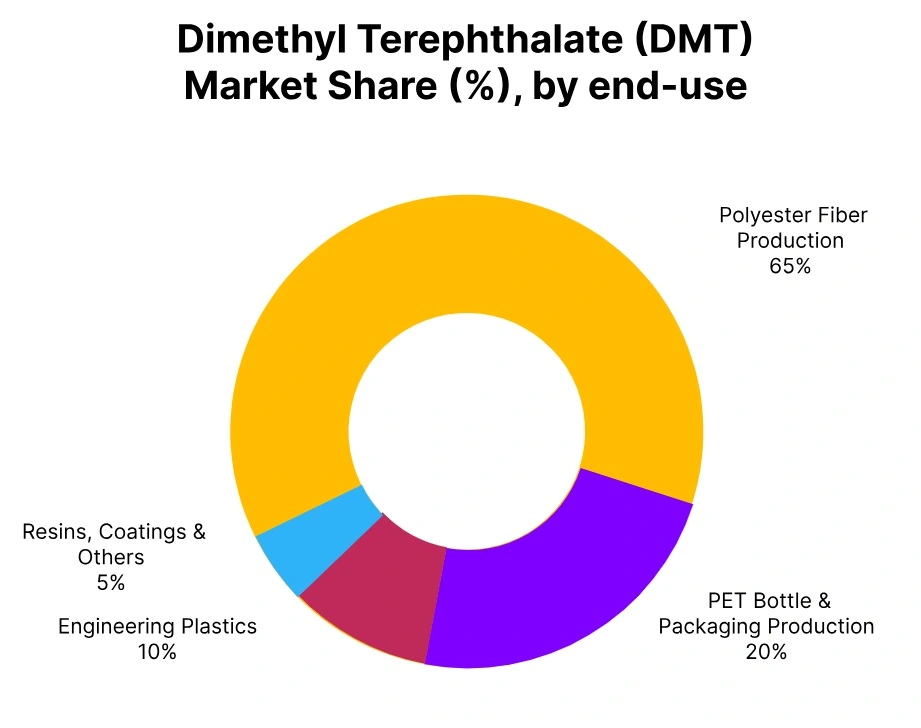
dimethyl terephthalate market share end use

Historically, several events have caused significant fluctuations in Dimethyl Terephthalate (dmt) prices

  • Russia-Ukraine Conflict (2022-Present): The conflict disrupted energy supplies, especially natural gas and oil, which are crucial for the petrochemical industry. Europe, a major consumer of Russian energy, faced significant supply issues. The conflict impacted the availability and cost of energy and raw materials like Terephthalic acid and Methanol which is derived from petrochemical processes. This led to increased production costs and supply disruptions in European DMT markets. 
  • COVID-19 Pandemic (2020-2022): The pandemic led to significant disruptions in global supply chains, causing widespread manufacturing shutdowns and labour shortages. Transportation logistics were severely affected, which resulted in production halts in the DMT industry. This disruption, combined with reduced demand from key sectors like Polyester production, Textiles, Resins and coatings Automotive applications, contributed to fluctuations in DMT prices during this period. 
  • U.S.-China Trade War (2018-2019): Tariffs on chemicals, including DMT disrupted global trade flows, leading to price volatility due to supply chain uncertainties, especially between the U.S. and China. 

Why Price Watch™?

Price Watch™ is your trusted resource for tracking global dimethyl terephthalate (dmt) price trends. Our platform delivers real-time data and expert analysis, offering deep insights into the key factors driving price fluctuations in the dimethyl terephthalate (dmt) market. By monitoring critical events such as geopolitical tensions, supply chain disruptions, and economic shifts, Price Watch™ keeps you fully informed of market dynamics.

In addition, Price Watch™ provides detailed forecasts and updates on production capacities, enabling you to anticipate market changes and make well-informed decisions. With Price Watch™, you gain a competitive edge in understanding all the elements that influence dimethyl terephthalate (dmt) prices worldwide. Stay ahead of the curve with Price Watch’s™ reliable, accurate, and timely dimethyl terephthalate (dmt) market data.

Track Price Watch's™ dimethyl terephthalate (dmt) price assessment on a weekly basis since 2015 onwards, along with short-term forecasts, and get access to the detailed report in a downloadable format.

Dimethyl Terephthalate (dmt) Market Price Trend published by 𝐏𝐫𝐢𝐜𝐞 𝐖𝐚𝐭𝐜𝐡™ reflect prevailing spot market conditions, derived from independent research, verified trade inputs, and proprietary market intelligence as of the publication date. Prices are published on the specified Incoterm and represent indicative base market levels, exclusive of applicable taxes, VAT, duties, tariffs, and other statutory charges. Actual transaction values may vary depending on volume, credit terms, contractual structure, and other negotiated conditions. Market prices are inherently subject to volatility, liquidity dynamics, regulatory changes, and evolving trade activity. The information provided is for reference and benchmarking purposes only and does not constitute an offer, recommendation, or guarantee of transactional outcomes. Users should exercise independent commercial judgment and assess their specific contractual, regulatory, tax, and application requirements before making business decisions. 𝐏𝐫𝐢𝐜𝐞 𝐖𝐚𝐭𝐜𝐡™ assumes no liability for decisions taken based on this information.

The pricing of DMT is influenced by several key factors, including raw material costs (such as para-xylene and methanol), production capacity, supply and demand dynamics, global economic conditions, and fluctuations in feedstock prices. Additionally, transportation costs and regional market conditions can significantly impact pricing.

Fluctuations in the prices of raw materials, particularly para-xylene and methanol, have a direct impact on DMT costs. When raw material prices rise, manufacturers often pass these costs onto consumers, leading to higher DMT prices. Conversely, if raw material prices decrease, DMT prices may also decline, making it crucial for procurement heads to monitor these trends closely.

Long-term price trends for DMT are typically influenced by market demand, production capacity expansions, and geopolitical factors. To effectively plan your procurement strategy, consider establishing flexible contracts, diversifying suppliers, and keeping an eye on market forecasts. Regularly reviewing market intelligence reports can help anticipate price changes and secure favorable purchasing conditions.

DMT (Dimethyl Terephthalate) is a key polyester intermediate used in the production of polyester fibres, films, and resins. Its price directly impacted costs across textile, packaging, and industrial sectors. Price-Watch™ tracked DMT prices to help businesses stay informed about market movements and cost trends.

DMT prices varied by region, purity, and contract terms. Prices are typically quoted per metric ton and fluctuated based on supply-demand balance and upstream paraxylene costs. Price-Watch™ provided up-to-date price assessments across key global markets.

DMT prices influenced by paraxylene feedstock trends, operating rates, demand from polyester sectors, and global trade flows. Inventory levels, plant shutdowns, and seasonal demand shifts also impacted pricing. Recent trends indicated mixed movements depending on polyester demand recovery and feedstock volatility.

Major consumers included polyester fiber manufacturers, PET resin producers, film manufacturers, and textile companies. Demand from apparel, packaging, and industrial polyester applications accounted for a significant share. Price-Watch™ tracked consumption trends across these sectors.

DMT is produced in petrochemical plants through the esterification of terephthalic acid or oxidation of paraxylene, followed by purification processes. It is supplied in solid or molten form for downstream polyester production.

China remained a major exporter, followed by producers in South Korea, Japan, and parts of Europe. Export volumes varied based on domestic demand, operating rates, and pricing competitiveness. Price-Watch™ monitored global trade flows and supply availability.

Overall supply remained balanced, though temporary tightness occurred due to maintenance shutdowns or fluctuations in polyester sector demand. Price-Watch™ tracked supply-demand balances to highlight market conditions.

DMT also available in fiber grade and polymer grade. Prices differed based on purity levels and suitability for specific polyester applications. Price-Watch™ provided grade-wise price assessments for better clarity.

When demand increased sharply, particularly from polyester fiber and packaging sectors, prices increased, inventories tightened, and spot availability reduced. Buyers experienced longer lead times. Price-Watch™ captured these shifts in real time.

Paraxylene acted as a primary feedstock. Any increase in paraxylene prices raised DMT production costs, which producers passed on to buyers. Price-Watch™ analyzed paraxylene–DMT price correlations.

Regional prices varied due to feedstock availability, production capacity, energy costs, import-export dynamics, and local polyester demand. Price-Watch™ tracked regional pricing differences across markets.

DMT price outlook depended on paraxylene trends, polyester demand, capacity expansions, and global economic conditions. Price-Watch™ publishes regular forecasts projecting price direction over the next 12 months.

Yes. Reliable forecasts help buyers plan procurement, manage inventory, negotiate contracts, and control packaging costs. Price-Watch™ forecasts support smarter purchasing and budgeting decisions.

Trade policy changes, shipping disruptions, and energy cost fluctuations impacted production and supply chains, which led to price volatility. Price-Watch™ provided timely updates on such developments.

Price-Watch™ gathered data from producers, traders, and buyers to publish transparent DMT price assessments, market insights, and forecasts, helping stakeholders stay ahead of market trends.