Dimethylformamide (dmf) Price Trend and Forecast

UNSPC code: 12352111
|
Weekly Update
|
Historical Data Since 2015
|
Forecast for 2026

dimethylformamide (dmf) Price Trends by Country

saSaudi Arabia
cnChina
inIndia
vnVietnam
brBrazil
arArgentina

Global dimethylformamide (dmf) Spot Market Prices, Trend Analysis and Forecast

Price-Watch™ provides real-time price assessments and price forecasts for Dimethylformamide (DMF) across top trading regions:

Dimethylformamide (DMF) Regional Coverage   Dimethylformamide (DMF) Grade and Country Coverage   Dimethylformamide (DMF) Pricing Data Coverage Explanation  
Asia-Pacific Dimethylformamide (DMF) Pricing Analysis  


Dimethylformamide (DMF) Industrial Grade (99.9%) FOB Prices at Shanghai, China  Weekly Price Update on Dimethylformamide (DMF) Real-Time Export Prices from Shanghai Port, China to Global Markets  
Dimethylformamide (DMF) Industrial Grade (99.9%) CIF Prices at Haiphong Port, Vietnam. Importing from China  Weekly Price Update on Dimethylformamide (DMF) Real-Time Import Prices at Haiphong Port, Vietnam, from China 
Dimethylformamide (DMF) Industrial Grade (99.9%) CIF Prices at Nhava Sheva Port, West India. Importing from Saudi Arabia  Weekly Price Update on Dimethylformamide (DMF) Real-Time Import Prices at Nhava Sheva Port, West India, from Saudi Arabia 
Dimethylformamide (DMF) Industrial Grade (99.9%) Ex-Mumbai, India  Weekly Price Update on Dimethylformamide (DMF) Real-Time Domestic Prices of Ex-Mumbai, India 
Europe Dimethylformamide (DMF) Pricing Analysis  Dimethylformamide (DMF) Industrial Grade (99.9%) CIF Prices at Santos Port, Brazil. Importing from China  Weekly Price Update on Dimethylformamide (DMF) Real-Time Import Prices at Santos Port, Brazil, from China 
Middle East Dimethylformamide (DMF) Pricing Analysis  Dimethylformamide (DMF) Industrial Grade (99.9%) FOB Prices at Jeddah Port, Saudi Arabia  Weekly Price Update on Dimethylformamide (DMF) Real-Time Export Prices from Jeddah Port, Saudi Arabia to Global Markets 
South America Dimethylformamide (DMF) Pricing Analysis  Dimethylformamide (DMF) Industrial Grade (99.9%) CIF Prices at Buenos Aires, Argentina. Importing from China  Weekly Price Update on Dimethylformamide (DMF) Real-Time Import Prices at Buenos Aires, Argentina, from China 

Dimethylformamide Price Trend Q1 2026

The price of Dimethylformamide, as of the first quarter of 2026, saw upward movement in all major world regions due mainly to an increase in demand and a resulting reduction in supply. The most recent pricing increase occurred around the month of March which has been when most of the increase had taken place on a month-over-month basis from February to March.

A significant share of the increase in price occurred during this month as there have been many incidents of geopolitical unrest (such as the conflict in between Iran and Israel) that caused significant interruptions to the supply of raw materials used to produce Dimethylformamide; therefore resulting in increased volatility of the world’s crude oil prices.

Increased world energy costs fuelled increases in feedstock prices, as well as continued instances of logistical disruptions which put additional strain on supply chains. These trends experienced in March demonstrate how vulnerable the Dimethylformamide industry has been from outside forces due to geopolitical risks and global fluctuations of the cost of energy.

All of these factors contributed to an ongoing tightening of supply and therefore the large price increases observed at that time due to the industry’s exposure to the greater geopolitical environment and its potential effects on the pricing of commodities.

China: Dimethylformamide Export prices FOB Shanghai, China; Grade- Industrial (99.9%)

According to Price-Watch™, The Dimethylformamide price in China saw a strong jump in the first quarter of 2026, climbing 8% compared to the end of 2025. This shift is mainly a result of supplies tightening up just as demand from downstream industries finally started to find its footing again. While the market has been flat earlier on, the momentum really picked up as the quarter progressed.

The Dimethylformamide price trend in China took a sharper turn in March, with prices skyrocketing 11% compared to February. A huge part of this surge is driven by the messy geopolitical situation between Iran and Israel. The tension doesn’t just rattle nerves it directly messed with supply chains and sent crude oil prices on a wild ride.

In China, Dimethylformamide prices in March 2026 reflected a market struggling with higher costs for raw materials and major logistical headaches. Because shipping routes became so unpredictable and expensive, getting essential feedstocks where they needed to go is a constant battle. These recent movements show just how the DMF market hangs on global politics and energy prices, making it vital for anyone in the industry to keep a very close eye on these external variables in the months ahead.

Saudi Arabia: Dimethylformamide Export prices FOB Jeddah, Saudi Arabia; Grade- Industrial (99.9%)

In the first quarter of 2026, the Dimethylformamide price in Saudi Arabia took a massive jump, climbing 20% compared to the final months of 2025. This surge is sparked by a major uptick in buying from downstream industries right when supply started to dry up. While the market is already feeling the heat, the Dimethylformamide price trend in Saudi Arabia reached a boiling point in March, with prices skyrocketing by 58% compared to February levels.

Most of this chaos is pinned on the heating geopolitical tensions between Iran and Israel, which sent shockwaves through the region. This conflict doesn’t just mess with trade; it sent crude oil prices on a wild ride and made it incredibly difficult to source raw materials.

In Saudi Arabia, Dimethylformamide prices in March 2026 reflected the reality of soaring feedstock costs and logistical nightmares that made supply shortages unavoidable. Ultimately, the market’s movement shows just how quickly global politics and oil fluctuations can flip things upside down, proving that external variables are currently the main drivers of local pricing.

Brazil: Dimethylformamide Import prices CIF Santos, Brazil; Grade- Industrial (99.9%)

The Dimethylformamide price trend in Brazil headed upward in the first quarter of 2026, marking a 4% increase over the previous quarter. This shift is largely driven by a steady recovery in purchasing activity across the textile and pharmaceutical sectors alongside a noticeably tighter supply of available material.

While the market remained relatively stable at the start of the year, the Dimethylformamide price in Brazil took a sharper turn in March, skyrocketing by 15% compared to February levels. This sudden price surge is primarily triggered by escalating geopolitical tensions between Iran and Israel, which disrupted global trade routes and caused significant volatility in crude oil prices.

Higher energy costs further compounded the issue, driving up the expense of essential feedstocks and creating logistical hurdles that left the market facing supply shortages. Ultimately, the Dimethylformamide price trend in Brazil in March 2026 highlights how deeply international stability and energy fluctuations influence local markets. In Brazil, Dimethylformamide prices in March 2026 serve as a clear indicator that monitoring global political events is essential for anticipating future market movements.

Argentina: Dimethylformamide Import prices CIF Buenos Aires, Argentina; Grade- Industrial (99.9%)

In Q1 2026, Dimethylformamide price trend in Argentina increased by 5.00% compared to last quarter, driven by a slight recovery in demand and tightening supply conditions. Dimethylformamide price in Argentina surged by 14.00% in March compared to February, influenced by geopolitical tensions between Iran and Israel, which disrupted raw material supplies and caused fluctuations in crude oil prices.

These geopolitical factors, combined with rising energy costs, increased feedstock prices and strained logistics, resulting in a tighter supply. Dimethylformamide price trend in Argentina in March 2026 highlights the market’s sensitivity to geopolitical risks and crude oil price volatility, emphasizing the need to monitor global developments for price predictions.

Vietnam: Dimethylformamide Import prices CIF Haiphong, Vietnam; Grade- Industrial (99.9%)

The Dimethylformamide price trend in Vietnam took a noticeable turn upward in the first quarter of 2026, climbing 8% as demand across the region began to recover and supplies started to dry up. This shift is especially felt by industries like electronics and textiles, which are major hubs in Vietnam and saw a sudden push for more material.

By March, the market hit a more volatile patch. The Dimethylformamide price in Vietnam jumped another 10% compared to February, a surge largely triggered by the escalating conflict between Iran and Israel. These geopolitical tensions don’t just rattle the markets; they caused the closure of the Strait of Hormuz on March 4, and threw global shipping routes into chaos.

In Vietnam, Dimethylformamide prices in March 2026 reflected a reality where raw material costs are skyrocketing and logistics are completely strained. With energy prices spiking and trade routes becoming unpredictable, manufacturers faced a significant squeeze on supply.

Ultimately, this period highlights just how Vietnam’s chemical market is at the mercy of global politics and oil fluctuations, proving why it is so critical to track these external variables to predict where prices might go next.

India: Dimethylformamide Import prices CIF Nhava Sheva, India; Grade- Industrial (99.5%)

In Q1 2026, Dimethylformamide price trend in India surged by 27.00% compared to Q4 2025, driven by a sharp recovery in demand and tighter supply conditions. Dimethylformamide price in India skyrocketed by 72.00% in March as compared to last month, largely influenced by the geopolitical tensions between Iran and Israel, which disrupted raw material supplies and caused fluctuations in crude oil prices.

These factors raised feedstock costs and strained logistics, resulting in a significant tightening of supply. Dimethylformamide price trend in India in March 2026 underscores the market’s sensitivity to geopolitical tensions and crude oil price volatility, showing how quickly external factors can influence prices.

Dimethylformamide (DMF) Price Trend Analysis: Q4 2025

In Q4 2025, Dimethylformamide prices experienced a mix of slight declines and stable trends across various markets. Overall, the price trend is influenced by weaker demand and stable supply conditions, with most regions seeing minimal price fluctuations. December saw some price upticks due to early restocking activities ahead of the holiday season, though demand remained subdued. The market showed signs of balancing out, but caution prevailed, particularly as many industries slowed their procurement in anticipation of year-end holidays. Despite some regional variations, the general trend reflected a period of cautious inventory management and stable supply chains, with minor shifts due to seasonality and global economic uncertainties. Prices were generally stable, but the market remained sensitive to demand fluctuations and global economic factors.

China: Dimethylformamide Export prices FOB Shanghai, China; Grade- Industrial (99.9%)

In Q4 2025, Dimethylformamide price trend in China decreased by 2.00%, reflecting a stable supply situation and subdued demand from key sectors compared to previous quarter. Dimethylformamide price in China showed slight fluctuations throughout the quarter, but demand remained weak due to cautious purchasing in industries such as textiles and pharmaceuticals. Dimethylformamide price trend in China in December 2025 increased by 2.00% compared to last November month, supported by early restocking activities before the Lunar New Year, despite a general downturn in demand. The market showed signs of stabilizing, though supply and demand imbalances persisted, indicating that prices remained vulnerable to shifts in consumer behaviour and inventory management.

Saudi Arabia: Dimethylformamide Export prices FOB Jeddah, Saudi Arabia; Grade- Industrial (99.9%)

The Dimethylformamide price trend in Saudi Arabia slipped by 2% during the final quarter of 2025, mostly because buying interest from downstream industries cooled off while supply stayed steady. Throughout those months, the Dimethylformamide price in Saudi Arabia barely budged, as local production kept pace even while major buyers started to pull back their orders. By December, the Dimethylformamide price trend in Saudi Arabia dipped another 1%, mainly because companies stopped restocking and cut down on procurement right before the year-end holidays. In Saudi Arabia, Dimethylformamide prices in December 2025 reflected a market that is mostly balanced but still felt the weight of regional economic uncertainty. Ultimately, the slow finish to the year shows how local prices depend on industrial momentum and the cautious habits of big buyers during the holiday season.

Brazil: Dimethylformamide Import prices CIF Santos, Brazil; Grade- Industrial (99.9%)

In Q4 2025, the Dimethylformamide price trend in Brazil shows a decline of 13.00% compared to the previous quarter, influenced by softer demand alongside stable supply conditions. The Dimethylformamide price in Brazil reflects this downward movement, as key consuming industries maintain reduced purchasing activity. In Brazil, Dimethylformamide prices in December 2025 register a further decrease of 3.00% from the prior month, largely due to lower procurement levels, with companies continuing to delay purchases ahead of year-end holidays. The overall market sentiment remains cautious, shaped by seasonal slowdowns and persistent global economic uncertainty.

Argentina: Dimethylformamide Import prices CIF Buenos Aires, Argentina; Grade- Industrial (99.9%)

In Q4 2025, the Dimethylformamide price trend in Argentina shows a 13.00% decrease compared to the previous quarter, as demand stays weak while supply conditions remain stable. The Dimethylformamide price in Argentina continues to decline, reflecting slower purchasing activity under a cautious market outlook. In Argentina, Dimethylformamide prices in December 2025 record a further 3.00% drop from November, driven by limited restocking ahead of the year-end period and reduced consumption across key industries. Despite steady supply levels, demand remains subdued, which continues to place downward pressure on prices.

Vietnam: Dimethylformamide Import prices CIF Haiphong, Vietnam; Grade- Industrial (99.9%)

In Q4 2025, Dimethylformamide price trend in Vietnam decreased by 2.00% compared to last quarter, due to weaker demand and relatively stable supply conditions. Dimethylformamide price in Vietnam saw minor fluctuations, as purchasing activity remained cautious, especially in industries such as textiles and automotive. Dimethylformamide price trend in Vietnam in December increased by 1.00% compared to November, driven by early restocking efforts before the holiday season, despite overall subdued demand. The slight uptick in December 2025 was a result of strategic inventory management ahead of the New Year.

India: Dimethylformamide Import prices Ex-Mumbai, India; Grade- Industrial (99.5%)

In Q4 2025, Dimethylformamide price trend in India (Ex-Mumbai) decreased by 2.00% compared to last quarter, driven by a combination of stable supply conditions and weaker demand from key industries. Dimethylformamide price in India showed limited movement during the quarter, as the market remained balanced with steady supply from Saudi Arabia. The lower demand from sectors like textiles and pharmaceuticals kept prices in check. Dimethylformamide price trend in India in December 2025 increased slightly by 1.00% compared to November, reflecting some early restocking activity as the year-end approached. However, despite this minor uptick, overall demand remained subdued as companies took a cautious approach to procurement due to global uncertainties. As the market adjusted to the year-end slowdowns, the price remained relatively stable, signaling that no major disruptions have been present in the supply chain.

Dimethylformamide (DMF) prices across major markets had mixed price directions Q3 2025. In China, prices showed a slight decline of 0.34%, attributed to lower demand from textiles and pharmaceuticals, along with oversupply. Similarly, DMF prices fell by 7.57% in Saudi Arabia, with lower demand and production plant closures leading this decline.

In contrast, significant increases in price were also recorded in both Brazil and Argentina, at 15.51% and 15.02%, respectively, driven by demand recovery in textiles, coatings, and pharmaceuticals.

Vietnam has been the only market with a slight decline of around 0.22%, with price remaining steady despite some demand issues in electronics and textiles. The outlook remains uncertain based on demand and supply chain recovery.

Saudi Arabia: Dimethylformamide Export prices FOB Jeddah, Saudi Arabia, Grade- (99.98%) Industrial Grade.

According to PriceWatch, In Q3 2025, Dimethylformamide (DMF) prices in Saudi Arabia experienced a sharp decline of 7.57%, following a moderate increase of 2.18% in Q2. The Dimethylformamide (DMF) price trend in Saudi Arabia was heavily influenced by a significant reduction in demand from domestic and international markets. This decline was driven by lower production in key sectors, including textiles and coatings, coupled with oversupply conditions.

A scheduled shutdown at a major production plant further disrupted the supply chain, which contributed to price instability. Dimethylformamide (DMF) prices in September 2025 were much lower than in Q2. The outlook for the upcoming quarter depends on the recovery of industrial demand and the resolution of supply disruptions.

Brazil: Dimethylformamide Import prices CIF Santos, Brazil, Grade- (99.9% min) Industrial Grade.

In Q3 2025, Dimethylformamide (DMF) prices in Brazil increased by 15.51%, following a sharp decline of 9.91% in Q2. The Dimethylformamide (DMF) price trend in Brazil was influenced by a rebound in demand from industries such as textiles and coatings, which experienced improved production schedules. This was partly due to stabilization in supply chains, as logistical disruptions were alleviated.

Furthermore, the Brazilian Real’s fluctuation against the US Dollar helped reduce import costs, leading to price adjustments. Dimethylformamide (DMF) prices in September 2025 were notably higher compared to Q2. The market is expected to maintain this upward trajectory as demand continues to recover in key sectors.

Argentina: Dimethylformamide Import prices CIF Buenos Aires, Argentina, Grade- (99.9% min) Industrial Grade.

In Q3 2025, Dimethylformamide (DMF) prices in Argentina saw an increase of 15.02%, following a decrease of 9.31% in Q2. The DMF price trend in Argentina was driven by a recovery in demand from the pharmaceutical and agricultural sectors, which contributed to increased industrial activity. Importantly, the weakening of the Argentine Peso led to higher import costs, further influencing the price increase.

Despite ongoing global supply chain challenges, the demand-side recovery helped stabilize prices. Dimethylformamide (DMF) prices in September 2025 were higher than in the previous quarter. The outlook for Q4 2025 remains positive, assuming continued recovery in the domestic industrial sectors.

China: Dimethylformamide Export prices FOB Shanghai, China, Grade- (99.9% min) Industrial Grade.

During the third quarter of 2025, the price of Dimethylformamide (DMF) in China saw a slight decrease of 0.34% following a modest increase of 0.77% in the second quarter. The decline in DMF price trend in China has mainly been attributed to diminished demand from key end-use sectors such as textiles and pharmaceuticals, which experienced production slowdowns.

Although production levels remained stable, domestic oversupply, and increasing competitive pressure from other exporters weighed on prices. Further implications for the price decline have been receding logistical complexities and rising raw material prices.

In China, the Dimethylformamide (DMF) prices in September 2025 have been lower compared to the previous quarter. The market sentiment remains cautious with good prospects for further price volatility depending on global demand, and supply chain conditions.

Vietnam: Dimethylformamide Import prices CIF Haiphong, Vietnam, Grade- (99.9% min) Industrial Grade.

In the third quarter of 2025, Dimethylformamide (DMF) prices in Vietnam experienced a slight decline of 0.22%, following a more substantial 1.22% decline in the second quarter. The price trend of DMF prices in Vietnam continued to show stability, with little variation beyond modest demand-side concerns.

The price decrease has primarily been a result of declining domestic demand due to slower production in the electronics and textile sectors, while the exchange rate’s impact on imports from China kept any major price change at bay.

In Vietnam, Dimethylformamide (DMF) prices in September 2025 have been marginally lower than that of the second quarter grade. The market is expected to remain steady at the current pricing levels with downward pressure unless demand from key sectors increases in the next quarter.

India: Dimethylformamide Import prices CIF Nhava Sheva, India, Grade- (99.98%) Industrial Grade.

In Q3 2025, prices for Dimethylformamide (DMF) in India fell significantly, by 6.26% in India and 7.33% in Ex-Mumbai, after moderate increases in Q2. Attributed to weaker demand in the textile, pharmaceutical, and chemical sectors, all of which have been running gradually slower production cycles and shorter operational runs. Additionally, the Indian Rupee continued to weaken, driving up import costs.

Moreover, logistical issues, higher feedstock costs, and high inventories added to price pressures on DMF. In September 2025, DMF prices in India have declined on comparison to prices recorded during Q2. The outlook for Q4 2025 is expected to be cautious, as pricing adjustments may be made depending on demand recovery in the domestic market.

According to PriceWatch, the prices of Dimethylformamide (DMF) showed mixed trends in Q2 2025. China’s prices rose to 670 USD per metric ton, a 0.77% increase from Q1 2025. This rise is due to a slight rebound in demand from Argentina, Vietnam, and Brazil, with stable feedstock costs. The price trend reflects moderate recovery, supported by steady consumption in the textile and chemical industries.

The price trend shows a slight strengthening in China’s market share, although demand growth remains slow. In contrast, Saudi Arabia’s prices increased to 692 USD per metric ton, a 2.18% rise from Q1 2025. The price trend in Saudi Arabia reflects a slight recovery in regional demand, particularly for industrial chemicals and solvents.

Feedstock cost increases and upstream fluctuations exert some pressure on production costs. The price trend shows Saudi Arabia’s competitiveness despite slow price recovery. Both markets show gradual improvement heading into Q3 2025.

According to the PriceWatch, the price of Dimethylformamide (DMF) imported to India from China increased to 755 USD per metric ton in Q2 2025, reflecting a 1.16% rise compared to Q1 2025. This increase is attributed to a mild recovery in downstream demand, particularly in the textile and chemical industries, which are showing signs of stabilization after seasonal slowdowns.

The price trend in India also reflects a slight rebound in feedstock costs, which contributed to the overall increase. However, domestic market conditions in Mumbai were slightly more subdued. The price in Mumbai decreased to 807 USD per metric ton, showing a 6.48% drop compared to Q1 2025.

This decline can be attributed to a reduction in demand from the local industrial sector, particularly the solvent and coatings industries, which experienced slower activity due to seasonal factors. Despite this, the overall market in India remained steady, with imports from China continuing to meet the country’s demand for DMF, even though local market conditions in Mumbai were weaker.

In Q1 2025, Dimethylformamide (DMF) prices experienced a slight reduction across major regions. In China, prices decreased by just 0.24%, reaching $665/MT. This marginal decline was primarily due to stable production levels and moderate demand, particularly from industries like paints and coatings, which had a steady but subdued consumption of DMF.

In Saudi Arabia, the price drop was more significant, falling by 6.97% to $677/MT. This sharp decline was attributed to slower economic growth, reduced demand from both domestic and international markets, and an oversupply in the local market.

The price drops in both regions had a ripple effect on countries such as Vietnam, Brazil, Argentina, and India, where demand from key sectors like textiles and pharmaceuticals remained weak, further driving down prices.

While lower prices provided some relief in procurement costs, the continued global economic uncertainty and fragile demand put pressure on manufacturers’ profit margins, which could hinder growth in these industries moving forward. 

In Q1 2025, Dimethylformamide (DMF) prices in India experienced a slight decline, primarily driven by ongoing global and domestic market challenges. CIF Nhava Sheva (Saudi Arabia) prices fell by 6.66%, reaching $746/MT. This drop can be attributed to the continued weakness in global demand and the uncertainty created by economic slowdowns across key markets.

Exporters faced challenges as global markets remained unstable, particularly in the wake of geopolitical tensions and shifts in international trade policies, including tariffs. Meanwhile, Ex-Mumbai prices also decreased by 1.77%, settling at $862/MT.

This decline was driven by reduced demand from critical industries such as textiles and pharmaceuticals, which faced ongoing pressures like slower production rates and cost-cutting measures.

Additionally, high inventory levels contributed to a lack of urgency in purchasing, further suppressing the market. Freight rates remained stable, and supply chain disruptions were minimal, contributing to the overall sense of market stagnation. 

Dimethylformamide (DMF) Price Trend Analysis: Q4 2024

In Q4 2024, Dimethylformamide prices in both China and Saudi Arabia saw a decline. In China, prices fell by 1.93%, settling at $667/MT, continuing the trend of market softness. The drop in prices was a result of steady but insufficient demand coupled with stable production. This price reduction provided relief to manufacturers in industries like textiles and coatings, allowing them to benefit from lower procurement costs.

In Saudi Arabia, prices dropped by 2.98%, reaching $728/MT. The decline was mainly driven by stable demand in key sectors like pharmaceuticals and agrochemicals, but economic pressures forced price adjustments.

Despite this, the availability of consistent supply ensured that manufacturers in these sectors could maintain steady production costs. The price reductions in both markets gave some relief to DMF-dependent industries, potentially driving growth and ensuring more competitive pricing for consumers. 

In Q4 2024, Dimethylformamide prices in India saw a heavy decline, driven by ongoing weakness in both global and domestic markets. CIF Nhava Sheva (Saudi Arabia) prices dropped by 3.21%, falling to $800/MT. This decrease was primarily due to lower demand from end-users and reduced export activity, as global oversupply and sluggish industrial growth persisted.

Exporters responded to these market conditions with aggressive destocking, which further pressured prices. Ex-Mumbai prices experienced a sharper drop of 9.47%, settling at $878/MT. This decline was largely attributed to weak domestic consumption, especially within the textiles and coatings sectors, alongside the continued oversupply in the market.

Despite some improvements in shipping availability and lower feedstock costs, broader economic uncertainties, including inflation concerns and fears of recessions in major markets, kept prices under pressure. The lack of recovery in specific industries added to the bearish sentiment in the market. 

 Q3 2024, Dimethylformamide prices followed divergent paths across regions. In China, prices continued their downward trend, falling by 3.53% to $680/MT. The decline was primarily caused by reduced demand from downstream sectors such as chemicals, pharmaceuticals, and electronics, with global economic conditions continuing to weigh heavily on demand.

Despite stable production, the ongoing weak demand from key sectors led to a continued pressure on prices. On the other hand, Saudi Arabia experienced a slight price increase of 0.08%, bringing prices up to $750/MT. This small rise was a result of a more balanced supply-demand dynamic, with steady demand from key industries like pharmaceuticals and chemicals.

Moreover, favourable feedstock pricing for dimethylamine supported this price stability. Despite global economic headwinds, Saudi Arabia’s relatively stable market conditions allowed for a slight price increase, providing some stability amid global market fluctuations. 

In Q3 2024, India saw a small uptick in the price of Dimethylformamide, rose by a modest rebound in global demand and improved domestic market. CIF Nhava Sheva (Saudi Arabia) prices increased by 3.16%, reaching $826/MT, driven by recovering demand in sectors such as agrochemicals and pharmaceuticals. The stabilization of these industries, alongside enhancements in global supply chain efficiency, played a role in the price hike.

Ex-Mumbai prices surged by 10.91%, reaching $970/MT, as domestic consumption grew, particularly within the packaging and coatings sectors. Supply conditions also improved, with key producers increasing output and logistics becoming more streamlined. The absence of major supply chain disruptions and the emergence of more favourable market dynamics helped stabilize import costs, contributing to a more positive outlook for the Indian DMF market. 

China and Saudi Arabia price saw a decreasing trend. In China, prices dropped by 4.36%, reaching $705/MT, primarily due to reduced demand from key sectors like chemicals, pharmaceuticals, and electronics. Despite the stability in production, weaker demand led to reduced procurement costs, providing some relief to manufacturers in these industries.

Conversely, in Saudi Arabia, prices increased by 2.30%, rising to $750/MT. This rise was largely due to a well-balanced supply-demand scenario, with steady demand from industries like agrochemicals, pharmaceuticals, and chemicals.

The stability in pricing allowed manufacturers to maintain consistent production costs, ensuring a reliable supply for these industries. Meanwhile, the price decline in China eased procurement pressures for manufacturers there, further aiding cost reductions for downstream industries. 

In Q2 2024, Dimethylformamide prices in India showed mixed movements, reflecting the ongoing volatility in the market. CIF Nhava Sheva (Saudi Arabia) prices increased by 2.82%, reaching $801/MT, largely driven by higher shipping costs and a slight uptick in global demand. This price increase was partially due to the rising costs of logistics from key exporting countries like Saudi Arabia and the increased cost of feedstocks used in DMF production.

However, Ex-Mumbai prices dropped by 5.94%, reaching $874/MT, primarily due to weaker domestic demand from the textiles and pharmaceutical sectors, which continued to be impacted by high inventory levels and slow manufacturing activity.

The contrasting trends in the two pricing indicators reflected the overall market volatility, with some regions benefitting from higher demand and increased operational costs, while others continued to face downward pressure from weaker consumption and inventory issues. 

In Q1 2024, Dimethylformamide prices saw a significant drop in both China and Saudi Arabia, reflecting broader market challenges. In China, prices plummeted by 8.16%, reaching $737/MT, driven by a combination of reduced demand from key sectors such as chemicals, pharmaceuticals, and electronics, along with high inventory levels and slower economic activity.

Despite the production levels remaining stable, the lack of strong demand led to an extended downward trajectory for prices. And in Saudi Arabia, prices also fell by 7.19%, settling at $733/MT. This decline was largely due to weaker demand, slower industrial activity, and a softening global market.

Although the price drop reflected a weak market sentiment, the stabilization of supply and relatively stable feedstock prices for dimethylamine helped to prevent a more dramatic decrease. The price decline in both regions signalled a cautious market outlook in early 2024, with manufacturers facing continued uncertainty and pressure on margins. 

In Q1 2024, Dimethylformamide prices in India experienced a modest decline, as both global and domestic conditions remained soft. CIF Nhava Sheva (Saudi Arabia) prices fell by 3.49%, settling at $779/MT, due to lower global demand and rising operational costs in key production regions. Ex-Mumbai prices also saw a small decline of 0.38%, settling at $930/MT.

This price reduction was driven by continued weaker domestic consumption, particularly from industries like textiles and pharmaceuticals, which were still facing challenges related to global supply chain disruptions, fluctuating raw material prices, and shifting demand patterns.

Furthermore, currency fluctuations and logistical bottlenecks added to the procurement costs, further pressuring prices downward. The overall market sentiment remained cautious, with a lack of strong demand from major sectors and economic concerns continuing to weigh on both domestic and global market conditions. 

Technical Specifications of Dimethylformamide (dmf) Price Trends

Product Description

Dimethylformamide (DMF) is a versatile, colourless organic solvent widely used in industries such as pharmaceuticals, textiles, and electronics. It is synthesized from feedstocks like dimethylamine through a chemical reaction with carbon monoxide. DMF is valued for its excellent solvency, stability, and ability to dissolve a variety of organic and inorganic compounds.

Identifiers and Classification:

  • CAS No – 68-12-2
  • HS Code – 2924191120
  • Molecular Formula – HCON(CH₃)₂
  • Molecular Weight (in gm/mol) –73.09


Dimethylformamide Synonyms:

  • Formyldimethylamine
  • N,N-Dimethylformamide
  • Formic acid dimethylamide
  • Dimethylformamide
  • DMF
  • Dimethyl formamide
  • N-formyldimethylamine
  • Formamide, N,N-dimethyl-
  • Dimethylformamid


Dimethylformamide Grades Specific Price Assessment:

  • (99.9% min) Industrial Grade
  • (99.98%) Industrial Grade


Dimethylformamide Global Trade and Shipment Terms

  • Quotation Terms (Product & Country Specific): 25-28 MT
  • Packaging Type (Product & Country Specific): 200 Kg Drum


Incoterms Referenced in Dimethylformamide Price Reporting

Shipping Term  Location  Definition 
FOB China  Shanghai, China  Dimethylformamide Export price from China 
FOB Saudi Arabia  Jeddah, Saudi Arabia  Dimethylformamide Export price from Saudi Arabia 
CIF Santos (China)  Santos, Brazil  Dimethylformamide Import price in Brazil from China 
CIF Buenos Aires (China)  Buenos Aires, Argentina  Dimethylformamide Import price in Argentina from China 
CIF Haiphong (China)  Haiphong, Vietnam  Dimethylformamide Import price in Vietnam from China 
CIF Nhava Sheva (Saudi Arabia)  Nhava Sheva, India  Dimethylformamide Import price in India from Saudi Arabia 
Ex- Mumbai  Mumbai, India  Domestically Traded Dimethylformamide price in Mumbai 

*Quotation Terms refers to the quantity range specified for the Dimethylformamide being quoted or offered in a commercial transaction.

**Packaging Type refers to standard packaging size commonly used for Dimethylformamide packing, ease of handling, transportation, and storage in industrial and commercial applications.


Key Dimethylformamide Manufacturers

Manufacturer 
Shandong Hualu Hengsheng 
Luxi Chemical Group 
Shandong Aojin Chemical Technology 
Shandong Pulisi Chemical Group 
Chemanol Chemicals (Saudi Arabia) 

Dimethylformamide (dmf) Industrial Applications

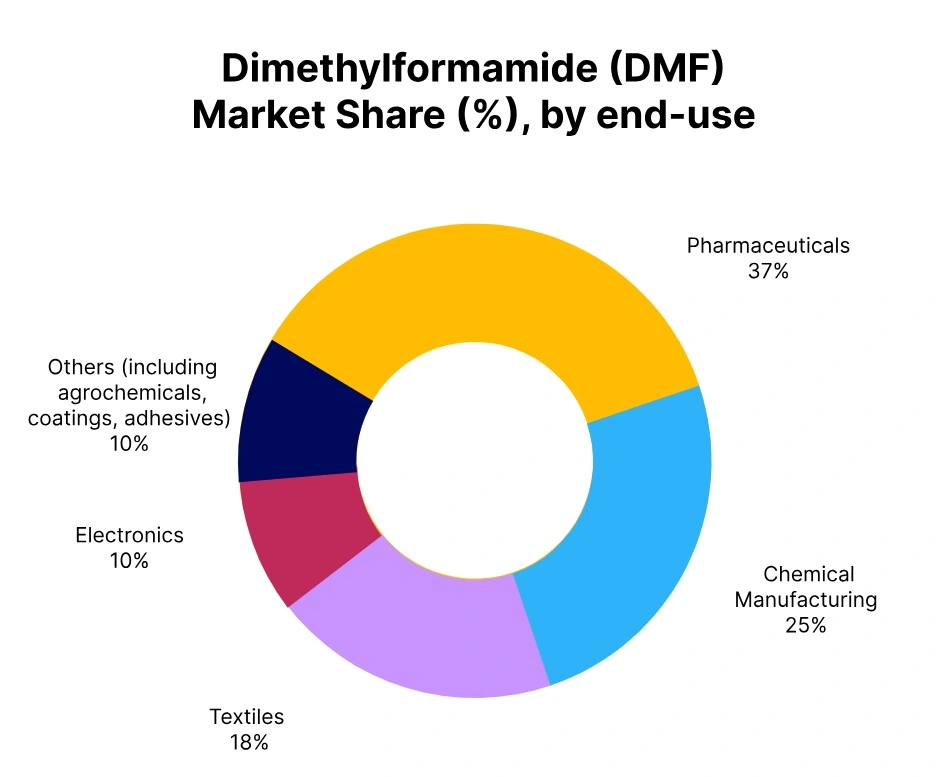
dimethylformamide market share end use

Historically, several events have caused significant fluctuations in Dimethylformamide (dmf) prices

  • Surplus inventories: Periods of oversupply in the market which lead to price drops. For example, increased production capacity by major manufacturers can saturate the market and reduce prices. 
  • Pandemic Impact (2020-2021): The global COVID-19 pandemic led to disruptions in supply chains and changes in demand patterns. Saudi Arabia and China, as a major producer, faced challenges that affected DMF production and pricing. 
  • Geopolitical Tensions (2018-2019): U.S.-China trade wars caused price instability due to disrupted supply chains. 
  • Changes in Trade Policies: Saudi Arabia’s trade agreements or policy changes regarding the export and import of chemicals can impact DMF prices. For instance, new trade agreements or tariffs can alter market dynamics. 
  • U.S.-China Trade War (2018-2019): Trade disputes and tariffs imposed between the U.S. and China affected the chemical industry, including DMF. Tariffs on chemical imports and exports impacted market dynamics and pricing. 
  • Supply Chain Issues: Disruptions in the supply of key raw materials for DMF production, such as methanol and carbon monoxide, due to domestic and international factors have influenced DMF prices. 
  • Oil Price Crises (e.g., 1973, 1980s, 2014-2016): As a major oil producer, Saudi Arabia’s oil price fluctuations impact the cost of raw materials and energy used in DMF production. Sharp oscillations in crude oil prices which indirectly influenced the chemical production costs and DMF prices. 


These events underscore the dimethylformamide market’s vulnerability to global disruptions and highlight the need for continuous monitoring of supply-demand dynamics.
 

Why Price Watch™?

Price Watch™ is your trusted resource for tracking global dimethylformamide (dmf) price trends. Our platform delivers real-time data and expert analysis, offering deep insights into the key factors driving price fluctuations in the dimethylformamide (dmf) market. By monitoring critical events such as geopolitical tensions, supply chain disruptions, and economic shifts, Price Watch™ keeps you fully informed of market dynamics.

In addition, Price Watch™ provides detailed forecasts and updates on production capacities, enabling you to anticipate market changes and make well-informed decisions. With Price Watch™, you gain a competitive edge in understanding all the elements that influence dimethylformamide (dmf) prices worldwide. Stay ahead of the curve with Price Watch’s™ reliable, accurate, and timely dimethylformamide (dmf) market data.

Track Price Watch's™ dimethylformamide (dmf) price assessment on a weekly basis since 2015 onwards, along with short-term forecasts, and get access to the detailed report in a downloadable format.

Dimethylformamide (dmf) Market Price Trend published by Price Watch™ reflect prevailing spot market conditions, derived from independent research, verified trade inputs, and proprietary market intelligence as of the publication date. Prices are published on the specified Incoterm and represent indicative base market levels, exclusive of applicable taxes, VAT, duties, tariffs, and other statutory charges. Actual transaction values may vary depending on volume, credit terms, contractual structure, and other negotiated conditions. Market prices are inherently subject to volatility, liquidity dynamics, regulatory changes, and evolving trade activity. The information provided is for reference and benchmarking purposes only and does not constitute an offer, recommendation, or guarantee of transactional outcomes. Users should exercise independent commercial judgment and assess their specific contractual, regulatory, tax, and application requirements before making business decisions. Price Watch™ assumes no liability for decisions taken based on this information.

The pricing of Dimethylformamide (DMF) is influenced by several factors, including fluctuations in raw material costs (such as acetic acid and methanol), energy prices, and supply chain dynamics. Additionally, demand from key industries like pharmaceuticals, textiles, and electronics, along with geopolitical events and trade policies, can significantly impact DMF pricing. Procurement heads must monitor these variables to manage costs effectively.

Feedstock availability, particularly for key components like acetic acid and methanol, directly impacts Dimethylformamide pricing. Shortages or disruptions in the production of these raw materials, due to factors such as weather conditions, geopolitical tensions, or regulatory changes, can lead to price increases. Conversely, improved feedstock availability can drive prices down, allowing for more cost-effective procurement strategies.

Dimethylformamide prices can vary significantly by region due to differences in production capacities, raw material costs, and local demand. For example, regions with higher production capabilities, such as China and the Middle East, may offer more competitive pricing compared to Europe or North America. Procurement teams should evaluate regional price variations and consider diversifying sourcing from cost-effective markets to optimize procurement strategies.

Dimethylformamide (DMF) is a colorless, high-polarity solvent widely used in industries like textiles, pharmaceuticals, agrochemicals, and electronics. It is primarily utilized in the production of synthetic fibers, as a solvent for chemical reactions, and as a key ingredient in manufacturing various products such as polyurethanes, resins, and coatings. Its price is crucial as it directly impacts the cost of production in these downstream industries, influencing overall manufacturing costs and pricing strategies. Price-Watch™ monitors DMF prices to keep businesses informed about market fluctuations.

Dimethylformamide prices fluctuate depending on region, feedstock costs (such as methanol and ammonia), and supply-demand dynamics. The prices are typically quoted per metric ton and vary across global markets. Price-Watch™ provides real-time price assessments to help both buyers and sellers navigate these changes and make informed purchasing decisions.

DMF prices are influenced by several factors including feedstock prices (methanol and ammonia), crude oil and energy price movements, production capacity utilization, and demand from key industries such as textiles, pharmaceuticals, and coatings. Geopolitical tensions, fluctuations in global supply chains, and regulatory changes also impact pricing trends. Price-Watch™ tracks these factors and provides detailed price insights to help businesses anticipate changes.

The largest consumers of DMF are the textile industry (for synthetic fibers), the pharmaceutical industry (for drug formulations and intermediates), and the coatings and adhesives industries. Other notable sectors include electronics (for semiconductors and circuit boards), agrochemicals (for pesticides and fertilizers), and polymers (for polyurethane production). Price-Watch™ tracks the demand across these industries to offer insights on price movements.

Dimethylformamide is produced primarily through the reaction of dimethylamine (DMA) with carbon monoxide in the presence of a catalyst. This process occurs in large petrochemical complexes, and it can also be produced as a by-product in the manufacture of other chemicals. Major producers of DMF include chemical manufacturers in the U.S., China, and Europe.

China, the United States, and several European countries are major exporters of DMF. These regions have large-scale production facilities and export to global markets, especially to countries with high demand in the textiles, pharmaceuticals, and coatings industries. Price-Watch™ tracks export data to provide comprehensive insights into global trade flows.

Global demand for DMF is generally met by current production levels, though localized shortages may occur due to factors such as plant shutdowns, feedstock supply disruptions, or significant demand spikes in key industries. Price-Watch™ monitors supply-demand dynamics and informs the market when potential shortages or supply issues arise.

DMF is available in various grades depending on its purity and intended use. Industrial-grade DMF is used for general solvent applications, while pharmaceutical and electronic grades require higher purity standards. The price of DMF varies based on these grades, with high-purity grades commanding premium prices due to stricter quality control requirements. Price-Watch™ provides price assessments for different grades to ensure clarity and market transparency.

A sudden spike in demand for DMF, especially in sectors like pharmaceuticals or textiles, can lead to price increases. When demand outpaces supply, availability tightens, leading to longer lead times and higher spot prices. Manufacturers may prioritize long-term contracts over spot orders, further limiting availability. Price-Watch™ tracks these changes in real-time to help businesses manage procurement strategies.

Energy costs, especially natural gas and electricity, play a significant role in DMF production. When energy prices rise, production costs also increase, which in turn raises the price of DMF. Furthermore, since DMF is produced using petrochemical feedstocks, fluctuations in crude oil prices also have a direct impact on its price. Price-Watch™ continuously monitors energy market trends to provide accurate insights into their effects on DMF pricing.

Regional price differences for DMF are caused by factors such as local feedstock availability, energy costs, transportation expenses, and production capacity. Areas with limited local production or high transportation costs typically see higher prices. Conversely, regions with robust production infrastructure and cheaper feedstock supply tend to have lower prices. Price-Watch™ monitors and compares these factors to highlight price variances across regions.

The forecast for DMF prices depends on various factors, including feedstock price trends, crude oil and energy costs, production capacity changes, and demand fluctuations in key industries. Price-Watch™ regularly publishes forecasts that project price movements over the next 12 months, helping businesses prepare for market conditions and plan their purchasing strategies accordingly.

Yes, accurate price forecasts enable businesses to make more informed decisions, whether it’s for stockpiling material before a price increase, negotiating better contract terms, or adjusting budgets for raw material procurement. By anticipating price changes, businesses can save costs and avoid supply chain disruptions. Price-Watch™’s forecasts help businesses strategize and optimize procurement decisions.

Global events such as geopolitical tensions, natural disasters, or trade disruptions can significantly impact DMF production and shipping routes, leading to supply shortages and price hikes. For example, supply chain disruptions from global events like the COVID-19 pandemic or regional conflicts can reduce production availability, while trade disputes may limit access to key feedstocks or markets. Price-Watch™ provides timely alerts when such events affect the DMF market.

Price-Watch™ collects data from reliable manufacturers, distributors, and buyers worldwide to offer comprehensive price assessments, market reports, and forecasts. Our transparent methodology and global coverage make us a trusted source for tracking DMF prices and market trends. Logistics costs typically see higher prices, while regions with integrated petrochemical complexes and favorable feedstock economics often have lower prices. Price-Watch™ tracks prices across all major regions to highlight these differences.