Ethanol Price Trend and Forecast

UNSPC code: 15101802
|
Weekly Update
|
Historical Data Since 2015
|
Forecast for 2026

ethanol Price Trends by Country

usUnited States
brBrazil
saSaudi Arabia
coColombia
krSouth Korea
twTaiwan
beBelgium
nlNetherlands
thThailand
inIndia
egEgypt
idIndonesia
pePeru
gbUnited Kingdom
mxMexico
phPhilippines
deGermany
clChile
caCanada
jpJapan
sgSingapore

Global ethanol Spot Market Prices, Trend Analysis and Forecast

𝐏𝐫𝐢𝐜𝐞 𝐖𝐚𝐭𝐜𝐡™ provides price assessments for Ethanol across top trading regions:


Asia-Pacific

  • Ethanol Anhydrous CIF Busan (USA), South Korea
  • Ethanol Anhydrous CIF Kaohsiung (USA), Taiwan
  • Ethanol Anhydrous CIF Laem Chabang (USA), Thailand
  • Ethanol Anhydrous CIF Nhava Sheva (USA), India
  • Ethanol Anhydrous CIF Jakarta (USA), Indonesia
  • Ethanol Anhydrous CIF Manila (USA), Philippines
  • Ethanol Anhydrous CIF Port of Singapore (USA), Singapore
  • Ethanol Anhydrous CIF Manila (Brazil), Philippines
  • Ethanol Anhydrous CIF Nhava Sheva (Brazil), India
  • Ethanol Anhydrous CIF Tokyo (Brazil), Japan
  • Ethanol Anhydrous CIF Busan (Brazil), South Korea
  • Ethanol Anhydrous CIF Port of Singapore (Brazil), Singapore


Europe

  • Ethanol Anhydrous CIF Antwerp (USA), Belgium
  • Ethanol Anhydrous CIF Rotterdam (USA), Netherlands
  • Ethanol Anhydrous CIF Immingham (USA), United Kingdom
  • Ethanol Anhydrous CIF Hamburg (USA), Germany
  • Ethanol Anhydrous CIF Antwerp (Brazil), Belgium
  • Ethanol Anhydrous CIF Rotterdam (Brazil), Netherlands


North America

  • Ethanol Anhydrous FOB Houston, USA
  • Ethanol Anhydrous CIF Veracruz (USA), Mexico
  • Ethanol Anhydrous CIF Montreal (USA), Canada


South America

  • Ethanol Anhydrous FOB Santos, Brazil
  • Ethanol Anhydrous CIF Barranquilla (USA), Colombia
  • Ethanol Anhydrous CIF Callao (USA), Peru
  • Ethanol Anhydrous CIF San Antonio (USA), Chile


Middle East

  • Ethanol Anhydrous CIF Jeddah (USA), Saudi Arabia


African

  • Ethanol Anhydrous CIF Alexandria (USA), Egypt


Ethanol Price Trend Q4 2025

In Q4 2025, global Ethanol markets demonstrated mixed performance with average change of approximately -3% to +4% across major trading regions. US-origin Ethanol exports experienced widespread downward pressure across most destinations, reflecting adequate domestic production and moderate international demand.

Brazilian Ethanol exports demonstrated consistent upward momentum across Asian and European markets, supported by robust sugarcane-based production and strong fuel blending demand.

The quarter reflected divergent regional supply dynamics, with US markets facing competitive pressures while Brazilian markets benefited from vigorous international consumption patterns, influencing pricing structures as participants navigated evolving fuel blending requirements and industrial consumption trends throughout the period.

USA: Ethanol Export Prices FOB Houston, USA, Grade-Anhydrous

In Q4 2025, Ethanol prices in the United States experienced downward pressure amid adequate domestic production and moderate export demand. Ethanol prices FOB Houston ranged between USD 565-710 per metric ton, recording a 1.91% decline compared to the previous quarter.

Balanced supply from corn-based ethanol facilities and steady consumption from fuel blending and chemical sectors shaped market dynamics throughout the period. In December 2025, Ethanol prices decreased significantly by 7.87%, influenced by year-end inventory liquidation executed by pragmatic producers, pronounced seasonal demand slowdowns amid holiday disruptions, and competitive domestic supply abundance progressively softening Houston end-year deal structures as calendars closed.

Brazil: Ethanol Export Prices FOB Santos, Brazil, Grade-Anhydrous

In Q4 2025, Ethanol prices in Brazil demonstrated upward momentum supported by robust sugarcane-based production and strong export demand. Ethanol prices FOB Santos ranged between USD 745-790 per metric ton, showing a 3.11% increase from the preceding quarter.

Consistent production from sugarcane mills and vigorous demand from international fuel blending markets influenced the upward trajectory throughout the period. In December 2025, Ethanol prices decreased by 0.90%, influenced by year-end contract settlements executed by strategic exporters, pronounced seasonal production adjustments amid harvest completions, and balanced regional supply availability progressively tempering Santo’s end-year deal structures as calendars closed.

Saudi Arabia: Ethanol Imported Prices CIF Jeddah from USA, Saudi Arabia, Grade-Anhydrous

In Q4 2025, Ethanol prices in Saudi Arabia experienced marginal downward pressure supported by steady import flows from US suppliers. Ethanol prices CIF Jeddah ranged between USD 655-815 per metric ton, recording a 0.70% decline compared to the previous quarter.

Consistent maritime logistics and adequate import availability meet domestic industrial requirements shaped market fundamentals throughout the period. In December 2025, Ethanol prices decreased by 6.94%, influenced by year-end inventory adjustments executed by prudent buyers, pronounced seasonal demand moderation amid reduced industrial uptake, and stable freight conditions progressively tempering Jeddah end-year deal structures as calendars closed.

Colombia: Ethanol Imported Prices CIF Barranquilla from USA, Colombia, Grade-Anhydrous

In Q4 2025, Ethanol prices in Colombia witnessed notable downward movement driven by competitive import pricing from US suppliers. Ethanol prices CIF Barranquilla ranged between USD 650-870 per metric ton, showing a 4.58% decline from the preceding quarter.

Adequate import availability and moderate consumption from fuel blending sectors influenced pricing dynamics throughout the period. In December 2025, Ethanol prices decreased significantly by 9.65%, influenced by year-end procurement completions executed by cost-conscious buyers, pronounced seasonal demand slowdowns amid holiday disruptions, and competitive regional supply pressures progressively softening Barranquilla end-year deal structures as calendars closed.

South Korea: Ethanol Imported Prices CIF Busan from USA, South Korea, Grade-Anhydrous

In Q4 2025, Ethanol prices in South Korea experienced downward pressure amid consistent import flows from US suppliers. Ethanol prices CIF Busan ranged between USD 625-775 per metric ton, recording a 2.43% decline compared to the previous quarter.

Adequate import availability and steady demand from industrial solvent and chemical processing sectors shaped market dynamics throughout the period. In December 2025, Ethanol prices decreased by 7.99%, influenced by year-end inventory optimization executed by strategic buyers, pronounced seasonal manufacturing slowdowns amid reduced industrial consumption, and stable freight conditions progressively tempering Busan end-year deal structures as calendars closed.

Taiwan: Ethanol Imported Prices CIF Kaohsiung from USA, Taiwan, Grade-Anhydrous

In Q4 2025, Ethanol prices in Taiwan witnessed downward movement supported by steady import flows from US suppliers. Ethanol prices CIF Kaohsiung ranged between USD 720-860 per metric ton, showing a 1.82% decline from the preceding quarter.

Consistent maritime logistics and adequate import availability meeting domestic chemical processing requirements influenced pricing fundamentals throughout the period. In December 2025, Ethanol prices decreased by 6.34%, influenced by year-end procurement completions executed by prudent manufacturers, pronounced inventory adjustments amid lunar new year planning, and balanced regional supply availability progressively tempering Kaohsiung end-year deal structures as calendars closed.

Belgium: Ethanol Imported Prices CIF Antwerp from USA, Belgium, Grade-Anhydrous

In Q4 2025, Ethanol prices in Belgium experienced downward pressure amid balanced European market conditions. Ethanol prices CIF Antwerp ranged between USD 620-770 per metric ton, recording a 1.45% decline compared to the previous quarter.

Adequate import availability from US suppliers and steady consumption from fuel blending and industrial sectors shaped market dynamics throughout the period. In December 2025, Ethanol prices decreased by 7.26%, influenced by year-end inventory liquidation executed by strategic distributors, pronounced seasonal demand slowdowns amid holiday disruptions, and competitive regional supply pressures progressively tempering Antwerp end-year deal structures as calendars closed.

Netherlands: Ethanol Imported Prices CIF Rotterdam from USA, Netherlands, Grade-Anhydrous

In Q4 2025, Ethanol prices in Netherlands witnessed downward movement driven by consistent import flows from US suppliers. Ethanol prices CIF Rotterdam ranged between USD 620-770 per metric ton, showing a 2.41% decline from the preceding quarter.

Adequate maritime logistics and steady import availability meeting European fuel blending requirements influenced pricing fundamentals throughout the period. In December 2025, Ethanol prices decreased significantly by 9.05%, influenced by year-end procurement completions executed by cost-conscious buyers, pronounced seasonal demand moderation amid holiday disruptions, and competitive regional supply abundance progressively softening Rotterdam end-year deal structures as calendars closed.

Thailand: Ethanol Imported Prices CIF Laem Chabang from USA, Thailand, Grade-Anhydrous

In Q4 2025, Ethanol prices in Thailand experienced downward pressure supported by steady import flows from US suppliers. Ethanol prices CIF Laem Chabang ranged between USD 690-830 per metric ton, recording a 1.64% decline compared to the previous quarter.

Consistent shipping schedules and adequate import availability meeting domestic fuel blending requirements shaped market dynamics throughout the period. In December 2025, Ethanol prices decreased by 6.60%, influenced by year-end inventory adjustments executed by prudent buyers, pronounced seasonal demand moderation amid reduced consumption, and stable freight conditions progressively tempering Laem Chabang end-year deal structures as calendars closed.

India: Ethanol Imported Prices CIF Nhava Sheva from USA, India, Grade-Anhydrous

In Q4 2025, Ethanol prices in India demonstrated marginal upward movement driven by robust domestic demand. Ethanol prices CIF Nhava Sheva ranged between USD 650-805 per metric ton, showing a 0.71% increase from the preceding quarter.

Strong consumption from fuel blending programs and industrial applications influenced the upward trajectory throughout the period. In December 2025, Ethanol prices decreased by 5.49%, influenced by year-end procurement completions executed by strategic buyers, pronounced seasonal demand adjustments amid reduced industrial uptake, and competitive import availability progressively tempering Nhava Sheva end-year deal structures as calendars closed.

Egypt: Ethanol Imported Prices CIF Alexandria from USA, Egypt, Grade-Anhydrous

In Q4 2025, Ethanol prices in Egypt experienced marginal downward pressure amid steady import flows from US suppliers. Ethanol prices, CIF Alexandria ranged between USD 675-805 per metric ton, recording a 0.35% decline compared to the previous quarter.

Adequate import availability and moderate consumption from industrial sectors shaped market fundamentals throughout the period. In December 2025, Ethanol prices decreased significantly by 8.57%, influenced by year-end inventory liquidation executed by pragmatic distributors, pronounced seasonal demand slowdowns amid reduced regional consumption, and stable freight conditions progressively softening Alexandria end-year deal structures as calendars closed.

Indonesia: Ethanol Imported Prices CIF Jakarta from USA, Indonesia, Grade-Anhydrous

In Q4 2025, Ethanol prices in Indonesia witnessed marginal downward movement supported by consistent import flows from US suppliers. Ethanol prices CIF Jakarta ranged between USD 710-890 per metric ton, showing a 0.44% decline from the preceding quarter.

Adequate maritime logistics and steady import availability meeting domestic industrial requirements influenced pricing dynamics throughout the period. In December 2025, Ethanol prices decreased by 6.48%, influenced by year-end procurement completions executed by cost-conscious buyers, pronounced inventory optimization amid seasonal adjustments, and balanced regional supply availability progressively tempering Jakarta end-year deal structures as calendars closed.

Peru: Ethanol Imported Prices CIF Callao from USA, Peru, Grade-Anhydrous

In Q4 2025, Ethanol prices in Peru experienced notable downward pressure driven by competitive import pricing from US suppliers. Ethanol prices CIF Callao ranged between USD 720-870 per metric ton, recording a 3.90% decline compared to the previous quarter.

Consistent import flows and moderate consumption from fuel blending sectors shaped market fundamentals throughout the period. In December 2025, Ethanol prices decreased by 6.30%, influenced by year-end inventory adjustments executed by prudent buyers, pronounced seasonal demand moderation amid reduced consumption, and stable freight conditions progressively tempering Callao end-year deal structures as calendars closed.

United Kingdom: Ethanol Imported Prices CIF Immingham from USA, United Kingdom, Grade-Anhydrous

In Q4 2025, Ethanol prices in United Kingdom witnessed marginal downward movement amid balanced market conditions. Ethanol prices CIF Immingham ranged between USD 660-825 per metric ton, showing a 0.92% decline from the preceding quarter.

Adequate import availability from US suppliers and steady consumption from fuel blending and industrial sectors influenced pricing dynamics throughout the period. In December 2025, Ethanol prices decreased by 6.89%, influenced by year-end procurement completions executed by strategic buyers, pronounced seasonal demand slowdowns amid holiday disruptions, and competitive regional supply pressures progressively tempering Immingham end-year deal structures as calendars closed.

Mexico: Ethanol Imported Prices CIF Veracruz from USA, Mexico, Grade-Anhydrous

In Q4 2025, Ethanol prices in Mexico experienced notable downward pressure supported by steady import flows from US suppliers. Ethanol prices CIF Veracruz ranged between USD 675-810 per metric ton, recording a 4.82% decline compared to the previous quarter.

Consistent cross-border logistics and adequate import availability meeting domestic fuel blending requirements shaped market fundamentals throughout the period. In December 2025, Ethanol prices decreased by 1.57%, influenced by year-end inventory adjustments executed by prudent buyers, pronounced stable freight conditions amid controlled shipping costs, and balanced domestic consumption progressively tempering Veracruz end-year deal structures as calendars closed.

Philippines: Ethanol Imported Prices CIF Manila from USA, Philippines, Grade-Anhydrous

In Q4 2025, Ethanol prices in Philippines demonstrated marginal downward pressure amid consistent import flows from US suppliers. Ethanol prices CIF Manila ranged between USD 730-920 per metric ton, showing a 0.33% decline from the preceding quarter.

Adequate maritime logistics and steady import availability meeting domestic fuel blending requirements influenced pricing dynamics throughout the period. In December 2025, Ethanol prices decreased by 6.34%, influenced by year-end procurement completions executed by cost-conscious buyers, pronounced seasonal demand moderation amid reduced consumption, and stable freight conditions progressively tempering Manila end-year deal structures as calendars closed.

Singapore: Ethanol Imported Prices CIF Port of Singapore from USA, Singapore, Grade-Anhydrous

In Q4 2025, Ethanol prices in Singapore demonstrated notable upward momentum driven by robust re-export activities and strong regional demand. Ethanol prices CIF Port of Singapore ranged between USD 720-875 per metric ton, recording a 4.90% increase compared to the previous quarter.

Strategic positioning as a regional trading hub and vigorous demand from Southeast Asian markets influenced the upward trajectory throughout the period. In December 2025, Ethanol prices decreased by 6.40%, influenced by year-end export completions executed by strategic traders, pronounced regional buyer caution amid reduced orders, and seasonal demand moderation progressively tempering Singapore end-year deal structures as calendars closed.

Germany: Ethanol Imported Prices CIF Hamburg from USA, Germany, Grade-Anhydrous

In Q4 2025, Ethanol prices in Germany experienced downward pressure amid balanced European market conditions. Ethanol prices CIF Hamburg ranged between USD 620-765 per metric ton, recording a 2.06% decline compared to the previous quarter.

Adequate import availability from US suppliers and steady consumption from fuel blending and industrial sectors shaped market dynamics throughout the period. In December 2025, Ethanol prices decreased by 7.00%, influenced by year-end inventory liquidation executed by pragmatic distributors, pronounced seasonal demand slowdowns amid holiday disruptions, and competitive regional supply pressures progressively tempering Hamburg end-year deal structures as calendars closed.

Chile: Ethanol Imported Prices CIF San Antonio from USA, Chile, Grade-Anhydrous

In Q4 2025, Ethanol prices in Chile witnessed downward movement supported by steady import flows from US suppliers. Ethanol prices CIF San Antonio ranged between USD 675-815 per metric ton, showing a 2.38% decline from the preceding quarter.

Consistent maritime logistics and adequate import availability meeting domestic fuel blending requirements influenced pricing fundamentals throughout the period. In December 2025, Ethanol prices decreased by 6.80%, influenced by year-end procurement completions executed by cost-conscious buyers, pronounced seasonal demand moderation amid reduced consumption, and stable freight conditions progressively tempering San Antonio end-year deal structures as calendars closed.

Canada: Ethanol Imported Prices CIF Montreal from USA, Canada, Grade-Anhydrous

In Q4 2025, Ethanol prices in Canada experienced downward pressure amid consistent import flows from US suppliers. Ethanol prices CIF Montreal ranged between USD 705-860 per metric ton, recording a 1.93% decline compared to the previous quarter.

Adequate cross-border logistics and steady import availability meeting domestic fuel blending requirements shaped market dynamics throughout the period. In December 2025, Ethanol prices decreased by 7.36%, influenced by year-end inventory adjustments executed by prudent buyers, pronounced seasonal demand slowdowns amid winter disruptions, and stable freight conditions progressively tempering Montreal end-year deal structures as calendars closed.

Philippines: Ethanol Imported Prices CIF Manila from Brazil, Philippines, Grade-Anhydrous

In Q4 2025, Ethanol prices in Philippines demonstrated upward momentum driven by strong demand from Brazilian sugarcane-based ethanol. Ethanol prices CIF Manila ranged between USD 865-925 per metric ton, recording a 2.33% increase compared to the previous quarter.

Robust consumption from fuel blending programs and consistent import availability from Brazilian suppliers influenced the upward trajectory throughout the period. In December 2025, Ethanol prices decreased by 0.78%, influenced by year-end procurement completions executed by strategic buyers, pronounced seasonal demand adjustments amid balanced consumption, and stable freight conditions progressively tempering Manila end-year deal structures as calendars closed.

India: Ethanol Imported Prices CIF Nhava Sheva from Brazil, India, Grade-Anhydrous

According to Price-Watch™,in Q4 2025, Ethanol prices in India demonstrated notable upward momentum driven by robust domestic demand and strong Brazilian supply. Ethanol prices CIF Nhava Sheva ranged between USD 810-870 per metric ton, recording a 4.54% increase compared to the previous quarter.

Vigorous consumption from fuel blending programs and industrial applications influenced the upward trajectory throughout the period. In December 2025, Ethanol prices increased by 1.82%, influenced by year-end restocking activities executed by forward-thinking buyers, pronounced supply discipline amid controlled import volumes, and robust domestic demand progressively reinforcing Nhava Sheva end-year deal structures as calendars closed.

Japan: Ethanol Imported Prices CIF Tokyo from Brazil, Japan, Grade-Anhydrous

In Q4 2025, Ethanol prices in Japan demonstrated upward momentum supported by steady import flows from Brazilian suppliers. Ethanol prices CIF Tokyo ranged between USD 810-855 per metric ton, showing a 3.21% increase from the preceding quarter.

Consistent maritime logistics and strong consumption from industrial solvent and chemical processing sectors influenced the upward trajectory throughout the period. In December 2025, Ethanol prices decreased by 0.77%, influenced by year-end procurement completions executed by cost-conscious manufacturers, pronounced inventory optimization amid seasonal adjustments, and balanced regional supply availability progressively tempering Tokyo end-year deal structures as calendars closed.

Belgium: Ethanol Imported Prices CIF Antwerp from Brazil, Belgium, Grade-Anhydrous

In Q4 2025, Ethanol prices in Belgium demonstrated upward momentum driven by robust Brazilian ethanol exports to European markets. Ethanol prices CIF Antwerp ranged between USD 840-885 per metric ton, recording a 3.88% increase compared to the previous quarter.

Strong consumption from fuel blending and industrial sectors coupled with consistent import availability influenced the upward trajectory throughout the period. In December 2025, Ethanol prices decreased by 0.80%, influenced by year-end contract settlements executed by strategic buyers, pronounced seasonal demand adjustments amid balanced consumption, and stable freight conditions progressively tempering Antwerp end-year deal structures as calendars closed.

Netherlands: Ethanol Imported Prices CIF Rotterdam from Brazil, Netherlands, Grade-Anhydrous

In Q4 2025, Ethanol prices in Netherlands demonstrated notable upward momentum driven by strong Brazilian ethanol exports to European markets. Ethanol prices CIF Rotterdam ranged between USD 840-885 per metric ton, recording a 4.33% increase compared to the previous quarter.

Vigorous consumption from fuel blending programs and consistent import availability from Brazilian suppliers influenced the upward trajectory throughout the period. In December 2025, Ethanol prices decreased by 0.80%, influenced by year-end procurement completions executed by prudent buyers, pronounced seasonal demand adjustments amid balanced consumption, and stable freight conditions progressively tempering Rotterdam end-year deal structures as calendars closed.

South Korea: Ethanol Imported Prices CIF Busan from Brazil, South Korea, Grade-Anhydrous

In Q4 2025, Ethanol prices in South Korea demonstrated upward movement supported by steady import flows from Brazilian suppliers. Ethanol prices CIF Busan ranged between USD 790-840 per metric ton, showing a 1.81% increase from the preceding quarter.

Consistent maritime logistics and steady consumption from industrial solvent and chemical processing sectors influenced the upward trajectory throughout the period. In December 2025, Ethanol prices decreased by 0.85%, influenced by year-end inventory optimization executed by strategic buyers, pronounced seasonal manufacturing adjustments amid balanced consumption, and stable freight conditions progressively tempering Busan end-year deal structures as calendars closed.

Singapore: Ethanol Imported Prices CIF Port of Singapore from Brazil, Singapore, Grade-Anhydrous

In Q4 2025, Ethanol prices in Singapore demonstrated upward momentum driven by robust re-export activities and strong regional demand from Brazilian ethanol. Ethanol prices CIF Port of Singapore ranged between USD 795-840 per metric ton, recording a 3.17% increase compared to the previous quarter.

Strategic positioning as a regional trading hub and vigorous demand from Southeast Asian markets influenced the upward trajectory throughout the period. In December 2025, Ethanol prices decreased by 0.88%, influenced by year-end export completions executed by strategic traders, pronounced regional buyer adjustments amid seasonal moderation, and stable freight conditions progressively tempering Singapore end-year deal structures as calendars closed.

Ethanol Price Trend Analysis: Q4 2025

Ethanol Price Trend Q3 2025

In Q3 2025, the global Ethanol market exhibited a firm upward trend driven by resilient international demand, tightening inventories, and stable freight conditions. In the United States, prices advanced steadily through the quarter as strong export momentum and consistent industrial consumption supported market strength.

Similarly, Brazil recorded sustained ethanol price gains amid limited production due to a constrained harvest season and active buying interest from Asia and Latin America. Both regions maintained positive sentiment supported by steady procurement activity and balanced supply fundamentals. Elevated ethanol price levels are expected to persist into the next quarter, with continued firmness anticipated across major exporting regions.

Thailand: Ethanol import prices CIF LAEM CHABANG, USA, Grade Anhydrous.

In Q3 2025, Ethanol prices in Thailand demonstrated a steady upward trajectory supported by firm export demand, tightening US feedstock supplies, and strong market fundamentals. Ethanol Prices progressively increased from July through September as corn-based production costs and FOB quotations in the USA trended higher, reflecting constrained availability and seasonal demand in both domestic and Southeast Asian markets.

Throughout the quarter, freight charges remained largely stable, ensuring consistent logistics and moderating sharp cost escalations despite strong export momentum. Ethanol price trend ranged between USD 736–830 per metric ton, marking a cumulative quarterly gain driven by increasing FOB values and limited supply. Import inquiries across the region remained active, reinforcing competitive market conditions.

Overall, the quarter concluded In September 2025, Ethanol prices with a +9.93%, underscoring the sustained bullish sentiment in the US-origin ethanol market. Short-term procurement opportunities are advised to be secured early, as continued FOB strength and regional demand are expected to maintain upward price pressure into the next quarter.

Egypt: Ethanol import prices CIF Alexandria, USA, Grade Anhydrous.

In Q3 2025, Ethanol price in Egypt followed a firm upward trajectory, supported by ongoing export demand, restricted US corn feedstock, and solid market fundamentals. Prices moved consistently higher from July through September as FOB quotations in the USA strengthened amid tight supply availability and active competition from international buyers.

Seasonal demand patterns added further support to pricing, while steady import volumes reflected continued procurement momentum in the Egyptian market. Ethanol price trend ranged between USD 647-855 per metric ton, securing a cumulative gain driven by higher FOB values and constrained US exports. Buyer activity remained strong, with competitive market dynamics influencing transaction speeds and securing supply positions.

Overall, the quarter closed In September 2025, Ethanol prices with a +9.52% rise, reinforcing the bullish sentiment in US-origin ethanol for Egyptian buyers. Prompt procurement is recommended as sustained export strength and disciplined US supply allocation are expected to maintain firm pricing into the upcoming quarter.

Belgium: Ethanol import prices CIF Antwerp, Grade Anhydrous (USA & Brazil Origin).

In Q3 2025, Ethanol prices in Belgium imported from both the USA and Brazil exhibited a firm upward momentum, reflecting global supply constraints and consistent industrial demand across Europe. US-origin ethanol prices advanced steadily through the quarter as rising corn feedstock costs and tighter supply allocation pushed FOB prices higher.

Brazilian-origin shipments similarly strengthened, supported by seasonal production limits and steady export interest from European buyers. Industrial consumption from chemical and blending sectors further sustained the regional price trend, keeping procurement activity firm throughout the period.

For US-origin ethanol, import prices ranged between USD 602-805 per metric ton, registering a cumulative quarterly increase driven by limited supply and firm export allocation from US producers. Brazilian-origin ethanol showed similar strength, with Ethanol price trend spanning USD 755-925 per metric ton throughout the quarter, influenced by tight shipping schedules and moderated freight reductions early in the period.

Overall, the quarter ended In September 2025, Ethanol prices with a significant +10.95% increase for US-origin and +7.32% for Brazil-origin Ethanol. The continued firmness in CIF Antwerp prices reflected strong export fundamentals from both origins, alongside persistent buyer activity in the European market. Procurement should be planned proactively as global feedstock tightness and export prioritization are expected to sustain elevated pricing levels into the next quarter.

Colombia: Ethanol import prices CIF Barranquilla, USA, Grade  Anhydrous

In Q3 2025, Ethanol prices in Colombia registered a strong upward momentum, driven by firm global demand and tightening supply conditions in the United States. Prices moved consistently higher from July through September as constrained corn-based feedstock and elevated production costs supported stronger FOB quotations.

Colombian buyers displayed active procurement interest throughout the quarter, maintaining steady import flow amid a competitive market landscape. Ethanol price trend ranged between USD 654-925 per metric ton, reflecting a notable quarterly increase. The sharp jump in September was particularly influenced by stronger Colombian inquiries and limited allocation from US exporters, resulting in elevated landed costs.

Firm regional demand and consistent trading activity further reinforced upward pricing sentiment. The quarter concluded In September 2025, Ethanol prices with a substantial +17.57% rise, marking one of the strongest quarterly gains among major ethanol-importing regions. Prompt procurement is recommended as persistent logistical challenges and firm export prices are expected to sustain elevated CIF levels into the next quarter.

South Korea: Ethanol import prices CIF Busan, Grade Anhydrous (USA & Brazil Origin).

In Q3 2025, Ethanol prices in South Korea showed consistent upward momentum, supported by firm market fundamentals, steady Asian demand, and tightening supply from both the USA and Brazil. Buyers actively secured volumes throughout the quarter as regional blending and industrial requirements maintained solid import interest. The firm global demand for biofuels and consistent feedstock tightening across origin markets added further bullish pressure on price movements.

For US-origin ethanol price trend ranged between USD 617-820 per metric ton during the quarter, marking a significant cumulative increase driven by higher FOB quotations and limited allocation from US producers. Brazilian-origin ethanol followed a similar trend, with prices between USD 727 – 880 per metric ton, supported by steady FOB strength and controlled export supply to Asian destinations.

Competitive buying behaviour and stable freight dynamics contributed to sustaining firm CIF pricing across the quarter. In September 2025, Ethanol prices concluded with an increase of +10.71% for US-origin and +6.33% for Brazil-origin deliveries, underscoring the strong regional price sentiment. Importers are advised to finalize procurement early, as constrained supply conditions and sustained export demand are expected to maintain firm price levels into the next quarter.

Peru: Ethanol import prices CIF Callao, USA, Grade Anhydrous.

In Q3 2025, Ethanol prices in Peru recorded a firm upward trend, driven by tightening US supply and sustained industrial demand across Latin America. Prices moved steadily higher through the quarter as stronger FOB values in the USA reflected constrained corn feedstock availability and elevated production costs.

Peruvian importers remained active throughout the quarter, maintaining stable procurement momentum even as US exporters limited spot allocations to balance regional commitments. Ethanol price trend ranged between USD 707-925 per metric ton during the quarter, marking a successive monthly rise supported by firm FOB benchmarks and consistent buying interest. Stable freight conditions allowed landed costs to reflect the direct influence of U.S. export tightness and elevated production economics.

In September 2025, Ethanol prices had increased by +9.43%, underscoring a bullish quarterly trajectory. Continued short-term firmness is expected as Latin American demand and limited US supply maintain upward pressure on CIF prices. Importers are advised to secure volumes promptly in anticipation of sustained market strength into the following quarter.

Germany: Ethanol import prices CIF Hamburg, USA, Grade Anhydrous

In Q3 2025, Ethanol price in Germany maintained a firm upward trajectory, reflecting strong US FOB market conditions and consistent European industrial demand. Prices increased steadily from July to September, supported by tighter corn feedstock availability in the United States and elevated production costs.

The German import market saw active procurement and robust trading interest, sustaining price strength throughout the quarter. Ethanol price trend ranged between USD 603-810 per metric ton during the period, marking a continuous monthly increase driven by higher FOB offers and limited spot supply from the US.

Freight rates remained broadly stable, ensuring price movements were primarily influenced by origin-market fundamentals and competitive buying across European destinations. In September 2025, Ethanol prices had increased +10.95%, highlighting firm pricing momentum in the US-origin ethanol market. Importers are advised to secure short-term volumes as persistent demand and tight export allocation are expected to maintain elevated CIF levels into the next quarter.

United Kingdom: Ethanol import prices CIF Immingham, USA, Grade Anhydrous

In Q3 2025, Ethanol prices in the United Kingdom showed a consistent upward trend, supported by firm US FOB pricing, stronger industrial demand, and tightening feedstock availability. Prices advanced steadily through the quarter as elevated production costs driven by limited corn supply and consistent US export commitments sustained bullish sentiment.

UK import demand remained stable, with active buying interest maintaining firm market fundamentals throughout the period. Ethanol price trend ranged between USD 642-865 per metric ton, marking a notable monthly progression driven by higher FOB quotations and tight producer allocation. Stable freight conditions contributed to smoother import operations and sustained competitive momentum among buyers.

In September 2025, Ethanol price had recorded a rise of +10.34%, reflecting strong importer interest and restricted supply from the US. Continued firmness in CIF levels is expected into the next quarter, with buyers advised to secure forward shipments early to mitigate potential cost escalation amid persistent supply constraints.

Indonesia: Ethanol import prices CIF Jakarta, USA, Grade Anhydrous.

In Q3 2025, Ethanol prices in Indonesia showed a steady upward trend, supported by firm US FOB pricing, restricted corn feedstock supply, and consistent regional demand. Prices increased progressively from July through September as production costs in the USA stayed elevated and export allocations remained tight.

Indonesian buyers actively engaged in procurement during the quarter, ensuring stable import momentum amid competitive market dynamics. Ethanol price trend ranged between USD 690-930 per metric ton, reflecting sustained monthly gains driven by FOB market strength and limited US-origin availability.

Active buyer interest and consistent consumption patterns maintained firm price levels throughout the quarter. In September 2025, Ethanol price had recorded an +8.97% rise, underscoring the ongoing bullish sentiment in the US-origin ethanol market for Indonesia. Short-term procurement is recommended as continued regional demand and constrained US supply are expected to uphold strong CIF pricing into the next quarter.

Saudi Arabia: Ethanol import prices CIF Jeddah, USA, Grade Anhydrous.

In Q3 2025, Ethanol price in Saudi Arabia showed a robust upward trajectory, supported by firm global demand and tightening supply from the United States. Prices advanced steadily from July through September as elevated FOB quotations, arising from constrained corn feedstock and limited export availability, influenced delivered values.

Market activity remained strong as importers actively secured volumes in response to tightening regional supply and sustained industrial consumption. Ethanol price trend ranged between USD 630-855 per metric ton across the quarter, marking a cumulative increase led by firmer FOB levels and stable freight conditions. The combination of strong international buying interest and disciplined US export allocation contributed to the market’s bullish outlook.

Competitive import demand further reinforced pricing momentum throughout the period. In September 2025, Ethanol prices had climbed by +10.42%, signalling intensified procurement activity and constrained origin availability. Buyers are advised to book short-term requirements promptly, as limited US export capacity and persistent regional demand are projected to sustain firm CIF pricing into the next quarter.

Taiwan: Ethanol import prices CIF Kaohsiung, USA, Grade Anhydrous.

In Q3 2025, Ethanol prices in Taiwan maintained a steady upward trend, supported by firm US FOB values, tighter corn feedstock availability, and sustained industrial demand across the region. Prices recorded consistent monthly increases from July through September, reflecting higher production costs in the United States and controlled export allocations.

Taiwanese importers remained active during the quarter, ensuring stable trading volumes amid rising global pricing pressure. Ethanol price trend ranged between USD per metric ton, marking a firm quarterly uptrend driven primarily by FOB strength and stable freight dynamics. Strong regional procurement and limited export availability from the US reinforced firm offers throughout the period, keeping market sentiment bullish.

In September 2025, ethanol prices advanced by +8.86%, emphasizing continued supply constraints and robust industrial demand in the Asia-Pacific region. Buyers are advised to secure near-term volumes promptly as persistent US supply tightness and steady regional consumption are expected to sustain elevated CIF pricing into the next quarter.

Philippines: Ethanol import prices CIF Manila, Grade Anhydrous (USA & Brazil Origin).

In Q3 2025, Ethanol prices in Philippines recorded consistent price increases supported by firm FOB levels from both the USA and Brazil, strong regional demand, and tightening feedstock availability. Prices rose steadily through the quarter as stable logistics and active buyer participation maintained firm market momentum.

Importers across the region showed heightened procurement interest, reflecting confidence in sustained price firmness amid tightening origin supply. For US-origin ethanol prices trend between USD 714-965 per metric ton, while Brazilian-origin ethanol traded between USD 694-910 per metric ton throughout the quarter.

The upward movement was driven by steady industrial and fuel blending demand alongside restrained export volumes from both origins. Competitive market dynamics and balanced freight conditions provided overall stability to delivered costs, supporting continuous purchasing momentum in the Philippine market.

In September 2025, ethanol prices had recorded quarterly increases of +9.43% for US-origin and +9.41% for Brazil-origin cargoes. Persistent supply constraints and robust industrial consumption are expected to sustain elevated CIF levels into the next quarter, encouraging buyers to secure short-term volumes proactively amid ongoing market tightness.

India: Ethanol import prices CIF Nhava Sheva, Grade Anhydrous (USA & Brazil Origin).

According to PriceWatch, in Q3 2025, Ethanol price in India exhibited a firm upward trend, supported by consistent industrial demand, tighter corn supply, and strengthening FOB values from both the USA and Brazil. Prices advanced steadily through the quarter, reflecting persistent global supply constraints and heightened regional buying interest.

Active import participation, combined with rising freight costs, especially on US-India routes, fuelled bullish sentiment in the Indian ethanol market. For US-origin ethanol price trend ranged between USD 750-930 per metric ton, representing a strong quarterly increase driven by tightening allocation, elevated freight surges, and sustained demand from downstream sectors.

Brazilian-origin ethanol followed a similar trajectory, with prices moving between USD 620-880 per metric ton during the quarter, influenced by limited export availability and ongoing Brazilian supply prioritization to regional buyers.

In September 2025, Ethanol prices had risen sharply, +14.40% for US-origin and +8.18% for Brazil-origin ethanol marking one of the strongest quarterly increases among major import hubs. Continued FOB firmness, restricted export supply, and steady Indian demand are projected to uphold elevated CIF levels into the next quarter, making early short-term procurement advisable to hedge against further upward pressure.

Singapore: Ethanol import prices CIF Port of Singapore, Grade Anhydrous (USA & Brazil Origin).

In Q3 2025, Ethanol prices in Singapore recorded a sharp upward trajectory, with notable gains driven by higher FOB values from both the USA and Brazil, tight regional supply, and significant freight cost movements. Prices advanced steadily from July through September, supported by firm Southeast Asian demand and restricted export allocations at origin.

Strong procurement activity and competitive buying behaviour sustained market firmness throughout the quarter. For US-origin ethanol, prices ranged between USD 614-820 per metric ton, with the quarter’s gains heavily influenced by substantial freight surges and tightening product availability from the US Gulf export market. Brazilian-origin ethanol traded between USD 746-925 per metric ton, supported by restrained export flow and rising logistical expenses, especially into Southeast Asia.

In September 2025, ethanol prices had increased by +17.01% for US-origin shipments and +6.37% for Brazilian-origin deliveries, underscoring the combined impact of freight-driven cost escalation and supply constraints. Continued firm procurement demand and limited allocation capacity at origin are expected to sustain elevated CIF pricing into the next quarter, making early short-term coverage advisable.

Chile: Ethanol import prices CIF San Antonio, USA, Grade Anhydrous.

In Q3 2025, Ethanol price in Chile initially followed an upward trajectory through July and August, supported by firmer US FOB prices, steady demand, and tightening corn feedstock availability. Prices strengthened over these months as industrial procurement remained consistent and competitive buying activity reinforced CIF cost stability across the Chilean import market.

However, in September 2025, ethanol prices reversed sharply as US exporters engaged in aggressive de-stocking and offered discounts to clear excess inventories, resulting in a pronounced price drop. Ethanol import price trend during the quarter ranged between USD 655-865 per metric ton.

Japan: Ethanol import prices CIF Tokyo, Brazil, Grade Anhydrous.

According to PriceWatch, in Q3 2025, Ethanol prices in Japan maintained a gradual but steady upward trajectory, supported by firm Brazilian FOB prices, consistent industrial demand, and constrained corn feedstock availability. Prices inched higher from July through August as balanced supply-demand conditions and stable buyer interest sustained market firmness. Slight freight cost reductions early in the quarter helped moderate CIF price pressures, keeping import flows steady.

In September 2025, ethanol price trend rose more sharply, closing the quarter between USD 730-895 per metric ton, with a +7.55% monthly gain driven by stronger Asian spot demand and restricted Brazilian export volumes. Higher freight rates later in the quarter amplified landed costs for Japanese buyers, adding to bullish sentiment.

Overall, the quarter reflected a controlled supply environment and competitive import activity. Buyers are advised to secure short-term volumes promptly, as both freight escalation and steady demand from regional markets are expected to maintain upward pressure on CIF Tokyo prices into the next quarter.

Mexico: Ethanol import prices CIF Veracruz, USA, Grade Anhydrous.

In Q3 2025, Ethanol prices in Mexico recorded a firm upward momentum, supported by active procurement, constrained US supply, and steady industrial demand. Prices posted consistent monthly gains from July through September as stronger FOB quotations in the United States reflected higher production costs driven by tightening corn feedstock availability. Mexican importers maintained steady purchase volumes through the quarter, encouraged by favourable logistics and a competitive yet tightening market environment.

Ethanol price trend ranged between USD 654-865 per metric ton, marking a sustained uptrend driven mainly by firm US export pricing and consistent regional demand. Stable freight throughout the quarter allowed CIF costs to directly mirror movements in FOB markets, supporting continuous import activity at elevated levels.

In September 2025, ethanol prices rose by +10.14%, highlighting firm export allocation control and robust market participation. Importers are advised to secure volumes promptly, as steady US export demand and limited supply availability are anticipated to maintain firm CIF levels into the next quarter.

United States: Ethanol export prices FOB Houston, Grade Anhydrous.

According to PriceWatch, in Q3 2025, Ethanol prices in USA displayed a consistent upward trajectory, supported by firm export demand, moderate feedstock cost pressure, and tightening inventory levels. Prices advanced steadily through the quarter as domestic blending requirements and strong international inquiries maintained active trade volumes. Stable freight conditions ensured smooth logistical flow, helping producers manage spot availability while reinforcing confidence in sustained price strength.

FOB Houston ethanol price Trend ranged between USD 553-755 per metric ton, marking a pronounced quarterly gain driven by steady industrial consumption and elevated export activity toward key markets in Latin America and Asia. Limited production flexibility amid robust short-term inquiries kept sellers in a favorable position.

In September 2025, Ethanol price had climbed by +11.81%, reflecting both supply discipline and heightened procurement interest. Continued firm sentiment is anticipated into the next quarter, with buyers advised to confirm cargoes early as sustained export traction and controlled domestic inventories are likely to uphold elevated FOB values.

Brazil: Ethanol export prices FOB Santos, Grade Anhydrous.

In Q3 2025, Ethanol price in Brazil followed a firm upward trajectory, supported by solid international demand, moderate corn and sugarcane cost pressures, and constrained production due to a limited harvest season. Prices advanced consistently from July through September as exporters benefited from steady industrial and energy sector consumption both domestically and abroad. Competitive buying interest, especially from Asia and Latin America, reinforced tight market conditions and sustained firm FOB values.

Ethanol price trend ranged between USD 670-830 per metric ton, reflecting a cumulative quarterly gain driven by healthy procurement from overseas buyers and stable freight conditions. The absence of significant changes in shipping costs kept delivered price stability intact, allowing FOB dynamics to align closely with production and demand fundamentals.

In September 2025, Ethanol price posted a quarterly increase of +7.48%, underscoring market firmness amid constrained supply. Buyers are advised to confirm near-term shipments early, as restricted output and active export programs are expected to preserve elevated price levels into the next quarter.

In Q2 2025, the Ethanol market displayed tentative signs of stabilization, supported by a gradual improvement in domestic transportation fuel demand and renewed export opportunities into Latin American markets, particularly Brazil and Mexico. Seasonal blending demand in Europe provided marginal support, though the overall market remained constrained by sustained high production volumes from U.S. biorefineries, driven by ample corn feedstock availability and efficient operational rates. Competitive alternative fuels and subdued global energy price volatility continued to limit any significant upward momentum.

The quarter reflected a delicate balance between recovering consumption and persistent oversupply, resulting in only a modest recovery. According to PriceWatch, by the close of Q2 2025, Ethanol prices averaged USD 620.72 per metric ton FOB Houston.

In Q2 2025, the Ethanol market faced renewed downward pressure as Asian demand weakened during the monsoon season, reducing import appetite in key markets like India. Competitive pricing from Brazilian sugarcane-based ethanol further eroded U.S. exporters’ market share, intensifying price competition.

Despite the decline, U.S. biorefineries maintained high production levels, supported by favorable corn harvest conditions and strong operational efficiency, sustaining global oversupply. Shipping congestion at major Indian ports and reduced regional blending activity exacerbated the softening trend.

The quarter underscored persistent structural challenges in international ethanol trade, where ample supply consistently outweighed seasonal demand shifts. According to PriceWatch, by the end of Q2 2025, Ethanol prices averaged USD 698 per metric ton CIF Nhava Sheva for U.S.-origin cargoes.

In Q1 2025, ethanol prices rebounded 6% to USD 613 per metric ton FOB US Gulf, supported by renewed export demand and stable domestic blending activity. US ethanol production and exports saw strong growth, with year-to-date production up 2% and exports up 6% from the previous year, driven by robust demand from Canada, the EU, UK, India, and Colombia.

Higher corn prices and energy costs contributed to a firmer cost base, but the ethanol market benefited from policy support for renewable fuels and favorable global trade dynamics. The quarter reflected a cautiously optimistic outlook, with the US ethanol market leveraging its competitive edge and export momentum to support higher pricing into 2025.

In Q1 2025, according to PriceWatch, ethanol prices in India climbed 3% to USD 733 per metric ton CIF Nhava Sheva (USA), reflecting robust demand from India’s ethanol market as the country accelerated its E20 blending mandate and industrial consumption remained strong. Higher global corn prices and a rebound in international freight rates contributed to the upward movement in ethanol pricing.

U.S. ethanol exports to India saw significant growth, with India ranking among the top five destinations for U.S. ethanol, supported by both policy-driven demand and ongoing domestic feedstock constraints. The quarter highlighted India’s reliance on imported ethanol to meet its ambitious blending targets and industrial needs, even as global market volatility and logistical costs continued to shape ethanol market dynamics.

Ethanol Price Trend Analysis: Q4 2024

Q4 2024 marked a strong downward correction in ethanol prices, with levels falling 13% to USD 576 per metric ton FOB US Gulf. The market faced renewed headwinds from global oversupply, softening international demand, and easing domestic consumption post-harvest. Elevated US inventories and increased competition from Brazilian exporters further weighed on export values. Although corn prices declined, offering some margin relief, the market saw narrowing profitability.

Despite record-high output and export volumes earlier in the year, the quarter highlighted ethanol’s sensitivity to demand shifts and reinforced the fragile balance between supply and pricing power.

Q4 2024 marked a sharp 19% decline in ethanol prices of India, falling to USD 711 per metric ton CIF Nhava Sheva (USA). This drop was driven by a global ethanol market oversupply, increased competition from Brazil and Southeast Asia, and improved Indian inventories after a period of heavy imports. Indian buyers moderated procurement as domestic stocks rose and seasonal demand softened, while lower U.S. corn prices and easing freight rates further pressured ethanol pricing.

Despite the price correction, India’s ethanol market remained active, with import volumes still elevated compared to historical norms, reflecting the country’s ongoing push toward higher blend rates and industrial usage.

Ethanol prices continued their upward trajectory in Q3 2024, rising a modest 3% to USD 663 per metric ton FOB US Gulf. The market remained supported by steady export flows and robust blending mandates across international markets. However, rising feedstock costs and logistical challenges put pressure on producer margins.

With higher corn prices and volatile energy costs, producers maintained disciplined output to align with market demand. Strong international buying interest particularly from India, the EU, and the UK continued to anchor US ethanol prices, cementing the country’s competitive export position.

The third quarter of 2024 saw ethanol prices in India rise 11% to USD 876 per metric ton CIF Nhava Sheva (USA), driven by surging Indian demand for ethanol blending and persistent domestic feedstock shortages. The ethanol market benefited from government policies supporting higher blending rates and aggressive procurement by oil marketing companies.

Logistical disruptions and tight global supply from alternative origins further supported ethanol pricing, while U.S. exporters capitalized on their competitive position in the global ethanol market. The quarter underscored the critical role of imports in India’s ethanol market as the nation advanced toward its E20 blending goal.

Ethanol prices rebounded in Q2 2024, climbing 14% to USD 642 per metric ton FOB US Gulf amid a seasonal boost in gasoline consumption and rising export interest. The North American summer driving season and regulatory support for biofuel blending drove increased ethanol demand.

However, elevated corn and energy prices raised production costs and compressed margins. Global buyers, especially from Europe and Asia, turned to US ethanol due to supply constraints elsewhere, helping to absorb excess domestic output and improve market sentiment.

In Q2 2024, In India ethanol increased 13% to USD 789 per metric ton CIF Nhava Sheva (USA). The ethanol market was buoyed by India’s sustained efforts to ramp up blending rates, persistent feedstock shortages, and elevated procurement prices for imported ethanol. Higher global freight costs and supply chain disruptions contributed to the price rise, while Indian buyers remained active in securing U.S. ethanol cargoes to meet government mandates. The quarter demonstrated the ethanol market’s sensitivity to both global logistical trends and domestic policy drivers in India.

In Q1 2024, ethanol prices had averaged USD 564 per metric ton FOB US Gulf, reflecting a sharp 21% quarter-on-quarter decline. The downturn was fuelled by weak domestic and global demand, particularly from the transportation sector and off-season markets like Europe. Concurrently, high post-harvest feedstock availability led to robust US ethanol production and a buildup in inventories.

Coupled with declining corn prices and sluggish export activity, these factors exerted significant downward pressure on pricing and margins. The quarter highlighted the ethanol market’s vulnerability to global agricultural cycles and energy demand fluctuations.

In India ethanol prices averaged at USD 696 per metric ton CIF Nhava Sheva (USA) in Q1 2024, down 9% from the previous quarter as Indian import demand eased following heavy year-end buying. Global oversupply and lower U.S. corn prices pressured ethanol pricing, but Indian importers continued to source U.S. ethanol to compensate for domestic production shortfalls and to support ambitious blending targets.

The quarter highlighted the interplay between global ethanol market conditions and India’s evolving policy landscape, with imports remaining a key lever for meeting both industrial and fuel blending requirements.

Technical Specifications of Ethanol Price Trends

Product Description

Ethanol, also known as ethyl alcohol, is a clear, colorless liquid widely used as a solvent, disinfectant, and fuel additive. Produced mainly from the fermentation of plant materials, it is highly effective in killing germs and dissolving substances, making it essential in pharmaceuticals, cosmetics, and cleaning products. Ethanol is also a key ingredient in alcoholic beverages and is valued for its high purity and versatility across industrial and household applications.


Identifiers and Classification:

  • CAS No – 64-17-5
  • HS Code – 22072000
  • Molecular Formula – C₂H₅OH
  • Molecular Weight (in gm/mol) – 46.068


Ethanol Synonyms:

  • Ethyl Alcohol


Ethanol Grades Specific Price Assessment:

  • Anhydrous


Ethanol Global Trade and Shipment Terms

  • Quotation Terms (Product & Country Specific): 24 – 26MT
  • Packaging Type (Product & Country Specific): ISO Tank


Incoterms Referenced in Ethanol Price Reporting

Shipping Term  Location  Definition 
FOB Houston  Houston, USA  Ethanol export price from USA 
FOB Santos  Santos, Brazil  Ethanol export price from Brazil 
CIF Jeddah (USA)  Jeddah, Saudi Arabia  Ethanol import price in Saudi Arabia from USA 
CIF Barranquilla (USA)  Barranquilla, Colombia  Ethanol import price in Colombia from USA 
CIF Busan (USA)  Busan, South Korea  Ethanol import price in South Korea from USA 
CIF Kaohsiung (USA)  Kaohsiung, Taiwan  Ethanol import price in Taiwan from USA 
CIF Antwerp (USA)  Antwerp, Belgium  Ethanol import price in Belgium from USA 
CIF Rotterdam (USA)  Rotterdam, Netherlands  Ethanol import price in Netherlands from USA 
CIF Laem Chabang (USA)  Laem Chabang, Thailand  Ethanol import price in Thailand from USA 
CIF Nhava Sheva (USA)  Nhava Sheva, India  Ethanol import price in India from USA 
CIF Alexandria (USA)  Alexandria, Egypt  Ethanol import price in Egypt from USA 
CIF Jakarta (USA)  Jakarta, Indonesia  Ethanol import price in Indonesia from USA 
CIF Callao (USA)  Callao, Peru  Ethanol import price in Peru from USA 
CIF Immingham (USA)  Immingham, United Kingdom  Ethanol import price in United Kingdom from USA 
CIF Veracruz (USA)  Veracruz, Mexico  Ethanol import price in Mexico from USA 
CIF Manila (USA)  Manila, Philippines  Ethanol import price in Philippines from USA 
CIF Port of Singapore (USA)  Port of Singapore, Singapore  Ethanol import price in Singapore from USA 
CIF Hamburg (USA)  Hamburg, Germany  Ethanol import price in Germany from USA 
CIF San Antonio (USA)  San Antonio, Chile  Ethanol import price in Chile from USA 
CIF Montreal (USA)  Montreal, Canada  Ethanol import price in Canada from USA 
CIF Manila (Brazil)  Manila, Philippines  Ethanol import price in Philippines from Brazil 
CIF Nhava Sheva (Brazil)  Nhava Sheva, India  Ethanol import price in India from Brazil 
CIF Tokyo (Brazil)  Tokyo, Japan  Ethanol import price in Japan from Brazil 
CIF Antwerp (Brazil)  Antwerp, Belgium  Ethanol import price in Belgium from Brazil 
CIF Rotterdam (Brazil)  Rotterdam, Netherlands  Ethanol import price in Netherlands from Brazil 
CIF Busan (Brazil)  Busan, South Korea  Ethanol import price in South Korea from Brazil 
CIF Port of Singapore (Brazil)  Port of Singapore, Singapore  Ethanol import price in Singapore from Brazil 

*Quotation Terms refers to the quantity range specified for the Ethanol being quoted or offered in a commercial transaction.

**Packaging Type refers to standard packaging size commonly used for Ethanol packing, ease of handling, transportation, and storage in industrial and commercial applications.


Ethanol Manufacturers

Manufacturer 
Valero Energy Corporations 
POET 
Green Plains llc. 
Arch Daniels Mainland 
Pacific Ethanol 
Valero Energy Corporations 
POET 

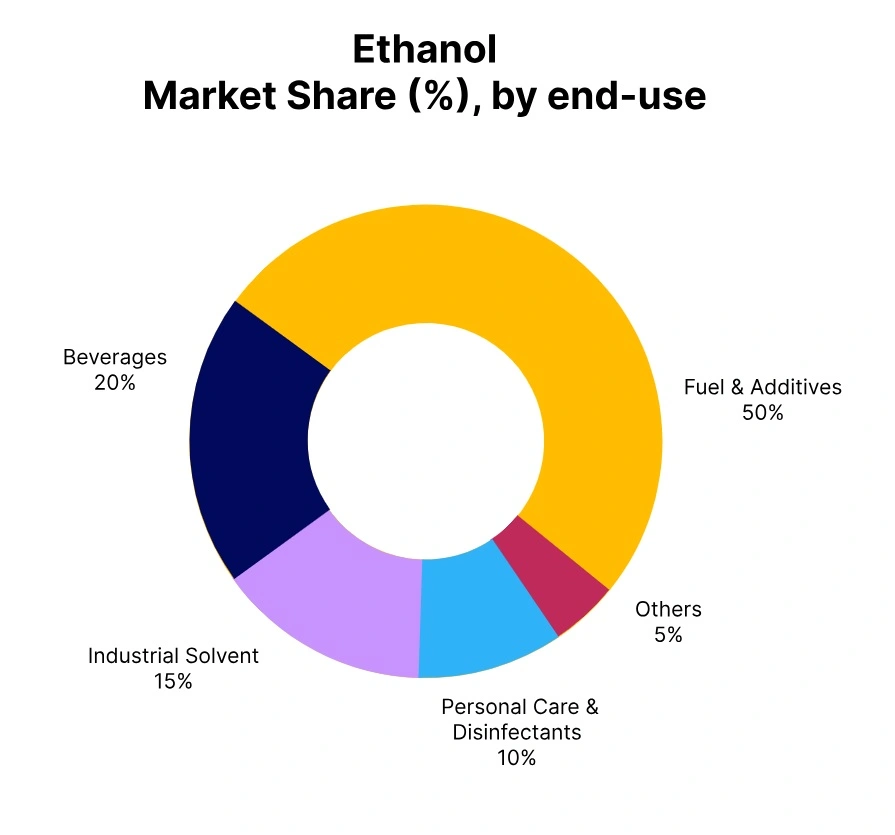
Ethanol Industrial Applications

ethanol market share end use

Historically, several events have caused significant fluctuations in Ethanol prices

  • Farming Impact – (2024) 

In Brazil, ethanol prices are expected to increase in May and June due to reduced sugarcane harvesting and increased demand for gasoline blending. Prices are also expected to rise in July as the sugarcane harvest season begins.

  • Feedstock Fluctuation – (2023) 

In Europe, ethanol prices were affected by several factors, including Year-end destocking, Reduced cargo rates, Rising corn and energy prices, Record sugarcane output in Belgium, Global crop consumption and production adjustments, and Delays in biofuel production.

  • Russia Ukraine – (2022) 

Acknowledging ethanol’s potential to enhance domestic fuel supplies following Russia’s invasion of Ukraine, the EPA has granted emergency waivers that lift the summertime restrictions on E15, permitting its sale throughout the year. This legislation also allocates funding for the infrastructure needed for higher-blend biofuels and extends several existing tax credits related to biofuels.

  • Production boom in the Aftermath of Covid – (2021) 

As the sector starts to bounce back from the demand losses caused by COVID-19, U.S. ethanol production has risen by 8% compared to levels seen in 2020.

  • The COVID-19 pandemic – (2020) 

Due to worldwide lockdowns and a significant drop in fuel demand, many ethanol manufacturers shifted their focus to producing hand sanitizer and industrial alcohol. At the height of the crisis, more than 50% of the industry’s capacity was closed, with approximately 75% of ethanol facilities either offline or functioning at lower output levels.

Why Price Watch™?

Price Watch™ is your trusted resource for tracking global ethanol price trends. Our platform delivers real-time data and expert analysis, offering deep insights into the key factors driving price fluctuations in the ethanol market. By monitoring critical events such as geopolitical tensions, supply chain disruptions, and economic shifts, Price Watch™ keeps you fully informed of market dynamics.

In addition, Price Watch™ provides detailed forecasts and updates on production capacities, enabling you to anticipate market changes and make well-informed decisions. With Price Watch™, you gain a competitive edge in understanding all the elements that influence ethanol prices worldwide. Stay ahead of the curve with Price Watch’s™ reliable, accurate, and timely ethanol market data.

Track Price Watch's™ ethanol price assessment on a weekly basis since 2015 onwards, along with short-term forecasts, and get access to the detailed report in a downloadable format.

Ethanol Market Price Trend published by 𝐏𝐫𝐢𝐜𝐞 𝐖𝐚𝐭𝐜𝐡™ reflect prevailing spot market conditions, derived from independent research, verified trade inputs, and proprietary market intelligence as of the publication date. Prices are published on the specified Incoterm and represent indicative base market levels, exclusive of applicable taxes, VAT, duties, tariffs, and other statutory charges. Actual transaction values may vary depending on volume, credit terms, contractual structure, and other negotiated conditions. Market prices are inherently subject to volatility, liquidity dynamics, regulatory changes, and evolving trade activity. The information provided is for reference and benchmarking purposes only and does not constitute an offer, recommendation, or guarantee of transactional outcomes. Users should exercise independent commercial judgment and assess their specific contractual, regulatory, tax, and application requirements before making business decisions. 𝐏𝐫𝐢𝐜𝐞 𝐖𝐚𝐭𝐜𝐡™ assumes no liability for decisions taken based on this information.

Ethanol Pricing Factors: Corn prices, demand (influenced by gasoline prices and government policies), and supply (affected by plant capacity and disruptions) are key determinants of ethanol pricing. To predict future trends, monitor these factors closely and consider consulting with industry experts.

Negotiating Ethanol Pricing: Leverage market knowledge, explore long-term contracts, consider alternative sources, and build strong relationships with suppliers to negotiate favourable ethanol pricing Leverage market knowledge: Understand current market conditions and benchmark prices to negotiate fair terms.

Explore long-term contracts: Consider long-term contracts to secure stable pricing and potentially negotiate volume discounts.

Consider alternative sources: Evaluate options like imported ethanol or alternative feedstocks to increase your bargaining power.

Build strong relationships: Nurture relationships with suppliers to foster trust and potentially negotiate more favourable terms.

Ethanol Procurement Risks and Mitigation: Address price volatility, supply disruptions, and quality concerns through hedging, diversification, and quality control measures.

Price volatility: Fluctuations in corn prices and ethanol demand can lead to price volatility.

Supply disruptions: Issues like plant closures, transportation problems, or natural disasters can disrupt ethanol supply.

Quality concerns: Ensuring ethanol meets required specifications is crucial for avoiding quality-related issues.

Mitigation strategies include:

Hedging: Use financial instruments like futures contracts to manage price risk.

Diversification: Source ethanol from multiple suppliers to reduce supply chain risks.

Quality control: Implement rigorous quality testing and inspection procedures.

Ethanol is high-purity ethyl alcohol (typically 99.5%+ ethanol) with minimal water content, widely used as a fuel additive (blended with gasoline), industrial solvent, chemical feedstock, pharmaceutical ingredient, and in beverage alcohol production. Its price directly impacts the cost of transportation fuels (E10, E85, E100), hand sanitizers, pharmaceutical products, personal care items, chemical synthesis, alcoholic beverages, and numerous industrial applications, making anhydrous ethanol pricing a critical factor for fuel blenders, pharmaceutical manufacturers, chemical producers, and beverage companies worldwide. 𝐏𝐫𝐢𝐜𝐞 𝐖𝐚𝐭𝐜𝐡™ tracks these prices to help businesses and consumers understand and stay updated with the market trends.

Ethanol prices vary by region, production method, and grade. Prices are typically quoted per gallon, per liter, or per metric ton and change based on supply, demand, feedstock costs (corn, sugarcane, cellulosic biomass), and energy prices. 𝐏𝐫𝐢𝐜𝐞 𝐖𝐚𝐭𝐜𝐡™ provides real-time price assessments across different global markets to help buyers and sellers make informed decisions.

Ethanol prices fluctuate due to changes in feedstock costs (corn, sugarcane, grain, cellulosic biomass), energy prices (natural gas for distillation), crude oil and gasoline prices (fuel ethanol competes with gasoline), production capacity utilization, and demand from fuel blending (dominant use), industrial solvents, pharmaceuticals, and beverage industries. Government biofuel mandates and policies (Renewable Fuel Standard in U.S., EU biofuel directives, Brazil’s ethanol program), corn and grain harvest yields and pricing, sugar prices (for sugarcane ethanol), dehydration and distillation costs, seasonal demand patterns (driving season for fuel), international trade policies and tariffs, renewable energy incentives, competition with synthetic ethanol and alternative fuels, carbon credit values, weather impacts on agricultural feedstocks, and broader economic conditions further shape price trends, with recent outlooks reflecting volatility driven by agricultural commodity prices, crude oil market dynamics, government policy changes, and renewable fuel demand growth.

The biggest buyers of Ethanol are fuel blenders and oil companies using it as a gasoline additive and oxygenate (E10, E15, E85 blends), representing approximately 80-90% of global consumption in major producing countries. Additional significant demand comes from industrial solvent users, pharmaceutical manufacturers (for extractions, tinctures, and antiseptics), hand sanitizer and personal care product producers, chemical manufacturers (using ethanol as feedstock for ethylene, acetaldehyde, ethyl acetate), beverage alcohol producers (for neutral spirits and fortification), cosmetics companies, cleaning product manufacturers, and laboratory/research applications. 𝐏𝐫𝐢𝐜𝐞 𝐖𝐚𝐭𝐜𝐡™ analyses demand patterns across all these industries.

Ethanol is produced through fermentation of sugar-containing or starch-containing feedstocks (corn, sugarcane, wheat, cassava, cellulosic biomass) followed by distillation to produce hydrous ethanol (95-96% ethanol), then dehydration using molecular sieves, membranes, or azeotropic distillation to remove remaining water and achieve 99.5%+ purity. Synthetic ethanol from ethylene hydration is also produced but represents a small fraction of global supply. It is manufactured at bioethanol plants, sugarcane mills with distilleries, corn ethanol facilities, and cellulosic ethanol plants, with production concentrated in major agricultural regions.

Ethanol trade is driven by production capacity, feedstock availability, domestic fuel mandates, and competitive prices. The United States and Brazil are the world’s two largest producers and major exporters, collectively accounting for approximately 85% of global production. The U.S. produces primarily corn-based ethanol, while Brazil produces sugarcane ethanol. European Union countries, China, India, Thailand, Argentina, and Canada also produce significant volumes with varying export participation. Export volumes fluctuate dramatically based on domestic biofuel mandate requirements, gasoline demand, corn and sugar prices, crude oil and gasoline prices affecting ethanol competitiveness, trade policies and tariffs (U.S.-Brazil trade dynamics historically significant), currency exchange rates, and seasonal production patterns (sugarcane harvest in Brazil). 𝐏𝐫𝐢𝐜𝐞 𝐖𝐚𝐭𝐜𝐡™ tracks production levels, export flows and trade patterns to help businesses understand global supply chains and identify sourcing opportunities.

Supply generally matches demand, but regional imbalances and seasonal variations occur due to harvest cycles, plant shutdowns, feedstock availability (drought, crop failures), transportation constraints, sudden demand spikes (pandemic-related sanitizer demand), or policy changes affecting fuel blending mandates. Ethanol production is seasonal in some regions (sugarcane harvest in Brazil), creating supply fluctuations. Infrastructure limitations (pipelines cannot carry ethanol, requiring truck/rail/barge transport) can create regional bottlenecks. 𝐏𝐫𝐢𝐜𝐞 𝐖𝐚𝐭𝐜𝐡™ monitors these supply-demand imbalances to alert the market about potential shortages or surpluses.

Ethanol prices vary by grade based on purity, denaturant status, and application requirements. Ethanol (99.5%+ purity, <0.5% water) is the baseline specification for fuel blending and many industrial applications. Fuel-grade Ethanol is denatured (made unfit for human consumption by adding gasoline or other denaturants) and trades at lower prices due to tax advantages and reduced regulatory requirements. USP/pharmaceutical-grade Ethanol (meeting U.S. Pharmacopeia or European Pharmacopoeia standards) commands significant premiums due to stringent purity requirements, testing, documentation, and suitability for pharmaceutical and food applications. Food-grade/beverage-grade Ethanol (undenatured, suitable for consumption) also commands premiums and faces additional regulations and taxation. Industrial/technical-grade Ethanol for solvents and chemical synthesis may have moderate specifications and pricing. Quality factors including water content, methanol levels, aldehyde content, acidity, conductivity, and residues affect pricing. Organic/non-GMO certified ethanol commands premiums in certain markets. 𝐏𝐫𝐢𝐜𝐞 𝐖𝐚𝐭𝐜𝐡™ provides separate price assessments for fuel-grade, industrial-grade, and pharmaceutical-grade anhydrous ethanol to ensure market transparency.

When Ethanol demand rises quickly, often due to increased gasoline consumption during driving season, biofuel mandate increases, pandemic-related sanitizer demand, or industrial solvent requirements, prices typically increase. The fuel ethanol market is particularly large and price-sensitive, with ethanol prices tracking gasoline values within the context of supply-demand fundamentals. Suppliers prioritize existing fuel supply contracts and high-volume customers, while spot buyers or smaller industrial users may face tighter availability, longer lead times, or premium pricing. Production flexibility is constrained by agricultural feedstock availability, fermentation and distillation capacity, and seasonal production patterns. 𝐏𝐫𝐢𝐜𝐞 𝐖𝐚𝐭𝐜𝐡™ captures these market dynamics in real-time.

Energy, feedstock costs, and Crude Oil prices are dominant factors in Ethanol pricing. Corn prices (for U.S. ethanol) and sugar prices (for Brazilian ethanol) are the largest cost components, driven by agricultural economics, weather, and global commodity markets. Natural gas costs for distillation and dehydration are significant. Crude Oil and gasoline prices strongly influence fuel ethanol values, as ethanol must be price-competitive with gasoline on an energy-adjusted basis. When corn or crude oil prices rise, ethanol production costs and market values typically increase. The corn-to-ethanol crush spread, and ethanol-to-gasoline price ratio are key industry metrics. This is why anhydrous ethanol prices reflect complex interactions between agricultural commodities, energy markets, and biofuel policies, relationships that 𝐏𝐫𝐢𝐜𝐞 𝐖𝐚𝐭𝐜𝐡™ analyses in its price assessments & market reports.

Ethanol prices vary significantly by region based on local production capacity and feedstock type (corn vs. sugarcane vs. grain), feedstock availability and agricultural conditions, energy costs for distillation, government biofuel mandates and incentives, fuel blending requirements, gasoline prices and refining economics, transportation infrastructure and costs (Ethanol cannot use petroleum pipelines), import/export dynamics and trade policies, taxation structures (beverage alcohol vs. fuel vs. industrial), seasonal production patterns, demand from fuel versus industrial applications, and regional supply-demand balances. The U.S. Midwest (near corn production), Brazil (sugarcane regions), and other agricultural areas typically have lower prices, while import-dependent coastal or urban markets face transportation premiums. 𝐏𝐫𝐢𝐜𝐞 𝐖𝐚𝐭𝐜𝐡™ tracks prices across all major regions to highlight these differences.

The Ethanol market outlook depends on factors such as corn, sugar, and agricultural feedstock price trends and harvest conditions, Crude Oil and gasoline price dynamics, natural gas and energy costs, biofuel policy developments and mandate levels (RFS, EU RED, national programs), fuel consumption trends and transportation demand, electric vehicle adoption affecting gasoline demand, cellulosic and advanced biofuel technology development, industrial solvent and chemical demand, pharmaceutical and sanitizer requirements, capacity additions and plant economics, international trade policies and tariffs, weather impacts on crop yields, carbon pricing and renewable energy incentives, and macroeconomic indicators affecting fuel consumption and agricultural markets. 𝐏𝐫𝐢𝐜𝐞 𝐖𝐚𝐭𝐜𝐡™ regularly publishes detailed forecasts that project price movements for the next 12 months based on comprehensive analysis of supply additions, demand growth in key industries, seasonal patterns, and macroeconomic indicators. Our forecasts help businesses anticipate market conditions and plan accordingly.

Absolutely. Accurate forecasting allows you to your purchases better time, negotiate contracts more effectively, and budget more accurately. If 𝐏𝐫𝐢𝐜𝐞 𝐖𝐚𝐭𝐜𝐡™ forecasts predict a price increase in three months, you might choose to secure supply now or lock in favorable contract terms, potentially saving significant costs given the volume and price volatility in ethanol markets.

Events like droughts or floods affecting corn/sugar crops, extreme weather disrupting production or logistics, plant shutdowns or accidents, feedstock supply disruptions, Crude Oil price shocks, government policy changes affecting biofuel mandates, trade disputes and tariff changes, transportation infrastructure disruptions, pandemics creating demand surges (sanitizer) or collapses (fuel demand), gasoline demand changes from economic conditions or fuel efficiency improvements, currency fluctuations affecting trade competitiveness, and agricultural commodity market volatility can cause supply shortages and price spikes or crashes. The 2020 COVID-19 pandemic created unprecedented volatility with collapsing fuel demand but surging sanitizer requirements. Drought conditions in corn-growing regions, Brazilian sugarcane harvest issues, U.S. Renewable Fuel Standard policy debates, and crude oil market disruptions regularly impact ethanol markets. 𝐏𝐫𝐢𝐜𝐞 𝐖𝐚𝐭𝐜𝐡™ provides timely alerts when such events affect the market.

𝐏𝐫𝐢𝐜𝐞 𝐖𝐚𝐭𝐜𝐡™ collects data from manufacturers, distributors, and buyers worldwide to publish regular price assessments, market reports, and forecasts. Our transparent methodology and comprehensive coverage make us a trusted source for understanding fair pricing and market trends in the Anhydrous Ethanol industry, covering fuel-grade, industrial-grade, and pharmaceutical-grade specifications across different production regions and markets.