Fluff Pulp Price Trend and Forecast

Weekly Update
|
Historical Data Since 2015
|
Forecast for 2026
  • Commodity Pricing

fluff pulp Price Trends by Country

usUnited States
itItaly
deGermany
cnChina
inIndia

Global fluff pulp Spot Market Prices, Trend Analysis and Forecast

Price Watch™ provides real-time price assessments and price forecasts for Fluff Pulp across top trading regions:

Fluff Pulp Regional Coverage Fluff Pulp Grade and Country Coverage Fluff Pulp Pricing Data Coverage Explanation
Asia Fluff Pulp Pricing Analysis Fluff Pulp Untreated Softwood Fluff Pulp CIF Prices at Shanghai, China Importing from USA Weekly Price Update on Fluff Pulp Real-Time Import Prices at Shanghai, China from USA
Fluff Pulp Untreated Softwood Fluff Pulp CIF Prices at Nhava Sheva Port, India Importing from USA Weekly Price Update on Fluff Pulp Real-Time Import Prices at Nhava Sheva Port, India from USA
Fluff Pulp Untreated Softwood Fluff Pulp Ex-Mumbai Domestic Prices, India Real-Time Weekly Price Update of Fluff Pulp Domestic Prices in Mumbai, India
North America Fluff Pulp Pricing Analysis Fluff Pulp Untreated Softwood Fluff Pulp FOB Prices at Houston Port, USA Weekly Price Update on Fluff Pulp Real-Time Export Prices from Houston Port, USA to Global Markets
Europe Fluff Pulp Pricing Analysis Fluff Pulp Untreated Softwood Fluff Pulp CIF Prices at Genoa Port, Italy Importing from USA Weekly Price Update on Fluff Pulp Real-Time Import Prices at Genoa Port, Italy from USA
Fluff Pulp Untreated Softwood Fluff Pulp CIF Prices at Hamburg Port, Germany Importing from USA Weekly Price Update on Fluff Pulp Real-Time Import Prices at Hamburg Port, Germany from USA

Fluff Pulp Price Trend Q1 2026

In Q1 2026, the global fluff pulp prices have been stabilizing compared to Q4 2025, with prices remaining almost unchanged showing a flat no movement. Price charts have been indicating a pause in the previous downward trend, and the price has been beginning to find a balance between supply and demand.

Buyers from hygiene, personal care, and related sectors have been maintaining steady procurement focused on essential consumption rather than aggressive restocking, which has been supporting price stabilization. Producers have been aligning output levels with demand and have been avoiding further price erosion.

Raw material availability has been sufficient, and exporters have been continuing stable shipment flows to key markets, preventing inventory accumulation. Market participants have been gradually regaining confidence, with buyers having been purchasing cautiously and mills having been experiencing stable order books and operational conditions.

Overall, Q1 2026 has been reflecting a phase of equilibrium in the global fluff pulp market, where supply and demand have been adjusting to each other, and market sentiment has been improving slightly as producers and buyers have been working to maintain stability after the declines of Q4 2025.

India: Fluff Pulp Domestically Traded Price Ex- Mumbai, from India; Grade- Untreated Softwood (Brightness ≥ 86%)

In Q1 2026, fluff pulp prices in India have been increasing by 6.1% compared to Q4 2025. The fluff pulp price trend in India has been shifting toward a strong upward direction compared to the previous quarter. The fluff pulp market has been strengthening due to improved demand from hygiene and personal care sectors.

Restocking activities have been supporting higher procurement volumes as buyers have been rebuilding inventories after previous declines. Domestic supply has been tightening slightly due to controlled imports and improved consumption levels. Raw material costs have been firming, while logistics expenses have been stabilizing, adding moderate cost pressure on suppliers.

The fluff pulp price trend in India has been illustrating a sharp upward curve. Global pulp markets have been showing signs of recovery, supporting domestic price increases. Overall pricing sentiment has been more optimistic than Q4 2025. On month-on-month basis, In March 2026, fluff Pulp prices in India have been increasing steadily, reflecting a 2.5% increase compared to February 2026.

Italy: Fluff Pulp Imported Prices CIF Genoa, Italy from USA; Grade- Untreated Softwood (Brightness ≥ 86%)

According to Price-Watch™ , in Q1 2026, fluff pulp prices in Italy have been increasing by 1% in CIF Genoa from Q4 2025. The fluff pulp prices have been shifting toward an upward direction compared to the previous quarter. The fluff pulp price trend in Italy has been stabilizing due to steady demand from European hygiene and personal care sectors. Seasonal restocking activities have been supporting moderate procurement volumes.

Export shipments from US and South American mills have been maintaining consistent flows. Logistics costs have been easing as port operations have been returning to normal after winter disruptions. The fluff pulp price chart has been illustrating a gentle upward curve. Global pulp markets have been showing early signs of stabilization after previous declines.

Overall pricing sentiment has been slightly more optimistic than Q4 2025. On month-on-month basis, In March 2026, fluff pulp prices in Italy have been increasing by 2.8% compared to February 2026.

Germany: Fluff pulp Imported Prices CIF Hamburg, Germany from USA; Grade- Untreated Softwood (Brightness ≥ 86%)

In Q1 2026, fluff pulp prices in Germany have been increasing by 0.7% compared to Q4 2025. The fluff pulp price trend in Germany has been shifting toward a slight upward direction compared to the previous quarter. The fluff pulp market has been stabilizing due to steady demand from hygiene and personal care sectors in Germany.

Restocking activities have been supporting moderate procurement volumes following the declines in the previous quarter. Import flows from the USA have been remaining consistent, ensuring balanced supply conditions. Raw material costs have been firming slightly, while logistics and energy costs have been stabilizing. The fluff pulp price chart has been illustrating a gentle upward curve.

Global pulp markets have been showing early signs of recovery after previous declines. Overall pricing sentiment has been slightly more optimistic than Q4 2025. On month-on-month basis, In March 2026, fluff pulp prices in Germany have been increasing by 3.0%, reflecting improving demand conditions and balanced market fundamentals.

China: Fluff Pulp Imported Prices CIF Shanghai, China from USA; Grade- Untreated Softwood (Brightness ≥ 86%)

In Q1 2026, fluff pulp prices in China have been increasing by 0.1% compared to Q4 2025. The fluff pulp prices have been shifting toward a stable direction compared to the previous quarter. The fluff pulp price trend in China has been stabilizing due to steady demand from hygiene and personal care sectors in China.

Restocking activities have been supporting moderate procurement volumes following the previous declines. Import flows from the USA have been remaining consistent, ensuring balanced supply conditions. Raw material costs have been stabilizing, while logistics and freight conditions have been remaining steady. The fluff pulp price chart has been illustrating a flat to slightly upward trend.

Global pulp markets have been showing early signs of stabilization after earlier declines. Overall pricing sentiment has been slightly more stable than Q4 2025. On month-on-month basis, In March 2026, fluff pulp prices in China have been increasing by 3% compared with February 2026, reflecting balanced supply-demand conditions and cautious purchasing activity.

Fluff Pulp Price Trend Analysis: Q4 2025

In Q4 2025, the global fluff pulp market has been facing a sharper decline compared to Q3 2025, with prices dropping by 6.9%. The price trend has been turning more negative across major regions, and price charts have been showing a steeper downward trajectory as demand has been weakening further.

Buyers from hygiene and personal care sectors have been reducing purchases despite typical year-end restocking cycles, and overall procurement activity has been remaining subdued. On the supply side, producers have been maintaining stable production levels, and raw material availability has been staying sufficient, which has been contributing to oversupply pressures in the market.

Exporters have been adjusting shipment volumes prudently to avoid excess inventory, but global trade flows have been remaining comfortable, reflecting no significant tightening. Mills have been experiencing softer order books and tighter margins, and market sentiment has been remaining largely negative with buyers being cautious and producers having to manage supply carefully.

Overall, Q4 2025 has been showing that the market has been struggling with weak demand and abundant supply, and participants have been navigating the decline by balancing output, shipments, and inventory levels.

India: Fluff Pulp Domestically Traded Price Ex- Mumbai, from India; Grade- Untreated Softwood (Brightness ≥ 86%)

In Q4 2025, fluff pulp prices in India have been decreasing by 3.5% compared to Q3 2025. The fluff pulp prices have been continuing their downward trend compared to the previous quarter. The fluff pulp price trend in India has been weakening due to lower demand from hygiene and personal care sectors.

Seasonal demand has been remaining subdued despite year-end expectations, limiting bulk procurement activity. Import availability has been remaining comfortable, ensuring sufficient domestic supply. Raw material costs have been softening slightly, while improved logistics and lower freight rates have been easing overall cost pressures.

The fluff pulp price chart has been illustrating a steeper downward curve. Global pulp markets have been reflecting bearish trends, influencing domestic price movements. Overall pricing sentiment has been more negative than Q3 2025. On month-on-month basis, In December 2025 fluff pulp prices in India have been declining during the quarter, indicating around 1% dip when compared to November 2025.

Italy: Fluff Pulp Imported Prices CIF Genoa, Italy from USA; Grade- Untreated Softwood (Brightness ≥ 86%)

According to Price-Watch™ , in Q4 2025, fluff pulp prices in Italy have been dropping by 6.5% compared to Q3 2025, showing rapid softening as Italian factories have been halting production during the holiday season. Sanitary napkin lines have been scaling back amid weak festive season pre-orders, while upstream, US mill maintenance shutdowns have been paradoxically boosting spot availability.

The fluff pulp price trend in Italy from the USA has been tumbling as falling energy costs have been curbing logistics expenses. Country-specific factors in Italy have been involving budget cuts in public health stockpiles. The fluff pulp price chart has been plunging amid the euro weakening against the dollar, and winter storms have been slightly disrupting Genoa port operations.

Market dynamics have been empowering European buyers decisively, with importers having been clinching long-term low-price contracts and shipments having been rerouted to alternative origins. Overall, trade flows have been conforming to bearish momentum, and in December 2025 the fluff pulp prices in Italy have been sliding 2.2% when compared to November 2025, reflecting sustained downward pressure throughout the quarter.

Germany: Fluff pulp Imported Prices CIF Hamburg, Germany from USA; Grade- Untreated Softwood (Brightness ≥ 86%)

In Q4 2025, fluff pulp prices in Germany have been decreasing by 6.5% compared to Q3 2025. The fluff pulp prices have been continuing their downward trend compared to the previous quarter. The fluff pulp price trend in Germany has been weakening due to reduced demand from hygiene and personal care sectors. Seasonal slowdowns and year-end demand softness have been limiting procurement activity.

Import supply from the USA has been remaining ample, contributing to comfortable availability in the German market. Raw material costs have been softening slightly, while declining energy and freight costs have been easing pricing pressure. The fluff pulp price chart has been illustrating a sharp downward curve. Global pulp markets have been reflecting bearish conditions, influencing regional pricing trends.

Overall pricing sentiment has been more negative than Q3 2025. On month-on-month basis, In December 2025, fluff pulp prices in Germany have been declining by 2.0% compared with November 2025, reflecting continued demand weakness.

China: Fluff Pulp Imported Prices CIF Shanghai, China from USA; Grade- Untreated Softwood (Brightness ≥ 86%)

In Q4 2025, fluff pulp prices in China have been decreasing by 6.5% compared to Q3 2025. The fluff pulp price trend in China has been continuing their downward trend compared to the previous quarter. The fluff pulp market has been weakening due to lower demand from the hygiene and personal care sectors.

Year-end demand has remained subdued, limiting bulk procurement activity despite seasonal expectations. Import availability from the USA has been remaining ample, contributing to comfortable supply conditions in the Chinese market. Raw material costs have been softening slightly, while declining freight and energy costs have been easing pricing pressure.

The fluff pulp price chart has been illustrating a steep downward curve. Global pulp markets have been reflecting bearish trends, influencing regional price movements. Overall pricing sentiment has been more negative than Q3 2025. On month-on-month basis, In December 2025, fluff pulp price in China have been declining by 2% compared with November 2025, reflecting continued demand weakness.

In Q3 2025, the global Untreated Softwood Fluff Pulp market remained largely stable, supported by balanced supply and steady demand from hygiene, tissue, and specialty paper manufacturers. In North America, export prices held firm as producers maintained consistent production and inventory levels, while regional buyers continued regular offtake.

Europe recorded modest price gains or stability, reflecting healthy demand and occasional logistics constraints, with downstream consumption remaining steady. Across Asia, Fluff Pulp price trends were mixed East Asia maintained neutral levels amid sufficient inventories and balanced supply-demand conditions, while South Asia saw notable upward movement driven by robust seasonal demand and competitive sourcing amid limited vessel availability.

Overall, the market demonstrated steady trading activity through the quarter, with Fluff Pulp price trend largely supported by equilibrium between supply and measured procurement across major regions.

United States: Fluff Pulp price in the USA, Grade: Untreated Softwood (Brightness ≥ 86%).

In Q3 2025, the Fluff Pulp (Untreated Softwood) export price in the USA has remained nearly stable amid balanced global demand from absorbent hygiene and specialty paper manufacturers. FOB Houston prices have inched up by 0.1%, trading between USD 940–970 per metric ton.

Suppliers have reported steady production rates and ample inventory levels, while buyers have maintained regular offtake across North American and Latin American markets. Logistics conditions have been favourable, supporting consistent shipment schedules.

Overall sentiment has been neutral, with neither significant upward nor downward price pressure during the quarter. The Fluff Pulp price trend in the USA has shown minimal fluctuation amid balanced supply and demand. In September 2025, Fluff Pulp prices in the USA have remained within USD 940–970 per metric ton, reflecting overall stability.

Italy: Fluff Pulp price in Italy imported from the USA, Grade: Untreated Softwood (Brightness ≥ 86%).

In Q3 2025, the Fluff Pulp (Untreated Softwood) import price in Italy has risen modestly amid firm demand from tissue and specialty paper producers. CIF Genoa prices have increased by 0.4%, ranging between USD 980–1100 per metric ton. European buyers have faced steady supply flows from the USA but have competed for vessel space amid seasonal logistics constraints.

Downstream consumption has held steady, driven by hygiene product manufacturers, while inventory levels have remained moderate. The slight Fluff Pulp price trend uptick has reflected healthy demand and tight freight capacity during the quarter. The Fluff Pulp price trend in Italy has indicated a steady upward tone supported by firm demand. In September 2025, Fluff Pulp prices in Italy have stood within USD 980–1100 per metric ton, maintaining stable performance.

Germany: Fluff Pulp price in Germany imported from the USA, Grade: Untreated Softwood (Brightness ≥ 86%).

In Q3 2025, the Fluff Pulp (Untreated Softwood) import price in Germany has remained stable due to balanced supply and demand. CIF Hamburg prices have stayed flat quarter-on-quarter at USD 990–1100 per metric ton. Import volumes from the USA have been consistent, with downstream hygiene and specialty paper industries maintaining regular procurement.

Freight and logistics conditions have eased slightly compared to the previous quarter, but overall buying sentiment has stayed cautious amid ample onshore inventories. The net result has been minimal price movement and a steady trading environment.

The Fluff Pulp price trend in Germany has remained stable amid balanced fundamentals. In September 2025, Fluff Pulp prices in Germany have hovered around USD 990–1100 per metric ton, reflecting ongoing steadiness.

China: Fluff Pulp price in China imported from the USA, Grade: Untreated Softwood (Brightness ≥ 86%).

In Q3 2025, the Fluff Pulp (Untreated Softwood) import price in China has held steady as demand from hygiene product and tissue manufacturers has matched stable supply. CIF Shanghai prices have remained unchanged at USD 990–1100 per metric ton.

American shipments have filled available port slots smoothly, and downstream buyers have maintained steady consumption. Inventory levels at mills and converters have been sufficient to meet ongoing production needs, while freight costs have stabilized after mid-quarter.

Overall, market conditions have been balanced, with pricing remaining effectively neutral. The Fluff Pulp price trend in China has exhibited steady behaviour amid consistent demand. In September 2025, Fluff Pulp prices in China have continued within USD 990–1100 per metric ton, showing balanced trading conditions.

India: Fluff Pulp price in India imported from the USA, Grade: Untreated Softwood (Brightness ≥ 86%).

According to Price-Watch, In Q3 2025, the Fluff Pulp (Untreated Softwood) import price in India has recorded a strong increase amid robust demand from hygiene and absorbent product manufacturers. CIF Nhava Sheva prices have climbed 3.2% to USD 1000–1100 per metric ton. Buyers have competed for limited vessel slots and spot volumes as downstream consumption has accelerated, driven by seasonal hygiene product production.

Inventory drawdowns have prompted replenishment purchases despite elevated freight costs. The firming price has reflected tight supply dynamics and heightened offtake across key end-use segments. The Fluff Pulp price trend in India has shown a firm upward tone supported by strong demand. In September 2025, Fluff Pulp prices in India have stayed between USD 1000–1100 per metric ton, maintaining an upward trajectory.

According to the PriceWatch, Fluff Pulp prices in the USA were assessed at USD 969 per metric ton FOB Houston by the end of Q2 2025, registering a 4.87 percent increase. Early in the quarter, prices rose due to tightened domestic supply and steady demand from hygiene and absorbent product manufacturers but began to stabilize and slightly decline toward the quarter’s close as inventories improved.

In European and Asian importing regions, particularly in Germany and China, cautious buying behaviour emerged due to high inventory carryovers, reduced diaper and feminine hygiene product demand, and efforts to manage production costs amid currency fluctuations. 

According to the PriceWatch, Fluff Pulp prices in India were assessed at USD 1163 per metric ton Ex Mumbai by the end of Q2 2025, reflecting an overall increase of 4.8%, although prices showed signs of stability and slight decline towards the quarter’s close. Early in the quarter, prices rose due to firm import demand from hygiene product manufacturers amid steady diaper and sanitary napkin production and higher shipping charges.

However, by June, softened procurement activity and sufficient port inventories led to reduced spot buying. Additionally, favourable shipping schedules from the USA and stable supply availability helped ease cost pressures in the Indian market. 

In Q1 2025, Fluff Pulp prices in the USA fell again to USD 924/MT, a 2.12% decline from Q4. This softness was due to slower domestic consumption early in the year, especially as hygiene manufacturers focused on clearing stocks built up in late 2024.

Reduced export interest from China, where buyers continued to favor local alternatives, also weighed on US sales. Although operating rates at US mills remained steady, abundant supply in the market kept prices from recovering during the quarter. 

In Q1 2025, the Fluff Pulp market experienced a slight decline with prices falling to USD 1110/MT, down 1.8% from the previous quarter. The early-year slowdown in purchasing, following the New Year and inventory carryover from Q4 2024, led to reduced buying activity across the sector.

Import prices eased slightly as global availability improved, especially from the USA, where producers offered competitive rates to regain volume. Additionally, currency stabilization and smoother port operations in India helped maintain adequate supply at lower delivered costs. 

Fluff Pulp Price Trend Analysis: Q4 2024

In Q4 2024, Fluff Pulp prices dipped slightly to USD 944/MT, down 2.1%. This adjustment was expected, as many buyers reduced purchasing volumes to manage year-end inventories. The market also saw an increase in available supply from both domestic mills and global competition, particularly from South America, which added to the pressure. Meanwhile, some converters delayed orders in anticipation of better pricing in the new year, contributing to the overall cooling in trade activity. 

In Q4 2024, Fluff Pulp prices in India softened slightly to USD 1130/MT, a marginal 0.88% decline. This modest drop was linked to cautious buying behaviour from converters aiming to control year-end inventories and manage cash flows.

Abundant supply in the domestic market, as delayed shipments from earlier quarters finally arrived, also relieved some pricing pressure. Meanwhile, stable production from local hygiene manufacturers prevented any significant dip in demand but wasn’t strong enough to push prices up. 

In Q3 2024, Fluff Pulp prices in the USA jumped to USD 964/MT, marking a 6.4% increase from the previous quarter. The rise was mainly driven by higher export activity, as buyers in Latin America and the Middle East ramped up orders to meet peak hygiene product demand.

Unplanned mill outages due to hurricane-related weather events in the Southeastern USA also limited production and reduced immediate availability. On top of that, a favorable price spread over SBSK encouraged more dedicated Fluff production, but not quickly enough to meet rising demand. 

In Q3 2024, Fluff Pulp prices in India saw a sharp jump to USD 1140/MT, marking an 8.6% rise. The surge was primarily due to increased stocking by large hygiene product brands ahead of the festive season, which boosted procurement volumes.

At the same time, some global suppliers diverted shipments to Latin America and the Middle East, reducing the quantity arriving in India. Moreover, heavy monsoon rains in western India affected inland logistics, causing delivery delays and pushing prices higher in key consumption hubs like Mumbai. 

In Q2 2024, Fluff Pulp prices in the USA moved up modestly to USD 906/MT, rising by 1.57% from Q1. The increase was supported by seasonal demand growth from hygiene product manufacturers.

Some tightness in availability was also seen due to planned maintenance at swing mills, which temporarily reduced production. Furthermore, improved margins encouraged a few mills to shift capacity back to Fluff, helping stabilize prices after a soft start to the year. 

In Q2 2024, Fluff Pulp prices in India increased further to USD 1050/MT, up 1.94%. This gradual rise was supported by steady production activity in the hygiene and personal care sector, with manufacturers maintaining procurement to meet stable retail demand.

Freight costs also remained elevated due to longer transit times from the USA and Europe, contributing to overall pricing pressure. Additionally, importers faced delays in customs clearance and port congestion in Mumbai, which restricted prompt availability and added to cost pass-throughs. 

In Q1 2024, Fluff Pulp prices in the USA eased slightly to USD 892/MT, reflecting a 0.78% drop from the previous quarter. This decline came as US mills faced weaker export orders, especially from China, where substitution with local alternatives became more common.

At the same time, stable demand in mature markets like North America couldn’t fully absorb the available supply, leading to a buildup of inventories. Additionally, the narrowing price spread between Fluff Pulp and Southern Bleached Softwood Kraft (SBSK) Pulp made swing mills less inclined to prioritize Fluff, adding to overall supply pressure. 

In Q1 2024, Fluff Pulp prices in the domestic market of India (Ex Mumbai) rose slightly to USD 1030/MT, reflecting a 3% increase from the previous quarter. The price uptick was mainly driven by firm demand from hygiene product manufacturers, especially in urban centers, where rising awareness and usage of baby diapers and adult incontinence products supported consumption.

At the same time, the Indian Rupee weakened against the US Dollar, raising the landed cost of imported Fluff Pulp. Furthermore, limited import volumes arriving at key ports, as some suppliers prioritized other regions, led to tighter availability in the local market. 

Technical Specifications of Fluff Pulp Price Trends

Product Description

Fluff Pulp is a specialized bleached softwood kraft pulp designed primarily for absorbent products such as diapers, sanitary napkins, and adult incontinence pads. It is produced through the kraft process and carefully treated to achieve high purity, brightness, and fiber integrity. Fluff pulp consists of long, flexible fibers that provide excellent absorbency, fluid distribution, and pad integrity when air-laid or formed into absorbent cores. It is chemically refined to minimize fines and improve defibration, ensuring consistent performance in high-speed converting operations. It is known for its softness, bulk, and fast liquid uptake. Fluff pulp is also made from sustainably managed softwood sources, supporting eco-friendly hygiene product manufacturing.

Identifiers and Classification:

  • CAS No: 65996-61-4
  • HS Code: 47032900
  • Molecular Formula: Not applicable (natural polymeric mixture of cellulose)
  • Molecular Weight: Variable (approx. 162–300 kDa for cellulose polymer chains)


Fluff Pulp Synonyms:

  • Comminution Pulp
  • Absorbent Pulp
  • Fluffy Pulp
  • Fluff Cellulose
  • Air-Dried Fluff Pulp
  • Bleached Softwood Kraft Pulp (for absorbent products)
  • High Bulk Kraft Pulp (HBKP – Softwood)


Fluff Pulp Grades Specific Price Assessment:

  • Untreated Softwood (Brightness ≥ 86%)


Fluff Pulp Global Trade and Shipment Terms

  • Quotation Terms (Product & Country Specific): 90-100 MT
  • Packaging Type (Product & Country Specific): Rolls covered with Plastic Film (Width: 19 inches)


Incoterms Referenced in Fluff Pulp Price Reporting

Shipping Term  Location  Definition 
FOB Houston  Houston, USA  Fluff pulp Export price from USA 
CIF Genoa (USA)  Genoa, Italy  Fluff pulp Import price in Italy from USA 
CIF Hamburg (USA)  Hamburg, Germany  Fluff pulp Import price in Germany from USA 
CIF Shanghai (USA)  Shanghai, China  Fluff pulp Import price in China from USA 
CIF Nhava Sheva (USA)  Nhava Sheva, India  Fluff pulp import price in India from USA 
Ex- Mumbai  Mumbai, India  Domestically Traded Fluff Pulp price in India 

Quotation Terms refers to the quantity range specified for the Fluff Pulp being quoted or offered in a commercial transaction.

Packaging Type refers to standard packaging size commonly used for Fluff Pulp packing, ease of handling, transportation, and storage in industrial and commercial applications.

Fluff Pulp Manufacturers and their brands

Brand Name  Manufacturer 
Lighthouse 95  Domtar Corporation 

Fluff Pulp Industrial Applications

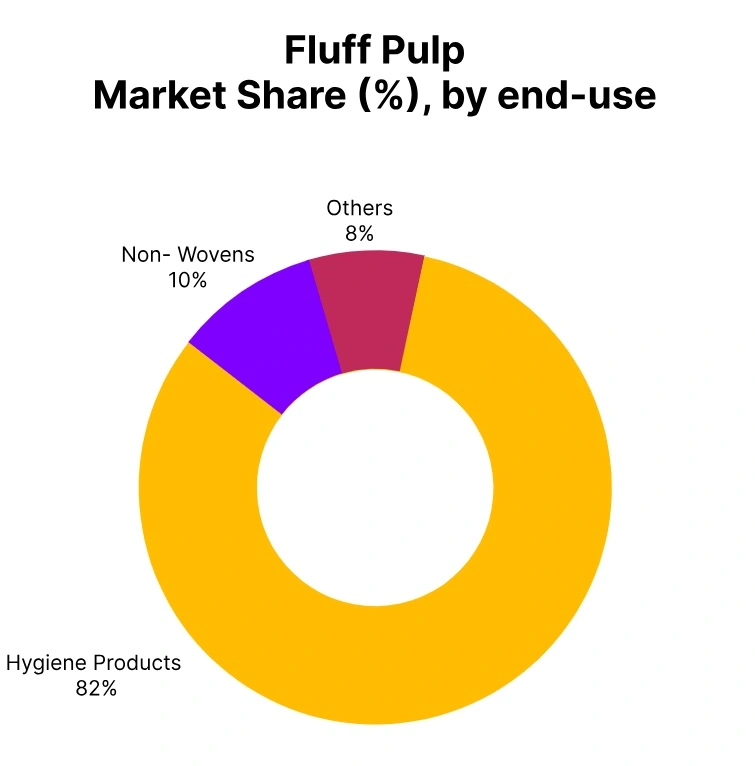
fluff pulp market share end use

Historically, several events have caused significant fluctuations in Fluff Pulp prices

Weakened Chinese Import Demand (2023–2024): Fluff Pulp exports from the USA to China declined as Chinese manufacturers increasingly adopted domestic or lower-cost alternatives. This reduced reliance on US-origin pulp pressured prices, especially during periods of abundant supply and weaker margins for swing mills shifting between Fluff and SBSK production. 

COVID-19 Pandemic Impact (2020): The global outbreak led to a sudden drop-in industrial activity, disrupting pulp logistics and operations at US mills. However, demand quickly rebounded as hygiene products like diapers and wipes became essential. This sudden demand surge led to short-term price spikes, followed by volatility as market conditions continuously shifted throughout the pandemic period. 

U.S.–China Trade War (2018–2019): Trade tensions between the USA and China created uncertainty in pulp exports. Chinese buyers hesitated on long-term contracts and looked to alternative sources due to fears of rising tariffs, which disrupted steady demand. The unpredictable trade environment caused erratic pricing and occasional inventory buildup in US warehouses.

These factors highlight the Fluff Pulp market’s sensitivity to global disruptions and energy price fluctuations, which have caused significant price volatility over the years. 

Why Price Watch™?

Price Watch™ is your trusted resource for tracking global fluff pulp price trends. Our platform delivers real-time data and expert analysis, offering deep insights into the key factors driving price fluctuations in the fluff pulp market. By monitoring critical events such as geopolitical tensions, supply chain disruptions, and economic shifts, Price Watch™ keeps you fully informed of market dynamics.

In addition, Price Watch™ provides detailed forecasts and updates on production capacities, enabling you to anticipate market changes and make well-informed decisions. With Price Watch™, you gain a competitive edge in understanding all the elements that influence fluff pulp prices worldwide. Stay ahead of the curve with Price Watch’s™ reliable, accurate, and timely fluff pulp market data.

Track Price Watch's™ fluff pulp price assessment on a weekly basis since 2015 onwards, along with short-term forecasts, and get access to the detailed report in a downloadable format.

Fluff Pulp Market Price Trend published by Price Watch™ reflect prevailing spot market conditions, derived from independent research, verified trade inputs, and proprietary market intelligence as of the publication date. Prices are published on the specified Incoterm and represent indicative base market levels, exclusive of applicable taxes, VAT, duties, tariffs, and other statutory charges. Actual transaction values may vary depending on volume, credit terms, contractual structure, and other negotiated conditions. Market prices are inherently subject to volatility, liquidity dynamics, regulatory changes, and evolving trade activity. The information provided is for reference and benchmarking purposes only and does not constitute an offer, recommendation, or guarantee of transactional outcomes. Users should exercise independent commercial judgment and assess their specific contractual, regulatory, tax, and application requirements before making business decisions. Price Watch™ assumes no liability for decisions taken based on this information.

Fluff Pulp prices are mainly influenced by raw material costs, especially the price of Southern Pine used to make SBSK (Southern Bleached Softwood Kraft). Global demand from hygiene product manufacturers, such as diaper and sanitary pad producers, also plays a key role.

In export markets, changes in demand from major importers like China, India, Germany, and Italy directly affect US pricing. Additionally, freight rates, mill operating decisions (such as switching between SBSK and Fluff Pulp), and inventory levels at both mills and buyers can lead to price fluctuations.

Logistics costs from the US to Europe—especially to Italy and Germany can significantly affect Fluff Pulp pricing. Factors like shipping delays through the Red Sea, Panama Canal congestion, or rising fuel costs can increase the delivered price of US-origin pulp.

If freight rates remain high or unstable, buyers in Europe may explore alternate sources or renegotiate contracts, which can influence US mills to adjust their pricing to stay competitive in the EU market.

Swing mills, which can switch between producing Fluff Pulp and SBSK (Southern Bleached Softwood Kraft), play a critical role in supply flexibility. When Fluff Pulp prices are high, mills tend to increase its production, leading to more supply and potential price drops.

Conversely, when margins favor SBSK, Fluff Pulp supply tightens, causing prices to rise. Procurement professionals should factor in mill behavior and pulp market dynamics to anticipate price changes.

Fluff pulp has served as a highly absorbent cellulose material in diapers and hygiene products. Its price has mattered because it has influenced production costs, consumer prices, and profitability, while rising demand and supply constraints have shaped global markets. Price Watch™ tracks these prices to help businesses and consumers understand and stay updated with the market trends.

Fluff pulp prices have been varying by region and grade (bleached or unbleached, softwood or hardwood). Prices have been typically being quoted per metric ton and have been changing based on supply, demand, and production costs. Price Watch™ provides real-time price assessments across different global markets to help buyers and sellers make informed decisions.

Fluff pulp prices have been fluctuating due to raw material availability (e.g., softwood logs), energy and chemical costs in pulping, logistics/shipping expenses, and varying demand from industries like diapers, adult incontinence products, feminine hygiene, tissue, and absorbent industrial products. Seasonal demand spikes, global supply disruptions, pulp grade shifts, and economic conditions have been further influencing trends, with recent forecasts showing steady growth amid sustainability and hygiene-driven market shifts.

Top of Form

Bottom of Form

The biggest buyers have been diaper manufacturers, adult incontinence and feminine hygiene product makers, tissue and towel producers, and other absorbent product manufacturers. Non-woven fabric producers, medical and healthcare product makers, and specialty industrial absorbent manufacturers have also been using significant amounts. Price Watch™ analyses demand patterns across all these industries.

Fluff pulp is being manufactured at pulp and paper mills worldwide through a chemical and mechanical process called kraft pulping, which has been separating cellulose fibers from wood chips to produce high-absorbency pulp.

The largest exporter of fluff pulp has been USA, while countries in Northern Europe (particularly Sweden and Finland), Canada, and Brazil have also been supplying significant volumes. Export volumes have been shifting based on regional production capacity, domestic demand, and global trade dynamics. Price Watch™ has been tracking production levels, export flows, and trade patterns to help businesses by understanding global supply chains and have been identifying sourcing opportunities for fluff pulp.

Supply generally matches demand, but regional shortages can occur due to mill shutdowns, low harvesting of trees, transportation problems, or sudden spikes in industrial activity. Price Watch™ monitors these supply-demand imbalances to alert the market about potential shortages or surpluses.

Fluff pulp comes in various grades based on fiber type, bleaching, and absorbency levels, ranging from unbleached or standard softwood pulp to high-brightness, high-absorbency bleached pulp. Higher-grade pulp has been costing more because it has been requiring additional processing and bleaching steps. Fluff pulp is being supplied in rolls, sheets, or bales, with prices having been varying accordingly. Price Watch™ has been providing separate price assessments for each grade to ensure market transparency.

When demand rises quickly for fluff pulp, perhaps due to increased diaper, tissue, or hygiene product production, prices typically climb. Suppliers may prioritize certain customers, and buyers might face longer delivery times or pay premium prices. Price Watch™ captures these market dynamics in real-time.

Energy is one of the largest production costs for fluff pulp. When power and chemical costs rise, manufacturers often pass these costs to buyers, making fluff pulp more expensive. This is why prices in regions with lower energy costs tend to be cheaper, a correlation that Price Watch™ analyzes in its price assessments and market reports.

Fluff pulp prices vary by location due to local production capacity, transportation costs, energy and chemical prices, import tariffs, and regional demand patterns. For example, fluff pulp might cost more in areas far from pulp mills due to higher shipping and logistics expenses. Price Watch™ tracks prices across all major regions to highlight these differences.

The fluff pulp market outlook depends on several factors, including global economic growth, disposable hygiene product demand, tissue and paper industry expansion, energy and raw material cost trends, and new production capacity. Price Watch™ regularly publishes detailed forecasts that project price movements for the next 3 months based on comprehensive analysis of supply additions, demand growth in key industries, seasonal patterns, and macroeconomic indicators. These forecasts help businesses anticipate market conditions and plan accordingly.

Absolutely. Accurate fluff pulp forecasting allows you to time your purchases better, negotiate contracts more effectively, and budget more accurately. If Price Watch™ forecasts predict a price increase in three months, you might choose to stock up now or lock in long-term contracts at current rates, potentially saving thousands of dollars.

Events like natural disasters, trade disputes, factory accidents, or economic downturns can disrupt production or shipping routes, causing supply shortages and price spikes. The COVID-19 pandemic, India’s 2021 anti-dumping duties, and Winter Storm Uri (2021), for instance, created significant market volatility. Price Watch™ provides timely alerts when such events affect the market.

Price Watch™ collects data from manufacturers, distributors, and buyers worldwide to publish regular price assessments, market reports, and forecasts. Our transparent methodology and comprehensive coverage make us a trusted source for understanding fair pricing and market trends in the Fluff pulp industry.