Fluoroelastomer (fkm) Price Trend and Forecast

UNSPC code: 13111007
|
Weekly Update
|
Historical Data Since 2015
|
Forecast for 2026

fluoroelastomer (fkm) Price Trends by Country

jpJapan
cnChina
inIndia
vnVietnam
idIndonesia
usUnited States
nlNetherlands

Global fluoroelastomer (fkm) Spot Market Prices, Trend Analysis and Forecast

Price-Watch’s most active coverage of Fluoroelastomer (FKM) price assessment:

  • Terpolymer (MV 60) FOB Houston, USA
  • Copolymer (MV 53) FOB Tokyo, Japan
  • Copolymer (MV 65) FOB Shanghai, China
  • Terpolymer (MV 68) FOB Rotterdam, Netherlands
  • Copolymer (MV 65) CIF Nhava Sheva (China), India
  • Copolymer (MV 53) CIF Nhava Sheva (Japan), India
  • Copolymer (MV 65) CIF Haiphong (China), Vietnam
  • Terpolymer (MV 60) CIF Jakarta (USA), Indonesia

Fluoroelastomer (FKM) Price Trend Q3 2025

In Q3 2025, global Fluoroelastomer price trend witnessed moderate growth with a 1-2% change in the market in major regions. Japan, South Korea, and Indonesia in the APAC region experienced robust demand from the automotive, chemical, and industrial industries, which led to consistent price hikes. The growth is mainly led by demand for high-performance seals and components that can resist heat, chemicals, and fuel.

North America witnessed a steady market pattern, with modest price increases resulting from continuous demand in the automotive and industrial sectors and stable raw material prices. Europe’s market saw some pressure, but overall demand continued to be strong, which helped cause a more subdued price alteration in the quarter. Worldwide, the Fluoroelastomer industry is resilient, with raw material prices and supply chain operations still driving price trends among these markets.

USA

Fluoroelastomer Export prices FOB Houston, USA, Grade- Terpolymer (MV 60).

According to PriceWatch, in Q3 2025, USA Fluoroelastomer price trend has been upward with a general 3.08% price increase on FOB Houston basis. US FKM price trend has been sustained by stable demand from major industrial end-use markets, such as automotive, aerospace, and chemical processing, where FKM is extensively used in high-performance seals, gaskets, and components.

Factors such as stable raw material costs, balanced supply-demand conditions, and consistent downstream consumption contributed to the quarterly increase. In September 2025, FKM prices in the US rose by around 0.7% compared to the previous month, driven by continued procurement activity and limited inventory levels among distributors. The Fluoroelastomer price trend in the USA is expected to remain stable to slightly firm heading into the next quarter.

Japan

FKM Export prices FOB Tokyo, Japan, Grade- Copolymer (MV 53).

According to PriceWatch, during Q3 2025, Fluoroelastomer (FKM) price trend in Japan increased by 2.61% on FOB Tokyo basis. The Fluoroelastomer price trend in Japan has been boosted during the quarter by firm demand from the automotive and electronics industries, where FKM is used in seals, gaskets, and other high-performance parts demanding good heat and chemical resistance. Good availability of feedstocks and firm downstream consumption underpinned the quarter’s rise.

In September 2025, Fluoroelastomer prices in Japan rose by about 0.3% from the preceding month, as a result of healthy buying activity and balanced supply levels. The trend in Japan for Fluoroelastomer prices is anticipated to stay strong in the near quarter driven by stable industrial demand.

China

FKM Export prices FOB Shanghai, China, Grade Copolymer (MV 65).

Fluoroelastomer (FKM) price trend in China dropped by 3.48% on FOB Shanghai basis in Q3 2025. The price trend of FKM prices in China became weaker because of weak demand from the industrial and automotive industries, supported by adequate supply from local producers. Weaker downstream consumption of high-performance elastomers and moderate competition among producers imposed a downward pressure on prices throughout the quarter.

During September 2025, Fluoroelastomer prices in China fell approximately 1.2% from the previous month, driven by cautious purchases and stable availability of feedstocks. The FKM price trend in China will continue to be weak in the short term in face of lacklustre demand recovery.

Netherlands

FKM Export prices FOB Rotterdam, Netherlands, Grade Terpolymer (MV 68).

During Q3 2025, Fluoroelastomer (FKM) price trend in the Netherlands fell by 1.8% on FOB Rotterdam basis. The Fluoroelastomer  price trend in the Netherlands weakened on account of moderate demand from the automotive and chemical processing industries, together with economic supply levels throughout the region. Stable feedstock prices and subdued downstream activity helped fuel the marginal quarterly decrease in prices.

Fluoroelastomer prices in the Netherlands decreased by approximately 0.5% during September 2025 versus the preceding month, influenced by stable market sentiment and defensive buying by end-use sectors. The Fluoroelastomer price movement in the Netherlands is likely to be stable with modest bearish pressure in the short term.

India

FKM import price CIF Nhava Sheva (China), India, Grade- Copolymer (MV 65).

According to PriceWatch, in Q3 2025, Fluoroelastomer (FKM) import prices in India increased by 1.0% CIF Nhava Sheva (China). The FKM price trend in India strengthened due to steady demand from the automotive, chemical, and industrial manufacturing sectors. Improved consumption of sealing materials and gaskets, coupled with moderate import costs and stable currency movement, supported the quarterly increase.

In September 2025, Fluoroelastomer prices in India rose by around 1.3% compared to the previous month, driven by consistent procurement activity and limited inventory among local distributors. The Fluoroelastomer price trend in India is expected to remain firm, supported by sustained demand from downstream industries.

Vietnam

FKM import price CIF Haiphong (China), Vietnam, Grade Copolymer (MV 65).

In Q3 2025, Fluoroelastomer (FKM) import prices in Vietnam decreased by 3.0% CIF Haiphong (China). The Fluoroelastomer price trend in Vietnam weakened due to subdued demand from the automotive and industrial sectors, along with sufficient import availability in the domestic market. Lower procurement activity from downstream manufacturers and competitive offers from Chinese suppliers contributed to the quarterly decline.

In September 2025, Fluoroelastomer prices in Vietnam decreased by around 1.1% compared to the previous month, reflecting continued market softness and cautious buying sentiment. The FKM price trend in Vietnam is expected to remain slightly bearish in the near term amid moderate demand conditions.

Indonesia

FKM import price CIF Jakarta (USA), Indonesia, Grade Terpolymer (MV 60).

In Q3 2025, Fluoroelastomer (FKM) prices in Indonesia increased by 2.0% CIF Jakarta (USA). The FKM price trend in Indonesia Showed supported by steady demand from the automotive, chemical, and industrial sectors, where fluoroelastomer is used in high-performance seals, gaskets, and components. Moderate procurement activity from downstream manufacturers and limited supply availability contributed to the quarterly increase.

In September 2025, Fluoroelastomer prices in Indonesia rose by around 0.6% compared to the previous month, reflecting sustained buying interest and stable import conditions. The Fluoroelastomer price trend in Indonesia is expected to remain firm in the near term, supported by continued industrial demand.

Fluoroelastomer (FKM) Price Trend Analysis: Q2 2025

According to the PriceWatch, the USA Fluoroelastomer (FKM) Terpolymer (MV 60) market experienced a 1.2% increase in prices during Q2 2025. The average price for the quarter was recorded at USD 34,977 per metric ton (FOB Houston). This marginal upward movement followed the moderate rebound observed in Q1 and was primarily supported by sustained procurement activity from automotive, aerospace, and chemical processing sectors, which continued to show signs of gradual recovery. While demand remained steady, supply-side conditions were relatively tight, particularly for high molecular weight and specialty grades, as manufacturers focused on fulfilling long-term contractual obligations.

In addition, firmer international pricing, especially from Asian and European suppliers, helped reinforce confidence in the U.S. market. Feedstock costs and energy-related inputs remained stable, offering limited cost volatility, while freight conditions across key transatlantic and Pacific routes stayed manageable.

The U.S. FKM market remains cautiously firm, and this mild bullish trend is expected to continue in the near term, supported by consistent demand and disciplined supply chain management across global producers.

According to the PriceWatch, the India Fluoroelastomer (FKM) Copolymer (MV 65) market witnessed a 2.5% decline in prices during Q2 2025. The average price for the quarter was recorded at USD 21,205 per metric ton (CIF Nava Sheva). This slight price correction followed the strong start seen in Q1 and was primarily influenced by reduced procurement momentum in the domestic market. After earlier inventory buildup, Indian traders and end-users adopted a more cautious approach, given sufficient stock availability and softer international sentiment.

Additionally, a slowdown in price offers from Japanese and Chinese suppliers, amid stabilizing raw material costs and adequate local inventories, further contributed to the weaker pricing trend.

Demand from key downstream sectors such as automotive, electronics, and industrial sealing remained stable but lacked the urgency seen in the previous quarter. Freight conditions remained favourable, with no major logistical disruptions reported on the import side.

Overall, the Indian FKM Copolymer market entered a phase of mild correction in Q2, and this softer pricing sentiment may persist in the near term unless supply disruptions emerge, or demand significantly strengthens in Q2 2025.

In Q1 2025, the global Fluoroelastomer (FKM) market demonstrated a moderate rebound, with the average price for Terpolymer (MV 60) reaching USD 34,550/MT (FOB Houston, USA), reflecting a 5% increase compared to Q1 2024. The upward pricing trend was influenced by improved global market sentiment and increased procurement activity, particularly in anticipation of price stability in the coming quarters.

Buyers in key regions adopted a more active purchasing stance following signs of steady demand recovery and firmer international pricing. Overall, the global FKM market reflected a cautiously optimistic outlook, supported by balanced supply-demand dynamics and strengthened trade confidence across major regions.

During Q1 2025, the Indian Fluoroelastomer (FKM) market started strong, with Copolymer (MV 65) average price standing at USD 21,785/MT CIF Nava Sheva, reflecting a 4% rise compared to the corresponding quarter of last year.

Price growth was supported by increased imported material from the major global suppliers such as Japan and China, along with pre-emptive inventory building by traders expecting supply risks.

Market fundamentals were strong, underpinned by steady availability, while price sentiment was supported by first-quarter buying activity. In contrast, prices in Japan were trending lower, driven by local inventory levels and stable import streams.

Fluoroelastomer (FKM) Price Trend Analysis: Q4 2024

In Q4 2024, the global Fluoroelastomer (FKM) market recorded a significant decline, with the average price settling at USD 32,830/MT for Terpolymer (MV 60) FOB Houston, USA, reflecting an 8% drop from Q3 2024 levels. This price decline was primarily driven by sluggish demand from the automotive sectors, which faced ongoing macroeconomic challenges and inventory adjustments.

Additionally, high stock levels from previous quarters and muted restocking activity across key markets, including Asia, Europe, and North America, weighed heavily on pricing. The overall market tone turned bearish due to cautious buying and delayed procurement decisions. Sentiment remained subdued as the industry prepared for a slow recovery into early 2025.

In Q4 2024, the Indian FKM market maintained its upward trend, with the average price for Copolymer (MV 65) reaching USD 21,625/MT CIF Nava Sheva, showing a 1% increase from the previous quarter. This price rise was partly driven by an uptick in importing prices from exporting regions, alongside steady supply levels and favourable exchange rates.

Despite moderate year-end buying activity, the market remained well-balanced, and suppliers managed to uphold pricing momentum amid year-end inventory management.

In Q3 2024, the Fluoroelastomer (FKM) market maintained a soft tone, with pricing trends showing a downward adjustment. In Asia, particularly China, market pressure persisted due to elevated inventory levels and limited movement in the supply chain. Europe experienced relatively stable pricing, there was a balanced gap between the demand and supply.

The average price for FKM for Terpolymer (MV 60) FOB Houston, USA, stood at USD 35,680/MT, marking a 2.5% decline compared to Q2 2024. Market activity was generally subdued, with participants maintaining cautious procurement patterns.

During Q3 2024, the Indian Fluoroelastomer (FKM) industry indicated a revival, with the average Copolymer (MV 65) price increasing to USD 21,510/MT CIF Nava Sheva, indicating a 2% rise over the last quarter. The increase in price was fuelled by stronger overseas offer levels by major exporting nations, coupled with more stringent inventories and value-buying by local customers.

While conditions in the supply remained stable, constrained availability enabled suppliers to hold more solid prices. The market mood overall turned cautiously optimistic as stability was expected to continue into Q4 2024.

In Q2 2024, FKM prices globally faced a downward trend, largely due to reduced demand from key end-use industries, particularly in the automotive sectors. The average FOB USA price for FKM for Terpolymer (MV 60) FOB Houston stood at USD 36,580/MT with a 0.4% dip.

Additionally, the improved availability of raw materials, such as fluorspar and other fluorinated compounds, led to moderate cost reductions, further contributing to the global price decline.

In Q2 2024, the market continued its downward trend, with the average price for Copolymer (MV 65) recorded at USD 21,030/MT CIF Nava Sheva, marking a 1% decrease from the previous quarter. The price drop was influenced by lower international offer levels from major exporting regions, coupled with stable supply conditions and subdued market activity.

Buyers remained conservative, focusing on short-term needs, while competitive pricing from East Asian suppliers continued to impact the domestic market. With supply chains operating steadily, forward buying activity remained limited.

In Q1 2024, Fluoroelastomer (FKM) prices in the APAC region experienced a decline due to weak industrial demand from key sectors like automotive and electronics, along with increased supply and increased competition. In contrast, North America and Europe saw stable price growth of 1.5-2%.

The average FOB USA price for FKM for Terpolymer (MV 60) FOB Houston stood at USD 36,74/MT with a 0.4% dip, driven by strong demand from the aerospace, automotive, and chemical processing industries, as well as ongoing infrastructure projects.

During Q1 2024, the Indian Fluoroelastomer (FKM) market experienced a mild price correction, with Copolymer (MV 65) averaging USD 21,220/MT CIF Nhava Sheva (China), a 2% fall from Q1 last year. The fall was primarily driven by steady supply conditions, relaxing cost pressures, and weaker international offer levels from major exporting countries. Chinese imports stayed steady, with competitive world prices still putting pressure on local prices downwards.

However, material brought in from Japan had a tighter trend because of increased landing expenses. Generally, buyer sentiment remained cautious, and there were limited forward purchases because of mixed signals from the world and general uncertainty in the broader market.

Technical Specifications of Fluoroelastomer (fkm) Price Trends

Product Description

Fluoroelastomer (FKM) is a high-performance synthetic rubber composed primarily of fluorinated hydrocarbons. It is renowned for its exceptional resistance to heat, chemicals, oils, and fuels, making it ideal for use in harsh and demanding environments. FKM exhibits outstanding thermal stability, low compression set, and excellent sealing performance, even under extreme conditions. Its superior resistance to aging, oxidation, and corrosion ensures long-term durability and reliability. Due to its versatility and ability to maintain elasticity across a wide temperature range.

Identifiers and Classification:

  • CAS No – 9011-17-0
  • HS Code – 39046990
  • Molecular Formula – (C₂H₂F₂)n-(C₃HF₅)m
  • Molecular Weight[g/mol] – 100,000 to 200,000


Fluoroelastomer (FKM) Synonyms:

  • Fluoroelastomer (FKM)
  • Fluoroelastomer
  • Fluoropolymer elastomer
  • Fluorocarbon elastomer
  • Fluorine rubber


Fluoroelastomer (FKM) Grades Specific Price Assessment:

Terpolymer (MV 60) Price Trend
Copolymer (MV 53) Price Trend
Copolymer (MV 65) Price Trend
Terpolymer (MV 68) Price Trend


Fluoroelastomer (FKM) Global Trade and Shipment Terms

  • Quotation Terms (Product & Country Specific): 200-300 Kg, 500 Kg-1MT, 2-3 MT
  • Packaging Type (Product & Country Specific): 35 Kg Bag


Incoterms Referenced in FKM Price Reporting

Shipping Term  Location  Definition 
FOB Houston  Houston, USA  FKM Export price from USA 
FOB Tokyo  Tokyo, Japan  FKM Export price from Japan 
FOB Shanghai  Shanghai, China  FKM Export price from China 
FOB Rotterdam  Netherlands  FKM Export price from Netherlands 
CIF Nhava Sheva (China)  Nhava Sheva, India  FKM import price in India from China 
CIF Nhava Sheva (Japan)  Nhava Sheva, India  FKM import price in India from Japan 
CIF Haiphong (China)  Haiphong, Vietnam  FKM import price in Vietnam from China 
CIF Jakarta (USA)  Jakarta, Indonesia  FKM import price in Indonesia from USA 

*Quotation Terms refers to the quantity range specified for the FKM being quoted or offered in a commercial transaction.

**Packaging Type refers to standard packaging size commonly used for FKM packing, ease of handling, transportation, and storage in industrial and commercial applications.

Fluoroelastomer (FKM) Manufacturers and their brands

Brand Name  Manufacturer 
Viton®  The Chemours Company 
DAIEL  Daikin Chemicals 

Fluoroelastomer (fkm) Industrial Applications

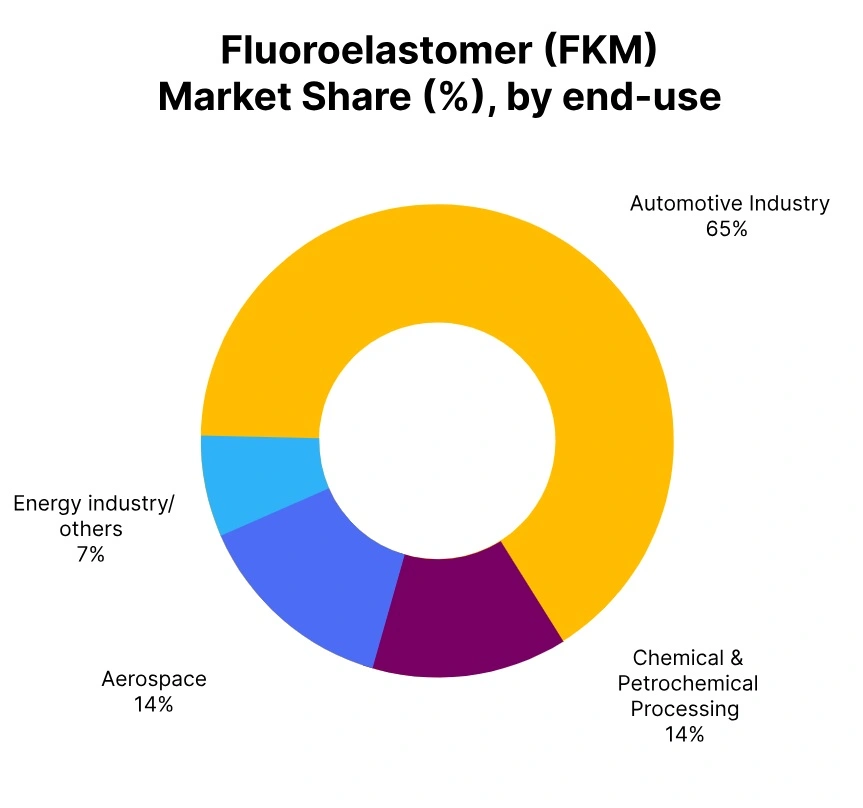
fluoroelastomer market share end use

Historically, several events have caused significant fluctuations in Fluoroelastomer (fkm) prices

  • Global Logistics and Shipping Crisis (2021-Present): The global logistics and shipping crisis has severely impacted the Fluoroelastomer (FKM) market, leading to supply chain disruptions and increased costs. Delays in the transport of key raw materials, such as butadiene and styrene, have reduced production rates and caused plant shutdowns. Rising freight costs from container shortages and higher fuel prices have also made FKM more expensive for industries like automotive and construction. Supply chain volatility has caused stock shortages, complicating manufacturers’ ability to meet demand. Regions like Europe, reliant on imports, have been more affected, while Asia has seen relatively better stability.
  • Global Energy Crisis (2021-2023): The 2021-2023 energy crisis significantly impacted Fluoroelastomer (FKM) production, leading to supply constraints and price increases. Rising energy costs, driven by disruptions in natural gas supplies, higher oil prices, and supply chain issues, escalated operating expenses for FKM producers, particularly in Asia and Europe. This led to reduced production rates and even plant shutdowns, tightening global supply and pushing prices higher. Transportation costs also surged, further exacerbating the situation. The crisis prompted FKM producers to explore energy-efficient technologies and diversify energy sources to reduce future risks, while price volatility and supply instability affected downstream industries like automotive and construction.
  • COVID-19 Pandemic (2020-2022): The COVID-19 pandemic caused widespread production halts as lockdowns forced manufacturing plants to close, delaying new vehicle releases and disrupting parts supply. Global supply chains, dependent on just-in-time manufacturing, faced severe disruptions, with critical component shortages like semiconductors leading to delays and cost increases. Consumer demand also plummeted due to economic uncertainty and lockdowns, further impacted by car dealership closures. A shift towards private vehicles and electric vehicles (EVs) emerged, driven by health concerns and online sales trends. Though the industry began to recover by late 2020, semiconductor shortages slowed the recovery, with Asia-Pacific rebounding faster than other regions.

Why PriceWatch?

PriceWatch is your trusted resource for tracking global fluoroelastomer (fkm) price trends. Our platform delivers real-time data and expert analysis, offering deep insights into the key factors driving price fluctuations in the fluoroelastomer (fkm) market. By monitoring critical events such as geopolitical tensions, supply chain disruptions, and economic shifts, PriceWatch keeps you fully informed of market dynamics.

In addition, PriceWatch provides detailed forecasts and updates on production capacities, enabling you to anticipate market changes and make well-informed decisions. With PriceWatch, you gain a competitive edge in understanding all the elements that influence fluoroelastomer (fkm) prices worldwide. Stay ahead of the curve with PriceWatch’s reliable, accurate, and timely fluoroelastomer (fkm) market data.

Track PriceWatch's fluoroelastomer (fkm) price assessment on a weekly basis since 2015 onwards, along with short-term forecasts, and get access to the detailed report in a downloadable format.

Data Collection and Sources​

  • Real-Time Market Data: PriceWatch aggregates real-time pricing data from a diverse range of sources, including global commodity exchanges, industry reports, and proprietary databases. This ensures that our assessments reflect the most current market conditions.
  • On-the-Ground Intelligence: Our team gathers insights directly from key market participants, including producers, suppliers, traders, and end-users, across major Fluoroelastomer (FKM) production hubs. This ground-level intelligence is crucial for understanding localized market dynamics.
  • Supply Chain Monitoring: We track the entire Fluoroelastomer (FKM) supply chain, from raw material availability to production and distribution channels. This includes monitoring feedstock prices, production capacities, and transportation logistics.

Event Tracking and Impact Analysis​

  • Geopolitical Tensions: PriceWatch continuously monitors global geopolitical developments, such as conflicts or trade disputes, which can significantly impact Fluoroelastomer (FKM) prices. Our analysis includes potential disruptions to supply chains and their immediate and long-term effects on pricing.
  • Natural Disasters and Climate Events: We assess the impact of natural disasters, such as hurricanes or winter storms, on Fluoroelastomer (FKM) production facilities, particularly in vulnerable regions like the U.S. Gulf Coast. These events are factored into our price forecasts and supply outlooks.
  • Economic Shifts: PriceWatch evaluates macroeconomic trends, including global economic growth, inflation rates, and sector-specific demand (e.g., automotive), to predict shifts in Fluoroelastomer (FKM) demand and corresponding price movements.

Production Capacity and Supply Analysis

  • Current Production Monitoring: We maintain a comprehensive database of global Fluoroelastomer (FKM) production facilities, tracking their operational status, maintenance schedules, and output levels. This allows us to assess current supply availability accurately.
  • Future Capacity Projections: Our research includes detailed forecasts of upcoming Fluoroelastomer (FKM) production capacities, factoring in new plant constructions, expansions, and technological advancements. This helps in predicting future supply trends and potential price stabilization.

Demand Forecasting

  • Sectoral Demand Analysis: PriceWatch provides in-depth analysis of demand trends across key sectors, including automotive, and construction. We track year-on-year demand growth and project future consumption patterns based on economic indicators and industry developments.
  • Global Demand Dynamics: Our methodology considers regional demand variations and how they influence global Fluoroelastomer (FKM) pricing. This includes understanding the impact of shifts in manufacturing bases, trade policies, and environmental regulations.

Pricing Model Development

  • Dynamic Pricing Models: PriceWatch utilizes advanced econometric models to forecast Fluoroelastomer (FKM) prices, incorporating real-time data, historical trends, and projected market conditions. Our models are continuously refined to enhance accuracy and predictive power.
  • Scenario Analysis: We conduct scenario-based assessments to evaluate potential future market conditions. This includes best-case, worst-case, and most likely scenarios, helping our clients prepare for a range of market outcomes.

Reporting and Client Support

  • Comprehensive Reports: Our clients receive detailed reports that include current price assessments, future price forecasts, and in-depth analysis of market drivers. These reports are designed to be actionable, providing clear insights and recommendations.
  • Ongoing Support: PriceWatch offers continuous updates and personalized support to our clients, ensuring they have the most up-to-date information to make informed decisions. Our experts are available to discuss specific market developments and provide tailored advice.

This research methodology ensures that PriceWatch delivers the most accurate, timely, and actionable Fluoroelastomer (FKM)pricing assessments, helping our clients stay ahead of market trends and make informed business decisions.

Fluoroelastomer (fkm) Market Price Trend provided by PriceWatch is a base price and excludes VAT/Taxes, discounts, or offers. The information herein is accurate to the best of our knowledge as of the date indicated and is provided solely for the convenience of our customers as a reference for fluoroelastomer (fkm). PriceWatch disclaims any warranties or representations regarding the accuracy of results derived from this information. It is the sole responsibility of the user to assess the suitability of the product for their specific application. This document does not constitute an endorsement to use the product in violation of any applicable patent rights.

The price of Fluoroelastomer (FKM) is influenced by several factors, including the cost of raw materials like fluorspar and fluorinated compounds, fluctuations in crude oil prices, and supply chain dynamics. Additionally, demand from key industries such as automotive, aerospace, and chemical processing, as well as geopolitical events and environmental regulations, can significantly impact FKM pricing. Freight and energy costs also play a role in the final price.

Raw material availability, especially of fluorspar and other fluorinated chemicals, plays a crucial role in determining the price of FKM. Shortages or disruptions in the supply chain of these raw materials can lead to increased production costs, thereby raising FKM prices. Conversely, an abundant supply of raw materials tends to stabilize or reduce prices. Procurement heads should closely monitor market conditions for these key inputs to anticipate pricing trends.

FKM prices are higher compared to other elastomers due to its specialized properties, including superior resistance to heat, chemicals, and oils. The complex production process, involving the polymerization of fluorinated monomers and the high cost of raw materials such as fluorspar, also contributes to its higher price. Additionally, the demand for FKM in industries like aerospace, automotive, and chemical processing, which require high-performance materials, drives its premium pricing.