Formic Acid Price Trend and Forecast

UNSPC code: 12352106
|
Weekly Update
|
Historical Data Since 2015
|
Forecast for 2026

formic acid Price Trends by Country

cnChina
deGermany
trTurkey
inIndia
jpJapan
saSaudi Arabia
vnVietnam
nlNetherlands
krSouth Korea

Global formic acid Spot Market Prices, Trend Analysis and Forecast

Price-Watch™ provides price assessments for Formic Acid across top trading regions:

Asia-Pacific

  • Formic Acid 85% min Industrial grade FOB Shanghai,China
  • Formic Acid 85% min Industrial grade CIF Tokyo_China, Japan
  • Formic Acid 85% min Industrial grade CIF Jeddah_China, Saudi Arabia
  • Formic Acid 85% min Industrial grade CIF Haiphong_China, Vietnam
  • Formic Acid 85% min Industrial grade CIF Busan_China, South Korea
  • Formic Acid 85% min Industrial grade CIF Nhava Sheva_China, India


Europe

  • Formic Acid 99-100% FOB Hamburg, Germany
  • Formic Acid 99-100% CIF Mersin_Germany, Turkey
  • Formic Acid 85% min Industrial grade CIF Mersin_China, Turkey
  • Formic Acid 99-100% FD Rotterdam, Netherlands

Note: In assessments structured as CIF [Importing Port] (Exporting Country), the country mentioned in brackets indicates the primary origin of supply (exporting country), while the named port refers to the destination port in the importing country. Other Incoterms (FOB, FD, EXW, etc.) should be interpreted in accordance with standard international trade definitions.

Formic Acid Price Trend Q1 2026

In Q1-2026, global Formic Acid prices have shown mixed quarterly trends but strong March recovery. Formic Acid price trend has been shaped by demand fluctuations and supply conditions. Geopolitical tensions and Strait of Hormuz disruptions have significantly increased costs and driven sharp monthly price surges.

China: Formic Acid Export prices FOB Shanghai, China; Grade- 85% min Industrial Grade

Formic Acid prices in China experience a varied trajectory throughout the first quarter of 2026. This shifting Formic Acid price trend in China stems from inconsistent export volumes and fluctuating feedstock expenses. During the early months of the quarter, market participants maintain a highly conservative procurement strategy, which contributes to a price decline of 3.05% relative to the previous quarter. This reduction reflects a period of quiet downstream demand and a surplus of available stock.

However, market sentiment shifts significantly as the quarter concludes. In March 2026, the Formic Acid price in China surges by 10.87% compared to February levels. This sharp increase follows rising geopolitical tensions between Iran, Israel, and the USA, which directly impact global trade routes.

Specifically, disruptions in the Strait of Hormuz have driven up both energy and freight costs. In China, Formic Acid prices in March 2026 reflect this supply tightening and a sudden influx of export inquiries, both of which provide strong upward momentum for market valuations.

Germany: Formic Acid Export prices FOB Hamburg, Germany; Grade- 99-100%

Formic Acid prices in Germany undergo a recovery phase during the first quarter of 2026, bolstered by a revival in domestic demand. This strengthening Formic Acid price trend in Germany stemmed from rising industrial consumption and more robust export volumes. As business confidence improves, market participants actively increase their procurement rates.

Throughout the quarter, prices rise by 1.67% compared to the previous period, a change that reflects an equilibrium between supply and demand as trading activity gains momentum. The market landscape shifts more dramatically toward the end of the quarter. In March 2026, the Formic Acid price in Germany climbs by 14.84% relative to the preceding month.

This sharp escalation follows heightening geopolitical instability in the Middle East, which directly impacts global trade. In Germany, Formic Acid prices in March 2026 reflect the significant logistics and feedstock cost increases caused by disruptions in the Strait of Hormuz. Intense export demand and these mounting cost pressures combine to accelerate the upward movement in market valuations.

Turkey: Formic Acid Import prices CIF Mersin, Turkey; Grade- 99-100%

Formic Acid prices in Turkey demonstrate upward momentum for higher-grade materials throughout the first quarter of 2026. The Formic Acid price trend in Turkey is currently shaped by rising import expenses and ongoing currency fluctuations. As industrial demand shows moderate improvement, market prices have climbed by 1.67% compared to the previous quarter. This growth reflects a heavy reliance on imports and a contraction in available supply, which has prompted increased purchasing interest among market participants. The market experiences a significant shift as the quarter concludes.

In March 2026, the Formic Acid price in Turkey surges by 13.45% over the previous month’s figures. This sharp escalation is a direct result of geopolitical tensions involving Iran, Israel, and the USA. In Turkey, Formic Acid prices in March 2026 reflect the impact of disruptions in the Strait of Hormuz, which have restricted critical shipping routes and inflated freight costs. These heightened import liabilities continue to drive the upward movement in domestic market valuations.

Turkey: Formic Acid Import prices CIF Mersin, Turkey; Grade- 85% min Industrial Grade

Formic Acid prices in Turkey demonstrate consistent growth for lower-grade materials throughout the first quarter of 2026. This upward Formic Acid price trend in Turkey is currently sustained by reliable demand from the agricultural and textile sectors. As import volumes remain steady, the market sees a price increase of 3.07% compared to the previous quarter, a shift that reflects an equilibrium between supply and demand.

Throughout this period, market participants maintain regular procurement schedules to support their operational needs. The market landscape shifts more notably as the quarter concludes. In March 2026, the Formic Acid price in Turkey climbs by 9.75% relative to the previous month. This surge stems from geopolitical tensions that have significantly impacted global trade routes.

In Turkey, Formic Acid prices in March 2026 reflect the rising freight and supply expenses caused by disruptions in the Strait of Hormuz. Furthermore, strengthening downstream demand provides additional support for these higher price levels across the domestic market.

Japan: Formic Acid Import prices CIF Tokyo, Japan; Grade- 85% min Industrial Grade

In Q1-2026, Formic Acid prices in Japan have shown a slightly declining trend initially. Formic Acid price trend in Japan has been impacted by weaker industrial demand. Import volumes have remained stable but consumption has softened. Q1-2026, Formic Acid prices in Japan have decreased by 2.45% compared to the previous quarter. This decline has reflected cautious buying activity. Market sentiment has remained moderate throughout most of the quarter.

In March 2026, Formic Acid prices in Japan have increased by 8.64% compared to the previous month. The rise has been driven by geopolitical tensions impacting global supply chains. Disruptions in the Strait of Hormuz have increased freight and raw material costs. Improved demand and restocking have supported price recovery.

Saudi Arabia: Formic Acid Import prices CIF Jeddah, Saudi Arabia; Grade- 85% min Industrial Grade

In Q1-2026, Formic Acid prices in Saudi Arabia have shown a declining trend initially. Formic Acid price trend in Saudi Arabia has been influenced by weak demand and sufficient inventory levels. Import activity has remained slow during most of the quarter. Q1-2026, Formic Acid prices in Saudi Arabia have decreased by 3.36% compared to the previous quarter. This decline has reflected limited industrial consumption. Market sentiment has remained cautious during early months.

In March 2026, Formic Acid prices in Saudi Arabia have increased by 11.25% compared to the previous month. The increase has been driven by escalating geopolitical tensions in the Middle East. Strait of Hormuz supply disruptions have increased regional logistics costs. Stronger demand and restocking have supported price recovery.

Vietnam: Formic Acid Import prices CIF Haiphong, Vietnam; Grade- 85% min Industrial Grade

Formic Acid prices in Vietnam follow a downward trajectory during the initial phase of the first quarter of 2026. This softening Formic Acid price trend in Vietnam stems from a combination of stable import volumes and moderate industrial requirements. While consumption remains steady, it lacks significant strength, leading to a price decrease of 3.02% compared to the previous quarter. This decline reflects a market with sufficient supply availability, where participants choose to limit their spot purchases in favor of existing inventories. The market environment shifts noticeably as the quarter concludes.

In March 2026, the Formic Acid price in Vietnam increases by 9.05% relative to the previous month. This rise follows geopolitical disruptions that have complicated global trade flows. In Vietnam, Formic Acid prices in March 2026 reflect the higher shipping and procurement expenses caused by ongoing issues in the Strait of Hormuz. Strengthening demand and a general shift toward recovery momentum have further supported this upward movement in market valuations.

South Korea: Formic Acid Import prices CIF Busan, South Korea; Grade- 85% min Industrial Grade

Formic Acid prices in South Korea follow an initial downward trajectory during the first quarter of 2026. This softening Formic Acid price trend in South Korea results from weakening demand in downstream sectors, even as import volumes remain consistent. Throughout the early months, prices have decreased by 2.87% compared to the previous quarter, a shift that reflects a cautious approach to procurement among market participants. This subdued sentiment characterizes the market as businesses manage existing stocks amidst quiet industrial activity. The market environment shifts significantly as the quarter concludes.

In March 2026, the Formic Acid price in South Korea surges by 10.20% relative to the previous month. This sharp escalation follows geopolitical tensions that have disrupted global supply chains. In South Korea, Formic Acid prices in March 2026 reflect the rising freight and energy costs caused by constraints in the Strait of Hormuz. A sudden strengthening in demand has further supported this recovery, leading to a notable improvement in overall market conditions.

Netherlands: Formic Acid Domestic prices FD Rotterdam, Netherlands; Grade- 99-100%

Formic Acid prices in the Netherlands demonstrate a recovery phase during the first quarter of 2026, bolstered by a revival in industrial demand. This strengthening Formic Acid price trend in Netherlands stems from improved consumption patterns across the region. Throughout the quarter, prices have increased by 1.41% compared to the previous period, a shift that reflects an equilibrium between supply and demand as market participants actively increase their procurement rates. The market landscape shifts more dramatically toward the end of the quarter.

According to Price-Watch™, in March 2026, the Formic Acid price in Netherlands climbs by 14.29% relative to the preceding month. This sharp escalation follows heightening geopolitical instability, which has directly impacted global energy markets. In Netherlands, Formic Acid prices in March 2026 reflect the significant logistics and feedstock cost increases caused by disruptions in the Strait of Hormuz. Intense demand and these mounting cost pressures have combined to sustain a bullish sentiment across the domestic market.

India: Formic Acid Import prices CIF Nhava Sheva, India; Grade- 85% min Industrial Grade

Formic Acid prices in India experience a period of gradual improvement throughout the first quarter of 2026. The Formic Acid price trend in India stems from a combination of steady import arrivals and moderate industrial demand.

During this time, market participants maintain a balanced strategy toward procurement, which has resulted in a marginal price increase of 0.73% compared to the previous quarter. This stability reflects an environment where inventory levels remain manageable and supply-demand conditions are well-aligned. However, the market landscape shifts dramatically as the quarter concludes.

In March 2026, the Formic Acid price in India surges by 24.70% relative to February levels. This significant spike follows heightening geopolitical tensions between Iran, Israel, and the USA. In India, Formic Acid prices in March 2026 reflect the substantial impact of disruptions in the Strait of Hormuz, which have severely inflated freight and import expenses. A sudden wave of restocking demand has further accelerated this upward momentum, signalling a strong shift in market dynamics.

Formic Acid Price Trend Analysis: Q4 2025

In Q4-2025, global Formic Acid prices have shown mixed to bearish trends across key regions. Formic Acid price trend has been influenced by weak demand, stable supply, and cautious procurement. Quarterly declines have dominated most markets, while December prices have softened further due to reduced spot demand.

China: Formic Acid Export prices FOB Shanghai, China; Grade- 85% min Industrial Grade

Formic Acid prices in China demonstrate a period of relative stability during the final quarter of 2025, supported by balanced demand. This steady Formic Acid price trend in China stems from consistent feedstock availability and reliable export volumes. Throughout the quarter, market participants maintain a conservative approach to procurement, leading to a marginal price increase of 0.41% compared to the previous quarter. This slight shift reflects a period where industrial consumption and export inquiries remain in equilibrium. The market environment softens as the year concludes. In December 2025, the Formic Acid price in China decreases by 3.20% relative to November levels due to a cooling in overall demand. Reduced spot market activity exerts further downward pressure on valuations, while inventory levels remain high enough to meet current requirements. In China, Formic Acid prices in December 2025 reflect this localized slowdown, as ample product availability and quieter purchasing patterns define the market sentiment at year-end.

Germany: Formic Acid Export prices FOB Hamburg, Germany; Grade- 99-100%

Formic Acid prices in Germany follow a downward trajectory during the final quarter of 2025, a shift triggered by cooling demand across the region. The Formic Acid price trend in Germany reflects a period of low consumption within downstream industries, forcing suppliers to lower their valuations in response to dwindling order volumes. Throughout this quarter, prices have decreased by 5.35% compared to the previous three-month period. This reduction stems from a combination of sluggish industrial activity and a surplus of available inventory. The market remains quiet as the year concludes. In December 2025, the Formic Acid price in Germany falls by an additional 0.73% relative to the preceding month, a change resulting from slow trading patterns. In Germany, Formic Acid prices in December 2025 reflect a landscape where export interest has remained stagnant and feedstock expenses have provided little to no upward pressure. Overall, the market concludes the year with a bearish sentiment as businesses maintain a cautious approach to procurement.

Turkey: Formic Acid Import prices CIF Mersin, Turkey; Grade- 99-100%

In Q4-2025, Formic Acid prices in Turkey have shown a declining trend for higher grade material. Formic Acid price trend in Turkey has been influenced by weak import demand and currency fluctuations. Market participants have adopted cautious procurement strategies during the quarter. In Q4-2025, Formic Acid prices in Turkey have decreased by 5.75% compared to the previous quarter. This decline has reflected subdued consumption from key downstream sectors. Importers have faced reduced buying interest and sufficient inventory levels. In December 2025, Formic Acid prices in Turkey have decreased by 1.48% compared to the previous month due to weak spot demand. Trading activity has remained slow across the market. Supply conditions have stayed stable throughout the period.

Turkey: Formic Acid Import prices CIF Mersin, Turkey; Grade- 85% min Industrial Grade

In Q4-2025, Formic Acid prices in Turkey have shown relatively stable performance for lower grade material. Formic Acid price trend in Turkey has been supported by steady demand from textile and agriculture sectors. Import flows have remained consistent during the quarter. In Q4-2025, Formic Acid prices in Turkey have decreased by 0.96% compared to the previous quarter. This marginal decline has reflected balanced supply-demand conditions. Market participants have maintained steady purchasing strategies. In December 2025, Formic Acid prices in Turkey have increased by 1.28% compared to the previous month due to improved spot demand. Buyers have shown slightly stronger interest toward quarter end. Supply chain adjustments have influenced pricing movements.

Japan: Formic Acid Import prices CIF Tokyo, Japan; Grade- 85% min Industrial Grade

In Q4-2025, Formic Acid prices in Japan have remained relatively stable with minor fluctuations. Formic Acid price trend in Japan has been supported by steady industrial demand. Import volumes have ensured sufficient supply levels in the market. In Q4-2025, Formic Acid prices in Japan have increased by 0.33% compared to the previous quarter. Balanced supply-demand dynamics have supported this marginal rise. In December 2025, Formic Acid prices in Japan have declined by 2.59% compared to the previous month due to weaker demand. Seasonal slowdown has influenced consumption patterns. Logistics costs have remained stable.

Saudi Arabia: Formic Acid Import prices CIF Jeddah, Saudi Arabia; Grade- 85% min Industrial Grade

In Q4-2025, Formic Acid prices in Saudi Arabia have followed a downward trend amid weak demand. Formic Acid price trend in Saudi Arabia has been impacted by reduced industrial consumption. Import activity has remained slow due to cautious buying behaviour. In Q4-2025, Formic Acid prices in Saudi Arabia have decreased by 1.65% compared to the previous quarter. This decline has reflected limited demand growth. In December 2025, Formic Acid prices in Saudi Arabia have decreased by 5.69% compared to the previous month due to weak purchasing. Regional demand has remained subdued. Supply conditions have stayed stable.

Vietnam: Formic Acid Import prices CIF Haiphong, Vietnam; Grade- 85% min Industrial Grade

In Q4-2025, Formic Acid prices in Vietnam have shown slight improvement supported by steady demand. Formic Acid price trend in Vietnam has been influenced by consistent imports and industrial usage. Textile and leather sectors have supported consumption levels. In Q4-2025, Formic Acid prices in Vietnam have increased by 0.38% compared to the previous quarter. Balanced supply-demand conditions have supported this rise. In December 2025, Formic Acid prices in Vietnam have declined by 2.98% compared to the previous month due to lower demand. Seasonal factors have influenced consumption. Supply availability has remained adequate.

South Korea: Formic Acid Import prices CIF Busan, South Korea; Grade- 85% min Industrial Grade

In Q4-2025, Formic Acid prices in South Korea have shown marginal growth amid stable demand. Formic Acid price trend in South Korea has been supported by steady industrial consumption. Import volumes have remained consistent throughout the quarter. In Q4-2025, Formic Acid prices in South Korea have increased by 0.38% compared to the previous quarter. Balanced market fundamentals have supported this trend. In December 2025, Formic Acid prices in South Korea have decreased by 3.02% compared to the previous month due to weaker demand. Downstream activity has slowed slightly. Logistics conditions have remained stable.

Netherlands: Formic Acid Domestic prices FD Rotterdam, Netherlands; Grade- 99-100%

In Q4-2025, Formic Acid prices in Netherlands have declined amid weak demand conditions. Formic Acid price trend in Netherlands has reflected subdued consumption across industries. Adequate inventory levels have reduced procurement urgency. In Q4-2025, Formic Acid prices in Netherlands have decreased by 5.24% compared to the previous quarter. This drop has been driven by soft industrial activity. In December 2025, Formic Acid prices in Netherlands have decreased by 1.31% compared to the previous month due to slow trading. Feedstock costs have remained stable. Market sentiment has stayed cautious.

India: Formic Acid Import prices CIF Nhava Sheva, India; Grade- 85% min Industrial Grade

In Q4-2025, Formic Acid prices in India have experienced a declining trend amid moderate demand. Formic Acid price trend in India has been influenced by sufficient imports and steady supply. Demand from key industries has remained stable but not strong. In Q4-2025, Formic Acid prices in India have decreased by 3.51% compared to the previous quarter. This decline has reflected cautious purchasing behavior. In December 2025, Formic Acid prices in India have decreased by 3.55% compared to the previous month due to weaker demand. Currency fluctuations have impacted import costs. Supply chain conditions have remained stable.

Global Formic Acid markets in Q3 2025 showed steady to rising prices, driven by strong demand from textile, leather, pharmaceutical, agriculture, and specialty industries. Stable feedstock supply, efficient logistics, and strong industrial activity supported market stability. September recorded modest to significant gains across regions, with trends expected to remain firm or upward going into Q4 2025.

China: Formic Acid Export prices FOB Shanghai, China, Grade – 85% min Industrial grade.

According to Price-Watch™, in Q3 2025, Formic Acid prices in China remained firm amid increasing demand from textile and leather industries. Formic Acid price trend in China was influenced by stable methanol feedstock supplies and balanced factory output.

Production activities were consistent, maintaining steady inventory levels across domestic and export markets. The prices for formic acid in Q3 reflected strong buyer engagement from regional and overseas markets.

Improved logistics and increased export volumes strengthened market sentiment. Formic Acid price trend in China is expected to remain stable into Q4. Formic Acid prices in September 2025 faced a modest increase, supported by ongoing downstream recovery and sustained export orders.

Germany: Formic Acid Export prices FOB Hamburg, Germany, Grade – 99-100%.

In Q3 2025, Formic Acid prices in Germany displayed sustained growth, primarily supported by strong demand from the pharmaceutical and agrochemical sectors. Formic Acid price trend in Germany remained positive, aided by reliable formamide feedstock supply and steady export activities within Europe.

Industrial performance showed resilience backed by manageable energy costs and improved production efficiencies. The prices for formic acid in Q3 reflected balanced supply-demand fundamentals alongside consistent manufacturing throughput.

Consumption levels from construction and specialty chemical industries went on to sustain steady market engagement. Formic Acid prices in September 2025 saw a noticeable rise following seasonal purchasing cycles. Product price trend in Germany is projected to maintain upward consistency and market stability into Q4 2025.

Turkey: Formic Acid Import prices CIF Mersin, Turkey, Grade – 99-100%.

In Q3 2025, Formic Acid prices in Turkey for the 99-100% grade showed a moderate upward trajectory driven by strong agriculture and industrial processing demand. Formic Acid price trend in Turkey benefited from consistent import flows from Germany and consistent shipment reliability across ports. Balanced inventories at distribution centers supported continuous delivery to key domestic industries.

The prices for formic acid in Q3 indicated market stability with resilient consumption patterns and sustained upstream cost discipline. End users sustained predictable procurement cycles, contributing to steady trading conditions throughout the quarter.

September 2025 prices recorded additional gains reflecting healthy downstream engagement. Formic Acid price trend in Turkey is projected to sustain its stable outlook heading into Q4 2025.

Formic Acid Import prices CIF Mersin, Turkey, Grade – 85% min Industrial grade.

In Q3 2025, Formic Acid prices in Turkey for the 85% min Industrial grade saw slight increases, sustained by steady demand from preservation, textile, and feed sectors. Formic Acid price trend in Turkey was supported by uninterrupted imports from China and smoothly managed port operations.

Domestic traders maintained healthy stock levels, ensuring consistent flow through local supply chains. The prices for formic acid in Q3 mirrored stable industrial activity and balanced procurement behavior among regional buyers.

End-use industries continued to exhibit predictable consumption patterns, enhancing market confidence. September 2025 prices recorded mild gains driven by steady demand and operational efficiency. Formic Acid price trend in Turkey is expected to remain balanced and firm into Q4 2025.

Japan: Formic Acid Import prices CIF Tokyo, Japan, Grade – 85% min Industrial grade.

In Q3 2025, Formic Acid prices in Japan recorded increases driven by strong industrial consumption and rising procurement costs. Formic Acid price trend in Japan was swayed by firm methanol feedstock values and consistent demand from the environmental treatment sector.

Imports from China and other suppliers rose as domestic production remained conservative due to recent environmental inspections. The prices for formic acid in Q3 reflected adjusted supply chain dynamics and robust demand within the textile industry.

Industrial buyers kept active purchasing patterns, ensuring steady market performance. September 2025 prices showed a significant rise, aligning with upstream cost movements. Formic Acid price trend in Japan is expected to retain its firm trajectory heading into Q4 2025.

Saudi Arabia: Formic Acid Import prices CIF Jeddah, Saudi Arabia, Grade – 85% min Industrial grade.

In Q3 2025, Formic Acid prices in Saudi Arabia registered steady growth supported by consistent demand from tannery and livestock feed industries. Formic Acid price trend in Saudi Arabia remained mostly stable due to balanced imports from China and regular regional trade activities.

Feedstock stability, coupled with efficient logistics and shipping operations, contributed to predictable market performance. The prices in Q3 reflected positive consumption trends across preservation and chemical processing applications.

Industrial users sustained strong procurement activity, ensuring steady operation continues. September 2025 prices showed moderate upward movement, reinforcing business confidence in the domestic market. Formic Acid price trend in Saudi Arabia is expected to maintain stability and balance entering Q4 2025.

Vietnam: Formic Acid Import prices CIF Haiphong, Vietnam, Grade – 85% min Industrial grade.

In Q3 2025, Formic Acid prices in Vietnam remained stable, sustained by strong demand from textile, rubber, and agricultural industries. Formic Acid price trend in Vietnam was bolstered by uninterrupted imports from China and consistent material availability in the domestic market.

Industrial buyers sustained regular procurement activity, securing predictable trading volumes throughout the quarter. The prices in Q3 reflected balanced supply conditions and minimal fluctuations in freight charges. Local manufacturers reported steady operational performance with no major disruptions.

September 2025 prices showed sustained growth, sustained by consistent purchasing trends from key end-use sectors. Formic Acid price trend in Vietnam is anticipated to maintain its current stability into Q4 2025.

South Korea: Formic Acid Import prices CIF Busan, South Korea, Grade – 85% min Industrial grade.

In Q3 2025, Formic Acid prices in South Korea recorded modest gains as downstream demand increased across the textile and electronics industries. Formic Acid price trend in South Korea was supported by stable import volumes from China and efficient inventory management by local distributors.

Optimized logistics and stable port operations contributed to uninterrupted trade activities through the quarter. The prices in Q3 reflected steady consumption trends and balanced feedstock availability across domestic markets.

Industrial activity went on to recover, strengthening overall purchasing confidence. September 2025 prices showed a minor upward movement in line with broader industrial momentum. Formic Acid price trend in South Korea is expected to maintain its stability entering Q4 2025.

Netherlands: Formic Acid Domestic prices FD Rotterdam, Netherlands, Grade – 99-100%.

In Q3 2025, Formic Acid prices in the Netherlands experienced moderate improvement, supported by stable demand from key industrial sectors. Formic Acid price trend in the Netherlands benefited from reliable feedstock imports within the EU and well coordinated supply chain operations.

Domestic production throughput saw an increase due to favorable manufacturing conditions and efficient energy usage. The prices in Q3 kept positive momentum, reflecting balanced market activity across local and export channels. Industrial buyers continued consistent procurement, reinforcing market stability.

September 2025 prices recorded a steady rise, underscoring resilience in demand. Formic Acid price trend in the Netherlands is anticipated to remain firm heading into Q4 2025.

Formic Acid Import prices CIF Nhava Sheva, India, Grade – 85% min Industrial grade.

In Q3 2025, Formic Acid prices in India rose steadily, driven by strong demand from the textile and agriculture sectors. Formic Acid price trend in India was supported by stable import flows from Chinese suppliers and well-managed shipping timelines.

Local distributors maintained sufficient inventories, ensuring uninterrupted supply for domestic buyers. The prices for formic acid in Q3 mirrored strong market sentiment and predictable operational costs. Industrial activity stayed buoyant, with consistent procurement from downstream sectors maintaining overall market stability.

September 2025 prices registered a clear upward movement, highlighting ongoing industrial growth and expansion. Formic Acid price trend in India is expected to sustain its upward trajectory heading into Q4 2025, supported by continued sectoral demand.

According to PriceWatch, Formic Acid prices on an FOB Shanghai basis in China averaged USD 479 per metric ton in Q2 2025, marking a 5.27% increase from Q1 2025. Prices in Germany on an FOB Hamburg basis averaged USD 973 per metric ton, reflecting a 3.29% rise compared to the previous quarter. This global price trend was supported by stronger restocking activity and stable demand from key sectors like textiles and leather.

The Q2 2025 price trend for Formic Acid showed moderate gains, with the price trend displaying a steady upward movement throughout the quarter. Market participants noted that supply chains remained resilient, and producers maintained disciplined inventory management to support prices. The global Formic Acid market has regained confidence as exporters in China and Germany prioritize logistics efficiency to meet changing market demands.

According to PriceWatch, Formic Acid prices on a CIF Nhava Sheva, India basis averaged USD 537 per metric ton in Q2 2025, registering a 0.56% increase from Q1 2025. The price trend in the Indian market was stable, with only slight upward movement reflecting consistent import demand and minimal supply disruptions.

The Q2 2025 price trend for India closely followed global market movements, while the price trend showed limited volatility and a narrow trading range. Ex-India, the Formic Acid market benefited from steady downstream consumption in sectors such as textiles and rubber.

Market participants in India continued to monitor international price developments and adjusted procurement strategies to secure favourable contracts and manage inventories efficiently.

In Q1 2025, Chinese Formic Acid prices rose slightly to $455/ton, up 1.79%. The modest recovery was driven by restocking and seasonal demand uptick, especially from stable-performing sectors like textiles and agriculture, signaling potential for gradual market improvement.  In Q1 2025, German Formic Acid prices slipped to $942/ton, a 2.28% decline from Q4 2024.

Consistent but unspectacular demand from stable end-use sectors kept prices soft, while ample availability and cautious buying capped any upward movement. These Price Changes Impacted the importing countries like: India, Netherlands, Turkey, Japan, Saudi Arabia, Vietnam and South Korea.

Prices saw a slight uptick to $533/ton in Q1 2025, rising by 1.33%. This increase was driven by restocking efforts and improved buying interest, while downstream industries continued stable operations with consistent raw material intake.

Formic Acid Price Trend Analysis: Q4 2024

Chinese Formic Acid prices slipped further to $447/ton in Q4 2024, marking a 4.89% decrease. Continued supply overhang and unchanged demand from stable downstream industries added pressure, with producers resorting to price cuts to manage excess stock and preserve margins. German Prices dropped to $964/ton in Q4 2024, down 2.63% from Q3.

While downstream industries remained steady, subdued export orders and macroeconomic uncertainty across Europe dampened sentiment, encouraging price reductions to maintain trade volumes. These Price Changes Impacted the importing countries like: India, Netherlands, Turkey, Japan, Saudi Arabia, Vietnam and South Korea.

In Q4 2024, prices fell further to $526/ton, down 3.66%. Domestic demand stayed constant, but competitive import offers, and high stock levels continued to suppress price momentum in the Indian Formic Acid market.

Chinese Formic Acid prices dropped to $470/ton in Q3 2024, down 8.56% from Q2. Although downstream sectors remained stable, high inventory levels and reduced export activity pushed suppliers to lower prices to maintain competitiveness. In Q3 2024, German formic acid prices eased to $990/ton, reflecting a modest 1.3% decline.

Despite stable downstream performance, increased competition among regional suppliers and a slight easing in input costs led to minor price adjustments across the domestic market. These Price Changes Impacted the importing countries like: India, Netherlands, Türkiye, Japan, Saudi Arabia, Vietnam, and South Korea.

Prices declined to $546/ton in Q3 2024, a 5.04% drop from the previous quarter. Despite steady downstream demand, increased local inventory and limited export activity led to price corrections across the Indian market.

China Prices dipped slightly to $514/ton in Q2 2024, a 0.39% decrease from Q1. The market remained steady as downstream industries remained stable, but a lack of fresh demand or major supply disruptions kept pricing mostly unchanged during this quarter. German Prices increased to $1,003/ton in Q2 2024, up 7.5% from Q1.

The increase was supported by Inventory restocking and growing downstream market. These Price Changes Impacted the importing countries like: India, Netherlands, Türkiye, Japan, Saudi Arabia, Vietnam, and South Korea.

Prices inched up to $575/ton in Q2 2024, a slight 0.88% increase from Q1. Stable demand from end-use sectors and marginal rise in international prices supported the mild recovery in domestic Formic Acid market sentiment.

In Q1 2024, Formic Acid prices in China $516/ton, down 11.95%. The decline was driven by stabilizing geopolitical tensions and a return to supply-demand equilibrium, which eased market pressures despite stable performance in downstream industries. Formic Acid prices in Germany averaged $933/ton, falling 7.99%.

The drop resulted from easing energy costs and improved supply conditions, while downstream industries like agriculture and leather remained stable, limiting further market volatility. These Price Changes Impacted the importing countries like: India, Netherlands, Türkiye, Japan, Saudi Arabia, Vietnam, and South Korea.

In Q1 2024 Formic Acid price in India was at $570/ton, down 5.94%. The decline stemmed from softened import costs and balanced supply-demand, while downstream industries such as rubber and textiles maintained stable procurement activity.

Technical Specifications of Formic Acid Price Trends

Product Description

Formic acid is a colourless, pungent liquid organic acid widely used in agriculture, leather processing, and chemical industries. Known for its strong antibacterial and preservative properties, it serves as an effective silage additive and cleaning agent. With excellent reducing capabilities, formic acid is an essential raw material in textiles, pharmaceuticals, and various industrial formulations.

Identifiers and Classification:

  • CAS No – 64-18-6
  • HS Code – 29151100
  • Molecular Formula – HCOOH
  • Molecular Weight (in gm/mol) – 46.03


Formic Acid Synonyms:

  • Methanoic acid
  • Formylic acid


Formic Acid Grades Specific Price Assessment:

  • 85% min Industrial grade
  • 99-100% Formic Acid


Formic Acid Global Trade and Shipment Terms

  • Quotation Terms: 25-28 MT
  • Packaging Type: ISO Tanks


Incoterms Referenced in Formic Acid Price Reporting

Shipping Term  Location  Definition 
FOB Shanghai  Shanghai, China  Formic Acid Export price from China 
FOB Hamburg  Hamburg, Germany  Formic Acid Export price from Germany 
CIF Mersin (Germany)  Mersin, Turkey  Formic Acid import price in Turkey from Germany 
CIF Mersin (China)  Mersin, Turkey  Formic Acid import price in Turkey from China 
CIF Tokyo (China)  Tokyo, Japan  Formic Acid import price in Japan from China 
CIF Jeddah (China)  Jeddah, Saudi Arabia  Formic Acid import price in Saudi Arabia from China 
CIF Haiphong (China)  Haiphong, Vietnam  Formic Acid import price in Vietnam from China 
CIF Busan (China)  Busan, South Korea  Formic Acid import price in South Korea from China 
FD Rotterdam  Rotterdam, Netherlands  Domestically Traded Formic Acid price in Netherlands 
CIF Nhava Sheva (China)  Nhava Sheva, india  Formic Acid import price in India from China 

*Quotation Terms refers to the quantity range specified for the Formic Acid being quoted or offered in a commercial transaction.

**Packaging Type refers to standard packaging size commonly used for Formic Acid packing, ease of handling, transportation, and storage in industrial and commercial applications.

Key Formic Acid Manufacturers

Manufacturer 
Luxi Chemicals 
BASF 
Eastman 
Fengda Chemicals 
GNFC 

Formic Acid Industrial Applications

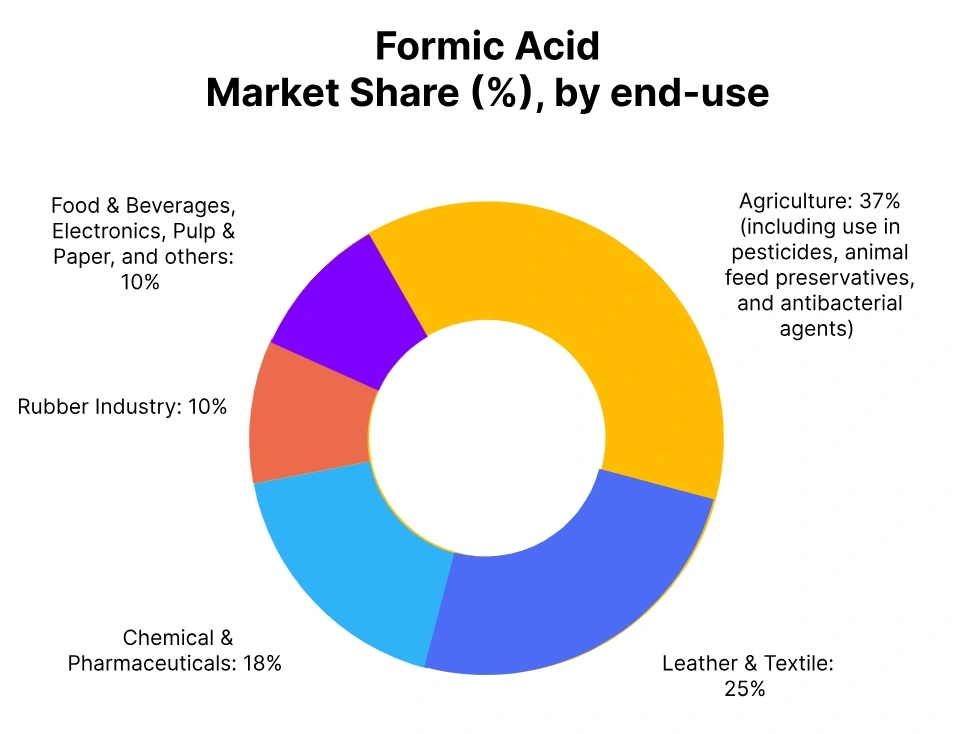
formic acid market share end use

Historically, several events have caused significant fluctuations in Formic Acid prices

  • Israel-Hamas Conflict (2023-Present): The ongoing conflict has disrupted trade routes and supply chains in the Middle East, affecting the availability and costs of raw materials critical for Formic Acid production, impacting markets globally, including South Africa and South Korea.
  • Russia-Ukraine Conflict (2022-Present): This war has severely disrupted production and supply chains across Europe, particularly impacting Belgium, and the Netherlands. These disruptions have led to increased costs and heightened global price volatility for Formic Acid, affecting importing markets like India and China.
  • COVID-19 Pandemic (2020-Present): The pandemic caused initial disruptions in production and a sharp decline in demand across several sectors. As economies recovered, demand surged in markets such as India and China, significantly impacting Formic Acid prices.
  • Environmental Regulations and Protests (2019-Present): Stricter environmental regulations in South Korea and India, along with protests against industrial pollution, have led to increased production costs and compliance challenges, contributing to price increases in the Formic Acid market.
  • Geopolitical Tensions and Trade Wars (2018-Present): Ongoing trade tensions, particularly between the U.S. and China, have created uncertainties in global supply chains. This has affected import/export dynamics for Formic Acid, especially in South Africa, South Korea, and key importing markets like Belgium and Singapore.

These events underscore the Formic Acid market’s vulnerability to global disruptions and highlight the importance of continuous monitoring of supply-demand dynamics.

Why Price Watch™?

Price Watch™ is your trusted resource for tracking global formic acid price trends. Our platform delivers real-time data and expert analysis, offering deep insights into the key factors driving price fluctuations in the formic acid market. By monitoring critical events such as geopolitical tensions, supply chain disruptions, and economic shifts, Price Watch™ keeps you fully informed of market dynamics.

In addition, Price Watch™ provides detailed forecasts and updates on production capacities, enabling you to anticipate market changes and make well-informed decisions. With Price Watch™, you gain a competitive edge in understanding all the elements that influence formic acid prices worldwide. Stay ahead of the curve with Price Watch’s™ reliable, accurate, and timely formic acid market data.

Track Price Watch's™ formic acid price assessment on a weekly basis since 2015 onwards, along with short-term forecasts, and get access to the detailed report in a downloadable format.

Formic Acid Market Price Trend published by 𝐏𝐫𝐢𝐜𝐞 𝐖𝐚𝐭𝐜𝐡™ reflect prevailing spot market conditions, derived from independent research, verified trade inputs, and proprietary market intelligence as of the publication date. Prices are published on the specified Incoterm and represent indicative base market levels, exclusive of applicable taxes, VAT, duties, tariffs, and other statutory charges. Actual transaction values may vary depending on volume, credit terms, contractual structure, and other negotiated conditions. Market prices are inherently subject to volatility, liquidity dynamics, regulatory changes, and evolving trade activity. The information provided is for reference and benchmarking purposes only and does not constitute an offer, recommendation, or guarantee of transactional outcomes. Users should exercise independent commercial judgment and assess their specific contractual, regulatory, tax, and application requirements before making business decisions. 𝐏𝐫𝐢𝐜𝐞 𝐖𝐚𝐭𝐜𝐡™ assumes no liability for decisions taken based on this information.

The pricing of formic acid is influenced by several factors, including the cost of raw materials such as methanol and carbon monoxide, production capacities, and transportation expenses. Additionally, fluctuations in demand from key industries like agriculture, textiles, and pharmaceuticals, along with geopolitical events and environmental regulations, can significantly impact pricing. Procurement heads should monitor these factors to make informed purchasing decisions.

Regional price variations for formic acid can arise from differences in raw material availability, production capabilities, and local demand. For example, regions with abundant feedstock resources may offer lower prices compared to areas with limited access. Understanding these regional differences allows procurement heads to optimize sourcing strategies, potentially reducing costs by exploring opportunities in cost-competitive markets and adjusting supply chains accordingly.

The price outlook for formic acid is shaped by trends in raw material costs, supply-demand dynamics, and global economic conditions. In the near term, procurement heads should expect potential price volatility due to fluctuations in feedstock prices and changes in regulatory policies. To plan effectively, they should monitor market reports, consider long-term contracts with suppliers, and explore alternative sourcing options to hedge against price increases and ensure cost stability.

Formic Acid is a simple carboxylic acid widely used in leather processing, textiles, agriculture, and preservatives. Its price directly impacts costs of downstream industries such as animal feed, rubber, leather tanning, and textile dyeing, making Formic Acid pricing crucial for global manufacturers. 𝐏𝐫𝐢𝐜𝐞 𝐖𝐚𝐭𝐜𝐡™ tracks these prices to help businesses stay updated with market trends.

Formic Acid prices vary by region and grade. Prices are typically quoted per metric ton and fluctuate based on supply-demand dynamics, feedstock costs, and logistics. 𝐏𝐫𝐢𝐜𝐞 𝐖𝐚𝐭𝐜𝐡™ provides real-time price assessments across global markets for better decision-making.

Formic Acid prices fluctuate due to feedstock cost changes such as methanol and carbon monoxide. Energy costs, production rates, and demand from leather, textile, and agriculture sectors also influence pricing. Supply chain disruptions, trade flows, and seasonal demand further shape market trends. Recent volatility has been linked to freight costs and geopolitical tensions affecting global supply routes.

The largest consumers of Formic Acid include leather tanning, textile dyeing, and animal feed industries. It is also used in rubber processing, agriculture as a preservative, and chemical manufacturing. Pharmaceutical and pesticide sectors contribute to additional demand. 𝐏𝐫𝐢𝐜𝐞 𝐖𝐚𝐭𝐜𝐡™ analyzes demand across these industries.

Formic Acid is primarily produced from methanol through carbonylation processes. It is also generated as a by-product in certain chemical reactions. Production takes place in large-scale chemical plants globally, especially in Asia and Europe.

China is the largest exporter of Formic Acid due to its significant production capacity. European countries such as Germany and the Netherlands also play important roles. Other exporters include South Korea and some Middle Eastern countries. Export volumes depend on domestic demand, production costs, and logistics.

Global supply generally meets demand, but temporary shortages may occur due to plant shutdowns or logistics disruptions. Seasonal demand fluctuations in agriculture and textiles can also create imbalances. 𝐏𝐫𝐢𝐜𝐞 𝐖𝐚𝐭𝐜𝐡™ monitors such supply-demand gaps.

Formic Acid is available in different grades such as 85% industrial grade and 99-100% high purity grade. Prices vary based on purity, application, and handling requirements. Higher purity grades command premium prices due to stricter specifications. 𝐏𝐫𝐢𝐜𝐞 𝐖𝐚𝐭𝐜𝐡™ provides price insights for each grade.

When demand rises, prices typically increase due to limited supply availability. Suppliers may prioritize contract buyers, while spot buyers face higher prices. Increased demand from leather and agriculture sectors often drives such spikes. 𝐏𝐫𝐢𝐜𝐞 𝐖𝐚𝐭𝐜𝐡™ tracks these changes in real time.

Energy is a key cost factor in Formic Acid production. Rising energy prices increase production costs, which are passed on to buyers. Feedstock costs also depend on energy markets, influencing overall pricing trends. 𝐏𝐫𝐢𝐜𝐞 𝐖𝐚𝐭𝐜𝐡™ analyzes these cost correlations.

Prices vary due to differences in production capacity, feedstock availability, and logistics costs. Regions dependent on imports typically have higher prices. Trade policies, currency fluctuations, and local demand also affect regional pricing. 𝐏𝐫𝐢𝐜𝐞 𝐖𝐚𝐭𝐜𝐡™ tracks these variations globally.

The outlook depends on feedstock trends, energy costs, and demand from key industries. Geopolitical events, trade flows, and capacity expansions also influence future prices. 𝐏𝐫𝐢𝐜𝐞 𝐖𝐚𝐭𝐜𝐡™ provides detailed forecasts based on market analysis.

Yes, accurate forecasts help businesses plan procurement and manage costs effectively. Companies can secure better contracts and avoid price volatility risks. 𝐏𝐫𝐢𝐜𝐞 𝐖𝐚𝐭𝐜𝐡™ supports strategic decision-making with reliable insights.

Events like geopolitical tensions, trade disruptions, and supply chain issues can impact prices. For example, shipping disruptions in key routes can raise freight costs. Such factors often lead to price volatility. 𝐏𝐫𝐢𝐜𝐞 𝐖𝐚𝐭𝐜𝐡™ provides timely market updates.

𝐏𝐫𝐢𝐜𝐞 𝐖𝐚𝐭𝐜𝐡™ gathers data from global market participants to provide accurate pricing insights. Regular reports, forecasts, and analysis help businesses understand market trends.