Fumaric Acid Price Trend and Forecast

UNSPC code: 41116107
|
âźł Weekly Update
|
Historical Data Since 2015
|
Forecast for 2026

fumaric acid Price Trends by Country

cnChina
inIndia
vnVietnam
brBrazil
usUnited States
idIndonesia
phPhilippines
mxMexico

Global fumaric acid Spot Market Prices, Trend Analysis and Forecast

Fumaric Acid Price Trend Q3 2025

In Q3 2025, Fumaric Acid prices went down to across most countries due to weak demand and oversupply. The Philippines saw the steepest drop at 11%, followed by the USA (10%), Indonesia (9%), and China and Mexico (8% each).

Vietnam recorded a 7% decline, matching India’s 5% fall. On the other hands, Brazil was the only market to witness a price increase of 7%, driven by steady demand and limited supply. China’s price decrease stemmed from sluggish demand and oversupply, while India faced weak industrial activity and competition from imports.

Vietnam and Indonesia were impacted by sufficient inventories and reduced demand. The USA and Mexico experienced subdued purchasing, and the Philippines saw slower buying sentiment. Brazil’s strong demand supported its upward trend.

China

Fumaric Acid Export Prices FOB Shanghai, China, Grade- (98.5% min) Technical Grade.

According to Price-Watch, in Q3 2025, Fumaric Acid price in China declined by 8% in contrast to the previous quarter, continuing the downward trend observed in Q2 2025, where prices had already fallen by 7%. The Fumaric Acid price trend in China was mainly influenced by sluggish demand from downstream industries such as food and beverages, cosmetics, and pharmaceuticals.

In spite of stable production rates, oversupply in the domestic market, coupled with weak export activity, exerted pressure on prices. Furthermore, high inventory levels and a slow recovery in global consumption further weighed on market sentiment.

Fumaric Acid price in September 2025 reflected these bearish market conditions, leading to a noticeable drop. The sustained softness in key end-use industries is expected to shape pricing dynamics in the upcoming quarter.

India

Fumaric Acid Import prices CIF Nhava Sheva, India, Grade- (98.5% min) Technical Grade.

According to Price-Watch, in Q3 2025, the Fumaric Acid price in India went down by 5% compared to the previous quarter, continuing the downward trajectory observed since Q2. The Fumaric Acid price trend in India was affected by sluggish activity in the pharmaceutical and cosmetics industries, while the food and beverages sector maintained moderate demand.

Competitive import offers from China and ample domestic stock levels led to a drop in procurement urgency. Fumaric Acid prices in September 2025 reflected this bearish outlook, due to decreased support from local buyers. Despite the decrease, some short-term demand from food processing provided minimal resistance to the overall softening of the market.

Vietnam

Fumaric Acid Import prices CIF Haiphong, Vietnam, Grade- (98.5% min) Technical Grade.

The Fumaric Acid price in Vietnam dipped by 7% in Q3 2025 compared to Q2, due to slow demand and easing freight constraints. The Fumaric Acid price trend in Vietnam moved downward as inventories stayed sufficient to meet the requirements of the food and beverages and cosmetics industries.

Lower raw material costs in China supported a fall in export offer prices. Fumaric Acid prices in September 2025 mirrored this softness, with buyers refraining from bulk procurement.

Pharmaceutical grade fumaric acid imports declined, indicating lower production output. Weak downstream activity contributed to the negative pricing environment despite seasonal fluctuations in food processing demand.

Brazil

Fumaric Acid Import prices CIF Santos, Brazil, Grade- (98.5% min) Technical Grade.

In Q3 2025, Fumaric Acid price in Brazil saw a 7% increase compared to the previous quarter, driven by steady demand from the food and beverages and cosmetics industries. The Fumaric Acid price trend in Brazil was swayed by tight supply conditions from China and a rise in freight costs.

Local demand remained stable, particularly from the pharmaceutical industry, which supported market sentiment despite slower industrial output. As a result, Fumaric Acid prices in September 2025 reflected the upward pressure.

Seasonal procurement in the food sector and limited inventory buildup from Q2 also contributed to price resilience during the quarter. Market participants continued to review Chinese export activity and logistical constraints for Q4 projections.

Indonesia

Fumaric Acid Import prices CIF Jakarta, Indonesia, Grade- (98.5% min) Technical Grade.

The Fumaric Acid price in Indonesia fell by 9% in Q3 2025 compared to Q2, reflecting less industrial demand and increased product availability from China. The Fumaric Acid price trend in Indonesia showed a downward trajectory, attributed to slow activity in the cosmetics and pharmaceutical industries, coupled with weakening macroeconomic indicators. In addition, buyers adopted a wait-and-watch approach amid falling global prices.

Fumaric Acid prices in September 2025 continued to drop as inventory pressure increased and imports outpaced consumption. The food sector showed steady but non-aggressive demand. Market participants remained cautious in procurement, contributing to the bearish tone throughout the quarter.

USA

Fumaric Acid Import prices CIF Houston, USA, Grade- (98.5% min) Technical Grade.

In Q3 2025, the Fumaric Acid price in the USA went down by 10% from the previous quarter due to decreased import volumes and a dip in downstream demand. The Fumaric Acid price trend in the USA was bearish, driven by ample inventories and a slowdown in purchasing activity within the food and beverages and pharmaceutical industries.

Lower freight costs and improved logistical efficiency from China added to the downward price momentum. Additionally, the Fumaric Acid price in September 2025 stayed subdued, reflecting weak demand fundamentals.

End-use sectors held back on bulk purchases, anticipating further price drops. Overall, the market sentiment remained cautious, and traders closely tracked developments in international supply dynamics for direction.

Mexico

Fumaric Acid Import prices CIF Manzanillo, México, Grade- (98.5% min) Technical Grade.

In Q3 2025, the Fumaric Acid price in Mexico dipped by 8% compared to Q2, influenced by reduced industrial demand and aggressive pricing from Chinese exporters. The Fumaric Acid price trend in Mexico mirrored a bearish tone as downstream industries, particularly the cosmetics and pharmaceutical sectors, pulled back on raw material purchases.

Market players reported excess stock levels, and Fumaric Acid prices in September 2025 stayed on a downward trend amid stable food industry consumption. Weaker currency dynamics and reduced freight charges further eased import costs. Buyers continued cautious procurement, expecting price stability or further dipsin the coming months. Overall sentiment remained weak across major end-use segments.

Philippines

Fumaric Acid Import prices CIF Manila, Philippines, Grade- (98.5% min) Technical Grade.

In Q3 2025, the Fumaric Acid price in the Philippines went down by 11% compared to the previous quarter due to weak buying sentiments and sluggish demand from the cosmetics and food and beverage industries.

The fumaric acid price trend in the Philippines was affected by an uptake in availability of lower-cost imports from China, prompting local buyers to delay new orders. Downstream industries scaled back production, leading to lower consumption levels.

Fumaric Acid prices in September 2025 stayed on a dipping trend as end-users continued de-stocking. The pharmaceutical sector also displayed moderate demand, failing to provide upward support. Market conditions remained oversupplied, applying further pressure on pricing throughout the quarter.

Fumaric Acid Price Trend Analysis: Q2 2025

According to PriceWatch, In Q2 2025, the price of Fumaric Acid from China declined to USD 792 per ton, marking a 7.2% decrease compared to the previous quarter. This downward trend was primarily driven by weak demand across key end-use industries, including food and beverages, cosmetics, and pharmaceuticals. The oversupply in the market, coupled with reduced export demand, added further pressure on prices.

Manufacturers in China adjusted their pricing strategies in response to competitive global markets and lower raw material costs. The food and beverage sector, a major consumer of Fumaric Acid, showed signs of slowed procurement, contributing to the decline. Similarly, demand from the cosmetics and pharmaceutical sectors remained moderate.

According to PriceWatch, In Q2 2025, the price of Fumaric Acid (CIF India) imported from China dropped to USD 850 per ton, reflecting a significant 8.7% decrease compared to the previous quarter. The decline was mainly attributed to weakened demand across end-use industries such as food and beverages, cosmetics, and pharmaceuticals. Lower consumption levels, especially in the food sector, along with excess supply in the global market, contributed to the price reduction.

Importers in India faced less pricing pressure due to favorable international rates and stable shipping conditions. Additionally, the pharmaceutical and cosmetics sectors showed restrained buying activity, further dampening demand.

In Q1 2025, fumaric acid prices in China decreased to 853 USD/ton, reflecting a 1.5% drop compared to the previous quarter. This decline was driven by reduced demand from key end-use industries such as food and beverages, pharmaceuticals, and cosmetics. Despite the ongoing need for fumaric acid in food products, pharmaceuticals, and cosmetic formulations, the price decrease indicated a slowdown in these sectors.

The drop in prices was influenced by global supply issues, fluctuations in raw material costs, and a reduction in overall demand, impacting pricing trends across these industries during the quarter.

In Q1 2025, CIF India China fumaric acid prices fell to 931 USD/ton, marking a 1.5% decrease from the previous quarter. This drop was primarily caused by lower demand from key industries such as food and beverages, pharmaceuticals, and cosmetics. These sectors, which rely on fumaric acid for food preservation, pharmaceutical applications, and cosmetics products, experienced a slight slowdown in activity.

The price reduction was further impacted by global supply fluctuations and raw material cost variations. Despite the decrease, fumaric acid continued to be crucial for these industries, supporting their production processes.

Fumaric Acid Price Trend Analysis: Q4 2024

In Q4 2024, fumaric acid prices in China dropped to 866 USD/ton, reflecting an 11.1% decrease compared to the previous quarter. This decline was primarily driven by reduced demand from key industries, including food and beverages, pharmaceuticals, and cosmetics.

Despite fumaric acid’s continued use as an acidulant in food products and in pharmaceutical and cosmetic formulations, the price drop indicated a slowdown in these sectors. The decrease was influenced by global supply challenges, fluctuations in raw material costs, and a reduction in demand across these industries, contributing to the overall decline in prices during the quarter.

In Q4 2024, CIF India China fumaric acid prices dropped to 945 USD/ton, reflecting a 10.1% decrease compared to the previous quarter. This decline was primarily driven by reduced demand from key end-use industries such as food and beverages, pharmaceuticals, and cosmetics. These sectors, which rely on fumaric acid for food preservation, pharmaceutical formulations, and cosmetics, experienced slower growth.

The price drop was also influenced by fluctuations in global supply and raw material costs. Despite these challenges, fumaric acid continued to be crucial in the production of products across these industries during the quarter

In Q3 2024, fumaric acid prices in China remained steady at 974 USD/ton, showing no change compared to the previous quarter. The stability in prices was attributed to consistent demand across key industries, including food and beverages, pharmaceuticals, and cosmetics.

These sectors continued to use fumaric acid for its functions as an acidulant in food products, as well as in pharmaceutical formulations and cosmetic products. Despite fluctuating market conditions, the demand for fumaric acid in these industries remained stable, helping to maintain a consistent price level throughout the quarter.

In Q3 2024, CIF India China fumaric acid prices increased to 1,051 USD/ton, reflecting a 3% rise compared to the previous quarter. This price increase was driven by a slight uptick in demand from key end-use industries, including food and beverages, pharmaceuticals, and cosmetics.

Fumaric acid continued to play a significant role in food preservation, pharmaceutical formulations, and cosmetic products. Despite challenges in global supply and raw material costs, the price increase indicated a recovery in demand within these sectors, helping to stabilize prices during the quarter.

In Q2 2024, fumaric acid prices in China dropped to 974 USD/ton, reflecting a 1% decrease compared to the previous quarter. The decline was mainly due to lower demand from key industries such as food and beverages, pharmaceuticals, and cosmetics. In the food industry, demand for fumaric acid as an acidulant slowed slightly, while the pharmaceutical and cosmetics sectors also experienced reduced production and consumption.

Despite the decrease in prices, fumaric acid remained essential in the production of various food products, medicines, and cosmetic formulations. These industries continued to rely on fumaric acid for its functional properties.

In Q2 2024, CIF India China fumaric acid prices slightly decreased to 1,035 USD/ton, reflecting a 0.3% drop compared to the previous quarter. This decline was attributed to a slight reduction in demand from key end-use industries, including food and beverages, pharmaceuticals, and cosmetics.

Despite fumaric acid’s continued use in food preservation, pharmaceutical formulations, and cosmetic products, the price drop indicated a minor slowdown in these sectors. The decrease in prices was influenced by global supply dynamics and fluctuations in raw material costs, which impacted pricing trends during the quarter.

In Q1 2024, fumaric acid prices in China were 984 USD/ton, reflecting a 0.3% decrease compared to the previous quarter. This slight decline was primarily driven by reduced demand in key industries such as food and beverages, pharmaceuticals, and cosmetics. Despite its continued use as an acidulant in food products, a stabilizing market environment and lower seasonal demand contributed to the price drop.

The pharmaceutical and cosmetics industries also saw a slowdown in production, impacting the overall consumption of fumaric acid. Despite this, these industries continued to rely on fumaric acid for various applications in their products.

In Q1 2024, (CIF India) China fumaric acid prices increased to 1,038 USD/ton, reflecting a 3% rise compared to the previous quarter. This price hike was driven by stronger demand from key industries such as food and beverages, pharmaceuticals, and cosmetics. These sectors rely on fumaric acid for various applications, including food preservation, pharmaceutical formulations, and cosmetic products.

The increase in prices highlighted the continued growth in these industries, despite ongoing challenges in raw material supply and production costs. The rise in prices was influenced by both higher demand and supply chain factors during the quarter.

Technical Specifications of Fumaric Acid Price Trends

Product Description

Fumaric Acid is a crystalline, colourless organic compound widely used in the food, pharmaceutical, and industrial sectors. It serves as an acidulant, flavour enhancer, and an intermediate in resin production. The primary feedstocks for fumaric acid are malic acid or succinic acid, which are commonly obtained through fermentation or synthetic methods.

Identifiers and Classification:

  • CAS No – 110-17-8
  • HS Code – 29171950
  • Molecular Formula – C4H4O4
  • Molecular Weight (in gm/mol) – 116.07


Fumaric Acid Synonyms:

  • Boletic Acid
  • Allomaleic acid
  • Donitic acid
  • Lichenic acid


Fumaric Acid Grades Specific Price Assessment:

  • Technical Grade (98.5% min)


Fumaric Acid Global Trade and Shipment Terms

  • Quotation Terms (Product & Country Specific): 25-28 MT
  • Packaging Type (Product & Country Specific): 25 Kg Bag


Incoterms Referenced in Fumaric Acid Price Reporting

Shipping Term  Location  Definition 
FOB Shanghai  Shanghai, China.  Fumaric Acid Export Price from China. 
CIF NHAVA SHEVA (China)  Nhava Sheva, India.  Fumaric Acid import price in India from China. 
CIF Haiphong (China)   Haiphong, Vietnam.  Fumaric Acid import price in Vietnam from China. 
CIF Santos (China)  Santos, Brazil.  Fumaric Acid import price in Brazil from China. 
CIF Jakarta (China)  Jakarta, Indonesia.  Fumaric Acid import price in Indonesia from China. 
CIF Houston (China)   Houston, USA.  Fumaric Acid import price in USA from China. 
CIF Manzanillo (China)  Manzanillo, Mexico.  Fumaric Acid import price in Mexico from China. 
CIF Manila (China)  Manila, Philippines.  Fumaric Acid import price in Philippines from China. 

*Quotation Terms refers to the quantity range specified for the Fumaric Acid being quoted or offered in a commercial transaction.

**Packaging Type refers to standard packaging size commonly used for Fumaric Acid packing, ease of handling, transportation, and storage in industrial and commercial applications.

Key Fumaric Acid Manufacturers

                      Manufacturer 
Henan GP Chemicals Co., Ltd 
Zibo Anquan Chemical Co., Ltd 
Zhengzhou Meiya Chemical Products Co., Ltd 
Nanjing Leading Chemical Co., Ltd. 
Alfa Chemical Co., Ltd. 

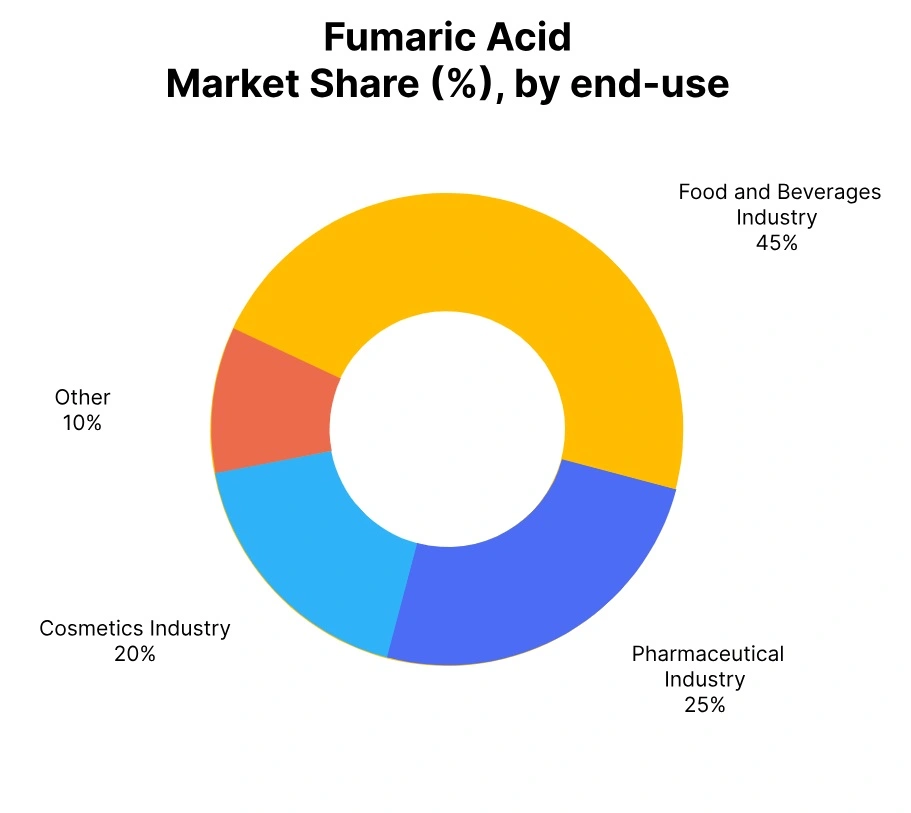
Fumaric Acid Industrial Applications

fumaric acid market share end use

Historically, several events have caused significant fluctuations in Fumaric Acid prices

  • Russia-Ukraine Conflict (2022):  The conflict has resulted in fluctuations in the prices of raw materials, such as maleic anhydride, which is a primary precursor for fumaric acid. The volatility in the availability and pricing of these materials has directly influenced the production costs of fumaric acid. The conflict has caused substantial disruptions in global supply chains. Both Russia and Ukraine are key players in the production and transportation of various raw materials used in the chemical industry, including those relevant to fumaric acid production. This has led to increased lead times and costs.
  • Texas Winter Storm (2021): The extreme cold weather led to widespread power outages and disruptions in manufacturing operations across Texas. Many chemical plants were forced to shut down or operate at reduced capacity, impacting the supply of fumaric acid and other chemicals. The storm affected the production and transportation of key raw materials used in fumaric acid manufacturing. Disruptions in supply chains for materials such as maleic anhydride, which is critical for fumaric acid production, contributed to shortages and increased prices.
  • COVID-19 Pandemic (2020): The pandemic led to significant disruptions in supply chains due to lockdowns, transportation restrictions, and workforce shortages. This impacted the production and distribution of fumaric acid, resulting in supply shortages and increased prices. Fumaric acid production relies on several key raw materials, such as maleic anhydride. Disruptions in the supply of these materials, caused by factory shutdowns and logistical challenges, contributed to rising production costs for fumaric acid.
  • Geopolitical Tensions (2018-2019): The trade tensions between the U.S. and China led to tariffs on various chemicals and raw materials. This resulted in increased costs for producers and suppliers of fumaric acid, as tariffs impacted the pricing of key raw materials used in its production. Geopolitical events often lead to fluctuations in the availability and prices of raw materials, such as maleic anhydride. As these prices increased due to supply uncertainties, the production costs for fumaric acid also rose, leading to higher market prices.
  • Shale Gas Boom (2010): The increase in shale gas production led to a substantial reduction in natural gas prices. Since many chemical processes, including those for producing fumaric acid, rely heavily on natural gas as a feedstock and energy source, the lower costs directly contributed to reduced production expenses.
  • Global Financial Crisis (2008-2009): The economic downturn led to reduced industrial activity and consumer spending. Demand for many products that use fumaric acid, such as automotive parts and construction materials, plummeted, causing a decline in consumption and putting downward pressure on prices.
  • Hurricane Katrina (2005): The hurricane caused extensive damage to chemical manufacturing facilities, particularly in the Gulf Coast region, where many chemical plants are located. Shutdowns and reduced operational capacity in these facilities led to temporary shortages of fumaric acid and increased production costs.

These events underscore the Fumaric Acid market’s vulnerability to global disruptions and highlight the need for continuous monitoring of supply-demand dynamics.

Why PriceWatch?

PriceWatch is your trusted resource for tracking global fumaric acid price trends. Our platform delivers real-time data and expert analysis, offering deep insights into the key factors driving price fluctuations in the fumaric acid market. By monitoring critical events such as geopolitical tensions, supply chain disruptions, and economic shifts, PriceWatch keeps you fully informed of market dynamics.

In addition, PriceWatch provides detailed forecasts and updates on production capacities, enabling you to anticipate market changes and make well-informed decisions. With PriceWatch, you gain a competitive edge in understanding all the elements that influence fumaric acid prices worldwide. Stay ahead of the curve with PriceWatch’s reliable, accurate, and timely fumaric acid market data.

Track PriceWatch's fumaric acid price assessment on a weekly basis since 2015 onwards, along with short-term forecasts, and get access to the detailed report in a downloadable format.

Data Collection and Sources​

  • Real-Time Market Data: PriceWatch aggregates real-time pricing data from a diverse range of sources, including global commodity exchanges, industry reports, and proprietary databases. This ensures that our assessments reflect the most current market conditions.
  • On-the-Ground Intelligence: Our team gathers insights directly from key market participants, including producers, suppliers, traders, and end-users, across major Fumaric Acid production hubs. This ground-level intelligence is crucial for understanding localized market dynamics.
  • Supply Chain Monitoring: We track the entire Fumaric Acid supply chain, from raw material availability (e.g. Maleic Acid) to production and distribution channels. This includes monitoring feedstock prices, production capacities, and transportation logistics.

Event Tracking and Impact Analysis​

  • Geopolitical Tensions: PriceWatch continuously monitors global geopolitical developments, such as conflicts or trade disputes, which can significantly impact Fumaric Acid prices. Our analysis includes potential disruptions to supply chains and their immediate and long-term effects on pricing.
  • Natural Disasters and Climate Events: We assess the impact of natural disasters, such as hurricanes or winter storms, on Fumaric Acid production facilities, particularly in vulnerable regions like the U.S. Gulf Coast. These events are factored into our price forecasts and supply outlooks.
  • Economic Shifts: PriceWatch evaluates macroeconomic trends, including global economic growth, inflation rates, and sector-specific demand (e.g., Food and beverages, Pharmaceuticals), to predict shifts in Fumaric Acid demand and corresponding price movements.

Production Capacity and Supply Analysis

  • Current Production Monitoring: We maintain a comprehensive database of global Fumaric Acid production facilities, tracking their operational status, maintenance schedules, and output levels. This allows us to assess current supply availability accurately.
  • Future Capacity Projections: Our research includes detailed forecasts of upcoming Fumaric Acid production capacities, factoring in new plant constructions, expansions, and technological advancements. This helps in predicting future supply trends and potential price stabilization.

Demand Forecasting

  • Sectoral Demand Analysis: PriceWatch provides in-depth analysis of demand trends across key sectors, including packaging, Food and beverages, and Pharmaceutical. We track year-on-year demand growth and project future consumption patterns based on economic indicators and industry developments.
  • Global Demand Dynamics: Our methodology considers regional demand variations and how they influence global Fumaric Acid pricing. This includes understanding the impact of shifts in manufacturing bases, trade policies, and environmental regulations.

Pricing Model Development

  • Dynamic Pricing Models: PriceWatch utilizes advanced econometric models to forecast Fumaric Acid prices, incorporating real-time data, historical trends, and projected market conditions. Our models are continuously refined to enhance accuracy and predictive power.
  • Scenario Analysis: We conduct scenario-based assessments to evaluate potential future market conditions. This includes best-case, worst-case, and most likely scenarios, helping our clients prepare for a range of market outcomes.

Reporting and Client Support

  • Comprehensive Reports: Our clients receive detailed reports that include current price assessments, future price forecasts, and in-depth analysis of market drivers. These reports are designed to be actionable, providing clear insights and recommendations.
  • Ongoing Support: PriceWatch offers continuous updates and personalized support to our clients, ensuring they have the most up-to-date information to make informed decisions. Our experts are available to discuss specific market developments and provide tailored advice.

This research methodology ensures that PriceWatch delivers the most accurate, timely, and actionable Fumaric Acid pricing assessments, helping our clients stay ahead of market trends and make informed business decisions.

Fumaric Acid Market Price Trend provided by PriceWatch is a base price and excludes VAT/Taxes, discounts, or offers. The information herein is accurate to the best of our knowledge as of the date indicated and is provided solely for the convenience of our customers as a reference for fumaric acid. PriceWatch disclaims any warranties or representations regarding the accuracy of results derived from this information. It is the sole responsibility of the user to assess the suitability of the product for their specific application. This document does not constitute an endorsement to use the product in violation of any applicable patent rights.

The pricing of fumaric acid is influenced by several key factors, including raw material costs, production processes, and market demand. Fluctuations in the availability and price of precursor materials, such as maleic anhydride, can significantly affect production costs. Additionally, global demand in industries like food, pharmaceuticals, and unsaturated polyester resins can lead to price variations. Regulatory changes and sustainability initiatives also play a role in shaping fumaric acid pricing.

To ensure competitive pricing for fumaric acid, procurement heads should regularly monitor market trends and supply dynamics. Building strong relationships with reliable suppliers can lead to better negotiation terms and bulk purchasing discounts. Additionally, exploring alternative sourcing options and staying informed about global supply chain developments will help maintain cost efficiency. Engaging in long-term contracts during favorable market conditions can also provide price stability.

Projected price trends for fumaric acid indicate moderate increases due to rising demand in various sectors, including food additives and specialty chemicals. As sustainability becomes a priority, investments in eco-friendly production methods may also affect pricing. However, advancements in production technology could help stabilize costs. It’s essential for procurement professionals to keep abreast of industry reports and market analyses to anticipate and adapt to these price trends effectively.