

The Global Benzene GIO Tracker provides real-time, plant-level intelligence on global benzene production capacity, refinery reformer output, steam cracker pygas extraction, operating rates, and disruption history since 2015. It enables daily monitoring of catalytic reformer turnarounds, steam cracker outages, extraction unit shutdowns, hydrogen and feedstock constraints, environmental compliance actions, capacity additions, rationalisations, and restart schedules.
The GIO tracker assesses benzene’s critical role as a core aromatics feedstock for downstream derivatives including styrene, phenol, cyclohexane, aniline, and linear alkylbenzene (LAB) for detergents. By combining disruption tracking with downstream demand exposure, operating rate analysis, trade flow monitoring, and margin evaluation, the tracker supports proactive supply risk management, procurement optimization, and value chain resilience across benzene-dependent industries.
Benzene is a key feedstock for producing chemicals like Linear Alkyl Benzene (LAB), used in detergents, and polymers such as polystyrene, crucial for packaging, electronics, and automotive industries. It also contributes to the production of solvents, paints, coatings, and other petrochemicals. Disruptions in benzene production, caused by feedstock shortages, plant outages, or regulatory changes, can lead to supply constraints and increased costs for downstream products. Environmental concerns over benzene emissions are driving stricter regulations, pushing for more sustainable production methods. The rising demand for eco-friendly products and clean energy technologies may reshape benzene’s downstream applications in sectors like cleaning, packaging, and energy.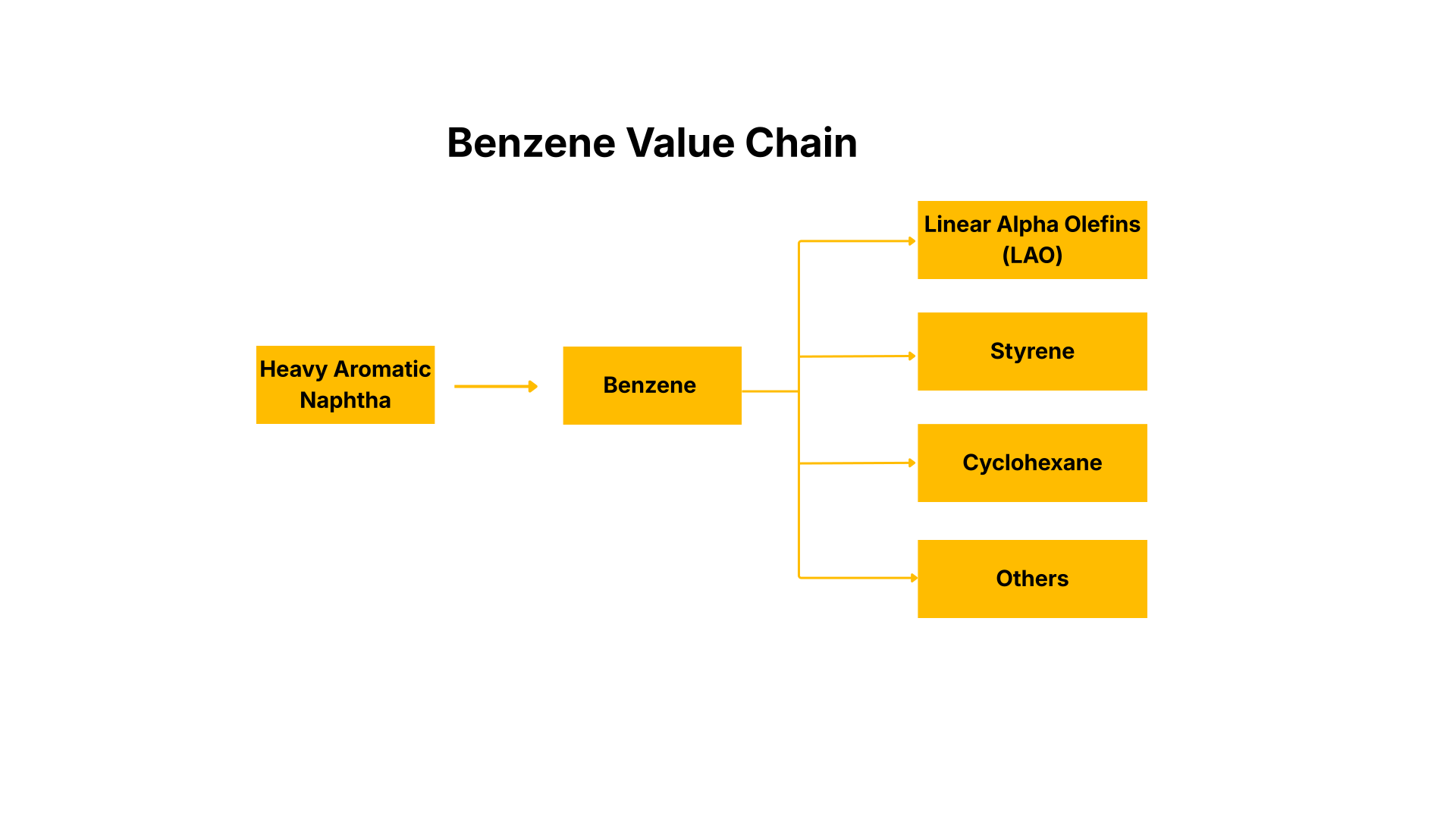
Benzene production is a crucial industry, heavily reliant on crude oil, making it vulnerable to supply disruptions. When production capacity is affected, price fluctuations can significantly impact downstream industries such as chemicals, plastics, and automotive manufacturing.
Utilise the GIO Tracker to receive real-time alerts on potential benzene supply shocks that could disrupt the production of key derivatives like Linear Alkyl Benzene (LAB), polystyrene, and cyclohexane.
Deploy the GIO Tracker across your supply chain to pinpoint emerging stress points, evaluate the impact of plant-level disruptions on benzene production, and transform hidden risks into actionable insights. Stay ahead of changes in feedstock availability, regulatory shifts, and environmental concerns to maintain stability within the benzene value chain. This proactive approach ensures uninterrupted production for essential sectors, including consumer goods, automotive, packaging, and clean energy technologies.
Global Overview
Global benzene production has reached over 50+ million[VP1.1][SG1.2] tonnes in 2025, reflecting increase of around 3% from 2024. The Benzene G.I.O Tracker offers real-time, plant-level operational intelligence, focusing on the downstream effects of benzene production, with Key regions like Asia-Pacific (China: 20M+ tpa; South Korea: 3M+) and North America (USA: 5M+ tpa) are closely monitored. The tracker integrates data on production capacity, utilization rates, and disruption indicators, helping industry players identify vulnerabilities in benzene supply chains that affect critical sectors like Linear Alkyl Benzene (LAB) production, polystyrene, plastics, paints, and automotive manufacturing.
Disruptions in benzene recovery or processing can directly impact the availability and cost of essential materials used in detergents, packaging, and consumer goods. GIO tracker ensures the early identification of potential supply risks, enabling businesses to proactively adjust their strategies and minimize disruptions across the global benzene value chain, thus safeguarding industries such as consumer goods, automotive, electronics, and construction.
Tracker Monitors 100+ benzene production facilities across the region, providing key insights into disruptions like feedstock shortages, plant turnarounds, capacity constraints, and regulatory or environmental curtailments that can impact output and tighten both regional and global benzene supply chains. By monitoring these risks-such as aromatic cracker outages, coking or reformer issues, logistics bottlenecks, and market demand shifts across derivatives like styrene and cumene-the system offers early warnings, helping stakeholders proactively address supply disruptions and navigate operational challenges in the concentrated and interconnected benzene market.
Tracker monitors 15+ benzene production facilities across North America, providing valuable insights into disruptions such as feedstock shortages, plant turnarounds, capacity limitations, and regulatory or environmental restrictions that can affect production and tighten both regional and global benzene supply chains. By tracking risks like outages in aromatic crackers, coking or reformer issues, logistics bottlenecks, and shifts in market demand for derivatives like styrene and cumene, the system offers early warnings. This enables stakeholders to proactively manage supply disruptions and navigate operational challenges in the tightly interconnected benzene market.
Tracker monitors 15+ benzene production facilities across the region, providing insights into disruptions such as feedstock shortages, plant turnarounds, and regulatory restrictions that can impact production and global supply chains. By tracking risks like cracker outages, coking issues, and demand shifts in derivatives like styrene and cumene, the system offers early warnings, helping stakeholders manage disruptions and navigate the interconnected benzene market.
Middle East & Africa Benzene Plant Tracking
Tracker monitors 15+ benzene production facilities across the region, providing essential insights into disruptions like refinery maintenance, logistical challenges, and regulatory changes that can affect production and limit both regional and global benzene flows.
Tracker monitors 2+ benzene production facilities across the region, providing essential insights into disruptions like refinery maintenance, logistical challenges, and regulatory changes that can affect production and limit both regional and global benzene flows.
Asia Pacific
Europe
North America
South America
Middle East & Africa
China
India
Kazakhstan
South Korea
Taiwan
Thailand
Singapore
Japan
Vietnam
Malaysia
Indonesia
Philippines
Brunei
Germany
Belgium
Poland
Netherlands
Italy
Russia
Czech Republic
Turkey
USA
Canada
Brazil
Iran
Saudi Arabia
South Africa
UAE
Oman
Kuwait
Algeria
Asia Pacific
Europe
North America
South America
Middle East & Africa
China
Taiwan
Japan
South Korea
India
Singapore
Kazakhstan
Vietnam
Indonesia
Thailand
Malaysia
Philippines
Brunei
Germany
Netherlands
Belgium
Czech Republic
Poland
Turkey
Russia
Italy
USA
Canada
Brazil
Saudi Arabia
Iran
Oman
South Africa
Algeria
Kuwait
UAE