

The global caprolactam market operates within a concentrated production landscape, capital-intensive facilities, and intricate supply chains that amplify disruptions across upstream and downstream segments.
GIO Tracker provides daily, asset-level intelligence on caprolactam plants worldwide, encompassing capacity details, production processes, feedstock dependencies, operational status, and outage histories across key producing regions. From cyclohexanone conversion efficiencies to total production losses by cause, every metric is being tracked at the facility level and updated daily. Leverage this operational intelligence, disruption alerts, and pricing impact analytics to anticipate supply dynamics ahead of broader market movements.
Caprolactam forms the cornerstone of polyamide-6 (nylon-6) polymer production and underpins a vast array of performance materials essential to the synthetic fibre and engineering plastics sectors. As the principal monomer input for polyamide-6 synthesis, caprolactam directly drives the output of textile fibres, industrial yarns, engineering plastics, films, and specialty compounds, influencing cost structures and supply availability across tire cords, carpets, automotive components, and consumer goods packaging.
Its production remains highly capital-intensive and inflexible, ensuring that capacity curtailments at the caprolactam stage cannot be swiftly offset and instead cascade through the value chain with amplified consequences. Disruptions in caprolactam supply ripple swiftly into nylon 6 derivatives, reshaping trade patterns, elevating feedstock expenses for polymerization plants, and constraining regional availability in manners that endure far beyond the originating event.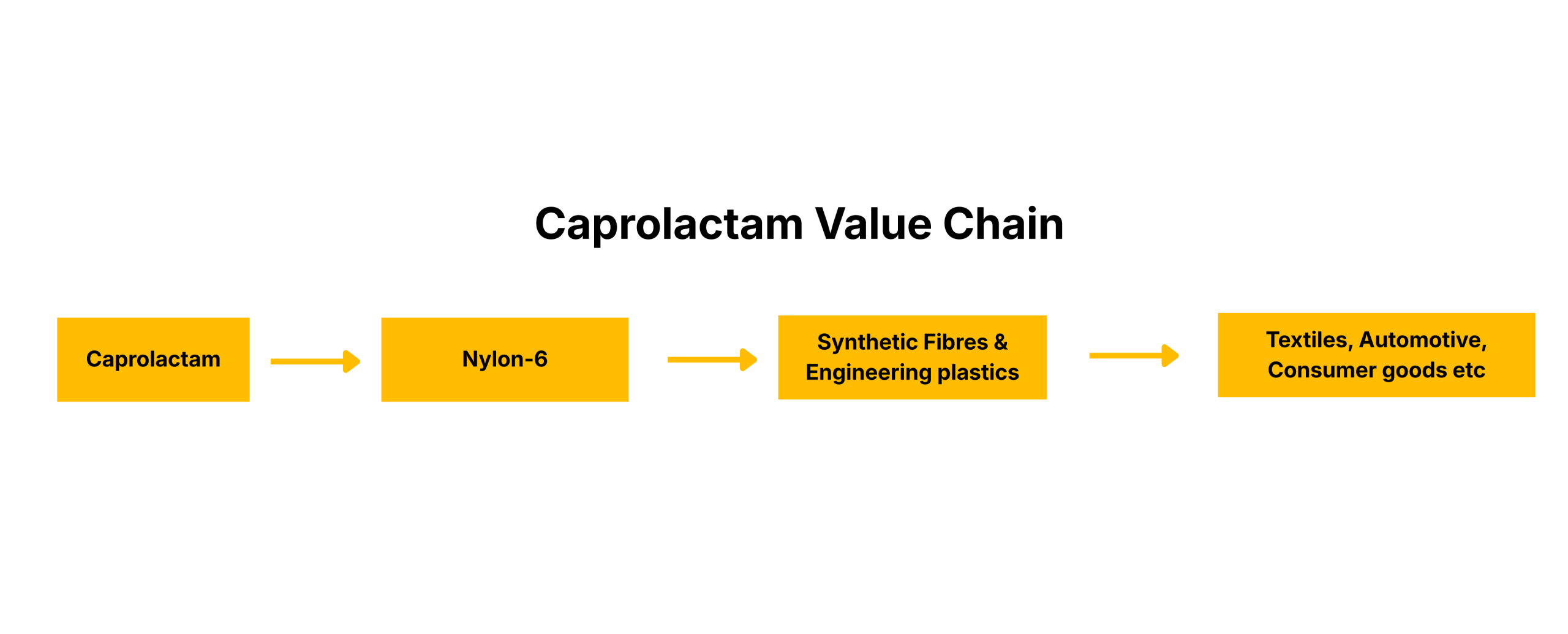
Caprolactam supply is concentrated, capital-intensive, and slow to replace. When capacity goes offline, price reactions are nonlinear. Get GIO Tracker for early warning on nonlinear caprolactam supply shocks across the nylon value chain.
Put GIO Tracker to work across your portfolio to surface those stress points early, quantify at plant-level how outages will ripple through nylon 6, fibres, engineering plastics, and key end-use sectors, and turn hidden operational risk into visible, actionable signals before it cascades across the polyamide value chain.
Global Overview
Global caprolactam production reached more than 9[VP1.1] million tons in 2025, concentrated majorly in Asia (China: 8+ Mtpa). GIO Tracker provides plant-level visibility across 50+ facilities, tracking capacity shifts and disruptions to forecast supply risks amid slow capacity growth and vulnerability to outages.
The Global Caprolactam GIO Tracker delivers structured, plant-level operational intelligence across major producing regions. Built on historical tracking since 2015, it monitors 50+ facilities worldwide, combining capacity, utilization, and real-time disruption signals to reveal supply flashpoints in concentrated caprolactam markets that drive global nylon production.
Tracks 35+ plants across the region, including more than 30 complexes in key coastal clusters. Monitors environmental shutdowns, power rationing, and seismic risks that tighten regional and global merchant Caprolactam flows.
Provides integrated visibility on major caprolactam production units across the U.S. Tracks turnarounds, energy outages, and capacity shifts amid demand for nylon intermediates, identifying tightness before regional prices react.
Tracks 10+ plants under intensifying decarbonization pressure across major European nylon hubs. Issues real-time alerts on energy rationing, production idlings, and feedstock-substitution tests that materially tighten caprolactam flows.
Asia Pacific
Europe
North America
China
India
Japan
Thailand
USA
Russia
Belgium
Germany
Netherlands
Ukraine
Spain
Asia Pacific
Europe
North America
China
India
Japan
Thailand
USA
Russia
Belgium
Germany
Netherlands
Ukraine