

Cobalt Mine G.I.O Tracker: Plant-Level Capacity and Daily Disruption Tracking & Impact Assessment Since 2015

Overview

The global cobalt industry is marked by highly concentrated mine production, particularly in the Democratic Republic of the Congo, and a relatively small number of large-scale industrial mining operations that supply the global battery materials market.

Cobalt mine supply is fundamentally dependent on sustained ore grades, stable regulatory environments, and the continuous operation of a relatively small number of large mining assets. When a mine experiences operational disruptions, such as temporary shutdowns, maintenance outages, force majeure declarations, or permanent closures the impact can quickly influence global cobalt availability.

The Cobalt Mine GIO Tracker provides structured mine-level operational intelligence across all major cobalt-producing countries. The platform monitors installed mining capacity, real-time operating status, temporary shutdowns, maintenance outages, care-and-maintenance status, restart activity, and permanent closures across global cobalt mining operations.

20++ Countries
15++ Production Facilities
60++ Operating Companies
290 KTPA Annual Capacity Tracked

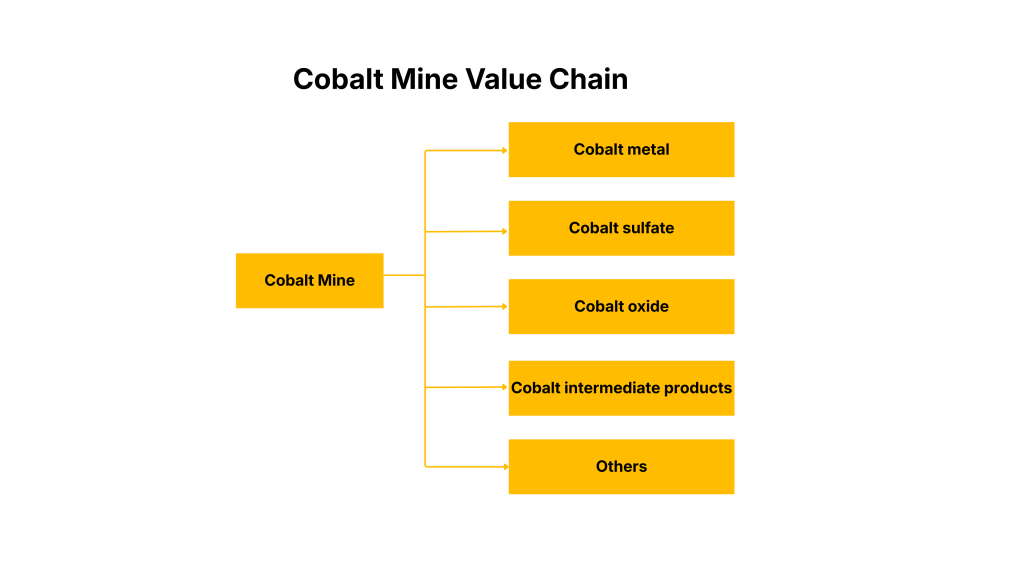
Cobalt Mine Downstream Impact Mapping

Cobalt is a key, primary material in the international battery materials supply chain. It is a vital component in NMC and NCA cathode active materials, consumer electronics battery cells, aerospace superalloys, cutting tools, and industrial catalysts, with electric vehicle production increasingly the primary demand driver.

As mine production is reduced or halted, through price-related shutdowns, export bans, force majeure, labor disputes, or environmental enforcement, the effect is transmitted quickly through the downstream chain.

Mine disruptions can:

  • Decrease the supply of cobalt hydroxide and concentrate to Chinese refiners
  • Raise spot cobalt sulfate and metal spot market premiums worldwide
  • Alter battery cathode material demand to higher cobalt or lower cobalt variants
  • Increase the import dependence of Western battery producers on Chinese refined materials
  • Exacerbate LME cobalt price volatility and basis risk
  • Affect cathode material substitution rates between NMC and LFP variants

In the case of structurally tight markets, even short-term mine shutdowns or partial production cuts can affect overall price formation, especially when inventories are low, restart times are uncertain, or export bans block the flow of material from exiting countries.

Mine-level operational status tracking, therefore, is essential for understanding supply chain risk before the effects of mine stoppages are captured in official production statistics, export data, or LME inventory levels.
Cobalt Mines Plant Tracker


Strategic Visibility – Cobalt Mine G.I.O Tracker

The global production of cobalt mines is still systematically concentrated. The Democratic Republic of the Congo represents about 77% of the global mine production of cobalt. This is a sole dependence on a single jurisdiction that has no equivalent in any other battery material. A few companies, most of them running joint ventures with Chinese companies, represent the vast majority of the global industrial production of cobalt.

The Cobalt Mines GIO Tracker provides early warning on these points of operational stress. By monitoring mine-level outages, suspension of care-and-maintenance activities, restart schedules, export stoppages, and geopolitically driven production shifts, the platform allows clients to detect potential supply shortages before they occur in LME cobalt prices, physical premiums, or trade customs data.

Price Watch™ Cobalt Mine G.I.O Tracker Coverage

Global Overview

The global production of cobalt mines in 2025 was about 280+ thousand tonnes. The production of cobalt mines is heavily concentrated in a few countries. The DRC alone represents more than 76% of the global production of cobalt, followed by Indonesia, whose production has increased tenfold in three years due to the expansion of nickel processing in HPAL nickel processing plants.

The Cobalt Mines GIO Tracker provides structured intelligence on all major cobalt mining operations. The platform is based on historical data of mine-level disruptions since 2015 and monitors operational status, capacity changes, care-and-maintenance activities, restarts, geopolitical exposure, and quantified output losses for all major cobalt-producing countries.

By systematically monitoring mine-level developments, the platform provides early warning on potential supply shortages that could impact:

  • LME cobalt prices and settlement trends
  • Physical cobalt sulfate and metal spot premiums
  • Battery cathode manufacturer procurement costs
  • NMC vs LFP chemistry substitution economics
  • Downstream EV and energy storage manufacturing cost structures

Asia Pacific Cobalt Mine Tracking

Tracks 25+ cobalt mining and associated laterite operations across the Asia Pacific region, monitoring operational status, maintenance shutdowns, temporary suspensions, and project commissioning developments affecting regional cobalt mine output.

  • Indonesia Cobalt Mine Tracking: Covers 4+ nickel laterite mining operations associated with cobalt production. The platform tracks operational status changes, maintenance shutdowns, temporary suspensions, and restart activity influencing cobalt mine supply.
  • Australia Cobalt Mine Tracking: Monitors 5 cobalt mining operations and development projects representing a small but strategic portion of global supply. Coverage includes operational status monitoring, maintenance outages, temporary shutdowns, and project commissioning milestones.

North America Cobalt Mine Tracking

Provides visibility into cobalt mining operations across North America, tracking operational status changes, maintenance shutdowns, and restart timelines affecting regional cobalt production capacity.

  • Canada Cobalt Mine Tracking: Monitors 3+ Mines representing ~1% of global supply. Tracks operational status, feasibility developments, production rates, maintenance cycle, and shutdowns.
  • U.S. Cobalt Mine Tracking: Identified cobalt resources of the United States are estimated to be about 1 million tons. Most of these resources are in Minnesota.

Europe Cobalt Mine Tracking

Tracks cobalt production associated with integrated nickel-copper mining complexes across Russia and surrounding regions. Monitoring includes sanctions-related trade flow realignments, maintenance cycles, and operational adjustments.

  • Russia Cobalt Mine Tracking: Covers 5+ mining operations linked to large nickel-copper-cobalt deposits, representing approximately 3% of global cobalt output. Captures production adjustments, maintenance shutdowns, sanctions-related trade shifts, and export flow realignments influencing global refined cobalt supply balances.

Middle East & Africa Cobalt Mine Tracking

Covers major export-oriented smelters integrated with long-term gas or captive power contracts. Monitors expansion projects, maintenance cycles, and export allocation shifts influencing global seaborne aluminium availability.

  • Democratic Republic of the Congo Cobalt Mine Tracking: Tracks 40+ mining operations across the Congolese Copperbelt and Katanga provinces, the world’s dominant cobalt producing region with more than 75% global production. Monitoring includes operational status changes, temporary shutdowns, maintenance outages, force majeure declarations, care-and-maintenance transitions, and permanent closures.
  • United Arab Emirates Primary Aluminium Smelter Tracking: Tracks 2 facilities representing ~3% of global capacity, capturing throughput adjustments and export flow dynamic.

South America Cobalt Mine Tracking

Tracks cobalt production from laterite and polymetallic mining operations across South America, monitoring project development timelines, operational disruptions, and logistics constraints affecting marginal global cobalt supply.

  • Cuba Cobalt Mine Tracking: Covers 2+ laterite nickel-cobalt mining operations, representing roughly 1% of global cobalt production. Monitoring includes operational adjustments, operational disruptions, and logistics constraints affecting marginal global cobalt supply.

Why Cobalt Mine G.I.O Tracker

Cobalt Mine G.I.O Tracker – Comprehensive Market Coverage & Intelligence Dashboard

Asset-Level Facility Intelligence

Regional Coverage

Asia Pacific

  • Cobalt Mine Capacity (Ktpa) at mine-level by Feedstock Type and Production Process – Asia Pacific
  • Cobalt Mine Capacity (Ktpa) at mine-level by Product Type and Unit Type – Asia Pacific
  • Count of Cobalt Mines with overall operational capacity – Asia Pacific
  • Cobalt Mines by Capacity (Ktpa) and Current Status – Asia Pacific
  • Cobalt Mine details (location, region, year of commissioning) – Asia Pacific
  • Announced and Upcoming Cobalt Mines with Capacity – Asia Pacific

Europe

  • Cobalt Mine Capacity (Ktpa) at mine-level by Feedstock Type and Production Process – Europe
  • Cobalt Mine Capacity (Ktpa) at mine-level by Product Type and Unit Type – Europe
  • Count of Cobalt Mines with overall operational capacity – Europe
  • Cobalt Mines by Capacity (Ktpa) and Current Status – Europe
  • Cobalt Mine details (location, region, year of commissioning) – Europe
  • Announced and Upcoming Cobalt Mines with Capacity – Europe

South America

  • Cobalt Mine Capacity (Ktpa) at mine-level by Feedstock Type and Production Process – South America
  • Cobalt Mine Capacity (Ktpa) at mine-level by Product Type and Unit Type – South America
  • Count of Cobalt Mines with overall operational capacity – South America
  • Cobalt Mines by Capacity (Ktpa) and Current Status – South America
  • Cobalt Mine details (location, region, year of commissioning) – South America
  • Announced and Upcoming Cobalt Mines with Capacity – South America

Middle East & Africa

  • Cobalt Mine Capacity (Ktpa) at mine-level by Feedstock Type and Production Process – Middle East & Africa
  • Cobalt Mine Capacity (Ktpa) at mine-level by Product Type and Unit Type – Middle East & Africa
  • Count of Cobalt Mines with overall operational capacity – Middle East & Africa
  • Cobalt Mines by Capacity (Ktpa) and Current Status – Middle East & Africa
  • Cobalt Mine details (location, region, year of commissioning) – Middle East & Africa
  • Announced and Upcoming Cobalt Mines with Capacity – Middle East & Africa

Country-Level Coverage

Daily Operations Tracker

Australia

  • Cobalt Mine Capacity (Ktpa) at mine-level by Feedstock Type and Production Process – Australia
  • Cobalt Mine Capacity (Ktpa) at mine-level by Product Type and Unit Type – Australia
  • Count of Cobalt Mines with overall operational capacity – Australia
  • Cobalt Mines by Capacity (Ktpa) and Current Status – Australia
  • Cobalt Mine details (location, region, year of commissioning) – Australia
  • Announced and Upcoming Cobalt Mines with Capacity – Australia

Indonesia

  • Cobalt Mine Capacity (Ktpa) at mine-level by Feedstock Type and Production Process – Indonesia
  • Cobalt Mine Capacity (Ktpa) at mine-level by Product Type and Unit Type – Indonesia
  • Count of Cobalt Mines with overall operational capacity – Indonesia
  • Cobalt Mines by Capacity (Ktpa) and Current Status – Indonesia
  • Cobalt Mine details (location, region, year of commissioning) – Indonesia
  • Announced and Upcoming Cobalt Mines with Capacity – Indonesia

Papua New Guinea

  • Cobalt Mine Capacity (Ktpa) at mine-level by Feedstock Type and Production Process – Papua New Guinea
  • Cobalt Mine Capacity (Ktpa) at mine-level by Product Type and Unit Type – Papua New Guinea
  • Count of Cobalt Mines with overall operational capacity – Papua New Guinea
  • Cobalt Mines by Capacity (Ktpa) and Current Status – Papua New Guinea
  • Cobalt Mine details (location, region, year of commissioning) – Papua New Guinea
  • Announced and Upcoming Cobalt Mines with Capacity – Papua New Guinea

Philippines

  • Cobalt Mine Capacity (Ktpa) at mine-level by Feedstock Type and Production Process – Philippines
  • Cobalt Mine Capacity (Ktpa) at mine-level by Product Type and Unit Type – Philippines
  • Count of Cobalt Mines with overall operational capacity – Philippines
  • Cobalt Mines by Capacity (Ktpa) and Current Status – Philippines
  • Cobalt Mine details (location, region, year of commissioning) – Philippines
  • Announced and Upcoming Cobalt Mines with Capacity – Philippines

Sweden

  • Cobalt Mine Capacity (Ktpa) at mine-level by Feedstock Type and Production Process – Sweden
  • Cobalt Mine Capacity (Ktpa) at mine-level by Product Type and Unit Type – Sweden
  • Count of Cobalt Mines with overall operational capacity – Sweden
  • Cobalt Mines by Capacity (Ktpa) and Current Status – Sweden
  • Cobalt Mine details (location, region, year of commissioning) – Sweden
  • Announced and Upcoming Cobalt Mines with Capacity – Sweden

Democratic Republic of Congo

  • Cobalt Mine Capacity (Ktpa) at mine-level by Feedstock Type and Production Process – Democratic Republic of Congo
  • Cobalt Mine Capacity (Ktpa) at mine-level by Product Type and Unit Type – Democratic Republic of Congo
  • Count of Cobalt Mines with overall operational capacity – Democratic Republic of Congo
  • Cobalt Mines by Capacity (Ktpa) and Current Status – Democratic Republic of Congo
  • Cobalt Mine details (location, region, year of commissioning) – Democratic Republic of Congo
  • Announced and Upcoming Cobalt Mines with Capacity – Democratic Republic of Congo

Cuba

  • Cobalt Mine Capacity (Ktpa) at mine-level by Feedstock Type and Production Process – Cuba
  • Cobalt Mine Capacity (Ktpa) at mine-level by Product Type and Unit Type – Cuba
  • Count of Cobalt Mines with overall operational capacity – Cuba
  • Cobalt Mines by Capacity (Ktpa) and Current Status – Cuba
  • Cobalt Mine details (location, region, year of commissioning) – Cuba
  • Announced and Upcoming Cobalt Mines with Capacity – Cuba

Regional Tracking

Asia Pacific

  • Total Operational Capacity (Ktpa) at mine level
  • Total Disrupted Capacity (Ktpa) and Production Loss (Kt) at mine level
  • Mine Outage Duration (Start Date and End Date)
  • Disruption Cause and Impact on Price
  • Mine disruption by type (Permanent or Temporary)

Europe

  • Total Operational Capacity (Ktpa) at mine level
  • Total Disrupted Capacity (Ktpa) and Production Loss (Kt) at mine level
  • Mine Outage Duration (Start Date and End Date)
  • Disruption Cause and Impact on Price
  • Mine disruption by type (Permanent or Temporary)

South America

  • Total Operational Capacity (Ktpa) at mine level
  • Total Disrupted Capacity (Ktpa) and Production Loss (Kt) at mine level
  • Mine Outage Duration (Start Date and End Date)
  • Disruption Cause and Impact on Price
  • Mine disruption by type (Permanent or Temporary)

Middle East & Africa

  • Total Operational Capacity (Ktpa) at mine level
  • Total Disrupted Capacity (Ktpa) and Production Loss (Kt) at mine level
  • Mine Outage Duration (Start Date and End Date)
  • Disruption Cause and Impact on Price
  • Mine disruption by type (Permanent or Temporary)

Country-wise Tracking

Australia

  • Total Operational Capacity (Ktpa) at mine level
  • Total Disrupted Capacity (Ktpa) and Production Loss (Kt) at mine level
  • Mine Outage Duration (Start Date and End Date)
  • Disruption Cause and Impact on Price
  • Mine Disruptions by Type (Permanent or Temporary)

Indonesia

  • Total Operational Capacity (Ktpa) at mine level
  • Total Disrupted Capacity (Ktpa) and Production Loss (Kt) at mine level
  • Mine Outage Duration (Start Date and End Date)
  • Disruption Cause and Impact on Price
  • Mine Disruptions by Type (Permanent or Temporary)

Papua New Guinea

  • Total Operational Capacity (Ktpa) at mine level
  • Total Disrupted Capacity (Ktpa) and Production Loss (Kt) at mine level
  • Mine Outage Duration (Start Date and End Date)
  • Disruption Cause and Impact on Price
  • Mine Disruptions by Type (Permanent or Temporary)

Philippines

  • Total Operational Capacity (Ktpa) at mine level
  • Total Disrupted Capacity (Ktpa) and Production Loss (Kt) at mine level
  • Mine Outage Duration (Start Date and End Date)
  • Disruption Cause and Impact on Price
  • Mine Disruptions by Type (Permanent or Temporary)

Sweden

  • Total Operational Capacity (Ktpa) at mine level
  • Total Disrupted Capacity (Ktpa) and Production Loss (Kt) at mine level
  • Mine Outage Duration (Start Date and End Date)
  • Disruption Cause and Impact on Price
  • Mine Disruptions by Type (Permanent or Temporary)

Democratic Republic of Congo

  • Total Operational Capacity (Ktpa) at mine level
  • Total Disrupted Capacity (Ktpa) and Production Loss (Kt) at mine level
  • Mine Outage Duration (Start Date and End Date)
  • Disruption Cause and Impact on Price
  • Mine Disruptions by Type (Permanent or Temporary)

Cuba

  • Total Operational Capacity (Ktpa) at mine level
  • Total Disrupted Capacity (Ktpa) and Production Loss (Kt) at mine level
  • Mine Outage Duration (Start Date and End Date)
  • Disruption Cause and Impact on Price
  • Mine Disruptions by Type (Permanent or Temporary)

Frequently Asked Questions – Cobalt Mine G.I.O Tracker

What is the Cobalt Mine GIO Tracker?

An asset-level operational intelligence platform that monitors global cobalt mine capacity, daily disruptions, production loss, and price impact across major Cobalt-producing regions.

What does the Cobalt Mine GIO Tracker monitor?

It tracks individual cobalt mine capacity (Ktpa), deposit and ore type, operational status, curtailments, care-and-maintenance events, restart timelines, force majeure declarations, export restrictions, ESG compliance actions, and quantified production loss at the mine level.

How frequently is the data updated?

Plant-level operational status and disruption signals are updated daily to provide real-time visibility into global Primary Aluminium developments.

How is production loss calculated?

Mine-level operational status and disruption signals are updated daily to provide real-time visibility into global cobalt supply developments.

Does the Cobalt Mine GIO Tracker cover global or regional markets?

It provides global coverage with structured regional and country-level drill-down across Central Africa (DRC), Asia Pacific (Indonesia, Australia, PNG), Europe (Russia), the Americas (Canada, Cuba), and other producing jurisdictions.

Who benefits from Cobalt Mine GIO Tracker?

Battery manufacturers, EV producers, cobalt traders, cathode material producers, procurement teams, commodity analysts, ESG compliance teams, investors, and supply chain strategists use the platform to monitor cobalt mine capacity (Ktpa), operational status, capacity shifts, commissioning events, shutdowns, restarts, outage durations, and quantified production loss.

How does it differ from country-level Cobalt production reports?

Unlike aggregated national statistics published quarterly or annually, the Cobalt Mines GIO Tracker monitors individual mine facilities daily — enabling early identification of supply risks before they appear in official production data, customs export flows, or LME inventory movements.

How does it help manage Cobalt supply risk?

The Cobalt Mines GIO Tracker transforms operational mine events — shutdowns, force majeure, export bans, ESG suspensions — into structured, facility-level supply intelligence, enabling proactive risk assessment and informed strategic procurement decisions.

Can I analyse Cobalt Mine alongside other metallic commodities?

Yes. The Cobalt Mine GIO Tracker applies a consistent mine-level intelligence framework that allows users to compare Cobalt Mine disruptions, capacity shifts, and supply risks alongside other metallic value chains. Standardized metrics such as capacity (Mtpa), outage duration, and quantified production loss enable cross-commodity risk comparison and identification of ripple effects across the steel ecosystem.

Get Full Access to Cobalt Mine Intelligence Subscribe to unlock facility-level data, daily disruption alerts and full G.I.O Tracker coverage.

UPGRADE NOW