

The global chlorine market features a concentrated production landscape, capital-intensive chlor-alkali plants, and supply chains exposed to energy costs and power disruptions.
The GIO Tracker offers daily, asset-level data on chlorine facilities, monitoring capacity, brine feedstock, electrolytic processes (membrane, diaphragm, mercury cells), run rates, and outage histories across regions like Asia, Europe, and North America. Chlorine, essential for PVC, water treatment, pulp bleaching, and disinfectants, tracks power prices and caustic soda balances amid environmental scrutiny on mercury cells. Long-term demand holds firm from construction, sanitation, and pharmaceuticals, with membrane tech adoption and renewable energy integration driving greener operations.
Chlorine gas itself is a highly reactive and toxic substance, integral in the production of essential chemicals such as PVC (polyvinyl chloride), sodium hypochlorite for disinfectants, and hydrochloric acid (HCl) used in chemical production and metal refining.
Chlorine is a critical feedstock in chlor-alkali processes, producing caustic soda and hydrogen for downstream chemicals, and directly feeds PVC, chlorinated solvents, water treatment disinfectants, and pulp bleaching. Disruptions from salt shortages, power outages, brine contamination, electrolyzer failures, or environmental regulations trigger supply shortages, price spikes, extended lead times, production curtailments, and inventory shortages.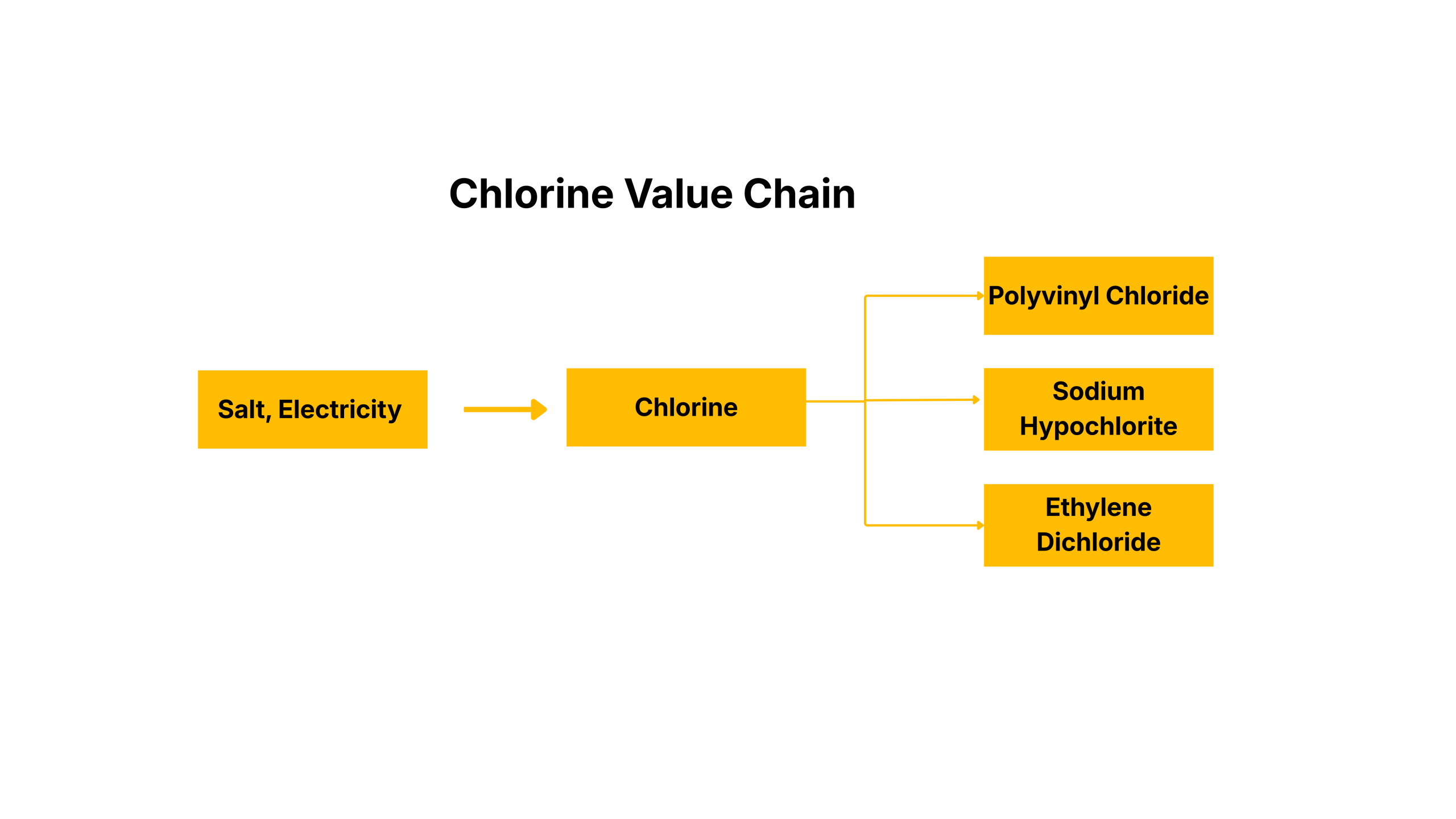
PVC (construction pipes, profiles, films), EDC/VCM (rigid packaging), chlorinated polyethylene (wires/cables), and water treatment chemicals face immediate impacts. Pulp/paper bleaching halts, while pharma intermediates and agrichemicals (glyphosate) encounter shortages. Sustainability shifts toward membrane cell technology and green hydrogen co-production reshape long-term supply chain resilience and costs.
The chlorine supply chain is defined by high concentration, significant capital investment, and limited operational flexibility. When production capacity is disrupted, price fluctuations can behave nonlinearly, impacting multiple downstream sectors.
By implementing GIO Tracker, early warning signals for nonlinear chlorine supply disruptions across the chlor-alkali value chain can be captured.
Utilizing GIO Tracker across your portfolio allows for the identification of emerging stress points, quantification of the impact of plant-level outages, and assessment of how these disruptions will affect downstream industries such as PVC production, water treatment, pulp and paper, and disinfectants.
The Chlorine G.I.O Tracker provides real-time, plant-level operational intelligence focused on downstream market exposure. Monitoring 160+ chlorine facilities globally, particularly in regions like North America (USA: 10M+ tpa) and Asia-Pacific (China: 20M+ tpa), the tracker integrates data on nameplate capacity, operating rates, and feedstock dependencies (salt, electricity). It also tracks disruption signals, such as plant outages, regulatory changes, and feedstock constraints. The tracker identifies vulnerabilities in the chlorine value chain, affecting industries such as construction, water treatment, healthcare, plastics manufacturing, and consumer goods. By detecting supply risks, price volatility, and capacity constraints, the tracker supports proactive decision-making, enhancing supply chain stability and optimizing procurement strategies across the global chlorine market.
The tracker provides real-time insights into operational risks like plant shutdowns, feedstock disruptions, and regulatory changes. It monitors capacity growth, supply-demand balances, and chlorine production metrics, including utilization levels and feedstock dependencies (salt, electricity). This enables proactive risk management and strengthens supply chain resilience across industries such as PVC production, water treatment, and construction.
The tracker offers detailed insights into operational risks such as plant shutdowns, feedstock shortages, and regulatory changes. It tracks capacity expansion, supply-demand dynamics, and critical chlorine production metrics, including utilization rates and feedstock dependencies (salt, electricity). This information supports effective risk management and strengthens supply chain resilience across industries like PVC manufacturing, water treatment, and chemical processing.
The tracker monitors around 60 chlorine production facilities, offering insights into risks like plant shutdowns, feedstock shortages, and regulatory changes. It tracks capacity growth, supply-demand trends, and key production metrics, supporting risk management and supply chain resilience in industries like PVC and water treatment.
Asia Pacific
North America
Europe
China
India
Pakistan
South Korea
Indonesia
Japan
Taiwan
Thailand
Germany
France
Finland
Spain
Belgium
Poland
Czech Republic
Norway
Sweden
UK
Hungary
Portugal
Netherlands
Austria
Greece
Turkey
Switzerland
Ireland
Italy
Romania
Slovenia
Slovakia
USA
Mexico
Canada
Brazil
Venezuela
Iran
Saudi Arabia
Qatar
Asia Pacific
Europe
North America
China
Taiwan
Japan
South Korea
India
Pakistan
Indonesia
Thailand
Germany
Netherlands
Belgium
France
Norway
Spain
Sweden
UK
Hungary
Czech Republic
Portugal
Poland
Turkey
Ireland
Italy
Finland
Austria
Greece
Slovakia
Slovenia
Romania
Switzerland
USA
Mexico
Canada
Brazil
Venezuela
Saudi Arabia
Iran
Qatar