

The global methyl methacrylate (MMA) market is characterized by a highly integrated production base, significant capital investments, and supply chains sensitive to fluctuations.
The GIO Tracker provides daily, asset-level insights into MMA facilities, monitoring production capacity, feedstock dependencies (primarily acetone, hydrogen cyanide, and methanol), operational status, plant outages, and maintenance histories across major production regions. MMA is a critical feedstock in the production of polymethyl methacrylate (PMMA), methyl methacrylate-butadiene-styrene (MBS), and coatings, and is significantly impacted by shifts in the prices of crude oil and petrochemical derivatives.
GIO tracker monitors planned turnarounds, unplanned outages, force majeure events, and feedstock constraints, while assessing MMA’s critical role in producing PMMA, coatings, adhesives, and sealants. The tracker helps industry players manage supply risks, optimize procurement strategies, and ensure operational continuity across MMA-dependent value chains, supporting decision-making in a volatile market.
Methyl Methacrylate (MMA) is a vital raw material in producing polymethyl methacrylate (PMMA), widely used in industries such as automotive, construction, electronics, and medical devices. Disruptions in MMA production, stemming from feedstock shortages (acetone, hydrogen cyanide), plant outages, utility disruptions, or regulatory changes, can result in higher raw material costs, supply shortages, extended procurement cycles, and production inefficiencies. In the automotive sector, MMA is used in lightweight components and light lenses, while construction relies on MMA for coatings and adhesives. Increasing focus on sustainability is pushing for bio-based MMA and recyclable polymers, influencing long-term market demand and supply chain dynamics.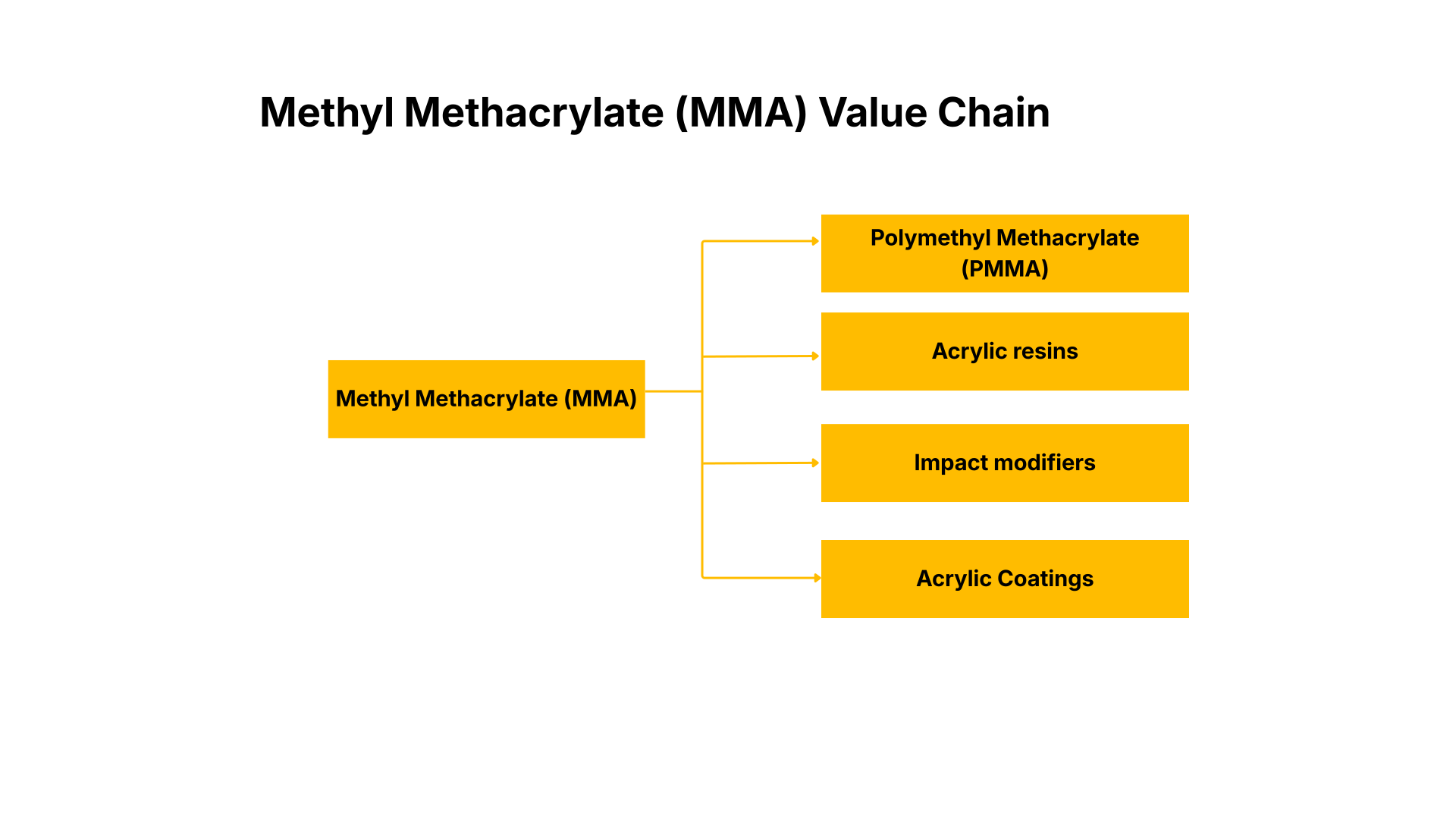
Methyl methacrylate (MMA) production is capital-intensive, primarily derived from acetone and hydrogen cyanide, making the market highly sensitive to feedstock availability and price fluctuations. MMA production is also vulnerable to operational disruptions, feedstock constraints, and cost volatility. Any plant outages, capacity reductions, or regulatory changes can lead to price volatility and supply uncertainty for downstream derivatives such as polymethyl methacrylate (PMMA), coatings, adhesives, and sealants. These materials are critical to industries like automotive, construction, electronics, and medical devices.
The GIO Tracker provides plant-level intelligence and disruption alerts, helping stakeholders anticipate supply shocks, manage procurement risks, optimize margins, and enhance resilience across the global MMA value chain. This visibility enables businesses to navigate market fluctuations effectively.
Global Methyl Methacrylate (MMA) production reached approximately 4 million tonnes in 2025, marking an increase around 4% compared to 2024.
The MMA GIO Tracker offers real-time, plant-level operational intelligence, focusing on downstream market exposure. Monitoring 50+ MMA facilities globally, especially in Asia-Pacific (China: 2M+ tpa) and North America (USA: +0.6M tpa), the tracker integrates data on nameplate capacity, operating rates, feedstock dependencies (acetone, hydrogen cyanide), and disruption signals. It identifies vulnerabilities in the MMA value chain, impacting industries like automotive, construction, electronics, and medical devices. By detecting supply risks, outages, and margin pressures, the tracker enables proactive decision-making and supports supply chain stability across global MMA markets.
The Asia-Pacific Methyl Methacrylate (MMA) Plant Tracker monitors 30+ MMA production facilities, providing real-time insights into operational risks such as shutdowns, feedstock disruptions, power rationing, and environmental factors. It tracks capacity growth, supply-demand balances, and regional market dynamics, helping businesses anticipate market tightness. This supports proactive risk management and strengthens supply chain resilience for industries like automotive, construction, and electronics.
The North America Methyl Methacrylate (MMA) Plant Tracker monitors around 5 MMA production facilities, offering real-time insights into operational risks like shutdowns, feedstock disruptions, power shortages, and environmental challenges. It tracks capacity growth, supply-demand shifts, and regional market trends, helping businesses forecast potential market tightness. This enables proactive risk management and enhances supply chain resilience for industries such as automotive, construction, and electronics.
The Europe Methyl Methacrylate (MMA) Plant Tracker monitors approximately 5 MMA production facilities, delivering real-time updates on operational risks including shutdowns, feedstock disruptions, power supply constraints, and environmental factors. It tracks capacity modifications, supply-demand dynamics, and market trends, thereby facilitating proactive risk management and bolstering supply chain resilience across automotive, construction, electronics, and healthcare sectors.
Tracker monitors approximately two facilities across the region, delivering comprehensive visibility into plant shutdowns, logistical disruptions, and regulatory developments impacting methyl methacrylate (MMA) supply chains both locally and globally. This oversight empowers stakeholders to anticipate potential interruptions proactively and refine strategies to maintain seamless production and consistent MMA availability.
Asia Pacific
North America
Europe
Middle East & Africa
China
South Korea
Taiwan
Thailand
Japan
Singapore
Germany
UK
Italy
USA
Canada
Saudi Arabia
Asia Pacific
Europe
North America
Middle East & Africa
China
Taiwan
Japan
South Korea
Singapore
Thailand
Germany
Italy
UK
USA
Canada
Saudi Arabia