

The global polyvinyl chloride (PVC) market is characterized by a highly integrated production base, significant capital investments, and supply chains sensitive to fluctuations.
The GIO Tracker provides daily, asset-level insights into PVC facilities, monitoring production capacity, feedstock dependencies (primarily ethylene dichloride (EDC) and vinyl chloride monomer (VCM)), operational status, plant outages, and maintenance histories across major production regions. PVC is a critical feedstock in the production of pipes, profiles, flooring, cables, and films, and is significantly impacted by shifts in the prices of crude oil and petrochemical derivatives.
PVC production is influenced by fluctuations in crude oil prices, environmental concerns, and growing demand from industries such as automotive and construction. By assessing plant-level disruptions and supply chain impacts, the tracker helps stakeholders manage supply risks, optimize sourcing strategies, and maintain operational continuity in a volatile market.
PVC plays a crucial role across industries such as construction, automotive, healthcare, and consumer goods. It is essential in producing pipes, flooring, automotive parts, medical devices, and packaging. As a capital-intensive product reliant on petrochemical feedstocks, disruptions in PVC production, such as feedstock shortages or plant outages, can have significant downstream effects. These disruptions can lead to tight supply, increased costs, and delays, particularly in construction and automotive sectors. Additionally, environmental concerns about PVC’s carcinogenic properties are driving the adoption of more sustainable production methods, potentially reshaping its downstream impact in the future.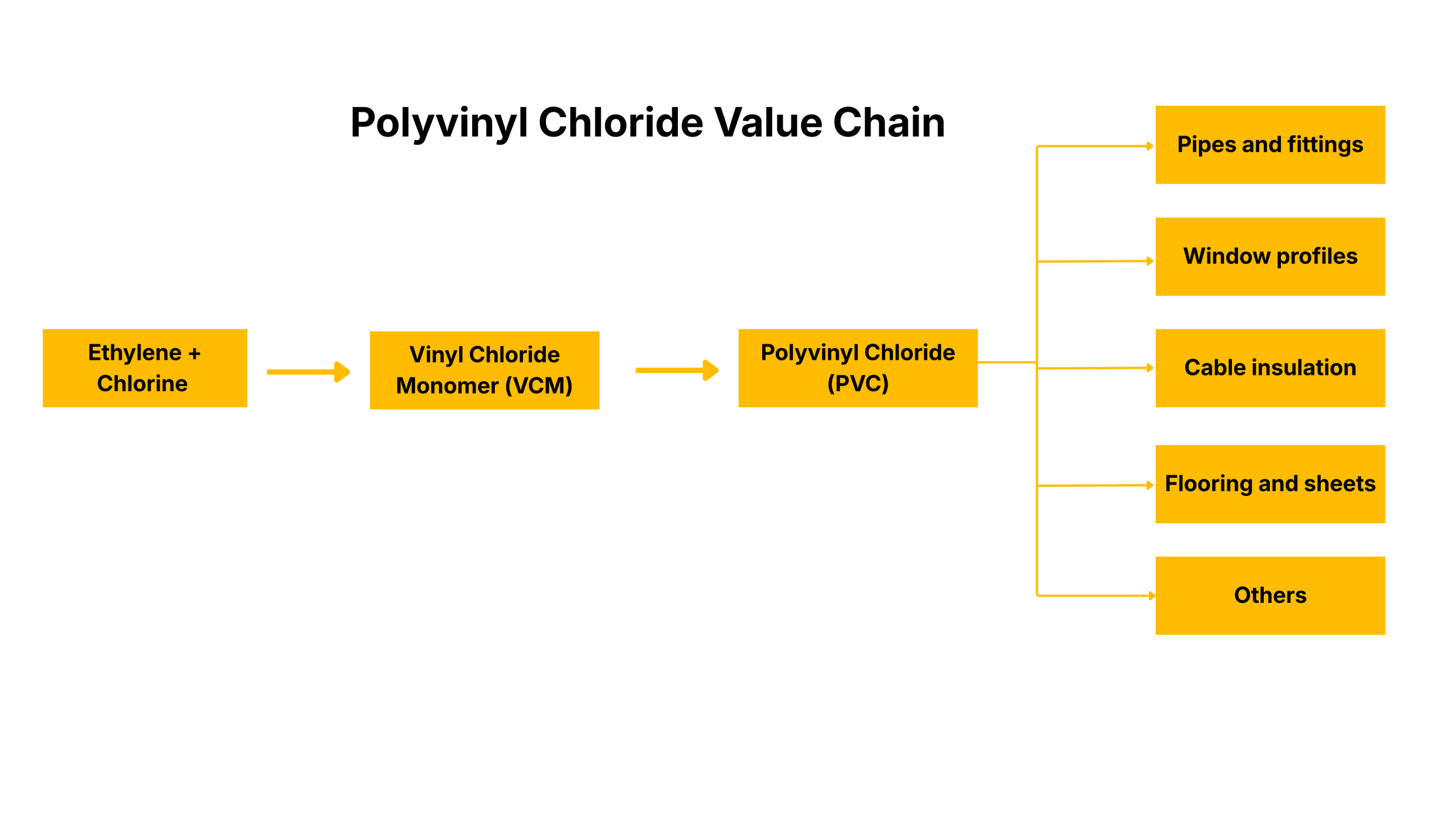
PVC supply is highly concentrated, capital-intensive, and vulnerable to disruptions. When production capacity is impacted, price fluctuations can be unpredictable and significant.
Deploy GIO Tracker across your operations to spot emerging stress points, assess how plant-level disruptions will impact PVC production for pipes, flooring, profiles, and medical devices, and convert hidden operational risks into clear, actionable insights before they ripple through downstream markets.
Use GIO Tracker to receive early alerts on potential PVC supply shocks affecting critical sectors such as construction, automotive, and healthcare. Stay proactive against changes in feedstock availability and evolving environmental regulations to ensure stability within the PVC value chain.
Global Overview
Global PVC production reached 35+ million tonnes in 2025, PVC production remained almost stable from 2024, dominant regions like Asia (China: ~20M+ tpa; South Korea: ~1M tpa).
The Global PVC GIO Tracker provides real-time, plant-level operational intelligence focused on the downstream effects of PVC production. By monitoring over 125 facilities globally, particularly in dominant regions like Asia-Pacific (China: ~20M tpa; South Korea: ~2M tpa), and integrating data on capacity, utilization, and disruption signals, the tracker identifies vulnerabilities in PVC supply chains that impact key downstream industries.
These include construction, automotive, healthcare, and consumer goods, where disruptions in PVC production can directly affect the availability and cost of critical materials. The tracker allows for early detection of emerging supply risks, helping stakeholders forecast potential disruptions and proactively adjust strategies to minimize their impact across the value chain.
The Asia Pacific PVC Plant Tracker monitors 70+ plants across the region, offering critical insights into operational risks such as shutdowns, power rationing, and seismic risks that could disrupt PVC production and impact both regional and global PVC flows. By tracking these factors, the system provides early warnings, helping stakeholders anticipate potential supply disruptions and manage operational challenges in the highly concentrated and interconnected PVC market. This allows companies to take proactive measures to mitigate risks and ensure a steady supply of PVC for downstream industries, including construction, automotive, and plastics manufacturing.
North America PVC Plant Tracking monitors over 15 plants across the region, providing critical insights into disruptions such as refinery maintenance, logistical challenges, and policy changes that can affect production and tighten both regional and global PVC flows. This system offers early warnings, enabling stakeholders to anticipate supply disruptions and make informed decisions in a complex and interconnected PVC market.
Tracks over 20 plants across the region, offering vital insights into disruptions such as refinery maintenance, logistical issues, and regulatory changes that can impact production and constrain both regional and global PVC flows.
Monitors 5+ plants across the region, providing essential insights into disruptions like refinery maintenance, logistical challenges, and regulatory changes that can affect production and limit both regional and global PVC flows.
Tracks 5+ facilities region-wide, delivering critical visibility into refinery outages, logistics bottlenecks, and regulatory impacts affecting local/global PVC supply flows.
Asia Pacific
North America
South America
Europe
Middle East & Africa
China
India
Pakistan
South Korea
Taiwan
Thailand
Bangladesh
Japan
Vietnam
Malaysia
Indonesia
Philippines
Uzbekistan
Germany
France
Finland
Spain
Belgium
Poland
Czech Republic
Norway
Sweden
UK
Hungary
Portugal
Netherlands
Ukraine
Russia
Turkey
USA
Mexico
Brazil
Argentina
Colombia
Venezuela
Iran
Saudi Arabia
Egypt
Morocco
South Africa
Asia Pacific
Europe
North America
South America America
Middle East & Africa
China
Taiwan
Japan
South Korea
India
Bangladesh
Pakistan
Vietnam
Indonesia
Thailand
Malaysia
Philippines
Uzbekistan
Germany
Netherlands
Belgium
France
Norway
Spain
Sweden
UK
Hungary
Czech Republic
Portugal
Poland
Turkey
Russia
Ukraine
Finland
USA
Mexico
Brazil
Colombia
Argentina
Venezuela
Saudi Arabia
Iran
Egypt
South Africa
Morocco