
The Global Propylene GIO Tracker offers real-time insights into propylene production at the plant level, focusing on capacity utilization, feedstock dependencies (such as Naphtha and Propane), operational status, and disruption history.
The GIO tracker monitors disruptions across key producing regions, identifying factors that impact propylene manufacturing. As a crucial raw material in the production of polypropylene, propylene oxide, and various chemicals used in plastics, automotive, and textiles, any disruption in its supply can have significant downstream effects across multiple industries. Propylene production is highly sensitive to fluctuations in raw material availability, including refinery by-products and natural gas liquids, as well as market dynamics such as crude oil prices, regulatory changes, and growing demand from sectors like packaging, automotive, and consumer goods.
By tracking plant-level disruptions, supply chain bottlenecks, and operational inefficiencies, the tracker helps stakeholders manage risks, optimize sourcing strategies, and ensure continuity in propylene supply. This data-driven approach enables industry players to stay ahead of potential disruptions, adjust to shifting market conditions, and mitigate the effects of volatility in the global propylene market.
Propylene is a key feedstock in the petrochemical industry, with significant downstream effects across sectors like plastics, automotive, textiles, and chemicals. It is primarily used in the production of polypropylene (PP), propylene oxide (PO), and acrylonitrile (AN), which are essential for a variety of applications.
Disruptions in propylene production, due to feedstock shortages, plant outages, or price fluctuations, can lead to increased costs, supply shortages, and delays. For example, polypropylene is crucial for packaging and automotive parts, while propylene oxide is used in polyurethanes for construction and insulation. Acrylonitrile is essential for synthetic fibers. Increasing environmental regulations and sustainability pressures are reshaping demand, further influencing propylene’s downstream impact.
Consequently, any disruptions in propylene production can cause widespread disruptions across the value chain.
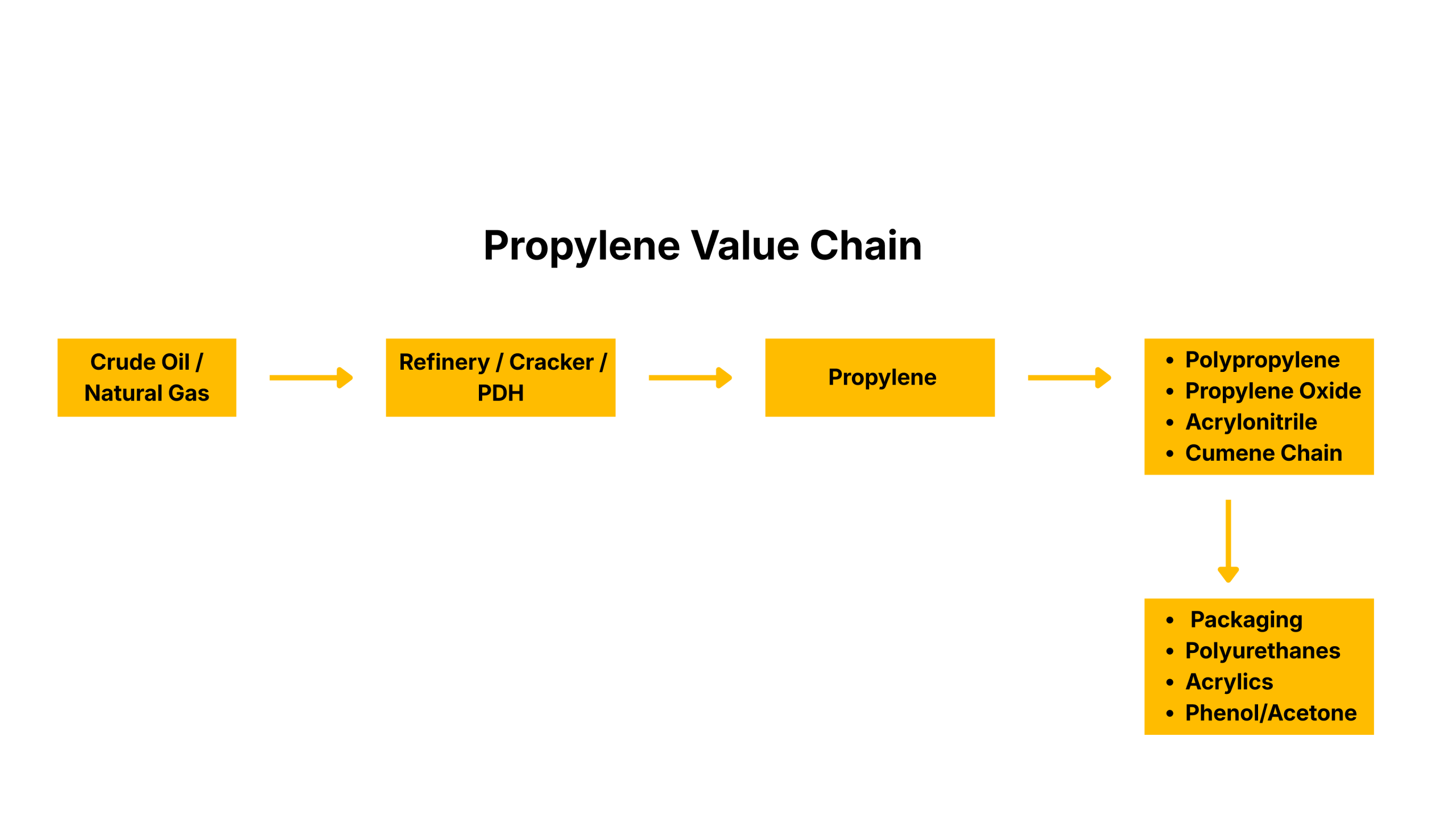
Propylene production is capital-intensive and highly dependent on the availability of feedstocks such as natural gas liquids and naphtha, making the market sensitive to feedstock fluctuations, operational disruptions, and regulatory changes.
Any plant outages, capacity reductions, or disruptions in the supply of feedstocks can quickly lead to price volatility and supply uncertainty for downstream derivatives like polypropylene (PP), propylene oxide (PO), and acrylonitrile (AN). These materials are essential to industries such as automotive, packaging, textiles, chemicals, and consumer goods.
The GIO Tracker provides real-time plant-level intelligence and disruption alerts, allowing stakeholders to anticipate supply shocks, manage procurement risks, optimize margins, and enhance resilience across the global propylene value chain. This data-driven insight helps businesses stay ahead of market fluctuations, mitigate supply chain disruptions, and ensure operational continuity in key sectors.
Global Overview
Global propylene production reached over 130 million tonnes in 2025, reflecting an increase of 3% from 2024. The Propylene GIO Tracker provides real-time, plant-level insights, monitoring 50+ facilities globally, with key production regions in Asia-Pacific (China: 65M+ tpa, South Korea: 6M+ tpa) and North America (USA: 15M+ tpa). It tracks nameplate capacity, operating rates, feedstock dependencies (such as natural gas liquids and naphtha), and disruptions, identifying vulnerabilities in the propylene value chain.
These fluctuations impact downstream sectors like plastics (polypropylene), chemicals (propylene oxide), automotive (parts, packaging), and textiles. The tracker enables early detection of supply risks, plant outages, and market shifts, allowing stakeholders to manage price volatility, optimize procurement strategies, and ensure stability across the global propylene market.
The Asia Pacific Propylene Plant Tracker monitors over 200 propylene production facilities. It offers real-time insights into risks such as plant shutdowns, feedstock disruptions, and supply chain issues, tracking production capacity, operational efficiency, margin fluctuations, and supply-demand imbalances. This helps stakeholders navigate market tightness or oversupply. Given propylene’s role in producing polypropylene, propylene oxide, acrylonitrile, and glycol ethers, the tracker aids proactive risk management and enhances supply chain resilience across industries like automotive, packaging, textiles, and chemicals. It supports optimized sourcing strategies by providing visibility into regional production and potential disruptions.
The tracker monitors around 40+ Propylene production facilities in the region, providing real-time insights into risks like shutdowns, feedstock disruptions, and weather impacts. It tracks capacity, operational efficiency, and supply-demand imbalances, helping manage tightness or oversupply. By focusing on propylene’s role in polypropylene (PP), propylene oxide (PO), and other derivatives, the tracker enhances proactive risk management and strengthens supply chain resilience across sectors like textiles and automotive.
The tracker follows around 40+ propylene production facilities across Europe, delivering real‑time insights into risks such as unplanned shutdowns, feedstock, and weather impacts. It monitors capacity, operational efficiency, margin trends, and supply‑demand balances to help manage market tightness or oversupply. By focusing on propylene’s use in polypropylene (PP), propylene oxide (PO), and acrylonitrile (AN), the tracker enables proactive risk management and strengthens supply chain resilience for key industries including automotive, packaging, and chemicals.
The tracker follows around 15+ propylene production facilities across South America, delivering real‑time insights into risks such as unplanned shutdowns, feedstock disruptions, and weather impacts. It monitors capacity, operational efficiency, and supply‑demand balances to help manage market tightness or oversupply. By focusing on propylene’s role in polypropylene (PP), propylene oxide (PO), and acrylonitrile (AN), the tracker supports proactive risk management and strengthens supply chain resilience for key industries including automotive, packaging, and chemicals.
The tracker monitors over 30 propylene production facilities across Europe, providing real-time insights into risks like unplanned shutdowns, feedstock disruptions, and weather impacts. It tracks capacity, operational efficiency, margin trends, and supply-demand balances to help manage market tightness or oversupply. Focusing on propylene’s key roles in producing polypropylene (PP), propylene oxide (PO), and acrylonitrile (AN), the tracker supports proactive risk management and enhances supply chain resilience for industries such as automotive, packaging, and chemicals.
Asia Pacific
North America
South America
Europe
Middle East & Africa
China
India
South Korea
Taiwan
Thailand
Japan
Vietnam
Malaysia
Indonesia
Philippines
Singapore
Kazakhstan
Uzbekistan
Germany
France
Finland
Spain
Belgium
Poland
Czech Republic
Norway
Austria
UK
Hungary
Portugal
Netherlands
Ukraine
Russia
Turkey
Azerbaijan
Sweden
Greece
Romania
Italy
Slovakia
USA
Brazil
Argentina
Chile
Iran
Saudi Arabia
Egypt
UAE
Israel
Oman
Libya
Nigeria
Asia Pacific
Europe
North America
South America
Middle East & Africa
China
Taiwan
Japan
South Korea
India
Uzbekistan
Kazakhstan
Vietnam
Indonesia
Thailand
Malaysia
Philippines
Singapore
Germany
Netherlands
Belgium
France
Norway
Spain
Sweden
UK
Hungary
Czech Republic
Portugal
Poland
Turkey
Russia
Ukraine
Finland
Azerbaijan
Greece
Romania
Italy
Austria
Slovakia
USA
Brazil
Argentina
Chile
Saudi Arabia
Iran
Egypt
UAE
Israel
Oman
Libya
Nigeria