
Styrene G.I.O Tracker: Plant-Level Capacity and Daily Disruption Tracking & Impact Assessment Since 2015

Overview

The global styrene market is characterized by a highly integrated production base, significant capital investments, and supply chains sensitive to fluctuations.

The Global Styrene GIO Tracker provides real-time, plant-level intelligence on global styrene production capacity, operating rates, feedstock dependencies (primarily ethylbenzene and benzene), process technologies, and disruption history since 2015. It enables daily monitoring of planned turnarounds, unplanned outages, force majeure events, feedstock and utility constraints, environmental compliance actions, capacity additions, rationalizations, and restart timelines.

Styrene is a critical feedstock in the production of polystyrene (PS), expanded polystyrene (EPS), styrene-butadiene rubber (SBR), and unsaturated polyester resins (UPR), and is significantly impacted by shifts in the prices of crude oil and petrochemical derivatives.

80++ Countries
20++ Production Facilities
90++ Operating Companies
40+ MMTPA Annual Capacity Tracked

Styrene Downstream Impact Mapping

Styrene is a strategically significant monomer used in the production of key styrenic polymers and resins, including polystyrene (PS), expanded polystyrene (EPS), acrylonitrile butadiene styrene (ABS), styrene-butadiene rubber (SBR), and unsaturated polyester resins (UPR). Its downstream impact is substantial, as these derivatives function as essential raw materials across industries such as automotive, construction, packaging, electronics, and consumer goods.

Disruptions in styrene production-arising from feedstock limitations (benzene or ethylene), plant outages, utility interruptions, or regulatory constraints-can transmit immediate downstream effects, including raw material cost escalation, supply shortages, extended procurement cycles, and production inefficiencies. In the automotive sector, styrene-based materials are integral to lightweight components, interior assemblies, tires, and composite structures.

Within construction, they are widely applied in insulation systems, piping, and reinforced panels, while packaging and appliance manufacturers depend on styrenics for protective, structural, and aesthetic applications. Increasing environmental and regulatory pressures related to emissions, waste management, and recyclability are further shaping styrene’s downstream impact by encouraging sustainable production methods, circular economy initiatives, and advanced recycling technologies, thereby influencing long-term demand patterns and value chain dynamics.
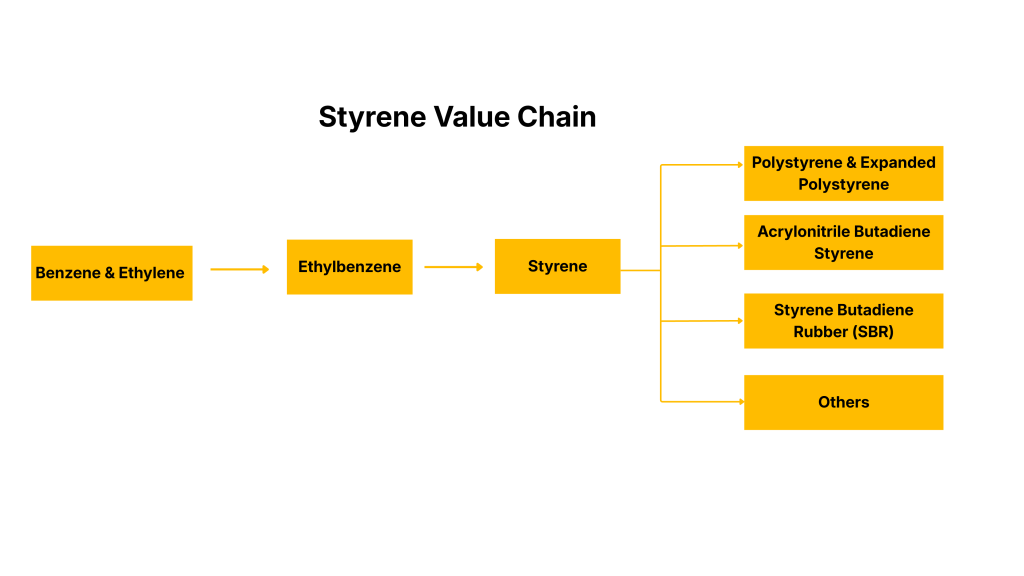
Styrene Value Chain

Strategic Visibility – Styrene G.I.O Tracker

Styrene production is capital-intensive and closely tied to benzene and ethylene feedstock dynamics, making the market highly sensitive to operational disruptions and cost fluctuations. 

The GIO Tracker delivers timely plant-level intelligence and disruption alerts, enabling stakeholders to anticipate supply shocks, manage procurement risks, optimize margins, and strengthen resilience across the global styrene value chain.  

Any outage, capacity reduction, or regulatory constraint can quickly translate into price volatility and supply uncertainty for downstream derivatives such as polystyrene (PS), EPS, ABS, SBR, and UPR. These materials are critical to automotive, construction, packaging, electronics, and consumer goods industries.  

Price Watch™ Styrene G.I.O Tracker Coverage

Global Overview

Global styrene production reached over 32 million tonnes in 2025, reflecting an increase of approximately +5% as compared to 2024. The Styrene GIO Tracker delivers real-time, plant-level operational intelligence with a strong focus on downstream market exposure. Monitoring 90+ styrene facilities worldwide-particularly in Asia-Pacific (China: 20M+ tpa) and North America (USA: ~5 tpa)-the tracker integrates data on nameplate capacity, operating rates, feedstock dependencies (benzene and ethylene), and disruption signals.

It identifies vulnerabilities across the styrene value chain that directly affect downstream sectors such as automotive (ABS, SBR components), construction (EPS insulation, UPR resins), packaging (PS), electronics, and consumer goods. By enabling early detection of supply risks, outages, and margin pressures, the tracker supports proactive decision-making, helping stakeholders mitigate volatility and maintain supply chain stability across global styrene markets.

Asia Pacific Styrene Plant Tracking

The Asia Pacific Styrene Plant Tracker monitors over 80 styrene monomer (SM) production facilities across the region, providing real-time intelligence on operational risks such as planned and unplanned shutdowns, turnaround schedules, operating rate fluctuations, feedstock disruptions (benzene and ethylene), power rationing, environmental inspections, logistics bottlenecks, and seismic or extreme weather events that may impact output.

By tracking capacity additions, debottlenecking projects, margin trends, and regional supply-demand balances, the tracker enables stakeholders to anticipate potential tightness or oversupply in the styrene value chain.

  • China Styrene Plant Tracking: China is the world’s largest styrene monomer (SM) producer, with the tracking system covering 30+ styrene production facilities, representing over 20 million tonnes per annum (tpa) of installed capacity-accounting for ~50% of global styrene capacity. The tracker provides daily updates on styrene plant shutdowns, turnarounds, operating rate changes, feedstock constraints (benzene, ethylene), margin shifts, power restrictions, environmental inspections, and new capacity start-ups. These factors impact China supply–demand balance, exports, and global prices, supporting informed procurement, trading, and risk management decisions across downstream styrene derivative markets.
  • South Korea Styrene Plant Tracking: Monitors around 10 Styrene facilities, accounting over 5% of global capacity and representing ~3million tonnes per annum (tpa). The tracking system provides daily updates on disruptions such as plant closures, unexpected outages, feedstock constraints, and regulatory changes. These signals reflect national supply shifts influencing global Styrene prices. Real-time insights help stakeholders proactively anticipate risks and make informed decisions.

North America Styrene Plant Tracking

The North America Styrene Plant Tracking System monitors over 10 production facilities, providing real-time insights into disruptions such as steam cracker outages, ethylbenzene and benzene feedstock constraints, maintenance turnarounds, logistical bottlenecks, and regulatory changes. By identifying factors that impact styrene operating rates and downstream polymer supply, the system enables stakeholders to anticipate shortages, manage price volatility, and make informed decisions in a dynamic and interconnected market.

  • U.S. Styrene Plant Tracking: Tracks over 5 facilities, representing around 10% of global Styrene capacity, with capacity of ~5 million tonnes per annum (tpa). It tracks daily developments such as plant restarts, maintenance outages, feedstock constraints, and operational efficiency improvements, particularly as reshoring boosts demand from construction, packaging, automotive, and electronics sectors reliant on styrene. By assessing its downstream integration into polystyrene, ABS, EPS, and SBR production, the system helps stakeholders manage supply risks, navigate price volatility, and optimize manufacturing performance amid expanding domestic industrial activity.

Europe Styrene Plant Tracking

Tracks over 10 styrene plants across the region, delivering critical visibility into disruptions such as steam cracker turnarounds, ethylbenzene feedstock constraints, transportation bottlenecks, and environmental regulatory changes that may affect operating rates. These insights help stakeholders anticipate production slowdowns and tightening regional and global styrene supply conditions, enabling more effective supply chain planning.

  • Germany Styrene Plant Tracking: Tracks 1+ facilities representing ~2% of global capacity (0.5M+ tpa), offering insights into production trends and potential disruptions. It helps stakeholders anticipate challenges like maintenance issues, market fluctuations, and supply chain disruptions, providing early warnings to optimize operations and manage risks in the Styrene market.
  • Netherlands Styrene Plant Tracking: Tracks around 2 facilities representing ~5% of global capacity (~1M tpa), offering insights into production trends and potential disruptions. Providing visibility into production trends and emerging disruptions, the system enables stakeholders to foresee maintenance turnarounds, and supply chain constraints. With timely alerts and actionable intelligence, it supports proactive decision-making, risk mitigation, and operational optimization across the dynamic styrene market.

Middle East & Africa Styrene Plant Tracking

Tracks over 5 facilities region-wide, providing crucial visibility into refinery shutdowns, logistical challenges, and regulatory changes that impact both local and global Styrene supply chains. This monitoring ensures stakeholders can anticipate disruptions and adjust strategies accordingly to maintain steady production and supply.

  • Saudi Arabia Styrene Plant Tracking: Tracks ~5 facilities representing ~2% of global capacity (~2M tpa), Delivering real-time visibility into production patterns and potential supply disruptions, the system enables stakeholders to proactively address maintenance turnarounds, demand shifts, and logistical constraints. Through timely alerts and market intelligence, it supports informed decision-making, enhances operational efficiency, and helps manage risk exposure within the evolving styrene industry.

South America Styrene Plant Tracking

Tracks ~5 facilities region-wide, providing essential insights into refinery shutdowns, transportation constraints, and regulatory developments that may influence production levels. This visibility helps stakeholders assess potential disruptions and understand their impact on both regional availability and global Styrene supply dynamics.

  • Brazil Styrene Plant Tracking: Tracks around 3 facilities representing around 0.5% of global capacity (~1M tpa), Providing insights into styrene production trends and disruptions, the system helps stakeholders anticipate supply risks, assess regional dynamics, and optimize operations, supporting stable feedstock supply for polystyrene, ABS, EPS, SBR, packaging, construction, and automotive sectors.

Why Styrene G.I.O Tracker

Styrene G.I.O Tracker – Comprehensive Market Coverage & Intelligence Dashboard

Asset-Level Facility Intelligence

Regional Coverage

Asia Pacific

  • Styrene Capacity (Ktpa) At Plant-Level By Feedstock Type And Production Process – Asia Pacific
  • Styrene Capacity (Ktpa) At Plant-Level By Product Type And Unit Type – Asia Pacific
  • Count Of Styrene Plants With Overall Operational Capacity – Asia Pacific
  • Styrene Plants By Capacity (Ktpa) And Current Status – Asia Pacific
  • Styrene Plant Details (Location, Region, Year Of Commissioning) – Asia Pacific
  • Announced And Upcoming Styrene Plants With Capacity – Asia Pacific

North America

  • Styrene Capacity (Ktpa) At Plant-Level By Feedstock Type And Production Process – North America
  • Styrene Capacity (Ktpa) At Plant-Level By Product Type And Unit Type – North America
  • Count Of Styrene Plants With Overall Operational Capacity – North America
  • Styrene Plants By Capacity (Ktpa) And Current Status – North America
  • Styrene Plant Details (Location, Region, Year Of Commissioning) – North America
  • Announced And Upcoming Styrene Plants With Capacity – North America

South America

  • Styrene Capacity (Ktpa) At Plant-Level By Feedstock Type And Production Process – South America
  • Styrene Capacity (Ktpa) At Plant-Level By Product Type And Unit Type – South America
  • Count Of Styrene Plants With Overall Operational Capacity – South America
  • Styrene Plants By Capacity (Ktpa) And Current Status – South America
  • Styrene Plant Details (Location, Region, Year Of Commissioning) – South America
  • Announced And Upcoming Styrene Plants With Capacity – South America

Europe

  • Styrene Capacity (Ktpa) At Plant-Level By Feedstock Type And Production Process – Europe
  • Styrene Capacity (Ktpa) At Plant-Level By Product Type And Unit Type – Europe
  • Count Of Styrene Plants With Overall Operational Capacity – Europe
  • Styrene Plants By Capacity (Ktpa) And Current Status – Europe
  • Styrene Plant Details (Location, Region, Year Of Commissioning) – Europe
  • Announced And Upcoming Styrene Plants With Capacity – Europe

Middle East & Africa

  • Styrene Capacity (Ktpa) At Plant-Level By Feedstock Type And Production Process – Middle East & Africa
  • Styrene Capacity (Ktpa) At Plant-Level By Product Type And Unit Type – Middle East & Africa
  • Count Of Styrene Plants With Overall Operational Capacity – Middle East & Africa
  • Styrene Plants By Capacity (Ktpa) And Current Status – Middle East & Africa
  • Styrene Plant Details (Location, Region, Year Of Commissioning) – Middle East & Africa
  • Announced And Upcoming Styrene Plants With Capacity – Middle East & Africa

Country-Level Coverage

China

  • Styrene Capacity (Ktpa) At Plant-Level By Feedstock Type And Production Process – China
  • Styrene Capacity (Ktpa) At Plant-Level By Product Type And Unit Type – China
  • Count Of Styrene Plants With Overall Operational Capacity – China
  • Styrene Plants By Capacity (Ktpa) And Current Status – China
  • Styrene Plant Details (Location, Region, Year Of Commissioning) – China
  • Announced And Upcoming Styrene Plants With Capacity – China

South Korea

  • Styrene Capacity (Ktpa) At Plant-Level By Feedstock Type And Production Process – South Korea
  • Styrene Capacity (Ktpa) At Plant-Level By Product Type And Unit Type – South Korea
  • Count Of Styrene Plants With Overall Operational Capacity – South Korea
  • Styrene Plants By Capacity (Ktpa) And Current Status – South Korea
  • Styrene Plant Details (Location, Region, Year Of Commissioning) – South Korea
  • Announced And Upcoming Styrene Plants With Capacity – South Korea

Taiwan

  • Styrene Capacity (Ktpa) At Plant-Level By Feedstock Type And Production Process – Taiwan
  • Styrene Capacity (Ktpa) At Plant-Level By Product Type And Unit Type – Taiwan
  • Count Of Styrene Plants With Overall Operational Capacity – Taiwan
  • Styrene Plants By Capacity (Ktpa) And Current Status – Taiwan
  • Styrene Plant Details (Location, Region, Year Of Commissioning) – Taiwan
  • Announced And Upcoming Styrene Plants With Capacity – Taiwan

Thailand

  • Styrene Capacity (Ktpa) At Plant-Level By Feedstock Type And Production Process – Thailand
  • Styrene Capacity (Ktpa) At Plant-Level By Product Type And Unit Type – Thailand
  • Count Of Styrene Plants With Overall Operational Capacity – Thailand
  • Styrene Plants By Capacity (Ktpa) And Current Status – Thailand
  • Styrene Plant Details (Location, Region, Year Of Commissioning) – Thailand
  • Announced And Upcoming Styrene Plants With Capacity – Thailand

Japan

  • Styrene Capacity (Ktpa) At Plant-Level By Feedstock Type And Production Process – Japan
  • Styrene Capacity (Ktpa) At Plant-Level By Product Type And Unit Type – Japan
  • Count Of Styrene Plants With Overall Operational Capacity – Japan
  • Styrene Plants By Capacity (Ktpa) And Current Status – Japan
  • Styrene Plant Details (Location, Region, Year Of Commissioning) – Japan
  • Announced And Upcoming Styrene Plants With Capacity – Japan

Singapore

  • Styrene Capacity (Ktpa) At Plant-Level By Feedstock Type And Production Process – Singapore
  • Styrene Capacity (Ktpa) At Plant-Level By Product Type And Unit Type – Singapore
  • Count Of Styrene Plants With Overall Operational Capacity – Singapore
  • Styrene Plants By Capacity (Ktpa) And Current Status – Singapore
  • Styrene Plant Details (Location, Region, Year Of Commissioning) – Singapore
  • Announced And Upcoming Styrene Plants With Capacity – Singapore

Malaysia

  • Styrene Capacity (Ktpa) At Plant-Level By Feedstock Type And Production Process – Malaysia
  • Styrene Capacity (Ktpa) At Plant-Level By Product Type And Unit Type – Malaysia
  • Count Of Styrene Plants With Overall Operational Capacity – Malaysia
  • Styrene Plants By Capacity (Ktpa) And Current Status – Malaysia
  • Styrene Plant Details (Location, Region, Year Of Commissioning) – Malaysia
  • Announced And Upcoming Styrene Plants With Capacity – Malaysia

Indonesia

  • Styrene Capacity (Ktpa) At Plant-Level By Feedstock Type And Production Process – Indonesia
  • Styrene Capacity (Ktpa) At Plant-Level By Product Type And Unit Type – Indonesia
  • Count Of Styrene Plants With Overall Operational Capacity – Indonesia
  • Styrene Plants By Capacity (Ktpa) And Current Status – Indonesia
  • Styrene Plant Details (Location, Region, Year Of Commissioning) – Indonesia
  • Announced And Upcoming Styrene Plants With Capacity – Indonesia

Germany

  • Styrene Capacity (Ktpa) At Plant-Level By Feedstock Type And Production Process – Germany
  • Styrene Capacity (Ktpa) At Plant-Level By Product Type And Unit Type – Germany
  • Count Of Styrene Plants With Overall Operational Capacity – Germany
  • Styrene Plants By Capacity (Ktpa) And Current Status – Germany
  • Styrene Plant Details (Location, Region, Year Of Commissioning) – Germany
  • Announced And Upcoming Styrene Plants With Capacity – Germany

France

  • Styrene Capacity (Ktpa) At Plant-Level By Feedstock Type And Production Process – France
  • Styrene Capacity (Ktpa) At Plant-Level By Product Type And Unit Type – France
  • Count Of Styrene Plants With Overall Operational Capacity – France
  • Styrene Plants By Capacity (Ktpa) And Current Status – France
  • Styrene Plant Details (Location, Region, Year Of Commissioning) – France
  • Announced And Upcoming Styrene Plants With Capacity – France

Spain

  • Styrene Capacity (Ktpa) At Plant-Level By Feedstock Type And Production Process – Spain
  • Styrene Capacity (Ktpa) At Plant-Level By Product Type And Unit Type – Spain
  • Count Of Styrene Plants With Overall Operational Capacity – Spain
  • Styrene Plants By Capacity (Ktpa) And Current Status – Spain
  • Styrene Plant Details (Location, Region, Year Of Commissioning) – Spain
  • Announced And Upcoming Styrene Plants With Capacity – Spain

Belgium

  • Styrene Capacity (Ktpa) At Plant-Level By Feedstock Type And Production Process – Belgium
  • Styrene Capacity (Ktpa) At Plant-Level By Product Type And Unit Type – Belgium
  • Count Of Styrene Plants With Overall Operational Capacity – Belgium
  • Styrene Plants By Capacity (Ktpa) And Current Status – Belgium
  • Styrene Plant Details (Location, Region, Year Of Commissioning) – Belgium
  • Announced And Upcoming Styrene Plants With Capacity – Belgium

Poland

  • Styrene Capacity (Ktpa) At Plant-Level By Feedstock Type And Production Process – Poland
  • Styrene Capacity (Ktpa) At Plant-Level By Product Type And Unit Type – Poland
  • Count Of Styrene Plants With Overall Operational Capacity – Poland
  • Styrene Plants By Capacity (Ktpa) And Current Status – Poland
  • Styrene Plant Details (Location, Region, Year Of Commissioning) – Poland
  • Announced And Upcoming Styrene Plants With Capacity – Poland

Czech Republic

  • Styrene Capacity (Ktpa) At Plant-Level By Feedstock Type And Production Process – Czech Republic
  • Styrene Capacity (Ktpa) At Plant-Level By Product Type And Unit Type – Czech Republic
  • Count Of Styrene Plants With Overall Operational Capacity – Czech Republic
  • Styrene Plants By Capacity (Ktpa) And Current Status – Czech Republic
  • Styrene Plant Details (Location, Region, Year Of Commissioning) – Czech Republic
  • Announced And Upcoming Styrene Plants With Capacity – Poland

Netherlands

  • Styrene Capacity (Ktpa) At Plant-Level By Feedstock Type And Production Process – Netherlands
  • Styrene Capacity (Ktpa) At Plant-Level By Product Type And Unit Type – Netherlands
  • Count Of Styrene Plants With Overall Operational Capacity – Netherlands
  • Styrene Plants By Capacity (Ktpa) And Current Status – Netherlands
  • Styrene Plant Details (Location, Region, Year Of Commissioning) – Netherlands
  • Announced And Upcoming Styrene Plants With Capacity – Netherlands

Italy

  • Styrene Capacity (Ktpa) At Plant-Level By Feedstock Type And Production Process – Italy
  • Styrene Capacity (Ktpa) At Plant-Level By Product Type And Unit Type – Italy
  • Count Of Styrene Plants With Overall Operational Capacity – Italy
  • Styrene Plants By Capacity (Ktpa) And Current Status – Italy
  • Styrene Plant Details (Location, Region, Year Of Commissioning) – Italy
  • Announced And Upcoming Styrene Plants With Capacity – Italy

USA

  • Styrene Capacity (Ktpa) At Plant-Level By Feedstock Type And Production Process – USA
  • Styrene Capacity (Ktpa) At Plant-Level By Product Type And Unit Type – USA
  • Count Of Styrene Plants With Overall Operational Capacity – USA
  • Styrene Plants By Capacity (Ktpa) And Current Status – USA
  • Styrene Plant Details (Location, Region, Year Of Commissioning) – USA
  • Announced And Upcoming Styrene Plants With Capacity – USA

Canada

  • Styrene Capacity (Ktpa) At Plant-Level By Feedstock Type And Production Process – Canada
  • Styrene Capacity (Ktpa) At Plant-Level By Product Type And Unit Type – Canada
  • Count Of Styrene Plants With Overall Operational Capacity – Canada
  • Styrene Plants By Capacity (Ktpa) And Current Status – Canada
  • Styrene Plant Details (Location, Region, Year Of Commissioning) – Canada
  • Announced And Upcoming Styrene Plants With Capacity – Canada

Brazil

  • Styrene Capacity (Ktpa) At Plant-Level By Feedstock Type And Production Process – Brazil
  • Styrene Capacity (Ktpa) At Plant-Level By Product Type And Unit Type – Brazil
  • Count Of Styrene Plants With Overall Operational Capacity – Brazil
  • Styrene Plants By Capacity (Ktpa) And Current Status – Brazil
  • Styrene Plant Details (Location, Region, Year Of Commissioning) – Brazil
  • Announced And Upcoming Styrene Plants With Capacity – Brazil

Argentina

  • Styrene Capacity (Ktpa) At Plant-Level By Feedstock Type And Production Process – Argentina
  • Styrene Capacity (Ktpa) At Plant-Level By Product Type And Unit Type – Argentina
  • Count Of Styrene Plants With Overall Operational Capacity – Argentina
  • Styrene Plants By Capacity (Ktpa) And Current Status – Argentina
  • Styrene Plant Details (Location, Region, Year Of Commissioning) – Argentina
  • Announced And Upcoming Styrene Plants With Capacity – Argentina

Saudi Arabia

  • Styrene Capacity (Ktpa) At Plant-Level By Feedstock Type And Production Process – Saudi Arabia
  • Styrene Capacity (Ktpa) At Plant-Level By Product Type And Unit Type – Saudi Arabia
  • Count Of Styrene Plants With Overall Operational Capacity – Saudi Arabia
  • Styrene Plants By Capacity (Ktpa) And Current Status – Saudi Arabia
  • Styrene Plant Details (Location, Region, Year Of Commissioning) – Saudi Arabia
  • Announced And Upcoming Styrene Plants With Capacity – Saudi Arabia

Kuwait

  • Styrene Capacity (Ktpa) At Plant-Level By Feedstock Type And Production Process – Kuwait
  • Styrene Capacity (Ktpa) At Plant-Level By Product Type And Unit Type – Kuwait
  • Count Of Styrene Plants With Overall Operational Capacity – Kuwait
  • Styrene Plants By Capacity (Ktpa) And Current Status – Kuwait
  • Styrene Plant Details (Location, Region, Year Of Commissioning) – Kuwait
  • Announced And Upcoming Styrene Plants With Capacity – Kuwait

Daily Operations Tracker

Regional Tracking

Asia Pacific

  • Total Operational Capacity (Ktpa) At Plant Level
  • Total Disrupted Capacity (Ktpa) And Production Loss (Kt) At Plant Level
  • Plant Outage Duration (Start Date And End Date)
  • Disruption Cause And Impact On Price
  • Plant Disruption By Disruption Type (Permanent Or Temporary)

Europe

  • Total Operational Capacity (Ktpa) At Plant Level
  • Total Disrupted Capacity (Ktpa) And Production Loss (Kt) At Plant Level
  • Plant Outage Duration (Start Date And End Date)
  • Disruption Cause And Impact On Price
  • Plant Disruption By Disruption Type (Permanent Or Temporary)

North America

  • Total Operational Capacity (Ktpa) At Plant Level
  • Total Disrupted Capacity (Ktpa) And Production Loss (Kt) At Plant Level
  • Plant Outage Duration (Start Date And End Date)
  • Disruption Cause And Impact On Price
  • Plant Disruption By Disruption Type (Permanent Or Temporary)

South America

  • Total Operational Capacity (Ktpa) At Plant Level
  • Total Disrupted Capacity (Ktpa) And Production Loss (Kt) At Plant Level
  • Plant Outage Duration (Start Date And End Date)
  • Disruption Cause And Impact On Price
  • Plant Disruption By Disruption Type (Permanent Or Temporary)

Middle East & Africa

  • Total Operational Capacity (Ktpa) At Plant Level
  • Total Disrupted Capacity (Ktpa) And Production Loss (Kt) At Plant Level
  • Plant Outage Duration (Start Date And End Date)
  • Disruption Cause And Impact On Price
  • Plant Disruption By Disruption Type (Permanent Or Temporary)

Country-Wise Tracking

China

  • Total Operational Capacity (Ktpa) At Plant Level
  • Total Disrupted Capacity (Ktpa) And Production Loss (Kt) At Plant Level
  • Plant Outage Duration (Start Date And End Date)
  • Disruption Cause And Impact On Price
  • Plant Disruption By Disruption Type (Permanent Or Temporary)

Taiwan

  • Total Operational Capacity (Ktpa) At Plant Level
  • Total Disrupted Capacity (Ktpa) And Production Loss (Kt) At Plant Level
  • Plant Outage Duration (Start Date And End Date)
  • Disruption Cause And Impact On Price
  • Plant Disruption By Disruption Type (Permanent Or Temporary)

Japan

  • Total Operational Capacity (Ktpa) At Plant Level
  • Total Disrupted Capacity (Ktpa) And Production Loss (Kt) At Plant Level
  • Plant Outage Duration (Start Date And End Date)
  • Disruption Cause And Impact On Price
  • Plant Disruption By Disruption Type (Permanent Or Temporary)

South Korea

  • Total Operational Capacity (Ktpa) At Plant Level
  • Total Disrupted Capacity (Ktpa) And Production Loss (Kt) At Plant Level
  • Plant Outage Duration (Start Date And End Date)
  • Disruption Cause And Impact On Price
  • Plant Disruption By Disruption Type (Permanent Or Temporary)

Indonesia

  • Total Operational Capacity (Ktpa) At Plant Level
  • Total Disrupted Capacity (Ktpa) And Production Loss (Kt) At Plant Level
  • Plant Outage Duration (Start Date And End Date)
  • Disruption Cause And Impact On Price
  • Plant Disruption By Disruption Type (Permanent Or Temporary)

Thailand

  • Total Operational Capacity (Ktpa) At Plant Level
  • Total Disrupted Capacity (Ktpa) And Production Loss (Kt) At Plant Level
  • Plant Outage Duration (Start Date And End Date)
  • Disruption Cause And Impact On Price
  • Plant Disruption By Disruption Type (Permanent Or Temporary)

Malaysia

  • Total Operational Capacity (Ktpa) At Plant Level
  • Total Disrupted Capacity (Ktpa) And Production Loss (Kt) At Plant Level
  • Plant Outage Duration (Start Date And End Date)
  • Disruption Cause And Impact On Price
  • Plant Disruption By Disruption Type (Permanent Or Temporary)

Singapore

  • Total Operational Capacity (Ktpa) At Plant Level
  • Total Disrupted Capacity (Ktpa) And Production Loss (Kt) At Plant Level
  • Plant Outage Duration (Start Date And End Date)
  • Disruption Cause And Impact On Price
  • Plant Disruption By Disruption Type (Permanent Or Temporary)

Germany

  • Total Operational Capacity (Ktpa) At Plant Level
  • Total Disrupted Capacity (Ktpa) And Production Loss (Kt) At Plant Level
  • Plant Outage Duration (Start Date And End Date)
  • Disruption Cause And Impact On Price
  • Plant Disruption By Disruption Type (Permanent Or Temporary)

Netherlands

  • Total Operational Capacity (Ktpa) At Plant Level
  • Total Disrupted Capacity (Ktpa) And Production Loss (Kt) At Plant Level
  • Plant Outage Duration (Start Date And End Date)
  • Disruption Cause And Impact On Price
  • Plant Disruption By Disruption Type (Permanent Or Temporary)

Belgium

  • Total Operational Capacity (Ktpa) At Plant Level
  • Total Disrupted Capacity (Ktpa) And Production Loss (Kt) At Plant Level
  • Plant Outage Duration (Start Date And End Date)
  • Disruption Cause And Impact On Price
  • Plant Disruption By Disruption Type (Permanent Or Temporary)

France

  • Total Operational Capacity (Ktpa) At Plant Level
  • Total Disrupted Capacity (Ktpa) And Production Loss (Kt) At Plant Level
  • Plant Outage Duration (Start Date And End Date)
  • Disruption Cause And Impact On Price
  • Plant Disruption By Disruption Type (Permanent Or Temporary)

Italy

  • Total Operational Capacity (Ktpa) At Plant Level
  • Total Disrupted Capacity (Ktpa) And Production Loss (Kt) At Plant Level
  • Plant Outage Duration (Start Date And End Date)
  • Disruption Cause And Impact On Price
  • Plant Disruption By Disruption Type (Permanent Or Temporary)

Spain

  • Total Operational Capacity (Ktpa) At Plant Level
  • Total Disrupted Capacity (Ktpa) And Production Loss (Kt) At Plant Level
  • Plant Outage Duration (Start Date And End Date)
  • Disruption Cause And Impact On Price
  • Plant Disruption By Disruption Type (Permanent Or Temporary)

Czech Republic

  • Total Operational Capacity (Ktpa) At Plant Level
  • Total Disrupted Capacity (Ktpa) And Production Loss (Kt) At Plant Level
  • Plant Outage Duration (Start Date And End Date)
  • Disruption Cause And Impact On Price
  • Plant Disruption By Disruption Type (Permanent Or Temporary)

Poland

  • Total Operational Capacity (Ktpa) At Plant Level
  • Total Disrupted Capacity (Ktpa) And Production Loss (Kt) At Plant Level
  • Plant Outage Duration (Start Date And End Date)
  • Disruption Cause And Impact On Price
  • Plant Disruption By Disruption Type (Permanent Or Temporary)

USA

  • Total Operational Capacity (Ktpa) At Plant Level
  • Total Disrupted Capacity (Ktpa) And Production Loss (Kt) At Plant Level
  • Plant Outage Duration (Start Date And End Date)
  • Disruption Cause And Impact On Price
  • Plant Disruption By Disruption Type (Permanent Or Temporary)

Canada

  • Total Operational Capacity (Ktpa) At Plant Level
  • Total Disrupted Capacity (Ktpa) And Production Loss (Kt) At Plant Level
  • Plant Outage Duration (Start Date And End Date)
  • Disruption Cause And Impact On Price
  • Plant Disruption By Disruption Type (Permanent Or Temporary)

Brazil

  • Total Operational Capacity (Ktpa) At Plant Level
  • Total Disrupted Capacity (Ktpa) And Production Loss (Kt) At Plant Level
  • Plant Outage Duration (Start Date And End Date)
  • Disruption Cause And Impact On Price
  • Plant Disruption By Disruption Type (Permanent Or Temporary)

Argentina

  • Total Operational Capacity (Ktpa) At Plant Level
  • Total Disrupted Capacity (Ktpa) And Production Loss (Kt) At Plant Level
  • Plant Outage Duration (Start Date And End Date)
  • Disruption Cause And Impact On Price
  • Plant Disruption By Disruption Type (Permanent Or Temporary)

Saudi Arabia

  • Total Operational Capacity (Ktpa) At Plant Level
  • Total Disrupted Capacity (Ktpa) And Production Loss (Kt) At Plant Level
  • Plant Outage Duration (Start Date And End Date)
  • Disruption Cause And Impact On Price
  • Plant Disruption By Disruption Type (Permanent Or Temporary)

Kuwait

  • Total Operational Capacity (Ktpa) At Plant Level
  • Total Disrupted Capacity (Ktpa) And Production Loss (Kt) At Plant Level
  • Plant Outage Duration (Start Date And End Date)
  • Disruption Cause And Impact On Price
  • Plant Disruption By Disruption Type (Permanent Or Temporary)

Frequently Asked Questions – Styrene G.I.O Tracker

What is the Styrene GIO Tracker?

The Styrene GIO Tracker is an asset-level intelligence platform that monitors global styrene monomer production capacity, operational disruptions, production losses, and price implications across major styrene-producing regions.

What does the Styrene GIO Tracker track?

It tracks styrene production capacity (Mtpa), steam cracker linkages, ethylbenzene feedstock dependencies, plant operating rates, expansions, startups, shutdowns, maintenance turnarounds, restarts, outage durations, and quantified production losses at the facility level.

How often is the data updated?

Plant-level operational status, turnaround schedules, and disruption signals are updated daily to provide timely visibility into global styrene supply conditions.

How is production loss measured?

Production loss is calculated by assessing affected styrene capacity, outage duration, operating rate reductions, and feedstock constraints, delivering structured impact analysis across regional and global supply chains.

Does the Styrene GIO Tracker cover global or regional markets?

It provides global coverage with detailed regional and country-level insights, including Asia-Pacific, Europe, North America, the Middle East, and South America.

Who benefits from the Styrene GIO Tracker?

The platform supports styrene producers, polystyrene and ABS manufacturers, procurement teams, commodity traders, supply chain risk managers, and strategy professionals seeking early signals of supply tightness and price volatility.

How is it different from country-level styrene production reports?

Unlike aggregated national statistics, the Styrene GIO Tracker monitors individual styrene facilities, enabling early detection of outages, feedstock disruptions, and capacity shifts.

How does it help manage styrene supply risk?

By quantifying production losses, tracking turnaround schedules, and assessing downstream impacts on polystyrene (PS), ABS, EPS, and SBR markets, the platform enables proactive procurement, trading, and risk mitigation strategies.

Can I analyse styrene alongside other materials and commodities?

Yes, the Styrene GIO Tracker applies a standardized plant-level framework, allowing comparison of styrene disruptions, capacity movements, and supply risks with other petrochemicals and polymers for cross-commodity risk assessment.

Get Full Access to Styrene Intelligence Subscribe to unlock facility-level data, daily disruption alerts and full G.I.O Tracker coverage.

UPGRADE NOW