Halo Butyl Rubber Price Trend and Forecast

UNSPC code: 13101707
|
Weekly Update
|
Historical Data Since 2015
|
Forecast for 2026

halo butyl rubber Price Trends by Country

ruRussia
sgSingapore
cnChina
inIndia
idIndonesia
jpJapan

Global halo butyl rubber Spot Market Prices, Trend Analysis and Forecast

Price Watch™ provides real-time price assessments and price forecasts for Halo Butyl Rubber across top trading regions:

Halo Butyl Rubber Regional Coverage Halo Butyl Rubber Grade and Country Coverage Halo Butyl Rubber Pricing Data Coverage Explanation
Asia-Pacific Halo Butyl Rubber Pricing Analysis Bromobutyl Rubber (BIIR) (MV 32) FOB Prices at Jurong Port, Singapore Weekly Price Update on Halo Butyl Rubber Real-Time Export Prices from Jurong Port, Singapore to Global Markets
Bromobutyl Rubber (BIIR) (MV 32) CIF Prices at Nhava Sheva Port, West India (Importing from Singapore) Weekly Price Update on Halo Butyl Rubber Real-Time Import Prices at Nhava Sheva Port, West India from Singapore
Bromobutyl Rubber (BIIR) (MV 28–36) Ex-Mumbai Prices, West India Weekly Price Update on Halo Butyl Rubber Real-Time Domestic Prices Ex-Mumbai, West India
Bromobutyl Rubber (BIIR) (MV 32) CIF Prices at Shanghai Port, China (Importing from Singapore) Weekly Price Update on Halo Butyl Rubber Real-Time Import Prices at Shanghai Port, China from Singapore
Bromobutyl Rubber (BIIR) (MV 32) CIF Prices at Jakarta Port, Indonesia (Importing from Singapore) Weekly Price Update on Halo Butyl Rubber Real-Time Import Prices at Jakarta Port, Indonesia from Singapore
Bromobutyl Rubber (BIIR) (MV 32) CIF Prices at Tokyo Port, Japan (Importing from Singapore) Weekly Price Update on Halo Butyl Rubber Real-Time Import Prices at Tokyo Port, Japan from Singapore
Europe Halo Butyl Rubber Pricing Analysis Bromobutyl Rubber (BIIR) (MV 28–35) FOB Prices at Novorossiysk Port, Russia Weekly Price Update on Halo Butyl Rubber Real-Time Export Prices from Novorossiysk Port, Russia to Global Markets

Note: In assessments structured as CIF [Importing Port] (Exporting Country), the country mentioned in brackets indicates the primary origin of supply (exporting country), while the named port refers to the destination port in the importing country. Other Incoterms (FOB, FD, EXW, etc.) should be interpreted in accordance with standard international trade definitions.

Halo Butyl Rubber Price Trend Q1 2026

For the first quarter of 2026, the international Halo Butyl Rubber (BIIR) market witnessed an irregular to upward pricing trend due to rising prices in most leading regions despite the price fall in the preceding quarter.

The average rise in the price level internationally stood at around 4–6% on account of rising demand in the tire industry and the automotive sector coupled with restocking. Purchasers are engaged in building up stocks in anticipation of tight supplies and higher pricing levels soon.

The sentiment in the market is rising owing to better consumption both locally and overseas. Manufacturers are running operations at moderate capacity utilization levels, thus helping bring about supply-demand balance and aiding prices in recovering. Raw material prices are holding steady to firm. Furthermore, regional purchasing trends are positive as well, aiding in the upward trend.

Russia: Halo Butyl Rubber Export prices FOB Novorossiysk, Russia; Grade- Bromobutyl Rubber (BIIR) (MV 28-35)

According to Price-Watch™, there has been a modest mixed movement for Halo Butyl Rubber prices in Russia in the first quarter of 2026, wherein prices for FOB Novorossiysk have experienced a decrease of 2.8% from Q4 2025. Halo Butyl Rubber price trend in Russia has been under downward pressure due to weaker demand for exports among the tire and automotive industries as there is a seasonal lull in the market.

Buyers have become cautious on their purchase decisions as purchases are done based on consumption while there has been sufficient availability of stocks in international markets. Sentiment within the market has been subdued as there are fewer inquiries for exports while trading activities remain stagnant.

Manufacturers have been keeping production levels controlled based on weak demand levels, while feedstocks isobutylene and isoprene prices have remained steady, giving no help to pricing trends. In Russia, HBR prices in March 2026 have surged by 11.6% due to stock building activities.

Singapore: Halo Butyl Rubber Export prices FOB Jurong, Singapore; Grade- Bromobutyl Rubber (BIIR) (MV 32)

The Halo Butyl Rubber price in Singapore during Q1 2026 have seen a firm to stable rise in prices with FOB Jurong having seen a price rise of about 3.4% from the prices seen in Q4 2025. Halo Butyl Rubber price trend in Singapore has been on an increase due to the gradual improvement in the export demand of HBR in rubber applications for tires, automotive, and industrial products.

Restocking activity has been on the rise among buyers expecting higher prices going forward. The market environment has been supportive of price levels since purchasing has been on the rise and availability has been balanced.

Production has been carried out at controlled capacity levels to match stable demand. Feedstock isobutylene costs and that of other raw materials have been stable to firm. In March 2026, HBR price in Singapore saw a price rise of 7.5%.

India: Halo Butyl Rubber Domestically Traded Prices Ex-Mumbai, India; Grade- Bromobutyl Rubber (BIIR) (MV 28-36)

The Halo Butyl Rubber prices in India in Q1 2026 has been witnessing a firm upward trend, with Ex-Mumbai prices having increased by approximately 5.8% compared to Q4 2025. Halo Butyl Rubber price trend in India has been rising as demand from tire manufacturing, automotive, and industrial sealing applications has been steadily improving.

Buyers have been actively restocking inventories to secure supply amid expectations of further price increases. Market sentiment has been strengthening as procurement activity has been increasing and import dependency has been supporting domestic price firmness.

Producers and suppliers have been maintaining controlled operating rates to balance supply with improving consumption levels. Feedstock costs, particularly isobutylene derivatives, have been remaining firm, providing steady cost support to BIIR production. In March 2026, HBR prices in India have shown a strong increase of 10.2%, driven by higher buying interest and tightening availability in the regional market.

China: Halo Butyl Rubber Import prices CIF Shanghai (Singapore), China; Grade- Bromobutyl Rubber (BIIR) (MV 32)

The Halo Butyl Rubber prices in China in Q1 2026 has been witnessing a firm upward trend, with CIF Shanghai prices having increased by approximately 3.4% compared to Q4 2025. Halo Butyl Rubber price trend in China has been rising as demand from tire, automotive, and industrial rubber applications has been gradually improving across domestic and export markets.

Buyers have been actively restocking inventories to secure supply amid expectations of further price increases. Market sentiment has been strengthening as procurement activity has been improving and import availability has been relatively balanced. Producers have been maintaining controlled operating rates to align output with steady demand conditions.

Feedstock costs, including isobutylene derivatives, have been remaining stable to firm, providing moderate support to pricing. In March 2026, HBR prices in China have shown a 7.4% increase, driven by improved buying interest and tightening spot availability in the regional market.

Indonesia: Halo Butyl Rubber Import prices CIF Jakarta (Singapore), Indonesia; Grade- Bromobutyl Rubber (BIIR) (MV 32)

The Halo Butyl Rubber prices in Indonesia in Q1 2026 has been witnessing a strong upward trend, with CIF Jakarta prices having increased by approximately 16.0% compared to Q4 2025. Halo Butyl Rubber price trend in Indonesia has been rising as demand from tire manufacturing, automotive, and industrial rubber applications has been steadily improving across the domestic market.

Buyers have been actively restocking inventories to secure supply amid expectations of further price increases. Market sentiment has been strengthening as import dependency has been supporting stronger pricing conditions and procurement activity has been increasing. Suppliers have been maintaining controlled operating rates to align output with improving regional demand.

Feedstock costs, including isobutylene derivatives, have been remaining firm, providing steady cost support to BIIR production. In March 2026, HBR prices in Indonesia have shown a 7.4% increase, driven by strong buying activity and tighter availability in the spot market.

Japan: Halo Butyl Rubber Import prices CIF Tokyo (Singapore), Japan; Grade- Bromobutyl Rubber (BIIR) (MV 32)

The Halo Butyl Rubber prices in Japan in Q1 2026 has been witnessing a steady upward trend, with CIF Tokyo prices having increased by approximately 3.3% compared to Q4 2025. Halo Butyl Rubber price trend in Japan has been rising as demand from tire manufacturing, automotive sealing, and industrial rubber applications has been gradually improving.

Buyers have been actively restocking inventories to secure supply amid expectations of further price increases. Market sentiment has been strengthening as procurement activity has been improving and import availability has been relatively balanced. Suppliers have been maintaining controlled operating rates to align output with steady regional demand conditions.

Feedstock costs, including isobutylene derivatives, have been remaining stable to firm, providing moderate support to BIIR production. In March 2026, HBR prices in Japan have shown a 7.3% increase, driven by improved buying interest and tighter spot availability in the Asian market.

Halo Butyl Rubber Price Trend Analysis: Q4 2025

During the fourth quarter of 2025, the international market for Halo Butyl Rubber (BIIR) has witnessed a general tendency of falling prices across all principal regions. The average price fluctuation level internationally has been roughly 3%, resulting mainly from lower seasonal demand, sluggish consumption in tire and automotive industries, and conservative buying behavior in leading markets.

The buyers’ need-based procurement approach has continued amid adequate stock levels, thereby discouraging new purchases. Supply levels in regional markets have remained steady; however, market sentiments have remained low owing to lower demand at the consumption level.

Feedstock costs have also remained stable but have failed to provide any significant boost to prices. Thus, the international BIIR market has been under constant pressure, witnessing a decline in price momentum without any signs of recovery.

Russia: Halo Butyl Rubber Export prices FOB Novorossiysk, Russia; Grade- Bromobutyl Rubber (BIIR) (MV 28-35)

According to Price-Watch™, there have been indications that the Halo Butyl Rubber price in Russia during the quarter 4 2025 have been experiencing a softening pattern where there have been declines by about 4.2% of prices on an FOB basis at Novorossiysk against the previous quarter.

Halo Butyl Rubber price trend in Russia has been falling in the prices due to weak demand trends from tires and automotive rubber markets as the slowdown season has arrived. There has been adopting a more conservative approach for purchase with buyers only purchasing based on demand and with adequate stocks available in the international market.

The market sentiment has remained pessimistic due to weak export inquiry trends and lower downstream consumption. There has been controlling operations of producers to keep supply in line with demand. There have been stable feedstock costs providing little to no help in supporting the prices. In December 2025, HBR prices in Russia experienced a fall of 3.0%.

Singapore: Halo Butyl Rubber Export prices FOB Jurong, Singapore; Grade- Bromobutyl Rubber (BIIR) (MV 32)

Halo Butyl Rubber prices in Singapore for Q4 2025 have experienced a weakening tendency, with prices on a FOB basis at Jurong being reduced by about 3.0% from Q3 2025. The Halo Butyl Rubber price trend in Russia have been falling due to weakening demand for tires, automotive, and industrial rubber applications.

Buyers have been implementing a conservative approach, with purchasing activities being mostly need-driven amidst ample stocks in the market. Sentiment in the market has been relatively weak owing to slowed down exports as well as consumption within the region. Producers have been practicing controlled operations to match supply with the prevailing demand trends.

Raw material costs have been stable, providing no pricing support. In December 2025, HBR prices in Singapore have fallen marginally by 0.8% due to weakening demand and reduced purchases in key Asian markets.

India: Halo Butyl Rubber Domestically Traded Prices Ex-Mumbai, India; Grade- Bromobutyl Rubber (BIIR) (MV 28-36)

The Halo Butyl Rubber prices in India in Q4 2025 has been witnessing a softening trend, with Ex-Mumbai prices having decreased by approximately 1.3% compared to Q3 2025. The Halo Butyl Rubber price trend in India have been declining as demand from tire manufacturing and automotive sealing applications has been weakening during the seasonal slowdown period.

Buyers have been adopting cautious procurement strategies, with purchasing activity largely remaining need-based amid sufficient inventory availability in the domestic market. Market sentiment has been staying subdued as downstream consumption has been easing, and order inflows have remained limited.

Producers and suppliers have been maintaining controlled operating rates to align supply with weaker demand conditions. Feedstock costs have been remaining relatively stable, offering limited support to pricing. In December 2025, HBR prices in India have shown a decline of 2.0%, driven mainly by seasonal demand weakness and reduced buying activity across end-use industries.

China: Halo Butyl Rubber Import prices CIF Shanghai (Singapore), China; Grade- Bromobutyl Rubber (BIIR) (MV 32)

The Halo Butyl Rubber prices in China in Q4 2025 has been witnessing a softening trend, with CIF Shanghai prices having decreased by approximately 3.1% compared to Q3 2025. Halo Butyl Rubber price trend in China has been declining as demand from tire, automotive, and industrial rubber sectors has been weakening during the seasonal slowdown period.

Buyers have been adopting cautious procurement strategies, with purchasing activity largely remaining need-based amid sufficient inventory availability in the domestic and export markets.

Market sentiment has been staying subdued as both export orders and domestic consumption have been easing toward year-end. Producers have been maintaining controlled operating rates to align supply with softer demand conditions and avoid inventory accumulation.

Feedstock costs, including isobutylene derivatives, have been remaining relatively stable, offering limited cost support. In December 2025, HBR prices in China have shown a marginal decline of 0.7%, driven mainly by seasonal demand weakness and reduced buying activity across downstream industries.

Indonesia: Halo Butyl Rubber Import prices CIF Jakarta (Singapore), Indonesia; Grade- Bromobutyl Rubber (BIIR) (MV 32)

The Halo Butyl Rubber prices in Indonesia in Q4 2025 has been witnessing a softening trend, with CIF Jakarta prices having decreased by approximately 2.9% compared to Q3 2025. Halo Butyl Rubber price trend in Indonesia has been declining as demand from tire manufacturing and automotive rubber applications has been weakening during the seasonal slowdown period.

Buyers have been adopting cautious procurement strategies, with purchasing activity largely remaining need-based amid sufficient inventory levels in the domestic market. Market sentiment has been staying subdued as import demand has been easing and downstream consumption has been slowing.

Importers have been maintaining controlled procurement activity to align supply with weaker demand conditions. Suppliers have been adjusting operating rates to manage inventory levels efficiently.

Feedstock costs have been remaining relatively stable, offering limited support to pricing. In December 2025, HBR prices in Indonesia have shown a marginal decline of 0.7%, driven mainly by seasonal demand weakness and reduced buying activity across end-use industries.

Japan: Halo Butyl Rubber Import prices CIF Tokyo (Singapore), Japan; Grade- Bromobutyl Rubber (BIIR) (MV 32)

The Halo Butyl Rubber prices in Japan in Q4 2025 has been witnessing a softening trend, with CIF Tokyo prices having decreased by approximately 3.0% compared to Q3 2025. Halo Butyl Rubber price trend in Japan has been declining as demand from tire, automotive, and industrial rubber applications has been weakening during the seasonal slowdown period.

Buyers have been adopting cautious procurement strategies, with purchasing activity largely remaining need-based amid sufficient inventory availability in the domestic market. Market sentiment has been staying subdued as import demand has been easing toward year-end and order inflows have remained limited.

Importers have been aligning procurement schedules with lower consumption levels across downstream industries. Producers have been maintaining controlled operating rates to manage supply in line with weaker demand conditions.

Feedstock costs have been remaining relatively stable, offering limited support to pricing. In December 2025, HBR prices in Japan have shown a marginal decline of 0.7%, driven mainly by seasonal demand weakness and reduced buying activity in the Japanese market.

In Q3 2025, the global Halo Butyl Rubber market has seen a generally downward direction of prices, with prices falling in a number of major markets. The average price fluctuation globally has been around 2%, led by weak demand, local supply deficiencies, and overall economic pressures. While India has displayed marginal upward direction, overall, the market has been under pressure owing to volatile raw material prices and decreased consumption by major industries.

The downtrend has indicated changing supply-demand dynamics, and economic uncertainties have been a reason behind the softness in the market. Thus, the global Halo Butyl Rubber market has also incurred pressures in terms of pricing, and the outlook has been uncertain. Soft demand and persistent economic conditions have continued to impact market conditions, resulting in sustained price volatility and subdued growth opportunities over the near term.

Russia: Halo Butyl Rubber Export prices FOB Novorossiysk, Russia, Grade- Bromobutyl Rubber (BIIR) (MV 28-35).

During Q3 2025, the halo butyl rubber price trend in Russia has been declining, with prices down by 2%. The weakening demand, coupled with worldwide supply chain complications affecting price stability, has contributed to the slide. Despite maintaining stable levels of production, the market has also been affected by changes in regional demand and supply forces. The persistent softness in demand from the major sectors has exerted downward pressure on prices throughout the quarter.

In September 2025, Halo Butyl Rubber prices in Russia have maintained its downward trend, decreasing by another 1% from the previous month. This persistent price drop has reflected continuing issues in the market, implying little room for improvement in the near term. Since the market has been under strain, Russia’s Halo Butyl Rubber market outlook has been uncertain in the near term.

Singapore: Halo Butyl Rubber Export prices FOB Jurong, Singapore, Grade- Bromobutyl Rubber (BIIR) (MV 32).

In Q3 2025, the halo butyl rubber price trend in Singapore has been on a declining trajectory, with a price reduction of 1.5%. Prices, as per FOB Jurong, have been affected by a mix of muted demand and global economic conditions, which have contributed to market fluctuations.

The continuous price fall has been an indication of dampened demand in the major industries that usually consume this material, in addition to supply side pressures like production limitations and raw material price volatility.

The industry has been also influenced by local surplus availability and decreased consumption in the midst of underlying general economic conditions. As of September 2025, Halo Butyl Rubber prices in Singapore have persisted, and there was a further drop of 1% from the last month.

This has indicated that the Singapore market has still been dealing with huge challenges, with few growth opportunities and continued necessity of market realignments as it has maneuvered through price volatility and changing demand.

India: Halo Butyl Rubber Domestically Traded Prices Ex-Mumbai, India, Grade- Bromobutyl Rubber (BIIR) (MV 28-36).

According to the PriceWatch, during Q3 2025, the halo butyl rubber price trend in India has been on an upward inclining trend, with prices increasing by 1%. The rise has been spurred by firm demand and firm raw material supply, leading to market price stability.

Global challenges notwithstanding, India’s firm industrial consumption has been supportive of the price rise. As of September 2025, Halo Butyl Rubber prices in India have been trending downward, with a 1% decrease from the last month.

This direction of change in the market has mirrored changing demand and outside market influences on pricing. The September decline has indicated that the Indian market has also struggled despite initial increases, as demand has dissipated and market forces have changed. Indian market prospects have been mixed, with volatile demand and price movements forecast to persist over the next few months.

China: Halo Butyl Rubber Import prices CIF Shanghai (Singapore), China, Grade- Bromobutyl Rubber (BIIR) (MV 32).

According to the PriceWatch, in Q3 2025, the Halo Butyl Rubber price trend in China has shown a downward market trend, with a 2% decrease in prices. Prices, based on CIF Shanghai imported from Singapore, have been influenced by weaker demand and global market volatility.

The reduction in prices can be attributed to the shifting demand dynamics in China, which have been affected by both domestic economic conditions and fluctuations in the global supply chain. As a major consumer and producer of rubber, China’s market has been sensitive to changes in both demand and supply-side conditions.

In September 2025, the Halo Butyl Rubber prices in China have continued, with a further 1% decrease in prices compared to the previous month. This has suggested that the market in China has continued to face downward pressure, with no immediate signs of recovery in the short term. Halo Butyl Rubber market participants have likely faced continued uncertainty, as demand has remained subdued and global economic factors have influenced pricing trends.

Indonesia: Halo Butyl Rubber Import prices CIF Jakarta (Singapore), Indonesia, Grade- Bromobutyl Rubber (BIIR) (MV 32).

According to the PriceWatch, in Q3 2025, the halo butyl rubber price trend in Indonesia has shown a downward market trend, with a 1.5% decrease in prices, based on CIF Jakarta imported from Singapore. The decline has been driven by a combination of lower demand from local industries and regional market imbalances.

Fluctuations in raw material prices and changing global market conditions have also played a role in this price reduction. The Halo Butyl Rubber market price decline has reflected ongoing challenges in the Indonesian market, where demand has been weak, and external economic pressures have continued to influence pricing stability.

In September 2025, the Halo Butyl Rubber prices in Indonesia have continued their downward trajectory, with a further 1% decrease in prices compared to the previous month. This has suggested that the market in Indonesia has remained under pressure, with no immediate signs of recovery. Demand weaknesses and pricing challenges have likely persisted, continuing to affect market conditions in the short term.

Japan: Halo Butyl Rubber Import prices CIF Tokyo (Singapore), Japan, Grade- Bromobutyl Rubber (BIIR) (MV 32).

According to the PriceWatch, in Q3 2025, the Halo Butyl Rubber price trend in Japan has shown a downward market trend, with a 1.5% decrease in prices. The decline in Halo Butyl Rubber prices has been attributed to softening demand, along with broader market conditions that have been influenced by global economic uncertainties and shifts in regional supply.

Japan’s market has faced challenges, as industries dependent on this material have reduced consumption amid uncertain economic conditions. Despite this, efforts to stabilize supply have been made, but the overall market conditions have remained difficult. In September 2025, the Halo Butyl Rubber prices in Japan have continued the declining trend, with a further 1% decrease in prices compared to the previous month.

This ongoing price decline has highlighted the persistent challenges in the Japanese market, where demand has remained subdued and pricing pressure has continued. As such, the market outlook has remained uncertain, with continued volatility being expected due to weak demand and external economic pressures.

According to the PriceWatch, In Q2 2025 Singapore Halo Butyl Rubber Bromobutyl Rubber (BIIR) market, i.e., FOB Jurong Singapore, has declined considerably with the current price at USD 2431 per metric ton, down by 4.8%. This reduction is due to various reasons such as changes in raw material prices, end use industry demand, and other influencing reasons.

The cost of Butyl Rubber is significantly dependent on the prices of major feedstocks, including Isobutene and Butylene. Changes in the price and supply of these raw materials, usually correlated with fluctuations in crude oil prices, can directly affect the end product’s price.

Additionally, demand for Bromobutyl Rubber in such sectors as automotive and tire production has experienced some volatility, with less consumption in some areas, further adding to the decline in price. Logistical issues, including shipping prices and port backlogs, have also contributed to putting downward pressure on prices.

In conclusion, the decline of the BIIR market is a culmination of a myriad of decreased feedstock prices, fluctuating demand, and logistical limitations, all contributing to the general market adjustment.

According to PriceWatch, In Q2 2025, the Indian Halo Butyl Rubber Bromobutyl Rubber (BIIR) market, specifically Ex-Mumbai, has seen a significant price decline, with the current rate at USD 2584 per metric ton, reflecting a decrease of 3.8%. This reduction is influenced by several factors, including fluctuations in raw material costs, demand fluctuations, and seasonality factors.

The price of Bromobutyl Rubber is closely tied to the cost of key feedstocks like Isobutene and Butylene. Variations in the availability and pricing of these raw materials, often linked to changes in crude oil prices, directly affect the final product price. Additionally, demand for Bromobutyl Rubber in industries such as automotive and tire manufacturing has experienced some slowdowns.

The automotive sector, a major consumer of Butyl Rubber products, has shown slower than expected recovery, affecting overall consumption levels. Overall, the price decline is a result of a combination of shifting raw material costs, reduced demand, seasonal variations, and logistical disruptions, all contributing to the current market trend in the BIIR sector in India.

In Q1 2025, the Halo Butyl Rubber (HBR) market in the APAC region witnessed a bearish trend, with Bromobutyl Rubber (BIIR) FOB Jurong prices softening to approximately USD 2550/MT, reflecting a 2% decline from the previous quarter. The downturn was primarily attributed to sluggish post-holiday industrial activity and reduced procurement momentum across key sectors such as automotive.

The Lunar New Year holidays in countries like China led to temporary factory shutdowns and lower operational rates, dampening overall demand. Additionally, milder weather in some regions curtailed seasonal tire replacement needs, further weighing on HBR consumption. On the supply side, inventories remained sufficient, and raw material costs showed limited volatility, providing little support for prices.

In Q1 2025, the Halo Butyl Rubber (HBR) market in India experienced a bearish trend, with Bromobutyl Rubber (BIIR) Ex-Mumbai prices declining to around USD 2690/MT, a 3% drop from the previous quarter.

The price decrease was mainly due to weak demand from key downstream sectors like tires and automotive parts, which saw slower activity after year-end stockpiling. Seasonal factors, such as subdued consumption during the early months of the year and cautious procurement ahead of the fiscal year-end, further contributed to the downturn.

Additionally, consistent feedstock supply and the presence of competitively priced imports exerted downward pressure on domestic prices. Overall, the combination of low buying interest, seasonal market slowdown, and sufficient availability led to a softening of the Indian HBR market in Q1 2025.

Halo Butyl Rubber Price Trend Analysis: Q4 2024

In Q4 2024, the Halo Butyl Rubber (HBR) market in the APAC region saw a bullish trend, with Bromobutyl Rubber (BIIR) FOB Jurong prices rising to around USD 2600/MT, a 7% increase from the previous quarter.

The price surge was largely driven by strong seasonal demand from the automotive sectors, as manufacturers boosted production and inventories ahead of the year-end. Colder weather conditions also contributed to increased demand for winter-grade tires, further supporting HBR consumption.

On the supply side, tight availability of key feedstocks like isobutylene, along with higher logistics costs, added upward pressure on prices. This combination of seasonal buying, industrial activity, and constrained supply underpinned the positive market sentiment across the region.

In Q4 2024, the Halo Butyl Rubber (HBR) market in India exhibited a positive trend, with Bromobutyl Rubber (BIIR) Ex-Mumbai prices rising to approximately USD 2760/MT, marking a 2.2% increase from the previous quarter. The upward movement was supported by steady demand from the automotive sectors, which saw improved offtake ahead of the festive and financial year-end production cycles.

The October to December period typically brings a surge in manufacturing activity, driven by heightened consumer demand and stocking needs. Additionally, limited domestic supply and stable raw material costs helped maintain firm price levels. A slight recovery in export inquiries also added to market optimism.

In Q3 2024, the Halo Butyl Rubber (HBR) market in the APAC region experienced a bullish trend, driven by a combination of rising demand and seasonal factors. The price for Bromobutyl Rubber (BIIR) FOB Jurong increased to approximately USD 2430/MT, reflecting a 2.2% uptick from the previous quarter.

This upward movement was supported by renewed demand from the automotive, particularly in countries like China and India, where manufacturing activities rebounded post-monsoon. Seasonal restocking ahead of year-end production cycles also contributed to the heightened consumption.

On the supply side, stable yet firming costs of feedstocks such as isobutylene added pressure to pricing. Overall, the alignment of recovering industrial activity, seasonal inventory build-up, and steady raw material trends underpinned the bullish momentum in the APAC HBR market during this period.

In Q3 2024, India’s Halo Butyl Rubber (HBR) market was in a positive direction, as Bromobutyl Rubber (BIIR) Ex-Mumbai prices climbed to about USD 2700/MT from the last quarter, up by 3.2%. The growth was underpinned by strengthening demand from the tire industry and the auto sector, as industrial activity regained momentum after the monsoons.

Seasonal restocking for the festive season also pushed up procurement levels. To boot, Original Equipment Manufacturers (OEMs) increased buying for the expectation of robust Q4 sales. In the supply category, moderate tightening and periodic logisticians associated with weather fluctuations imparted some upward pressure to pricing.

Across the board, a mix of improving demand, seasonally based purchasing habits, and tight supplies contributed to an upbeat market mood for HBR in India through Q3 2024.

In Q2 2024, the HBR market continued to weaken due to oversupply, low raw material costs, and limited demand from key industries like automotive. The prices for Bromobutyl Rubber (BIIR) FOB Jurong were around USD 2375/MT with 1% decrease.

The automotive sector’s slow recovery and slower-than-expected growth in construction exacerbated the situation. Economic uncertainties added to the reduced demand, while increased competition among producers led to price reductions.

During Q2 2024, the Indian Halo Butyl Rubber (HBR) market was in a bearish trend, with Bromobutyl Rubber (BIIR) Ex-Mumbai prices dropping to approximately USD 2620/MT, down by 4.1% compared to the last quarter. The fall was caused by poor demand from major sectors like tire production, which suffered from seasonal slowdowns and rolled over high inventories. The onset of the monsoon season affected logistics and clipped production in many areas, further dampening demand.

Moreover, an inflow of cheaper imports placed competitive pressure on buyers, causing them to defer purchases hoping for better terms. The market atmosphere overall remained prudent, with negligible activity and subdued procurement. These combined to drive prices downwards and create a negative sentiment for the HBR market in India in the second quarter of 2024.

In Q1 2024, Halo Butyl Rubber (HBR) prices dropped globally, primarily due to lower raw material costs and weakened demand. The decrease in feedstock isobutylene and halogen prices, influenced by falling crude oil costs, reduced production expenses, especially for Bromobutyl Rubber (BIIR).

The prices for Bromobutyl Rubber (BIIR) FOB Jurong were around USD 2400/MT with 9.5% decrease. Key sectors like automotive saw diminished demand, further pushing prices down. Overall, the combination of lower raw material costs and sluggish consumption in major industries led to the market’s decline.

During Q1 2024, the Indian Halo Butyl Rubber (HBR) market underwent a negative trend with Bromobutyl Rubber (BIIR) Ex-Mumbai prices dropping to approximately USD 2730/MT, down 5% compared to the last quarter. This decrease was mainly fuelled by softening demand from major industries like automotive, as production activity decreased following year-end inventory bulking.

Seasonal slowdown in the first few months of the year and an overall conservative market sentiment weakened the buying interest further. Aggressive import offers imposed further pressure on domestic prices. The subdued consumption, seasonally related lethargy, and cost-induced price revision went towards creating bearish behaviour for the HBR market in India for the first quarter of 2024.

Technical Specifications of Halo Butyl Rubber Price Trends

Product Description

Halo Butyl Rubber is a synthetic rubber made by copolymerizing isobutylene with isoprene, with bromine added to enhance its properties. This type of rubber is characterized by its exceptional impermeability to gases and chemicals, as well as its resistance to aging, UV degradation, and ozone. Its low permeability and excellent chemical stability make it stand out in various applications. Halo Butyl Rubber also offers outstanding resilience, maintaining its properties over time even in challenging conditions. The unique composition and chemical modifications of Halo Butyl Rubber make it a highly durable and stable material.

Identifiers and Classification:

  • CAS No – 68441-14-5
  • HS Code – 40023900
  • Molecular Formula – (C₄H₈)x(C₅H₈)yBr
  • Molecular Weight[g/mol] – 300,000 to 500,000


Halo Butyl Rubber Synonyms:

  • Bromobutyl rubber (BIIR)
  • Chlorobutyl rubber (CIIR)
  • Halogenated Butyl Rubber
  • HBR
  • Halogenated Isobutylene Isoprene Rubber
  • HIIR


Halo Butyl Rubber Grades Specific Price Assessment:

  • Bromobutyl Rubber (BIIR) (MV 28-35) Price Trend
  • Bromobutyl Rubber (BIIR) (MV 32) Price Trend
  • Bromobutyl Rubber (BIIR) (MV 28-36) Price Trend


Halo Butyl Rubber Global Trade and Shipment Terms

  • Quotation Terms (Product & Country Specific): 25-28 MT, 15-20 MT
  • Packaging Type (Product & Country Specific): 30 Kg Bales


Incoterms Referenced in Halo Butyl Rubber Price Reporting

Shipping Term  Location  Definition 
FOB Novorossiysk  Novorossiysk, Russia  Halo Butyl Rubber Export price from Russia 
FOB Jurong  Jurong, Singapore  Halo Butyl Rubber Export price from Singapore 
Ex-Mumbai  Mumbai, India  Domestically Traded Halo Butyl Rubber price in Mumbai 
CIF Shanghai (Singapore)  Shanghai, China  Halo Butyl Rubber import price in China from Singapore 
CIF Jakarta (Singapore)  Jakarta, Indonesia  Halo Butyl Rubber import price in Indonesia from Singapore 
CIF Tokyo (Singapore)  Tokyo, Singapore  Halo Butyl Rubber import price in Japan from Singapore 

*Quotation Terms refers to the quantity range specified for the Halo Butyl Rubber being quoted or offered in a commercial transaction.

**Packaging Type refers to standard packaging size commonly used for Halo Butyl Rubber packing, ease of handling, transportation, and storage in industrial and commercial applications.

Key Halo Butyl Rubber Manufacturers and their brands

Brand Name  Manufacturer 
NA  Exxon Mobil Corporation 
X_Butyl®  Arlanxeo 
NA  SIBUR Holding PJSC 
Impramer  Reliance Sibur Elastomers Private Ltd. 

Halo Butyl Rubber Industrial Applications

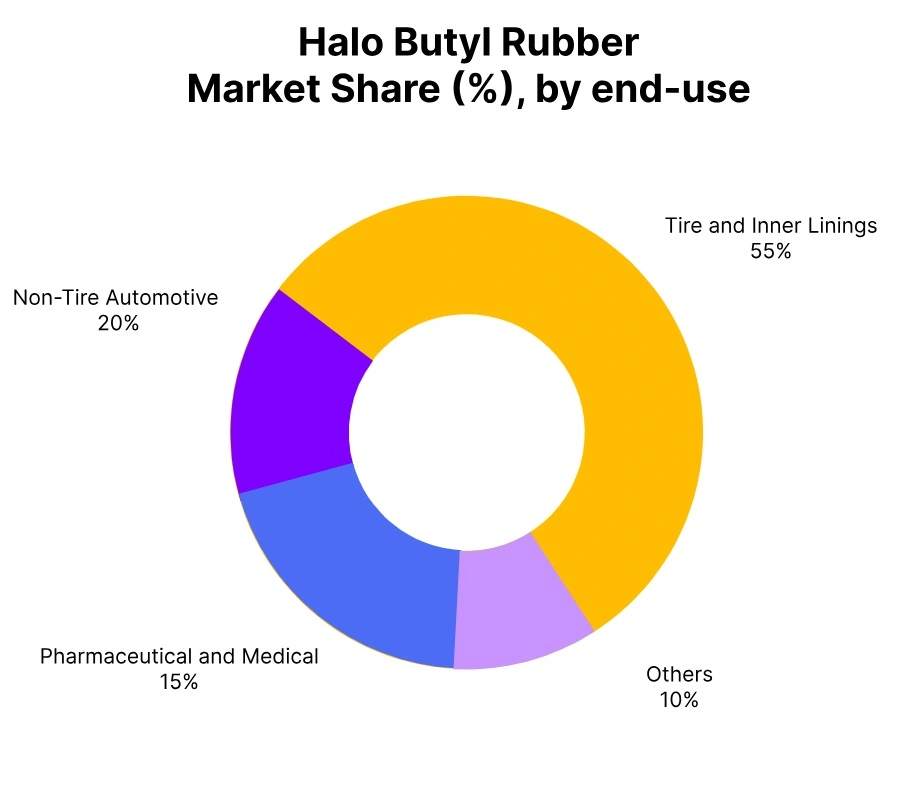
Halo Butyl Rubber market share end use

Historically, several events have caused significant fluctuations in Halo Butyl Rubber prices

  • Russia-Ukraine Conflict (2022-Present): The conflict disrupted energy supplies, especially natural gas and oil, which are crucial for the petrochemical industry. Europe, a major consumer of Russian energy, faced significant supply issues. The conflict impacted the availability and cost of energy and raw materials like styrene, which is derived from petrochemical processes. This led to increased production costs and supply disruptions in European polystyrene markets.
  • Global Logistics and Shipping Crisis (2021-Present): The global logistics and shipping crisis has severely impacted the Halo Butyl Rubber (HBR) market, leading to supply chain disruptions and increased costs. Delays in the transport of key raw materials, such as butadiene and styrene, have reduced production rates and caused plant shutdowns. Rising freight costs from container shortages and higher fuel prices have also made HBR more expensive for industries like automotive and construction. Supply chain volatility has caused stock shortages, complicating manufacturers’ ability to meet demand. Regions like Europe, reliant on imports, have been more affected, while Asia has seen relatively better stability.
  • COVID-19 Pandemic (2020-2022): The pandemic caused widespread disruptions to global supply chains. Manufacturing plants were shut down, labour shortages occurred, and transportation logistics were severely impacted. The polystyrene industry experienced production halts due to factory closures and reduced demand from key sectors like automotive and construction.

Why Price Watch™?

Price Watch™ is your trusted resource for tracking global halo butyl rubber price trends. Our platform delivers real-time data and expert analysis, offering deep insights into the key factors driving price fluctuations in the halo butyl rubber market. By monitoring critical events such as geopolitical tensions, supply chain disruptions, and economic shifts, Price Watch™ keeps you fully informed of market dynamics.

In addition, Price Watch™ provides detailed forecasts and updates on production capacities, enabling you to anticipate market changes and make well-informed decisions. With Price Watch™, you gain a competitive edge in understanding all the elements that influence halo butyl rubber prices worldwide. Stay ahead of the curve with Price Watch’s™ reliable, accurate, and timely halo butyl rubber market data.

Track Price Watch's™ halo butyl rubber price assessment on a weekly basis since 2015 onwards, along with short-term forecasts, and get access to the detailed report in a downloadable format.

Halo Butyl Rubber Market Price Trend published by Price Watch™ reflect prevailing spot market conditions, derived from independent research, verified trade inputs, and proprietary market intelligence as of the publication date. Prices are published on the specified Incoterm and represent indicative base market levels, exclusive of applicable taxes, VAT, duties, tariffs, and other statutory charges. Actual transaction values may vary depending on volume, credit terms, contractual structure, and other negotiated conditions. Market prices are inherently subject to volatility, liquidity dynamics, regulatory changes, and evolving trade activity. The information provided is for reference and benchmarking purposes only and does not constitute an offer, recommendation, or guarantee of transactional outcomes. Users should exercise independent commercial judgment and assess their specific contractual, regulatory, tax, and application requirements before making business decisions. Price Watch™ assumes no liability for decisions taken based on this information.

The pricing of Halo Butyl Rubber (HBR) is influenced by several key factors, including the cost of raw materials (such as isobutylene, chlorine, or bromine), fluctuations in crude oil prices, production costs, supply and demand dynamics, and transportation or freight costs. Additionally, geopolitical events and global economic conditions can impact pricing, as well as seasonal demand variations in industries like automotive and construction.

Raw material prices, particularly for isobutylene and halogenating agents (chlorine or bromine), have a direct impact on HBR pricing. When crude oil prices fluctuate, the cost of these raw materials can rise or fall, affecting the overall production costs of HBR. Procurement heads should closely monitor changes in raw material markets, as they can lead to either upward or downward shifts in HBR prices.

As of recent trends, Halo Butyl Rubber (HBR) prices have experienced volatility due to supply chain disruptions and fluctuating demand from key sectors like automotive and construction. Procurement heads can optimize their purchasing strategies by locking in contracts during periods of lower prices, staying updated on market forecasts, and exploring alternative suppliers to mitigate risks associated with price spikes. Monitoring freight rates and geopolitical factors can also help in better timing their purchases.

Halo butyl rubber (chlorobutyl and Bromobutyl rubber) is a synthetic elastomer used in tire inner liners, pharmaceutical stoppers, and sealing applications. Its price matters because it directly affects costs in the automotive, healthcare, and industrial packaging sectors. Price-Watch™ tracks these prices to help businesses and consumers understand and stay updated with the market trends.

Halo butyl rubber prices vary depending on grade (chlorobutyl or Bromobutyl), crude oil trends, region, and supply-demand conditions. Prices are generally quoted per metric ton and fluctuate with petrochemical feedstock costs and global market dynamics. Price-Watch™ provides real-time price assessments across global markets.

Halo butyl rubber prices are influenced by crude oil movements, isobutylene feedstock costs, tire industry demand, automotive production cycles, and global supply availability. Freight rates, plant operating rates, and macroeconomic conditions also impact price trends.

The major buyers are tire manufacturers, automotive component producers, pharmaceutical companies (vial and stopper applications), adhesives manufacturers, and industrial seal producers. The tire industry remains the dominant consumer globally. Price-Watch™ analyses demand patterns across all these industries.

Halo butyl rubber is produced through the halogenation of butyl rubber using chlorine or bromine in petrochemical manufacturing plants. Major production hubs are located in North America, Europe, the Middle East, and Asia.

The largest exporters of halo butyl rubber include the United States, Germany, China, and Saudi Arabia. These countries have strong petrochemical production bases and integrated supply chains. Export volumes depend on tire industry demand, plant operating rates, and regional consumption patterns. Price-Watch™ tracks global trade flows and export trends.

Supply is generally balanced with demand, but tightness can occur during plant shutdowns, maintenance turnarounds, or periods of strong tire industry demand. Crude oil volatility and logistics disruptions can also temporarily impact availability.

Halo butyl rubber mainly includes chlorobutyl and bromobutyl grades. These grades differ in gas permeability, heat resistance, and chemical stability. Bromobutyl is often preferred for high-performance tire applications, making it generally more expensive than chlorobutyl.

When demand rises sharply, especially from the automotive and tire sectors, prices typically increase. Suppliers may prioritize long-term contracts, while spot market availability becomes limited, leading to higher procurement costs.

Crude oil directly impacts halo butyl rubber prices because it is derived from petrochemical feedstocks such as isobutylene. When crude oil prices rise, production costs increase, which leads to higher halo butyl rubber prices. Price-Watch™ closely monitors these feedstock cost movements.

Halo butyl rubber prices vary by region due to differences in feedstock availability, transportation costs, import duties, local tire industry demand, and production capacity. Regions closer to petrochemical hubs generally benefit from more competitive pricing. Price-Watch™ tracks these regional variations across global markets.

The price outlook depends on crude oil trends, automotive production growth, tire demand, supply additions from major producers, and global economic conditions. Seasonal demand cycles and feedstock volatility can also influence short-term price movements. Price-Watch™ provides regular forecasts based on these market factors.

Yes. Price forecasts help businesses plan procurement, manage inventory, and negotiate contracts more effectively. If prices are expected to rise, buyers can secure material earlier to reduce cost risk and improve margins.

Global events such as crude oil price shocks, geopolitical tensions, refinery shutdowns, natural disasters, and shipping disruptions can significantly affect supply chains and increase halo butyl rubber prices. Price-Watch™ provides timely alerts during such market disruptions.

Price-Watch™ collects data from manufacturers, distributors, and global petrochemical markets to publish accurate price assessments, trend analysis, and forecasts for halo butyl rubber.