Lithium Price Trend and Forecast

UNSPC code: 12352206
|
Weekly Update
|
Historical Data Since 2015
|
Forecast for 2026
  • Commodity Pricing

lithium Price Trends by Country

cnChina

Global lithium Spot Market Prices, Trend Analysis and Forecast

𝐏𝐫𝐢𝐜𝐞 𝐖𝐚𝐭𝐜𝐡™ provides price assessments for Lithium Metal across top trading regions:

Asia-Pacific

  • Lithium Metal Purity: 99.9%min FOB Shanghai, China


Note:
In assessments structured as CIF [Importing Port] (Exporting Country), the country mentioned in brackets indicates the primary origin of supply (exporting country), while the named port refers to the destination port in the importing country. Other Incoterms (FOB, FD, EXW, etc.) should be interpreted in accordance with standard international trade definitions.

Lithium Metal Price Trend Q4 2025

Throughout Q4 2025, the Lithium Metal market globally has been relatively stable as prices had begun increasing again following a small drop over the prior quarter. Judging by current conditions, China remains both the largest producer of lithium as well as their largest consumer, with positive inventory levels driven by prudent and no-longer delayed reorders by lithium-ion battery OEMs. This has both created balance between supply-use while supporting lithium prices at current levels. Overall, demand for lithium from traditional and non-traditional (e.g., electric vehicles and energy storage) sources, in addition to stable long-term pricing for raw materials, has produced a stable environment from which the downside from these components to the metals industry has been minimized. Thus, Q4 2025 indicates continued strength in the lithium metals market as reflected by gradual price increases on the strength of long-term fundamentals for major downstream utilization applications.

China: Lithium Metal Domestic traded prices Ex Shanghai, China; Purity: 99.9%min.

In Q4 2025, lithium metal price trend in China incline by 0.84% quarter-on-quarter, reflecting a mild bullish momentum driven by sustained demand from the EV, battery, and energy storage sectors. While overall supply remained stable, tight spot availability due to port congestion and limited prompt shipments supported price resilience. Year-end restocking by downstream manufacturers added incremental upward pressure, contributing to a 3.67% monthly gain in Lithium metal prices in China in December 2025. Despite these gains, the market remained balanced, with moderate growth signalling underlying strength heading into Q1 2026 amid continued EV production and energy storage demand.

Lithium Price Trend Analysis: Q4 2025

In Q3 2025, the worldwide Lithium Metal market experienced a slight contraction, with overall lithium prices declining approximately 0.24% quarter-quarter. The slight pullback in pricing has primarily been attributed to weaker battery and electronics sector demand along with stabilizing raw material costs. In China, the leading producer and consumer, there have been rising inventory levels and slower downstream procurement from lithium-ion battery producers, which put some modest pressure on prices.

Although the long-term fundamentals remained firm due to ongoing electric vehicle and energy storage application growth, sentiment in the near term remained cautious. Overall, the market remained relatively stable, with minimal volatility, which reflected a brief corrective market phase following prior price surges in prior quarters.

China: Lithium Metal Export prices Ex Sanghai, China, Purity: 99.9%min.

According to Price-Watch, in Q3 2025, the lithium price trend in China declined by 0.24% compared to the previous quarter, reflecting a slight softening in market sentiment. The marginal decline was primarily driven by moderated demand from the battery manufacturing and EV sectors, coupled with stable supply from domestic producers and import sources.

Despite steady raw material and energy costs, cautious procurement by downstream manufacturers and mild inventory accumulation contributed to the downward pressure. Overall, the market remained largely balanced, with a slightly bearish tone prevailing throughout the quarter.

Lithium metal prices in China inclined by 3.35% in September 2025, primarily driven by improved demand from the battery, electric vehicle, and electronics sectors amid robust downstream activity in the later stages of Q3. Tight supply from domestic smelters and constrained raw material availability further supported the upward price movement.

According to the PriceWatch, In Q2 2025, lithium prices dropped sharply by $83,284 per metric ton, Ex Shanghai a 6.79% decrease due largely to continued oversupply, particularly from Chinese producers facing high inventories and low demand absorption.

Despite ongoing growth in electric vehicle and energy storage sectors, global demand has not kept pace with increased production, pushing spot prices to around $14,200 per ton below the average production cost of $15,500.

This imbalance has strained the profitability of major suppliers like Tianqi and Ganfeng, many of whom are operating at a loss. While policy support and modest demand recovery in July offer some hope for price stabilization, the lithium market remains under pressure heading into the second half of 2025. 

In Q1 2025, the lithium market experienced a notable downturn, with prices decreasing by $89,348 per metric ton, Ex Shanghai representing a 6.44% drop. This decline reflects a continuation of the cooling trend seen in late 2024, driven by a combination of oversupply concerns and softer than expected demand from the electric vehicle (EV) and energy storage sectors. Production ramp ups in key regions like Australia and Latin America have outpaced short term demand growth, contributing to downward pressure on prices.

Additionally, ongoing economic uncertainties and cautious inventory management by battery manufacturers have tempered purchasing activity. Despite this drop, long term fundamentals for lithium remain strong, underpinned by the global push toward decarbonization and clean energy technologies. 

Lithium Price Trend Analysis: Q4 2024

In Q4 2024, the lithium market experienced a notable price decrease of $95,495 per metric ton, Ex-Shanghai representing a decline of approximately 10.74%. This significant drop reflects ongoing market adjustments driven by a combination of oversupply concerns, weaker-than-expected demand from the electric vehicle (EV) sector, and increased production capacity in major lithium-producing countries such as Australia and Chile.

The decline also suggests a temporary correction following previous price surges, as inventories remained high and buyers became more cautious. Market participants are closely watching for signs of stabilization, with attention turning to downstream demand recovery and potential supply constraints in 2025. 

In Q3 2024, the lithium market experienced a notable downturn, with prices declining by $106,980 per metric ton, Ex-Shanghai marking a sharp 12.62% decrease. This significant drop reflects ongoing oversupply concerns and weakened demand, particularly from the electric vehicle (EV) sector, which faced slower-than-expected growth and inventory adjustments. Additionally, increased production from key suppliers such as Australia and Latin America added downward pressure on prices.

Market sentiment was also dampened by economic uncertainty and tightening monetary policies, which reduced investment appetite. The lithium industry’s outlook remains cautious, with stakeholders closely monitoring demand recovery and supply chain dynamics. 


In Q2 2024, according to PriceWatch the lithium market experienced a notable rebound, with prices surging by $122,433 per metric ton, Ex-Shanghai marking a 7.77% increase. This uptick suggests renewed demand momentum, likely driven by expanding electric vehicle (EV) production, restocking by battery manufacturers, and improved investor sentiment. The increase may also reflect tighter supply dynamics due to weather-related disruptions in key producing regions or delays in new project ramp-ups.

Overall, the price surge indicates a tightening market environment, reinforcing lithium’s critical role in the clean energy transition and suggesting potential volatility ahead if supply fails to keep pace with accelerating demand. 

In the first quarter of 2024, the lithium market experienced a significant price decline, with prices dropping by $113,601 per metric ton, Ex-Shanghai representing a steep decrease of 27.51%. This sharp downturn reflects a combination of factors including oversupply concerns, weakening demand from key end-use sectors like electric vehicles and battery manufacturing, and broader macroeconomic uncertainties.

The substantial price correction signals a cooling phase after previous high valuations, potentially prompting producers to reassess production strategies and investors to recalibrate expectations. Moving forward, market participants will closely monitor supply adjustments and demand recovery to gauge the lithium market’s trajectory for the remainder of the year. 


Technical Specifications of Lithium Price Trends

Product Description

Lithium is a soft, silvery white alkali metal (Li) renowned for its exceptional electrochemical properties, making it a cornerstone element in modern energy storage solutions. As the lightest metal, lithium is primarily used in the production of lithium-ion batteries, which power a wide range of devices from smartphones and laptops to electric vehicles (EVs) and grid scale energy storage systems. Beyond batteries, lithium compounds such as lithium carbonate and lithium hydroxide are critical in the manufacturing of ceramics, glass, lubricating greases, and pharmaceuticals for mood stabilization.

Lithium’s high energy density, low atomic mass, and reactive nature also make it vital in nuclear technology and emerging hydrogen fuel applications. With growing demand in renewable energy and electrification sectors, lithium plays an essential role in the transition to a low carbon, sustainable future.

Identifiers and Classification:

  • CAS No – 7439-93-2
  • HS Code – 850650


Lithium Metal Grades Specific Price Assessment:

  • Lithium Metal Purity: 99.9%min. Price Trend


Lithium Metal Global Trade and Shipment Terms

  • Quotation Terms (Product & Country Specific): 500-1000 Kg
  • Packaging Type (Product & Country Specific): 50kg Steel drum


Incoterms Referenced in Lithium Metal Price Reporting

Shipping Term  Location  Definition 
Ex Sanghai  Shanghai, China  Domestically Traded Benzene price in China 

*Quotation Terms refers to the quantity range specified for the Lithium Metal being quoted or offered in a commercial transaction.

**Packaging Type refers to standard packaging size commonly used for Lithium Metal packing, ease of handling, transportation, and storage in industrial and commercial applications.

Key Lithium Metal Manufacturers

Manufacturer 
Ganfeng Lithium 
Tianqi Lithium Corporation 
China Lithium Products Technology Co., Ltd. 

Lithium Industrial Applications

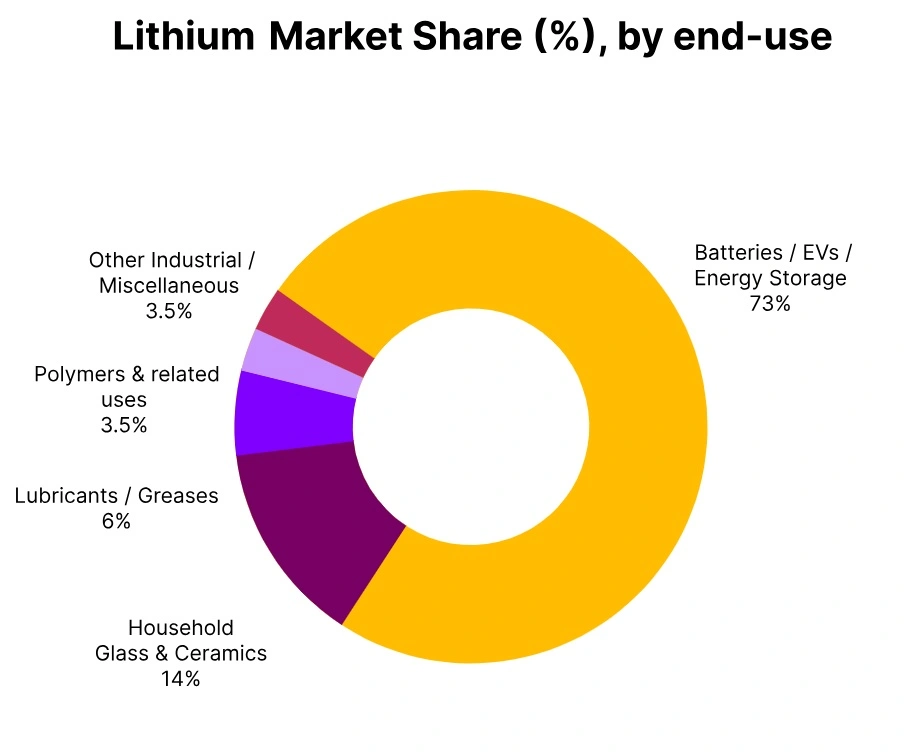
Lithium market share end use

Historically, several events have caused significant fluctuations in Lithium prices

  • Market Correction & Policy Signals (2023–2024): As inventories grew and demand projections were moderated, lithium prices experienced a sharp correction. Additionally, government interventions, such as China’s support for domestic lithium production and efforts in the U.S. and EU to diversify supply chains, helped alleviate some supply concerns, putting downward pressure on prices. 
  • Speculation & Inventory Buildup (2022–2023): Fears of continued shortages and geopolitical tensions (including China’s control over key parts of the lithium supply chain) led to speculative stockpiling by battery makers and EV manufacturers. This drove spot market prices up further. However, by mid-to-late 2023, signs of oversupply began emerging due to accelerated production ramp-up, especially in Australia and Latin America. 
  • Supply Lag & Project Delays (2021–2022): Although demand surged, lithium supply lagged due to underinvestment during prior low-price years and delays in bringing new projects online in regions like South America and Australia. This mismatch between supply and demand tightened markets, pushing prices to record highs by late 2021 and into 2022. 
  • EV Boom & Renewable Energy Transition (2020–2021): The post-COVID global push for green energy accelerated the adoption of electric vehicles (EVs) and energy storage systems, both heavily reliant on lithium-ion batteries. This surge in demand led to a rapid increase in lithium consumption, contributing to a sharp price rebound after a slump in 2018–2019. 

Why Price Watch™?

Price Watch™ is your trusted resource for tracking global lithium price trends. Our platform delivers real-time data and expert analysis, offering deep insights into the key factors driving price fluctuations in the lithium market. By monitoring critical events such as geopolitical tensions, supply chain disruptions, and economic shifts, Price Watch™ keeps you fully informed of market dynamics.

In addition, Price Watch™ provides detailed forecasts and updates on production capacities, enabling you to anticipate market changes and make well-informed decisions. With Price Watch™, you gain a competitive edge in understanding all the elements that influence lithium prices worldwide. Stay ahead of the curve with Price Watch’s™ reliable, accurate, and timely lithium market data.

Track Price Watch's™ lithium price assessment on a weekly basis since 2015 onwards, along with short-term forecasts, and get access to the detailed report in a downloadable format.

Lithium Market Price Trend published by 𝐏𝐫𝐢𝐜𝐞 𝐖𝐚𝐭𝐜𝐡™ reflect prevailing spot market conditions, derived from independent research, verified trade inputs, and proprietary market intelligence as of the publication date. Prices are published on the specified Incoterm and represent indicative base market levels, exclusive of applicable taxes, VAT, duties, tariffs, and other statutory charges. Actual transaction values may vary depending on volume, credit terms, contractual structure, and other negotiated conditions. Market prices are inherently subject to volatility, liquidity dynamics, regulatory changes, and evolving trade activity. The information provided is for reference and benchmarking purposes only and does not constitute an offer, recommendation, or guarantee of transactional outcomes. Users should exercise independent commercial judgment and assess their specific contractual, regulatory, tax, and application requirements before making business decisions. 𝐏𝐫𝐢𝐜𝐞 𝐖𝐚𝐭𝐜𝐡™ assumes no liability for decisions taken based on this information.

Raw Material Availability: Lithium is primarily extracted from hard rock deposits (like spodumene) and lithium-rich brine resources. Variations in ore grade, extraction difficulty, water availability (especially for brine operations), and depletion rates can significantly impact supply and pricing.

Supply and Demand Dynamics: Lithium demand is mainly driven by the electric vehicle (EV) battery industry, energy storage systems, and consumer electronics. Rapid growth in EV adoption, government incentives for clean energy, and advancements in battery technology create strong demand surges, which push prices upward. Conversely, market slowdowns or oversupply can depress prices.

Production and Processing Costs: Extracting and refining lithium into battery-grade materials involves complex and costly processes, including chemical conversion and purification. Costs of energy, labor, water, and chemicals, as well as scale efficiencies at production facilities, heavily influence lithium prices.

Environmental and Regulatory Factors: Lithium mining and extraction (especially from brine) often require significant water usage and can cause ecological concerns. Stricter environmental regulations on water use, waste disposal, and land reclamation can increase operational costs and constrain supply, thereby influencing prices.

Global Trade Policies and Tariffs: Lithium-producing countries like Australia, Chile, Argentina, and China dominate the market. Export controls, tariffs, or trade disputes involving these key producers or major consumers (such as China and the U.S.) can disrupt supply chains and cause price volatility.

Geopolitical Risks and Regional Stability: Lithium production regions are often politically sensitive or subject to social conflicts. Instability, policy changes, or nationalization efforts can disrupt mining operations or exports, impacting global lithium supply and pricing.

Technological Advancements: Innovations in lithium extraction methods (e.g., direct lithium extraction from brine), battery chemistry improvements reducing lithium intensity, and recycling technologies can alter demand and supply balance, affecting prices over time.

Exchange Rates: Lithium is traded globally, so fluctuations in currencies such as the Australian Dollar, Chilean Peso, Chinese Yuan, and U.S. Dollar affect export competitiveness and international pricing.

Market Competition and Substitutes: Competition between lithium producers, the emergence of alternative battery chemistries (like sodium-ion or solid-state batteries), and recycling initiatives can impact lithium demand and pricing strategies.

The availability and cost of raw materials such as high-carbon steel and alloy coatings directly affect Lithium production costs and pricing.

Lithium prices generally increase alongside inflation, driven by rising costs of mining, processing, and logistics. Additionally, strong and growing demand from electric vehicle manufacturers, battery producers, and renewable energy sectors helps maintain price stability and upward pressure even during broader economic shifts.

PriceWatch offers a range of tools and services to track commodity prices effectively:

Real-Time Data: Access to market intelligence and data on global Lithium supply chains.

Expert Analysis: Insights into market trends and potential risks.

Risk Assessment: Tools to evaluate supply chain vulnerabilities.

Benchmarking: Compare Lithium prices and sourcing practices.

Supplier Intelligence: Information on supplier reliability and financial health.

Lithium metal is a highly reactive, soft, silvery-white metal used primarily in batteries, electronics, aerospace, and advanced chemical applications. Its price is critical because it directly impacts the cost of lithium-ion batteries, electric vehicles, and energy storage systems. 𝐏𝐫𝐢𝐜𝐞 𝐖𝐚𝐭𝐜𝐡™ tracks lithium metal prices to help businesses and consumers stay informed about market trends.

Prices vary depending on purity, form (foil, ingot, powder), region, and market demand. Lithium metal is typically quoted per kilogram or metric ton. Prices fluctuate due to supply-demand dynamics, mining output, processing costs, and currency exchange rates. 𝐏𝐫𝐢𝐜𝐞 𝐖𝐚𝐭𝐜𝐡™ provides real-time price assessments across global markets for buyers and sellers.

Prices are influenced by lithium extraction rates, battery demand, EV production, raw material availability, and industrial adoption. Trade policies, logistics, technological developments, and macroeconomic factors also drive market trends.

Major consumers include battery manufacturers, electric vehicle producers, electronics companies, aerospace industries, and specialty chemical firms. 𝐏𝐫𝐢𝐜𝐞 𝐖𝐚𝐭𝐜𝐡™ analyzes demand across these sectors.

Lithium metal is produced from lithium-containing minerals like spodumene or from lithium brine extraction. The metal is then refined and processed into various industrial forms according to purity standards.

Australia, Chile, and China are among the largest exporters. Export volumes depend on domestic production, mining policies, global demand for lithium-ion batteries, and trade conditions. 𝐏𝐫𝐢𝐜𝐞 𝐖𝐚𝐭𝐜𝐡™ tracks production, exports, and trade patterns to help businesses understand global supply chains.

Global supply is currently tight due to rapid EV and battery growth. Temporary shortages may occur from mining delays, processing constraints, or surges in battery manufacturing. 𝐏𝐫𝐢𝐜𝐞 𝐖𝐚𝐭𝐜𝐡™ monitors these imbalances to alert the market about potential shortages or surpluses.

Lithium metal is graded by purity (e.g., 99.5%–99.9%), form, and intended application. Higher-purity or specialty grades command higher prices due to stricter production requirements. 𝐏𝐫𝐢𝐜𝐞 𝐖𝐚𝐭𝐜𝐡™ provides separate assessments for each grade for transparency.

When demand spikes, for instance from EV ramp-ups or battery storage projects, prices typically rise. Suppliers may prioritize strategic customers, and lead times can extend. 𝐏𝐫𝐢𝐜𝐞 𝐖𝐚𝐭𝐜𝐡™ captures these market dynamics in real time.

Lithium production and refining are energy-intensive. Rising electricity, fuel, or processing costs are often passed on to buyers. Regions with cheaper energy generally have lower lithium metal prices, a trend analyzed by 𝐏𝐫𝐢𝐜𝐞 𝐖𝐚𝐭𝐜𝐡™.

Price differences arise from local mining capacity, import dependency, transportation costs, tariffs, and industrial demand. 𝐏𝐫𝐢𝐜𝐞 𝐖𝐚𝐭𝐜𝐡™ tracks prices across all key regions to highlight these variations.

Forecasts depend on mining output, processing capacity, EV and battery demand, and macroeconomic conditions. 𝐏𝐫𝐢𝐜𝐞 𝐖𝐚𝐭𝐜𝐡™ publishes projections for the next 12 months based on supply additions, technology trends, seasonal demand, and policy developments. These forecasts help businesses plan purchases and contracts.

Yes. Accurate forecasts enable businesses to optimize procurement, negotiate contracts, and manage inventories. If 𝐏𝐫𝐢𝐜𝐞 𝐖𝐚𝐭𝐜𝐡™ predicts a price surge, companies can plan purchases or secure long-term contracts to control costs.

Events such as mining disruptions, export restrictions, labor strikes, geopolitical tensions, or technology changes can cause supply shortages and price volatility. 𝐏𝐫𝐢𝐜𝐞 𝐖𝐚𝐭𝐜𝐡™ issues timely alerts on such impacts.

𝐏𝐫𝐢𝐜𝐞 𝐖𝐚𝐭𝐜𝐡™ collects data from miners, refiners, distributors, and end-users to publish price assessments, market reports, and forecasts. Its transparent methodology and global coverage make it a trusted source for understanding lithium metal pricing and market trends.