Magnesium Alloy Ingot Price Trend and Forecast

UNSPC code: 11101800
|
Weekly Update
|
Historical Data Since 2015
|
Forecast for 2026
  • Commodity Pricing

magnesium alloy ingot Price Trends by Country

cnChina
usUnited States
nlNetherlands
inIndia

Global magnesium alloy ingot Spot Market Prices, Trend Analysis and Forecast

Price-Watch’s most active coverage of Magnesium alloy ingot Price Assessment:

Asia-Pacific

  • Magnesium alloy ingot AZ91D FOB Shanghai, China
  • Magnesium alloy ingot AZ91D CIF Nhava Sheva (China), India


North America

  • Magnesium alloy ingot AZ91D CIF Houston (China), USA


Europe

  • Magnesium alloy ingot AZ91D CIF Rotterdam (China), Netherlands


Magnesium Alloy Ingot Price Trend Q4 2025

In Q4 2025, the global magnesium alloy ingot market witnessed a modest price decline of 2-3%, reflecting balanced supply-demand fundamentals and improved production stability across key regions. Increased primary magnesium output in China, the world’s dominant producer, eased earlier supply tightness and contributed to softer export offers. Meanwhile, steady automotive and aerospace demand in United States and Germany provided underlying support but was insufficient to offset ample inventories. Lower energy costs in parts of Europe and improved logistics flows further stabilized production expenses. Market participants reported cautious procurement strategies amid macroeconomic uncertainties, limiting spot buying momentum.

China: Magnesium Alloy Ingot Export prices FOB Shanghai, China; Grade- AZ91D

The price trend of magnesium alloy ingot in China during Q4 2025 reflected a continued softening in market momentum, with average prices registering a 1.8% decrease compared to Q3 2025. The downward trajectory was primarily influenced by subdued downstream demand from the automotive and consumer electronics sectors, coupled with sufficient domestic supply levels.

Market participants reported cautious procurement strategies as buyers limited bulk purchases amid stable inventory positions and moderate export inquiries. Additionally, easing raw material costs and improved operating rates among major producers exerted further pressure on pricing dynamics.

In December 2025 magnesium alloy ingot the price was decline by 2%, driven by year-end inventory adjustments and reduced spot market activity. Overall, the quarter was characterized by balanced supply-demand fundamentals, yet persistent demand hesitancy and competitive pricing strategies among suppliers contributed to the mild but consistent price correction across the Chinese market.

USA: Magnesium Alloy Ingot Import prices CIF Houston (China), USA; Grade- AZ91D

The price trend of magnesium alloy ingot in the USA during Q4 2025 reflected a modest downward correction compared to the previous quarter, registering a 1.3% decrease from Q3 2025 levels. The decline was primarily influenced by softer demand from the automotive and aerospace sectors, where procurement activity slowed toward year-end amid inventory optimization and cautious purchasing strategies.

Stable domestic production and adequate import availability further eased supply-side pressures, contributing to a balanced market environment. Additionally, relatively steady energy and freight costs limited sharp fluctuations, keeping overall volatility contained. In December 2025 magnesium alloy ingot the price was decline by 0.80%, as buyers postponed bulk orders and focused on short-term requirements.

Despite the quarterly dip, the market maintained underlying stability, supported by long-term lightweight material demand trends and ongoing infrastructure and transportation manufacturing activity across the United States.

Netherlands: Magnesium Alloy Ingot Import prices CIF Rotterdam (China), Netherlands; Grade- AZ91D

The price trend of magnesium alloy ingot in Netherlands during Q4 2025 reflected a modest downward correction compared to the previous quarter, with average prices registering a 1.1% decrease from Q3 2025. The softer pricing environment was primarily driven by subdued downstream demand from the automotive and die-casting sectors, coupled with sufficient regional inventory levels that eased procurement urgency.

Market participants also reported stable import flows from key Asian suppliers, which maintained competitive pressure on domestic distributors. Currency stability against major trading partners further limited price volatility throughout the quarter.

In December 2025 magnesium alloy ingot the price was decline by 1.7%, marking the steepest monthly adjustment of the quarter, as year-end inventory balancing and cautious purchasing strategies weighed on spot transactions and short-term contract negotiations.

India: Magnesium Alloy Ingot Import prices CIF Nhava Sheva (China), India; Grade- AZ91D

The price trend of magnesium alloy ingot in India during Q4 2025 reflected a modest downward correction, registering a 1.2% decrease compared to Q3 2025. The quarter opened with stable procurement activity supported by steady demand from the automotive and die-casting sectors, but softening raw material costs and cautious inventory strategies gradually pressured market sentiments.

Increased availability from domestic producers, coupled with moderate import inflows, further contributed to balanced supply conditions. By December 2025, magnesium alloy ingot prices declined by 1.9% month-on-month, primarily due to subdued year-end purchasing and improved supply chain efficiencies.

Additionally, relatively stable energy costs and controlled logistics expenses limited sharper fluctuations. Overall, Q4 2025 demonstrated a mild bearish trajectory, driven by tempered industrial demand and adequate market supply, while broader macroeconomic stability prevented any significant volatility in pricing trends.

Magnesium Alloy Ingot Price Trend Analysis: Q4 2025

In Q3 2025, the global magnesium alloy ingot market experienced a mixed price trend, fluctuating around 1% in comparison to the previous quarter. This change reflected a balance between supportive and restraining market forces. Stable demand from the automotive and aerospace sectors driven by lightweight material preferences helped maintain price levels.

Alongside that, global economic uncertainties, rising energy costs, and cautious procurement activities apply downward pressure. Supply-side factors also contributed, as production in major regions like China remained stable but faced intermittent disruptions due to environmental regulations. Meanwhile, inventory levels in key consumer markets remained adequate, limiting any strong upward momentum in pricing.

United States: Magnesium Alloy Ingot import prices CIF Houston (China), USA, Grade- AZ91D.

In Q3 2025, magnesium alloy ingot prices in the U.S. market have shown a slight upward movement, increasing by 0.50% compared to Q2. This growth has been supported by steady demand from the automotive and aerospace sectors, along with tight supply conditions resulting from ongoing logistical constraints and limited imports.

However, in September 2025, magnesium alloy ingot prices in the US have declined by 2% as downstream demand has slowed and domestic production rates have improved.

Buyers have adopted a cautious purchasing approach amid high inventory levels, contributing to the softening of prices toward the end of the quarter. While the quarterly average has still reflected a marginal gain, the late-quarter dip has indicated a potential shift in market sentiment.

Netherlands: Magnesium Alloy Ingot import prices CIF Rotterdam (China), Netherlands, Grade- AZ91D.

In Q3 2025, magnesium alloy ingot price trend in the Netherlands have shown a modest upward movement, rising by 0.50% compared to Q2. This increase has been supported by firm downstream demand from the automotive and aerospace sectors, coupled with tight supply conditions due to reduced imports from key Asian markets.

However, in September 2025, magnesium alloy ingot prices in the Netherlands have declined by 1% as market sentiment has weakened amid signs of slowing demand and improved inventory levels across European distributors.

Despite this brief correction, the quarterly average has remained higher, underpinned by strong pricing in July and August. Additionally, rising energy costs and stricter environmental regulations affecting production have contributed to elevated costs, reinforcing the overall upward price trend for Q3.

China: Magnesium Alloy Ingot Export prices FOB Shanghai, China, Grade- AZ91D.

According to PriceWatch, the magnesium alloy ingot price trend in China demonstrated a slight increase at the conclusion of Q3 2025, appreciating by close to 1% in comparison to Q2. The increases in price have largely been a result of persistent demand from consumer electronics and other growth sectors, alongside reduced capacity due to enforced environmental checks restraining production in key mainland production provinces of Shaanxi and Shanxi.

However, in September 2025, magnesium alloy ingot price in China retreated by 2% due to weakening market developments amid increased stockpiles of magnesium alloy ingot and weaker downstream demand. Softening raw material pricing as well as improved operations have been noted in addition to price drops.

India: Magnesium Alloy Ingot import prices CIF Nhava Sheva (China), India, Grade- AZ91D.

According to PriceWatch, magnesium alloy ingot price trend within India have exhibited a slight decrease in Q3 2025, by about 0.50% relative to Q2. This decline has stemmed from soft demand from the automotive and aerospace sectors and relatively healthy supply in India and around the world. Magnesium alloy ingot prices have been mostly stable through July and August. However, in September 2025, Magnesium alloy ingot prices in India fell by almost 1%, a significant decline over the quarter.

This trend has been led by increased imports from China at more favorable prices and easing raw material costs, particularly for ferro silicon and aluminum, which have been the primary building blocks for magnesium. Moreover, limited purchasing from manufacturers during 2025 as they adjusted their inventories has continued to keep downward pressure on prices. While the Indian rupee has remained stable, weaker logistics costs have also contributed to a downward trend in prices.

According to the Pricewatch, the global price trend of magnesium alloy ingot increased by $2617 per metric ton FOB Shanghai, marking a 3.85% rise in Q2 2025. This price growth is primarily attributed to reduced global supply, particularly from China, where production was curtailed due to stricter environmental regulations and seasonal maintenance closures.

Additionally, higher input costs, especially for coal-based energy and ferrosilicon critical materials in magnesium alloy production have pushed up manufacturing costs globally. Prices remain sensitive to supply disruptions, energy costs, and environmental policies, making market trends highly responsive to production shifts, particularly in major exporting countries like China. 

According to the Pricewatch, the price of magnesium alloy ingot in India rose by $2,668 per metric ton CIF Nhava Sheva, reflecting a 0.24% increase in Q2 2025. While this growth is more moderate compared to the global average, it stems largely from import-related costs and tariff implications. India relies heavily on imports for magnesium alloy, and recent discussions around potential safeguard duties ranging from 1525% have influenced trader behavior and import pricing. 

In Q1 2025, Magnesium alloy ingot prices declined by $2,520 per metric ton FOB Shanghai, representing a 3.32% drop. This marked the fifth consecutive quarterly decrease, underscoring persistent softness in the market. The downturn was driven by subdued demand from key end-use sectors such as automotive and aerospace, amid broader macroeconomic uncertainty.

Additionally, continued improvements in supply chains and elevated inventory levels in China and Europe exerted downward pressure. Market sentiment was further dampened by currency fluctuations and weak industrial activity in major importing regions, signaling a protracted period of price correction. 

In Q1 2025, Magnesium alloy ingot prices in India declined by ₹2,680 per metric ton CIF Nhava Sheva (China), reflecting a moderate drop of 0.76%. Domestic demand remained subdued, especially in the automotive and electronics manufacturing sectors. Despite marginal recovery in downstream operations, high stock levels and steady imports from China and the Middle East kept the market oversupplied. Softer input costs and a stable rupee also helped prevent price volatility. Buyers continued to delay purchases in anticipation of further corrections, resulting in cautious market sentiment. 

Magnesium Alloy Ingot Price Trend Analysis: Q4 2024

During Q4 2024, Magnesium alloy ingot prices fell by $2,607 per metric ton FOB Shanghai, a decline of 5.10%. The price weakness reflected sustained oversupply and cautious buying behavior from downstream users. Production in China remained robust, supported by easing energy constraints and high operating rates, while demand growth stalled due to slowing global manufacturing.

European buyers in particular reduced procurement in response to high stockpiles and weak economic indicators. The market also experienced limited speculative interest, which had previously propped up prices, contributing to the downward trajectory. 

Magnesium alloy ingot prices in India fell by ₹2,701 per metric ton CIF Nhava Sheva (China), registering a 3.98% decrease. The quarter saw a slowdown in domestic consumption as several auto and appliance manufacturers scaled back output amid sluggish retail demand and cost-cutting measures.

On the supply front, Magnesium alloy ingot imports from China and Kazakhstan surged due to lower international prices, increasing competition for local producers. Falling freight charges and improved port handling times further supported the downward price movement in the Indian market. 

In Q3 2024, Magnesium alloy ingot prices continued their downward trend, falling by $2,747 per metric ton FOB Shanghai, a 3.63% decrease. Oversupply remained the dominant market theme, with Chinese producers maintaining high output levels despite weakening international demand. The slowdown in sectors like automotive and electronics further curtailed consumption, while lower natural gas prices reduced production costs, removing a key upward pressure on prices. Additionally, improved shipping logistics allowed for faster delivery cycles, contributing to a more liquid and competitive market environment. 

In Q3 2024, Indian Magnesium alloy ingot prices declined by ₹2,813 per metric ton CIF Nhava Sheva (China), amounting to a 2.37% reduction. The fall was primarily driven by weak procurement from alloy producers and limited activity in the export sector. Domestic smelters operated at reduced capacity as demand projections remained conservative.

While global geopolitical factors briefly disrupted Magnesium alloy ingot shipments, consistent availability from Chinese suppliers helped maintain stable inventory levels. Traders reported a wait-and-watch approach from key buyers, further softening the market. 

In Q2 2024, Magnesium alloy ingot prices declined by $2,850 per metric ton FOB Shanghai, representing a 4.68% drop. The decrease was fueled by persistent supply-side strength, particularly from China, coupled with tepid demand in both Western and Asian markets. Magnesium alloy ingot buyers remained conservative amid ongoing global economic headwinds and inventory destocking.

Meanwhile, environmental compliance costs, which had supported prices in prior quarters, were partially offset by government subsidies and favorable electricity tariffs, helping to keep production flowing and prices under pressure. 

During Q2 2024, Magnesium alloy ingot prices in India dropped by ₹2,881 per metric ton CIF Nhava Sheva (China), a 3.82% contraction. The decline followed ongoing industrial slowdowns and lower procurement from sectors like construction and renewable energy. With global prices falling and domestic supply stable, buyers pushed back orders and negotiated better terms. Additionally, favorable FX rates and relaxed import duties improved landed costs for overseas Magnesium alloy ingot, putting downward pressure on local prices. 

Magnesium alloy ingot prices in Q1 2024 fell by $2,990 per metric ton FOB Shanghai, marking a 6.56% decline. This steep drop was largely attributed to a sharp decline in export demand, particularly from the European Union, amid a slowdown in industrial output and greater substitution by recycled materials.

Despite winter-related disruptions in some regions, domestic production in China remained resilient, contributing to a buildup in inventories. The market also reacted to policy shifts aimed at boosting raw material exports, which increased the available supply and weighed on global prices. 

In Q1 2024, Indian Magnesium alloy ingot prices experienced a significant decline of ₹2,995 per metric ton CIF Nhava Sheva (China), reflecting a 5.12% decrease the steepest quarterly fall in the year. This was triggered by reduced raw material costs, especially dolomite and ferrosilicon, and a sharp drop in demand from automotive and steel sectors.

Improved availability from China, along with softening global energy prices, made imports more competitive. Domestic producers faced margin pressures amid intense price competition, prompting discounts and short-term deals. 

Technical Specifications of Magnesium Alloy Ingot Price Trends

Product Description:

Magnesium alloy ingot (Mg) is a lightweight, silvery metal known for its excellent strength-to-weight ratio and high machinability. It is widely used in automotive, aerospace, electronics, and medical industries due to its superior thermal and electrical conductivity and ease of casting.

Available in various forms such as ingots, sheets, rods, and powders, Magnesium alloy ingot is ideal for applications requiring weight reduction without compromising strength. It is also used in steelmaking as a desulfurization agent and is valued for its recyclability and sustainability.

Identifiers and Classification:

  • HS Code: 810411


Magnesium Alloy Ingot Grades Specific Price Assessment:

  • AZ91D


Magnesium Alloy Ingot Global Trade and Shipment Terms

Packaging Type (Product & Country Specific): Steel Strap

Quotation Terms (Product & Country Specific): 50-60 MT and 30-35MT,


Incoterms Reference in Magnesium Alloy Ingot Reporting

Shipping Term  Location  Definition 
FOB Shanghai  Shanghai, China   Magnesium Alloy Ingot export from China 
CIF Houston (China)  USA  Magnesium Alloy Ingot Import Price in USA From China  
CIF Rotterdam (China) 


Netherlands   Magnesium Alloy Ingot Import Price in Netherlands from China  
CIF Nhava Sheva (China)  India  Magnesium Alloy Ingot Import Price in India from China  

*Quotation Terms refers to the quantity range specified for the Magnesium Alloy Ingot being quoted or offered in a commercial transaction.

**Packaging Type refers to standard packaging size commonly used for Magnesium Alloy Ingot packing, ease of handling, transportation, and storage in industrial and commercial applications.

Reporting Key Magnesium Alloy Ingot Manufacturers

Manufacturer 
Magontec Qinghai Limited 
Dead Sea Magnesium Ltd 
Wenxi YinGuang Magnesium Industry 
Baowu Magnesium Technology Co., Ltd 

Magnesium Alloy Ingot Industrial Applications

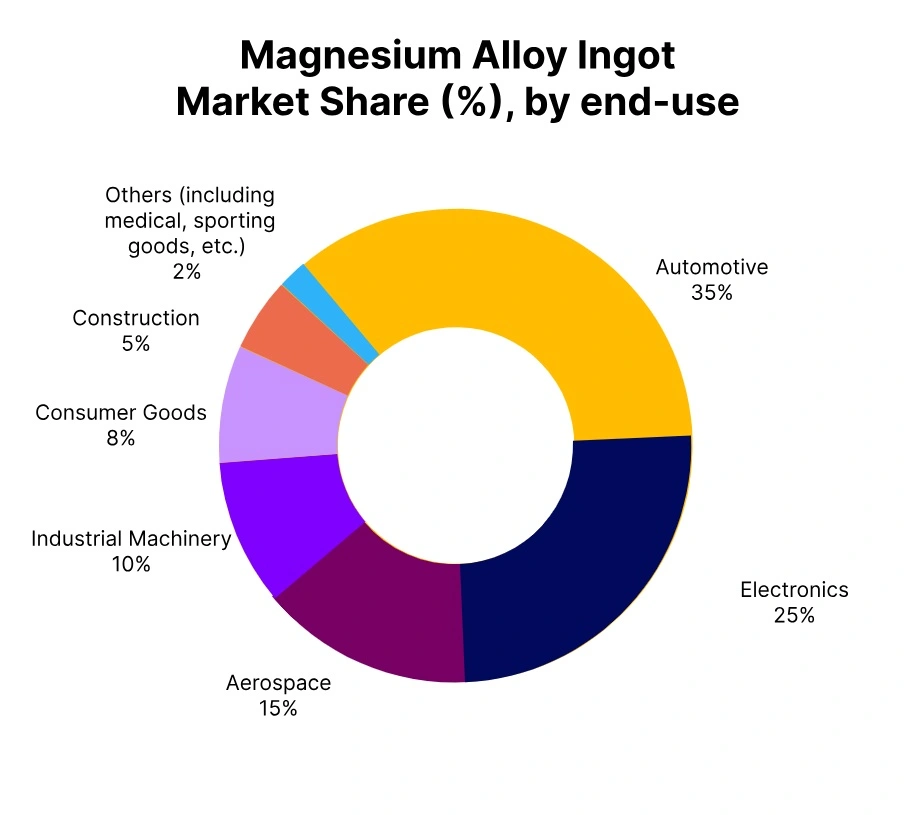
magnesium alloy ingot market share end use

Historically, several events have caused significant fluctuations in Magnesium Alloy Ingot prices

• Supply Chain Realignment and Cost Pressures (2023): 
With industries attempting to diversify sourcing and build resilience, Magnesium alloy ingot markets saw fluctuating prices driven by logistics bottlenecks, rising energy prices, and geopolitical instability. These factors created unpredictability in both supply and cost structures across major consumer regions. 

• Energy Crisis & Emission Policies in China (2021–2022): 
China, the dominant global supplier of Magnesium alloy ingot, implemented energy consumption caps and stricter environmental regulations in 2021–2022. These policies led to temporary shutdowns of smelting operations, triggering supply shortages and a sharp spike in global Magnesium alloy ingot prices. 

• COVID-19 Pandemic (2019–2020): 
The pandemic severely impacted global manufacturing and logistics, disrupting supply chains and leading to reduced output in Magnesium alloy ingot consuming sectors. Simultaneously, supply interruptions occurred due to lockdowns and reduced mining activity, causing price volatility and inventory imbalances. 

• Global Economic Slowdown (2019–2020): 
The downturn in global economic activity, particularly in industrial sectors such as automotive, aerospace, and electronics major consumers of Magnesium alloy ingot resulted in a marked decline in Magnesium alloy ingot demand. This, combined with overproduction in key supply regions, drove prices down during this period. 

Why Price Watch™?

Price Watch™ is your trusted resource for tracking global magnesium alloy ingot price trends. Our platform delivers real-time data and expert analysis, offering deep insights into the key factors driving price fluctuations in the magnesium alloy ingot market. By monitoring critical events such as geopolitical tensions, supply chain disruptions, and economic shifts, Price Watch™ keeps you fully informed of market dynamics.

In addition, Price Watch™ provides detailed forecasts and updates on production capacities, enabling you to anticipate market changes and make well-informed decisions. With Price Watch™, you gain a competitive edge in understanding all the elements that influence magnesium alloy ingot prices worldwide. Stay ahead of the curve with Price Watch’s™ reliable, accurate, and timely magnesium alloy ingot market data.

Track Price Watch's™ magnesium alloy ingot price assessment on a weekly basis since 2015 onwards, along with short-term forecasts, and get access to the detailed report in a downloadable format.

Magnesium Alloy Ingot Market Price Trend published by 𝐏𝐫𝐢𝐜𝐞 𝐖𝐚𝐭𝐜𝐡™ reflect prevailing spot market conditions, derived from independent research, verified trade inputs, and proprietary market intelligence as of the publication date. Prices are published on the specified Incoterm and represent indicative base market levels, exclusive of applicable taxes, VAT, duties, tariffs, and other statutory charges. Actual transaction values may vary depending on volume, credit terms, contractual structure, and other negotiated conditions. Market prices are inherently subject to volatility, liquidity dynamics, regulatory changes, and evolving trade activity. The information provided is for reference and benchmarking purposes only and does not constitute an offer, recommendation, or guarantee of transactional outcomes. Users should exercise independent commercial judgment and assess their specific contractual, regulatory, tax, and application requirements before making business decisions. 𝐏𝐫𝐢𝐜𝐞 𝐖𝐚𝐭𝐜𝐡™ assumes no liability for decisions taken based on this information.

Magnesium alloy ingot prices are driven by several interconnected factors:
• Global Demand-Supply Dynamics:
Demand from automotive, aerospace, electronics, and steel industries, alongside supply levels from major producing countries (e.g., China, Russia, Australia), primarily dictate pricing.
• Raw Material Availability and Costs:
Magnesium alloy ingot production depends on raw materials like magnesite, dolomite, and seawater. Fluctuations in availability and mining costs directly affect Magnesium alloy ingot prices.
• Energy and Production Costs:
Magnesium alloy ingot extraction and refining are highly energy-intensive processes. Changes in electricity, fuel, and processing chemical costs significantly impact overall Magnesium alloy ingot pricing.
• Market and Regional Trends:
Global steel, aluminum, and automotive sector trends influence Magnesium alloy ingot demand. Regional trade policies and tariffs also affect supply chains and prices.
• Geopolitical Risks and Trade Policies:
Export controls, sanctions, or political instability in key producing regions can disrupt supply and create volatility in Magnesium alloy ingot pricing.
• Macroeconomic Conditions:
Global economic growth, inflation rates, and industrial output influence demand for Magnesium alloy ingot, impacting both short-term and long-term price trends.

Magnesium alloy ingot production costs are closely linked to:
• Mining and processing costs of magnesite and dolomite
• Energy inputs (electricity, natural gas) used in electrolytic and thermal reduction methods
• Chemical inputs such as chlorine and hydrochloric acid
Increases in raw material and energy prices typically lead to higher Magnesium alloy ingot production costs and market prices.

Magnesium alloy ingot is a critical lightweight metal used in alloys for automotive, aerospace, and electronics applications. Rising Magnesium alloy ingot prices can lead to:
• Increased production costs for Magnesium alloy ingot alloys and related products
• Higher prices for aluminum-Magnesium alloy ingot alloy components, impacting automotive and aerospace manufacturing costs
• Broader inflationary pressures in industries reliant on lightweight metals for energy efficiency and performance improvements

Our platform offers comprehensive tools to help you track and analyze Magnesium alloy ingot market trends:
• Real-time Magnesium alloy ingot price updates and historical trends
• Production and capacity insights from major Magnesium alloy ingot producers worldwide
• Forward-looking price forecasts based on market dynamics and economic indicators
• Risk assessments related to energy markets, geopolitical events, and trade policies
• Weekly market reports and custom intelligence to support procurement and investment decisions

Some of the key benefits of using PriceWatch include: 

 Real-time Data: Access to up-to-date market intelligence and data on commodity supply chains. 

Expert Analysis: Insights from industry experts to interpret market trends and identify potential risks. 

Risk Assessment: Tools to assess supply chain vulnerabilities and develop mitigation strategies. 

Benchmarking: Comparisons of commodity prices and sourcing practices to optimize procurement decisions.

Magnesium Alloy Ingot is a lightweight metallic material produced by combining magnesium with alloying elements such as aluminum, zinc, manganese, or rare earth metals to enhance strength, corrosion resistance, and castability. It is widely used in automotive, aerospace, electronics, die casting, and structural applications. Its price directly impacts manufacturing costs in lightweight engineering sectors. Price Watch™ tracks these prices to help businesses and consumers stay updated with market movements and cost trends.

Magnesium Alloy Ingot prices vary by region, alloy grade (such as AZ91D, AM60, ZK60), purity, and market conditions. Prices are typically quoted per metric ton and fluctuate based on global magnesium supply, energy costs, alloying material prices, and currency exchange rates. Price Watch™ provides real-time price assessments across major global markets to help buyers and sellers make informed decisions.

Prices fluctuate due to changes in primary magnesium production, particularly supply from major producing countries, energy and coal prices, raw material availability (dolomite and magnesite), environmental regulations, and seasonal industrial demand. Trade policies, freight rates, and macroeconomic conditions also significantly influence market trends.

Major consumers include the automotive industry (lightweight components), aerospace manufacturers, die-casting companies, electronics producers, power tools manufacturers, and defense sectors. Price Watch™ analyzes demand patterns across these industries to provide detailed market insights.

Magnesium Alloy Ingot is produced from magnesium extracted primarily through the Pidgeon process or electrolytic methods. The raw material typically comes from dolomite or magnesite ores. Alloying elements such as aluminum, zinc, manganese, zirconium, and rare earth metals are added to achieve specific mechanical and corrosion-resistant properties. Major producing regions include China, Russia, Israel, Kazakhstan, Europe, and North America.

China is the world’s largest producer and exporter of primary magnesium and magnesium alloy products. Other notable exporters include Russia, Israel, and Kazakhstan. Export volumes fluctuate depending on domestic demand, energy availability, environmental regulations, and international trade policies. Price Watch™ tracks global production levels and trade flows to provide supply chain transparency.

Global supply generally meets demand; however, disruptions can occur due to energy shortages, environmental inspections, plant shutdowns, geopolitical tensions, or sudden increases in automotive and aerospace demand. Price Watch™ monitors supply-demand imbalances to alert the market about potential shortages or surpluses.

Magnesium alloy grades vary based on composition and performance characteristics. Common grades include AZ91D (high castability and corrosion resistance), AM60 (improved ductility), and ZK60 (high strength). Prices differ depending on alloy composition, mechanical properties, and application-specific requirements. Higher-performance or rare-earth-containing alloys typically command premium prices. Price Watch™ provides separate price assessments for various grades to ensure pricing transparency.

When demand rises for example, due to automotive lightweighting initiatives, electric vehicle production growth, or aerospace expansion prices typically increase. Suppliers may prioritize long-term contracts, and lead times can extend. Price Watch™ captures these market dynamics in real time.

Magnesium production is highly energy-intensive, particularly in thermal reduction processes that rely on coal or electricity. Rising energy and fuel costs significantly increase production expenses, which are often passed on to buyers. Regions with lower energy costs generally offer more competitive pricing. Price Watch™ analyzes the correlation between energy markets and magnesium pricing in its reports.

Regional variations occur due to import dependence, transportation and logistics costs, local taxes and duties, currency fluctuations, and regional industrial demand levels. Trade barriers and environmental regulations may also impact pricing. Price Watch™ tracks pricing across major regions to highlight these differences clearly.

Forecasts depend on global magnesium production capacity, Chinese export policies, automotive and aerospace demand trends, energy prices, and broader economic conditions. Price Watch™ publishes detailed 12-month forecasts based on supply expansions, demand growth, seasonal patterns, and macroeconomic indicators to help businesses anticipate market movements.

Yes. Reliable forecasts enable businesses to optimize procurement strategies, negotiate better contracts, and manage inventory efficiently. If Price Watch™ projects a price increase in the coming months, companies may choose to secure current rates or build inventory in advance to reduce cost risks.

Events such as export restrictions, trade tariffs, geopolitical tensions, energy shortages, environmental crackdowns, or smelter shutdowns can cause supply disruptions and price volatility. Price Watch™ provides timely alerts and analysis when such developments affect the market.

Price Watch™ collects pricing data from producers, traders, distributors, and end-users worldwide to publish transparent price assessments, market reports, and forecasts. Its comprehensive methodology and global coverage make it a trusted source for understanding fair pricing and market trends in the Magnesium Alloy Ingot industry.