Methenamine Price Trend and Forecast

UNSPC code: 41116107
|
Weekly Update
|
Historical Data Since 2015
|
Forecast for 2026
  • Commodity Pricing

methenamine Price Trends by Country

ruRussia
inIndia

Global methenamine Spot Market Prices, Trend Analysis and Forecast

𝐏𝐫𝐢𝐜𝐞 𝐖𝐚𝐭𝐜𝐡™ provides price assessments for Methenamine across top trading regions:

Europe

  • Methenamine Industrial Grade (99%) FOB Novorossiysk, Russia


Asia

  • Methenamine Industrial Grade (99%) CIF Nhava Sheva (India), Russia


Note:
In assessments structured as CIF [Importing Port] (Exporting Country), the country mentioned in brackets indicates the primary origin of supply (exporting country), while the named port refers to the destination port in the importing country. Other Incoterms (FOB, FD, EXW, etc.) should be interpreted in accordance with standard international trade definitions.

Methenamine Price Trend Q1 2026

Methenamine markets saw different conditions throughout Q1 2024, specifically between Russia and India, as both markets felt fluctuations from changing levels of demand and recent changes in the global trade dynamic. The Russian Methenamine market had ample supply available to support selling to customers; however, there has been little distribution of methenamine resins, textiles, plastics, and pharmaceuticals causing pricing pressure on the market.

The export market has also been hesitant to sell due to these issues. India’s methenamine market also saw a reduction in importation costs along with moderate levels of demand from customers, coupled with stable inventory at the warehouse level.

Geopolitical events relating to US-Israel and Iran, mainly in and around the Strait of Hormuz, have created trade flow and freight activity volatility. As Q1 2026 ended, however, there has been renewed interest in purchasing methenamine.

Russia: Methenamine Export Prices FOB Novorossiysk, Russia; Grade- (99% min) Industrial Grade

In Q1 2026, Methenamine price in Russia has decreased by 12.2% compared to the previous quarter, reflecting continued pressure from subdued export demand and sufficient supply levels. Methenamine price trend in Russia has remained unstable due to fluctuating consumption across Methenamineic resin, textile, plastic, and pharmaceutical sectors.

Geopolitical tensions involving US-Israel and Iran, particularly around the Strait of Hormuz, have influenced global trade sentiment and added uncertainty to export flows. In Russia, Methenamine price in March 2026 has increased by 14% compared to the previous month, supported by improved buying activity after weaker February demand. Overall, the market has shown partial recovery but has remained cautious.

India: Methenamine Import prices CIF Nhava Seva, India; Grade- (99% min) Industrial Grade

According to Price-Watch™, in Q1 2026, Methenamine price in India has declined compared to the previous quarter, marking a decrease of 10% amid softened import prices from Russia and cautious demand across downstream sectors. The Methenamine price trend in India has remained under pressure due to moderate consumption from Methenamine resin, textile, plastic, and pharmaceutical industries, along with sufficient inventory levels.

Additionally, global uncertainties, including US-Israel tensions and Iran-related developments around the Strait of Hormuz, have influenced trade flows and freight sentiments. However, Methenamine prices in March 2026 have increased by 14.5% compared to the previous month, supported by restocking activities and improved buying interest. Overall, the market has shown mixed momentum, balancing geopolitical concerns with gradual demand recovery.

Methenamine Price Trend Analysis: Q4 2025

In Q4 2025, Methenamine markets have shown a downward trend across Russia and India, influenced by softer demand and stable supply conditions. Methenamine price in Russia has weakened due to moderated export activity and balanced production levels, while Methenamine price trend in Russia has reflected subdued consumption from Methenamine resin, textile, plastic, and pharmaceutical sectors. Similarly, Methenamine price in India has declined amid cautious import demand and sufficient inventory availability. Methenamine price trend in India has remained slightly bearish, with reduced procurement from downstream industries. Methenamine price in December 2025  has dropped in both regions compared to the previous month, indicating weak year-end buying interest.

Russia: Methenamine Export Prices FOB Novorossiysk, Russia; Grade- (99% min) Industrial Grade

In Q4 2025, Methenamine price in Russia has decreased by 3.1% compared to the previous quarter, driven by softened export demand and balanced supply conditions. Methenamine price trend in Russia has shown a downward movement as consumption from end-use industries such as Methenamine resin, textile, plastic, and pharmaceutical sectors has remained moderate. Export-oriented market dynamics have further influenced pricing sentiments amid stable production levels. Methenamine price in December 2025 has declined by 8% compared to the previous month, reflecting weaker year-end purchasing activity and cautious buyer participation. Overall, the market has maintained a bearish tone with limited recovery signals.

India: Methenamine Import prices CIF Nhava Seva, India; Grade- (99% min) Industrial Grade

In Q4 2025, Methenamine price in India has declined compared to the previous quarter, reflecting a 4% decrease amid softer import dynamics from Russia and moderated downstream demand. The Methenamine price trend in India has remained slightly bearish due to reduced procurement from Methenamine resin, textile, plastic, and pharmaceutical sectors, alongside improved inventory levels. Market participants have adjusted buying strategies in response to easing supply pressures and lower feedstock costs. Methenamine prices in December 2025 have decreased by 5.5% compared to the previous month, driven by subdued year-end demand and stable import flows. Overall, the market has exhibited cautious sentiment, with pricing influenced by balanced supply-demand fundamentals and limited volatility.

In Q3 2025, Methanamine prices in both Russia and India registered a notable decline of 9% compared to the previous quarter. The Methanamine price trend in Russia was driven by weakened demand across the resins and plastics, textile, and pharmaceutical industries, along with ample inventories and stable production, which created oversupply conditions. Meanwhile, the Methanamine price trend in India was impacted by subdued import demand, despite steady shipments from Russia.

Indian buyers remained cautious due to high inventory levels, lower freight rates, and currency fluctuations. Both markets reflected bearish sentiment throughout the quarter. The Methanamine price in September 2025 in both countries continued this downward trend, with limited restocking activity and uncertainty about demand recovery in the upcoming quarter.

Russia: Methenamine Export Prices FOB Novorossiysk, Russia, Grade- (99% min) Industrial Grade.

In Q3 2025, Methanamine price in Russia had a stark downturn compared to the previous quarter, declining by 9% from Q2 levels. The Methanamine price trend in Russia was mainly influenced by weakened demand across key downstream sectors, particularly the resins and plastics, textile, and pharmaceutical industries. Reduced export orders from European and Asian markets, coupled with ample domestic inventories, added to the downward pressure on prices.

In addition, operational stability at local production facilities ensured a steady supply, further driving the oversupply conditions. Despite minor procurement activity from the pharmaceutical segment, overall market sentiment remained bearish. The Methanamine price in September 2025 reflected this trend, marking one of the quarter’s lowest points. Market participants anticipated cautious buying in the upcoming quarter.

India: Methenamine Import prices Nhava Seva, India; Grade- (99% min) Industrial Grade

According to Price-Watch, in Q3 2025, Methanamine price in India recorded a notable decline of 9% compared to the previous quarter, mirrored weak import demand and easing supply-side concerns. The Methanamine price trend in India was influenced by reduced industrial activity and subdued procurement from key downstream sectors such as resins and plastics, textile, and pharmaceutical industries. Imports from Russia stayed steady, but Indian buyers adopted a cautious approach amid oversupplied inventories and softening regional prices.

Currency fluctuations and lower freight rates contributed to the downward pressure. Despite occasional restocking activity in early August, overall sentiment remained bearish. The Methanamine price in September 2025 mirrored this trajectory, reflecting weaker trade volumes. Buyers remained attentive to global price cues heading into the next quarter.

According to PriceWatch, In Q2 2025, the price of Methenamine from Russia rose to USD 820 per ton, reflecting a 4% increase compared to the previous quarter. The price hike was primarily driven by firm demand across key end-use industries such as resins and plastics, textiles, and pharmaceuticals. The resins and plastics sector, in particular, witnessed increased production activity, which supported stronger procurement of Methenamine.

Additionally, supply constraints due to logistical challenges and rising raw material costs in Russia contributed to the upward price movement. The textile and pharmaceutical industries also maintained steady demand, further reinforcing the positive pricing trend

According to PriceWatch, In Q2 2025, the price of Methenamine (CIF India) imported from Russia increased to USD 916 per ton, reflecting a 1.9% rise compared to the previous quarter. This moderate price growth was supported by steady demand from key end-use industries such as resins and plastics, textiles, and pharmaceuticals. The resins and plastics segment remained the primary consumer, with consistent production levels driving procurement.

The textile industry also contributed to stable demand, while the pharmaceutical sector maintained regular intake. The price increase was further influenced by firming raw material costs and logistical adjustments affecting Russian exports. Despite the slight rise, supply remained uninterrupted, ensuring smooth import flows into the Indian market.

In Q1 of 2025, Methenamine prices in Russia dropped by 1.06% to 785 USD/MT, driven by a combination of factors. A slight reduction in demand from the pharmaceutical sector contributed to the price decrease, while the availability of cheaper logistics and raw materials further helped lower production costs.

These improvements enabled a reduction in the minimum efficiency scale (MES) for Methenamine production in the region, allowing for more cost-effective manufacturing. This overall reduction in production costs played a key role in the price decline observed in Q1.

In Q1 of 2025, Methenamine prices in India fell by 1.73% to 899 USD/MT, closely mimicking the downward price trend observed in Russia. The decline in Indian prices was supported by reduced freight costs, which contributed to easing overall import expenses. This development highlights how international price movements and logistical efficiencies together influence domestic pricing dynamics.

Methenamine Price Trend Analysis: Q4 2024

In Q4 of 2024, Methenamine prices in Russia increased further by 9.86% to 793 USD/MT compared to Q3, driven by a combination of factors. Continued strong demand from the pharmaceutical and industrial sectors, particularly in emerging markets, put upward pressure on prices, alongside high logistics and operational costs.

Additionally, seasonal fluctuations in raw material costs and potential disruptions in supply chains—stemming from geopolitical factors or logistical challenges—exacerbated price increases.

In Q4 of 2024, Methenamine prices increased by 4.92% to 915 USD/MT compared to Q3, driven by a combination of factors. Continued strong demand from the pharmaceutical and industrial sectors, along with high logistics and operational costs, put upward pressure on prices in Russia.

This price increase in Russia directly affected importing countries like India, where rising costs were passed on to buyers. The persistent demand and logistical challenges in Russia contributed to the ongoing upward price trend across the region, further influencing the global Methenamine market.

In Q3 of 2024, Methenamine prices rose by 8.80% to 722 USD/MT in Russia, driven largely by increased demand from the pharmaceutical and industrial sectors. Simultaneously, the APAC region saw a significant price uptrend, fuelled by strong demand across pharmaceuticals, agriculture, and textiles.

Regulatory reforms aimed at improving drug manufacturing processes boosted market sentiment, fostering collaborations between local and international companies. These efforts enhanced production efficiency, contributing to the overall price surge in both Russia and the APAC market.

In Q3 of 2024, Methenamine prices in India rose sharply by 12.40% to 872 USD/MT, primarily driven by increased demand from the pharmaceutical and industrial sectors, coupled with a short supply of the chemical. A significant factor in this price surge was the high freight costs from Russia to India, which further strained the supply chain.

Russia, as a key supplier of Methenamine to India, experienced production disruptions and logistical challenges, exacerbating the situation. This combination of higher demand and costly freight from Russia significantly impacted prices in India, creating upward pressure on the market.

In Q2 of 2024, the 2.42% rebound in Methenamine prices in Russia brought them to 663 USD/MT, primarily driven by ongoing political unrest, which had become a persistent issue disrupting both production and supply chains. Rising logistics costs further contributed to the price increase.

As the APAC region remains a major importer of Methenamine, the price hike in Russia exerted upward pressure on prices across the region, influencing market conditions and increasing costs for buyers in key countries.

In Q2 of 2024, Methenamine prices in India rose by 3.59% to 776 USD/MT, largely due to ongoing political unrest that disrupted production and supply chains. The increase in logistics costs further fueled the price surge. As India remains a key importer of Methenamine, the price hikes in Russia added upward pressure on regional prices, influencing market dynamics.

This, in turn, led to higher costs for buyers in important markets across the region. The combined impact of geopolitical instability, rising transportation costs, and global price trends contributed to the overall price increase.

In Q1 of 2024, Methenamine prices in Russia fell by 2.85% to 648 USD/MT due to global political unrest and supply disruptions in the Middle East. These disruptions initially created raw material shortages, but as supply chains stabilized and demand weakened in certain sectors, prices dropped. This trend also led to a decrease in Methenamine prices across the APAC region, where supply conditions improved and competition increased.

In Q1 of 2024, Methenamine prices in India rose by 6.42% to 749 USD/MT, primarily driven by global political unrest and supply disruptions. These factors, coupled with increased freight charges from Russia to India, initially led to a shortage of Methenamine. The combination of supply constraints and higher transportation costs pushed prices up.

However, as supply chains gradually stabilized and demand in certain sectors weakened, the price surge began to ease. This shift in market dynamics led to a gradual decrease in Methenamine prices as the supply-demand balance began to normalize.

Technical Specifications of Methenamine Price Trends

Product Description

Methenamine (also known as hexamine, C₆H₁₂N₄) is a heterocyclic organic compound used in disinfectants, plastics, and pharmaceuticals. It is primarily synthesized from Formaldehyde and Ammonia, both derived from petrochemical feedstocks. Methenamine is valued for its antimicrobial properties and is used in urinary tract infection treatments, as well as in the production of resin adhesives.

Identifiers and Classification:

  • CAS No – 100-97-0
  • HS Code – 29336950
  • Molecular Formula – C6H12N4
  • Molecular Weight (in gm/mol) – 140.186 g/mol


Methenamine Synonyms:

  • Hexamethylenetetramine
  • Urotropin
  • Hiprex


Methenamine Grades Specific Price Assessment:

  • Industrial Grade (99%)


Methenamine Global Trade and Shipment Terms

  • Quotation Terms: 25-28 MT (Export-Import)
  • Packaging Type: Bag (25 Kgs) (Export-Import)


Incoterms Referenced in Methenamine Price Reporting

Shipping Term  Location  Definition 
FOB Novorossiysk  Novorossiysk, Russia.  Methenamine Export Price from Russia. 
CIF Nhava Sheva (Russia)  Nhava Sheva, India.  Methenamine import price in India from Russia. 

*Quotation Terms refers to the quantity range specified for the Methenamine being quoted or offered in a commercial transaction.

**Packaging Type refers to standard packaging size commonly used for Methenamine packing, ease of handling, transportation, and storage in industrial and commercial applications.

Key Methenamine Manufacturers

Manufacturers 
Metra Frax Chemicals 

Methenamine Industrial Applications

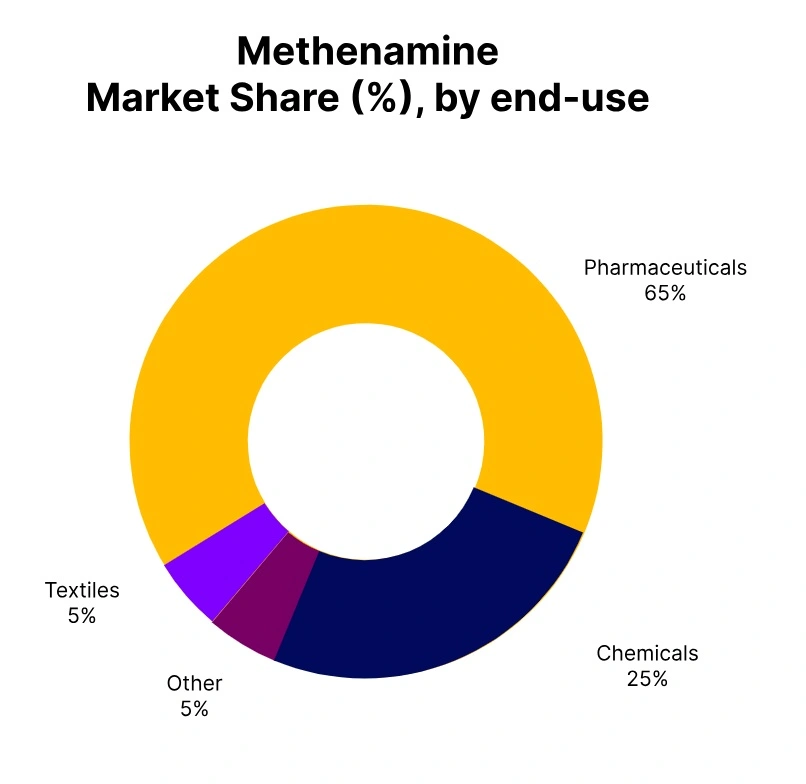
methenamine market share end use

Historically, several events have caused significant fluctuations in Methenamine prices

  • Rising Energy Prices (2021-2022): The recovery from the pandemic saw a surge in energy prices, particularly natural gas and crude oil. Since Methenamine production is energy-intensive, higher energy costs directly impacted manufacturing costs, leading to increased prices for Methenamine.
  • COVID-19 Pandemic (2020): The outbreak of COVID-19 caused widespread supply chain disruptions, with many chemical plants shutting down or reducing capacity due to health concerns and restrictions. This led to temporary shortages and price spikes in Methenamine, especially as demand surged in the pharmaceutical and healthcare sectors.
  • Global Supply Chain Disruptions (2017–2018): Chinese Environmental Crackdowns (2017-2018): China, one of the largest producers of chemicals globally, initiated stricter environmental regulations around 2017, leading to factory closures and production cutbacks in the chemical sector. These disruptions affected the supply of raw materials, including formaldehyde (a key precursor to Methenamine), which directly influenced the production cost of Methenamine. The resulting global supply shortages contributed to price increases in the chemical markets.


These events underscore the Methenamine market’s vulnerability to global disruptions and highlight the need for continuous monitoring of supply-demand dynamics.

Why Price Watch™?

Price Watch™ is your trusted resource for tracking global methenamine price trends. Our platform delivers real-time data and expert analysis, offering deep insights into the key factors driving price fluctuations in the methenamine market. By monitoring critical events such as geopolitical tensions, supply chain disruptions, and economic shifts, Price Watch™ keeps you fully informed of market dynamics.

In addition, Price Watch™ provides detailed forecasts and updates on production capacities, enabling you to anticipate market changes and make well-informed decisions. With Price Watch™, you gain a competitive edge in understanding all the elements that influence methenamine prices worldwide. Stay ahead of the curve with Price Watch’s™ reliable, accurate, and timely methenamine market data.

Track Price Watch's™ methenamine price assessment on a weekly basis since 2015 onwards, along with short-term forecasts, and get access to the detailed report in a downloadable format.

Methenamine Market Price Trend published by 𝐏𝐫𝐢𝐜𝐞 𝐖𝐚𝐭𝐜𝐡™ reflect prevailing spot market conditions, derived from independent research, verified trade inputs, and proprietary market intelligence as of the publication date. Prices are published on the specified Incoterm and represent indicative base market levels, exclusive of applicable taxes, VAT, duties, tariffs, and other statutory charges. Actual transaction values may vary depending on volume, credit terms, contractual structure, and other negotiated conditions. Market prices are inherently subject to volatility, liquidity dynamics, regulatory changes, and evolving trade activity. The information provided is for reference and benchmarking purposes only and does not constitute an offer, recommendation, or guarantee of transactional outcomes. Users should exercise independent commercial judgment and assess their specific contractual, regulatory, tax, and application requirements before making business decisions. 𝐏𝐫𝐢𝐜𝐞 𝐖𝐚𝐭𝐜𝐡™ assumes no liability for decisions taken based on this information.

The pricing of Methenamine is influenced by various factors, including the cost of raw materials like formaldehyde and ammonia, which are essential for its production. Fluctuations in the prices of these chemicals, often driven by supply chain disruptions or shifts in global demand, can significantly affect Methenamine prices. Additionally, manufacturing costs, including energy and labor expenses, play a role in determining final pricing. Increased demand in industries such as pharmaceuticals, chemicals, and textiles can also drive-up prices, especially when supply is limited. Geopolitical factors, trade policies, and tariffs in key production countries can further impact the pricing structure, as can the grade or purity of Methenamine required for specific applications, such as pharmaceutical use. Understanding these market dynamics is essential for procurement heads when assessing the true cost of Methenamine in the global market.

Procurement heads can employ several strategies to negotiate the best pricing for Methenamine. First, purchasing in bulk often provides leverage for securing volume discounts, particularly if long-term agreements with suppliers are established. Building strong relationships with key suppliers can also facilitate better pricing and favorable payment terms. Keeping abreast of global supply chain trends and understanding the fluctuating demand for Methenamine across industries allows procurement teams to time their purchases strategically, capitalizing on lower prices. Additionally, negotiating flexible pricing models, such as price caps or price adjustments based on market conditions, helps mitigate the impact of unforeseen price hikes. Lastly, entering long-term contracts with suppliers can offer price stability over extended periods, reducing the risk of sudden price fluctuations and ensuring a more predictable supply chain.

When evaluating Methenamine suppliers, quality should always be a top priority in addition to price. The purity and grade of Methenamine are crucial, particularly for high-demand applications in pharmaceuticals, medical devices, or specialty chemicals. Suppliers should provide certification of product purity and meet the necessary regulatory standards, such as GMP (Good Manufacturing Practices) for pharmaceutical-grade Methenamine. Consistency and reliability are also vital. Suppliers must be able to deliver the same high-quality product consistently to avoid production delays or product failure. Additionally, procurement teams should ensure that suppliers adhere to relevant testing and compliance standards, such as ISO certifications, and provide proper packaging and storage conditions to maintain product integrity during transit. While price is important, selecting a reliable supplier who ensures timely delivery and maintains quality standards can provide the best long-term value.

Methenamine (hexamethylenetetramine) is a white crystalline organic compound widely used in pharmaceuticals, chemical intermediates, adhesives, coatings, and resin production. Its price directly impacts the cost of downstream products such as urinary antiseptics, urotropine resins for molding, formaldehyde-based chemicals, and specialty adhesives. Fluctuations in Methenamine pricing affect manufacturers across multiple industries worldwide, making it a critical factor for supply planning and cost management. 𝐏𝐫𝐢𝐜𝐞 𝐖𝐚𝐭𝐜𝐡™ tracks these prices to help businesses and consumers understand and stay updated with market trends.

Methenamine prices vary by region. Prices are typically quoted per metric ton and change based on supply, demand, feedstock costs, and energy prices. 𝐏𝐫𝐢𝐜𝐞 𝐖𝐚𝐭𝐜𝐡™ provides real-time price assessments across different global markets to help buyers and sellers make informed decisions.

Methenamine prices fluctuate due to changes in feedstock costs, primarily formaldehyde and ammonia, as well as energy price movements and production capacity utilization. Demand from key consuming industries such as pharmaceuticals, urotropine resins, adhesives, coatings, and specialty chemicals also strongly influences pricing. Seasonal demand patterns, global capacity additions or plant shutdowns, transportation and logistics costs, trade flows, and regional import/export dynamics further shape market trends. Recent outlooks show price volatility driven by formaldehyde availability, energy costs, capacity expansions in Russia, and demand cycles in key derivative markets.

The largest consumers of Methenamine are pharmaceutical companies producing urinary antiseptics and other Methenamine-based drugs, followed by manufacturers of urotropine resins Additional demand comes from specialty chemical producers, formaldehyde-based resin manufacturers, rubber and plastics industries, and companies using Methenamine derivatives for industrial applications. 𝐏𝐫𝐢𝐜𝐞 𝐖𝐚𝐭𝐜𝐡™ analyses demand patterns across all these industries.

Methenamine is primarily synthesized by reacting formaldehyde with ammonia under controlled industrial conditions. This process produces Methenamine as the main product, which can then be purified into crystalline or powdered forms for different applications. It is manufactured in large chemical plants with integrated access to ammonia and formaldehyde feedstocks. Some pharmaceutical-grade Methenamine is produced under stricter purity standards, while industrial-grade Methenamine is used for resins, adhesives, and chemical intermediates.

Methenamine trade is influenced by production capacity, regional demand, and feedstock availability. Russia is the largest global exporter, supplying Europe, Asia, Methenamine, while shipment volumes vary with domestic demand, plant capacity, regulatory policies, and logistics costs. 𝐏𝐫𝐢𝐜𝐞 𝐖𝐚𝐭𝐜𝐡™ tracks production levels, export flows and trade patterns to help businesses understand global supply chains and identify sourcing opportunities.

Global Methenamine supply generally meets demand, but regional shortages can occur due to plant maintenance, feedstock constraints, transportation issues, or sudden spikes in pharmaceutical, resin, or chemical production. 𝐏𝐫𝐢𝐜𝐞 𝐖𝐚𝐭𝐜𝐡™ monitors these supply-demand imbalances to alert the market about potential shortages or surpluses.

Methenamine prices vary by grade depending on purity, contaminants, and application. Industrial-grade Methenamine is used in resins, adhesives, and chemical intermediates, while pharmaceutical/USP-grade commands higher prices due to stricter purity standards. Crystalline, powdered, or molten forms may also differ in cost based on handling, storage, and logistics requirements. 𝐏𝐫𝐢𝐜𝐞 𝐖𝐚𝐭𝐜𝐡™ provides separate price assessments for each grade to ensure market transparency.

When Methenamine demand rises quickly often due to increased pharmaceutical production, resin manufacturing, or specialty chemical applications prices typically increase. Suppliers may prioritize long-term contract customers, while spot buyers face tighter availability, longer lead times, or premium pricing. Production flexibility is limited by formaldehyde-ammonia feedstock balances and plant capacity. 𝐏𝐫𝐢𝐜𝐞 𝐖𝐚𝐭𝐜𝐡™ captures these market dynamics in real-time.

Energy is a significant cost in Methenamine production. When natural gas, electricity, or steam costs rise, producers typically pass these increases on to buyers, making Methenamine more expensive. Feedstock costs formaldehyde and ammonia are also influenced by energy prices, as ammonia production is energy intensive. Regions with lower energy costs and integrated chemical facilities generally have more competitive Methenamine pricing. 𝐏𝐫𝐢𝐜𝐞 𝐖𝐚𝐭𝐜𝐡™ analyses in its price assessments & market reports.

Methenamine prices vary by region due to differences in local production capacity, feedstock (formaldehyde and ammonia) availability and costs, energy prices, transportation and logistics expenses, import/export dynamics, and regional demand from pharmaceuticals, resins, and specialty chemicals. Areas with limited local production or higher logistics costs typically see higher prices, while regions with integrated chemical facilities and favorable feedstock economics often enjoy lower prices. 𝐏𝐫𝐢𝐜𝐞 𝐖𝐚𝐭𝐜𝐡™ tracks prices across all major regions to highlight these differences.

The Methenamine market outlook depends on factors such as formaldehyde and ammonia feedstock price trends, energy costs, production capacity expansions or plant turnarounds, and demand growth in pharmaceuticals, resins, adhesives, and specialty chemical industries. Regional trade flows, logistics, and macroeconomic conditions affecting industrial production also influence pricing. 𝐏𝐫𝐢𝐜𝐞 𝐖𝐚𝐭𝐜𝐡™ regularly publishes detailed forecasts that project price movements for the next 12 months based on comprehensive analysis of supply additions, demand growth in key industries, seasonal patterns, and macroeconomic indicators. Our forecasts help businesses anticipate market conditions and plan accordingly.

Absolutely. Accurate forecasting allows you to time your purchases better, negotiate contracts more effectively, and budget more accurately. If 𝐏𝐫𝐢𝐜𝐞 𝐖𝐚𝐭𝐜𝐡™ forecasts predict a price increase in three months, you might choose to stock up now or lock in long-term contracts at current rates, potentially saving thousands of dollars.

Global events such as natural disasters, trade disputes, plant accidents, feedstock supply disruptions, or economic downturns can disrupt Methenamine production or shipping, leading to supply shortages and price spikes. Regulatory changes, ammonia or formaldehyde supply constraints, logistics disruptions, and pandemic-related shifts in pharmaceutical or resin demand have historically caused significant Methenamine market volatility. 𝐏𝐫𝐢𝐜𝐞 𝐖𝐚𝐭𝐜𝐡™ provides timely alerts when such events affect the market.

𝐏𝐫𝐢𝐜𝐞 𝐖𝐚𝐭𝐜𝐡™ collects data from manufacturers, distributors, and buyers worldwide to publish regular price assessments, market reports, and forecasts. Our transparent methodology and comprehensive coverage make us a trusted source for understanding fair pricing and market trends in the Methenamine industry.