Price-Watch™ provides real-time price assessments and price forecasts for Monoethanolamine across top trading regions:
| Monoethanolamine (MEA) Regional Coverage | Monoethanolamine (MEA) Grade and Country Coverage | Monoethanolamine (MEA) Pricing Data Coverage Explanation |
|
Asia Monoethanolamine Pricing Analysis |
Monoethanolamine Industrial Grade (99.5% min) FOB Prices at Shanghai Port, China | Weekly Price Update on Monoethanolamine Real-Time Export Prices from Shanghai Port, China to Global Markets |
| Monoethanolamine Industrial Grade (99.5% min) FOB Prices at Laem Chabang port, Thailand | Weekly Price Update on Monoethanolamine Real-Time Export Prices from Laem Chabang Port, Thailand to Global Markets
|
|
| Monoethanolamine Industrial Grade (99.5% min) FOB Prices at Kelang Port, Malaysia | Weekly Price Update on Monoethanolamine Real-Time Export Prices from Kelang Port, Malaysia to Global Markets
|
|
| Monoethanolamine Industrial Grade (99.5% min) CIF Prices at Nhava Sheva Port, West India, Importing form Saudi Arabia | Weekly Price Update on Monoethanolamine Real-Time Import Prices at Nhava Sheva Port, West India from Saudi Arabia | |
| Monoethanolamine Industrial Grade (99.5% min) CIF Prices at Nhava Sheva port, West India, importing form China | Weekly Price Update on Monoethanolamine Real-Time Import Prices at Nhava Sheva Port, West India from China | |
| Middle East & Africa Monoethanolamine Pricing Analysis | Monoethanolamine Industrial Grade (99.5% min) FOB Prices at Jeddah Port, Saudi Arabia | Weekly Price Update on Monoethanolamine Real-Time Export Prices from Jeddah Port, Saudi Arabia to Global Markets
|
| Monoethanolamine Industrial Grade (99.5% min) CIF Prices at Jebel Ali Port, UAE, Importing from Saudi Arabia | Weekly Price Update on Monoethanolamine Real-Time Import Prices at Jebel Ali Port, UAE from Saudi Arabia
|
|
| Europe Monoethanolamine Pricing Analysis
|
Monoethanolamine Industrial Grade (99.5% min) FOB Prices at Hamburg Port, Germany | Weekly Price Update on Monoethanolamine Real-Time Export Prices from Hamburg Port, Germany to Global Markets |
Monoethanolamine Price Forecasts & Market Foresight Q3 2026
Outlook: Bearish to Strongly Bearish
Confidence: High
Monoethanolamine (MEA) prices are expected to remain in a strongly bearish phase globally during Q3 2026, pressured by softer ethylene oxide and ammonia feedstock costs, ample product availability, and weak downstream demand. Asia is likely to witness sustained pricing pressure due to competitive export offers from China, Malaysia, and Thailand, coupled with cautious buying activity.
Europe is expected to experience further corrections amid comfortable inventories and subdued industrial demand, while the Middle East and India may continue to face soft pricing driven by adequate supply and need-based procurement, limiting any meaningful price recovery during the quarter.
Global Monoethanolamine Market Overview by Region (July–September 2026)
| Country | Grade/ Incoterm | Outlook |
| China | Industrial Grade (99.5% min) FOB Shanghai | Strongly Bearish |
| Saudi Arabia | Industrial Grade (99.5% min) FOB Jeddah | Strongly Bearish |
| Malaysia | Industrial Grade (99.5% min) FOB Kelang | Strongly Bearish |
| Thailand | Industrial Grade (99.5% min) FOB Laem Chabang | Strongly Bearish |
| Germany | Industrial Grade (99.5% min) FOB Hamburg | Strongly Bearish |
| India | Industrial Grade (99.5% min) CIF Nhava Sheva (CHINA) | Strongly Bearish |
| India | Industrial Grade (99.5% min) CIF Nhava Sheva (Saudi Arabia) | Strongly Bearish |
| United Arab Emirates | Industrial Grade (99.5% min) CIF Jebel Ali (Saudi Arabia) | Strongly Bearish |
*Monoethanolamine Forecast represents an analytical assessment based on information available at the time of publication. Actual market prices may vary due to unforeseen operational, regulatory, geopolitical, or economic developments.
Explore the Complete Price Watch™ Monoethanolamine Forecast
Access comprehensive Monoethanolamine market intelligence, including a 3-Month Rolling Forecast, 12-Month Price Forecast, forward price curves, country-wise market outlooks, procurement insights, and monthly forecast updates.
Explore Price Watch™ Monoethanolamine Forecasts
What’s Included
The 3-Month Forecast (Updated Monthly)
It reflects changes in ethylene oxide and ammonia feedstock costs, energy prices, producer operating rates, plant outages, inventory levels, trade flows, freight rates, regional demand, and geopolitical developments affecting the global Monoethanolamine market.
The 12-Month Forecast (Published Annually)
It provides a strategic outlook based on expected capacity additions, supply-demand balances, feedstock economics, macroeconomic conditions, industrial production trends, trade policies, seasonal demand patterns, and long-term supply chain developments, supporting procurement, budgeting, and strategic planning.
Our Proprietary Hybrid Forecasting Model Evaluates:
- Feedstock & production economics
- Plant operating rates & outages
- Inventory and supply-demand balance
- Regional trade flows & freight
- Import-export dynamics
- Macroeconomic & geopolitical developments
Track Monoethanolamine Supply Disruptions in Real Time
As geopolitical risks continue to reshape global supply chains, stay ahead of the events that drive price movements by monitoring plant shutdowns, maintenance turnarounds, force majeure events, logistics bottlenecks, trade restrictions, and operational disruptions before they impact Monoethanolamine markets.
Access the 𝐏𝐫𝐢𝐜𝐞 𝐖𝐚𝐭𝐜𝐡™ GIO Tracker
Monoethanolamine (MEA) Price Trend Q2 2026
In Q2 2026, the global Monoethanolamine (MEA) market recorded a significant price increase across major producing and importing regions due to supply chain disruptions caused by the Iran and USA conflict and the closure of the Strait of Hormuz.
The geopolitical tensions pushed crude oil prices higher, increasing feedstock, freight, and transportation costs for Monoethanolamine producers and importers. Rising prices of ethylene oxide and ammonia further elevated manufacturing costs.
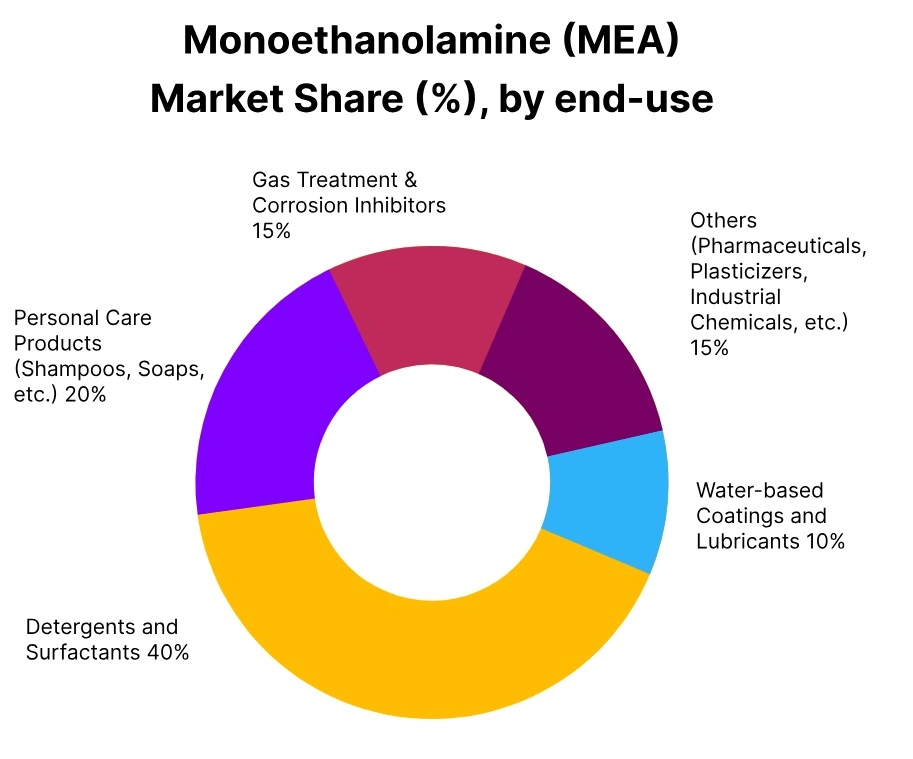
Strong demand from the gas treatment, agrochemical, detergent, personal care, textile, construction chemical, and industrial sectors supported market sentiment across Asia, Europe, and the Middle East. The Monoethanolamine Price Chart reflected sustained upward momentum during the quarter, while the Monoethanolamine Price Index indicated firm pricing conditions driven by elevated logistics expenses, higher production costs, and cautious procurement strategies.
However, in June 2026, most markets witnessed price corrections as logistics conditions gradually improved and buyers slowed procurement after earlier inventory build-up.
China: Monoethanolamine Export prices FOB Shanghai, China; Grade- Industrial Grade (99.5% min)
In Q2 2026, Monoethanolamine prices in China increased by 40%, primarily due to the Iran and USA conflict and the closure of the Strait of Hormuz, which increased crude oil prices and raised feedstock, energy, freight, and transportation costs.
Higher ethylene oxide and ammonia prices further supported the upward trend. Stable demand from the detergent, agrochemical, textile, gas treatment, and industrial sectors further strengthened the market, while firm export activity improved supplier confidence. The Monoethanolamine Price Trend in China showed strong growth as producers maintained firm offers to offset higher manufacturing and logistics expenses.
Buyers adopted cautious procurement strategies amid changing supply chain conditions. However, in June 2026, Monoethanolamine prices in China declined by 11% due to improved freight availability and weaker downstream purchasing following earlier inventory accumulation.
Malaysia: Monoethanolamine Export prices FOB Kelang, Malaysia; Grade- Industrial Grade (99.5% min)
In Q2 2026, Monoethanolamine prices in Malaysia increased by 43%, primarily due to higher import costs caused by rising crude oil prices, elevated freight rates, and supply chain disruptions following the Iran and USA conflict and the closure of the Strait of Hormuz.
Strong demand from the detergent, personal care, agrochemical, and industrial sectors further supported the market. The Monoethanolamine Price Trend in Malaysia reflected significant growth as importers passed higher procurement and logistics costs through the supply chain.
Buyers maintained cautious purchasing strategies amid limited import availability. However, in June 2026, Monoethanolamine prices in Malaysia declined by 11% due to easing freight costs, improved supply availability, and softer downstream procurement.
Thailand: Monoethanolamine Export prices FOB Laem Chabang, Thailand; Grade- Industrial Grade (99.5% min)
In Q2 2026, Monoethanolamine prices in Thailand increased by 38%, primarily due to higher import costs resulting from elevated crude oil prices, rising freight rates, and supply chain disruptions caused by the Iran and USA conflict and the closure of the Strait of Hormuz.
Stable demand from the detergent, textile, agrochemical, and industrial sectors further supported the market. The Monoethanolamine Price Trend in Thailand showed strong growth as suppliers adjusted offers to recover higher transportation and procurement expenses.
Buyers adopted cautious procurement strategies while maintaining sufficient inventories. However, in June 2026, Monoethanolamine prices in Thailand declined by 13% due to improved logistics conditions and softer downstream purchasing.
Germany: Monoethanolamine Export prices FOB Hamburg, Germany; Grade- Industrial Grade (99.5% min)
In Q2 2026, Monoethanolamine price in Germany rose by 46%, mainly due to rising crude oil prices linked to the conflict between Iran and the USA, alongside the closure of the Strait of Hormuz, which raised feedstock, energy, and transportation expenses throughout Europe.
Increasing ethylene oxide expenses and strong industrial demand additionally bolstered the market. The Monoethanolamine Price Trend in Germany exhibited significant growth as manufacturers upheld solid prices to offset increasing operational expenses while guaranteeing consistent supply.
Purchasers maintained their usual sourcing even with high prices. However, in June 2026, Monoethanolamine price in Germany fell by 15% owing to reduced feedstock costs, better product availability, and decreased demand from downstream markets.
Saudi Arabia: Monoethanolamine Export prices FOB Jeddah, Saudi Arabia; Grade- Industrial Grade (99.5% min)
In the second quarter of 2026, Monoethanolamine price in Saudi Arabia rose by 67%, mainly because of the conflict between Iran and the USA, along with the closure of the Strait of Hormuz, which led to higher crude oil prices and increased costs for feedstock, production, and transportation.
Robust demand from the gas treatment, refinery, detergent, construction chemical, and industrial sectors bolstered the market. The Monoethanolamine price trend in Saudi Arabia showed considerable increase as manufacturers upheld strong offers due to limited regional supply and high production expenses.
Purchasers maintained a careful approach to buying while securing sufficient stock levels. However, in June 2026, Monoethanolamine prices in Saudi Arabia dropped by 10% because of lower feedstock expenses, enhanced supply conditions, and decreased downstream demand.
India: Monoethanolamine Import prices CIF Nhava Sheva, India; Grade- Industrial Grade (99.5% min)
In Q2 2026, Monoethanolamine prices in India, sourced from China, rose by 44%, mainly because of higher Chinese export prices, increased shipping costs, and rising feedstock expenses due to the Iran and USA conflict and the blockage of the Strait of Hormuz.
Robust demand from the detergent, agrochemical, textile, personal care, and industrial industries also bolstered the upward trend. The Monoethanolamine Price Trend in India exhibited considerable growth as importers upheld strong offers to offset increased procurement and logistics costs.
Purchasers modified purchasing strategies to handle increasing expenses while ensuring sufficient stock levels. However, in June 2026, Monoethanolamine price in India fell by 10% as a result of reduced logistics expenses, better import access, and a slowdown in downstream buying.
UAE: Monoethanolamine Import prices CIF Jebel Ali, United Arab Emirates; Grade- Industrial Grade (99.5% min)
In Q2 2026, the Monoethanolamine price in the UAE, sourced from Saudi Arabia, rose by 71%, mainly because of the conflict between Iran and the USA and the closure of the Strait of Hormuz, which notably drove up crude oil prices, shipping costs, and transportation expenses across borders.
Increased export prices from Saudi Arabia limited regional availability, while high feedstock expenses additionally bolstered the market. The MEA Price Trend in the UAE demonstrated considerable increase as importers and distributors kept strong offers to offset rising procurement and logistics costs.
Purchasers implemented careful buying approaches while maintaining sufficient stock levels due to uncertain local supply circumstances. However, in June 2026, Monoethanolamine price in the UAE fell by 8% because of better supply availability, lower Saudi Arabian export prices, decreased transportation expenses, and diminished purchases after prior inventory buildup.