Natural Rubber Price Trend and Forecast

UNSPC code: 13101501
|
Weekly Update
|
Historical Data Since 2015
|
Forecast for 2026

natural rubber Price Trends by Country

vnVietnam
thThailand
cnChina
inIndia
idIndonesia
usUnited States
myMalaysia
nlNetherlands
brBrazil

Global natural rubber Spot Market Prices, Trend Analysis and Forecast

Price Watch™ provides price assessments for Natural Rubber across top trading regions:

Asia-Pacific

  • Natural Rubber Bulk Latex (60% DRC) Ex-Kottayam, India
  • Natural Rubber TSR (ISNR 20) Ex-Kottayam, India
  • Natural Rubber RSS3 Ex-Kottayam, India
  • Natural Rubber Bulk Latex (60% DRC) Ex-South India, India
  • Natural Rubber TSR (ISNR 20) Ex-South India, India
  • Natural Rubber RSS3 Ex-South India, India
  • Natural Rubber Bulk Latex (60% DRC) Ex-West India, India
  • Natural Rubber TSR (ISNR 20) Ex-West India, India
  • Natural Rubber RSS3 Ex-West India, India
  • Natural Rubber Bulk Latex (60% DRC) CIF Nhava Sheva (Thailand), India
  • Natural Rubber RSS Bale 3 CIF Nhava Sheva (Thailand), India
  • Natural Rubber TSR (STR 20) CIF Nhava Sheva (Thailand), India
  • Natural Rubber TSR (SIR 20) CIF Nhava Sheva (Indonesia), India
  • Natural Rubber Bulk Latex (60% DRC) CIF Nhava Sheva (Vietnam), India
  • Natural Rubber TSR (SIR 20) FOB Jakarta, Indonesia
  • Natural Rubber TSR (SMR 20) FOB Johor, Malaysia
  • Natural Rubber Bulk Latex (60% DRC) FOB Johor, Malaysia
  • Natural Rubber Bulk Latex (60% DRC) FOB Bangkok, Thailand
  • Natural Rubber RSS Bale 3 FOB Bangkok, Thailand
  • Natural Rubber TSR (STR 20) FOB Bangkok, Thailand
  • Natural Rubber Bulk Latex (60% DRC) FOB Saigon, Vietnam
  • Natural Rubber TSR (SVR 10) FOB Saigon, Vietnam
  • Natural Rubber Bulk Latex (60% DRC) CIF Shanghai (Thailand), China
  • Natural Rubber RSS Bale 3 CIF Shanghai (Thailand), China
  • Natural Rubber TSR (STR 20) CIF Shanghai (Thailand), China
  • Natural Rubber Bulk Latex (60% DRC) CIF Shanghai (Vietnam), China


North America

  • Natural Rubber Bulk Latex (60% DRC) CIF Houston (Thailand), USA
  • Natural Rubber RSS Bale 3 CIF Houston (Thailand), USA
  • Natural Rubber TSR (STR 20) CIF Houston (Thailand), USA
  • Natural Rubber TSR (SIR 20) CIF Houston (Indonesia), USA
  • Natural Rubber Bulk Latex (60% DRC) CIF Houston (Vietnam), USA


Europe

  • Natural Rubber Bulk Latex (60% DRC) CIF Rotterdam (Thailand), Netherlands
  • Natural Rubber RSS Bale 3 CIF Rotterdam (Thailand), Netherlands
  • Natural Rubber Bulk Latex (60% DRC) CIF Rotterdam (Malaysia), Netherlands
  • Natural Rubber Bulk Latex (60% DRC) CIF Rotterdam (Vietnam), Netherlands


South America

  • Natural Rubber Bulk Latex (60% DRC) CIF Santos (Thailand), Brazil
  • Natural Rubber TSR (SIR 20) CIF Santos (Indonesia), Brazil
  • Natural Rubber Bulk Latex (60% DRC) CIF Santos (Vietnam), Brazil


Note:
In assessments structured as CIF [Importing Port] (Exporting Country), the country mentioned in brackets indicates the primary origin of supply (exporting country), while the named port refers to the destination port in the importing country. Other Incoterms (FOB, FD, EXW, etc.) should be interpreted in accordance with standard international trade definitions.

Natural Rubber Price Trend Q1 2026

In Q1 2026, the Natural Rubber market has been recording a notable upward natural rubber price trend, with prices increasing across major producing and importing regions compared to the previous quarter, supported by tightening supply conditions and improving downstream demand.

The market has been witnessing firmer sentiment as procurement activity from the automotive, tire, medical, and industrial manufacturing sectors steadily improved throughout the quarter. Buying interest has been strengthening across Asia, Europe, and North America, while market participants actively secured inventories amid expectations of further price increases and tighter export availability.

Supply conditions remained constrained due to heavy rainfall, reduced tapping activities, and weather-related disruptions across key producing countries including Thailand, Indonesia, Vietnam, and Malaysia. Additionally, elevated crude oil and synthetic rubber (SBR) prices encouraged partial substitution toward natural rubber grades, further supporting market fundamentals.

Export availability across Southeast Asia remained limited, while logistics disruptions and currency fluctuations continued influencing trade flows. Overall, market sentiment remained firm to bullish, driven by supply tightness, higher production costs, and stable global demand fundamentals.

India: Natural Rubber Domestical price Ex-Kottayam; Grade – Bulk Latex (60% DRC)

In Q1 2026, the natural rubber price trend in India witnessed a notable upward trend, with Ex-Kottayam prices rising by approximately 11% compared to Q4 2025. The price increase has been primarily supported by improving demand from the medical, adhesive, and latex-based manufacturing sectors, while supply availability remained limited due to weather-related disruptions and reduced tapping activities across key plantation regions in South India.

Market participants actively secured inventories amid expectations of further price increases, which additionally tightened spot market availability during the quarter. Furthermore, firm crude oil and synthetic rubber (SBR) prices encouraged partial substitution towards natural rubber grades, supporting overall buying sentiment in the domestic market.

Export demand from Southeast Asian and international buyers also contributed to the bullish market environment. In March 2026, Natural Rubber Bulk Latex (60% DRC) prices in India increased further by 4% compared to February 2026, supported by stable downstream procurement activity and tightening inventories.

Indonesia: Natural Rubber Export price FOB Jakarta; Grade – TSR (SIR 20)

In Q1 2026, the natural rubber price trend in Indonesia demonstrated a firm upward trend, with FOB Jakarta prices increasing by approximately 9% compared to Q4 2025. Prices were supported by improving procurement activity from the global tire and automotive manufacturing sectors, while supply availability remained constrained due to lower tapping activities and weather-related disruptions across key producing regions.

Market sentiment strengthened further as buyers actively secured cargoes amid expectations of tighter export availability during the quarter. Additionally, elevated crude oil and synthetic rubber prices increased production costs for alternative materials, encouraging partial substitution toward natural rubber grades.

Strong buying interest from China, Europe, and other importing nations also contributed to the bullish market outlook. In March 2026, Natural Rubber TSR (SIR 20) prices in Indonesia increased further by 2% compared to February 2026, supported by stable export demand and balanced inventory levels across major trading hubs.

Malaysia: Natural Rubber Export price FOB Johor; Grade – Bulk Latex (60% DRC)

In Q1 2026, the natural rubber price trend in Malaysia recorded a strong upward trend, with FOB Johor prices rising by approximately 10% compared to Q4 2025. Prices increased as procurement demand from the medical gloves, adhesive, and industrial manufacturing sectors remained firm throughout the quarter.

Supply conditions tightened due to reduced tapping activities and unfavourable weather conditions across several plantation regions, limiting fresh latex arrivals in the domestic market. Market participants also remained active in securing inventories amid expectations of additional supply-side pressure in Southeast Asia. Furthermore, higher crude oil and synthetic rubber (SBR) prices encouraged downstream industries to increase natural rubber consumption as an alternative material.

Export demand from China, Europe, and the United States remained supportive during the quarter. In March 2026, Natural Rubber Bulk Latex (60% DRC) prices in Malaysia surged further by 10% compared to February 2026, driven by aggressive buying activity and tightening regional supply availability.

Thailand: Natural Rubber Export price FOB Bangkok; Grade – Bulk Latex (60% DRC)

According to Price-Watch™, in Q1 2026, the natural rubber price trend in Thailand experienced a significant upward trend, with FOB Bangkok prices increasing by approximately 14% compared to Q4 2025. Prices were supported by strong procurement activity from medical and industrial downstream sectors, while heavy rainfall and weather-related disruptions reduced latex tapping activities across major plantation areas.

Tightening supply conditions across Southeast Asia further strengthened bullish market sentiment during the quarter. Additionally, rising crude oil and synthetic rubber (SBR) prices increased production costs for alternative rubber materials, encouraging greater preference toward natural rubber-based products.

Export demand from China, Europe, and North America remained firm, while market participants actively secured cargoes amid expectations of continued supply tightness. In March 2026, Natural Rubber Bulk Latex (60% DRC) prices in Thailand increased sharply by 11% compared to February 2026, supported by limited inventories and aggressive downstream buying activity.

Vietnam: Natural Rubber Export price FOB Saigon; Grade – Bulk Latex (60% DRC)

In Q1 2026, the natural rubber price trend in Vietnam witnessed a strong upward trend, with FOB Saigon prices rising by approximately 9% compared to Q4 2025. Prices increased as demand from the medical, adhesive, and industrial manufacturing sectors improved steadily across domestic and export markets.

Supply availability remained constrained due to lower tapping activities and unfavourable weather conditions across key plantation regions, which tightened overall market availability during the quarter. Furthermore, firm crude oil and synthetic rubber (SBR) prices encouraged downstream industries to increase natural rubber consumption as a substitute material.

Export demand from China, Europe, and the United States also supported positive market sentiment. Market participants remained active in securing inventories amid expectations of further supply-side pressure across Southeast Asia.

In March 2026, Natural Rubber Bulk Latex (60% DRC) prices in Vietnam increased significantly by 12% compared to February 2026, driven by strong buying activity and tightening export supplies.

USA: Natural Rubber Import price CIF Houston, USA form Thailand; Grade – Bulk Latex (60% DRC)

In Q1 2026, the natural rubber price trend in the United States witnessed a firm upward trend, with CIF Houston prices for Thailand-origin material increasing by approximately 11% compared to Q4 2025. Prices were supported by improving procurement demand from the healthcare, medical gloves, and industrial manufacturing sectors, while tightening export availability from Southeast Asia further strengthened market sentiment.

Heavy rainfall and reduced tapping activities across Thailand limited latex supply during the quarter, contributing to higher offer levels in the international market. Additionally, elevated crude oil and synthetic rubber (SBR) prices encouraged buyers to increase preference toward natural rubber-based materials.

Freight market volatility and logistics constraints also supported the bullish pricing environment. In March 2026, Natural Rubber Bulk Latex (60% DRC) prices in the United States increased further by 10% compared to February 2026, driven by stable downstream demand and tightening import availability.

Netherlands: Natural Rubber Import price CIF Rotterdam, Netherlands form Thailand; Grade – Bulk Latex (60% DRC)

In Q1 2026, the natural rubber price trend in the Netherlands witnessed a strong upward trend, with CIF Rotterdam prices for Thailand-origin material rising by approximately 13% compared to Q4 2025. Prices increased as procurement demand from the healthcare, industrial, and latex-based manufacturing sectors improved steadily across the European market.

Supply availability remained constrained due to heavy rainfall and lower tapping activities in Thailand, which tightened export volumes during the quarter. Market participants actively secured inventories amid expectations of further supply-side pressure and rising freight costs. Additionally, elevated crude oil and synthetic rubber (SBR) prices encouraged buyers to increase consumption of natural rubber-based materials as an alternative product.

Import demand from several European nations also remained supportive throughout the quarter. In March 2026, Natural Rubber Bulk Latex (60% DRC) prices in the Netherlands increased further by 10% compared to February 2026, supported by tightening inventories and firm downstream buying activity.

Brazil: Natural Rubber Import price CIF Santos, Brazil form Thailand; Grade – Bulk Latex (60% DRC)

In Q1 2026, the natural rubber price trend in Brazil experienced a notable upward trend, with CIF Santos prices for Thailand-origin material increasing by approximately 12% compared to Q4 2025. Prices were supported by improving procurement demand from the medical, industrial, and latex-based manufacturing sectors, while tightening export availability from Southeast Asia strengthened market sentiment during the quarter.

Heavy rainfall and reduced tapping activities across Thailand constrained supply conditions, limiting fresh cargo availability for export markets. Additionally, higher crude oil and synthetic rubber (SBR) prices encouraged downstream industries to increase natural rubber consumption as a replacement material. Freight market fluctuations and currency movements also contributed to the bullish pricing environment.

In March 2026, Natural Rubber Bulk Latex (60% DRC) prices in Brazil increased sharply by 14% compared to February 2026, driven by aggressive buying activity and tightening import inventories across the domestic market.

China: Natural Rubber Import price CIF Shanghai, China form Thailand; Grade – Bulk Latex (60% DRC)

In Q1 2026, the natural rubber price trend in China recorded a significant upward trend, with CIF Shanghai prices for Thailand-origin material increasing by approximately 13% compared to Q4 2025. Prices were supported by improving procurement demand from the healthcare, adhesive, and industrial manufacturing sectors, while tightening export availability from Southeast Asia further strengthened bullish market sentiment.

Heavy rainfall and lower tapping activities in Thailand reduced latex supply during the quarter, leading to limited cargo availability for major importing countries. Additionally, elevated crude oil and synthetic rubber (SBR) prices encouraged downstream industries to increase preference toward natural rubber-based materials.

Market participants remained active in securing inventories amid expectations of further price increases and tighter regional supply conditions. In March 2026, Natural Rubber Bulk Latex (60% DRC) prices in China increased further by 11% compared to February 2026, supported by firm downstream demand and constrained import availability.

Natural Rubber Price Trend Analysis: Q4 2025

In Q4 2025, the Natural Rubber market recorded a relatively stable trend across major producing and importing regions, with prices witnessing modest fluctuations compared to the previous quarter amid balanced supply-demand fundamentals.

The market experienced steady conditions as procurement activity from the automotive, tire, healthcare, and industrial manufacturing sectors improved gradually, although buying interest largely remained cautious and need-based.

Supply availability across key producing countries including Thailand, Indonesia, Vietnam, and Malaysia remained sufficient due to stable weather conditions and improved tapping activities during the quarter. Additionally, softer fluctuations in crude oil and synthetic rubber (SBR) prices limited aggressive substitution demand toward natural rubber grades, keeping overall market sentiment balanced.

Export activity across Asia, Europe, and North America remained moderate, while market participants closely monitored inventory levels and downstream consumption trends. Overall, market sentiment remained stable to slightly positive, supported by balanced supply conditions, controlled production activity, and steady procurement demand across major downstream industries.

India: Natural Rubber Domestical price Ex-Kottayam; Grade – Bulk Latex (60% DRC)

In Q4 2025, the Natural Rubber Bulk Latex (60% DRC) price trend in India witnessed a downward trend, with Ex-Kottayam prices declining by approximately 8% compared to Q3 2025. The market remained under pressure due to subdued procurement activity from the medical, adhesive, and industrial manufacturing sectors, while sufficient inventory availability in the domestic market further weighed on pricing sentiment.

Improved weather conditions across key plantation regions supported tapping activities and increased latex arrivals during the quarter, easing supply-side concerns. Additionally, softer crude oil and synthetic rubber (SBR) prices reduced replacement demand for natural rubber grades, limiting upward price momentum in the market.

Buyers largely maintained cautious procurement strategies, focusing primarily on need-based purchases amid uncertain downstream demand conditions. However, in December 2025, Natural Rubber Bulk Latex (60% DRC) prices in India increased slightly by 3% compared to November 2025, supported by stable downstream buying activity and balanced inventory levels.

Indonesia: Natural Rubber Export price FOB Jakarta; Grade – TSR (SIR 20)

In Q4 2025, the Natural Rubber TSR (SIR 20) price trend in Indonesia recorded a marginal upward trend, with FOB Jakarta prices increasing by approximately 2% compared to Q3 2025. Prices remained relatively stable as balanced supply-demand fundamentals persisted across the market during the quarter.

Procurement activity from the tire and automotive manufacturing sectors improved gradually, while export demand from China and other Asian importing nations provided moderate support to market sentiment. Supply availability remained adequate due to stable tapping activities and improved weather conditions across major plantation regions.

Additionally, softer fluctuations in crude oil and synthetic rubber (SBR) prices limited significant substitution demand toward natural rubber grades. Market participants largely adopted cautious purchasing strategies amid mixed downstream demand trends and sufficient inventory levels.

In December 2025, Natural Rubber TSR (SIR 20) prices in Indonesia increased slightly by 1% compared to November 2025, supported by stable export demand and balanced cargo availability across the regional market.

Malaysia: Natural Rubber Export price FOB Johor; Grade – Bulk Latex (60% DRC)

According to Price-Watch™ , in Q4 2025, the Natural Rubber Bulk Latex (60% DRC) price trend in Malaysia witnessed a marginal upward trend, with FOB Johor prices increasing by approximately 2% compared to Q3 2025. Market conditions remained relatively balanced as procurement demand from the medical gloves, adhesive, and industrial sectors improved moderately during the quarter.

Supply availability remained sufficient due to stable weather conditions and improved tapping activities across key plantation regions, which prevented any major supply disruptions in the domestic market. Additionally, softer fluctuations in crude oil and synthetic rubber (SBR) prices limited strong replacement demand for natural rubber grades.

Export demand from China, Europe, and regional Asian markets remained steady, supporting overall market fundamentals. Buyers largely maintained cautious procurement strategies, focusing on essential purchases amid stable inventory levels. In December 2025, Natural Rubber Bulk Latex (60% DRC) prices in Malaysia increased marginally by 1% compared to November 2025, supported by balanced downstream demand and steady export activity.

Thailand: Natural Rubber Export price FOB Bangkok; Grade – Bulk Latex (60% DRC)

In Q4 2025, the Natural Rubber Bulk Latex (60% DRC) price trend in Thailand recorded a slight upward trend, with FOB Bangkok prices increasing by approximately 1% compared to Q3 2025. Prices remained largely stable during the quarter as balanced supply-demand conditions persisted across the market.

Procurement activity from the medical, industrial, and latex-based manufacturing sectors improved gradually, while export demand from China and other international markets provided moderate support to overall sentiment. Supply availability remained comfortable due to favourable weather conditions and stable tapping activities across key producing regions in Thailand.

Additionally, softer crude oil and synthetic rubber (SBR) price fluctuations limited aggressive buying interest toward natural rubber grades. Market participants maintained controlled inventory management strategies amid cautious downstream purchasing activity.

In December 2025, Natural Rubber Bulk Latex (60% DRC) prices in Thailand remained stable compared to November 2025, supported by balanced supply conditions and steady export demand across the regional market.

Vietnam: Natural Rubber Export price FOB Saigon; Grade – Bulk Latex (60% DRC)

In Q4 2025, the Natural Rubber Bulk Latex (60% DRC) price trend in Vietnam witnessed a relatively stable trend, with FOB Saigon prices increasing marginally by approximately 1% compared to Q3 2025. The market remained balanced during the quarter as steady procurement activity from the medical, adhesive, and industrial manufacturing sectors supported overall demand fundamentals.

Supply availability remained adequate due to stable tapping activities and improved plantation conditions across key producing regions. Export demand from China and Southeast Asian markets continued at moderate levels, while buyers largely maintained cautious procurement strategies amid sufficient inventory availability.

Additionally, softer crude oil and synthetic rubber (SBR) prices limited significant replacement demand for natural rubber grades. Market sentiment remained stable as downstream industries focused primarily on need-based purchasing activities. In December 2025, Natural Rubber Bulk Latex (60% DRC) prices in Vietnam remained unchanged compared to November 2025, supported by balanced market fundamentals and stable export activity.

USA: Natural Rubber Import price CIF Houston, USA form Thailand; Grade – Bulk Latex (60% DRC)

In Q4 2025, the Natural Rubber Bulk Latex (60% DRC) price trend in the United States witnessed a downward trend, with CIF Houston prices for Thailand-origin material declining by approximately 2% compared to Q3 2025. Prices remained under pressure due to subdued procurement activity from the healthcare, industrial, and latex-based manufacturing sectors, while sufficient import availability supported comfortable inventory conditions across the market.

Improved weather conditions and stable tapping activities in Thailand increased export supply availability during the quarter, easing supply-side concerns for importers. Additionally, softer crude oil and synthetic rubber (SBR) prices reduced the urgency for substitution toward natural rubber-based materials. Buyers largely maintained cautious procurement strategies amid uncertain downstream demand conditions and stable freight market trends.

In December 2025, Natural Rubber Bulk Latex (60% DRC) prices in the United States remained unchanged compared to November 2025, supported by balanced import supply and steady downstream purchasing activity.

Netherlands: Natural Rubber Import price CIF Rotterdam, Netherlands form Thailand; Grade – Bulk Latex (60% DRC)

In Q4 2025, the Natural Rubber Bulk Latex (60% DRC) price trend in the Netherlands recorded a marginal upward trend, with CIF Rotterdam prices for Thailand-origin material increasing by approximately 1% compared to Q3 2025. Prices remained relatively stable during the quarter as balanced supply-demand fundamentals persisted across the European market.

Procurement activity from the healthcare, industrial, and latex-based manufacturing sectors improved gradually, while sufficient import availability from Southeast Asia maintained comfortable inventory conditions. Stable weather conditions and improved tapping activities in Thailand supported consistent export supply during the quarter.

Additionally, softer fluctuations in crude oil and synthetic rubber (SBR) prices limited aggressive buying interest toward natural rubber grades. Buyers largely adopted cautious procurement strategies amid stable downstream demand conditions. In December 2025, Natural Rubber Bulk Latex (60% DRC) prices in the Netherlands remained unchanged compared to Nove 2025, supported by balanced inventories and steady import activity.

Brazil: Natural Rubber Import price CIF Santos, Brazil form Thailand; Grade – Bulk Latex (60% DRC)

In Q4 2025, the Natural Rubber Bulk Latex (60% DRC) price trend in Brazil witnessed a noticeable downward trend, with CIF Santos prices for Thailand-origin material declining by approximately 6% compared to Q3 2025. Prices remained under pressure due to weaker procurement activity from the medical, industrial, and latex-based manufacturing sectors, while comfortable import availability supported sufficient inventory levels across the domestic market.

Improved weather conditions in Thailand increased tapping activities and export supply availability during the quarter, easing supply concerns for importers. Additionally, softer crude oil and synthetic rubber (SBR) prices reduced replacement demand for natural rubber grades, limiting bullish market momentum.

Buyers maintained cautious purchasing strategies amid uncertain downstream consumption trends and stable freight conditions. In December 2025, Natural Rubber Bulk Latex (60% DRC) prices in Brazil declined further by 2% compared to November 2025, driven by weak buying sentiment and sufficient import availability.

China: Natural Rubber Import price CIF Shanghai, China form Thailand; Grade – Bulk Latex (60% DRC)

In Q4 2025, the Natural Rubber Bulk Latex (60% DRC) price trend in China recorded a marginal upward trend, with CIF Shanghai prices for Thailand-origin material increasing by approximately 1% compared to Q3 2025. Market conditions remained relatively balanced during the quarter as procurement demand from the healthcare, adhesive, and industrial manufacturing sectors improved moderately.

Supply availability from Southeast Asia remained sufficient due to stable tapping activities and favourable weather conditions across Thailand, supporting comfortable inventory levels in the Chinese market. Additionally, softer fluctuations in crude oil and synthetic rubber (SBR) prices limited strong substitution demand toward natural rubber-based materials.

Buyers largely maintained cautious procurement strategies amid stable downstream operating conditions and balanced import availability. In December 2025, Natural Rubber Bulk Latex (60% DRC) prices in China declined slightly by 2% compared to November 2025, pressured by weaker buying activity and sufficient cargo availability across major ports.

In Q3 2025, Natural Rubber prices showed a general downward trend across major producing and consuming regions. Southeast Asia experienced notable price declines due to softened export demand and increased supply. Key importing markets in Asia, Europe, and the Americas faced cautious buying amid elevated inventories and muted consumption.

Freight conditions remained stable or slightly eased, supporting steady trade flows but not enough to bolster prices. Globally, market sentiment was subdued as producers and traders adjusted offers in response to competitive pressures and uncertain demand, leading to an overall weak Natural Rubber price trend across the Natural Rubber landscape.

USA: Natural Rubber Import Price from CIF Houston (Thailand Origin), Grade: Bulk Latex (60% DRC).

In Q3 2025, Natural Rubber price in USA declined by 4.29%, with CIF Houston offering ranging USD 1510–1615 per metric ton. Freight rates moved downward, contributing to softer prices offered and stable import volumes. The Natural Rubber price trend in the USA reflected a bearish tone, as downstream demand remained weak, and inventories stayed elevated.

However, in September 2025, Natural Rubber prices in the USA increased by 2.88%, suggesting slight improvement amid steady import flows and cost stabilization. Buyer enquiries were limited, suggesting ongoing caution among importers. Exporters adjusted offers strategically to retain competitiveness amid global oversupplies. However, stable freight and logistics support helped sustain trade activity despite persistent price pressures.

Netherlands: Natural Rubber Import Price from CIF Rotterdam (Thailand Origin), Grade: Bulk Latex (60% DRC).

In Q3 2025, Natural Rubber price in the Netherlands saw a notable drop of 8.28%, with CIF Rotterdam offering a range of USD 1420–1465 per metric ton. The Natural Rubber price trend in the Netherlands remained negative amid falling freight rates and subdued regional demand. European importers showed limited interest, resulting in fewer spot deals and a lack of price momentum. Sellers reduced offers to stay competitive with other Asian origins.

Inventories remained stable, but buyer caution persisted. Some traders expected modest restocking activity in Q4, though price direction remained uncertain. However, in September 2025, Natural Rubber prices in the Netherlands increased by 1.75%, reflecting a minor rebound from earlier declines.

India: Natural Rubber Domestically Traded Price from Ex-Kottayam, India Grade: Bulk Latex (60% DRC).

In Q3 2025, Natural Rubber price in India declined by 3.82%, with domestic offers ranging USD 1455–1720 per metric ton. The Natural Rubber price trend in India was influenced by stable domestic supply and soft demand sentiment. Procurement remained cautious as buyers waited for clearer market signals, resulting in limited upward pressure on prices. In September 2025, Natural Rubber prices in India decreased by 5.95%, reflecting continued bearishness amid sluggish procurement and ample inventories.

Inventory levels in key trading hubs like Kottayam remained sufficient, curbing any bullish momentum. While domestic tapping activities were steady, competitive pressure from imported material restrained price growth. Sellers maintained modest adjustments in offers to match sluggish market conditions across the quarter, while traders anticipated a limited revival before the monsoon transition.

Indonesia: Natural Rubber Export Price from FOB Jakarta, Indonesia Grade: TSR (SIR 20).

In the third quarter of 2025, the price of natural rubber in Indonesia declined slightly by 0.48%, with Free on Board (FOB) prices in Jakarta quoted between USD 1,605 and USD 1,770 per metric ton. The natural rubber price trend in Indonesia continued to exhibit price stability as supply and demand have been balanced and continued export activity at a moderate pace as inquiries from overseas buyers continued.

During September 2025, natural rubber prices in Indonesia moved upwards for a slight improvement of 0.29%, which has been driven in part by steady demand for exports. However, competition from neighboring exporting countries and moderate and steady levels of production at home held prices stable and tempered enthusiasm for price increases. However, in September 2025, Natural Rubber prices in Thailand increased by 1.13%, indicating a mild recovery amid steady exports and adjusted offers.

Thailand: Natural Rubber Export Price from FOB Bangkok, Thailand Grade: Bulk Latex (60% DRC).

According to Price-Watch™ , in Q3 2025, Natural Rubber price in Thailand declined by 8.06%, with FOB Bangkok offers ranging USD 1315–1370 per metric ton. The Natural Rubber price trend in Thailand reflected weak overseas demand and pressure from surplus supplies. Exporters lowered offers to sustain trade momentum amid reduced buying interest from major importers like China and the EU.

Market players reported fewer long-term deals, with most trades occurring on a short-term or spot basis. Despite consistent tapping in southern provinces, oversupply conditions weighed heavily on price sentiment. Sellers remained focused on clearing inventories and stabilizing margins in a highly competitive export environment.

Vietnam: Natural Rubber Export Price from FOB Saigon, Vietnam, Grade: Bulk Latex (60% DRC).

In Q3 2025, Natural Rubber price in Vietnam posted a decline of 7.61%, with FOB Saigon offers ranging USD 1330–1415 per metric ton. The Natural Rubber price trend in Vietnam remained under pressure as international buying slowed and regional competition intensified. Exporters revised offers downward multiple times across the quarter to attract cautious buyers.

However, in September 2025, Natural Rubber prices in Vietnam increased by 1.09%, marking a modest rebound amid improved short-term demand. Although production remained consistent, the number of enquiries was limited due to sluggish global demand. The weak market sentiment and competitive pricing from neighboring suppliers further impacted Vietnam’s export prices, though steady export flows helped prevent sharper declines toward the quarter’s close.

Malaysia: Natural Rubber Export Price from FOB Johor, Malaysia, Grade: Bulk Latex (60% DRC).

In Q3 2025, Natural Rubber price in Malaysia recorded a decrease of 6.43%, with FOB Johor offers ranging USD 1330–1390 per metric ton. The Natural Rubber price trend in Malaysia tracked lower as regional oversupply and stagnant export demand weighed on market performance. Exporters kept offering competitive levels to retain buyer interest amid falling prices in neighboring origins.

However, in September 2025, Natural Rubber prices in Malaysia increased by 1.11%, signaling early signs of recovery amid stable production levels. While production remained steady, weaker global demand limited the scope for higher pricing. Procurement was mostly need-based, with few long-term deals. Sellers anticipated gradual price stabilization if export momentum improves in the coming quarter.

China: Natural Rubber Import Price from CIF Shanghai (Thailand Origin), Grade: Bulk Latex (60% DRC).

In Q3 2025, Natural Rubber price in China decreased by 7.54%, with CIF Shanghai offers ranging USD 1350–1405 per metric ton. The Natural Rubber price trend in China reflected weak demand and abundant supply conditions. Import enquiries declined due to high domestic inventories and cautious downstream sentiment. Offers from Thailand and Vietnam were frequently adjusted downward to stimulate interest.

Despite a minor increase in freight rates, overall prices offered remained under pressure. However, in September 2025, Natural Rubber prices in China increased by 1.84%, showing early stabilization as downstream demand steadied. Market sentiment stayed soft, but gradual improvements in tire and automotive sectors offered mild optimism for Q4.

Brazil: Natural Rubber Import Price from CIF Santos (Vietnam Origin), Grade: Bulk Latex (60% DRC).

In Q3 2025, Natural Rubber price in Brazil declined slightly by 2.00%, with CIF Santos offers ranging USD 1515–1550 per metric ton. The Natural Rubber price trend in Brazil remained mostly stable due to minimal changes in freight rates and a steady flow of imports. Buyers’ enquiries were moderate, and importers adopted a cautious approach amid broader economic uncertainty.

In September 2025, Natural Rubber prices in Brazil decreased by 1.60%, showing mild correction amid steady but cautious trade activity. Offers remained largely unchanged, with some downward changes seen during the quarter. Despite consistent availability, overall trade volume remained limited. Market sentiment stayed balanced, with suppliers monitoring regional consumption trends before adjusting future offers.

In Q2 2025, Natural Rubber (Latex 60%) prices FOB Laem Chabang averaged 1,448 USD per metric ton, showing a −5.67% decline from 1,535 USD per metric ton in Q1 2025. This decrease was driven by softer demand from the automotive and manufacturing sectors amid ongoing global economic uncertainties. Excess global supply and rising inventories further pressured prices downward.

Buyers remained cautious, limiting new purchases due to concerns about future market conditions. Despite the price drop, production and export activities stayed stable, supported by steady supply from major rubber-producing countries. The market overall reflected a cautious tone, balancing adequate supply against subdued demand, resulting in a moderate price correction while maintaining market equilibrium. 

In Q2 2025, according to PriceWatch, Natural Rubber (Latex 60%) prices Ex-Kottayam averaged 1,635 USD per metric ton, reflecting a +4.57% increase from 1,568 USD per metric ton in Q1 2025. The price rise was primarily driven by sustained demand from India’s glove and rubber goods manufacturing sectors. Favorable weather conditions supported steady tapping activity, but rising labor and processing costs added upward pressure on prices.

Additionally, limited availability of high-quality latex and firm buying interest from domestic processors kept the market buoyant. The consistent upward price trend indicated strong downstream demand and tighter supply dynamics. Overall, the Indian Natural Rubber (Latex 60%) market maintained a bullish outlook during Q2. 

In Q1 2025, Natural Rubber (Latex 60%) prices FOB Laem Chabang slipped to 1,475 USD/MT, marking a −6.65% drop from Q4 2024. This decline was driven by weaker global demand, especially from the automotive sector in China and Europe, which affected import momentum.

At the same time, favorable weather conditions across Thailand boosted production, leading to an abundant domestic supply. Adding to the pressure, geopolitical tensions and shipping disruptions in the Red Sea created uncertainty in global trade flows, prompting many international buyers to delay large-volume purchases. 

As Q1 2025 began, prices of Natural Rubber (Latex 60%) of Ex-Kottayam showed a modest rebound, climbing to 1,568 USD/MT, which marks a +3.50% increase from Q4 2024. The rise was supported by steady offtake from tyre manufacturers and rubber goods producers, driven by strong auto sales at the start of the year.

Cooler winter weather in key production zones slightly limited the yield, tightening fresh supply in the market. Export demand for processed rubber goods also lent support to local procurement. Still, the market remained generally balanced, with adequate stock levels keeping any sharp spikes in check. 

Natural Rubber Price Trend Analysis: Q4 2024

Looking ahead to Q4 2024, the Natural Rubber (Latex 60%) market was expected to witness shifting dynamics. As the festive season approached, increased demand for Natural Rubber in packaging and automotive applications was likely to drive prices up. Additionally, potential supply chain challenges, such as geopolitical pressures and weather-related disruptions, could impact market conditions.

The ongoing focus on sustainable practices and advancements in production technologies also had the potential to influence future pricing and supply availability. Overall, procurement teams were advised to remain attentive and adaptive to changing demand conditions while planning for the upcoming quarter. 

In Q4 2024, the Natural Rubber (Latex 60%) market of Ex-Kottayam witnessed a notable correction, with prices settling around 1,515 USD/MT, reflecting a −17.93% decline from Q3. This drop was largely due to improved tapping conditions post-monsoon, leading to better domestic supply.

Additionally, festive season demand had already peaked, and many buyers had stocked up in the previous quarter. With imports stabilizing and production from Kerala and northeastern regions improving, the market experienced a decrease in procurement pressure, bringing prices down to more comfortable levels. 

By early Q3 2024, Natural Rubber (Latex 60%) demand shifted to a more bearish trend, with FOB Laem Chabang prices reported at 1,764 USD/MT in July, indicating a −9% decline from June. This downturn was attributed to weaker demand from key sectors and an abundant global supply, prompting market correction.

The easing of supply chain issues and improved production capabilities contributed to better inventory levels and softer prices. Seasonal factors and reduced consumer demand in certain regions also played a role in driving prices down. 

By Q3 2024, the market saw a sharper increase in Natural Rubber (Latex 60%) prices of Ex-Kottayam, rising to 1,846 USD/MT, a +14.30% jump from Q2. The rally was mainly driven by ongoing tight supply conditions during the monsoon season, which disrupted harvesting and delayed transportation in rubber-producing belts.

Domestic manufacturers ramped up procurement amid fears of prolonged supply gaps, especially with festive demand for commercial vehicles and replacement tyres peaking. Additionally, port-related challenges and slower imports of rubber from Southeast Asia contributed to a tighter market, pushing prices further upward. 

In Q2 2024, Natural Rubber (Latex 60%) prices FOB Laem Chabang rose to 1,917.6 USD/MT, reflecting a +10% increase from Q1. This rise was supported by strong demand from sectors like automotive tires, medical gloves, and processed rubber goods. Increased output in these areas, along with logistical constraints and rising freight costs, added upward pressure on prices. Additionally, supply chain disruptions and factory shutdowns tightened the availability of Natural Rubber, further driving the price increase. 

In Q2 2024, Natural Rubber (Latex 60%) prices of Ex-Kottayam continued to rise, reaching around 1,615 USD/MT, marking an +11.07% increase from Q1. This steady growth was driven by stronger industrial demand, especially from tyre manufacturers fulfilling both domestic and export orders.

On the supply side, seasonal factors such as summer dryness in rubber-growing regions affected latex tapping, causing a mild supply constraint. Furthermore, global rubber prices firmed up due to limited exports from Southeast Asian countries, indirectly impacting the Indian market as well. This price movement aligned with a broader recovery in automotive demand and increased freight activity. 

In Q1 2024, the global Natural Rubber (Latex 60%) market sustained a bullish trend, driven largely by strong demand from vital sectors such as automotive, manufacturing, and consumer goods. FOB Laem Chabang prices were reported at 1,577.5 USD/MT in January and 1,730.8 USD/MT in February, marking a +10% increase month-over-month.

This surge was driven by robust activity in construction and increased use of Natural Rubber in products such as tires, footwear, and adhesives. The Lunar New Year also boosted demand for packaging materials, leading to a spike in production and distribution, which further lifted Natural Rubber consumption. 

In Q1 2024, the Indian Natural Rubber (Latex 60%) market experienced a strong upward trend, with prices of Ex-Kottayam reported at 1,454 USD/MT, reflecting a +8.27% increase from the previous quarter. This surge was largely fueled by improved buying interest from the automotive and tyre manufacturing sectors, which saw a recovery in production activity after a muted Q4 2023.

Additionally, the harvest season in key rubber-producing states like Kerala led to tight domestic supply, further supporting the price rise. The festive season during January and February also contributed to a temporary boost in demand, particularly in logistics and two-wheeler sales, which rely heavily on rubber-based components. 

Technical Specifications of Natural Rubber Price Trends

Product Description:

Natural Rubber is a flexible, durable material made from the latex of rubber trees, primarily found in tropical regions. It is widely used in tires, industrial products, and medical items due to its excellent elasticity, strength, and resistance to wear and tear. Its natural origin and versatility make it a popular choice for a variety of applications where performance and resilience are key.

Identifiers and Classification:

  • CAS No – 9006-04-6
  • HS Code -400110
  • Molecular Formula – (C5H8) n


Natural Rubber Synonym:

  • Latex


Natural Rubber Grades Specific Price Assessment:

  • Bulk Latex (60% DRC)
  • TSR (ISNR 20)
  • TSR (SIR 20)
  • RSS Bale 3
  • TSR (SMR 20)


Natural Rubber Global Trade and Shipment Terms:

  • Quotation Terms (Product & Country Specific): 16-25 MT, 25-28 MT
  • Packaging Type (Product & Country Specific): 220 Kg Drum, Bales/Bags, Drum/IBCs/Flex tanks


Incoterms Referenced in Natural Rubber Price Reporting:

Shipping Term  Location  Definition 
Ex-Kottayam  Kottayam, India  Domestically Traded Natural Rubber price in Kottayam 
Ex-South India  South India, India  Domestically Traded Natural Rubber price in South India 
Ex-West India  West India, India  Domestically Traded Natural Rubber price in West India 
 FOB Jakarta  Jakarta, Indonesia  Natural Rubber Export Price from Indonesia 
FOB Bangkok  Bangkok, Thailand  Natural Rubber Export Price from Thailand 
FOB Saigon  Saigon, Vietnam  Natural Rubber Export Price from Vietnam 
FOB Johor  Johor, Malaysia  Natural Rubber Export Price from Malaysia 
CIF Houston (Thailand)  Houston, USA  Natural Rubber Import Price in USA from Thailand 
CIF Houston (Vietnam)  Houston, USA  Natural Rubber Import Price in USA from Vietnam 
CIF Rotterdam (Thailand)  Rotterdam, Netherlands  Natural Rubber Import Price in Netherlands from Thailand 
CIF Rotterdam (Vietnam)  Rotterdam, Netherlands  Natural Rubber Import Price in the Netherlands from Vietnam 
CIF Rotterdam (Malaysia)  Rotterdam, Netherlands  Natural Rubber Import Price in Netherlands from Malaysia 
CIF Shanghai ( (Thailand)  Shanghai, China  Natural Rubber Import Price in China from Thailand 
CIF Shanghai (Vietnam)  Shanghai, China  Natural Rubber Import Price in China from Vietnam 
CIF Santos (Thailand)  Santos, Brazil  Natural Rubber Import Price in Brazil from Thailand 
CIF Santos (Vietnam)  Santos, Brazil  Natural Rubber Import Price in Brazil from Thailand 

*Quotation Terms refers to the quantity range specified for the Natural Rubber being quoted or offered in a commercial transaction.

**Packaging Type refers to standard packaging size commonly used for Natural rubber packing, ease of handling, transportation, and storage in industrial and commercial applications.


Key Natural Rubber Manufacturers:

Manufacturers 
Thomson Rubbers (India) Pvt Ltd. 
 Joseph Rubber India Pvt Ltd 
PT. Nusa Alam Rubber 
SINAR Rubber  
Sri Trang Agro-Industry Public Company Limited 
Vietnam Rubber Group (VRG) 
FGV Rubber Industries Sdn. Bhd. 

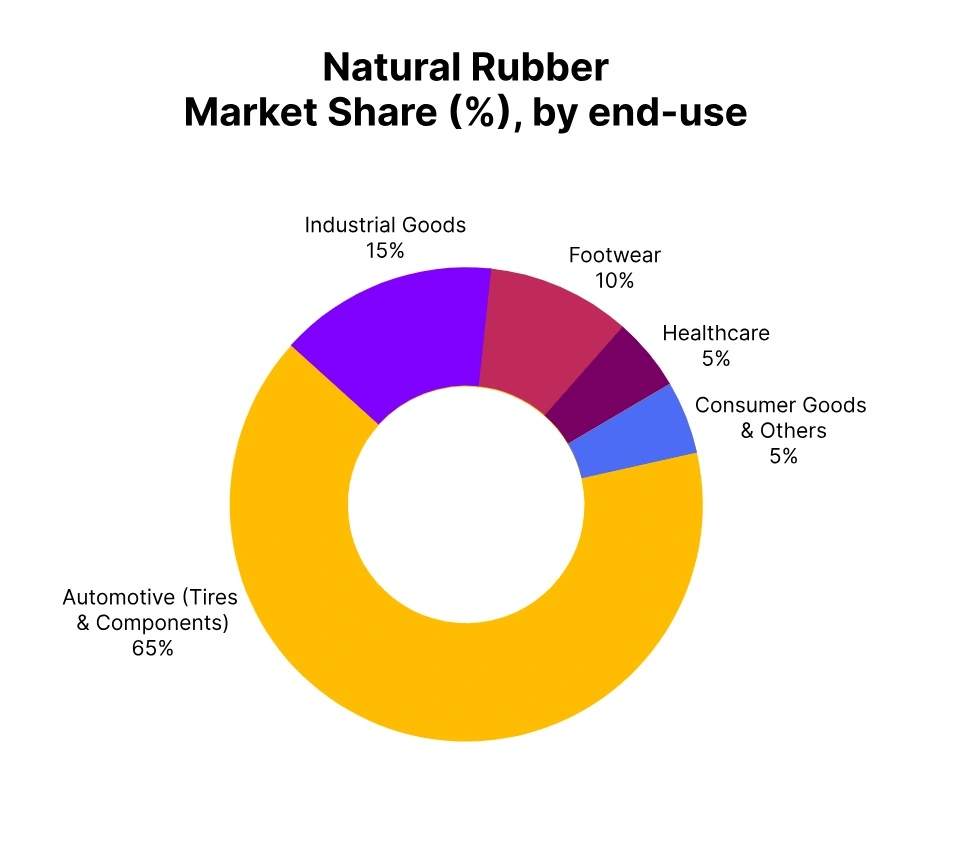
Natural Rubber Industrial Applications

natural-rubber-share-market-end-use

Historically, several events have caused significant fluctuations in Natural Rubber prices

  • China’s Economic Slowdown (2023-2024): A slowdown in China’s economy led to reduced demand for Natural Rubber, particularly in the automotive and manufacturing sectors, causing downward pressure on prices.
  • Southeast Asia Droughts (2022): Severe droughts in Thailand and Malaysia, major producers of Natural Rubber, reduced latex output, leading to a temporary supply shortage and increased prices globally.
  • COVID-19 Pandemic (2020-2021): Natural Rubber prices initially dropped due to reduced demand in industries like automotive, but as demand for medical gloves and packaging materials surged, prices rebounded sharply.
  • Thailand’s Export Restrictions (2019): To stabilize falling prices, Thailand, one of the largest producers of Natural Rubber, introduced export restrictions, leading to reduced global supply and a price increase.
  • El Niño Weather Event (2016): The El Niño phenomenon caused extreme weather conditions in Southeast Asia, impacting latex yields and reducing supply, which led to a significant spike in Natural Rubber prices.
  • China’s Stockpile Management (2015): China, a major consumer of Natural Rubber, adjusted its stockpile strategies in 2015, purchasing large quantities to build reserves. This increased demand, temporarily raising global prices.


These events highlight the sensitivity of the Natural Rubber market to environmental factors, geopolitical tensions, and shifts in demand, underscoring the importance of constant monitoring for procurement strategies.

Why Price Watch™?

Price Watch™ is your trusted resource for tracking global natural rubber price trends. Our platform delivers real-time data and expert analysis, offering deep insights into the key factors driving price fluctuations in the natural rubber market. By monitoring critical events such as geopolitical tensions, supply chain disruptions, and economic shifts, Price Watch™ keeps you fully informed of market dynamics.

In addition, Price Watch™ provides detailed forecasts and updates on production capacities, enabling you to anticipate market changes and make well-informed decisions. With Price Watch™, you gain a competitive edge in understanding all the elements that influence natural rubber prices worldwide. Stay ahead of the curve with Price Watch’s™ reliable, accurate, and timely natural rubber market data.

Track Price Watch's™ natural rubber price assessment on a weekly basis since 2015 onwards, along with short-term forecasts, and get access to the detailed report in a downloadable format.

Natural Rubber Market Price Trend published by Price Watch™ reflect prevailing spot market conditions, derived from independent research, verified trade inputs, and proprietary market intelligence as of the publication date. Prices are published on the specified Incoterm and represent indicative base market levels, exclusive of applicable taxes, VAT, duties, tariffs, and other statutory charges. Actual transaction values may vary depending on volume, credit terms, contractual structure, and other negotiated conditions. Market prices are inherently subject to volatility, liquidity dynamics, regulatory changes, and evolving trade activity. The information provided is for reference and benchmarking purposes only and does not constitute an offer, recommendation, or guarantee of transactional outcomes. Users should exercise independent commercial judgment and assess their specific contractual, regulatory, tax, and application requirements before making business decisions. Price Watch™ assumes no liability for decisions taken based on this information.

The price of Natural Rubber is influenced by several factors, including the supply of raw materials from major producing countries such as Thailand, Indonesia, and Malaysia. Fluctuations in demand from key industries like automotive, changes in weather conditions affecting rubber plantations, and geopolitical events also play a crucial role. Additionally, transportation costs, currency exchange rates, and government export policies can impact pricing trends for Natural Rubber.

Natural Rubber production is highly sensitive to weather conditions. Heavy rainfall, droughts, or disease outbreaks in major producing regions can reduce latex yield, leading to lower supply and higher prices. Conversely, favourable weather conditions typically result in higher production, which can lead to price stabilization or reductions. Procurement heads should monitor weather patterns closely to anticipate potential price fluctuations.

Natural Rubber prices can vary significantly across regions due to differences in production capacities, export policies, and transportation costs. Southeast Asia, being the largest producer, generally offers more competitive prices compared to other regions like Europe or North America. Procurement teams should consider sourcing from regions where prices are lower and account for logistics costs, tariffs, and local market conditions to optimize procurement strategies.

Natural rubber is an elastic material obtained from latex produced by rubber trees and is widely used in tires, automotive components, medical gloves, footwear, and industrial products. Its price directly impacts manufacturing costs across automotive, healthcare, and industrial sectors. Price Watch™ tracks natural rubber prices to help businesses stay informed about market movements and cost trends.

Natural rubber prices vary by region, grade, and product type such as TSR, RSS, or Latex. Prices are usually quoted per metric ton and fluctuate based on supply-demand balance, weather conditions, and export activity. Price Watch™ provides up-to-date price assessments across key global markets.

Natural rubber prices are influenced by weather conditions, plantation output, crude oil trends, synthetic rubber prices, automotive demand, and export-import flows. Seasonal tapping cycles, diseases affecting plantations, and regional trade dynamics also play a role. Recent trends indicate mixed movements depending on tire industry demand and supply availability.

Major consumers include tire manufacturers, automotive component producers, footwear companies, medical glove manufacturers, and industrial rubber goods producers. Tire manufacturing accounts for a significant share of global natural rubber demand. Price Watch™ tracks consumption trends across these sectors.

Natural rubber is produced mainly in Southeast Asian countries through the tapping of latex from rubber trees. The latex is processed into various grades such as TSR, RSS, and Latex concentrates for use in automotive, medical, and industrial applications worldwide.

Thailand is one of the largest exporters of natural rubber globally, followed by Indonesia, Vietnam, and Malaysia. Export volumes vary based on weather conditions, plantation productivity, domestic demand, and global pricing competitiveness. Price Watch™ monitors global trade flows and supply availability.

Overall supply is generally sufficient, but temporary tightness can occur due to heavy rainfall, plantation diseases, logistics disruptions, or increased automotive demand. Price Watch™ closely tracks supply-demand balances to highlight potential shortages or oversupply situations.

Natural rubber is available in multiple grades such as TSR, RSS, and Latex concentrates. Prices differ based on purity levels, processing methods, viscosity, contamination content, and end-use application requirements. Price Watch™ provides grade-wise price assessments for better market clarity.

When demand rises sharply often due to automotive growth or tire manufacturing activity prices may increase, inventories can tighten, and buyers may face limited spot availability. Price Watch™ captures these shifts in real time.

Synthetic rubber such as SBR is derived from petrochemicals and crude oil. Any increase in crude oil or synthetic rubber prices can encourage buyers to shift toward natural rubber, increasing demand and supporting higher prices. Price Watch™ analyses crude oil–natural rubber price correlations to explain cost movements.

Regional prices vary due to plantation output, weather conditions, export availability, freight rates, import duties, currency fluctuations, and domestic demand levels. Price Watch™ tracks regional differentials to highlight pricing gaps across markets.

Natural rubber price outlook depends on plantation conditions, weather patterns, tire industry demand, crude oil trends, and global economic conditions. Price Watch™ publishes regular forecasts projecting price direction over the next 12 months.

Yes. Reliable forecasts help buyers plan procurement, manage inventory, negotiate contracts, and control raw material costs. Price Watch™ forecasts support smarter purchasing and budgeting decisions.

Events such as heavy rainfall, floods, plantation diseases, trade policy changes, shipping disruptions, or geopolitical tensions can affect rubber production, export flows, and supply availability, leading to price fluctuations. Price Watch™ provides timely updates on such market-moving events.

Price Watch™ gathers data from producers, exporters, traders, processors, and buyers to publish transparent natural rubber price assessments, market reports, and forecasts, helping stakeholders stay ahead of market trends.