

P-phenylenediamine (6ppd) Price Trend and Forecast

Weekly Update
|
Historical Data Since 2015
|
Forecast for 2026
  • Commodity Pricing

p-phenylenediamine (6ppd) Price Trends by Country

cnChina
krSouth Korea
inIndia
idIndonesia
mxMexico
usUnited States
trTurkey

Global p-phenylenediamine (6ppd) Spot Market Prices, Trend Analysis and Forecast

Price-Watch’s most active coverage of P-Phenylenediamine (6PPD) price assessment:

  • Flakes, Melting Point=45% min FOB Shanghai, China
  • Flakes, Melting Point=45% min CIF JNPT (China), India
  • Pastille, Melting Point=46% min FOB Busan, South Korea
  • Pastille, Melting Point=46% min CIF JNPT (South Korea), India
  • Flakes, Melting Point=45% min CIF Jakarta (China), Indonesia
  • Flakes, Melting Point=45% min CIF Manzanillo (China), Mexico
  • Flakes, Melting Point=45% min CIF Houston (China), USA
  • Flakes, Melting Point=45% min CIF Mersin (China), Turkey

P-Phenylenediamine (6PPD) Price Trend Q3 2025

Overall, Q3 2025 saw continued price declines across all markets due to the ongoing supply-demand imbalance and cautious procurement strategies. The market remained oversupplied, with limited signs of recovery, particularly in key sectors like tire manufacturing. The 6PPD price in September 2025 is expected to reflect the continued softness in the market, with limited price recovery anticipated in the near future.

China

P-Phenylenediamine (6PPD) Export prices FOB Shanghai, China, Flakes, Melting Point=45% min.

In Q3 2025, the price of P-Phenylenediamine (6PPD) in China continued to decline as global demand remained weak. The 6PPD price trend in China showed a 3.77% decrease, with a price of 2140 USD/MT. Despite strong export volumes, particularly to key markets like India and Southeast Asia, the overall market faced downward pressure due to oversupply and limited demand recovery from the tire industry. Chinese manufacturers maintained competitive pricing strategies to retain market share, but this led to continued price reductions. The 6PPD price in September 2025 is expected to follow a similar trend, staying low as the market remains oversupplied with limited price recovery anticipated.

South Korea

P-Phenylenediamine (6PPD) Export prices FOB Tokyo, Japan, Pastille, Melting Point=46% min.

In Q3 2025, the price of P-Phenylenediamine (6PPD) in South Korea experienced a slight decline as demand from the rubber industry remained under pressure. The 6PPD price trend in South Korea showed a 1.75% decrease, with a price of 2227 USD/MT. While South Korean exports continued at a steady pace, competition from Chinese suppliers kept prices under control. The domestic demand for 6PPD remained relatively stable, but the broader rubber market was subdued. The 6PPD price in September 2025 is expected to remain aligned with Q3 levels, reflecting ongoing market challenges. Overall, Q3 saw modest price declines due to balanced supply and demand dynamics.

India

P-Phenylenediamine (6PPD) import prices CIF JNPT, India, Flakes, Melting Point=45% min

In Q3 2025, the price of P-Phenylenediamine (6PPD) in India faced a decline as market conditions remained weak. The 6PPD price trend in India showed a 2.85% decrease, with a price of 2220 USD/MT. The slowdown in tire and rubber industries, combined with global oversupply, put significant downward pressure on prices. Despite competitive offers from Chinese suppliers, demand in India remained subdued. The 6PPD price in September 2025 is expected to follow the Q3 trend, with limited recovery anticipated. Overall, Q3 2025 reflected a continuation of weak market sentiment with no significant price rebound expected in the near future.

India

P-Phenylenediamine (6PPD) import prices CIF JNPT, India, Pastille, Melting Point=46% min.

In Q3 2025, the price of P-Phenylenediamine (6PPD) in India showed a modest decline, driven by weak demand from key sectors like tire and rubber manufacturing. The 6PPD price trend in India reflected a 1.16% decrease, with a price of 2314 USD/MT. The subdued demand was largely due to ongoing market conditions, including oversupply and competitive pricing from South Korean suppliers. The 6PPD price in September 2025 was expected to follow the trend set in Q3, remaining under pressure as both supply and demand struggled to reach equilibrium. Overall, Q3 2025 saw limited price movement, with cautious purchasing strategies from importers.

Indonesia

P-Phenylenediamine (6PPD) import prices CIF Haiphong, Vietnam; Flakes, Melting Point=45% min.

In Q3 2025, the price of P-Phenylenediamine (6PPD) in Indonesia decreased as the market faced challenges due to weak industrial demand. The 6PPD price trend in Indonesia showed a 4.25% decrease, with a price of 2186 USD/MT. Demand from the tire and rubber industries continued to remain sluggish, leading to weaker price support. Competitive pricing from Chinese suppliers further pressured the market. The 6PPD price in September 2025 is expected to remain aligned with the Q3 decline, reflecting a continued oversupply situation. Overall, Q3 2025 saw a sharp drop in prices, with little market recovery in sight.

Mexico

P-Phenylenediamine (6PPD) import prices CIF Manzanillo, Mexico, Flakes, Melting Point=45% min.

In Q3 2025, the price of P-Phenylenediamine (6PPD) in Mexico saw a moderate decline as demand remained subdued. The 6PPD price trend in Mexico showed a 3.96% decrease, with a price of 2244 USD/MT. The reduction in demand from key sectors like automotive and rubber manufacturing, coupled with high import levels from China, put downward pressure on prices. Despite stable export levels, the 6PPD price in September 2025 is expected to mirror the Q3 decline, with limited price recovery. Q3 2025 indicated continued softness in the market, driven by oversupply and restrained consumption.

USA

P-Phenylenediamine (6PPD) import prices CIF Houston, USA, Flakes, Melting Point=45% min.

In Q3 2025, the price of P-Phenylenediamine (6PPD) in the USA continued to face downward pressure due to weak demand. The 6PPD price trend in the USA showed a 5.01% decrease, with a price of 2296 USD/MT. The tire and rubber industries struggled with low demand, which coupled with strong competition from Chinese suppliers, kept prices suppressed. The 6PPD price in September 2025 is expected to follow the Q3 trend, staying under pressure as the market remains oversupplied. Overall, Q3 2025 was marked by a continued decline, with no major signs of recovery in sight.

Turkey

P-Phenylenediamine (6PPD) import prices CIF Mersin, Turkey, Flakes, Melting Point=45% min.

In Q3 2025, the price of P-Phenylenediamine (6PPD) in Turkey experienced a slight decrease as market conditions remained weak. The 6PPD price trend in Turkey showed a 3.89% decrease, with a price of 2277 USD/MT. Despite steady demand from some industrial sectors, the overall market was influenced by low consumption and high inventory levels, leading to price declines. The 6PPD price in September 2025 is expected to reflect continued market weakness, with limited price recovery. Q3 2025 showed a softening market, driven by oversupply and stagnant demand from key consuming industries.
P-Phenylenediamine (6PPD) Price Trend Analysis: Q2 2025

Global:

In Q2 2025, the price of P-Phenylenediamine (6PPD) continued to decline in both China and South Korea. The 6PPD price trend in China showed a 4.08% decrease, with the price dropping to 2224 USD/MT. South Korea also saw a 5.53% decrease, with the price reaching 2267 USD/MT. The continued price pressure was driven by low demand from the tire sector and excess supply in both markets. While export activity remained steady, the market struggled to recover, keeping prices subdued. The 6PPD price in September 2025 is expected to follow the downward trend of Q2, with limited recovery anticipated. Overall, Q2 reflected a continuation of weak market conditions.

India:

In Q2 2025, the price of P-Phenylenediamine (6PPD) in India, imported from both China and South Korea, continued to decline due to weak market conditions. The 6PPD price trend in India showed a 4.89% decrease for Chinese imports, with a price of 2286 USD/MT, and a 6.87% decrease for South Korean imports, with a price of 2341 USD/MT. Despite efforts to stabilize the market, the oversupply situation continued to weigh heavily on pricing, with limited recovery in demand from the tire and rubber sectors. The 6PPD price in September 2025 is expected to follow the same downward trend, with competition from Chinese suppliers maintaining price pressure. Overall, Q2 2025 reflected weak pricing and cautious demand for both Chinese and South Korean imports.

Global:

In Q1 2025, the price of P-Phenylenediamine (6PPD) in both China and South Korea saw significant declines due to weak demand from key industrial sectors. The 6PPD price trend in China showed a 7.34% decrease, with the price reaching 2318 USD/MT. Similarly, South Korea experienced an 8.08% decline, with the price reaching 2399 USD/MT. The drop in prices was mainly driven by subdued demand from the tire and rubber industries, compounded by global oversupply. Competitive pricing from Chinese suppliers kept the market under pressure. The 6PPD price in September 2025 is expected to stay aligned with the Q1 decline as the market remains weak and oversupplied.

India:

In Q1 2025, the price of P-Phenylenediamine (6PPD) in India, imported from both China and South Korea, saw significant declines due to weak demand from the tire and rubber industries. The 6PPD price trend in India showed a 7.02% decrease for Chinese imports, with a price of 2403 USD/MT, and a 7.57% decrease for South Korean imports, with a price of 2514 USD/MT. The downturn was driven by oversupply in the market, high inventory levels, and cautious procurement strategies from local buyers. Competitive pricing from Chinese suppliers further pressured the market. The 6PPD price in September 2025 is expected to remain on a downward trajectory, with subdued demand from key sectors. Overall, Q1 2025 reflected a challenging market environment for both Chinese and South Korean imports.

P-Phenylenediamine (6PPD) Price Trend Analysis: Q4 2024

Global:

In Q4 2024, the price of P-Phenylenediamine (6PPD) in China and South Korea diverged sharply. The 6PPD price trend in China showed a 7.85% decrease, with a price of 2502 USD/MT, marking a significant decline as weak demand persisted in the tire and rubber industries, and oversupply continued to weigh heavily on the market. In South Korea, the 6PPD price trend showed a 5.37% decrease, with a price of 2610 USD/MT, as market conditions weakened due to reduced demand in the latter part of the year. The 6PPD price in September 2025 is expected to remain under pressure, with China continuing its decline and South Korea experiencing more modest pricing adjustments. Q4 2024 showed a steep drop in China and a moderate decline in South Korea.

India:

In Q4 2024, the price of P-Phenylenediamine (6PPD) in India saw a significant drop for Chinese imports, while South Korean imports experienced a decline after several quarters of growth. The 6PPD price trend in India for Chinese imports showed a 7.59% decrease, with a price of 2584 USD/MT, driven by continued market softness and weaker demand from key industries like rubber manufacturing. South Korean imports saw a 5.94% decrease, with the price dropping to 2720 USD/MT, as demand weakened towards the end of the year. The 6PPD price in September 2025 is expected to reflect the continued weakness in the market for both imports, with Chinese imports seeing the sharpest decline. Overall, Q4 2024 marked a period of price contraction for both sources.

Global:

In Q3 2024, the price of P-Phenylenediamine (6PPD) in both China and South Korea saw slight declines. The 6PPD price trend in China showed a 2.23% decrease, with a price of 2715 USD/MT, driven by continued weakness in demand from tire manufacturers and an oversupplied market. In contrast, South Korea saw a milder 1.77% increase, with a price of 2758 USD/MT, supported by steady demand in the tire and rubber industries. The 6PPD price in September 2025 is expected to follow a similar trend, with China experiencing further declines while South Korea maintains more moderate growth. Overall, Q3 2024 continued to show price pressure in China and moderate increases in South Korea.

India:

In Q3 2024, the price of P-Phenylenediamine (6PPD) in India continued to reflect a mixed performance between Chinese and South Korean imports. The 6PPD price trend in India for Chinese imports showed a 1.64% decrease, with a price of 2796 USD/MT, due to continued weak demand from the tire industry and global oversupply. In contrast, South Korean imports saw a 3.05% increase, with the price reaching 2892 USD/MT, supported by more resilient demand from the tire sector. The 6PPD price in September 2025 is expected to follow the trend of weak pricing for Chinese imports, while South Korean imports are expected to maintain moderate strength. Q3 2024 continued to show a contrast in price movements between the two sources.

Global:

In Q2 2024, the price of P-Phenylenediamine (6PPD) in China and South Korea continued to show contrasting trends. The 6PPD price trend in China showed a 1.84% decrease, with a price of 2777 USD/MT, reflecting ongoing weak demand from key industries like tires and rubber. Despite a slight easing in oversupply, market conditions remained soft. In South Korea, the 6PPD price trend showed a 3.51% increase, with a price of 2710 USD/MT, driven by strong demand and a tight supply situation. The 6PPD price in September 2025 is expected to follow the same trend, with China continuing its downward trajectory while South Korea shows moderate growth. Q2 2024 continued to reflect price pressure in China and moderate stability in South Korea.

India:

In Q2 2024, the price of P-Phenylenediamine (6PPD) in India continued its downward trajectory for Chinese imports while South Korean imports showed growth. The 6PPD price trend in India for Chinese imports showed a 1.54% decrease, with a price of 2843 USD/MT, driven by sluggish demand in key industries like tire manufacturing and continued oversupply. South Korean imports, however, saw a 3.75% increase, with the price reaching 2806 USD/MT, supported by stronger demand and more stable pricing in the market. The 6PPD price in September 2025 is expected to remain on a downward trend for Chinese imports, while South Korean imports might stabilize. Overall, Q2 2024 reflected a divergence in pricing trends.

Global:

In Q1 2024, the price of P-Phenylenediamine (6PPD) in China and South Korea showed diverging trends. The 6PPD price trend in China showed a 2.62% decrease, with the price reaching 2829 USD/MT, driven by weak demand and an oversupply in the market. The slowdown in the tire and rubber industries in China continued to suppress prices. Conversely, South Korea experienced a 2.71% increase, with a price of 2618 USD/MT. This increase was driven by steady demand and a stable supply chain. The 6PPD price in September 2025 is expected to reflect these trends, with China continuing to face price pressure and South Korea maintaining a more stable outlook. Overall, Q1 2024 reflected a challenging market for China and moderate stability for South Korea.

India:

In Q1 2024, the price of P-Phenylenediamine (6PPD) in India, imported from both China and South Korea, showed mixed results. The 6PPD price trend in India for Chinese imports saw a 1.44% decrease, with a price of 2887 USD/MT, driven by soft demand and oversupply in the market. Conversely, South Korean imports saw a 4.71% increase, with the price reaching 2705 USD/MT, supported by relatively stronger demand in the tire industry. The 6PPD price in September 2025 is expected to remain under pressure for Chinese imports due to continued market softness, while South Korean imports may see moderate stability. Overall, Q1 2024 showed a contrasting performance between the two sources.

Technical Specifications of P-phenylenediamine (6ppd) Price Trends

Product Description:

6PPD (N-(1,3-Dimethylbutyl)-N′-phenyl-p-phenylenediamine) is an organic chemical primarily used as an antioxidant and antiozonant in the rubber industry, especially for tires, to protect against cracking caused by ozone and oxidation. While it protects rubber products like tires, conveyor belts, and hoses, its transformation product, 6PPD quinone, is highly toxic to certain aquatic animals, most notably coho salmon

Identifiers and Classification:

  • CAS No – 793-24-8
  • HS Code – 29215130
  • Molecular Formula – C₁₈H₂₄N₂
  • Molecular Weight (in gm/mol) – 268.4


P-Phenylenediamine (6PPD) Synonyms:

  • Antioxidant 6PPD
  • N-(1,3-Dimethylbutyl)-p-phenylenediamine


P-Phenylenediamine (6PPD) Grades Specific Price Assessment:

  • P-Phenylenediamine (6PPD) Flakes, Melting Point=45% min
  • P-Phenylenediamine (6PPD) Pastille, Melting Point=46% min


P-Phenylenediamine (6PPD) Global Trade and Shipment Terms

  • Quotation Terms (Product & Country Specific): 25-28 MT
  • Packaging Type (Product & Country Specific): 25 Kg Bag


Incoterms Referenced in P-PHENYLENEDIAMINE (6PPD) Price Reporting

Shipping Term  Location  Definition 
FOB China  Shanghai, China  P-Phenylenediamine (6PPD) Export price from China 
FOB South Korea  Busan, South Korea  P-Phenylenediamine (6PPD) Export price from South Korea 
CIF JNPT (South Korea)  JNPT, India  P-Phenylenediamine (6PPD) import price in India from South Korea 
CIF Jakarta (China)  Jakarta, Indonesia  P-Phenylenediamine (6PPD) import price in Indonesia from China 
CIF Manzanillo (China)  Manzanillo, Mexico  P-Phenylenediamine (6PPD) import price in Mexico from China 
CIF Houston (China)  Houston, USA  P-Phenylenediamine (6PPD) import price in USA from China 
CIF Mersin (China)  Mersin, Turkey  P-Phenylenediamine (6PPD) import price in Turkey from China 

*Quotation Terms refers to the quantity range specified for the P-Phenylenediamine (6PPD) being quoted or offered in a commercial transaction.

**Packaging Type refers to standard packaging size commonly used for P-Phenylenediamine (6PPD) packing, ease of handling, transportation, and storage in industrial and commercial applications.

Key P-Phenylenediamine (6PPD) Manufacturers and their brands

Brand  Manufacturer 
KUMANOX 13  Kumho Petrochemical Co Ltd 
SIRANTOX 6 PPD  Sennics Co Ltd 

P-phenylenediamine (6ppd) Industrial Applications

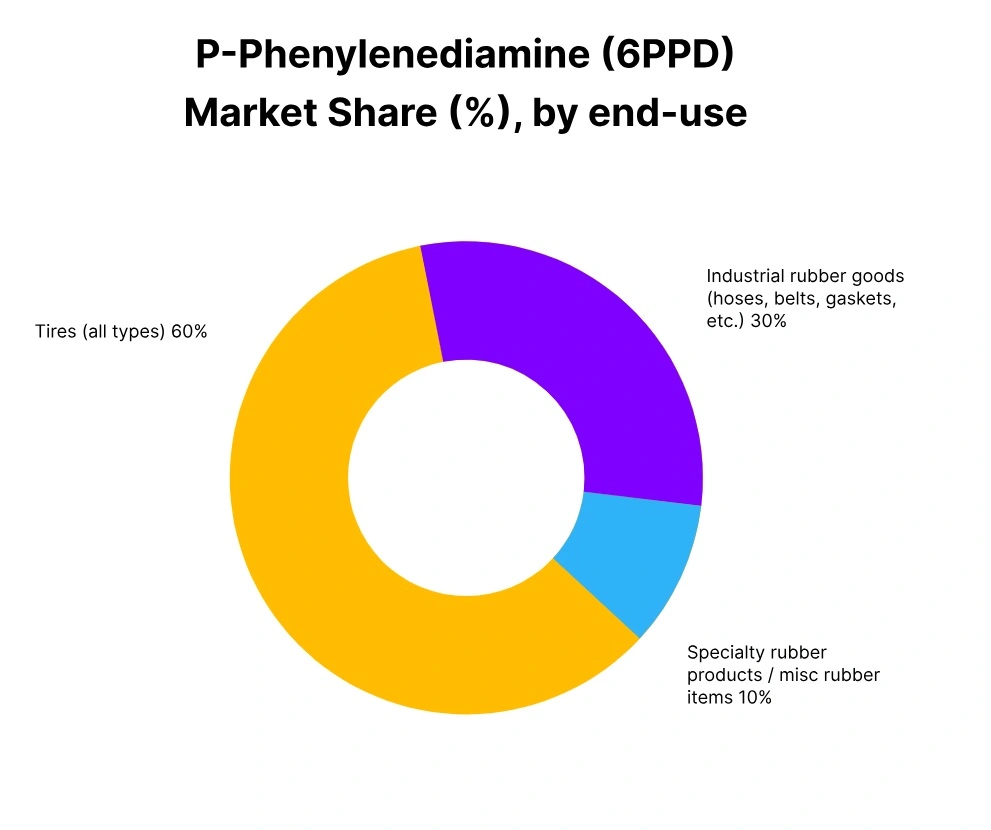
6ppd market share end use

Historically, several events have caused significant fluctuations in P-phenylenediamine (6ppd) prices

Why PriceWatch?

PriceWatch is your trusted resource for tracking global p-phenylenediamine (6ppd) price trends. Our platform delivers real-time data and expert analysis, offering deep insights into the key factors driving price fluctuations in the p-phenylenediamine (6ppd) market. By monitoring critical events such as geopolitical tensions, supply chain disruptions, and economic shifts, PriceWatch keeps you fully informed of market dynamics.

In addition, PriceWatch provides detailed forecasts and updates on production capacities, enabling you to anticipate market changes and make well-informed decisions. With PriceWatch, you gain a competitive edge in understanding all the elements that influence p-phenylenediamine (6ppd) prices worldwide. Stay ahead of the curve with PriceWatch’s reliable, accurate, and timely p-phenylenediamine (6ppd) market data.

Track PriceWatch's p-phenylenediamine (6ppd) price assessment on a weekly basis since 2015 onwards, along with short-term forecasts, and get access to the detailed report in a downloadable format.

Data Collection and Sources​

Event Tracking and Impact Analysis​

Production Capacity and Supply Analysis

Demand Forecasting

Pricing Model Development

Reporting and Client Support

P-phenylenediamine (6ppd) Market Price Trend provided by PriceWatch is a base price and excludes VAT/Taxes, discounts, or offers. The information herein is accurate to the best of our knowledge as of the date indicated and is provided solely for the convenience of our customers as a reference for p-phenylenediamine (6ppd). PriceWatch disclaims any warranties or representations regarding the accuracy of results derived from this information. It is the sole responsibility of the user to assess the suitability of the product for their specific application. This document does not constitute an endorsement to use the product in violation of any applicable patent rights.