Para Nitro Chloro Benzene (pncb) Price Trend and Forecast

Weekly Update
|
Historical Data Since 2015
|
Forecast for 2026
  • Commodity Pricing

para nitro chloro benzene (pncb) Price Trends by Country

inIndia
cnChina

Global para nitro chloro benzene (pncb) Spot Market Prices, Trend Analysis and Forecast

𝐏𝐫𝐢𝐜𝐞 𝐖𝐚𝐭𝐜𝐡™ provides price assessments for Para Nitro Chloro Benzene across top trading regions:

Asia Pacific

  • Para Nitro Chloro Benzene (PNCB) Industrial Grade (>99%) FOB Shanghai, China
  • Para Nitro Chloro Benzene (PNCB) Industrial Grade (>99%) CIF Nhava Sheva (China), India
  • Para Nitro Chloro Benzene (PNCB) Industrial Grade (>99%) Ex-Mumbai, India

Para Nitro Chloro Benzene Price Trend Q4 2025

In Q4 2025, Para Nitro Chloro Benzene (PNCB) prices declined notably in key Asian markets, with quarterly changes in the 8% to 9% range amid high inventories, subdued dyes/pharma demand, and ample monochlorobenzene feedstock. China’s FOB Shanghai led the softening due to weak export inquiries, while India’s CIF Nhava Sheva followed on competitive Chinese supplies. Downstream sectors like pigments and agrochemicals showed cautious buying, with operating rates ~60% reflecting overcapacity. Year-end saw minor dips while the outlook for Q1 2026 suggests stabilization via controlled output and regional consumption recovery.

China: Para Nitro Chloro Benzene Export prices FOB Shanghai, China, Grade- Industrial Grade (>99%)

In Q4 2025, Para Nitro Chloro Benzene price in China softened significantly amid oversupply and weak export demand. Para Nitro Chloro Benzene price trend in China recorded a 9.20% decline compared to Q3, with Shanghai prices ranged between USD 780-845 per metric ton. High domestic inventories pressured producers including Bayi Chemical and Sinopec Nanjing. Para Nitro Chloro Benzene prices in December 2025 went down0.09%, despite minor restocking. Chlorobenzene feedstock remained cheap, sustaining low costs. Dyes and pharma sectors absorbed limited volumes. Operational discipline curbed deeper falls. Logistics to India held steady and regional dominance persists with cautious Q1 recovery.

India: Para Nitro Chloro Benzene Import prices CIF Nhava Sheva from China, India, Grade- Industrial Grade (>99%)

In Q4 2025, Para Nitro Chloro Benzene price in India weakened under competitive Chinese imports and soft domestic sentiment. Para Nitro Chloro Benzene price trend in India declined 8.42% from Q3, with Nhava Sheva prices ranged between USD 810-900 per metric ton. Local dye makers like Aarti Industries sourced steadily amid high arrivals. Para Nitro Chloro Benzene prices in December 2025 fell 1.69%, reflecting ample stocks. Port efficiencies at Nhava Sheva aided flows. Agrochem and pigments demand stabilized gradually. Importer economics benefited from rupee parity.

Para Nitro Chloro Benzene (PNCB) Price Trend Analysis: Q4 2025

In Q3 2025, the global Para Nitro Chloro Benzene (PNCB) market witnessed a stable to slightly bearish outlook, shaped by steady freight conditions, consistent feedstock availability, particularly Chlorobenzene and Nitric Acid, and cautious buying interest across key regions. While import activity into South Asia remained active under CIF terms, export demand from China showed signs of moderation due to sufficient inventory levels and softer overseas inquiries.

Manufacturers maintained balanced production rates to avoid stock accumulation, contributing to overall market stability. The para nitro chloro benzene (PNCB) price trend reflected regional dynamics, with pricing pressure observed in some markets, while others remained supported by steady consumption and logistical efficiency.

China: Para nitro chloro benzene (PNCB) Export prices FOB Shanghai, China, Industrial Grade (>99%).

In Q3 2025, The Para Nitro Chloro Benzene prices trend in China showed a noticeable decline driven by weaker procurement activity and sufficient domestic inventories. Downstream industries were caution in bulk purchases, as consistent availability of feedstocks like Chlorobenzene and Nitric Acid kept production costs under control. Despite steady production rates by local manufacturers, limited export momentum influenced overall pricing sentiment.

The PNCB price trend in China dropped by 8.33%, with FOB prices assessed in the range of USD 815–940 per metric ton. Inquiries remained quiet as buyers monitored global trends and awaited direction on price recovery. In September 2025 Para Nitro Chloro Benzene (PNCB) prices reflecting a decline of 7.29% from the previous month. The fall in offered prices was largely driven by subdued international inquiries as global buyers showed reduced interest amid high inventory levels.

India: Para Nitro Chloro Benzene Import prices CIF Nhava Sheva, India, Industrial Grade (>99%).

In Q3 2025, The Para nitro chloro benzene (PNCB) prices trend in India under CIF Nhava Sheva terms from China to India remained firm, putting slight pressure on import cost assessments. The Para Nitro Chloro Benzene price trend in India showed a slight decline, supported by steady demand from downstream sectors and consistent offtake.

The number of inquiries remained stable across the quarter, specifically from traders maintaining balanced inventory levels. Although domestic supply was adequate, Indian buyers continued to rely on imports to meet flexible sourcing needs.

According to PriceWatch, the PNCB price trend in India fell by -3.00%, with CIF prices ranging between USD 885–970 per metric ton. FOB offers from China were competitively priced, helping maintain a stable trade flow into Indian ports. In September 2025 Para Nitro Chloro Benzene (PNCB) prices decreasing by 4.31% monthly. The decline in offered prices originated from a softer FOB trend in India, where spot availability remained sufficient to cater to both domestic and export requirements.

According to the PriceWatch, In Q2 2025, Para Nitro Chloro Benzene (PNCB) prices in China rose to USD 964.25 per metric ton, reflecting a quarterly increase of +1.50%. This moderate growth was supported by steady demand from the agricultural chemical and dye intermediate sectors. Despite ongoing global economic uncertainties and cautious export activity, China’s downstream chemical industries maintained stable consumption levels.

Increased production of pesticides and specialty chemicals, particularly ahead of the peak agricultural season, contributed to stronger offtake in key regions. Additionally, seasonal maintenance shutdowns at certain manufacturing facilities temporarily tightened supply, supporting price resilience.

Overall, Q2 closed with a mild upward pricing trend, backed by consistent downstream demand and supply-side constraints. Moreover, fluctuations in feedstock costs, notably benzene and chlorine, influenced PNCB pricing dynamics amid variable crude oil market conditions. 

In Q2 2025, according to PriceWatch, Para Nitro Chloro Benzene (PNCB) prices in India (Ex-Mumbai) averaged USD 1014.07 per metric ton, reflecting a significant quarterly decline of 7.30%. This sharp drop was largely driven by surplus availability in the domestic market, with local producers maintaining steady output amid lacklustre demand. Competitive pricing pressure intensified as sellers aimed to clear older inventories, leading to more aggressive discounting.

Weak procurement activity from key downstream sectors such as dyes, agrochemicals, and pharmaceuticals further compounded the bearish trend. Additionally, limited export inquiries and subdued global buying, especially from the Asia-Pacific region, contributed to the price softness.

With no immediate signs of tightness in supply and buyers exercising restraint, the market remained under pressure throughout the quarter. Going forward, procurement may remain need based as buyers monitor for further downside or any signs of market stabilization before stepping in with larger volumes. 

In Q1 2025, the Para Nitro Chloro Benzene (PNCB) market in China continued on a stable to slightly declining trend, with prices averaging $950/MT, down by 3.85% from Q4 2024. This dip was mainly due to an abundant global supply and moderate demand growth from key sectors such as agrochemicals, pharmaceuticals, and dyes. The balance in supply-demand dynamics limited any sharp price movement, keeping the market steady despite subdued downstream buying. 

In Q1 2025, PNCB in India (Ex-Mumbai) was priced at $1085.23/MT, reflecting a 4.76% decline from Q4 2024. Domestic buying stayed moderate as many downstream players awaited fiscal policy announcements before resuming large-scale procurement.

The availability of feedstocks improved, and production levels normalized, easing cost pressures. While a demand pickup is anticipated in Q2, the market for now remains stable without significant volatility expected in the near term. 

Para Nitro Chloro Benzene (PNCB) Price Trend Analysis: Q4 2024

During Q4 2024, PNCB prices in China declined moderately to $988/MT, reflecting a 4.82% drop from Q3. This downward trend was supported by ample production volumes and a plateau in consumption across major end-use industries. While the agrochemical, pharma, and dyes sectors maintained consistent demand, there was no significant growth, leading to softening prices amid well-stocked inventories. 

During Q4 2024, the average price for PNCB in India (Ex-Mumbai) dropped to $1139.50/MT, showing a 6.26% decrease from Q3. Although October’s festive season provided a short-lived demand push, most buyers had already stocked up at the end of monsoon, limiting new orders. The availability of imported material at competitive prices also pressured local suppliers. Meanwhile, export demand remained inconsistent due to global holiday slowdowns and reduced year-end industrial activity overseas. 

In Q3 2024, the Chinese PNCB market saw a sharper decline, with prices falling by 9.82% to $1038/MT compared to Q2. This was largely the result of excess market supply and reduced activity in the dye and pigment segments. Although agrochemical and pharma demand remained steady, weaker exports and continued global logistical normalization led to restrained buying momentum. 

In Q3 2024, PNCB in India (Ex-Mumbai) saw prices fall further to $1215.53/MT, down by 8.15% from the previous quarter. The decline was primarily caused by weaker demand in textile dyeing and agrochemical sectors. Monsoon-related disruptions also hampered operations in chemical hubs, limiting domestic buying. With abundant supply and adequate inventories, buyers waited for more favourable pricing before placing new orders. 

In Q2 2024, PNCB prices in China experienced a 4.56% drop to $1151/MT. This correction came as raw material availability improved, and logistics disruptions eased. Despite the price dip, demand from agrochemical and dye manufacturers remained healthy. Additionally, increased supply from producers in India and South Korea helped stabilize market conditions and relieved pressure from earlier tightness. 

Moving into Q2 2024, prices for PNCB in India (Ex-Mumbai) slightly corrected to $1323.41/MT, marking a 3.88% dip from Q1. The market saw steady raw material availability and improved production rates, leading to a stabilization in prices. Export demand, particularly from Southeast Asia, declined during this quarter, and pre-monsoon industrial slowdown further reduced domestic consumption. 

In Q1 2024, the PNCB market in China rose by 7.20%, with prices reaching $1206/MT. This increase was mainly driven by revived industrial activity, especially in the chemical manufacturing sector. Strong demand from agrochemical, dye, and pharmaceutical industries, coupled with supply chain bottlenecks and rising freight costs, contributed to the upward trend during this period. 

In Q1 2024, the market for PNCB in India (Ex-Mumbai) witnessed a strong upward trend, with prices averaging $1376.79/MT, reflecting a 10.12% increase from the previous quarter. This rise was fueled by higher demand from dyes, pigments, and agrochemical sectors. Post-holiday manufacturing recovery, combined with tight supply of Chlorine and Nitric Acid, supported the price increase. The overall sentiment remained strong due to an active start to the year and limited material availability. 

Technical Specifications of Para Nitro Chloro Benzene (pncb) Price Trends

Product Description:

Para Nitro Chloro Benzene is an aromatic chemical compound with the molecular formula C6H4ClNO2. It is a yellow to brownish crystalline solid that is primarily used in the production of various chemicals, including Agrochemicals, Pharmaceuticals, and Dyes. Para Nitro Chloro Benzene is synthesized through the Nitration and Chlorination of Benzene, typically resulting in a compound where the nitro group (-NO2) and the chlorine atom (-Cl) are positioned on the opposite sides of the benzene ring, hence the term “para.”

Identifiers and Classification:

  • CAS No – 100-00-5
  • HS Code – 29049950
  • Molecular Formula – C6H4ClNO2
  • Molecular Weight[g/mol] -157.5545 g/mol


Para Nitro Chloro Benzene Synonyms:

  • p-chloronitrobenzene
  • 1-chloro-4-nitrobenzene
  • 4-chloronitrobenzene
  • 4-nitro-1-chlorobenzene
  • PNCB
  • p-nitrophenyl chloride


Para Nitro Chloro Benzene Grades Specific Price Assessment:

  • Industrial Grade (>99%)


Para Nitro Chloro Benzene Global Trade and Shipment Terms

  • Quotation Terms (Product & Country Specific): 25-30 MT
  • Packaging Type (Product & Country Specific): ISO Tank


Incoterms Referenced in Para Nitro Chloro Benzene Price Reporting

Shipping Term  Location  Definition 
FOB Shanghai  Shanghai, China  PNCB Export Price from China 
CIF Nhava Sheva (China)  Nhava Sheva, India  PNCB Import price in India from China 

*Quotation Terms refers to the quantity range specified for the Para Nitro Chloro Benzene being quoted or offered in a commercial transaction.

**Packaging Type refers to standard packaging size commonly used for Para Nitro Chloro Benzene packing, ease of handling, transportation, and storage in industrial and commercial applications.


Key Para Nitro Chloro Benzene Manufacturers

Manufacturer 
Anhui Bayi Chemical Industry Co., Ltd. 
Sinopec Nanjing 
Anhui Guangxin 
Aarti Industris 

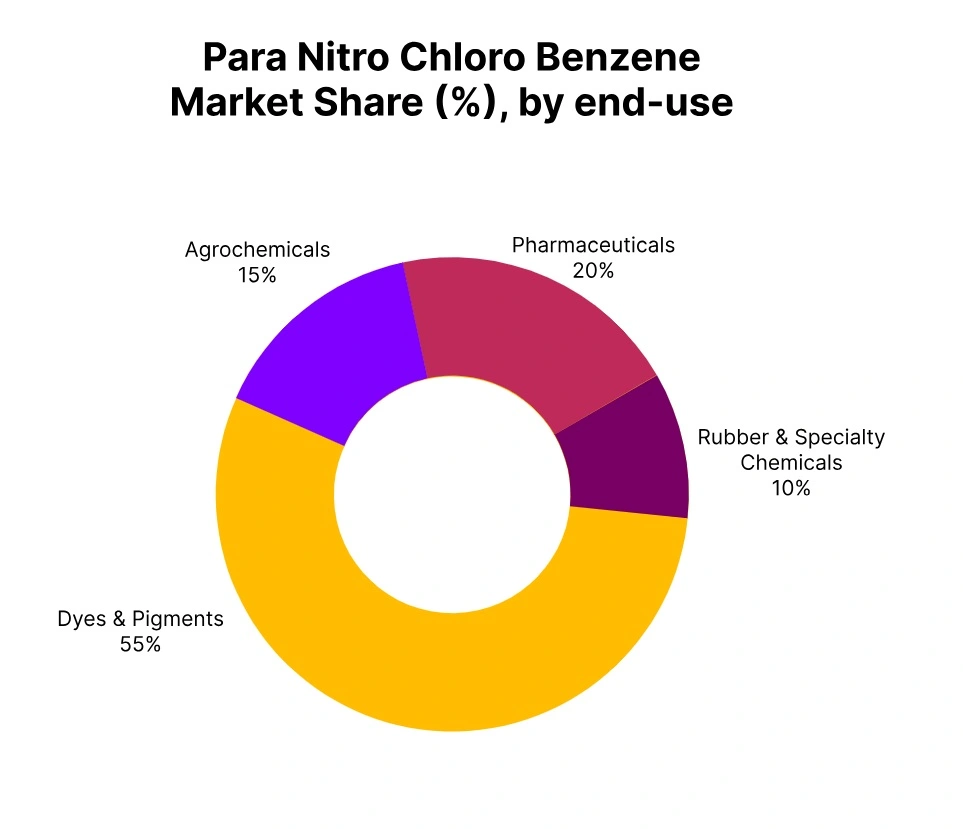
Para Nitro Chloro Benzene (pncb) Industrial Applications

para-nitro-chloro-benzene-market-share-end-use

Historically, several events have caused significant fluctuations in Para Nitro Chloro Benzene (pncb) prices

  • Russia-Ukraine Conflict (2022-Present): The ongoing conflict has led to a significant disruption in global supply chains, especially impacting the chemicals and manufacturing sectors. Energy prices have surged due to the instability in Eastern Europe, increasing production costs for Para Nitro Chloro Benzene. In addition, the war has caused logistical bottlenecks, especially in key production regions like China, leading to delays and transportation issues that have added upward pressure on prices globally. 
  • Global Supply Chain Disruptions (2021-Present): Following the COVID-19 pandemic, numerous supply chain challenges continue to affect the availability of Para Nitro Chloro Benzene. Shipping delays, port congestion, and raw material shortages have impacted the ability of manufacturers to meet demand. As a result, there has been a gradual increase in the price of PNCB due to limited supply, particularly in regions like APAC, where demand from industries like pharmaceuticals, agrochemicals, and dyes remains strong. 
  • COVID-19 Pandemic (2020): During the pandemic, demand for many industrial chemicals, including Para Nitro Chloro Benzene, dropped due to the economic slowdown. However, as the global economy started to recover, particularly in industries like agriculture and pharmaceuticals, there was a rapid surge in demand, contributing to a price spike in PNCB. The continued recovery in 2021 and 2022 kept demand for PNCB high, maintaining upward pressure on prices, especially in the APAC region. 
  • Geopolitical Tensions (2018-2019): Trade disputes, particularly between China and the United States, created significant uncertainty in global markets, which also extended to the Para Nitro Chloro Benzene market. Tariffs and changes in trade policies caused disruptions in the supply of raw materials and products, impacting the price of PNCB. The effect was felt particularly in major manufacturing regions like China and India, where PNCB is widely used in industrial applications. 
  • Asian Demand Surge (2015-2017): A surge in industrial demand, particularly in Asia, led to increased demand for specialty chemicals like Para Nitro Chloro Benzene. China, as one of the largest consumers of PNCB, witnessed rapid growth in industries such as pharmaceuticals, textiles, and agrochemicals, further driving the demand. This resulted in higher prices for Para Nitro Chloro Benzene during this period, as supply struggled to keep pace with growing demand. 

Why Price Watch™?

Price Watch™ is your trusted resource for tracking global para nitro chloro benzene (pncb) price trends. Our platform delivers real-time data and expert analysis, offering deep insights into the key factors driving price fluctuations in the para nitro chloro benzene (pncb) market. By monitoring critical events such as geopolitical tensions, supply chain disruptions, and economic shifts, Price Watch™ keeps you fully informed of market dynamics.

In addition, Price Watch™ provides detailed forecasts and updates on production capacities, enabling you to anticipate market changes and make well-informed decisions. With Price Watch™, you gain a competitive edge in understanding all the elements that influence para nitro chloro benzene (pncb) prices worldwide. Stay ahead of the curve with Price Watch’s™ reliable, accurate, and timely para nitro chloro benzene (pncb) market data.

Track Price Watch's™ para nitro chloro benzene (pncb) price assessment on a weekly basis since 2015 onwards, along with short-term forecasts, and get access to the detailed report in a downloadable format.

Para Nitro Chloro Benzene (pncb) Market Price Trend published by 𝐏𝐫𝐢𝐜𝐞 𝐖𝐚𝐭𝐜𝐡™ reflect prevailing spot market conditions, derived from independent research, verified trade inputs, and proprietary market intelligence as of the publication date. Prices are published on the specified Incoterm and represent indicative base market levels, exclusive of applicable taxes, VAT, duties, tariffs, and other statutory charges. Actual transaction values may vary depending on volume, credit terms, contractual structure, and other negotiated conditions. Market prices are inherently subject to volatility, liquidity dynamics, regulatory changes, and evolving trade activity. The information provided is for reference and benchmarking purposes only and does not constitute an offer, recommendation, or guarantee of transactional outcomes. Users should exercise independent commercial judgment and assess their specific contractual, regulatory, tax, and application requirements before making business decisions. 𝐏𝐫𝐢𝐜𝐞 𝐖𝐚𝐭𝐜𝐡™ assumes no liability for decisions taken based on this information.

The pricing of Para Nitro Chloro Benzene is influenced by several factors, including raw material costs, production costs, and global supply-demand dynamics. Key raw materials used in the production of Para Nitro Chloro Benzene, such as Chlorobenzene and Nitrobenzene, significantly affect its cost. Geopolitical events, such as trade disputes or sanctions, can disrupt the supply chain and impact prices. Additionally, fluctuations in crude oil prices and energy costs also affect the overall production costs, leading to price variations. Demand from key industries, such as pharmaceuticals, agrochemicals, and dyes, further influences pricing trends.

Procurement heads can forecast future price trends of Para Nitro Chloro Benzene by closely monitoring global supply chains, production capacities, and economic conditions. Keeping track of the prices of raw materials like Chlorobenzene and Nitrobenzene, which are essential for its manufacturing, can help predict price movements. Additionally, geopolitical events and changes in regulations can provide early indicators of market shifts. Regularly analyzing industry reports, such as those provided by chemical market intelligence platforms, and staying updated on trends in demand from key sectors like agrochemicals and pharmaceuticals can assist in anticipating price fluctuations.

Market conditions in China and India, as major producers and consumers of Para Nitro Chloro Benzene, have a significant impact on its global pricing. These countries’ production capacity, economic growth, and demand from key industries like pharmaceuticals, agrochemicals, and dyes influence global prices. For example, if there is a surge in demand for agrochemicals in India or pharmaceuticals in China, it can drive up the prices of Para Nitro Chloro Benzene due to increased production and consumption. Additionally, any disruptions in manufacturing due to labor strikes, factory shutdowns, or regulatory changes in these regions can lead to supply shortages, which often results in price hikes in the global market.

Para-Nitro Chloro Benzene (PNCB) is a key aromatic chemical used as an intermediate in the production of dyes, pharmaceuticals, agrochemicals, and specialty chemicals. It is essential for manufacturing herbicides, insecticides, rubber chemicals, and azo dyes. PNCB prices directly affect the cost of these downstream products, making it a critical component of chemical supply chains and discussions on efficient and sustainable chemical production. 𝐏𝐫𝐢𝐜𝐞 𝐖𝐚𝐭𝐜𝐡™ tracks these prices to help businesses and consumers understand and stay updated with the market trends.

Para Nitro Chloro Benzene (PNCB) prices vary by grade and region. Prices are typically quoted per metric ton and change based on supply, demand, and energy costs. 𝐏𝐫𝐢𝐜𝐞 𝐖𝐚𝐭𝐜𝐡™ provides real-time price assessments across different global markets to help buyers and sellers make informed decisions.

Para-Nitro Chloro Benzene (PNCB) prices fluctuate with changes in global supply and demand, driven by production capacity, feedstock availability, and manufacturing cycles. Logistics, trade policies, and currency movements also influence pricing. Demand from the dye, pharmaceutical, and agrochemical industries, along with regulatory compliance and safety standards, further shape the market. Supply disruptions, plant shutdowns, and broader economic conditions add volatility, while long-term demand remains supported by industrial and agrochemical growth.

The largest buyers of Para-Nitro Chloro Benzene (PNCB) are dye manufacturers and pharmaceutical companies, followed by agrochemical producers making herbicides and insecticides. Additional demand comes from rubber chemical manufacturers, specialty chemical producers, and industrial intermediates suppliers, with trading companies and distributors also purchasing significant volumes for supply to global chemical and agrochemical markets. 𝐏𝐫𝐢𝐜𝐞 𝐖𝐚𝐭𝐜𝐡™ analyses demand patterns across all these industries.

Para-Nitro Chloro Benzene (PNCB) is produced through chemical manufacturing rather than agricultural processes. It is synthesized by nitrating chlorobenzene using a controlled reaction with nitric acid, typically in industrial chemical plants, and then purified before being supplied to dye, pharmaceutical, and agrochemical manufacturers.

Para-Nitro Chloro Benzene (PNCB) trade is driven by production capacity, chemical plant output, and access to global dye, pharmaceutical, and agrochemical markets. Major producers include India, China, and select European chemical hubs, while key importing and trading centers are countries with large dye, pharmaceutical, and agrochemical industries, such as the United States, Germany, and Japan. Trade volumes fluctuate based on plant operating rates, feedstock availability, regulatory compliance, environmental and safety standards, and global industrial demand. 𝐏𝐫𝐢𝐜𝐞 𝐖𝐚𝐭𝐜𝐡™ tracks production levels, export flows and trade patterns to help businesses understand global supply chains and identify sourcing opportunities.

Supply generally matches demand, but regional shortages can occur due to plant shutdowns, transportation problems, or sudden spikes in industrial activity. 𝐏𝐫𝐢𝐜𝐞 𝐖𝐚𝐭𝐜𝐡™ monitors these supply-demand imbalances to alert the market about potential shortages or surpluses.

Para-Nitro Chloro Benzene (PNCB) prices vary by purity and grade, with high-purity, industrial-grade PNCB commanding a premium. Premium grades attract higher prices due to their suitability for dyes, pharmaceuticals, and agrochemical production, consistent quality, and compliance with safety standards. Lower-grade or technical PNCB trades at a discount as it may require further processing or is limited to less demanding industrial applications. 𝐏𝐫𝐢𝐜𝐞 𝐖𝐚𝐭𝐜𝐡™ provides separate price assessments for each grade to ensure market transparency.

When Para-Nitro Chloro Benzene (PNCB) demand rises sharply, often due to increased dye, pharmaceutical, or agrochemical production, prices typically increase. Suppliers may prioritize long-term or key industrial buyers, while others face tighter availability, longer lead times, or higher premiums to secure high-purity or specification-grade PNCB supplies. 𝐏𝐫𝐢𝐜𝐞 𝐖𝐚𝐭𝐜𝐡™ captures these market dynamics in real-time.

Processing and logistics are among the largest cost components for Para-Nitro Chloro Benzene (PNCB). When feedstock, energy, or transportation costs rise, producers and traders often pass these costs on to buyers, driving up PNCB prices. This is why prices in regions with lower production or transport costs tend to be more competitive, a correlation that 𝐏𝐫𝐢𝐜𝐞 𝐖𝐚𝐭𝐜𝐡™ analyses in its price assessments & market reports.

Para-Nitro Chloro Benzene (PNCB) prices vary by region based on production capacity, feedstock availability, transportation costs, regulatory requirements, and local demand from dye, pharmaceutical, and agrochemical industries. Regions with limited supply, higher logistics expenses, or stricter quality and safety standards typically see higher prices due to the added costs of compliance and distribution. 𝐏𝐫𝐢𝐜𝐞 𝐖𝐚𝐭𝐜𝐡™ tracks prices across all major regions to highlight these differences.

The Para-Nitro Chloro Benzene (PNCB) market outlook depends on factors such as growth in dye, pharmaceutical, and agrochemical demand, feedstock and crude chemical availability, production capacity and plant operating rates, logistics and transportation costs, and quality, safety, and regulatory compliance requirements. 𝐏𝐫𝐢𝐜𝐞 𝐖𝐚𝐭𝐜𝐡™ regularly publishes detailed forecasts that project price movements for the next 12 months based on comprehensive analysis of supply additions, demand growth in key industries, seasonal patterns, and macroeconomic indicators. Our forecasts help businesses anticipate market conditions and plan accordingly.

Absolutely. Accurate forecasting allows you to time your purchases better, negotiate contracts more effectively, and budget more accurately. If 𝐏𝐫𝐢𝐜𝐞 𝐖𝐚𝐭𝐜𝐡™ forecasts predict a price increase in three months, you might choose to stock up now or lock in long-term contracts at current rates, potentially saving thousands of dollars.

Events like plant shutdowns, feedstock shortages, trade disputes, or economic slowdowns can disrupt Para-Nitro Chloro Benzene (PNCB) production or shipping routes, causing supply shortages and price spikes. For example, major refinery turnarounds, geopolitical tensions affecting raw material supply, or logistic bottlenecks have historically created significant market volatility. 𝐏𝐫𝐢𝐜𝐞 𝐖𝐚𝐭𝐜𝐡™ provides timely alerts when such events affect the market.

𝐏𝐫𝐢𝐜𝐞 𝐖𝐚𝐭𝐜𝐡™ collects data from manufacturers, distributors, and buyers worldwide to publish regular price assessments, market reports, and forecasts. Our transparent methodology and comprehensive coverage make us a trusted source for understanding fair pricing and market trends in the Para Nitro Chloro Benzene (PNCB) industry.