Phosphoric Acid Price Trend and Forecast

UNSPC code: 51171811
|
Weekly Update
|
Historical Data Since 2015
|
Forecast for 2026

phosphoric acid Price Trends by Country

maMorocco
usUnited States
cnChina
vnVietnam
joJordan
inIndia
esSpain
saSaudi Arabia
mxMexico
caCanada
brBrazil
beBelgium
auAustralia
krSouth Korea

Global phosphoric acid Spot Market Prices, Trend Analysis and Forecast

Price Watch™ provides price assessments for Phosphoric Acid across top trading regions:

Asia-Pacific

  • Phosphoric Acid Food Grade (85%) FOB Shanghai, China
  • Phosphoric Acid Food Grade (85%) FOB Haiphong, Vietnam
  • Phosphoric Acid Food Grade (85%) CIF Sydney (China), Australia
  • Phosphoric Acid Food Grade (85%) CIF Busan (China), South Korea
  • Phosphoric Acid Fertilizer Grade (50–55%) CIF Nhava Sheva (Morocco), India
  • Phosphoric Acid Fertilizer Grade (50–55%) CIF Nhava Sheva (Jordan), India
  • Phosphoric Acid Food Grade (85%) CIF Nhava Sheva (Vietnam), India
  • Phosphoric Acid Food Grade (85%) Ex-Mumbai, India


North America

  • Phosphoric Acid Fertilizer Grade (50–55%) FOB Houston, USA
  • Phosphoric Acid Fertilizer Grade (50–55%) CIF Montreal (USA), Canada
  • Phosphoric Acid Fertilizer Grade (50–55%) CIF Manzanillo (USA), Mexico


Europe

  • Phosphoric Acid Fertilizer Grade (50–55%) CIF Barcelona (Morocco), Spain
  • Phosphoric Acid Fertilizer Grade (50–55%) CIF Antwerp (Morocco), Belgium


South America

  • Phosphoric Acid Fertilizer Grade (50–55%) CIF Santos (Morocco), Brazil


Middle East & Africa

  • Phosphoric Acid Fertilizer Grade (50–55%) FOB Casablanca, Morocco
  • Phosphoric Acid Fertilizer Grade (50–55%) FOB Aqaba, Jordan
  • Phosphoric Acid Fertilizer Grade (50–55%) CIF Jeddah (Jordan), Saudi Arabia


Note: In assessments structured as CIF [Importing Port] (Exporting Country), the country mentioned in brackets indicates the primary origin of supply (exporting country), while the named port refers to the destination port in the importing country. Other Incoterms (FOB, FD, EXW, etc.) should be interpreted in accordance with standard international trade definitions.

Phosphoric Acid Price Trend Q4 2025

According to Price-Watch™ ,In Q4 2025, global Phosphoric Acid prices across fertilizer (50-55%) and food (85%) grades in key markets like Morocco, China, Jordan, USA, Vietnam, Australia, South Korea, Brazil, Spain, Belgium, India, Saudi Arabia, Canada, and Mexico mostly rose within a quarter-on-quarter range of roughly -0.2% to +6%, reflecting a broadly firm uptrend driven by elevated production costs via wet-process (phosphate rock + sulfuric acid) and thermal routes (elemental P4+ air + water), plus sustained fertilizer demand ahead of 2026 planting and steady food/pharma/beverage offtake.

Supply tightness arose from Moroccan/Jordanian export leverage, Chinese raw material firmness, and import reliance in Brazil/Spain/Saudi Arabia/India, tempered by freight fluctuations and ample North American output keeping USA/Canada/Mexico stable-to-lower.

Trading emphasized pre-season procurement and restocking amid port logistics, with minor December dips in select spots like Jordan/Vietnam/Australia/Saudi Arabia from buyer caution; overall, the quarter ended with balanced-but-firm supply, robust sectoral demand, and a bullish bias hinging on phosphate rock recovery, energy costs, freight trends, and agricultural cycles rather than speculation.

Morocco: Phosphoric Acid Export prices Casablanca, Morocco; Grade- Fertilizer Grade (50-55%)

In Q4 2025, Morocco Phosphoric Acid price for Fertilizer Grade (50-55%) FOB Casablanca rose by 6.08%, and its quarterly price range was $1080-$1145 per MT. This upward price trend in Morocco was primarily driven by the process of extracting phosphate rock and then reacting it with sulfuric acid, which faced higher production costs during the quarter.

Morocco, as a key global supplier, saw sustained demand from international fertilizer manufacturers looking to secure volumes ahead of the 2026 planting season. In December 2025, Phosphoric Acid prices in Morocco increased by 2.26%, reflecting tight supply and strong bargaining power by regional exporters.

China: Phosphoric Acid Export prices Shanghai, China; Grade- Food grade (85%)

In Q4 2025, China Phosphoric Acid price for Food Grade (85%) FOB Shanghai rose by 3.85%, and its quarterly price range was $935-$960 per MT. The price trend in China was dictated by the thermal production route involving Elemental phosphorus (P4, air, and water. Despite intermittent logistical challenges at major ports, strong demand from the domestic and export food-processing sectors supported the price hike. In December 2025, Phosphoric Acid prices in China rose by 1.27%, as manufacturers passed on the costs of firm raw material phosphorus to the end consumers.

Jordan: Phosphoric Acid Export prices Aqaba, Jordan; Grade- Fertilizer Grade (50-55%)

In Q4 2025, Jordan Phosphoric Acid price for Fertilizer Grade (50-55%) FOB Aqaba rose by 4.45%, and its quarterly price range was $1130-$1155 per MT. This price movement was supported by the consistent demand for high-analysis phosphate nutrients produced via the reaction of phosphate rock with sulfuric acid.

Jordan benefited from its strategic position to serve the Asian and Middle Eastern markets. However, in December 2025, Phosphoric Acid prices in Jordan saw a minor dip of -0.55%, as some buyers moved to the sidelines following the aggressive price rallies seen earlier in the quarter.

USA: Phosphoric Acid Export prices Houston, USA; Grade- Fertilizer Grade (50-55%)

In Q4 2025, USA Phosphoric Acid price for Fertilizer Grade (50-55%) FOB Houston fell slightly by -0.14%, and its quarterly price range was $980-$1010 per MT. The price trend in the US remained relatively stable as domestic supply from Florida and North Carolina mines was sufficient to meet the off-season agricultural demand.

While production costs for the wet-process acid remained firm, a balanced supply-demand outlook prevented significant fluctuations. In December 2025, Phosphoric Acid prices in the USA increased by 0.71%, as early-season restocking activities began to pick up in the Gulf Coast region.

Vietnam: Phosphoric Acid Export prices Haiphong, Vietnam; Grade- Food grade (85%)

In Q4 2025, Vietnam Phosphoric Acid price for Food Grade (85%) FOB Haiphong fell by -1.74%, and its quarterly price range was $1010-$1080 per MT. This downward price trend in Vietnam was influenced by competitive pressure from Chinese food-grade exports and a temporary buildup of local inventories.

The thermal production process using elemental phosphorus remained stable, but weak regional demand for industrial-grade applications weighed on the overall index. In December 2025, Phosphoric Acid prices in Vietnam decreased by -2.39%, as sellers offered discounts to stimulate year-end export volumes.

Australia: Phosphoric Acid Imported prices Sydney from China, Australia; Grade- Food grade (85%)

In Q4 2025, Australia Phosphoric Acid price for Food Grade (85%) CIF Sydney (China) rose by 3.39%, and its quarterly price range was $1025-$1100 per MT. This price trend was driven by a stable increase in freight charges from China to Australia and the rising FOB values at the origin.

Australian food and beverage manufacturers maintained steady procurement levels to safeguard against potential supply chain disruptions. In December 2025, Phosphoric Acid prices in Australia decreased by -1.28%, following a slight cooling in the global shipping market and the fulfilment of major Q4 contracts.

South Korea: Phosphoric Acid Imported prices Busan from China, South Korea; Grade- Food grade (85%)

In Q4 2025, South Korea Phosphoric Acid price for Food Grade (85%) CIF Busan (China) rose by 3.81%, and its quarterly price range was $965-$990 per MT. The upward price trend was supported by stable freight rates from China and firm demand from the South Korean high-tech and food processing industries.

The market remained sensitive to the raw material trends of Elemental phosphorus (P4) in the North Asian region. In December 2025, Phosphoric Acid prices in South Korea increased by 1.18%, tracking the late-quarter price adjustments seen in the Chinese export market.

Brazil: Phosphoric Acid Imported prices Santos from Morocco, Brazil; Grade- Fertilizer Grade (50-55%)

In Q4 2025, Brazil Phosphoric Acid price for Fertilizer Grade (50-55%) CIF Santos (Morocco) rose by 5.42%, and its quarterly price range was $1185-$1250 per MT. This price trend in Brazil was strongly linked to the rising export prices from Morocco and stable freight routes. As Brazil is a major importer of phosphate nutrients for its soybean and corn crops, the increase in wet-process acid costs was quickly absorbed by the market. In December 2025, Phosphoric Acid prices in Brazil increased by 1.73%, as the country prepared for its peak agricultural application window

Spain: Phosphoric Acid Imported prices Barcelona from Morocco, Spain; Grade- Fertilizer Grade (50-55%)

In Q4 2025, Spain Phosphoric Acid price for Fertilizer Grade (50-55%) CIF Barcelona (Morocco) rose by 5.70%, and its quarterly price range was $1125-$1195 per MT. The price trend in Spain mirrored the bullish sentiment in the Mediterranean region, with stable freight from Morocco ensuring a direct pass-through of origin price hikes.

Demand from the domestic specialty fertilizer sector remained robust throughout the quarter. In December 2025, Phosphoric Acid prices in Spain increased by 2.83%, driven by seasonal procurement and tighter regional availability.

Belgium: Phosphoric Acid Imported prices Antwerp from Morocco, Belgium; Grade- Fertilizer Grade (50-55%)

In Q4 2025, Belgium Phosphoric Acid price for Fertilizer Grade (50-55%) CIF Antwerp (Morocco) rose by 3.68%, and its quarterly price range was $1170-$1235 per MT. The upward trend in Belgium was slightly mitigated by a sharp decrease in freight charges from Q3 to Q4, which offset a portion of the rising Moroccan FOB costs.

As a key entry point for the European fertilizer market, Antwerp saw consistent trade volumes. In December 2025, Phosphoric Acid prices in Belgium rose by 2.41%, following the broader European trend of firming prices for nitrogen and phosphorus-based nutrients.

India: Domestically Traded Phosphoric Acid price in Mumbai, India; Grade-Food Grade (85%)

In Q4 2025, India Phosphoric Acid price for Food Grade (85%) Ex-Mumbai rose by 2.93%, and its quarterly price range was $1130-$1200 per MT. This upward price trend in India was driven by steady demand from the pharmaceutical and beverage industries and the rising cost of imported thermal-grade acid.

While India is a major consumer of fertilizer-grade acid, the food-grade sector saw its own supply constraints due to limited domestic (P4) production. In December 2025, Phosphoric Acid prices in India increased by 2.44%, as industrial consumers entered the market for year-end restocking.

Saudi Arabia: Phosphoric Acid Imported prices Jeddah from Jordan, Saudi Arabia; Grade- Fertilizer Grade (50-55%)

In Q4 2025, Saudi Arabia Phosphoric Acid price for Fertilizer Grade (50-55%) CIF Jeddah (Jordan) rose by 4.42%, and its quarterly price range was $1245-$1270 per MT. This price trend was supported by a stable increase in freight from Jordan and firm demand for fertilizer blending in the region.

The proximity to Jordanian supply did not prevent prices from rising in line with global phosphate rock trends. In December 2025, Phosphoric Acid prices in Saudi Arabia saw a slight correction of -0.50%, reflecting a temporary stabilization in the local supply-demand balance.

Canada: Phosphoric Acid Imported prices Montreal from USA, Canada; Grade- Fertilizer Grade (50-55%)

In Q4 2025, Canada Phosphoric Acid price for Fertilizer Grade (50-55%) CIF Montreal (USA) fell slightly by -0.13%, and its quarterly price range was $1120-$1150 per MT. The price trend in Canada closely followed the US market, with stable freight from Houston ensuring a consistent pricing link.

The minor quarterly drop was a result of ample regional supply during the winter off-season. In December 2025, Phosphoric Acid prices in Canada increased by 0.67%, mirroring the marginal recovery seen in the US Gulf Coast market as participants looked toward 2026.

Mexico: Phosphoric Acid Imported prices Manzanillo from USA, Mexico; Grade- Fertilizer Grade (50-55%)

In Q4 2025, Mexico Phosphoric Acid price for Fertilizer Grade (50-55%) CIF Manzanillo (USA) fell slightly by -0.22%, and its quarterly price range was $1040-$1070 per MT. The Mexican market benefitted from stable freight costs from the US, which kept landed prices competitive.

Domestic agricultural demand was steady but insufficient to drive prices higher against the backdrop of a well-supplied North American market. In December 2025, Phosphoric Acid prices in Mexico rose by 0.96%, reflecting a minor seasonal uptick in preparation for the local growing season.

Phosphoric Acid Price Trend Analysis: Q4 2025

In Q3 2025, the global Phosphoric Acid market showed uneven performance across regions. Western markets, including the USA, Canada, and Mexico, recorded mild gains driven by steady demand from fertilizer producers and stable import flows. Europe, notably Spain, Belgium, and Morocco, experienced solid price increases supported by healthy consumption in fertilizer sectors and competitive export activity from key suppliers.

On the other hand, Asia-Pacific markets such as China, Vietnam, and South Korea faced slight softness due to subdued downstream demand and cautious procurement during global economic uncertainties.

In general, the market remained reasonably balanced, underpinned by steady industrial activity, controlled inventories, and moderate freight conditions. Regional supply chain fundamentals and disparate downstream consumption trends continued to influence pricing during the quarter.

Morocco: Phosphoric Acid Export prices Casablanca, Morocco, Grade- Fertilizer Grade (50-55%).

In Q3 2025, The Phosphoric Acid prices in Morocco went up by 5.45%, with a quarterly price range of USD 1025–1070 per MT. The Phosphoric Acid price trend in Morocco was supported by strong demand from global fertilizer manufacturers, alongside steady export volumes and consistent production levels at Moroccan plants. Buyers in Brazil, Spain, and Belgium competed for limited cargoes, balancing limited supply with growing consumption across international markets.

In September 2025, Phosphoric Acid prices in Morocco continued their upward movement by 2.71%, reflecting bullish market sentiment, significant fertilizer sector activity, sustained procurement, and controlled inventories that prevailed during the quarter, supporting stable pricing and continued market confidence.

China: Phosphoric Acid Export prices Shanghai, China, Grade- Food grade (85%).

In Q3 2025, The Phosphoric Acid prices in China dipped by 2.48%, with a quarterly price range of USD 867–960 per MT. The Phosphoric Acid price trend in China was swayed by weaker downstream demand from food processing, beverage, and fertilizer sectors, alongside ample inventories that applied pressure on prices. Producers maintained steady operating rates, while buyers were careful amid softer consumption and subdued market activity.

According to Price-Watch AI, in September 2025, Phosphoric Acid prices in China continued to decrease by 0.17%, reflecting subdued pricing, competitive global supply conditions, and ongoing economic uncertainties that persisted throughout the quarter, limiting upside potential and moderating procurement from key industrial and export markets.

Jordan: Phosphoric Acid Export prices Aqaba, Jordan, Grade- Fertilizer Grade (50-55%).

In Q3 2025, The Phosphoric Acid prices in Jordan went up by 8.47%, with a quarterly price range of USD 1040–1140 per MT. The Phosphoric Acid price trend in Jordan was driven by strong export demand from Middle East and Indian subcontinent fertilizer markets, alongside supply tightening during plant maintenance periods. Market participants engaged in proactive buying to secure volumes amid anticipated seasonal demand peaks, ensuring steady shipments to key destinations.

In September 2025, Phosphoric Acid prices in Jordan continued their upward trajectory by 3.78%, reflecting strong market sentiment, sustained export-driven demand, and strategic procurement activity that prevailed throughout the quarter, supporting firm pricing and balanced supply-demand fundamentals across the region.

USA: Phosphoric Acid Export prices Houston, USA, Grade- Fertilizer Grade (50-55%).

In Q3 2025, The Phosphoric Acid prices in the USA increased by 3.14%, with a quarterly price range of USD 980–1015 per MT. The Phosphoric Acid price trend in the USA was supported by stable production, consistent export demand from North and Latin American fertilizer producers, and steady domestic consumption. Buyers kept regular procurement patterns amid balanced inventories and smooth logistical operations, ensuring uninterrupted downstream supply.

According to Price-Watch, in September 2025, Phosphoric Acid prices in the USA continued their rise by 2.43%, reflecting healthy downstream activity, sustained trading momentum, and overarching market firmness that prevailed throughout the quarter, supporting consistent pricing and stable supply-demand fundamentals across regional markets.

Vietnam: Phosphoric Acid Export prices Haiphong, Vietnam, Grade- Food grade (85%).

In Q3 2025, The Phosphoric Acid prices in Vietnam declined by 1.51%, with a quarterly price range of USD 1035–1100 per MT. The Phosphoric Acid price trend in Vietnam was swayed by weaker demand from food, beverage, and fertilizer industries, alongside competitive import offers that pressured domestic pricing. Production levels remained steady, while downstream buyers moderated purchases amid inventory management and cautious procurement strategies.

In September 2025, Phosphoric Acid prices in Vietnam increased by 3.22%, reflecting cautious market sentiment, careful buying activity, and the impact of global uncertainties on regional trade throughout the quarter, supporting measured price recovery and balanced supply-demand conditions.

Australia: Phosphoric Acid Import prices Sydney, Australia, Grade- Food grade (85%).

In Q3 2025, The Phosphoric Acid prices in Australia went up by 1.42%, with a quarterly price range of USD 970–1077 per MT. The Phosphoric Acid price trend in Australia was influenced by sharp freight increases from Q2 to Q3, though demand from food processing, fertilizer, and industrial sectors remained stable. Importers managed tight supply amid logistics challenges, supporting firm prices and consistent market activity.

In September 2025, Phosphoric Acid prices in Australia continued their moderate rise by 1.57%, reflecting steady demand, proactive inventory replenishment, and careful procurement ahead of anticipated seasonal upticks, which added to balanced supply-demand fundamentals and stable trading conditions throughout the quarter.

South Korea: Phosphoric Acid Import prices Busan, South Korea, Grade- Food grade (85%).

In Q3 2025, The Phosphoric Acid prices in South Korea dipped by 2.23%, with a quarterly price range of USD 896–991 per MT. The Phosphoric Acid price trend in South Korea was swayed by cautious buying from downstream beverage, food, and fertilizer sectors amid steady supply. Stable freight rates and adequate inventory levels eased procurement urgency, managing market activity.

In September 2025, Phosphoric Acid prices in South Korea continued their softening trend by 0.17%, reflecting balanced supply-demand conditions, limited price volatility, and measured trading behavior that prevailed throughout the quarter, ensuring stable market fundamentals and consistent availability for regional buyers.

Brazil: Phosphoric Acid Export prices Santos, Brazil, Grade- Fertilizer Grade (50-55%).

In Q3 2025, The Phosphoric Acid prices in Brazil went up by 5.03%, with a quarterly price range of USD 1130–1175 per MT. The Phosphoric Acid price trend in Brazil was supported by stable export supply from Morocco, meeting firm demand from fertilizer producers ahead of seasonal crop cycles. Stabilized freight rates facilitated consistent cargo availability, while buyers took part in proactive procurement to secure volumes.

In September 2025, Phosphoric Acid prices in Brazil continued their upward trajectory by 2.37%, reflecting positive market sentiment, healthy downstream consumption, and active inventory restocking, which contributed to stable trading conditions and balanced supply-demand fundamentals throughout the quarter.

Spain: Phosphoric Acid Export prices Barcelona, Spain, Grade- Fertilizer Grade (50-55%).

In Q3 2025, The Phosphoric Acid prices in Spain went up by 5.47%, with a quarterly price range of USD 1071–1115 per MT. The Phosphoric Acid price trend in Spain was supported by improved demand from European fertilizer, food, and chemical sectors, alongside balanced supply and regular import flows. Freight costs rose fairly compared to Q2 but remained manageable, ensuring consistent cargo availability.

In September 2025, Phosphoric Acid prices in Spain continued their upward movement by 2.52%, reflecting proactive stock replenishment ahead of high application periods, firm market sentiment, and sustained trading activity throughout the quarter, supporting stable pricing and steady supply-demand fundamentals across the region.

Belgium: Phosphoric Acid Export prices Antwerp, Belgium, Grade- Fertilizer Grade (50-55%).

In Q3 2025, The Phosphoric Acid prices in Belgium went up by 2.21%, with a quarterly price range of USD 1103–1220 per MT. The Phosphoric Acid price trend in Belgium was influenced by conservative supply and strong downstream demand from fertilizer and chemical sectors, despite sharp freight cost decreases compared to Q2. Importers secured cargoes aggressively, supporting measured stock rebuilds and consistent market activity.

In September 2025, Phosphoric Acid prices in Belgium continued their upward movement by 3.53%, mirroring firm market sentiment, active procurement, and sustained demand throughout the quarter, contributing to balanced supply-demand fundamentals and stable trading conditions across the regional market.

India: Domestically Traded Phosphoric Acid price in Mumbai, India, Grade-Food Grade (85%).

In Q3 2025, The Phosphoric Acid prices in India increased by 3.12%, with a quarterly price range of USD 1100–1200 per MT. The Phosphoric Acid price trend in India was supported by strong demand from food, beverage, and fertilizer manufacturing sectors, alongside stable domestic supply and balanced import arrivals. Buyers replenished inventories amid steady downstream consumption and consistent production requirements.

According to Price-Watch, in September 2025, Phosphoric Acid prices in India continued their moderate rise by 4.31%, reflecting firm market sentiment, sustained demand, and proactive procurement strategies that prevailed throughout the quarter, supporting balanced supply-demand fundamentals and stable pricing conditions across regional markets.

Saudi Arabia: Phosphoric Acid Export prices Jeddah, Saudi Arabia, Grade- Fertilizer Grade (50-55%).

In Q3 2025, The Phosphoric Acid prices in Saudi Arabia increased by 8.22%, with a quarterly price range of USD 1150–1250 per MT. The Phosphoric Acid price trend in Saudi Arabia was driven by strong demand from the fertilizer sector, stable imports from Jordan, and smooth freight and logistics that facilitated consistent supply. Buyers actively restocked inventories ahead of upcoming agricultural cycles, ensuring uninterrupted downstream operations.

In September 2025, Phosphoric Acid prices in Saudi Arabia continued their upward trajectory by 3.44%, reflecting bullish market sentiment, firm procurement activity, and sustained demand throughout the quarter, which supported balanced supply-demand fundamentals and stable trading conditions across the regional market.

Canada: Phosphoric Acid Export prices Montreal, Canada, Grade- Fertilizer Grade (50-55%).

In Q3 2025, The Phosphoric Acid prices in Canada increased by 3.50%, with a quarterly price range of USD 1120–1155 per MT. The Phosphoric Acid price trend in Canada was supported by balanced supply from US suppliers, steady fertilizer demand, and consistent consumption across agricultural and industrial sectors. Importers maintained regular procurement, helping to smooth out seasonal variations and ensure uninterrupted downstream operations.

In September 2025, Phosphoric Acid prices in Canada continued their moderate rise by 2.13%, reflecting firm market fundamentals, supportive sentiment, and sustained trading activity throughout the quarter, contributing to stable pricing and balanced supply-demand dynamics across regional markets.

Mexico: Phosphoric Acid Export prices Manzanillo, Mexico, Grade- Fertilizer Grade (50-55%).

In Q3 2025, The Phosphoric Acid prices in Mexico increased by 3.26%, with a quarterly price range of USD 1040–1075 per MT. The Phosphoric Acid price trend in Mexico was supported by consistent imports from the USA, steady demand from local fertilizer manufacturers, and ongoing consumption across agricultural and industrial sectors.

Stable freight conditions facilitated supply continuity, while importers and distributors managed inventory carefully to align with anticipated seasonal demand. Buyers engaged in measured procurement to ensure uninterrupted downstream operations and maintain balanced stock levels.

In September 2025, Phosphoric Acid prices in Mexico continued their upward movement by 2.29%, reflecting cautious stock replenishment, balanced supply-demand dynamics, and sustained trading activity throughout the quarter, supporting firm pricing and market stability across regional markets.

In Q2 2025, the prices of Phosphoric Acid (Fertilizer Grade 50-55%), FOB Casablanca increased slightly to USD 991.67 per metric tonnes, leading to +1.88% from the previous quarter. The upper global fertilizer was inspired by stable demand from manufacturers, especially in areas preparing for planting season. This seasonal push continuously helped to maintain off take from parts of South Asia and Latin America.

Despite the stable local production in Morocco, geopolitical tension – including the ongoing Eastern European conflicts and unrest in parts of North and West Africa – created uncertainty around logistics and trade flows.

Some traditional supply routes faced delays or high freight transportation costs, motivating buyers to secure cargo before normal. Export volumes from Casablanca remained strong, although shipping schedule was tight.

Meanwhile, global buyers, beware of disruption, strengthening the tendency to pricing, by increasing their dependence on the suppliers of Morocco. Overall, combined to support a slight price benefit for Phosphoric Acid during the balanced supply, seasonal demand and geo -political caution.

In Q2 2025, according to PriceWatch the prices of Phosphoric Acid (Food Grade 85%), Mumbai have become $1148.95 per metric tonnes, which reflects a significant +6.40% increase since the last quarter. Food processing, a price on the back of strong demand from beverages and pharmaceutical industries was fixed, which maintained stable despite the onset of the monsoon season.

Buyers showed more urgency in acquiring supply due to increasing concerns over international disruption. Geophysical instability-especially ongoing Eastern European conflicts and business bottlenecks in major maritime regions-showing the global availability of Phosphoric Acid with high purity, carry forward many domestic players to rely more on local producers.

In response, many industries also increased their stockpiling activity as a precautionary measure. Production in Mumbai operates smoothly, in which no major supply disruption is reported, but the growing raw materials and logistics costs are added to the trend of pricing upwards. Overall, the quarter was marked by concrete demand, vigilant purchase behaviour, and geopolitical uncertainty, all of which contributed to Phosphoric Acid pricing.

Moving into Q1 2025, the Phosphoric Acid market in FOB Casablanca (Fertilizer Grade (50-55%)) continued its upward trajectory, with prices climbing to $973/MT, reflecting a 3.21% increase from Q4. The rise was largely driven by steady demand from end-use industries, including agriculture and food processing.

Additionally, stable export activity to Asian and European markets played a key role in maintaining price strength. While market conditions remained firm, buyers closely monitored further developments in global demand trends to anticipate future price movements.

When Q1 2025 started, Ex-Mumbai (Food Grade (85%)) prices dipped even lower to $1080/MT, down by 5.68% from Q4. Demand for food-grade chemicals in Mumbai during the first quarter is generally thin as industries exhaust available stocks bought in the previous quarter’s rush.

There were no significant food industry festivals or events this quarter, and buyers therefore took a wait-and-watch stance. In addition, weak customer sentiment and foreign import competition brought down trade pace at the Ex-Mumbai market.

Phosphoric Acid Price Trend Analysis: Q4 2024

In Q4 2024, Phosphoric Acid prices in FOB Casablanca (Fertilizer Grade (50-55%)) rebounded, reaching $943/MT, marking a 5.79% increase from Q3. The market saw stronger demand from key importing countries, particularly in the agricultural sector, as fertilizer producers ramped up production ahead of the next planting season.

Additionally, sustained interest from the food and detergent industries contributed to the price rise. Improved global trade activity also supported exports, keeping the supply-demand balance tighter.

By Q4 2024, Ex-Mumbai (Food Grade (85%)) prices experienced a slight decrease of 1.29%, slipping to $1145/MT. After the major festive season concluded, bulk buyers reduced their procurement activity, leading to a temporary dip in consumption across Mumbai’s food-grade sector.

The availability of imported material at competitive rates, along with steady local production, ensured an abundant supply situation in the market. This, coupled with year-end stock clearance tendencies, led to minor price softening.

In Q3 2024, the Phosphoric Acid market in FOB Casablanca (Fertilizer Grade (50-55%)) experienced a declining trend, with prices reported at $891/MT, reflecting a -3.15% decline from Q2. This was primarily due to moderate demand from global fertilizer manufacturers, as some buyers opted for a wait-and-watch approach amid uncertain market conditions.

Additionally, higher inventory levels from the previous quarter allowed buyers to delay fresh purchases, leading to a softer pricing trend. Despite this, stable consumption from industrial applications helped prevent a sharper decline in prices.

During Q3 2024, the market saw a corrective 3.11% hike, pushing Ex-Mumbai (Food Grade (85%)) prices to $1160/MT, led by a seasonal increase in demand from packaged food and beverage industries with festive activities starting in western India.

Ganesh Chaturthi and Navratri festivals have resulted in production activity in food processing units in and around Maharashtra, which has increased demand for food-grade Phosphoric Acid used in preservation and adjustment of acidity. Transportation congestion at the Mumbai port was also responsible for exerting short-run tightness in availability that in its turn caused upward pressure on prices to remain.

As we moved into Q2 2024, the price of Phosphoric Acid in FOB Casablanca (Fertilizer Grade (50-55%)) further decreased to $920/MT, representing a decline of 3.44% from Q1. This ongoing trend was driven by a combination of factors, including reduced export activity and an abundant supply in the market.

Global supply chain challenges also played a role, as some logistical disruptions impacted on the flow of goods, particularly in the agricultural sector, leading to a temporary decrease in pricing.

During Q2 2024, Ex-Mumbai (Food Grade (85%)) prices declined once more by 0.88% to $1125/MT as demand was subdued at the beginning of summer. The season usually favors higher off-take of processed food and soft beverages but below-normal temperatures in western India and weak consumer sentiment curbed the anticipated pick-up in demand.

Moreover, sufficient supply from domestic players and regular import arrivals at Mumbai port maintained supply-side fundamentals well, triggering moderate competition among suppliers and slightly softer prices.

In Q1 2024, the global Phosphoric Acid market experienced a mixed trend. In FOB Casablanca (Fertilizer Grade (50-55%)), prices were reported at $953/MT, reflecting a slight decrease of -1.85% from the previous quarter.

This drop was attributed to stable production levels and a reduction in demand from agricultural sectors, which typically influence pricing. Meanwhile, the USA and Jordan saw varying dynamics due to different agricultural cycles and export demands, impacting the overall market sentiment.

In Q1 2024, the Indian Ex-Mumbai market of Phosphoric Acid (Food Grade (85%)) was sentimentally weak by a minor margin since prices remained stable at $1135/MT, down by a minor 0.44% from the last quarter. The decline was largely attributed to subdued buying by the food and beverages industry, which accumulated stocks during festival-rich Q4 2023.

Since Mumbai is well penetrated by processed foods, soft drinks, and packaged foods industries, festive season slack in consumer off-take following end-of-year festivals resulted in weak runouts, thus weakening the demand for food-grade Phosphoric Acid in the area.

Technical Specifications of Phosphoric Acid Price Trends

Product Description

Phosphoric Acid (H₃PO₄) is a clear, colourless liquid or a white crystalline solid in its pure form. It is a key ingredient known for its acidity and ability to act as a vital nutrient in fertilizers. Phosphoric Acid produced through several methods, including the wet process, which involves the reaction of Phosphate rock with Sulfuric Acid. This versatile and environmentally friendly chemical plays a crucial role in various industries, contributing to agriculture, food processing, and industrial applications.

Identifiers and Classification:

  • CAS No – 7664-38-2
  • HS Code – 28092010
  • Molecular Formula – H3PO4
  • Molecular Weight (in gm/mol) – 97.994


Phosphoric Acid Synonyms:

  • Orthophosphoric Acid


Phosphoric Acid Grades Specific Price Assessment:

  • Phosphoric Acid Food Grade (85%), Fertilizer Grade (50-55%)


Phosphoric acid Global Trade and Shipment Terms

  • Quotation Terms (Product & Country Specific): 25-30 MT, 15-20 MT
  • Packaging Type (Product & Country Specific): 1650 Kg IBC Drum, 35 Kg Drum


Incoterms Referenced in Phosphoric Acid Price Reporting:

Shipping Term  Location  Definition 
FOB Casablanca  Casablanca, Morocco  Phosphoric Acid Export price from Morocco 
FOB Shanghai  Shanghai, China  Phosphoric Acid Export price from China 
FOB Aqaba  Aqaba, Jordan  Phosphoric Acid Export price from Jordan 
FOB Houston  Houston, USA  Phosphoric Acid Export price from USA 
FOB Haiphong  Haiphong, Vietnam  Phosphoric Acid Export price from Vietnam 
CIF Sydney (China)  Sydney, Australia  Phosphoric Acid Import price in Australia from China 
CIF Busan (China)  Busan, South Korea  Phosphoric Acid Import price in South Korea from China 
CIF Santos (Morocco)  Santos, Brazil  Phosphoric Acid Import price in Brazil from Morocco 
CIF Barcelona (Morocco)  Barcelona, Spain  Phosphoric Acid Import price in Spain from Morocco 
CIF Antwerp (Morocco)  Antwerp, Belgium  Phosphoric Acid Import price in Belgium from Morocco 
CIF Nhava Sheva (Morocco)  Nhava Sheva, India  Phosphoric Acid Import price in India from Morocco 
CIF Nhava Sheva (Jordan)  Nhava Sheva, India  Phosphoric Acid Import price in India from Jordan 
CIF Nhava Sheva (Vietnam)  Nhava Sheva, India  Phosphoric Acid Import price in India from Vietnam 
Ex-Mumbai  Mumbai, India  Domestically Traded Phosphoric Acid price in Mumbai 
CIF Jeddah (Jordan)  Jeddah, Saudi Arabia  Phosphoric Acid Import price in Saudi Arabia from Jordan 
CIF Montreal (USA)  Montreal, Canada  Phosphoric Acid Import price in Canada from USA 
CIF Manzanillo (USA)  Manzanillo, Mexico  Phosphoric Acid Import price in Mexico from USA 

*Quotation Terms refers to the quantity range specified for the Phosphoric Acid being quoted or offered in a commercial transaction.

**Packaging Type refers to standard packaging size commonly used for Phosphoric Acid packing, ease of handling, transportation, and storage in industrial and commercial applications.

Key Phosphoric Acid Manufacturers

Manufacturers 
OCP Group 
DE SMET 
Wengfu (Group) Co., Ltd 
Yuntianhua Group 
Jiangsu Chengxing Phosph-Chemicals Co., Ltd. 
Henan GP Chemicals Co., Ltd. 
Jordan Phosphate Mines Company 
Indo-Jordan Chemicals Company Ltd (IJC) 
Innophos 
The Mosaic company 
Duc Giang Chemicals Group 
 Vietnam Phosphorus Joint Stock Company 
IFFCO 
GACL 
Aditya Birla Group 

Phosphoric Acid Industrial Applications

Historically, several events have caused significant fluctuations in Phosphoric Acid prices

  • COVID-19 Pandemic (2020): Initially, demand for Phosphoric Acid dipped due to industrial shutdowns. However, as agricultural needs surged, particularly for fertilizers, prices rebounded sharply.
  • U.S.-China Trade Disputes (2018): Tariffs and trade tensions disrupted trade flows and affected the Phosphoric Acid market, leading to price instability.
  • Regulatory Changes on Environmental Concerns (2018): Stricter regulations regarding Phosphorus runoff and environmental impacts began to affect production practices and costs, contributing to fluctuations in Phosphoric Acid prices.
  • Shifts in Global Demand (2017): Changes in agricultural practices and crop yields influenced demand for Phosphoric Acid fertilizers, leading to fluctuations in prices.

These events highlight the Phosphoric Acid market’s sensitivity to various global factors, emphasizing the importance of monitoring supply-demand dynamics and geopolitical developments.

Why Price Watch™?

Price Watch™ is your trusted resource for tracking global phosphoric acid price trends. Our platform delivers real-time data and expert analysis, offering deep insights into the key factors driving price fluctuations in the phosphoric acid market. By monitoring critical events such as geopolitical tensions, supply chain disruptions, and economic shifts, Price Watch™ keeps you fully informed of market dynamics.

In addition, Price Watch™ provides detailed forecasts and updates on production capacities, enabling you to anticipate market changes and make well-informed decisions. With Price Watch™, you gain a competitive edge in understanding all the elements that influence phosphoric acid prices worldwide. Stay ahead of the curve with Price Watch’s™ reliable, accurate, and timely phosphoric acid market data.

Track Price Watch's™ phosphoric acid price assessment on a weekly basis since 2015 onwards, along with short-term forecasts, and get access to the detailed report in a downloadable format.

Phosphoric Acid Market Price Trend published by 𝐏𝐫𝐢𝐜𝐞 𝐖𝐚𝐭𝐜𝐡™ reflect prevailing spot market conditions, derived from independent research, verified trade inputs, and proprietary market intelligence as of the publication date. Prices are published on the specified Incoterm and represent indicative base market levels, exclusive of applicable taxes, VAT, duties, tariffs, and other statutory charges. Actual transaction values may vary depending on volume, credit terms, contractual structure, and other negotiated conditions. Market prices are inherently subject to volatility, liquidity dynamics, regulatory changes, and evolving trade activity. The information provided is for reference and benchmarking purposes only and does not constitute an offer, recommendation, or guarantee of transactional outcomes. Users should exercise independent commercial judgment and assess their specific contractual, regulatory, tax, and application requirements before making business decisions. 𝐏𝐫𝐢𝐜𝐞 𝐖𝐚𝐭𝐜𝐡™ assumes no liability for decisions taken based on this information.

The price of Phosphoric Acid is influenced by several factors, including:

Raw material costs: The price of Phosphate rock and Sulphur, which are critical inputs in Phosphoric Acid production, directly impacts pricing.

Supply and demand dynamics: Seasonal fluctuations, agricultural demand (for fertilizers), and industrial uses (like food additives and detergents) affect market pricing.

Geopolitical events: Export restrictions, trade policies, or political instability in key producing countries can lead to supply shortages, causing price fluctuations.

Logistics and freight costs: Transportation challenges, including shipping rates and fuel costs, also play a significant role in pricing variations across different regions.

Global economic conditions heavily influence the pricing of Phosphoric Acid. During periods of economic growth, the demand for fertilizers in agriculture and Phosphoric Acid in industrial applications tends to increase, driving prices upward. Conversely, during economic slowdowns or recessions, reduced demand from end-use industries can lead to lower prices. Additionally, inflation, currency fluctuations, and changes in energy prices can also impact production costs, further affecting market prices.

Current trends in Phosphoric Acid pricing are largely driven by:

Seasonal agricultural demand, particularly in regions where Phosphate-based fertilizers are widely used.

Environmental regulations, which may affect production capacity in major producing countries.

Technological advancements in production processes, which can reduce costs and stabilize prices. Procurement heads can secure the best deals by closely monitoring the market for key indicators like raw material price shifts, maintaining strong relationships with suppliers, and locking in long-term contracts during periods of price stability to avoid market volatility.

Phosphoric Acid is a widely used inorganic acid that plays a critical role in fertilizer production, food processing, and industrial applications. It is a key input for Phosphate fertilizers, which directly influence global agricultural productivity and food supply. Because of its broad downstream usage, Phosphoric Acid prices are an important indicator of input costs across agriculture and multiple industrial sectors. 𝐏𝐫𝐢𝐜𝐞 𝐖𝐚𝐭𝐜𝐡™ tracks these prices to help businesses and consumers understand and stay updated with the market trends.

Phosphoric Acid prices are typically quoted per metric ton and vary by grade (Fertilizer, food-grade) and region (Asia, Europe, North America). Prices fluctuate based on raw material costs, energy prices, and regional supply–demand balances. 𝐏𝐫𝐢𝐜𝐞 𝐖𝐚𝐭𝐜𝐡™ provides real-time price assessments across different global markets to help buyers and sellers make informed decisions.

Phosphoric Acid prices are mainly influenced by Phosphate rock and Sulphur costs, as sulfuric acid is a key input in its production. Energy prices, particularly for mining and processing, also impact manufacturing costs. On the demand side, fertilizer consumption cycles and seasonal agricultural demand strongly shape market trends.

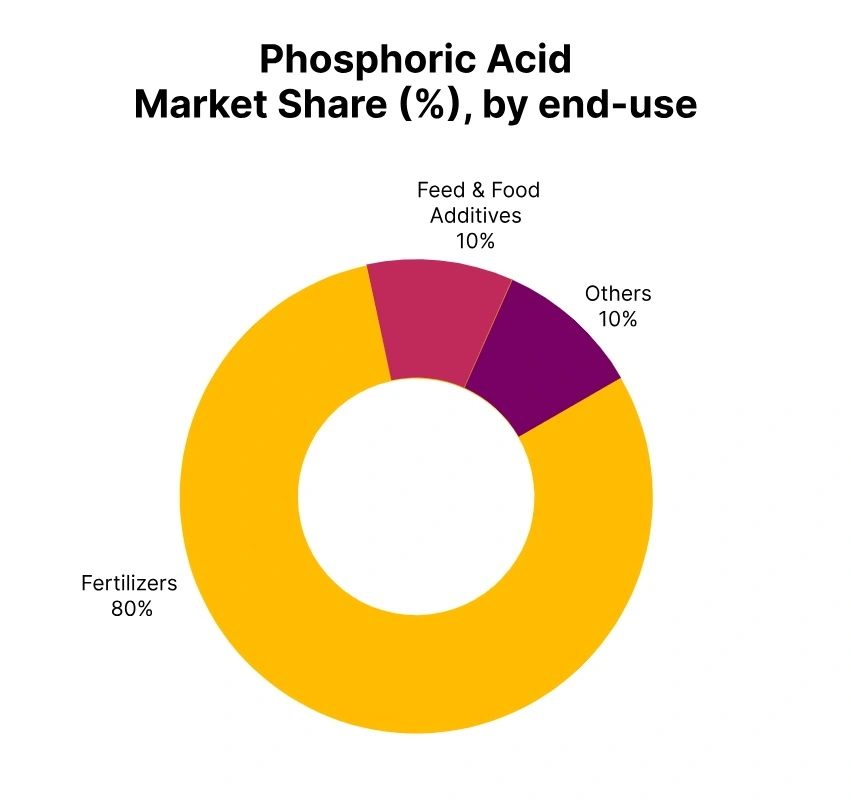
The fertilizer industry accounts for the largest share of Phosphoric Acid consumption, primarily for producing DAP, MAP, and other Phosphate fertilizers. Other major consumers include food and beverage manufacturers, detergents, water treatment, and metal surface treatment industries. 𝐏𝐫𝐢𝐜𝐞 𝐖𝐚𝐭𝐜𝐡™ analyses demand patterns across all these industries.

Phosphoric Acid is mainly produced via the wet-process method, where Phosphate rock reacts with sulfuric acid. Production is concentrated in regions with abundant Phosphate rock reserves and integrated fertilizer complexes, ensuring stable access to raw materials.

Major exporters of Phosphoric Acid include Morocco, China, and the United States, supported by strong Phosphate rock availability and integrated fertilizer industries. Export volumes and trade flows shift based on regional demand, logistics costs, and trade policies. 𝐏𝐫𝐢𝐜𝐞 𝐖𝐚𝐭𝐜𝐡™ tracks production levels, export flows and trade patterns to help businesses understand global supply chains and identify sourcing opportunities.

Supply generally matches demand, but regional shortages can occur due to plant shutdowns, transportation problems, or sudden spikes in industrial activity. 𝐏𝐫𝐢𝐜𝐞 𝐖𝐚𝐭𝐜𝐡™ monitors these supply-demand imbalances to alert the market about potential shortages or surpluses.

Phosphoric Acid is available in fertilizer-grade and food-grade variants. Food-grade material commands a premium due to stricter purity and quality requirements. Pricing also varies based on concentration levels and packaging formats. 𝐏𝐫𝐢𝐜𝐞 𝐖𝐚𝐭𝐜𝐡™ provides separate price assessments for each grade to ensure market transparency.

A sharp increase in fertilizer demand—often driven by planting seasons or government support programs—can push Phosphoric Acid prices higher. Since production depends on mining and processing capacity, sudden demand surges may lead to supply tightness and higher spot prices. 𝐏𝐫𝐢𝐜𝐞 𝐖𝐚𝐭𝐜𝐡™ captures these market dynamics in real-time.

Energy prices significantly impact Phosphoric Acid production, particularly in mining Phosphate rock, producing sulfuric acid, and processing finished acid. Rising fuel and electricity costs increase overall production expenses, which may be passed on to buyers. 𝐏𝐫𝐢𝐜𝐞 𝐖𝐚𝐭𝐜𝐡™ analyses in its price assessments & market reports.

Regional price variations are driven by raw material availability, freight costs, trade policies, and local demand conditions. Import-dependent regions often face higher prices due to logistics and supply risks. 𝐏𝐫𝐢𝐜𝐞 𝐖𝐚𝐭𝐜𝐡™ tracks prices across all major regions to highlight these differences.

Phosphoric Acid price forecasts depend on phosphate rock and sulphur trends, fertilizer demand outlook, and global agricultural conditions. 𝐏𝐫𝐢𝐜𝐞 𝐖𝐚𝐭𝐜𝐡™ regularly publishes detailed forecasts that project price movements for the next 12 months based on comprehensive analysis of supply additions, demand growth in key industries, seasonal patterns, and macroeconomic indicators. Our forecasts help businesses anticipate market conditions and plan accordingly.

Absolutely. Accurate forecasting allows you to time your purchases better, negotiate contracts more effectively, and budget more accurately. If 𝐏𝐫𝐢𝐜𝐞 𝐖𝐚𝐭𝐜𝐡™ forecasts predict a price increase in three months, you might choose to stock up now or lock in long-term contracts at current rates, potentially saving thousands of dollars.

Events like natural disasters, trade disputes, factory accidents, or economic downturns can disrupt production or shipping routes, causing supply shortages and price spikes. The COVID-19 pandemic, India’s 2021 anti-dumping duties, and Winter Storm Uri (2021), for instance, created significant market volatility. 𝐏𝐫𝐢𝐜𝐞 𝐖𝐚𝐭𝐜𝐡™ provides timely alerts when such events affect the market.

𝐏𝐫𝐢𝐜𝐞 𝐖𝐚𝐭𝐜𝐡™ collects data from manufacturers, distributors, and buyers worldwide to publish regular price assessments, market reports, and forecasts. Our transparent methodology and comprehensive coverage make us a trusted source for understanding fair pricing and market trends in the Phosphoric Acid industry.