Pig Iron Price Trend and Forecast

UNSPC code: 11101900
|
Weekly Update
|
Historical Data Since 2015
|
Forecast for 2026
  • Commodity Pricing

pig iron Price Trends by Country

brBrazil
usUnited States
inIndia
cnChina

Global pig iron Spot Market Prices, Trend Analysis and Forecast

Price-Watch’s most active coverage of Pig iron price assessment:


Asia-Pacific

  • Pig iron, Steel grade, Ex-Bhilai, India
  • Pig iron, L8-547, Ex-Shanghai, China


North America

  • Pig iron, Steel grade, FOB-Alabama, USA


South America

  • Pig iron, Steel grade, FOB Santos, Brazil


Note:
In assessments structured as CIF [Importing Port] (Exporting Country), the country mentioned in brackets indicates the primary origin of supply (exporting country), while the named port refers to the destination port in the importing country. Other Incoterms (FOB, FD, EXW, etc.) should be interpreted in accordance with standard international trade definitions.

Pig iron Price Trend Q4 2025

In the fourth quarter of 2025, the global pig iron market saw small declines, due to steady steel demand, balanced furnace use, and normal shipping rates. Brazil and China led the slight drop with regular production from Angico and Hebei areas. The USA and India followed with weaker demand from foundries and local steel mills, showing an overall balanced but soft market.

Pig iron, Steel grade, FOB Santos, Brazil

The price trend of pig iron in Brazil fell by 0.2% in Q4 2025, caused by lower US shipments and steady local steel needs after tax changes. Factories in the Angico area kept production steady, but FOB prices at Itaguai dropped due to weak interest from Turkey and Asia. The currency helped offset some shipping costs, and P15S grades held small premiums. Exports lost edge to suppliers from CIS countries, leading to minor volume cuts. Pig iron prices in Brazil rose by 0.7% in December 2025, helped by some restocking from US buyers. Short port delays lifted short-term prices, though big suppliers focused on contracts. Good quality kept price differences small, supporting the small gain.

Pig iron, Steel grade, FOB-Alabama, USA

The price trend of pig iron in the USA fell by 0.3% in Q4 2025, due to lower demand from Midwest car parts and better scrap mixes at big mills. Imports from Brazil stayed routine, reducing spot needs despite stable tariffs. Recyclers preferred local scrap over imports with even shipping costs. Foundry demand slowed after peak season. Pig iron prices in the USA rose by 0.5% in December 2025 as some cargo deals countered stock levels. Buyers sought small amounts for early next year, lifting delivered prices. Stable scrap kept changes in check.

Pig iron, Steel grade, Ex-Bhilai, India

The price trend of pig iron in India fell by 1.0% in Q4 2025, from weak DRI use and lower ductile iron output amid flat steel prices. Auctions in Odisha and Maharashtra saw low bids, with sponge iron gaining share. Coastal imports from CIS matched local prices, cutting Raipur premiums amid high stocks. Foundries waited for infrastructure projects. Pig iron prices in India rose by 0.8% in December 2025, aided by holiday buying and mine shipments. Buyers took small lots, slightly raising weekly prices. Steady coking coal costs prevented bigger drops.

Pig iron, L8-547, Ex-Shanghai, China

The price trend of pig iron in China fell by 0.3% in Q4 2025, from lower blast furnace rates in Tangshan and shifts to silico-manganese mixes. Tangshan L8-10 prices eased against scrap gains, with inland shipping helping equal trades. Silicomanganese makers cut back versus other paths. Local rules reduced spot supply a bit. Pig iron prices in China rose by 0.8% in December 2025, from year-end furnace empties and policy support. Traders filled January needs, boosting MB prices slightly. Rebar demand hints steadied the end.

Pig Iron Price Trend Analysis: Q4 2025

In the third quarter of 2025, the global pig iron market exhibited a general bearish sentiment, with prices in most regions declining modestly to moderately due to cooling demand and balanced supply. Steel production growth remained limited, resulting in lower pig iron consumption in key end-use markets.

At the same time, raw material costs for pig iron remained stable while the lack of a strong post-downstream recovery limited any price momentum. Exports faced logistical and pricing challenges that dampened the volume of global trade.

However, some short-term mid-Q3 support with some mild restocking and regional supply adjustments have allowed for some modest positioning of pig iron prices. Thus, this quarter generally exhibited cautious sentiment coupled with unchanged pricing activity, putting price movements into the final months leading into 2025 subdued.

Brazil: Pig Iron Export prices FOB Santos, Brazil, Grade- Steel Grade.

The Pig iron price trend in Brazil declined slightly by 0.40% in Q3 2025, mainly due to moderate export demand and balanced domestic consumption. Although Brazilian mills maintained stable production levels, global pig iron trade experienced limited activity as buyers remained cautious amid softer steel market conditions.

Freight stabilization and currency fluctuations reduced export competitiveness, keeping pricing sentiment weak. Demand from major importers in Asia and Europe showed only marginal improvement, insufficient to lift overall prices.

On a monthly basis, Pig iron prices in Brazil inched up marginally by 0.03% in September 2025, supported by short-term restocking from select overseas buyers and slight tightening in availability due to brief logistical slowdowns, though overall market conditions stayed largely muted.

USA: Pig Iron Import prices CIF Houston (Brazil), USA, Grade- Steel Grade.

The Pig iron price trend in the USA eased by 0.28% in Q3 2025, as domestic demand from steelmakers remained subdued and inventory levels adequate. Lower scrap prices reduced mills’ reliance on pig iron procurement, while steady import flows from Brazil and CIS countries ensured stable supply.

Soft downstream manufacturing activity and conservative procurement strategies kept demand quiet throughout the quarter. Despite stable energy and freight costs, weak consumption prevented any price recovery.

However, Pig iron prices in the USA rose marginally by 0.04% in September 2025, driven by limited replenishment purchases by mills seeking to maintain consistent feedstock supply, although overall trade activity remained thin as buyers awaited clearer signals from steel prices in the later stages of the quarter.

China: Pig Iron Domestic Prices EX Shanghai, China, Grade- L8-10.

According to Price-Watch, The Pig iron price trend in China decreased by 1.97% in Q3 2025, as steady output and weak steel production limited upward potential throughout the quarter. Sluggish downstream demand from the construction and automotive industries pressured market sentiment, leading producers to maintain competitive offers.

Imports from nearby Asian markets added further supply-side competition, curbing domestic price recovery. Raw material cost stability offered little incentive for higher pricing, and exports stayed limited due to global softness.

However, Pig iron prices in China edged up by 0.30% in September 2025, supported by mild restocking ahead of seasonal construction demand and traders’ efforts to take advantage of short-term buying momentum before the market slowed toward quarter-end.

India: Pig Iron Domestic Prices EX Bhilai, India, Grade- Steel Grade.

In the third quarter of 2025, there has been a 1.78% drop in India’s Pig iron price trend, due to reduced domestic demand from foundries and secondary steel makers amidst declining industrial activity. There has been adequate supply in the market due to plentiful availability and steady production, and with soft global demand and an unfavorable exchange rate, there have been few export opportunities.

Mills have been put under pressure to reduce prices to overcome sluggish demand and prevent inventory accumulation. The slowdowns in the construction and automotive sectors have also been impacting consumption.

In September 2025, India’s Pig iron declined by 0.49%, as buyers have been waiting to buy in the hope of getting greater discounts. Although raw material costs remained stable, limited demand from end users continued to contribute to negative price sentiment across the Indian market.

According to PriceWatch, In Q2 2025, pig iron prices in Brazil increased from $424 per metric tonne in Q1 to $442 per metric tonne in Q2, a 4.25% rise. This upward trend was supported by a recovery in US demand, which remains the main export destination for Brazilian pig iron. Despite an increase in Brazilian pig iron supply production rose by nearly 10% in March and by 2.5% in Q1 local steel mills and export markets absorbed the additional volumes.

The price increase in April, even amid higher supply, reflected robust demand from US buyers, who returned to the market after a period of subdued activity. This export-driven demand, coupled with higher steel production in Brazil, underpinned the steady price gains through the quarter. 

In the United States, pig iron prices rose from by 2.77% in Q2. The US market experienced a rebound in pig iron prices as import volumes dropped to multi-year lows, and buyers faced uncertainty around new tariffs. The reduction in imports, particularly from Russia and Ukraine due to tariffs and geopolitical factors, tightened domestic supply.

Meanwhile, US steel mills increased their purchases from Brazil, pushing up prices. Higher ferrous scrap prices and strong demand from the steel sector also contributed to the upward momentum in pig iron prices during the quarter. 

In China, pig iron prices dropped a 7.57% in Q2. This decline was primarily due to weak steel demand, high inventories, and increased competition from alternative raw materials. Chinese pig iron production remained steady but subdued downstream demand and persistent oversupply led to price pressure.

Additionally, fluctuations in iron ore prices and cautious procurement by steel mills contributed to the downward trend. As a result, Chinese producers were compelled to lower prices to maintain sales, reflecting broader weakness in the country’s steel and raw materials market. 

According to PriceWatch, pig iron prices in India surged an 8.64% increase from approximately $368 per metric tonne in Q1 2025 to $400 per metric tonne in Q2 2025. The sharp rise in prices was driven by strong domestic demand, higher finished steel prices, and a rapid increase in export offers.

In April, Indian pig iron prices jumped significantly, reflecting a market shock as buyers adjusted to higher input costs and robust demand from both domestic and export markets. The Indian government’s continued focus on expanding steel production capacity and infrastructure projects also supported the upward price trajectory. 

In Q1 2025, Brazil’s pig iron price fell from USD 434.9/MT, FOB Santos to USD 424.7/MT, FOB Santos marking a decline of about 2.3% quarter-on-quarter. This decrease was primarily driven by a combination of subdued global demand and increased competition from other exporters, as well as currency devaluation impacting export pricing. Despite a rise in Brazilian steel production and some recovery in export volumes, the market faced downward price pressure due to limited alternative buyers outside the US and the need to match lower-priced offers from Indian suppliers.

In the United States, the pig iron market sentiment was cautious, with prices edging slightly lower as domestic steelmakers sought to align pig iron costs more closely with scrap prices and global demand remained tepid. China’s market mood was subdued, reflecting ongoing weakness in steel sector demand and persistent oversupply.

In India, the sentiment was negative, as pig iron prices dropped sharply amid softer domestic demand and increased supply following the end of the monsoon season. Overall, Q1 2025 was characterized by cautious and subdued sentiment across the major pig iron markets, with most regions facing downward price pressure and uncertain demand outlooks. 

In Q1 2025, Indian pig iron prices continued their downward trend, falling to about $379/MT (a 7.6% quarter-on-quarter decline). This ongoing weakness was driven by persistent oversupply, tepid demand from steelmakers, and limited export opportunities, as global pig iron markets also faced pressure.

The market mood was pessimistic, with producers contending with high inventories and buyers delaying purchases in anticipation of further price corrections. Industry stakeholders hoped for a turnaround later in the year, possibly spurred by renewed government infrastructure initiatives or a recovery in global steel demand. 

Pig Iron Price Trend Analysis: Q4 2024

In Q4 2024, the global pig iron market showed signs of further divergence. Brazil’s price declined by 1.8%, and the USA saw a 1.7% drop, both reflecting softer year-end demand and possible inventory adjustments. China’s market continued to struggle, with prices falling by 1.6% as economic uncertainty and lackluster steel production persisted.

India saw a sharp 8% decrease, as post-monsoon recovery in supply outpaced demand growth, leading to a correction in prices. Overall, the quarter was characterized by subdued sentiment and cautious market activity, with most regions facing downward pressure due to weaker demand and ongoing economic uncertainties, particularly in Asia and India. 

Q4 2024 witnessed a further drop in pig iron prices to $410/MT (a 7.9% decrease quarter-on-quarter). The market was affected by a combination of increased supply as monsoon disruptions faded, and a slower-than-expected recovery in demand from both domestic and export markets. Export volumes, which had shown some improvement in late Q3, declined sharply again, putting additional pressure on prices. Sentiment remained weak, with producers facing margin compression and buyers remaining cautious amid uncertain steel sector prospects. The industry looked to policy support and a pick-up in construction activity for potential stabilization. 

Q3 2024 saw mixed fortunes for pig iron producers worldwide. Brazil’s price dipped slightly by 0.5%, while the USA posted a modest 0.5% increase, suggesting ongoing resilience in North American demand but some cooling in South America. China experienced a more significant decline of nearly 6%, as oversupply and weak construction demand continued to weigh on the market, intensifying pressure on producers.

India’s prices fell by 7.5%, likely due to the monsoon season dampening construction activity and reducing steel sector demand. The quarter was marked by cautious sentiment globally, with optimism in the Americas tempered by persistent challenges in Asia and a notable seasonal slowdown in India. 

In Q3 2024, Indian pig iron prices fell back to $446/MT (a decrease of 7.4% from the previous quarter). This decline was largely attributed to the onset of the monsoon season, which typically slows construction activity and dampens demand for steel and pig iron. Export opportunities remained limited, and domestic buyers became more conservative, focusing on inventory management rather than aggressive purchasing. Market sentiment was subdued, with most stakeholders expecting the lull to persist until post-monsoon demand picked up. Producers responded by adjusting output and offering discounts to move stock, while monitoring for signs of a demand revival later in the year.

In Q2 2024, the global pig iron market maintained a generally stable to slightly positive tone in the Americas, while Asian markets continued to face headwinds. Brazil’s pig iron price edged up by about 0.8% quarter-on-quarter, and the USA saw a similar 0.9% increase, both supported by steady demand from their respective steel industries and healthy export activity.

In contrast, China’s pig iron price slipped by 1.3%, reflecting ongoing weakness in domestic steel production and subdued construction activity. India, however, experienced a sharp surge, with prices jumping nearly 11.4%, likely fueled by robust infrastructure spending and supply constraints.

Overall, the quarter highlighted a divergence between the strength of the American and Indian markets and the persistent softness in China, with global sentiment shaped by regional economic performance and policy measures. 

Q2 2024 saw a strong rebound in Indian pig iron prices, from about $433/MT to $482/MT (an increase of roughly 11.3%). This significant uptick was fueled by a surge in domestic demand, driven by renewed infrastructure projects and a seasonal boost in construction activity. Additionally, supply constraints and higher input costs, particularly for coke, supported the price recovery. Market sentiment turned optimistic, with producers ramping up output and buyers willing to pay premiums to secure material amid concerns of further price rises. The overall outlook was positive, buoyed by expectations of continued government investment in infrastructure and a stable macroeconomic environment.

In Q1 2024, the global pig iron market presented a mixed picture, with notable regional variations in price trends. Brazil and the USA both recorded moderate quarter-on-quarter price increases, with Brazil’s pig iron rising by about 2.8% and the USA by 3%.

These gains were largely driven by steady export demand and resilient domestic steel production, which supported higher consumption of pig iron. In contrast, China saw its pig iron prices decline by approximately 1.6%, reflecting subdued steel sector demand and ongoing concerns about oversupply and economic uncertainty.

India experienced a more pronounced decrease of around 2.1%, likely due to softer domestic demand and a temporary slowdown in infrastructure activity. Overall, while the Americas enjoyed a cautiously optimistic market environment supported by stable demand, Asian markets faced downward pressure, highlighting the impact of regional economic factors and shifting consumption patterns on the global pig iron landscape in early 2024. 

In Q1 2024, Indian pig iron prices declined $442/MT to $433/MT (about a 2% decrease). This softening was primarily driven by weaker domestic demand, especially as infrastructure activity slowed after the year-end push and steelmakers adjusted their procurement in response to subdued market conditions. The sentiment in the market was cautious, with producers facing pressure from both falling export volumes and limited trading activity in major domestic hubs. Supply remained steady, but the lack of robust demand kept prices under check, and the market looked for signals of recovery from government infrastructure spending or a rebound in steel. 


Technical Specifications of Pig Iron Price Trends

Product Description

Pig iron is a high-carbon iron alloy produced by smelting iron ore in a blast furnace, using coke as a reducing agent and limestone as a flux to remove impurities. It typically contains 3.5–4.5% carbon, along with varying amounts of silicon, manganese, sulfur, phosphorus, and trace elements. The high carbon content makes pig iron hard, brittle, and not suitable for direct use in most applications, but it is an essential intermediate for producing steel and cast iron.

Identifiers and Classification:

  • HS Code – 720110


Pig iron Grades Specific Price Assessment:

  • Pig iron Steel grade Price Trend
  • Pig iron L8-547 Price trend


Pig iron Global Trade and Shipment Terms

  • Quotation Terms (Product & Country Specific): 15-18 MT
  • Packaging Type (Product & Country Specific): Bulk


Incoterms Referenced in Pig iron Price Reporting

Shipping Term  Location  Definition 
Ex Shanghai  Shanghai, China  Domestically Traded Pig Iron Price in China 
FOB Santos  Santos, Brazil  Export Pig iron price of Brazil 
Ex-Albama  Albama, USA  Domestically Traded Pig iron price in USA 
EX-Bhilai  Bhilai, India  Domestically Traded Pig iron price in India 

*Quotation Terms refers to the quantity range specified for the pig iron being quoted or offered in a commercial transaction.

**Packaging Type refers to standard packaging size commonly used for Pig iron packing, ease of handling, transportation, and storage in industrial and commercial applications.


Key Pig iron Manufacturers

Manufacturer 
China Baowu Group   
ArcelorMittal   
Nippon Steel Corporation   
Tata Steel Limited  
Hyundai Steel 
Russia’s Severstal 
POSCO Holdings   
JFE Steel Corporation  

Pig Iron Industrial Applications

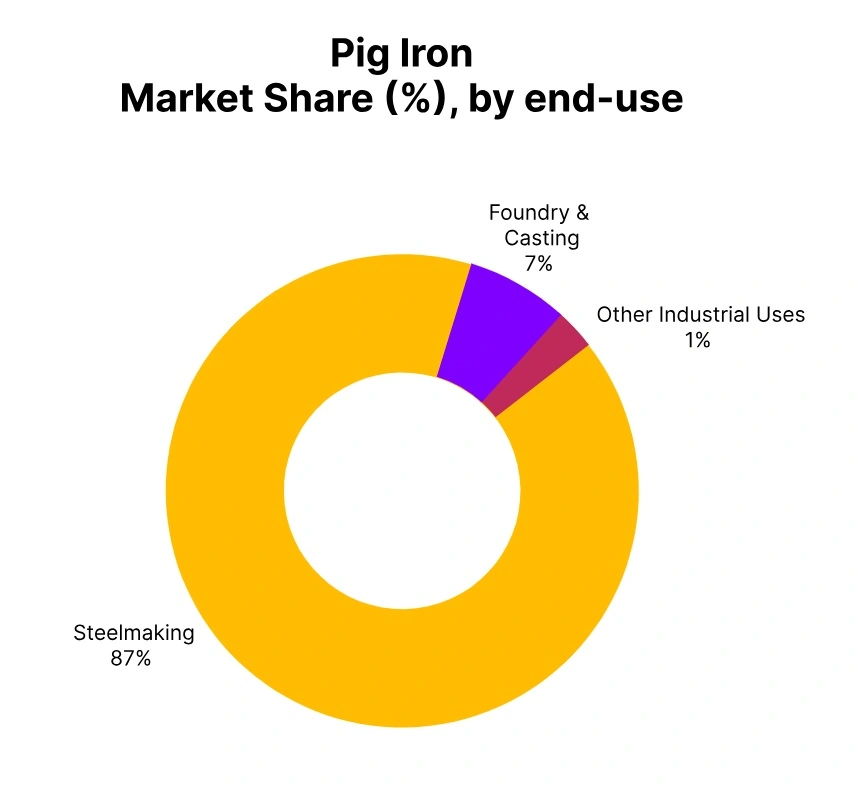
Pig Iron Market Share End Use

Historically, several events have caused significant fluctuations in Pig Iron prices

  • Impact on Investment and Financing: Elevated interest rates globally, particularly in major economies like the U.S. and Europe, made financing more expensive for businesses. 
  • Global Supply Chain Disruption (2022): The war in Ukraine and other geopolitical tensions disrupted supply chains, leading to price volatility in various commodities, including pig iron. 
  • COVID-19 Pandemic (2019-2020): The global pandemic led to a significant decline in demand for pig iron-intensive industries, such as steelmaking and automotive manufacturing, causing prices to plummet. 
  • Global Economic Downturn (2019-2020): The global economic slowdown, particularly in sectors like steel and automotive, led to reduced demand for pig iron, resulting in lower prices. 


These events underscore the
pig iron market’s vulnerability to global disruptions and highlight the need for continuous monitoring of supply-demand dynamics.
 

Why Price Watch™?

Price Watch™ is your trusted resource for tracking global pig iron price trends. Our platform delivers real-time data and expert analysis, offering deep insights into the key factors driving price fluctuations in the pig iron market. By monitoring critical events such as geopolitical tensions, supply chain disruptions, and economic shifts, Price Watch™ keeps you fully informed of market dynamics.

In addition, Price Watch™ provides detailed forecasts and updates on production capacities, enabling you to anticipate market changes and make well-informed decisions. With Price Watch™, you gain a competitive edge in understanding all the elements that influence pig iron prices worldwide. Stay ahead of the curve with Price Watch’s™ reliable, accurate, and timely pig iron market data.

Track Price Watch's™ pig iron price assessment on a weekly basis since 2015 onwards, along with short-term forecasts, and get access to the detailed report in a downloadable format.

Pig Iron Market Price Trend published by 𝐏𝐫𝐢𝐜𝐞 𝐖𝐚𝐭𝐜𝐡™ reflect prevailing spot market conditions, derived from independent research, verified trade inputs, and proprietary market intelligence as of the publication date. Prices are published on the specified Incoterm and represent indicative base market levels, exclusive of applicable taxes, VAT, duties, tariffs, and other statutory charges. Actual transaction values may vary depending on volume, credit terms, contractual structure, and other negotiated conditions. Market prices are inherently subject to volatility, liquidity dynamics, regulatory changes, and evolving trade activity. The information provided is for reference and benchmarking purposes only and does not constitute an offer, recommendation, or guarantee of transactional outcomes. Users should exercise independent commercial judgment and assess their specific contractual, regulatory, tax, and application requirements before making business decisions. 𝐏𝐫𝐢𝐜𝐞 𝐖𝐚𝐭𝐜𝐡™ assumes no liability for decisions taken based on this information.

Commodity prices are influenced by a complex interplay of factors, including:

 Production cost: Production costs directly influence commodity prices. When production expenses rise, such as through higher raw material or labor costs, commodity prices typically increase. Conversely, lower production cost leads to reduced prices of commodities.

Supply and Demand: The fundamental driver of commodity prices is the balance between supply and demand. When demand exceeds supply, prices tend to rise, and vice versa.  

Economic Growth: Global economic growth, particularly in emerging markets, can increase demand for commodities, driving prices higher.  

Geopolitical Events: Political instability, conflicts, and trade tensions can disrupt supply chains, affecting commodity prices.  

Natural Disasters: Weather events such as droughts, floods, and hurricanes can impact the production and availability of certain commodities.  

Speculation: Financial speculators can influence commodity prices through their trading activities.  

Government Policies: Government policies, such as tariffs, subsidies, and regulations, can impact the production, consumption, and trade of commodities.  

PriceWatch, a leading procurement intelligence firm, offers a comprehensive suite of tools and services to help you effectively track commodity prices.

Some of the key benefits of using PriceWatch include:

 Real-time Data: Access to up-to-date market intelligence and data on commodity supply chains.

Expert Analysis: Insights from industry experts to interpret market trends and identify potential risks.

Risk Assessment: Tools to assess supply chain vulnerabilities and develop mitigation strategies.

Benchmarking: Comparisons of commodity prices and sourcing practices to optimize procurement decisions.

Supplier Intelligence: Detailed information on suppliers, including their financial health, production capacity, and sustainability practices.

Pig iron is molten iron cast into ingots from blast furnaces, used mainly as a raw material in steelmaking and castings. Its price matters for steel mills, foundries, and metal producers as it affects production costs in construction, autos, and machinery. 𝐏𝐫𝐢𝐜𝐞 𝐖𝐚𝐭𝐜𝐡™ tracks these prices to help businesses and consumers understand and stay updated with the market trends.

Pig iron prices vary by region and market conditions. Prices are typically quoted per metric ton or per pound and fluctuate based on global supply, import/export flows, industrial demand, and currency exchange rates. 𝐏𝐫𝐢𝐜𝐞 𝐖𝐚𝐭𝐜𝐡™ provides real-time price assessments across different global markets to help buyers and sellers make informed decisions.

Prices change due to blast furnace output, steel demand, scrap competition, coking coal costs, and import duties. Exchange rates, shipping costs, and economic conditions also play a role.

Main buyers are steelmaking (basic oxygen furnaces), ductile iron foundries, and gray iron castings for autos, pipes, and machinery. 𝐏𝐫𝐢𝐜𝐞 𝐖𝐚𝐭𝐜𝐡™ analyses demand patterns across all these industries.

Pig iron is produced in blast furnaces by smelting iron ore with coke and limestone, tapped as liquid metal and cast into pigs for transport and further use.

Brazil is the world’s largest exporter, followed by Russia, Ukraine, India, and CIS countries. Export volumes vary with domestic policies, environmental regulations, and international demand. 𝐏𝐫𝐢𝐜𝐞 𝐖𝐚𝐭𝐜𝐡™ tracks production levels, export flows and trade patterns to help businesses understand global supply chains and identify sourcing opportunities.

Supply usually matches demand, but issues like furnace shutdowns, power cuts, or steel cuts can cause gaps. 𝐏𝐫𝐢𝐜𝐞 𝐖𝐚𝐭𝐜𝐡™ monitors these supply-demand imbalances to alert the market about potential shortages or surpluses.

Grades differ by silicon (low-Si, nodular), phosphorus/sulfur levels, and manganese; low-impurity basic pig iron for steel costs more than foundry grades due to purer ore and process control. 𝐏𝐫𝐢𝐜𝐞 𝐖𝐚𝐭𝐜𝐡™ provides separate price assessments for each grade to ensure market transparency.

When demand rises, for example: from steel production booms or foundry surges, prices typically climb. Suppliers may prioritize certain customers, and lead times can extend. 𝐏𝐫𝐢𝐜𝐞 𝐖𝐚𝐭𝐜𝐡™ captures these market dynamics in real-time.

Pig iron production uses lots of energy in blast furnaces for coke heating and air blowing. Higher coal, electricity, or gas prices often raise costs for buyers. Regions with cheap energy have lower prices, as 𝐏𝐫𝐢𝐜𝐞 𝐖𝐚𝐭𝐜𝐡™ shows in its reports.

Differences come from import needs, freight costs, currency changes, and local demand. 𝐏𝐫𝐢𝐜𝐞 𝐖𝐚𝐭𝐜𝐡™ tracks prices in all major areas to show these gaps.

Forecasts depend on production capacity, Brazil export policies, industrial demand, and macroeconomic factors. 𝐏𝐫𝐢𝐜𝐞 𝐖𝐚𝐭𝐜𝐡™ regularly publishes detailed forecasts that project price movements for the next 12 months based on comprehensive analysis of supply additions, demand growth in key industries, seasonal patterns, and macroeconomic indicators. Our forecasts help businesses anticipate market conditions and plan accordingly.

Yes. Accurate forecasts allow businesses to optimize purchasing, negotiate contracts, and manage inventories. If 𝐏𝐫𝐢𝐜𝐞 𝐖𝐚𝐭𝐜𝐡™ forecasts predict a price increase in three months, you might choose to stock up now or lock in long-term contracts at current rates, potentially saving thousands of dollars.

Events like Chinese steel limits, furnace halts, environmental rules, or economic issues can create shortages and price swings. 𝐏𝐫𝐢𝐜𝐞 𝐖𝐚𝐭𝐜𝐡™ gives quick alerts on these market effects.

𝐏𝐫𝐢𝐜𝐞 𝐖𝐚𝐭𝐜𝐡™ collects data from manufacturers, distributors, and buyers worldwide to publish regular price assessments, market reports, and forecasts. Our transparent methodology and comprehensive coverage make us a trusted source for understanding fair pricing and market trends in the Pig Iron industry.