Platinum Price Trend and Forecast

UNSPC code: 12141700
|
Weekly Update
|
Historical Data Since 2015
|
Forecast for 2026
  • Commodity Pricing

platinum Price Trends by Country

usUnited States

Global platinum Spot Market Prices, Trend Analysis and Forecast

Price-Watch™ most active coverage of Platinum price assessment:

  • Purity 99.95% Weekly Closing Spot Price, Global

Platinum Price Trend Q1 2026

Platinum price surged sharply in the global market in Q1 2026 (approximately 29% higher than Q4 2025) has been based on supply-side disruptions and rapid growth of demand from Industry and Investment.

Output constraints in major producers (particularly South Africa and Russia) have been exacerbated by worsening energy shortages, infrastructure bottlenecks, geopolitical instability; combined with increased use of hydrogen fuel cells and stricter emission regulations in the EU and Asia resulting in an increase in industrial purchasing and end-use consumption.

Global Platinum (XPT/USD)

According to Price-Watch™, the price trend of platinum recorded a powerful upward movement during the first quarter of 2026, with platinum prices climbing by 29% compared to Q4 2025 on quarter-on-quarter basis, reflecting a tightening global supply-demand balance and accelerating demand from multiple end-use sectors.

The primary driver of this surge has been the sustained disruption to mine output in South Africa, the world’s largest platinum producer, where chronic electricity rationing by Eskom and deteriorating shaft infrastructure reduced refined output significantly.

Russia’s Norilsk Nickel also reported lower platinum-group metal output amid operational restructuring and export restrictions linked to ongoing geopolitical tensions, further constraining global availability. Jewelry demand from India and China remained firm during the first three months of 2026, underpinned by favorable pricing relative to gold and rising consumer sentiment.

Investment demand also strengthened considerably, with global platinum ETF holdings rising to multi-year highs as institutional investors diversified away from elevated gold and equity valuations. The price of platinum has declined in March 2026 by 3.65%, as the metal pulled back following its historic 2025 rally.

Waning diesel vehicle demand weakened catalytic converter requirements, while a narrowing supply deficit eased tightness concerns. Rising European recycling volumes added to selling pressure, prompting investors to lock in profits after platinum’s record-breaking run.

Platinum Price Trend Analysis: Q4 2025

In Q4 2025, platinum prices surged by about 24%, reflecting a tightening global market and stronger industrial demand. The rally was driven primarily by supply constraints from key producers such as South Africa and Russia, where operational challenges and geopolitical uncertainties limited output.

At the same time, demand from the automotive sector strengthened as platinum gained greater use in catalytic converters, partly substituting the more expensive palladium. Growing interest in the metal for hydrogen technologies and fuel cells also supported the price momentum.

Investment demand improved as market participants sought diversification amid volatility in other precious metals like gold. Overall, the sharp increase in Q4 2025 highlighted platinum’s evolving role in both traditional industries and emerging clean-energy applications, tightening the global supply-demand balance.

Global Platinum (XPT/USD)

The price trend of platinum in Q4 2025 showed a strong upward trajectory, reflecting tightening supply conditions and improving industrial demand across key sectors. Compared with Q3 2025, platinum prices increased by 24%, supported by stronger automotive catalyst demand and renewed investment interest in precious metals amid global economic uncertainty.

Supply constraints from major producing regions and stable jewelry demand further contributed to the bullish momentum throughout the quarter. Market participants also noted increased procurement activity from manufacturers anticipating potential supply disruptions and higher input costs.

In December 2025, platinum prices recorded a notable rise of 21.5%, marking the sharpest monthly increase of the quarter and reinforcing the overall positive market sentiment. The combination of constrained mine output, resilient end-use demand, and investor diversification into precious metals continued to support platinum prices, keeping the market outlook firm toward the end of 2025.

In the third quarter of 2025, the worldwide platinum market saw a significant price rebound, up 30% as compared to the second quarter of 2025. The price increases took place due to a combination of supply tightening and demand increases in key utilization sectors. South African production of platinum, accounting for the largest share of global supply, has been impeded by worker strikers in the mines and ongoing power shortages, constraining production.

Meanwhile, automotive demand had a strong rebound, particularly for hybrid and hydrogen fuel cell vehicles encompassing platinum in their catalytic and fuel cell technologies. Investment demand also increased sharply as investors turn to safe-haven assets amid increasing geopolitical tensions and global economic uncertainty. Lastly, increased regulatory environmental standards in Asia and Europe also contributed to an increasing industrial demand for Platinum.

Global Platinum (XPT/USD)

According to Price-Watch™ In Q3 2025, platinum exhibited strong bullish price action, reflecting a substantial recovery in global markets. Platinum prices rose by roughly 30% from Q2, benefiting from tightening supply, an increase in automotive demand, and renewed investor interest amid inflationary pressures. In September 2025, the prices have raised by about 7%, reflecting sustained bullish sentiment, as supply to important mining areas continued to be disrupted due to labor strikes and logistical challenges.

Demand-side support continued to emanate from the green energy transition in hydrogen fuel cell technologies, which, in turn, contributed to the price appreciation. Investor sentiment has been further supported by central banks signaling dovish monetary policy, which provided a basis to shift to safe-haven assets.

According to the PriceWatch, Platinum prices experienced a notable increase in Q2 2025, rising to $1061 per ounce with a 7.50% rise. This upward trend can be attributed to a combination of tightening supply and growing demand. On the supply side, disruptions in major mining regions, particularly in South Africa due to labor strikes and persistent power outages, have significantly reduced output.

Meanwhile, demand has surged, especially from the automotive sector where platinum is a key component of catalytic converters. Additionally, growing interest in hydrogen fuel cell technology, which relies heavily on platinum, has further boosted industrial consumption. 

In Q1 2025, platinum prices rose by 1.07% to settle at $987 per ounce (Spot Price Weekly Closing). This modest gain reflected improving industrial demand, particularly from the automotive sector, where substitution of palladium with platinum continued. A slightly weaker U.S. dollar and optimism around future hydrogen fuel cell applications also contributed to sentiment. However, long-term concerns around EV adoption and the global economic slowdown tempered the rally. 

Platinum Price Trend Analysis: Q4 2024

Platinum prices saw a slight decline of 0.23% in Q4 2024, ending the quarter at $977 per ounce (Spot Price Weekly Closing). Market sentiment was mixed, as jewelry demand showed modest holiday-season resilience, but weak economic data from China and Europe kept industrial demand subdued. Although mining disruptions in South Africa intermittently constrained supply, the effects were largely priced in by year-end. Investor participation remained cautious. 

Prices slipped in Q3 2024, with platinum registering a 2.10% decline to $980 per ounce (Spot Price Weekly Closing). This dip was due to seasonal softening in demand and currency headwinds, as the U.S. dollar strengthened. Auto sector demand plateaued, and investors rotated into other metals amid uncertain macroeconomic indicators. Though platinum retained cost advantages over palladium, the absence of fresh industrial drivers limited upside movement. 

Platinum rebounded strongly in Q2 2024, rising 9.00% to $1,000 per ounce (Spot Price Weekly Closing). The price surge was driven by increased industrial restocking, renewed investment inflows, and expectations of supply tightening. With palladium prices under pressure and manufacturers continuing to substitute platinum in catalytic converters, demand momentum picked up. South African supply risks including power constraints and labor disruptions also fueled bullish sentiment. 

Platinum prices edged lower in Q1 2024, falling by 1.30% to close at $918 per ounce (Spot Price Weekly Closing). This decline was primarily attributed to subdued demand from the automotive and jewelry sectors, amid continued market uncertainty and economic stagnation in key regions like Europe and China. Additionally, higher interest rates and a strong U.S. dollar pressured precious metal prices broadly, with platinum facing particular strain from weak diesel vehicle sales in Western markets. 

Technical Specifications of Platinum Price Trends

Product Description:

Platinum (XPT/USD) is a rare precious metal extensively used in industrial applications, particularly diesel engine catalytic converters, chemical processing, and hydrogen fuel technologies. It also serves as a key component in jewelry and investment products.

Identifiers and Classification:

  • CAS No – 7440-06-4
  • HS Code: 711011


Platinum Grades Specific Price Assessment:

  • Purity: 99.95%


Platinum Global Trade and Shipment Terms

  • Quotation Terms (Product & Country Specific): 1–5 oz
  • Packaging Type (Product & Country Specific): Vaccum-sealed plastic


Incoterms Reference in Platinum Reporting

Shipping Term  Location  Definition 
Weekly Spot Price   Global  Platinum Spot Price (XPT/USD) 

*Quotation Terms refers to the quantity range specified for the Platinum being quoted or offered in a commercial transaction.

**Packaging Type refers to standard packaging size commonly used for Platinum packing, ease of handling, transportation, and storage in industrial and commercial applications.

Key Platinum Manufacturers

Manufacturer 
Valterra Platinum 
SibanyeStillwater 
Norilsk Nickel 
Lonmin 

Platinum Industrial Applications

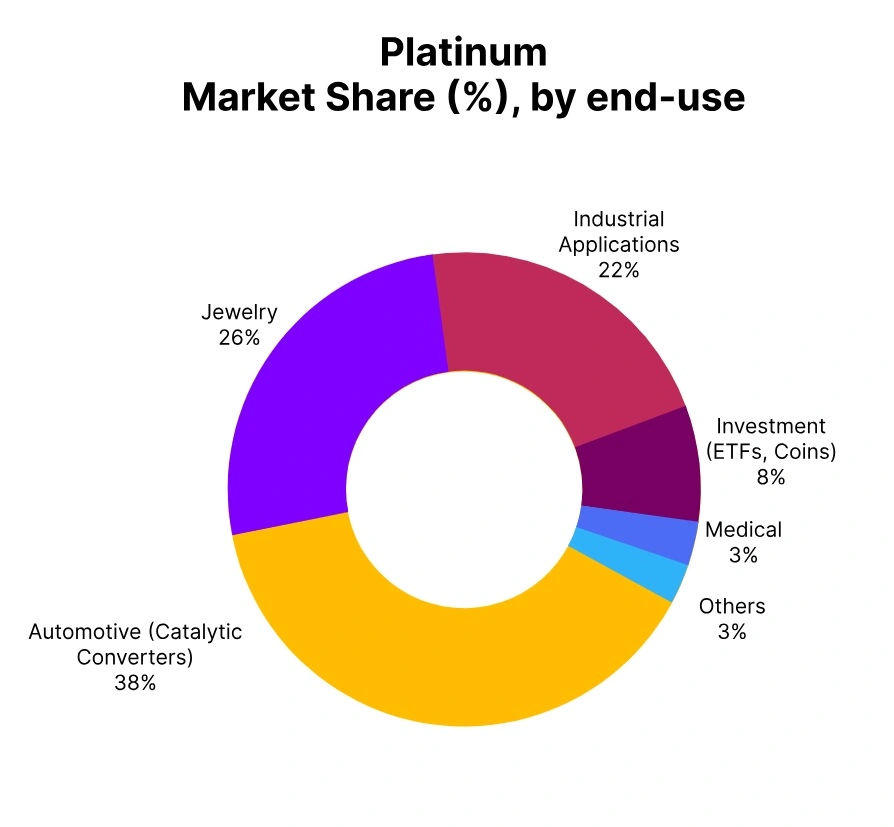
Platinum market share end use

Historically, several events have caused significant fluctuations in Platinum prices

  • Russia-Ukraine Conflict (2022): 
    While Russia is not the dominant global supplier of platinum, the conflict created spillover effects on PGM markets. Increased attention to supply diversification and risk mitigation helped drive interest in South African and North American output, supporting prices during volatile periods. 
  • COVID-19 Pandemic (2020–2021): 
    The pandemic disrupted supply chains and curbed demand, leading to price volatility. However, platinum benefited in late 2020 and early 2021 from a rebound in auto production and speculative interest in green technologies like hydrogen fuel cells. 
  • Global Financial Crisis (2008–2009): 
    Platinum prices plunged amid a collapse in auto production and industrial output but rebounded gradually with stimulus packages and automotive recovery, particularly in diesel-heavy European markets. 

Why Price Watch™?

Price Watch™ is your trusted resource for tracking global platinum price trends. Our platform delivers real-time data and expert analysis, offering deep insights into the key factors driving price fluctuations in the platinum market. By monitoring critical events such as geopolitical tensions, supply chain disruptions, and economic shifts, Price Watch™ keeps you fully informed of market dynamics.

In addition, Price Watch™ provides detailed forecasts and updates on production capacities, enabling you to anticipate market changes and make well-informed decisions. With Price Watch™, you gain a competitive edge in understanding all the elements that influence platinum prices worldwide. Stay ahead of the curve with Price Watch’s™ reliable, accurate, and timely platinum market data.

Track Price Watch's™ platinum price assessment on a weekly basis since 2015 onwards, along with short-term forecasts, and get access to the detailed report in a downloadable format.

Platinum Market Price Trend published by Price Watch™ reflect prevailing spot market conditions, derived from independent research, verified trade inputs, and proprietary market intelligence as of the publication date. Prices are published on the specified Incoterm and represent indicative base market levels, exclusive of applicable taxes, VAT, duties, tariffs, and other statutory charges. Actual transaction values may vary depending on volume, credit terms, contractual structure, and other negotiated conditions. Market prices are inherently subject to volatility, liquidity dynamics, regulatory changes, and evolving trade activity. The information provided is for reference and benchmarking purposes only and does not constitute an offer, recommendation, or guarantee of transactional outcomes. Users should exercise independent commercial judgment and assess their specific contractual, regulatory, tax, and application requirements before making business decisions. Price Watch™ assumes no liability for decisions taken based on this information.

Industrial demand (especially in automotive and chemical sectors)

Jewelry consumption trends

Supply constraints in South Africa and Russia

Geopolitical risks, currency fluctuations, and investment flows

Platinum is used in catalytic converters for diesel engines and is increasingly considered as a substitute for palladium in gasoline engines due to cost advantages and similar catalytic properties.

Use PriceWatch’s live dashboards, weekly reports, and market forecasts to monitor platinum prices, historical trends, and relevant industrial developments.