Polyetheramine Price Trend and Forecast

UNSPC code: 12352115
|
Weekly Update
|
Historical Data Since 2015
|
Forecast for 2026

polyetheramine Price Trends by Country

cnChina
sgSingapore
trTurkey
inIndia
vnVietnam
usUnited States

Global polyetheramine Spot Market Prices, Trend Analysis and Forecast

Price Watch™ provides real-time price assessments and price forecasts for Polyetheramine across top trading regions :

Polyetheramine Regional Coverage Polyetheramine Grade and Country Coverage Polyetheramine Pricing Data Coverage Explanation
Asia-Pacific Polyetheramine Pricing Analysis Polyetheramine Grade-Diamine (230) FOB Prices at Shanghai Port, China Weekly Price Update on Polyetheramine Real-Time Export Prices from Shanghai Port, China to Global Markets
Polyetheramine Grade-Diamine (230) FOB Prices at Jurong Port, Singapore Weekly Price Update on Polyetheramine Real-Time Export Prices from Jurong Port, Singapore to Global Markets
Polyetheramine Grade-Diamine (230) CIF Prices at Haiphong Port, Vietnam. Importing from China Weekly Price Update on Polyetheramine Real-Time Import Prices at Haiphong Port, Vietnam, from China
Polyetheramine Grade-Diamine (230) CIF Prices at Nhava Sheva Port, India. Importing from China Weekly Price Update on Polyetheramine Real-Time Import Prices at Nhava Sheva Port, India, from China
Polyetheramine Grade-Diamine (230) CIF Prices at Nhava Sheva Port, India. Importing from Singapore Weekly Price Update on Polyetheramine Real-Time Import Prices at Nhava Sheva Port, India, from Singapore
Polyetheramine Grade-Diamine (230) Ex-Mumbai, India Weekly Price Update on Polyetheramine Real-Time Domestic Ex-Mumbai Prices in India
North America Polyetheramine Pricing Analysis Polyetheramine Grade-Diamine (230) CIF Prices at Houston Port, USA. Importing from China Weekly Price Update on Polyetheramine Real-Time Import Prices at Houston Port, USA, from China
Europe Polyetheramine Pricing Analysis Polyetheramine Grade-Diamine (230) CIF Prices at Mersin Port, Turkey. Importing from Singapore Weekly Price Update on Polyetheramine Real-Time Import Prices at Mersin Port, Turkey, from Singapore

Polyetheramine Price Trend Q1 2026

In Q1 2026, the global average Polyetheramine price trend declined modestly by around -0.50% to -1% on a quarterly basis, reflecting cautious purchasing activity and adequate supply during the early part of the quarter. However, prices increased by around 4% in March, primarily due to disruptions in global energy and raw material supply chains caused by geopolitical tensions in the Middle East.

These disruptions reduced feedstock availability, raised freight costs, and created logistical bottlenecks, tightening spot supply and triggering restocking activity.

Overall, the March price movement highlighted the market’s sensitivity to upstream supply disruptions and energy market volatility, emphasizing the importance of monitoring feedstock availability, inventory levels, and downstream demand to evaluate short-term price trends.

The overall worldwide trend for prices of Polyetheramine fell slightly by -0.50% to -1% in Q1 2026 quarter-on-quarter owing to a conservative buying attitude among purchasers and sufficient supplies in the initial phase of the quarter.

Prices of the product rose by approximately 4% in March largely because of the disruption in global energy and raw materials supply chains because of geopolitical instabilities in the Middle East.

The price increase was mainly driven by decreased supplies of raw materials, higher freight rates, and logistic constraints associated with the disruption in the supply chain, making prices rise further. Therefore, prices in the month of March were highly dependent on upstream supply disruptions and energy price dynamics.

China: Polyetheramine Export prices FOB Shanghai, China; Grade-Diamine (230)

In Q1 2026, Polyetheramine price trend in China declined modestly by -0.50% on a quarterly average, reflecting cautious buying and adequate supply during the early part of the quarter. The Polyetheramine price in China surged in March, increasing by 4%, primarily driven by disruptions in global energy and raw material supply chains caused by geopolitical tensions in the Middle East.

These disruptions constrained feedstock availability, increased freight costs, and created logistical bottlenecks, tightening spot supply and prompting restocking activity. Overall, the Polyetheramine price trend in China in March underscores the market’s sensitivity to upstream supply shocks and energy market volatility, highlighting the importance of monitoring feedstock flows, inventory levels, and downstream demand to anticipate short-term price movements.

The Polyetheramine price trend in China for the first quarter of 2026 has dropped marginally by -0.50%, indicating some caution in purchasing activities amid sufficient supplies at the onset of the quarter. There is a significant increase in Polyetheramine prices in China in March due to a spike in global energy and raw material logistics because of political tensions in the Middle East region.

As a result, the supply of raw materials has become limited, leading to an increase in freight costs and making logistics a bottleneck, and thus resulting in restocking activities. In March 2026, Polyetheramine price in China has illustrated the impact that disruptions in upstream supplies and volatility in energy markets can have on the market environment.

Vietnam: Polyetheramine Import prices CIF Haiphong, Vietnam; Grade-Diamine (230)

In Q1 2026, Polyetheramine price trend in Vietnam remained almost stable on a quarterly average, supported by steady supply demand dynamics and adequate feedstock availability during the early part of the quarter. The Polyetheramine price in Vietnam surged in March, increasing by 4%, primarily driven by disruptions in global energy and raw material supply chains caused by geopolitical tensions in the Middle East.

These disruptions constrained feedstock availability, increased freight costs, and created logistical bottlenecks, tightening spot supply and prompting restocking activity. Overall, the Polyetheramine price trend in Vietnam in March underscores the market’s sensitivity to upstream supply shocks and energy market volatility, emphasizing the importance of monitoring feedstock flows, inventory levels, and downstream demand to anticipate short-term price movements.

In the first quarter of 2026, there has been a relatively consistent Polyetheramine price trend in Vietnam on a quarterly basis due to consistent supply-demand dynamics and sufficient feedstocks available at the beginning of the quarter. The Polyetheramine price in Vietnam has experienced an increase of 4% in March.

The reason for this sharp increase is attributed to supply chain disruptions in energy supplies in the Middle East region and disruptions in the supply chains of other raw materials. These disruptions have resulted in limited feedstocks available and higher shipping costs, among others. In March 2026, Polyetheramine price in Vietnam is an indicator of the vulnerability of the market in terms of its responsiveness to upstream supply disruptions.

USA: Polyetheramine Import prices CIF Houston, USA; Grade-Diamine (230)

In Q1 2026, Polyetheramine price trend in USA remained almost stable on a quarterly average, supported by steady supply-demand dynamics and adequate feedstock availability in the early part of the quarter. The Polyetheramine price in USA rose in March, increasing by 4%, primarily driven by disruptions in global energy and raw material supply chains caused by geopolitical tensions in the Middle East.

These disruptions constrained feedstock availability, increased freight costs, and created logistical bottlenecks, tightening spot supply and prompting restocking activity. Overall, the Polyetheramine price trend in USA in March underscores the market’s sensitivity to upstream supply shocks and energy market volatility, highlighting the importance of monitoring feedstock flows, inventory positions, and downstream demand to anticipate short-term price movements.

Polyetheramine prices in the USA stayed largely stable during the Q1 2026 quarter thanks to well-balanced market supply-demand conditions and sufficient feedstock supply at the start of the quarter. In March 2026, Polyetheramine price in the USA showed an increase of 4% due to disruption in global energy supply chain logistics due to geopolitical risks in the Middle East region.

Disruptions in global energy and raw material supply chains raised freight costs and led to insufficient supply of feedstocks, creating logistical issues for manufacturers of the chemical. All in all, Polyetheramine price in USA in March 2026 clearly shows how sensitive the market is to feedstock-related disruptions.

Singapore: Polyetheramine Export prices FOB Jurong, Singapore; Grade-Diamine (230)

In Q1 2026, Polyetheramine price trend in Singapore declined modestly by -0.5% on a quarterly average, reflecting balanced supply-demand conditions and cautious buying during the early part of the quarter. The Polyetheramine price in Singapore surged in March, increasing by 4%, primarily driven by disruptions in global energy and raw material supply chains caused by geopolitical tensions in the Middle East.

These disruptions constrained feedstock availability, increased freight costs, and created logistical bottlenecks, tightening spot supply and prompting restocking activity. In March 2026, Polyetheramine price in Singapore underscores the market’s sensitivity to upstream supply shocks and energy market volatility, emphasizing the importance of monitoring feedstock flows, inventory positions, and downstream demand to anticipate short-term price movements.

Turkey: Polyetheramine Import prices CIF Mersin, Turkey; Grade-Diamine (230)

In Q1 2026, Polyetheramine price trend in Turkey rose modestly by 1% on a quarterly average, supported by steady downstream demand and slightly tightening supply in the early part of the quarter. The Polyetheramine price in Turkey increased further in March, climbing by 3%, primarily driven by disruptions in global energy and raw material supply chains caused by geopolitical tensions in the Middle East.

These disruptions constrained feedstock availability, increased freight costs, and created logistical bottlenecks, tightening spot supply and prompting restocking activity. In March 2026, Polyetheramine price in Turkey underscores the market’s sensitivity to upstream supply shocks and energy market volatility, emphasizing the importance of monitoring feedstock flows, inventory positions, and downstream demand to anticipate short-term price movements.

India: Polyetheramine Import prices CIF Nhava Sheva, India; Grade-Diamine (230)

According to Price-Watch™, in Q1 2026, Polyetheramine price trend in India rose by 3% on a quarterly average, supported by tightening supply conditions and improving downstream demand in the early part of the quarter. The Polyetheramine price in India surged sharply in March, increasing by 6%, primarily driven by disruptions in global energy and raw material supply chains caused by geopolitical tensions in the Middle East.

These disruptions constrained feedstock availability, increased freight costs, and created logistical bottlenecks, tightening spot supply and prompting restocking activity. In March 2026, Polyetheramine price in India underscores the market’s sensitivity to upstream supply shocks and energy market volatility, emphasizing the importance of monitoring feedstock flows, inventory positions, and downstream demand to anticipate short-term price movements.

Polyetheramine Price Trend Analysis: Q4 2025

In Q4 2025, Global Polyetheramine price trend remained relatively stable on a quarterly average, supported by balanced supply-demand conditions and steady demand from the coatings, adhesives, and specialty chemicals sectors.

In December, prices witnessed an approximate decline of approx 0.5%, reflecting slight market moderation due to limited inventory adjustments and cautious procurement activities toward the end of the quarter.

Overall, the December market trend suggests that adequate feedstock availability and controlled buying behavior helped maintain price stability despite somewhat subdued market sentiment.

For the fourth quarter of 2025, the global price trend for polyetheramine showed some stability, primarily because of favorable supply-demand dynamics and consistent demand from the coatings, adhesives, and specialty chemicals markets.

However, during December, there was a slight dip in prices by roughly 0.5%. This decline may be attributed to the moderate nature of the market during the latter stages of the quarter, which indicates careful stockpiling practices and conservative buying behavior.

China: Polyetheramine Export prices FOB Shanghai, China; Grade-Diamine (230)

In Q4 2025, Polyetheramine price trend in China remained almost stable on a quarterly average, reflecting balanced supply-demand conditions and steady downstream demand from coatings, adhesives, and specialty chemical sectors.

The Polyetheramine price in China recorded a slight decline of -0.5% in December, indicating minor moderation toward the end of the quarter due to limited inventory adjustments and controlled procurement.

Overall, the Polyetheramine price trend in China in December highlights how steady feedstock availability and cautious buying helped maintain price stability despite generally soft market sentiment.

The Polyetheramine price trend in China during Q4 2025 has been consistent at a quarterly average level, owing to the equilibrium state between supply and demand, coupled with consistent demand from coatings, adhesives, and specialty chemicals applications.

There has been a slight dip in the Polyetheramine price in China by -0.5% during the month of December. In December 2026, Polyetheramine price in China has shown that steady feedstock supply and cautious purchasing have enabled the maintenance of price stability amidst weak market sentiments.

Vietnam: Polyetheramine Import prices CIF Haiphong, Vietnam; Grade-Diamine (230)

In Q4 2025, Polyetheramine price trend in Vietnam declined by -1% on a quarterly average, reflecting soft demand from downstream coatings, adhesives, and specialty chemical sectors, along with cautious procurement and steady feedstock availability.

The Polyetheramine price in Vietnam recorded a smaller decline of -0.50% in December, indicating minor moderation toward the end of the quarter as inventory adjustments and selective buying helped stabilize prices.

Overall, the Polyetheramine price trend in Vietnam in December highlights how balanced supply and controlled procurement prevented further sharp declines despite generally subdued market sentiment.

During the fourth quarter of 2025, the Polyetheramine price trend in Vietnam has experienced a downward shift of -1%, as demand from downstream markets like coatings, adhesives, and specialty chemicals is weak, coupled with prudent buying practices and constant feedstock supplies.

The Polyetheramine price in Vietnam has witnessed a marginal fall of -0.50% during the month of December, suggesting a gradual stabilization at the tail end of the quarter. In December 2025, Polyetheramine price in Vietnam has illustrated that stable supplies and disciplined procurement practices have kept further drops in check despite overall weak market conditions.

In Q3 2025, the Polyetheramine price trend for global remained largely stable with a slight downward bias, as balanced supply and softening demand from select end-use sectors particularly coatings, adhesives, and composites kept pricing in check.

The Polyether amine price showed minimal fluctuations across key regions, with some downward pressure emerging due to subdued industrial activity and cautious purchasing behavior in both Asian and Western markets. Adequate production levels and smooth supply chains helped prevent any significant volatility, even as feedstock markets remained relatively calm.

By September, the Polyether amine price in major markets had eased marginally compared to Q2, reflecting softer sentiment but without sharp corrections. Overall, the Polyether amine price trend showed a stable yet slightly bearish market environment heading into Q4.

China: Polyetheramine Export prices FOB Shanghai, China, Grade-Diamine (230).

In Q3 2025, Polyetheramine price trend in China stayed relatively stable, despite some intermittent ups and downs during the quarter. The Polyetheramine price in the China export market was swayed by moderate fluctuations in raw material costs and shifting demand from downstream sectors such as epoxy curing agents and coatings. However, consistent production levels and manageable inventory positions helped maintain overall Polyetheramine price stability.

In September 2025, Polyetheramine price in China volatility took place due to regional buying activity and feedstock dynamics, these were balanced out over time, resulting in a stable quarterly average. By September, the market had mostly settled, and the price remained close to previous quarter levels, mirroring a steady supply-demand environment.

Vietnam: Polyetheramine Import prices CIF Haiphong, Vietnam, Grade-Diamine (230).

In Q3 2025, Polyetheramine price trend in Vietnam remained relatively stable, supported by steady demand from downstream industries and consistent supply from key exporting countries. The Polyetheramine price in the Vietnam market showed minimal movement throughout the quarter, as both procurement volumes and import availability stayed balanced.

Despite minor fluctuations in upstream costs and freight rates, these factors had limited impact on overall pricing. In September 2025, Polyetheramine price in Vietnam market had maintained a stable tone, with the price holding close to previous levels, reflecting a calm trading environment and stable regional fundamentals.

USA: Polyetheramine Import prices CIF Houston, USA, Grade-Diamine (230).

In Q3 2025, the Polyetheramine price trend in USA, imported from China, declined by approximately 5%, primarily due to a stark drop in freight rates. The Polyetheramine price in USA market eased as lower shipping costs from Asia dipped the overall landed cost, even though Polyetheramine FOB prices from China stayed mostly steady.

This shift in logistics expenses created more competitive pricing for importers, encouraging increased interest in Chinese cargoes. In September 2025, Polyetheramine price in USA had translated into lower CIF values, and the price reflected the downward adjustment without any major change in underlying supply-demand dynamics.

Singapore: Polyetheramine Export prices FOB Jurong, Singapore, Grade-Diamine (230).

In Q3 2025, the Polyetheramine price trend in Singapore declined by around 4%, driven by soft demand and competitive market pressure across Asia. The Polyetheramine price in Singapore weakened as regional buyers adopted a careful purchasing approach amid steady product availability and limited spot activity.

Despite stable production levels, sellers adjusted offers downward to remain competitive, especially as pricing from other main export hubs also showed slight weakness. In September 2025, Polyetheramine in Singapore the market had absorbed these changes, with the price mirroring a moderate but clear downward correction for the quarter.

Turkey: Polyetheramine Import prices CIF Mersin, Turkey, Grade-Diamine (230).

In Q3 2025, Polyetheramine price trend in Turkey dipped by approximately 5%, even though FOB prices from Singapore remained weak. The Polyetheramine price in the Turkey market was pulled downward primarily due to soft regional demand and competitive global offers, with the effect of falling export prices from Asia partially offset by still-elevated freight costs.

However, the overall landed price dropped as sellers adjusted to market conditions and buyers pushed back against higher levels. In September 2025, Polyetheramine price in Tukey hand combined influence of softened fundamentals and adjusted shipping rates resulted in a clear reduction in the price, marking a bearish quarter for imports into Turkey.

India: Polyetheramine Import prices CIF Nhava Sheva, India, Grade-Diamine (230).

According to Price-Watch, In Q3 2025, Polyetheramine price trend in India remained overall stable, despite some variation in import pricing from different origins, particularly Singapore and China. The Polyetheramine price in the Indian market showed slight movement as shipments arrived at slightly different rates depending on source, but the overall impact on landed costs was balanced.

Competitive offers from China were offset by marginally higher prices from Singapore, helping to maintain a stable average across the quarter. In September 2025, Polyetheramine price in India market had settled into a steady range, with no significant shifts in demand or supply, and the price reflected consistent import activity amid diversified sourcing strategies.

According to PriceWatch, In Q2 2025, Polyetheramine price trend for FOB Shanghai basis remained almost stable throughout the quarter. This steady price behaviour was driven by a balanced interplay between supply and demand in the regional market. Production levels from key manufacturers were consistent, with no significant disruptions in output, which helped maintain stable availability of the product.

On the demand side, key end-use industries such as coatings, adhesives, and wind energy sectors maintained steady consumption levels, contributing to a well-supported but unspectacular demand environment.

At the end of quarter the price were 1850 USD per ton. Feedstock costs, including key raw materials like diethylenetriamine (DETA), experienced mixed movements during the period; however, these fluctuations were not significant enough to create notable pressure on Polyetheramine pricing.

The market sentiment remained cautiously optimistic, with buyers and sellers engaging in transactions at prices close to previous quarter levels. Overall, the quarter was marked by price steadiness, underpinned by balanced supply-demand fundamentals and steady feedstock costs, despite ongoing global economic uncertainties that continued to influence market behaviour cautiously.

According to the PriceWatch, In Q2 2025, polyetheramine price trend for FOB Jurong, Singapore basis witnessed a slight decrease compared to the previous quarter and stood at 2280 USD per ton.

The market remained largely balanced, but a mild downward trend emerged, primarily due to softening demand from key downstream industries such as coatings, adhesives, epoxy curing agents, and wind energy composites.

While consumption continued at a steady pace, it lacked the strength to support any significant price increases. On the supply side, production remained stable, bolstered by consistent output from regional facilities, including Huntsman’s operations on Jurong Island.

Feedstock costs showed minor fluctuations but did not exert significant pressure on pricing, and freight rates remained largely unchanged throughout the quarter. The slight decrease in FOB Jurong prices was primarily demand-driven, as buyers maintained cautious purchasing strategies amid broader global economic uncertainty.

Overall, the market exhibited a stable yet slightly bearish tone, with polyetheramine prices showing gentle fluctuations and ending the quarter somewhat lower than Q1 levels.

According to the PriceWatch, In Q2 2025, polyetheramine price trend CIF Nhava Sheva basis (originating from China) remained almost stable, with only minor mixed movements throughout the quarter and ended at 166400 INR per ton. Supply from Chinese exporters was consistent, and domestic production in India faced no disruptions, ensuring a reliable flow into the Nhava Sheva market.

While import volumes were steady, currency fluctuations between the US Dollar (USD), and Indian Rupee (INR) introduced intermittent price adjustments, prompting buyers to recalibrate bids based on exchange rate movements.

Downstream demand from sectors such as adhesives, sealants, epoxy components, and wind-energy composites remained steady yet lacked strong upward momentum, resulting in cautious procurement behavior.

Feedstock costs and freight rates showed limited volatility, suggesting that the observed price fluctuations were largely demand-driven and currency influenced rather than stemming from supply-side pressures.

Overall, the market environment was characterized by balanced fundamentals, slight currency-adjusted price oscillations, and a resilient yet cautious buying sentiment, indicative of a well-supplied and stable polyetheramine trade flow through Nhava Sheva. 

According to the PriceWatch, In Q22025, polyetheramine price trend for CIF Nhava Sheva basis (originating from Singapore) experienced a slight decrease compared to the previous quarter and ended at 200240 INR per ton.

This modest decline was primarily driven by softening demand from downstream sectors such as adhesives, coatings, epoxy curing agents, and composite materials all of which continued to purchase cautiously amid global economic uncertainties.

On the supply side, shipments from Singapore remained steady, and Indian import reception at Nhava Sheva saw no significant logistical disruptions, ensuring a reliable inflow of material. While feedstock costs showed only minor fluctuation and freight rates remained relatively stable, buyers and sellers adjusted bids in response to modest pricing pressure.

Exporters from Singapore faced increased competition in the Indian market, which further contributed to the slight downward tone. Overall, the CIF Nhava Sheva market portrayed a well-supplied environment with a gentle bearish bias, resulting in polyetheramine prices ending the quarter somewhat lower, albeit within a narrow and controlled range. 

Q1 2025 saw a continuation of the stable pricing observed at the end of 2024. Shanghai FOB prices remained essentially flat, with minimal month-on-month increases. Jurong prices dipped slightly early in the quarter but returned to near-December levels.

This calm reflects a market in equilibrium steady demand from construction and industrial sectors met by consistent supply. Though prices remained well below Q1 2024 highs, the bottom appeared to have been established, setting the stage for a potentially firmer market ahead. 

In Q1 2025, the Indian Polyetheramine market appeared to bottom out, with prices staying flat near INR 228,000 throughout the quarter. Tiny monthly adjustments signaled that both buyers and sellers had aligned on current valuations, echoing the stability seen in Shanghai and Jurong prices.

The market seemed to be transitioning into a phase of equilibrium, supported by consistent (albeit modest) demand from the construction sector and steady raw material availability. 

Polyetheramine Price Trend Analysis: Q4 2024

Q4 2024 was marked by stability at lower price levels. Shanghai FOB hovered around USD 1,857–1,870, showing only fractional declines. Jurong followed suit, closing the year at USD 2,462.5.

The market operated with cautious optimism, though limited supplier activity and restrained buyer interest kept prices from rebounding significantly. Demand remained predictable but unremarkable, and market conditions suggested a “wait-and-see” approach going into 2025. 

Q4 2024 reflected ongoing bearish sentiment, with monthly declines in all three months. Prices moved from INR 233,000 in October to INR 228,000 in December. The Indian market remained demand-driven, but consistent price drops suggested excess supply and low urgency in purchasing.

This was in line with global trends, where FOB prices also plateaued at lower levels. Construction activity provided a floor to demand, but not enough to drive a recovery. 

In Q3 2024, Shanghai prices showed slight recovery, with minor month-over-month increases in July and August before flattening in September. Jurong saw a similar but more subdued trend. The rebound suggested some improvement in market confidence, though large-scale demand did not fully return.

Construction demand remained steady, supporting prices from further drops, but overall activity was below historical norms. The market appeared to find a temporary floor. 

Prices in Q3 dropped to their lowest quarterly average in the year. July posted the sharpest decline (-3.64%), though August brought a brief 1.10% recovery. September saw a slight dip again, indicating weak market fundamentals.

Global prices also remained under pressure due to low buyer engagement. Indian demand stayed steady but subdued, as downstream sectors avoided large-volume procurement amid declining price expectations. 

Q2 2024 saw more pronounced price declines, especially in June, when Shanghai FOB dropped to USD 1,830 and Jurong FOB to USD 2,555. These moves were driven by weakening demand across core sectors, particularly construction and coatings.

While Jurong briefly rebounded in May, the overall trend for both regions was negative. Suppliers responded with selective pricing, and inventory buildup in the market pressured prices further downward. 

Q2 2024 saw increased price volatility, with a significant drop in April (-2.36%), a short-lived rise in May, and a sharper correction in June (-2.90%). The net effect was a downward trend as prices fell below INR 243,000 by quarter-end.

This aligned with weaker global sentiment and falling FOB prices in Shanghai and Jurong, influenced by reduced activity in the construction and coating sectors. The Indian market mirrored this sluggishness, with reduced restocking and a wait-and-see approach by buyers. 

In Q1 2024, Polyetheramine prices began to soften after a relatively stable start. Shanghai FOB declined from USD 2,060 in January to USD 1,972 by March (a ~4.3% drop), while Jurong prices were slightly more resilient, dipping to USD 2,751 in March.

Though demand from the construction sector remained steady, the market saw reduced supplier engagement and fewer large-volume trades. The overall tone was one of caution, with signs of shifting sentiment emerging despite previously balanced supply-demand dynamics. 

In Q1 2024, the Indian Polyetheramine market started with mild weakness, as January and February saw marginal declines. However, March posted a 1.58% rebound, bringing prices back above INR 252,000.

The movement mirrored global trends, where FOB Shanghai and Jurong prices also hovered at relatively high levels, reflecting steady demand in key sectors like construction. Indian buying interest showed signs of confidence toward the end of the quarter, though overall sentiment remained cautious. 

Technical Specifications of Polyetheramine Price Trends

Product Description

Polyetheramine is a versatile, reactive chemical compound characterized by amine groups attached to a polyether backbone, typically based on propylene oxide (PO), ethylene oxide (EO), or their copolymers. It is a colorless to pale yellow liquid with low viscosity and low vapor pressure. Polyetheramines are primarily used as curing agents for epoxy resins, where they provide flexibility, toughness, and excellent chemical resistance in coatings, adhesives, and composites. They are also employed in polyurea systems, fuel additives, asphalt modifiers, and surfactant production. Available in monoamine, diamine, or triamine grades, polyetheramines offer a range of reactivities and molecular weights to suit different applications. Their unique combination of hydrophilic and hydrophobic properties makes them highly effective in improving mechanical performance, adhesion, and durability in advanced material systems.

Identifiers and Classification:

  • CAS No – 9046-10-0
  • HS Code – 39072090
  • Molecular Formula – 𝐶𝐻3𝐶𝐻(𝑁𝐻2)𝐶𝐻2[𝑂𝐶𝐻2𝐶𝐻(𝐶𝐻3)]𝑛𝑁𝐻2
  • Molecular Weight (in gm/mol) – ≥230


Polyetheramine Synonyms:

  • Polyether polyamine
  • Amino-terminated polyether
  • Aminated polyether


Polyetheramine Grades Specific Price Assessment:

  • Diamine(230)


Polyetheramine Global Trade and Shipment Terms

  • Quotation Terms: 15-20 MT, 25-28 MT
  • Packaging Type: 195 Kg Drum


Incoterms Referenced in Polyetheramine Price Reporting

Shipping Term  Location  Definition 
FOB Shanghai  Shanghai, China  Polyetheramine Export price from China 
CIF Haiphong (China)  Haiphong, Vietnam  Polyetheramine import price in Vietnam from China 
CIF Nhava Sheva (China)  Nhava Sheva, India  Polyetheramine import price in India from China 
CIF Houston (China)  Houston, USA  Polyetheramine import price in USA from China 
FOB Jurong  Jurong, Singapore  Polyetheramine Export price from Singapore 
CIF Nhava Sheva (Singapore)  Nhava Sheva, India  Polyetheramine import price in India from Singapore 
CIF Mersin (Singapore)  Mersin, Turkey  Polyetheramine import price in Turkey from Singapore 
Ex-Mumbai  Mumbai, India  Domestically Traded Polyetheramine price in Mumbai 

*Quotation Terms refers to the quantity range specified for the Polyetheramine, being quoted or offered in a commercial transaction.

**Packaging Type refers to standard packaging size commonly used for Poletheramine packing, ease of handling, transportation, and storage in industrial and commercial applications.

Key Polyetheramine Manufacturers and their brands

Brand Name  Manufacturer 
JEFFAMINE  Huntsman Corporation 
Polyetheramine  Qichen Chemical 
Polyetheramine  Shijiazhuang City Horizon Chemical Industry Co.,Ltd. 
Polyetheramine  Zibo Dexin Lianbang Chemical Industry Co.,Ltd. 

Polyetheramine Industrial Applications

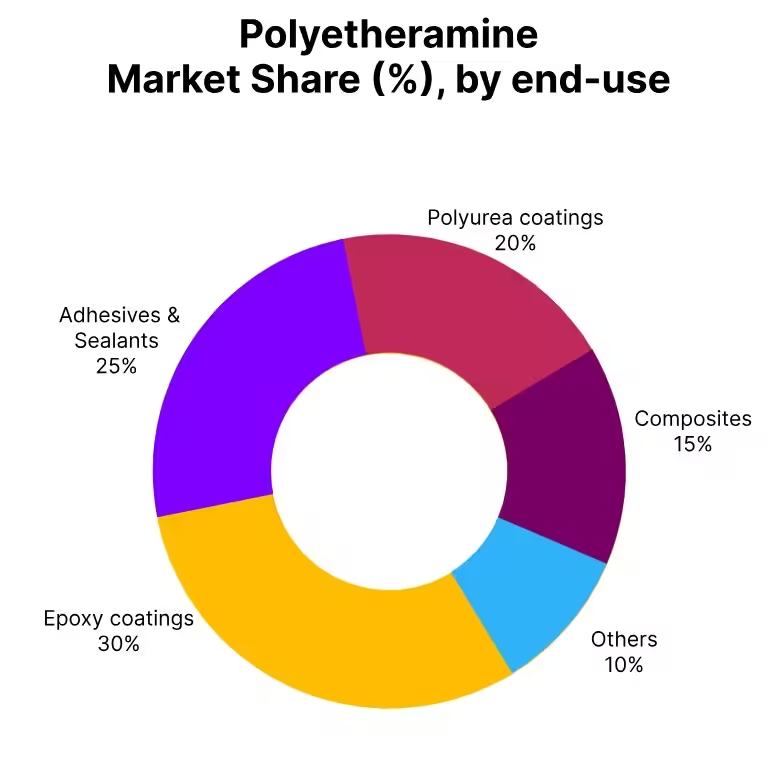
Polyetheramine market share end use

Historically, several events have caused significant fluctuations in Polyetheramine prices

  • Russia-Ukraine Conflict (2022-Present): Disruptions in European crude oil production led to increased costs and global price volatility. 
  • COVID-19 Pandemic (2020): Demand plummeted initially but rebounded as packaging needs surged. 
  • Geopolitical Tensions (2018-2019): U.S.-China trade wars caused price instability due to disrupted supply chains. 
  • Hurricane Katrina (2005): Disruptions in U.S. Gulf Coast production caused supply shortages and price spikes. 
  • Oil Price Shocks (1970s-1980s): The 1970s oil crises, driven by the 1973 OPEC embargo and 1979 Iranian Revolution, spiked prices by raising crude oil costs. 


These events underscore the Polyetheramine market’s vulnerability to global disruptions and highlight the need for continuous monitoring of supply-demand dynamics.
 

Why Price Watch™?

Price Watch™ is your trusted resource for tracking global polyetheramine price trends. Our platform delivers real-time data and expert analysis, offering deep insights into the key factors driving price fluctuations in the polyetheramine market. By monitoring critical events such as geopolitical tensions, supply chain disruptions, and economic shifts, Price Watch™ keeps you fully informed of market dynamics.

In addition, Price Watch™ provides detailed forecasts and updates on production capacities, enabling you to anticipate market changes and make well-informed decisions. With Price Watch™, you gain a competitive edge in understanding all the elements that influence polyetheramine prices worldwide. Stay ahead of the curve with Price Watch’s™ reliable, accurate, and timely polyetheramine market data.

Track Price Watch's™ polyetheramine price assessment on a weekly basis since 2015 onwards, along with short-term forecasts, and get access to the detailed report in a downloadable format.

Polyetheramine Market Price Trend published by Price Watch™ reflect prevailing spot market conditions, derived from independent research, verified trade inputs, and proprietary market intelligence as of the publication date. Prices are published on the specified Incoterm and represent indicative base market levels, exclusive of applicable taxes, VAT, duties, tariffs, and other statutory charges. Actual transaction values may vary depending on volume, credit terms, contractual structure, and other negotiated conditions. Market prices are inherently subject to volatility, liquidity dynamics, regulatory changes, and evolving trade activity. The information provided is for reference and benchmarking purposes only and does not constitute an offer, recommendation, or guarantee of transactional outcomes. Users should exercise independent commercial judgment and assess their specific contractual, regulatory, tax, and application requirements before making business decisions. Price Watch™ assumes no liability for decisions taken based on this information.

The pricing of Polyetheramine is influenced by several factors, including raw material costs such as amines, ethylene/propylene oxides fluctuations in supply and demand within industries like paints, coatings, and adhesives, as well as external elements like geopolitical events, trade tariffs, and energy prices. These factors combine to create variability in pricing depending on global economic conditions.

Regional production plays a significant role in Polyetheramine pricing. Regions with high production, like Asia-Pacific, tend to have more competitive pricing due to local availability, whereas regions that rely on imports, such as North America and Europe, often face higher costs due to transportation fees, import duties, and potential supply chain disruptions.

The latest pricing trends for Polyetheramine often reflect fluctuations in the cost of raw materials and changes in global supply chains. To secure better rates, procurement heads can consider locking in long-term contracts with suppliers, monitoring global price trends and indices, and optimizing bulk purchasing strategies to take advantage of volume discounts.

Polyetheramine is a class of amine-terminated polyether compounds widely used as curing agents for epoxy resins, chemical intermediates, surfactants, corrosion inhibitors, and in coatings, adhesives, and oilfield chemicals. Its price matters because it is a critical raw material for these industries, and fluctuations directly affect production costs, formulation efficiency, and profit margins. Since PEA is derived from petrochemical feedstocks like ethylene oxide and amines, its pricing reflects raw material costs, energy prices, and supply-demand trends, making it a key indicator for epoxy, coatings, and chemical manufacturers. Price-Watch™ tracks these prices to provide real-time market insights.

Polyetheramine prices vary depending on molecular weight, functionality (e.g., monoamine, diamine), grade, and region, typically quoted per metric ton. Prices fluctuate based on raw material costs such as ethylene oxide, amine feedstocks, energy expenses, and demand from epoxy curing and chemical applications. Price-Watch™ provides updated price assessments and market reports to help buyers and sellers make informed decisions.

The Polyetheramine market has recently remained steady to slightly firm, influenced by demand from coatings, adhesives, epoxy resins, and oilfield chemical industries. Prices are primarily affected by feedstock costs, production capacity, energy prices, and industrial consumption, while logistics, seasonal demand, and regulatory policies can impact short-term fluctuations. Overall, the market trend reflects stable industrial demand with price movements closely tied to petrochemical raw material availability and downstream sector growth. Price-Watch™ monitors these factors to provide accurate market insights.

The largest consumers of Polyetheramine are epoxy resin manufacturers, coatings and adhesives producers, oilfield chemical formulators, and specialty chemical industries. It is used as a curing agent, chemical intermediate, and performance enhancer, providing superior adhesion, flexibility, and corrosion resistance. Epoxy coatings and adhesives account for the majority of demand, while oilfield chemicals and surfactant applications consume significant volumes. Price-Watch™ tracks these consumption patterns to inform market trends.

Polyetheramine is produced by reacting amines such as ethylenediamine with polyether backbones derived from ethylene oxide or propylene oxide, resulting in amine-terminated polyether compounds. Production depends on the availability of petrochemical feedstocks like ethylene oxide and various amines, making its price closely linked to upstream chemical and energy markets. Price-Watch™ tracks production, feedstock supply, and capacity trends affecting PEA availability.

China is currently the largest exporter of Polyetheramine, supplying a major portion of global demand due to its large-scale chemical manufacturing capacity and competitive pricing. Other significant exporters include Germany, and Singapore, which provide specialized high-purity grades. Price-Watch™ tracks export volumes and trade flows to help businesses understand sourcing options and global supply dynamics.

Global supply of Polyetheramine generally meets current demand, with production capacities aligned with requirements from coatings, adhesives, epoxy resins, and oilfield chemical industries. Inventories in major producing regions are sufficient to support stable pricing, though temporary tightness may occur due to feedstock shortages, plant maintenance, or logistics disruptions. Price-Watch™ monitors these supply-demand balances to alert the market about potential surpluses or shortages.

Polyetheramine is available in different grades based on molecular weight, functionality (monoamine, diamine, triamine), and purity, tailored for specific applications such as epoxy curing, coatings, adhesives, or surfactants. Prices differ because high-performance or specialty grades require more refined feedstocks, advanced processing, and quality control, making them more expensive, while standard industrial grades are produced at larger volumes with lower costs. Price-Watch™ tracks pricing across all grades for market transparency.

A sudden increase in demand for Polyetheramine, for instance from epoxy resin or coatings surges, can lead to higher prices and temporary supply constraints. Short-term supply is relatively fixed, causing immediate cost pressure for downstream industries, while producers typically increase production to stabilize prices. Higher costs may also prompt formulation optimization or alternative sourcing. Price-Watch™ captures these market dynamics in real-time.

Energy prices directly influence Polyetheramine costs because production involves energy-intensive reactions with ethylene oxide and other amines. Higher electricity, natural gas, or fuel prices increase manufacturing expenses, pushing PEA prices upward, while lower energy costs reduce production costs. Energy price volatility can therefore contribute to short-term market fluctuations. Price-Watch™ analyzes energy trends alongside PEA pricing.

Regional price variations result from differences in feedstock availability, production capacity, proximity to manufacturing hubs, transportation costs, local industrial demand, and regulatory factors. Areas near major production facilities generally have lower prices, while import-dependent regions face higher costs. Currency fluctuations and regional energy costs also contribute to price differences. Price-Watch™ tracks these regional variations for accurate market insights.

Industry data suggests that Polyetheramine prices are likely to remain stable with moderate upward potential in the near term, driven by steady demand from epoxy resins, coatings, adhesives, and oilfield chemicals. Significant price increases would require feedstock shortages, energy spikes, or major production disruptions. Price-Watch™ provides detailed forecasts analyzing supply-demand balance, feedstock costs, and industrial consumption trends.

Yes. Accurate Polyetheramine price forecasts enable companies to optimize procurement, manage costs, and negotiate better contracts. If Price-Watch™ predicts a price increase, businesses can plan advance purchases or secure long-term supply agreements, minimizing cost risks and ensuring uninterrupted production in epoxy, coatings, or chemical applications.

Global events such as feedstock shortages, plant shutdowns, energy crises, transportation disruptions, or geopolitical tensions can affect Polyetheramine supply and pricing. For example, ethylene oxide production issues or logistics bottlenecks can tighten supply and increase prices, while construction slowdowns or industrial demand shifts may reduce pressure. Price-Watch™ provides timely alerts on events impacting the PEA market.

Price-Watch™ collects data from Polyetheramine manufacturers, distributors, and buyers globally to publish regular price assessments, market reports, and forecasts. Its transparent methodology and comprehensive coverage make it a trusted source for understanding pricing trends, supply-demand dynamics, and procurement strategies across global markets.