Polylactic Acid Price Trend and Forecast

UNSPC code: 12162002
|
Weekly Update
|
Historical Data Since 2015
|
Forecast for 2026

polylactic acid Price Trends by Country

usUnited States
cnChina
nlNetherlands
inIndia
twTaiwan
caCanada
brBrazil
beBelgium
deGermany
itItaly
krSouth Korea
thThailand

Global polylactic acid Spot Market Prices, Trend Analysis and Forecast

𝐏𝐫𝐢𝐜𝐞 𝐖𝐚𝐭𝐜𝐡™ provides price assessments for Polylactic Acid across top trading regions:

Asia-Pacific

  • General Purpose FOB Laem Chabang, Thailand
  • General Purpose FOB Qingdao, China
  • General Purpose Ex-Ahmedabad, India
  • General Purpose CIF Nhava Sheva (Thailand), India
  • General Purpose CIF Busan (China), South Korea
  • General Purpose CIF Busan (USA), South Korea
  • General Purpose CIF Busan (Thailand), South Korea
  • General Purpose CIF Kaohsiung (USA), Taiwan
  • General Purpose CIF Kaohsiung (Thailand), Taiwan


North America

  • General Purpose FOB Houston, USA
  • General Purpose CIF Montreal (USA), Canada


Europe

  • General Purpose FOB Rotterdam, Netherland
  • General Purpose FD Hamburg, Germany
  • General Purpose FD Milano, Italy
  • General Purpose FD Antwerp, Belgium


South America

  • General Purpose CIF Santos (Thailand), Brazil

Polylactic Acid Price Trend Q4 2025

In Q4 2025, global Polylactic Acid (PLA) prices showed moderate fluctuations, with changes ranging from 3% to 5% depending on regional dynamics. European, Chinese, and Southeast Asian markets experienced minor declines due to stable feedstock costs, adequate inventories, and cautious downstream demand in packaging, textiles, and bioplastics. Conversely, India and Taiwan saw modest gains driven by firm domestic consumption and reliable import logistics. FOB, CIF, and FD markets were influenced by freight cost adjustments, currency movements, and competition from alternative bio-based polymers. Overall, the quarter reflected a mildly bearish global trend, tempered by region-specific pockets of steady demand.

Thailand: Polylactic Acid export price from Thailand, General Purpose

In Q4 2025, PLA prices in Thailand fell slightly as international demand softened amid competitive Southeast Asian exports. FOB Laem Chabang prices ranged USD 2550–2600/MT, reflecting a -1.98% decline. Packaging and disposable product sectors reduced procurement, while domestic PLA production remained stable. Logistics were smooth, but moderate global order flow limited export gains. Feedstock corn prices were steady, keeping input costs predictable. Manufacturers focused on managing inventories while maintaining operational efficiency. Overall, the Thai PLA market displayed a slightly bearish tone, shaped by cautious buyer sentiment, competitive export pricing, and subdued seasonal demand.

USA: Polylactic Acid export price from USA, General Purpose

In Q4 2025, PLA prices in the USA were marginally lower, with FOB Houston prices between USD 2400–2450/MT, marking a -0.53% decline. Domestic demand from sustainable packaging and 3D printing sectors remained steady, but competitive import pricing limited upward pressure. Regional producers maintained production rates, and feedstock lactic acid supply was stable. Minimal logistical disruptions allowed consistent distribution, while buyers negotiated carefully amid cautious global procurement. Overall, the U.S. PLA market showed near-neutral to mildly bearish sentiment, with stable consumption offsetting external pricing pressures from imports and global trends.

Netherlands: Polylactic Acid export price from Netherlands, General Purpose

In Q4 2025, PLA prices in the Netherlands experienced a slight decline, with FOB Rotterdam prices ranging USD 2550–2600/MT, reflecting a -1.18% decrease. European bioplastics demand softened amid moderate industrial activity and cautious purchasing by packaging and consumer goods sectors. Inventory levels remained sufficient, while feedstock costs were stable. Competition from Asian imports further contributed to pricing pressure. Despite this, regional supply chains were smooth, supporting operational continuity. Overall, the Dutch PLA market displayed a slightly bearish tone, with minimal price adjustment reflecting balanced supply-demand conditions and cautious end-user procurement.

China: Polylactic Acid export price from China, General Purpose

In Q4 2025, PLA prices in China declined due to oversupply and moderated export demand. FOB Qingdao prices ranged USD 2150–2200/MT, marking a -3.63% drop. Domestic lactic acid production remained stable, but tepid orders from packaging and fibers segments limited offtake. Export-oriented buyers benefited from competitive offers, while higher inventory levels pressured producers to adjust pricing downward. Despite slight recovery in electronics and EV sectors, their impact on PLA consumption was minimal. Overall, China’s PLA market experienced moderate bearish pressure, reflecting supply-demand imbalance, competitive exports, and cautious procurement by regional buyers.

India: Domestically traded Polylactic Acid price in Ahmedabad, General Purpose

In Q4 2025, PLA prices in India rose slightly, with Ex-Ahmedabad prices between USD 2950–3000/MT, representing a +1.22% increase. Domestic demand from packaging, textiles, and bioplastics remained firm, supported by consistent downstream activity. Local producers maintained high operating rates, and imports were limited due to currency factors and shipping costs. Market sentiment was bullish for domestic-origin PLA as buyers prioritized timely procurement. Inventory management strategies were applied to balance supply. Overall, the Indian PLA market exhibited a mildly bullish trend, contrasting with regional declines, driven by firm consumption and stable domestic supply chains.

South Korea: Polylactic Acid import price in South Korea from China, General Purpose

In Q4 2025, PLA import prices into South Korea declined modestly due to oversupply and cautious buying. CIF Busan prices from China ranged USD 2150–2200/MT, reflecting a -3.64% fall. Importers were selective as packaging and electronics sector demand softened. Stable feedstock costs and steady logistics supported supply, but regional buyers adjusted purchases to navigate competitive Chinese pricing. Domestic converters slowed orders, balancing inventory and cost. Overall, the South Korean PLA market displayed moderate bearishness, driven by subdued demand, abundant supply, and competitive import options.

Taiwan: Polylactic Acid import price in Taiwan from USA, General Purpose

In Q4 2025, PLA prices in Taiwan increased slightly, with CIF Kaohsiung prices at USD 2500–2550/MT, marking a +0.68% rise. Demand from 3D printing, medical, and specialty packaging sectors remained stable. U.S.-origin imports were preferred due to quality and reliable delivery. While broader Asian markets faced mild declines, Taiwan sustained niche demand, allowing modest price support. Importers carefully timed purchases to match consumption and supply conditions. Overall, the Taiwanese PLA market reflected slight bullishness, supported by steady domestic demand and predictable U.S. import logistics amid regional price pressure.

Canada: Polylactic Acid import price in Canada from USA, General Purpose

In Q4 2025, PLA prices in Canada were largely stable, with CIF Montreal prices between USD 2550–2600/MT, marking a -0.43% decline. Demand from compostable packaging and sustainability initiatives remained steady. Supply chains were efficient, with minimal logistical disruptions. U.S. imports met market needs effectively, and end-users maintained consistent procurement volumes. Competitive pressures were moderate but did not significantly affect pricing. Overall, the Canadian PLA market showed a neutral to slightly bearish tone, reflecting stable consumption, reliable import logistics, and balanced supply-demand fundamentals.

Brazil: Polylactic Acid import price in Brazil from Thailand, General Purpose

In Q4 2025, PLA prices in Brazil declined, with CIF Santos ranging USD 2700–2750/MT, reflecting a -3.77% drop. Regional demand softened amid slower industrial activity, while imports from Thailand remained competitively priced. Freight rates were stable, but cautious buying and currency fluctuations limited procurement. Packaging converters and bioplastics processors adjusted orders strategically. Overall, the Brazilian PLA market exhibited moderate bearish pressure, driven by ample import availability, soft local demand, and competitive regional supply.

Germany: Domestically Traded Polylactic Acid price in Germany, General Purpose

In Q4 2025, PLA prices in Germany eased slightly, with FD Hamburg at USD 2600–2650/MT, marking a -1.13% decline. End-user demand from packaging and consumer goods was stable but unremarkable. European import competition from Asia continued to influence pricing decisions. Manufacturers focused on inventory balance while maintaining steady output. Market sentiment remained cautious, with buyers monitoring global supply trends. Overall, Germany’s PLA market displayed mildly bearish behaviour, reflecting moderate demand, balanced supply, and competitive regional imports.

Italy: Domestically Traded Polylactic Acid price in Italy, General Purpose

In Q4 2025, PLA prices in Italy declined slightly, with FD Milano ranging USD 2650–2700/MT, representing a -1.24% drop. Downstream demand from bioplastics, packaging, and consumer sectors was moderate, with buyers cautious amid soft industrial activity. Imports from Asia added mild pressure on domestic pricing. Production remained consistent, and inventories were sufficient to meet order requirements. Overall, Italy’s PLA market exhibited slightly bearish sentiment, driven by subdued end-user demand and competitive import dynamics.

Polylactic Acid Price Trend Analysis: Q4 2025

In Q3 2025, the global Polylactic Acid (PLA) market witnessed a marginal decline in prices, fluctuating within a range of 3%-5%, depending on regional demand, logistics, and feedstock dynamics. The polylactic acid price trend reflected subdued performance in key downstream industries like packaging and bioplastics, amid cautious procurement and inventory adjustments.

Market fundamentals were affected by global economic uncertainty, minor shifts in corn-derived lactic acid supply, and competitive pricing from alternative materials. While a few regions such as the USA and Canada saw marginal price upticks driven by steady domestic demand, most markets reported minor declines driven by supply-demand imbalances and feedstock normalization.

Thailand: Polylactic Acid export price from Thailand; General Purpose.

In Q3 2025, Polylactic Acid (PLA) prices in Thailand ranged between USD 2570–2730 per metric ton, registering a 2.78% decrease, as export activity slowed amid weak international demand and competitive market pressure. The Polylactic Acid price trend in Thailand reflected softening global orders and subdued packaging sector performance.

This decline was driven by stable-to-lower Corn feedstock values and weakened export volumes. Domestic production remained steady, though logistical delays and excess inventories weighed on sentiment. Manufacturers managed operations cautiously to stabilize the market.

In Q3 September 2025, Polylactic Acid prices in Thailand weakened slightly as export demand softened and overseas inquiries slowed. Early optimism faded as the month progressed, with consistent pressure from limited orders and cautious procurement. Stable production levels balanced the decline, yet oversupply concerns and fragile trading sentiment maintained downward pressure on overall pricing levels.

United States: Polylactic Acid export price from USA, General Purpose.

According to PriceWatch, in Q3 2025, Polylactic Acid (PLA) prices in the USA ranged between USD 2350–2500 per metric ton, marking a 0.92% increase, supported by steady domestic demand from the sustainable packaging and 3D printing sectors. The Polylactic Acid price trend in the USA indicated stable market sentiment with producers passing on minor cost increases amid consistent lactic acid availability. Global demand remained mixed, but regional cost competitiveness and stable logistics supported slight price gains.

Favourable energy prices and local production strength underpinned this modest upward movement. In Q3 September 2025, Polylactic Acid prices in the United States experienced slight softness throughout the month due to weak export demand and restrained domestic activity. Buying interest remained limited as producers navigated cautious sentiment. Consistent inventory levels and sufficient feedstock availability stabilized supply but failed to lift overall pricing momentum in the regional market.

Netherlands: Polylactic Acid export price from Netherlands, General Purpose.

In Q3 2025, Polylactic Acid (PLA) prices in the Netherlands ranged between USD 2540–2700 per metric ton, reflecting a 1.33% decrease, due to softer export activity and moderated demand in the European bioplastics sector. The Polylactic Acid price trend in the Netherlands showed cautious sentiment driven by moderate inventory buildup and weak biodegradable packaging orders.

Stable feedstock costs and limited industrial activity further dampened market dynamics, while competition from Asia added to pricing pressure across the quarter. In Q3 September 2025, Polylactic Acid prices in the Netherlands declined modestly under continued pressure from weaker export operations and slow order volumes.

Despite steady supply and feedstock consistency, downbeat sentiment persisted as buyers avoided speculative purchases. Prices reflected cautious market behaviour with stability remaining uncertain amid sustained European consumption weakness through the month.

China: Polylactic Acid export price from China, General Purpose.

According to PriceWatch, in Q3 2025, Polylactic Acid (PLA) prices in China ranged between USD 2180–2310 per metric ton, recording a 3.18% drop, due to persistent supply surplus and moderate demand from the packaging and fiber sectors. The Polylactic Acid price trend in China highlighted ongoing pressure from inventory buildup and slow downstream offtake.

Stable feedstock supply and localized logistical ease couldn’t offset weak consumption. Despite recovery in EV and electronics sectors, limited spillover reduced overall price stability across Q3. In Q3 September 2025, Polylactic Acid prices in China faced mild downward pressure initially before stabilizing later in the month.

Softened export activity and reduced international orders dampened price confidence, although steady domestic demand limited further declines. Balanced supply conditions and cautious trading sentiment prompted sellers to adopt conservative pricing strategies to maintain liquidity.

India: Domestically traded Polylactic Acid price in Ahmedabad, General Purpose.

According to PriceWatch, in Q3 2025, domestic Polylactic Acid (PLA) prices in India averaged between USD 2880–3060 per metric ton, down by 0.66% as demand growth slowed across key industries including packaging and textiles. The Polylactic Acid price trend in India reflected subdued procurement behavior and slight weakness induced by currency volatility.

While production and raw material availability stayed consistent, imported competition from Southeast Asia pressured domestic margins. Overall, balanced supply-demand dynamics helped maintain stability within a mildly declining environment.

In Q3 September 2025, Polylactic Acid prices in India recorded modest improvement supported by steady local demand from packaging and industrial sectors. Sellers adopted a guarded pricing approach as weekly momentum strengthened slightly. Stable feedstock sourcing and balanced inventories maintained measured confidence, allowing prices to reflect controlled upward adjustments across the month.

South Korea: Polylactic Acid import price in South Korea from China, General Purpose.

In Q3 2025, Polylactic Acid (PLA) prices into South Korea from China averaged between USD 2210–2350 per metric ton, showing a 3.15% decrease, as regional oversupply weighed on pricing. The Polylactic Acid price trend in South Korea illustrated a clear imbalance between supply and demand due to high export availability.

Tepid domestic demand from packaging and electronics further restrained recovery. Local converters adopted lean procurement schedules while importers adjusted strategies to offset ongoing price fluctuations. In Q3 September 2025, Polylactic Acid prices in South Korea weakened moderately due to higher regional availability and slower procurement by converters.

Increased shipments from neighboring countries pressured domestic values. Market sentiment turned cautious as buyers delayed purchases, keeping overall price movement subdued while oversupply persisted through the latter half of the month.

Taiwan: Polylactic Acid import price in Taiwan from USA, General Purpose.

In Q3 2025, Polylactic Acid (PLA) prices from the USA into Taiwan ranged between USD 2410–2560 per metric ton, with a 0.84% increase, supported by steady demand in the medical and 3D printing sectors. The Polylactic Acid price trend in Taiwan emphasized consistent consumption despite regional weakness.

Importers preferred U.S.-origin materials owing to quality reliability and smooth logistics. Niche industrial strength allowed Taiwan to maintain moderate gains despite wider Asian pricing pressure. In Q3 September 2025, Polylactic Acid prices in Taiwan moved lower as sluggish demand from downstream processors constrained buying interest.

Declining imports and weaker sentiment limited price support. Despite stable supply operations, buyers stayed cautious, reflecting the influence of subdued regional consumption and muted industrial activity throughout the month.

Canada: Polylactic Acid import price in Canada from USA, General Purpose.

In Q3 2025, Polylactic Acid (PLA) prices in Canada ranged between USD 2490–2650 per metric ton, marking a 1.05% rise, due to steady demand and logistical efficiency in North America. The Polylactic Acid price trend in Canada showed firm sentiment supported by compostable packaging expansion and sustainability projects. Supply chains operated consistently with minimal disruptions, while steady regional trade flows reinforced stable to firm pricing throughout the quarter.

In Q3 September 2025, Polylactic Acid prices in Canada softened slightly, mirroring weaker regional sentiment linked to easing USA prices. Procurement slowed as downstream industries moderated consumption. Stable import flows maintained supply balance, while cautious purchasing kept pricing momentum subdued and prevented significant upward corrections during the period.

Brazil: Polylactic Acid import price in Brazil from Thailand, General Purpose.

In Q3 2025, imported Polylactic Acid (PLA) prices in Brazil averaged between USD 2740–2910 per metric ton, reflecting a 1.41% decrease, as demand weakened and Asian exporters offered competitive rates. The Polylactic Acid price trend in Brazil depicted cautious buying amid reduced industrial activity and currency-driven cost fluctuations. Despite stable freight routes, sufficient Southeast Asian supply limited price resilience, keeping Brazil’s market buyer-oriented.

In Q3 September 2025, Polylactic Acid prices in Brazil showed noticeable softness driven by lower freight costs and weak export-linked activity. Import volumes remained steady, but tepid regional consumption contributed to gradual price easing. Conservative interest from buyers and moderate supply levels left prices stable at a lower range throughout the month.

Germany: Domestically Traded Polylactic Acid price in Germany, General Purpose.

In Q3 2025, domestic Polylactic Acid (PLA) prices in Germany stood between USD 2580–2740 per metric ton, decreasing by 1.40%, amid sluggish industrial performance and conservative demand recovery. The Polylactic Acid price trend in Germany showed restrained activity as buyers slowed orders and producers maintained steady pricing. Lacklustre consumption in packaging and consumer goods coupled with Asian competition sustained mild price correction.

In Q3 September 2025, Polylactic Acid prices in Germany experienced slight weakening influenced by lower Rotterdam-linked quotations. Domestic consumption remained slow as industrial demand in packaging and consumer goods softened. Consistent supply conditions provided stability, yet muted purchasing behavior limited any opportunity for recovery across the latter part of the month.

Italy: Domestically Traded Polylactic Acid price in Italy, General Purpose.

In Q3 2025, Polylactic Acid (PLA) prices in Italy ranged between USD 2630–2800 per metric ton, falling by 1.03%, amid subdued demand from bioplastics and packaging applications. The Polylactic Acid price trend in Italy displayed soft consumer outlook and selective buying, influenced by Asian price competition. Stable feedstock access and organized supply chains prevented deeper declines, maintaining balanced but cautious sentiment across the period.

In Q3 September 2025, Polylactic Acid prices in Italy displayed modest decline amid weaker demand and competitive offers aligned with Rotterdam pricing levels. Slowed industrial consumption, especially in bioplastic applications, kept trading subdued. Stable feedstock support prevented deeper losses, but cautious buying patterns ensured a subdued tone through the period.

Belgium: Domestically Traded Polylactic Acid price in Belgium, General Purpose.

In Q3 2025, domestic Polylactic Acid (PLA) prices in Belgium averaged between USD 2570–2730 per metric ton, decreasing by 1.39%, as modest demand met increased import competition. The Polylactic Acid price trend in Belgium underscored stable but slow-moving market sentiment, constrained by cheaper Asian inflows. Consistent feedstock and smooth logistics kept activity balanced, though producers resorted to mild markdowns to protect market share amid tepid industrial demand.

In Q3 September 2025, Polylactic Acid prices in Belgium recorded mild weakening linked to lower Rotterdam market performance. Export interest remained limited, while domestic demand offered minimal support. Producers maintained consistent operations to manage inventories, yet fragile sentiment and modest supply-side adjustments resulted in continued price softness through the month.

In Q2 2025, according to the PriceWatch Polylactic Acid General Purpose FOB Houston prices experienced a slight decrease of -0.40%, settling at USD 2,404 per metric ton, remaining largely stable from the previous quarter. Demand across key sectors such as medical devices, textiles, and food packaging stayed moderate, with no significant changes in buying patterns.

U.S. corn feedstock markets remained balanced, supporting steady Polylactic Acid (PLA) production. Despite geopolitical tensions like the Iran-Israel conflict, the domestic market saw no major disruptions in logistics or freight activity. However, ongoing competition from lower-cost fossil-based plastics continued to limit upward price movement, keeping market sentiment cautiously neutral.

In Q2 2025, according to the PriceWatch Polylactic Acid General Purpose CIF Nhava Sheva (Thailand) prices continued its downward movement, declining by -2.14% to USD 2,740 per metric ton, as buyers remained cautious amid weak demand from food packaging and biodegradable sectors.

Feedstock prices, especially for corn and glucose, stayed manageable, limiting upstream cost pressure. Stable global supply chains ensured uninterrupted imports from Thailand, but competitive regional offers and reduced local converter activity intensified price pressure.

In Q1 2025, prices of Polylactic Acid (PLA) in the USA (FOB Houston) decreased significantly by -7.51% to USD 2,414/MT, reflecting shifting market dynamics. The drop was largely due to an abundant supply of lactic acid and intensified competition, as several manufacturers expanded production capacity. Additionally, a post-holiday industrial slowdown dampened short-term demand.

Nonetheless, demand from the 3D printing and electronics sectors offered some market support. In Europe, imports declined moderately as domestic production became more cost-effective, while in Asia, supply remained strong particularly with Thailand ramping up exports under government-backed bioplastics incentives.

India (CIF Nhava Sheva) PLA prices fell -5.25% to USD 2,800/MT in Q1 2025. This was caused by excess supply of Thai raw materials following increased production capacity, softened post-holiday industrial demand in India, and heightened competition among suppliers offering cheaper bioplastic alternatives.

Polylactic Acid Price Trend Analysis: Q4 2024

In Q4 2024, prices of PLA in the USA (FOB Houston) increased marginally by +3.07% to USD 2,610/MT. This uptick was supported by improved manufacturing efficiency among key producers, which offset the impact of falling raw material costs—particularly for lactic acid. While the building industry experienced seasonally induced slowdowns, trimming demand for insulation and composites, the food packaging sector remained a consistent consumer.

Regulatory policies in Europe favouring biodegradable plastics further boosted PLA adoption. In Asia, production costs declined modestly due to better agricultural yields of corn and sugarcane, ensuring a steady supply of key PLA feedstocks.

In Q4 2024, Indian Polylactic Acid (PLA) prices (CIF Nhava Sheva) reduced by -0.17% to USD 2,955/MT. This reduction was supported by consistent demand during the festival season in the food packaging industry, cheap PLA import from Thailand, and reduced construction activity as the year closed.

In Q3 2024, the USA (FOB Houston) PLA market saw a decline of -2.28%, settling at USD 2,532/MT. This downturn was driven by inconsistent demand from major sectors like packaging, automotive, and medical applications. However, the ongoing push for sustainability supported demand for PLA-based biodegradable plastics, especially in retail and food industries.

High crude oil prices also made PLA a more attractive alternative to petroleum-based plastics. In Europe, supply remained stable, while Asian exports strengthened on growing demand in consumer goods and textiles.

In Q3 2024, Indian PLA prices (CIF Nhava Sheva) reduced by a modest -3.58% to USD 2,960/MT. This reduction was influenced by strong but not rising demand from key sectors like textiles and automobile, high Thai-origin PLA supply due to export-oriented policies, and low market pull from the bioplastics market due to strong crude oil prices.

With higher production and consumption during the festive holidays, PLA application strengthened considerably in terms of demand during Q2 2024, when it hovered at a USD 2,591/MT price tag within the USA (FOB Houston) after declining -2.77% from Q1. This reduction was caused by strong demand for Lactic Acid, which further encouraged technological development in the manufacturing processes of Lactic Acid and PLA.

Good weather conditions also helped ensure a ready supply of raw materials, alleviating some of the pressures in prices. The development of biodegradable materials in the market also contributed, fostering competition and volatile prices in the industry.

In Q2 2024, Indian Polylactic Acid (PLA) prices (CIF Nhava Sheva) fell sharply by -8.22% to USD 3,070/MT due to an abundance of PLA imports from Thailand supported by good crops of corn, improved efficiency in production that lowered the cost of manufacturing and decreasing off-season demand from the food packaging sector.

During Q1 2024, the worldwide Polylactic Acid (PLA) market was bullish, led mainly by increasing feedstock prices and strong demand from major industries like packaging and textiles. In USA (FOB Houston), PLA prices were quoted at USD 2,665/MT, up marginally by +1.48% compared to the last quarter.

Continuing recovery in the construction market strengthened demand further for PLA, as the Lunar New Year augmented requirements for packaging products, specifically across food and beverages.

In Q1 2024, Indian Polylactic Acid (PLA) prices (CIF Nhava Sheva) fell marginally by -1.33% to USD 3,345/MT. The reason was the lower demand from packaging and textiles segments after end-year rush, balanced supply of PLA from Thailand, and seasonally weaker demand from the building segment.

Technical Specifications of Polylactic Acid Price Trends

Product Description

Polylactic Acid (PLA) is a biodegradable thermoplastic polymer derived from renewable resources like corn starch or sugarcane. It’s produced through the fermentation of carbohydrates followed by polymerization of Lactic Acid. PLA is known for its environmentally friendly nature as it is compostable under industrial conditions, making it a sustainable alternative to petroleum-based plastics. It’s clear appearance, durability, and ease of processing have led to its increasing use across various industries.

Identifiers and Classification:

  • CAS No – 26100-51-6
  • HS Code – 39077000
  • Molecular Formula – (C3H4O2)n
  • Molecular Weight (in gm/mol) – 60,000


Polylactic Acid Synonyms:

  • PLA
  • Polylactide
  • PLA Biopolymer
  • Lactic Acid Polymer


Polylactic Acid Grades Specific Price Assessment:

  • Polylactic Acid, General Purpose


Polylactic Acid Global Trade and Shipment Terms

  • Quotation Terms (Product & Country Specific): 10-15 MT, 20-25 MT
  • Packaging Type (Product & Country Specific): Bag (25 Kg)


Incoterms Referenced in Polylactic Acid Price Reporting

Shipping Term  Location  Definition 
FOB Laem Chabang  Laem Chabang, Thailand  Polylactic Acid export price from Thailand 
FOB Houston  Houston, USA  Polylactic Acid export price from USA 
FOB Rotterdam  Rotterdam, Netherlands  Polylactic Acid export price from the Netherlands 
FOB Qingdao  Qingdao, China  Polylactic Acid export price from China 
Ex-Ahmedabad  Ahmedabad, India  Domestically traded Polylactic Acid price in Ahmedabad 
CIF Nhava Sheva (Thailand)  Nhava Sheva, India  Polylactic Acid import price in India from Thailand 
CIF Busan (China)  Busan, South Korea  Polylactic Acid import price in South Korea from China 
CIF Busan (USA)  Busan, South Korea  Polylactic Acid import price in South Korea from USA 
CIF Busan (Thailand)  Busan, South Korea  Polylactic Acid import price in South Korea from Thailand 
CIF Kaohsiung (USA)  Kaohsiung, Taiwan  Polylactic Acid import price in Taiwan from USA 
CIF Kaohsiung (Thailand)  Kaohsiung, Taiwan  Polylactic Acid import price in Taiwan from Thailand 
CIF Montreal (USA)  Montreal, Canada  Polylactic Acid import price in Canada from USA 
CIF Santos (Thailand)  Santos, Brazil  Polylactic Acid import price in Brazil from Thailand 
FD Hamburg  Hamburg, Germany  Domestically Traded Polylactic Acid price in Germany 
FD Milano  Milan, Italy  Domestically Traded Polylactic Acid price in Italy 
FD Antwerp  Antwerp, Belgium  Domestically Traded Polylactic Acid price in Belgium 

*Quotation Terms refers to the quantity range specified for the Polylactic Acid being quoted or offered in a commercial transaction.

**Packaging Type refers to standard packaging size commonly used for Polylactic Acid packing, ease of handling, transportation, and storage in industrial and commercial applications.

Key Polylactic Acid Manufacturers

Manufacturer 
Purac Thailand Ltd. 
Total Corbion 
Evonik 
Nature Works LLC 
Shanghai Tong-jie-liang Biomaterials Co. 

Polylactic Acid Industrial Applications

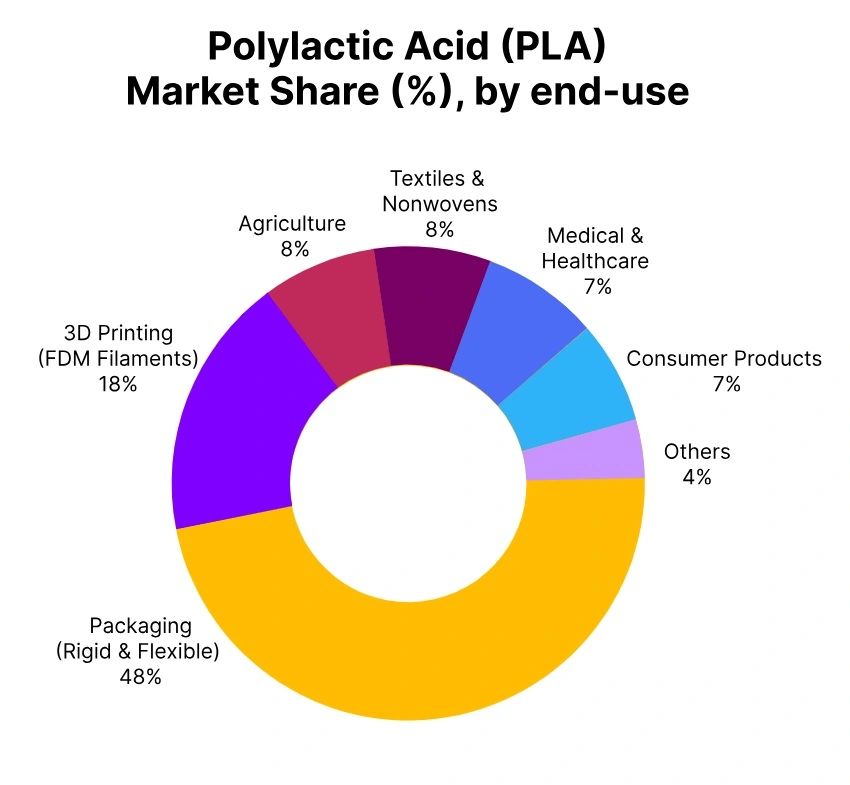
PLA market share end use

Historically, several events have caused significant fluctuations in Polylactic Acid prices

  • Russia-Ukraine Conflict (2022-Present): The ongoing conflict disrupted global supply chains and trade routes, leading to higher transportation costs for Polylactic Acid (PLA) and its raw materials, resulting in price fluctuations in the european and global markets.
  • COVID-19 Pandemic (2020): The pandemic initially caused a dip in demand for PLA as manufacturing slowed. However, demand quickly rebounded, especially in the packaging and medical sectors, leading to a rise in prices as supply chains strained to keep up.
  • S.-China Trade Tensions (2018-2019): Trade disputes between the U.S. and China caused interruptions in PLA feedstock supplies, leading to supply shortages and fluctuating prices, particularly in Asia and North America.


These events demonstrate the PLA market’s sensitivity to global events, highlighting the importance of monitoring both geopolitical developments and demand-supply dynamics for effective market forecasting.

Why Price Watch™?

Price Watch™ is your trusted resource for tracking global polylactic acid price trends. Our platform delivers real-time data and expert analysis, offering deep insights into the key factors driving price fluctuations in the polylactic acid market. By monitoring critical events such as geopolitical tensions, supply chain disruptions, and economic shifts, Price Watch™ keeps you fully informed of market dynamics.

In addition, Price Watch™ provides detailed forecasts and updates on production capacities, enabling you to anticipate market changes and make well-informed decisions. With Price Watch™, you gain a competitive edge in understanding all the elements that influence polylactic acid prices worldwide. Stay ahead of the curve with Price Watch’s™ reliable, accurate, and timely polylactic acid market data.

Track Price Watch's™ polylactic acid price assessment on a weekly basis since 2015 onwards, along with short-term forecasts, and get access to the detailed report in a downloadable format.

Polylactic Acid Market Price Trend published by 𝐏𝐫𝐢𝐜𝐞 𝐖𝐚𝐭𝐜𝐡™ reflect prevailing spot market conditions, derived from independent research, verified trade inputs, and proprietary market intelligence as of the publication date. Prices are published on the specified Incoterm and represent indicative base market levels, exclusive of applicable taxes, VAT, duties, tariffs, and other statutory charges. Actual transaction values may vary depending on volume, credit terms, contractual structure, and other negotiated conditions. Market prices are inherently subject to volatility, liquidity dynamics, regulatory changes, and evolving trade activity. The information provided is for reference and benchmarking purposes only and does not constitute an offer, recommendation, or guarantee of transactional outcomes. Users should exercise independent commercial judgment and assess their specific contractual, regulatory, tax, and application requirements before making business decisions. 𝐏𝐫𝐢𝐜𝐞 𝐖𝐚𝐭𝐜𝐡™ assumes no liability for decisions taken based on this information.

The pricing of Polylactic Acid is influenced by several key factors, including the cost of raw materials, such as corn starch and sugarcane, which are the primary feedstocks for PLA production. Fluctuations in production capacity, global demand from key sectors like packaging and textiles, and competition from alternative biodegradable materials also play significant roles. Additionally, logistical challenges, changes in government policies related to sustainability, and environmental regulations can impact pricing trends in the PLA market.

The availability of feedstock, particularly renewable resources like corn and sugarcane, is crucial for Polylactic Acid pricing. Shortages or disruptions in feedstock production due to adverse weather conditions, supply chain issues, or changes in agricultural policies can lead to price increases. Conversely, abundant supply or improved agricultural yields may result in lower prices. Procurement heads should monitor agricultural market trends closely to anticipate potential pricing fluctuations and secure favorable sourcing agreements.

Regional pricing differences for Polylactic Acid can vary significantly based on local production capabilities, feedstock availability, and demand levels. For instance, countries like the USA and China are major producers, often leading to more competitive pricing due to larger production volumes. In contrast, regions with limited production capacity may experience higher prices. Procurement teams should analyze regional market conditions, explore cost-effective sourcing opportunities, and consider logistics when developing their procurement strategies to optimize costs effectively.

PolyLactic Acid (PLA) is a bio-based, biodegradable polymer derived primarily from renewable resources such as corn starch or sugarcane. It is widely used in packaging, disposable tableware, textiles, medical devices, and 3D printing. PolyLactic Acid prices matter because they directly impact the cost of sustainable consumer goods and influence the competitiveness of bio-based plastics versus conventional petrochemical plastics. 𝐏𝐫𝐢𝐜𝐞 𝐖𝐚𝐭𝐜𝐡™ tracks PolyLactic Acid prices to help businesses and consumers stay informed about market trends.

PolyLactic Acid prices vary by region, grade, and application. Prices are typically quoted per metric ton and fluctuate based on feedstock costs, production capacity, demand from packaging and bioplastics sectors, and energy prices. 𝐏𝐫𝐢𝐜𝐞 𝐖𝐚𝐭𝐜𝐡™ provides real-time price assessments across key global markets.

PolyLactic Acid prices are influenced by raw material costs (such as corn or sugar), fermentation and polymerization costs, energy prices, logistics, and demand from sustainable packaging, textiles, and consumer goods industries. Government regulations promoting biodegradable plastics, bans on single-use plastics, and sustainability commitments from brands further shape market trends, with long-term growth prospects remaining strong.

The largest consumers of PolyLactic Acid include packaging manufacturers (food containers, films, and cups), disposable tableware producers, textile and nonwoven manufacturers, 3D printing filament producers, and medical and healthcare product manufacturers. 𝐏𝐫𝐢𝐜𝐞 𝐖𝐚𝐭𝐜𝐡™ analyses demand patterns across all major end-use sectors.

PolyLactic Acid is produced at industrial biopolymer plants through the fermentation of plant-based sugars into lactic acid, followed by polymerization into PolyLactic Acid resin. Production facilities are mainly located in North America, Europe, and Asia.

The United States is one of the leading producers and exporters of PolyLactic Acid, followed by countries in Europe and Asia, including Thailand and China. Export volumes vary based on production capacity, regional demand, and sustainability regulations. 𝐏𝐫𝐢𝐜𝐞 𝐖𝐚𝐭𝐜𝐡™ tracks global production, trade flows, and supply-chain developments.

While PolyLactic Acid capacity has expanded significantly in recent years, supply can still be tight during periods of rapid demand growth, especially as more countries adopt biodegradable packaging mandates. 𝐏𝐫𝐢𝐜𝐞 𝐖𝐚𝐭𝐜𝐡™ monitors supply-demand balances to identify potential shortages or surpluses.

PolyLactic Acid is available in multiple grades based on molecular weight, heat resistance, crystallinity, and intended application (e.g., packaging, fibers, injection molding, or 3D printing). Specialty and high-performance grades typically command higher prices due to additional processing and performance enhancements. 𝐏𝐫𝐢𝐜𝐞 𝐖𝐚𝐭𝐜𝐡™ provides separate price assessments for different PLA grades.

When demand rises sharply often driven by regulatory changes or shifts toward sustainable packaging PolyLactic Acid prices may increase due to limited short-term production flexibility. Buyers may experience longer lead times or higher spot prices. 𝐏𝐫𝐢𝐜𝐞 𝐖𝐚𝐭𝐜𝐡™ captures these market movements in real time.

Energy prices impact PolyLactic Acid production through fermentation, polymerization, and downstream processing costs. Higher energy prices can raise production expenses, which may be passed on to buyers. 𝐏𝐫𝐢𝐜𝐞 𝐖𝐚𝐭𝐜𝐡™ analyses the relationship between energy markets and PolyLactic Acid pricing.

Regional price differences arise from variations in feedstock availability, production capacity, transportation costs, import duties, regulatory incentives, and local demand for biodegradable materials. PolyLactic Acid often costs more in regions reliant on imports. 𝐏𝐫𝐢𝐜𝐞 𝐖𝐚𝐭𝐜𝐡™ tracks prices across all major regions to highlight these differences.

PolyLactic Acid price forecasts depend on feedstock cost trends, new capacity additions, sustainability regulations, fossil plastic prices, and global economic conditions. 𝐏𝐫𝐢𝐜𝐞 𝐖𝐚𝐭𝐜𝐡™ regularly publishes detailed forecasts that project price movements for the next 12 months based on comprehensive analysis of supply additions, demand growth in key industries, seasonal patterns, and macroeconomic indicators. Our forecasts help businesses anticipate market conditions and plan accordingly.

Absolutely. Accurate forecasting allows you to time your purchases better, negotiate contracts more effectively, and budget more accurately. If 𝐏𝐫𝐢𝐜𝐞 𝐖𝐚𝐭𝐜𝐡™ forecasts predict a price increase in three months, you might choose to stock up now or lock in long-term contracts at current rates, potentially saving thousands of dollars.

Global events such as crop yield disruptions, energy market volatility, geopolitical tensions, trade policies, or changes in environmental regulations can affect PolyLactic Acid supply chains and prices. The COVID-19 pandemic and evolving plastic waste regulations created notable volatility in the PolyLactic Acid market. 𝐏𝐫𝐢𝐜𝐞 𝐖𝐚𝐭𝐜𝐡™ provides timely alerts on such developments.

𝐏𝐫𝐢𝐜𝐞 𝐖𝐚𝐭𝐜𝐡™ collects data from PolyLactic Acid producers, converters, distributors, and buyers worldwide to publish transparent price assessments, market reports, and forecasts. Our comprehensive methodology makes us a trusted source for understanding fair pricing and market trends in the PolyLactic Acid industry.